
When a vehicle is deemed ‘out of service,’ its owner faces several significant challenges, especially if they rely on it for daily use or business operations. This article unpacks the implications of this status, providing critical insights for local private car owners, used car buyers and sellers, and small business fleet operators. From driving prohibitions to legal and financial consequences, we explore how this designation can affect registration, licensing, insurance, and necessary actions to get back on the road. Each chapter will illuminate key aspects of the out-of-service status, ensuring you understand both the immediate effects and the steps you need to take to resolve them.
Out of Service: Navigating Vehicle Prohibition and Reinstatement
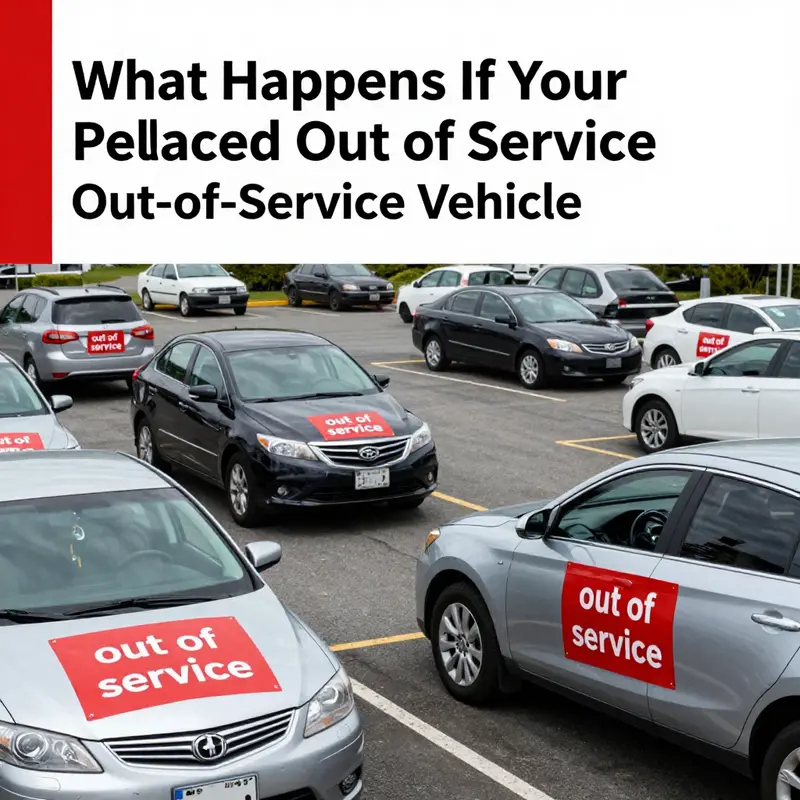
A vehicle placed out of service stops its use on public roads and triggers a mandatory process to address the safety or regulatory issues that caused the designation. Driving is prohibited until the cited defects are repaired and the vehicle passes a re-inspection by the appropriate authority. Common triggers include brake or tire defects, faulty lights, steering irregularities, or noncompliant safety equipment, as well as procedural problems like incomplete inspections or emissions failures. Financial consequences can include fines, potential impoundment, storage costs, and impacts on insurance and registration. The reinstatement path requires correcting the identified defects, documenting the repairs and inspections, and completing the required re-inspection. If successful, the vehicle is released back into service; if not, penalties and heightened scrutiny may follow. Prevention through disciplined maintenance, meticulous record-keeping, and proactive regulatory compliance reduces the risk of an out-of-service finding, while clear communication with authorities and timely repairs help restore operation with safety as the guiding principle.
When a Vehicle Goes Silent: Navigating the Legal and Financial Fallout of Being Placed Out of Service
A notice that a vehicle is out of service can feel like a sudden, cold checkpoint on a journey that had seemed ordinary enough. One moment you turn the key, and the next you face a status that prevents you from driving on public roads. This chapter traces that moment and follows the thread through the legal terrain, the financial realities, and the practical steps required to move from being sidelined to restoring a vehicle for lawful use. The out-of-service designation is not merely a technical hiccup; it is a formal condition imposed by regulatory authorities because a vehicle no longer meets the standards needed to keep roads safe and commerce compliant. Reasons can vary from unresolved safety issues and expired registrations to unpaid fines or emissions failures, but the path back to operation is usually structured and navigable when you approach it with clear information and steady follow-through. The consequences extend beyond the immediate restriction, rippling into insurance considerations and the financial equations that accompany retrieval and reinstatement. The practical takeaway is to stay organized, document every step, and seek timely guidance from the relevant authorities and trusted professionals.
The moment a vehicle is placed out of service marks the start of a formal process rather than a mere administrative hiccup. Driving becomes prohibited on public roads, and attempting to bypass the restriction can bring meaningful penalties, including fines, license implications, or impoundment. The law treats this status as an active restriction, signaling that the vehicle, in its current state, fails to meet the legal and safety benchmarks required for operation. The immediate consequence is the loss of the right to use the vehicle as intended, with the added risk of escalating penalties if it is driven anyway. The state and local authorities may respond with a combination of administrative actions and, if necessary, criminal enforcement. Impoundment or seizure is a common manifestation of this process, highlighting the vehicle’s status in the system and prompting a formal path back to compliance.
Legal and financial consequences unfold quickly from that starting point. If the underlying issue is a traffic violation, a failed inspection, or an outstanding debt, the case may progress through the courts or administrative bodies. The owner could face fines, license suspensions, or legal proceedings that complicate any attempt to regain normal driving privileges. If the vehicle is tied to repossession or a broader investigation, additional steps—subpoenas, storage orders, or seizure dispositions—may come into play. In this landscape, multiple agencies may be involved: police, prosecutors, motor vehicle departments, and the courts, all coordinating to determine the vehicle’s status and future.
Financially, the costs can accumulate quickly. Retrieval costs, towing, storage, and processing fees add up, often rapidly if the issue remains unresolved. If repossession is involved, lenders typically require reinstatement funds, missed payments, and daily storage fees to be paid within a relatively tight window. Failure to meet deadlines can trigger further loss, such as a sale at auction, leaving the owner with remaining debt and potentially a damaged credit profile. Insurance coverage can also be affected: many policies require the vehicle to be operable and properly registered, and coverage can be reduced or denied if the vehicle is not legally drivable. Even when coverage continues, claims may be limited or denied if the incident occurred while the vehicle was out of service. The financial calculus extends beyond repair costs to consider the broader impact on cash flow, credit, and future insurability.
To restore the vehicle to lawful operation, the typical path is straightforward in principle but demands discipline in practice. Identify the specific cause, contact the appropriate regulatory authority, and understand exactly what is required, including documents and deadlines. Reinstatement commonly involves completing repairs, passing inspections, or settling outstanding fines, followed by submitting documentation and paying any required fees. The authority’s decision to reinstate hinges on verifiable proof that the issues have been addressed and the vehicle now meets the applicable standards. Timing can vary from days to weeks or months, depending on the issue, parts availability, and agency backlog. Keeping meticulous records—receipts, inspection reports, correspondence, and proof of payment—is essential to supporting your case.
In the broader view, being out of service can influence planning and mobility. For daily transportation, it creates a gap that can affect employment, childcare, and other routines. The experience often prompts a reassessment of priorities and preventive maintenance strategies to reduce the risk of recurrence. For fleets and commercial operations, the stakes are higher, as out-of-service orders can disrupt schedules, erode customer trust, and trigger regulatory scrutiny. The Federal Motor Carrier Safety Administration offers guidance on out-of-service orders for commercial fleets, providing a structured framework for understanding the steps and timelines involved in reentry to service. External resources can be valuable anchors during this process.
Community knowledge and professional guidance can help ease the journey back to compliance. Practical tips from maintenance and regulatory perspectives emphasize documentation, proactive upkeep, and a disciplined sequence of actions that preserve vehicle value while restoring lawful operation. If you seek deeper legal detail, reputable information sources outline rights and responsibilities and provide practical steps to move from impoundment or repossession to reinstatement and release. See external resources for detailed discussions on these topics, including general guidance and jurisdiction-specific requirements: https://www.nolo.com/legal-encyclopedia/recovering-car-after-repossession-34679.html
When Registration and Licenses Are Tied to an Out-of-Service Order: What It Means for You and Your Vehicle
Registration and Licenses Tied to an Out-of-Service Order: What It Means for You and Your Vehicle
When a regulatory authority places your vehicle out of service, the immediate implication is safety. The vehicle is not fit to operate on public roads until corrective work is completed. That restriction affects more than movement. It reaches into your registration, your license, and your legal ability to operate other vehicles. Understanding those connections helps you act quickly. It also helps you avoid penalties that escalate fast.
An out-of-service order is a formal action. It can arrive after an inspection, a roadside stop, or an administrative review. Inspectors issue it when defects, expired credentials, or environmental noncompliance present an unacceptable risk. The order forbids driving the vehicle until it passes re-inspection. This prohibition stands even when registration or plates appear current. Authorities make the safety decision independent of paperwork status. You must treat the order as absolute. Operating the vehicle anyway invites fines, citations, and possible criminal charges if harm occurs.
Registration and licensing consequences depend on two factors. The first is the nature of the violation. The second is whether the vehicle is commercial. For private passenger cars, the most common outcomes are suspension of registration and a requirement for a re-inspection before renewal. For commercial vehicles, the consequences are stiffer. A commercial out-of-service order can trigger license suspension, fleet-level enforcement, and coordinated action across agencies. Repeated or severe violations may lead to permanent revocation of registration for the vehicle and suspension of your commercial driver’s license. Small infractions typically require fixing the defect and presenting proof. Larger failures of compliance can lead to long delays and heavy fees.
Even when registration remains technically valid, the out-of-service status overrides the right to drive. Law enforcement and inspectors will rely on the out-of-service notice as the controlling factor. That means a vehicle that looks legal on paper can still be legally immobilized. Some jurisdictions will affix a tag or a placard to the vehicle. Others will record the out-of-service order electronically. In practice, the outcome is the same: the vehicle must not move on public roads until cleared.
Insurance coverage is another area affected. Many insurers include clauses that limit or void coverage for vehicles that are intentionally operated when out of service. If you drive despite the order and cause an accident, your insurer may deny a claim. That exposure affects liability and physical damage repairs. If the vehicle is listed on a commercial policy, the insurer may also review whether safety management practices were adequate. Poor maintenance or ignored defects found during an out-of-service inspection can trigger additional premiums or cancellation of coverage.
Beyond direct insurance impact, registration issues create downstream friction. A suspended registration prevents plate renewal. That in turn can block inspections that insurers or employers require. Lenders and leasing companies also monitor registration status. If a financed vehicle is placed out of service, the finance or leasing company can insist on repairs or even take possession to protect its interest. That step can occur quietly but quickly, especially for commercial trucks that must not operate while noncompliant.
Driver licensing can be on the line as well. For commercial drivers, out-of-service orders are recorded and can affect the driver’s safety record. Multiple out-of-service incidents can lead to a suspension of the commercial driver’s license, or CDL. The result can be fines, mandatory remedial training, and disqualification from driving commercial vehicles for a period. In extreme cases, a pattern of noncompliance may prompt criminal charges if regulators conclude the violations were willful.
Jurisdictions differ in their procedures for resolving registration and licensing consequences. However, common elements appear across systems. First, you must correct the identified defects. That means repairing unsafe components, completing emissions upgrades, or addressing documentation gaps. Second, you must present proof of correction. This proof might be a repair invoice, a passed safety inspection form, or payment receipts for outstanding fines. Third, you or your representative must submit those documents to the appropriate agency. Only then can the out-of-service status be formally lifted.
Practical steps reduce delay and cost. Start by contacting the issuing authority. Ask for a clear list of the defects or compliance failures that led to the order. Request the exact documentation they need. Next, schedule repairs with a reputable mechanic or shop familiar with regulatory inspections. Keep detailed receipts. Ask the shop to sign any required forms. Finally, return for re-inspection as soon as repairs are complete. Acting methodically minimizes the risk of follow-up citations.
If your vehicle must remain immobile, plan for storage or towing. Many jurisdictions require that out-of-service vehicles be parked off public roads. That requirement avoids repeat violations and protects public safety. It also reduces the chance of the vehicle accruing additional penalties. Arrange secure storage and retain proof of where and when the vehicle was stored. Towing invoices and storage receipts are often necessary when you seek reinstatement.
For fleet operators, out-of-service orders can trigger broader compliance reviews. Regulators may examine maintenance records, driver logs, and inspection histories. A single out-of-service event can spark an audit that affects all vehicles in a fleet. That review may uncover systemic issues. Addressing those problems often requires process changes, additional training, and updated maintenance schedules. Preventive measures reduce the likelihood of future orders. For small operators, establishing clear maintenance routines can prevent a single defect from escalating to fleet-wide consequences.
Record-keeping matters. Document every step you take to correct the issues. Store receipts, inspection reports, and correspondence with agencies. Good records shorten the path to reinstatement. They also provide evidence if disputes arise. If you believe the out-of-service order was incorrect, you will need documentation to support your appeal. Appeals procedures vary, so ask the issuing authority for the right process and timeframe.
When repairs are complete, the formal reinstatement stage begins. Submit the required documents on time. In some areas, a final inspection will confirm repairs. Once cleared, the agency will remove the out-of-service designation. If registration was suspended, you may need to pay fees to restore it. If licensing penalties applied, follow any mandated steps to reinstate licenses. That might include paying fines, attending training, or waiting out a suspension period.
In worst-case scenarios, unresolved out-of-service orders lead to impoundment and prolonged registration loss. If you ignore notices, fines accumulate. Your vehicle could be towed and stored at your expense. The agency may move to cancel registration. Recovering the vehicle then becomes more expensive. If a loan or lease is on the vehicle, the lender may intervene. Acting quickly and cooperating with inspectors prevents these outcomes.
Prevention matters as much as response. Regular inspections and routine maintenance reduce the chance of being placed out of service. Keep registration and inspection documents current. Address recall notices promptly. For commercial operators, establish a maintenance schedule and a checklist system. Train drivers to report defects immediately. For guidance on setting up maintenance routines and preventing common failures, consult the truck maintenance advice available at the resource: truck maintenance tips for first-time owners.
Understanding local rules helps too. Laws and enforcement priorities vary by state and country. Contact your local motor vehicle agency for specifics. They can tell you the exact forms, fees, and timelines you must follow. If the situation involves commercial operations, the federal agency guidance may apply. These steps protect you from unexpected penalties.
When resolving an out-of-service order, remain proactive. Take immediate steps to understand the order’s cause. Schedule repairs quickly. Keep careful records. Consult the issuing agency as needed. And if you operate commercially, treat the event as a prompt to review broader compliance practices. Acting decisively restores your vehicle to service faster. It also protects your registration, your license, and your ability to operate without interruption.
For federal-level guidance on out-of-service orders for commercial vehicles, see the Federal Motor Carrier Safety Administration: https://www.fmcsa.dot.gov/regulations/out-of-service
Out of Service on the Road: Insurance, Penalties, and the Path Back to Legal Driving

When a vehicle is placed out of service, it marks more than a warning sign on a dashboard. It is a formal designation that the vehicle has been deemed unsafe or non-compliant with regulatory standards and is prohibited from operating on public roads until the identified issues are corrected. This status can arise from a roadside inspection, a formal notice from a motor vehicle department, or a regulatory directive tied to safety, emissions, registration, or paperwork discrepancies. The moment the order lands, the entire trajectory of ownership and operation changes. A driver may feel the urge to press forward, to limp through the issues, to hope enforcement will look the other way. But the law, and more crucially the risk to people on the road, does not permit that kind of tolerance. Out-of-service status is a protective measure designed to prevent dangerous conditions from becoming real-world accidents. Understanding what it means for insurance, the steps you must take, and how to navigate the road back to compliance is essential for any vehicle owner facing this predicament.
The most immediate consequence is practical and legal: driving the vehicle on public roads becomes illegal. An out-of-service order suspends the vehicle’s ability to be operated until the underlying issues are addressed and a re-inspection confirms compliance. This is not a matter of choice or courtesy; it is a binding directive. If someone ignores it and actions the vehicle on the street, they expose themselves to fines, penalties, and possible impoundment. The legal framework behind these orders exists to prevent unsafe vehicles from endangering others. It is not a punishment to the owner alone; it is a public safety measure to reduce the risk of accidents caused by neglected maintenance, faulty equipment, or falsified documentation.
Insurance follows a parallel logic. Insurance providers view out-of-service status as a material risk signal. Even when a vehicle is not in use, insurers must consider the possibility of a claim that is likely to be contestable or denied if the vehicle is operated while noncompliant. In many cases, coverage is paused or limited until the vehicle regains a compliant status. Some insurers will suspend or cancel coverage outright if the out-of-service condition persists for an extended period, especially if the insurer believes the risk to be elevated by continuing to hold a policy on a non-operational, potentially hazardous asset. And there is a separate, but equally important, implication: if an accident occurs while the vehicle is in violation—driven after an out-of-service order—claims may be denied in whole or in part because the policy terms explicitly prohibit operating an out-of-service vehicle. This is not simply a technicality; it is a practical consequence that can leave the owner with substantial out-of-pocket exposure for damages, medical costs, and liability.
The insurance dimension also intersects with the practical realities of being unable to legally drive. In some cases, a carrier or owner may be able to obtain temporary or conditional coverage that excludes operation of the out-of-service vehicle or requires explicit notification of its status. In others, the policy may require proof of compliance before reinstatement, making the out-of-service period a precondition to reestablishing liability protection. Either way, the status acts as a bar to seamless coverage, and the financial calculus shifts. Insurers may require documentation of the corrective steps taken, including receipts for repairs, safety inspections, and updated registrations. They may request evidence that the vehicle has passed a re-inspection or met emissions criteria. In any event, the moment the out-of-service tag is placed, it is prudent to prepare for a period of scrutiny, documentation, and potential negotiation with the insurer about how and when coverage will resume.
The path back to driving legality is defined by a sequence of concrete actions. First, cease driving the vehicle immediately. This is not merely a safety precaution; it is a compliance requirement rooted in the recognition that the vehicle poses a risk while its defects or issues persist. Then, take a measured, methodical approach to addressing the issues identified during the inspection or the out-of-service notice. This includes any mechanical repairs needed to restore roadworthiness, safety-related fixes to meet standards, and the resolution of paperwork discrepancies that may have contributed to the out-of-service status in the first place. The goal is to reach a state where the vehicle can convincingly demonstrate, through a proper inspection, that it meets all applicable safety and regulatory criteria.
Repair work is as much about documentation as it is about parts. When the inspector notes a defect or deficiency, the owner should not simply repair the flaw but also document the process. This includes obtaining replacement parts from reputable sources, keeping receipts, logging the dates and details of all maintenance performed, and recording the results of any subsequent tests or inspections. A clear, organized maintenance trail strengthens the case for reinstatement and provides the insurer with the assurances they need to consider reissuing liability protection. Repair decisions should be guided by the specifics of the out-of-service order. Some issues will require certified inspections or recalibrations, such as brake systems, steering assemblies, lighting, and emissions-related components. Others may involve electronic or documentation-related problems, such as incorrect or missing registration, expired permits, or outstanding fines tied to the vehicle. Each category has its own path toward resolution, but all contribute to the ultimate objective: a vehicle that can pass a compliance review and be returned to service.
Once repairs or corrections are completed, the vehicle must undergo a re-inspection by a qualified inspector. The re-inspection is a quality control checkpoint designed to verify that the previously identified issues have been fully addressed. It is not enough to have the car, truck, or van in a tuneful state of readiness; the inspector must observe, test, and confirm that all safety barriers are intact and that the vehicle meets the performance standards required for road use. This re-inspection can be a procedural formality in some cases, and a stricter, more revealing process in others, depending on the severity of the initial findings and the specific regulatory framework at play. Either way, passing the re-inspection is the gateway to reinstating legal operation. It signals to the authorities that the vehicle has met the necessary thresholds and that the owner is committed to ongoing maintenance and compliance.
Registering and licensing aspects often ride alongside the status of the vehicle. Out-of-service scenarios can lead to a suspension or cancellation of the vehicle’s registration, complicating the renewal of license plates or the acquisition of insurance. In some jurisdictions, the registration status may remain active only if proof of compliance is demonstrated and a reinstatement is granted. This convergence of regulatory and insurance concerns means owners must view out-of-service as a multi-faceted problem rather than a narrow mechanical fault. The administrative dimension should be handled with the same seriousness as the mechanical side. Collecting documentation, communicating with the motor vehicle department, and maintaining a transparent record of all actions taken are essential to a smooth and timely reinstatement. Without this, the road back to operation can be delayed by procedural bottlenecks, leaving the vehicle off the road for longer than necessary and potentially increasing penalties or liabilities along the way.
In practice, the steps toward reinstatement often involve a careful choreography of contacts and constraints. You may need to coordinate with the local motor vehicle department to understand the specific reason for the out-of-service order and to confirm the exact reforms required. This is not a one-size-fits-all process. Some issues require simple fixes, such as expired registration or missing documentation, while others demand extensive mechanical repairs or more complex compliance checks, including emissions testing or safety inspections. For commercial vehicles, the stakes are typically higher. The out-of-service framework for commercial fleets is designed to keep the national transportation system safe and reliable, and the regulatory process reflects that emphasis. In these cases, the FMCSA and related agencies may provide more structured guidance about remedies, testing, and timelines. The general principle holds true across all contexts: identify the root cause, correct it comprehensively, document every step, and confirm compliance through the appropriate re-inspection channel before re-entering service.
An important note for owners who are balancing maintenance with ongoing financial pressures: the out-of-service status can trigger a cascade of financial consequences beyond fines. Delinquent tickets, unpaid fees, or unresolved administrative hurdles can accumulate while the vehicle sits idle. This can affect not only the ability to reinstate registration and insurance but also the owner’s credit profile if liens or penalties mount. The emphasis, therefore, should be on an orderly, timely resolution. Delays can complicate reinstatement, extend the non-operational period, and magnify the cost and effort required to return the vehicle to service. At every stage, keep in mind that the goal is to demonstrate that the vehicle is now safe and compliant, and that its operation on public roads will not jeopardize others.
To bring these threads together, consider the practical implications for day-to-day decisions during the out-of-service period. The vehicle should be parked in a secure location, protected from weather and vandalism, with a clear, organized file of all inspection notices, repair receipts, and inspection appointment confirmations. If the vehicle is a commercial asset, coordinating with fleet management or a compliance officer can help ensure consistency with corporate policies and legal requirements. The human component—communication with authorities, insurers, and service providers—often plays as big a role as the mechanical fixes themselves. Timely, precise communication helps prevent misunderstandings and accelerates the path to reinstatement. It also reduces the likelihood that the out-of-service status becomes an ongoing, confusing matter that drags on for weeks or months.
For readers seeking practical guidance on the maintenance aspects during this period, consider consulting trusted resources that address fundamental vehicle upkeep and safety checks. A focused approach to preventive maintenance can prevent future issues from compounding into another out-of-service event once the vehicle returns to service. For hands-on, vehicle-specific maintenance advice, see Truck maintenance tips for first-time owners. This resource can help owners align basic maintenance practices with the expectations of inspectors and insurers, ensuring that the vehicle remains in a state that supports both safe operation and compliance during the reinstatement process. The underlying message is simple: when in doubt, document thoroughly, fix responsibly, and revalidate through proper channels before attempting to operate again. The consequences of skipping steps are rarely worth the short-term convenience.
As the re-inspection date approaches, a disciplined preparation routine becomes the difference between a smooth return to service and another cycle of compliance issues. Ensure that all deficiencies noted during the initial inspection are fully resolved and that any new findings are promptly addressed before the re-inspection appointment. Having a well-documented file—photos of repairs, parts replaced, service logs, and test results—can help inspectors verify that the necessary work has been completed to standard. If the out-of-service status was connected to equipment that can degrade with time, such as tires or brakes, schedule maintenance well ahead of the re-inspection to avoid last-minute scrambles. The inspectors are trained to look for evidence of ongoing risk, not to be impressed by last-minute patchwork. A proactive, transparent approach often speeds the process and reduces the likelihood of additional corrective action being required.
Ultimately, the reinstatement hinges on a clear demonstration: the vehicle now meets the safety, mechanical, and regulatory criteria required for lawful operation on public roads. Once the re-inspection passes, the owner can typically proceed to have the vehicle reinstated. This milestone is not the end of the story. It marks the transition back to normal operations, but with the added awareness that compliance and regular maintenance must remain a priority to avoid future interruptions. Insurance coverage, if suspended, will often be restored once the vehicle is once again deemed compliant and actively operated. It is essential, however, to maintain meticulous records going forward. Ongoing compliance requires ongoing diligence, not just a one-off fix followed by renewed driving.
For those navigating the broader regulatory landscape, it helps to keep in mind the existence of formal standards and procedures that guide out-of-service actions and reinstatement. The Department of Transportation and related agencies maintain guidelines that detail when out-of-service orders are issued, what constitutes acceptable remediation, and how reinstatement is achieved. In the commercial sector, these guidelines are particularly explicit, aiming to minimize disruption while maximizing safety and accountability. When in doubt, consult the official resources or speak with a qualified inspector who can provide guidance tailored to your vehicle’s make, model, and its specific out-of-service findings. The road back to compliance is a carefully constructed program, not a single fix. By approaching it with discipline and transparency, vehicle owners can restore lawful operation and protect themselves from the additional risk and cost that accompany noncompliant use.
External resource: FMCSA provides detailed guidance on out-of-service orders and how to resolve them, which can offer authoritative context for both private and commercial operators facing these orders: https://www.fmcsa.dot.gov/regulations/out-of-service
Final thoughts
A vehicle being placed out of service can create a ripple effect that impacts driving privileges, legal standing, financial obligations, and insurance coverage. By understanding these ramifications, vehicle owners, whether private individuals or small business operators, can take proactive measures to resolve any issues, minimize penalties, and reinstate their vehicle’s operational status. Taking swift action can help avoid extensive complications and financial burdens down the line.