Understanding how to track Return on Investment (ROI) on service vehicle investments is essential for local private car owners, used car buyers and sellers, and small business fleet operators alike. ROI tracking allows these groups to make informed decisions about purchases, operational expenses, and potential savings in fleet management. Each chapter in this article dives into critical aspects of ROI tracking, leveraging fleet management platforms, measuring fuel costs, analyzing operational costs, utilizing AI-driven insights, and identifying cost-saving opportunities. As we proceed, you’ll learn how these components interlink, providing a comprehensive guide to optimizing investments in service vehicles.
From Data to Dollars: How Integrated Fleet Management Converts Service Vehicle Investments into Measurable ROI
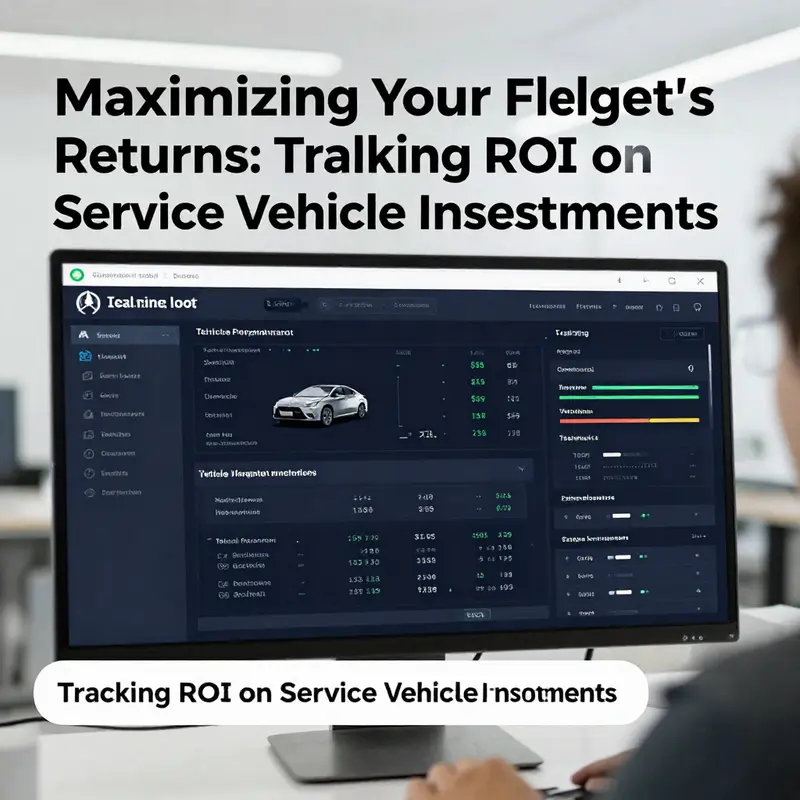
ROI on service vehicle investments rests on more than the sticker price. It hinges on turning a tangle of data into a clear, financial story about asset performance, service reliability, and costs that can be controlled. A modern fleet management platform does exactly that by collecting real-time telematics, maintenance triggers, fuel usage, route data, and driver behavior in a single, coherent view. The result is not a stack of reports but a continuous feedback loop that guides decisions, justifies new investments, and strengthens the link between everyday operations and the bottom line. In practice, this means moving from a siloed view of vehicles to an integrated framework where every mile traveled and every service call contributes to a quantified ROI narrative. The value emerges when managers translate data into action—reallocating assets, redesigning routes, scheduling preventive maintenance, and coaching drivers—so that every asset performs at its best, more of the time.
What this looks like in daily operations is a shift from reactive management to proactive optimization. A fleet platform captures utilization metrics that reveal how often each vehicle is on the road, how long it sits idle, and whether assets are overburdened or underutilized. It also tracks fuel consumption with precision, allowing managers to spot patterns such as excessive idling or routes that burn fuel unnecessarily. Maintenance schedules, driven by real-time usage, help prevent unexpected breakdowns and extend component life. Driver behavior data—aggressive acceleration, abrupt braking, excessive idling—provides another lever to reduce wear, improve safety, and trim fuel costs. And route optimization uses live traffic signals and historical patterns to shave minutes off trips and miles off every day. When these data streams converge, managers gain the ability to measure, with confidence, how each vehicle contributes to service levels and cost structure. The adjustments that follow—reallocating workloads, modifying routes, or changing shift patterns—translate directly into measurable ROI.
A practical ROI framework begins with a clear accounting of the total investment in the fleet. This includes the initial purchase price of vehicles, ongoing maintenance and parts, fuel, insurance, and any financing costs. It then weighs these outlays against tangible benefits that are trackable within the platform: increased uptime, reduced downtime, improved fuel efficiency, and lower operating costs across the enterprise. Industry observations, drawn from organizations using advanced fleet platforms, often report fuel cost reductions in the range of 10 to 20 percent and substantial gains in uptime—up to roughly 30 percent when maintenance is guided by predictive alerts rather than a calendar-only approach. These figures aren’t promises tied to a single feature; they reflect the cumulative impact of data-driven decision-making across staffing, routing, maintenance scheduling, and asset deployment. The story is not about chasing a single metric but about building a robust ROI equation that improves service delivery while controlling cost growth.
The role of GPS-enabled tracking in this equation cannot be overstated. Even at a basic level, knowing where every vehicle is, how fast it’s moving, and what it is doing at any moment allows managers to pivot quickly. They can reassign vehicles to demand surges, flatten peak loads by balancing workloads, and reroute around congestion to protect schedule reliability. It is not only about saving fuel; it is about preventing wasted miles and unproductive time. When idle periods shrink and routes become more purposeful, asset utilization improves and the cost per delivered service erodes—the essence of ROI. The benefits compound as managers make smaller, smarter adjustments daily: a vehicle shifts from a quiet period to a high-demand lane, a route is trimmed by a few minutes here and a few miles there, and a maintenance window is moved earlier to avert a costly breakdown. Over weeks and months, these incremental changes accumulate into a sizable financial delta that can be attributed to the platform’s visibility and control.
Cost control, often framed through the lens of fuel management and expense reporting, remains central to the ROI conversation. A fleet platform that ties fuel spend directly to specific vehicles or routes creates a granular, actionable picture of where savings lie. When fuel prices shift or when particular routes burn more fuel due to terrain or traffic, managers can adjust fueling strategies, optimize stop sequences, or rewrite schedules to preserve efficiency without compromising service levels. The clarity provided by integrated cost reporting adds discipline to budgeting cycles and strengthens the case for ongoing investment in technology and process improvements. This linkage—fuel spend anchored to asset-level data and route-level decisions—transforms fuel from a nebulous expense into a controllable, measurable component of the ROI equation. For teams managing multi-vehicle programs, this linkage is crucial for communicating the value of a data-driven operating model to executives in finance and operations alike. If readers want to explore practical, narrative examples of how these linkages operate in real-world contexts, the KMZ Vehicle Center blog offers case studies and insights into fleet optimization in everyday operations.
Maintenance strategy follows a similar logic but emphasizes reliability and predictability. Predictive maintenance alerts, generated from ongoing usage and wear indicators, help prevent unexpected failures that disrupt service and inflate costs. When a platform flags a component before it fails, teams avoid emergency repairs, minimize downtime, and extend the asset’s useful life. Across the fleet, this translates into higher uptime, lower repair costs, and more dependable service delivery. The data also informs replacement planning and capital budgeting, ensuring that aging assets are retired before they threaten service levels or skew the cost of ownership. In this light, maintenance becomes a strategic lever for ROI rather than a routine expense. The overarching benefit is a more resilient operation where service commitments are kept, customer satisfaction rises, and financial performance tightens its alignment with operational reality.
Yet data alone does not guarantee results. Adoption and governance determine whether insights translate into action. A successful fleet program requires a shared understanding of value among drivers, technicians, and finance professionals. This means establishing clear definitions for metrics, designing dashboards that translate complex signals into simple decisions, and implementing training that helps every stakeholder understand how behavior and maintenance timing affect costs and service outcomes. Data quality matters just as much as data quantity: erroneous readings or inconsistent inputs can undermine confidence in AI-driven recommendations and erode trust in the platform. When governance is strong, predictive insights become credible guides for daily decisions—from vehicle assignments to route planning and maintenance scheduling—creating a virtuous cycle where better decisions continuously improve the ROI narrative.
Taken together, these threads reveal a broader strategic advantage: fleet management platforms transform disparate data points into a coherent, financially meaningful story. They provide the evidence needed to justify ongoing technology investments, training, and process changes, while offering a framework that adapts as operating conditions evolve. The ROI story shifts from a one-time tally at the moment of purchase to an ongoing discipline that measures, learns, and optimizes. In this view, ROI is not a static target but a dynamic, data-driven practice that sustains service quality and cost control over the fleet’s entire life cycle. For readers seeking practical, grounded ideas that tie AI-driven analytics to day-to-day decisions, a wealth of resources illustrate how predictive analytics and automation can prioritize investments and optimize operations at scale. For further reading and practical context, see the KMZ Vehicle Center blog for related discussions, and for a broader, research-backed treatment of ROI from GPS fleet management, consult https://www.fleetmanagement.com/roi-guide.
Fuel Intelligence as ROI Engine: Real-Time Costs, Route Optimization, and Hidden Returns in Service Vehicle Investments
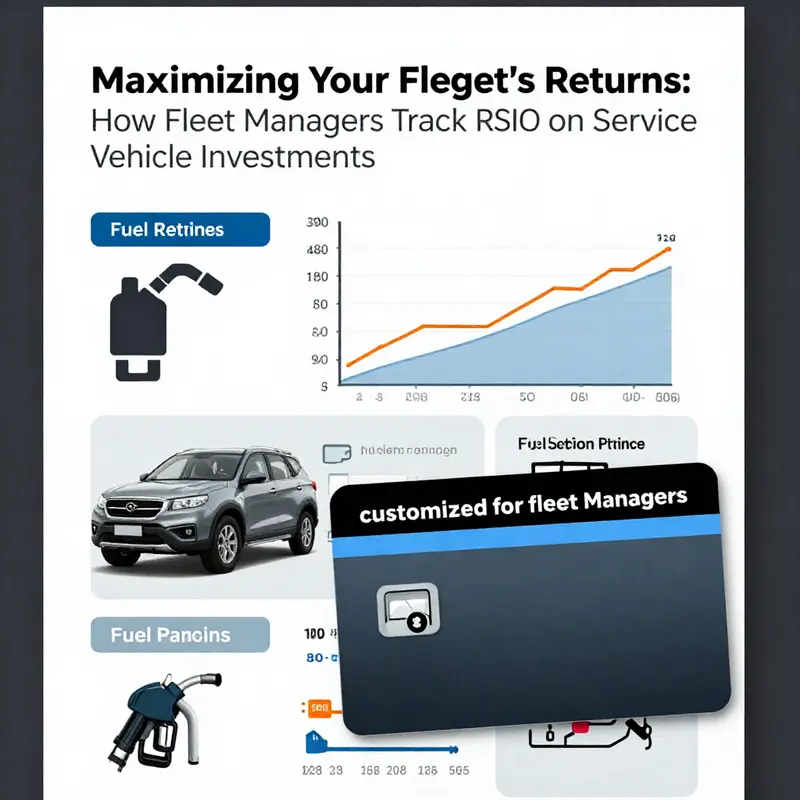
Fuel Intelligence as ROI Engine: Real-Time Costs, Route Optimization, and Hidden Returns in Service Vehicle Investments
When fleet managers price the return on service vehicle investments, fuel cost sits at the center of the economics. Fuel is not just a line item; it’s a lever that can amplify or erode profitability depending on how it’s measured, managed, and acted upon. Modern fleets increasingly rely on data-rich platforms that pull together real-time fuel pricing, consumption metrics, maintenance schedules, and route information. The result is not a single snapshot but a living view of how every mile traveled contributes to or detracts from the bottom line. In this view, ROI emerges from the tight alignment of fuel management with asset utilization, maintenance discipline, and operational discipline, all anchored by reliable data.
Real-time data integration is the backbone of this approach. When route planning is informed by live fuel prices and the current status of nearby service stations, managers can position stops to minimize cost without compromising service levels. This dynamic routing goes beyond avoiding empty miles; it accounts for proximity to maintenance facilities, rest areas, and even the likelihood of price shifts during peak periods. The practical impact is a reduction in per-mile fuel spend and fewer detours that inflate both fuel use and maintenance exposure. A fleet reference architecture that emphasizes such adaptive routing demonstrates how constant price signals can be translated into day-to-day decisions, turning volatile fuel markets into a predictable component of the ROI equation.
Yet fuel costs alone do not determine ROI. A fleet’s ability to measure and allocate fuel consumption with precision across the entire operation is equally critical. Modern monitoring systems collect data from each vehicle’s engine and fuel system, then harmonize it with route data, driver behavior, and vehicle condition. This enables managers to quantify fuel efficiency by vehicle and by route, to benchmark performance across the fleet, and to link fuel spend to specific operational choices. The value becomes clear when you can answer questions like which routes consistently deliver the best miles-per-gallon given payload and terrain, or which vehicles underperform relative to their peers under similar conditions. When such granular visibility exists, cost-control initiatives become targeted rather than generic, and ROI becomes a matter of tracking improvements against a transparent baseline.
Predictive and preventative maintenance also play a central role in ROI related to fuel. Vehicles that operate with suboptimal engine performance or degraded propulsion systems burn more fuel for the same output. Proactive maintenance—driven by predictive analytics that forecast component wear or imminent failure—reduces unplanned downtime and avoids fuel waste caused by inefficiency. A maintenance regime that emphasizes timely inspections and calibrated maintenance intervals preserves engine efficiency, extends asset life, and stabilizes fuel expenses in the face of price volatility. The result is a smoother cost curve where the savings from improved fuel efficiency compound with the gains from higher uptime and better asset utilization. In practice, this means that every intervention—whether it’s a tune-up, a tire replacement, or a simple filter update—delivers a measurable impact on miles per gallon, energy use per hour of operation, and ultimately, per-vehicle profitability.
Integrated cost-control strategies come together when fuel tracking, route optimization, and maintenance planning are viewed as a single ecosystem. A comprehensive platform that blends these elements enables managers to translate complex data into actionable ROI metrics. It becomes possible to quantify the total investment not only as the upfront purchase price but also as ongoing costs: maintenance, insurance, administrative overhead, and, of course, fuel. On the benefits side, the same framework captures tangible outcomes such as increased uptime, reduced downtime due to breakdowns, improved fuel efficiency, and lower operating costs. The net ROI, expressed in concrete terms, reflects the extent to which improved utilization and efficiency offset the total cost of ownership over the vehicle’s life cycle.
To bring these concepts to life, consider how an organization might approach ROI calculation in a disciplined, repeatable way. Start with the total investment: the purchase price of each service vehicle, plus estimated maintenance over its life, insurance costs, and the overhead of operating a connected fleet management system. Then quantify the tangible benefits: higher uptime and lower downtime, sharper fuel efficiency gains from optimized routing and engine maintenance, and improved reliability that enhances service levels and customer satisfaction. The ROI is then the net benefit over a defined horizon, divided by the total cost of investment. What makes this approach robust is the explicit linkage of each benefit to a measurable driver—whether it’s miles driven, fuel price exposure, or maintenance intervals—so you can see how much of the ROI comes from fuel management versus other efficiency gains.
This integrated perspective also invites a more nuanced view of fuel cost management. It’s not just about paying less for fuel at the pump; it’s about reducing the fuel consumed per service task and rethinking how routes, loads, and shift patterns influence consumption. A manager might discover that a handful of routes skew fuel spend due to stop-and-go traffic or unnecessary idle time. By smoothing speed profiles, prioritizing efficient driving behaviors, and curating routes that minimize idling, organizations can push the fuel-benefit levers without sacrificing service reliability. In turn, those improvements propagate through the ROI calculation as lower fuel expenditure per mile and lower total fuel cost per completed service call. The broader picture is a fleet that can adapt to price shifts and demand cycles because its core data model treats fuel as a dynamic variable, not a fixed cost.
The role of knowledge propagation across the organization is often underestimated. Data-driven ROI requires more than a government-map of costs and savings; it demands a culture of continuous improvement where drivers, technicians, and dispatchers understand how their day-to-day decisions influence the fuel bill and the service outcome. Clear dashboards, timely alerts, and simple narratives help non-technical stakeholders grasp why a minor routing adjustment or a proactive maintenance item can yield meaningful savings. When teams see the causal chain—from fuel pricing signals to route choices to vehicle health to uptime—they become agents of ROI rather than passive observers of cost lines.
For readers seeking practical, field-tested perspectives on fleet management, the KMZ Vehicle Center blog offers practical insights grounded in real-world operations. Its hands-on guidance can help teams translate the theory of fuel optimization into concrete steps, from evaluating route options to scheduling preventive maintenance in a way that aligns with budget realities and service commitments. KMZ Vehicle Center blog
As the conversation shifts toward the future, AI-driven analytics promise to sharpen ROI further. Predictive models that assimilate price dynamics, weather, traffic, and maintenance history can forecast fuel cost trajectories and suggest preemptive routing or maintenance actions before issues arise. Automation can turn these insights into workflows that reduce decision latency and keep the fleet in its most efficient state longer. The ongoing challenge is to maintain data quality, ensure governance over data sources, and keep the human layer engaged so automated recommendations are trusted and acted upon. In this sense, ROI isn’t a one-time calculation but an ongoing discipline—a cycle of data, decision, and outcome that compounds over the life of the assets.
To complement this discussion with broader industry context, practitioners can consult established best-practice resources that frame fuel cost management as part of a resilient, cost-conscious operating model. The external reference material provides a framework for aligning fuel strategy with budgeting, procurement, and maintenance planning, helping managers extend ROI beyond individual vehicles to the whole fleet ecosystem. External resource: https://www.fleetmanagementnews.com/industry-best-practices-managing-fleet-fuel-costs/
null
null
The ROI Lens: AI-Driven Predictive Analytics for Service Vehicle Investments
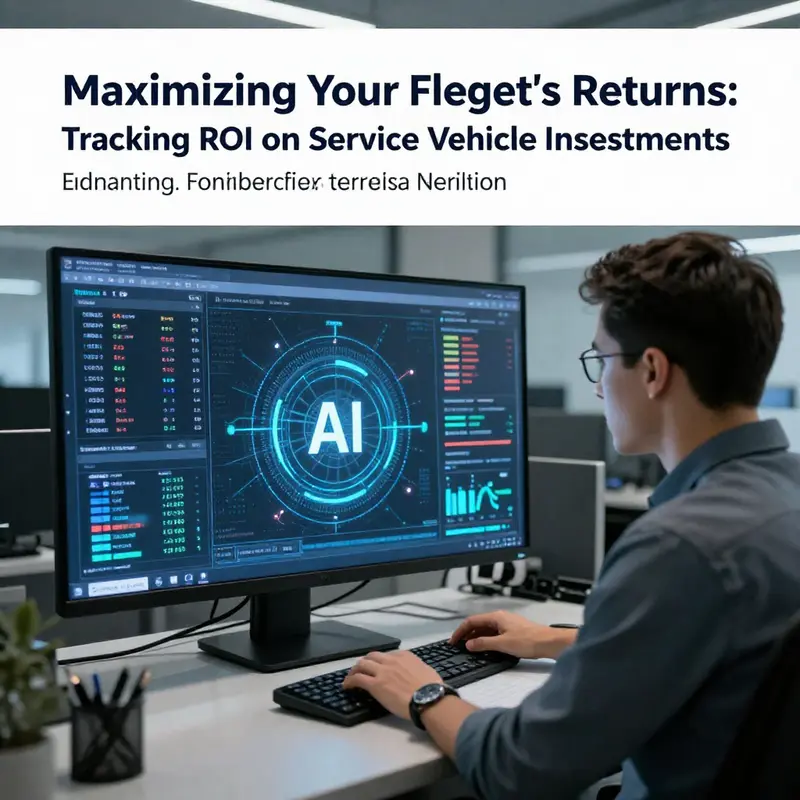
When fleet managers set out to prove the value of service vehicle investments, they quickly discover ROI is more than a tidy payback period. It is a living tapestry woven from uptime, utilization, maintenance cycles, and cost controls that together determine how efficiently a fleet converts capital into reliable service. In this landscape, AI and predictive analytics act as a lens that clarifies how each mile traveled and each hour of operation translates into measurable savings. Real-time data from connected vehicles, fed into an agile analytics stack, makes it possible to forecast disruptions before they occur, optimize routine work against constraints, and report outcomes in terms that the business understands. The promise is not merely to cut costs, but to raise the resilience of the service network itself by reducing surprises that disrupt schedules and erode margins. This is the core shift: fleets that leverage AI-driven insights can align resource deployment with demand, while preserving service levels and lowering total cost of ownership over the life of the asset.
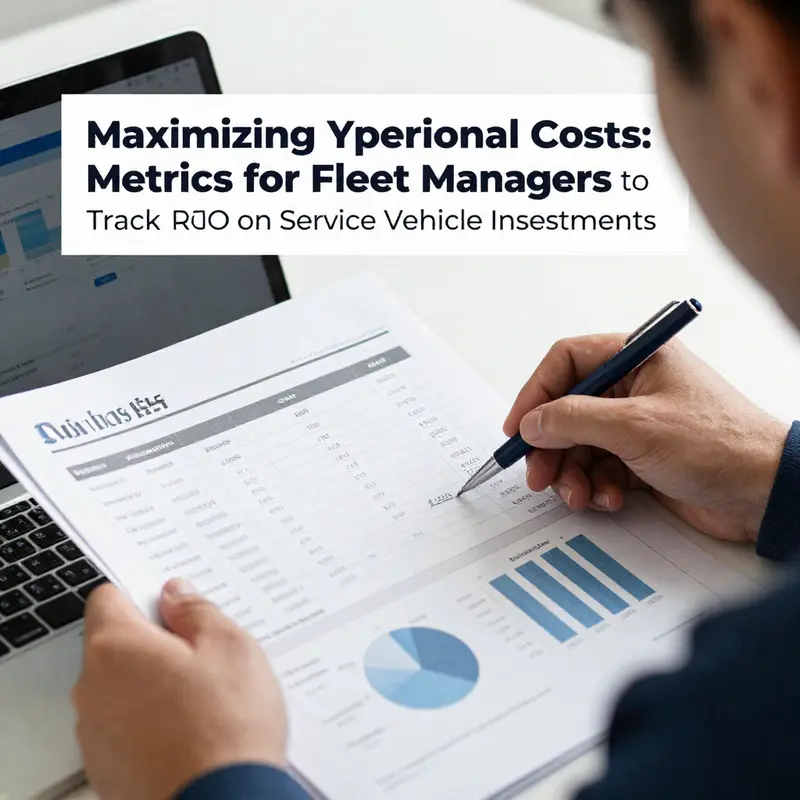
Predictive maintenance stands at the heart of this shift. AI systems comb through historical maintenance records and live telemetry to identify patterns that precede component failures. Rather than reacting to a breakdown, maintenance becomes a proactive discipline guided by probabilistic risk assessments. The impact is tangible: fewer unplanned repairs, lower emergency labor charges, and a smoother maintenance calendar that fits within budgetary tolerances. When a vehicle is kept in top form, uptime climbs and the cost per delivered service task falls. Importantly, the ROI equation expands beyond the simple price tag of a part or a billable hour. It encompasses the value of reduced downtime, the opportunity cost of idle assets, and the downstream effect on customer satisfaction when service windows are preserved. In practice, predictive maintenance also strengthens inventory efficiency. By forecasting which parts are likely to be consumed next, procurement can target stock levels to match actual needs, reducing carrying costs and minimizing overtime or expedited shipping charges that would otherwise inflate the total cost of ownership. Maintenance scheduling becomes a balance of timing precision and resource availability, and AI helps managers tune this balance with data-driven confidence. For fleet teams, this means you can optimize intervals not only by hours or miles but by the evolving wear profile of each vehicle, its load patterns, and the specific routes it serves. This holistic view helps answer a persistent ROI question: if a vehicle must be out of service, which alternative asset in the pool should handle the demand with the least impact on service levels and costs? The AI-informed decision about which asset to deploy can shave minutes or even hours off response times, and those marginal gains accumulate across a year into a meaningful reduction in operating expenses. If we think of maintenance timing as a lever, predictive analytics turns it into a precisely calibrated control that reduces waste and unlocks dependable uptime. Alongside maintenance, dynamic route optimization is the second pillar of ROI enhancement. Traditional routing considered static constraints—delivery windows, distance, and basic traffic estimates. Today, AI-driven routing uses live traffic feeds, weather data, driver performance signals, and customer priorities to reshape routes on the fly. The payoff is not merely faster arrivals; it is a more efficient use of fuel, a gentler wear profile on the powertrain, and better alignment of manpower with the most demanding segments of the day. As traffic patterns shift and weather changes unfold in minutes, a fleet that can re-route without delaying service gains a competitive edge. The economic impact multiplies when you pair route agility with robust maintenance data. Vehicles that avoid congestion and harsh driving conditions experience less stress on components, translating to lower maintenance costs over time and longer asset life. The result is a more predictable cost structure—one that stakeholders can model and validate against targets. The way AI supports route decisions also feeds into compliance and safety outcomes. Automated compliance reporting, powered by AI, helps ensure that fleets stay aligned with evolving regulations without adding manual workload to drivers or dispatchers. Error-prone paperwork and late submissions become rare, and fines or penalties tied to missed requirements shrink accordingly. In practice, this means a fleet can sustain high service levels while keeping governance costs under control. The data that underpins automated reporting—driver logs, telematics, route histories, and maintenance records—also offers a clearer view of how these factors interact to influence ROI. By correlating uptime with maintenance spend, route efficiency with fuel burn, and compliance with risk exposure, managers gain a multiplanar understanding of the financial impact of their decisions. The narrative then extends into more advanced AI constructs, where generative and agentic AI begin to take on increasingly autonomous roles in fleet decision-making. Generative AI can simulate a broad set of scenarios, allowing managers to test how variations in demand, fuel prices, or weather would affect ROI under different policy choices. Agentic AI, meanwhile, can autonomously adjust routes, reallocate assets in response to emergencies, or orchestrate coordinated responses to incidents. This level of automation promises greater speed and precision, driving safer driving practices and more efficient operations. The practical implication is a dashboard of performance metrics that translate every activity into an ROI signal. Vehicle utilization rates quantify how effectively each asset is deployed; maintenance costs are tracked against mileages and hours; and driver safety scores feed into risk-adjusted cost models. The challenge lies in aligning the data model with business goals. Clear KPIs are essential, but so is a layered data architecture that distinguishes channel-level signals from event-level actions. Continuous validation against business objectives ensures that improvements in one area do not mask declines in another. In this sense, ROI is not a single number but a dynamic equilibrium among uptime, reliability, cost control, and risk exposure. The evidence for AI’s ROI enhancement comes from broader industry studies that show meaningful returns on AI investments, with magnitudes that make the case for integrating predictive analytics into fleet operations. The numbers are persuasive, but the path to achieving them requires disciplined data governance, robust integration between telematics and financial systems, and a clear strategy for translating analytics into actionable operational changes. As organizations pursue this alignment, they should maintain a focus on data quality, model transparency, and the human-in-the-loop mechanisms that ensure AI recommendations are practical and ethical for daily dispatch. The ROI conversation, then, becomes less about a one-off optimization and more about a continuous improvement loop: collect high-quality data, run predictive models, act on actionable insights, measure outcomes, and refine both the model and the processes that sustain it. In this framework, a fleet that treats AI-driven insights as a strategic asset can move from reactive cost management to proactive value creation. It can demonstrate, with real numbers, how investment in intelligent maintenance, adaptive routing, and automated reporting translates into fewer outages, happier customers, and a leaner, more predictable cost base. This is the essence of the ROI lens—the ability to translate data into decisions that improve service reliability while preserving capital efficiency over the asset’s lifecycle. For practitioners seeking practical steps, the journey starts with a governing data infrastructure, followed by a staged rollout of predictive maintenance and dynamic routing capabilities, all anchored by a transparent KPI framework. Along the way, it helps to anchor the discussion in concrete maintenance and operations practices that align with broader financial goals. For instance, consider maintenance timing as part of a broader cost control strategy. You can examine how intervals relate to both wear patterns and service demands, and you can explore the balance between preventive work and break-fix exposure. If you want deeper context on how to balance maintenance intervals with value, see Optimal oil-change intervals: time vs. mileage. This reference provides a practical lens on timing decisions that impact uptime and cost, reinforcing how maintenance discipline feeds straight into ROI calculus.
Beyond the internal calculations, AI-enhanced ROI storytelling helps leadership appreciate the impact in tangible terms. It is not enough to report a percentage increase in uptime; you need to translate that improvement into fewer missed service windows, faster response to emergencies, and lower total operating costs per service task. When decision-makers can see how predictive maintenance reduces spare parts consumption and how route optimization trims fuel spend without sacrificing service quality, they gain confidence to invest in broader AI capabilities. The discussion also benefits from a cautious note about data quality and governance. Predictive accuracy hinges on reliable sensor data, clean metadata, and consistent definitions across the fleet. Without disciplined data management, sophisticated models may overpromise and underperform. Therefore, the ROI narrative should couple ambitious analytics with pragmatic governance—data standards, validation protocols, and a clear plan for auditing model outputs. In this light, ROI becomes a conversation about the maturity of the analytics ecosystem as much as about the technical capabilities themselves. As with any significant optimization program, success accrues through a combination of technology, process, and people. The people component—drivers, dispatchers, maintenance technicians, and finance specialists—must understand how AI recommendations translate into daily actions and measurable results. Training and change management thus become essential companions to the AI stack, ensuring that insights are not only generated but enacted. In the final analysis, AI-driven predictive analytics offer fleet managers a powerful toolkit for enhancing ROI on service vehicle investments. They enable a proactive posture in maintenance, a responsive posture in routing, and a disciplined posture in compliance and reporting. The ROI picture emerges when all these elements are integrated into a coherent operating model, one that treats uptime as a shared asset, cost control as an ongoing discipline, and data as the central currency of decision-making. As the field evolves, the most successful fleets will be those that align predictive capabilities with practical workflows, reinforcing a feedback loop that continuously improves both performance and profitability. For additional perspectives on how AI can transform fleet operations and maximize ROI, refer to the external resource that explores automated accident advisory and related decision-support capabilities. https://www.mongodb.com/blog/post/ai-powered-vehicle-accident-advisor
Smart Savings, Real Uptime: Uncovering Cost-Reduction Levers to Elevate ROI in Service Vehicle Fleets
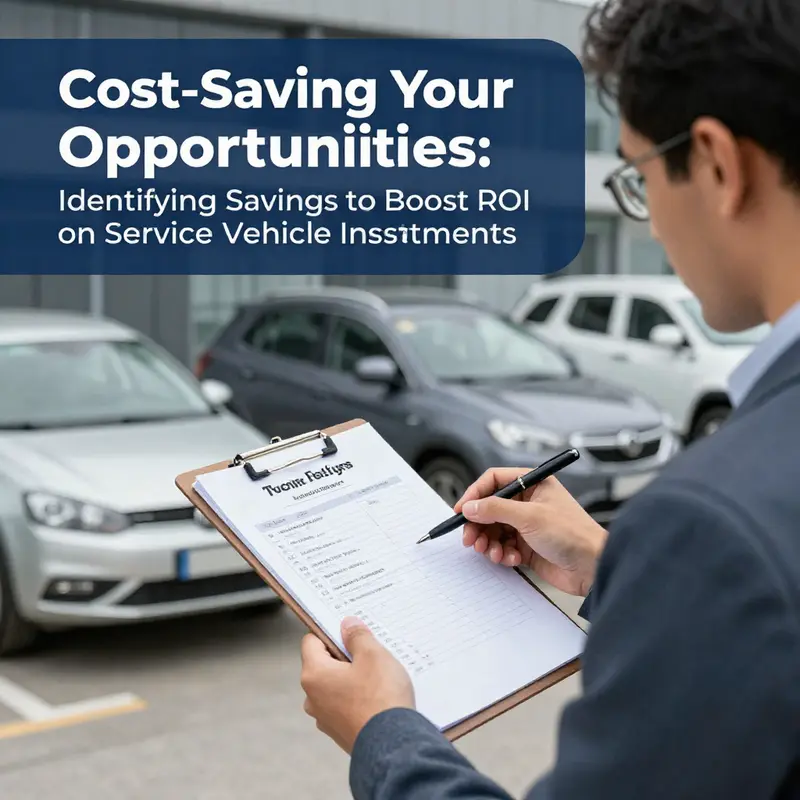
ROI on service vehicle investments is not a single payoff realized at the moment of purchase. It unfolds over time as fleets turn data into discipline, and discipline into dollars. The core idea is simple: identify where money leaks from the system—whether through idle assets, wasted fuel, or reactive maintenance—and then apply targeted, data-driven fixes that translate into measurable gains. The research landscape already points to how significant those gains can be when fleets commit to an integrated approach. Real-time visibility, predictive maintenance, and thoughtful lifecycle management don’t just reduce costs; they change the economics of service delivery itself. In practice, this means weaving together telematics, maintenance analytics, and fuel management into a single, coherent picture of how each vehicle earns its keep day after day. When that picture is clear, ROI becomes less about chance and more about informed choices that scale across the fleet.
A central lever in this optimization is vehicle utilization. Modern fleet-management platforms that aggregate real-time location data, usage patterns, and maintenance signals provide a window into how assets are actually deployed. Idle time is not merely a nuisance; it is a direct line-item cost. The opportunity exists in translating that hidden time into actionable scheduling and routing decisions that reallocate capacity where it is most needed. When managers can see, at a glance, which routes are congested, which vehicles sit idle, and which assets are underutilized, they can reconfigure deployments to shave fuel burn and reduce labor waste. This is not theoretical. In emerging practice, organizations that embrace comprehensive telematics report fuel savings on the order of up to 15 percent and maintenance cost reductions between 10 and 20 percent. Those figures, grounded in broad industry experience, reflect the power of aligning asset utilization with demand signals and service windows.
Yet utilization alone does not capture the full ROI story. The most robust gains come when utilization is paired with proactive maintenance and predictive analytics. Traditional maintenance strategies—whether fixed schedules or reactive repairs—often misalign with the actual health of a vehicle. Predictive analytics flips this script by translating engine diagnostics, tire wear, brake health, and other condition indicators into a maintenance plan that is performed only when necessary. The payoff is twofold: fewer unscheduled downtimes and longer vehicle lifespans. The American Society of Mechanical Engineers has documented that predictive maintenance can cut overall maintenance costs by nearly a quarter and boost vehicle availability by more than a third. That productivity uplift has a direct, compounding effect on ROI. When a fleet is available more consistently, the fixed costs of ownership are spread over a greater amount of productive output, improving the revenue or service capacity borne by each asset.
This is where lifecycle thinking becomes essential. Strategic vehicle selection and ongoing lifecycle management influence not only the upfront price but the total cost of ownership over years of use. Fuel efficiency, reliability, and emissions performance all matter as costs accumulate across maintenance, downtime, and insurance. Standardizing fleet models—preferring common parts, training needs, and maintenance schedules—creates leverage across procurement, service, and scheduling. The U.S. Department of Energy emphasizes that effective lifecycle management can lift fleet efficiency by as much as 20 percent. That improvement compounds as more vehicles enter the fleet and as maintenance teams gain fluency with a standardized set of assets. When a fleet makes disciplined, well-informed choices about which models to acquire and how long to keep them, it reduces depreciation shocks, mitigates repair spikes, and preserves usable capacity for longer periods. The ROI effect is not flashy, but it is substantial: steadier operating costs, more predictable budgeting, and a resilient service capability that can adapt to demand shocks without compromising service levels.
All of these gains—utilization optimization, predictive maintenance, and lifecycle discipline—merge most effectively when data is treated as an asset in its own right. A centralized management approach that ties vehicle performance data to fuel spend, maintenance history, and route-level cost aligns operational decisions with the financial reality of the business. In practice, this means linking fuel-card data to specific vehicles and routes, and mapping maintenance events to service intervals derived from actual wear patterns rather than mere timers. When you can attach a dollar amount to each vehicle’s uptime, you begin to see ROI not as a single metric but as a network of improvements that reinforce one another. For instance, reducing idle time lowers fuel costs and reduces engine stress, which in turn lowers maintenance frequency and extends service life. The same data streams that show where a vehicle is at any moment also reveal whether a tire age threshold has been reached or if an engine fault code signals the need for a preemptive repair. This holistic view makes it possible to quantify ROI with greater precision, balancing capital expenditure against the tangible benefits of uptime, reliability, and service quality.
From a budgeting perspective, the ROI equation grows richer when fuel management—often the largest variable cost—interlocks with maintenance and utilization insights. If a fleet can demonstrate a sustainable 10–15 percent decline in fuel expense through smarter routing and reduced idling, while simultaneously cutting maintenance costs by 10–20 percent through predictive analytics, the combined effect can be substantial. When you also factor in the productivity gains from higher availability and more consistent service delivery, the total benefits can surpass the sum of the individual savings. This is precisely the kind of multiplier effect that strategic fleet management aims to unlock. In industries where service windows are tight and customer expectations are exacting, even modest percentage improvements in uptime and efficiency translate into meaningful competitive advantage.
A practical way to think about ROI is to separate the cost inputs from the benefit outputs and then tether both to concrete metrics. Costs include the purchase price of the vehicles, ongoing maintenance, fuel, and insurance. Benefits comprise improved uptime, lower downtime impact on service capacity, better fuel efficiency, and reduced maintenance overhead. When a fleet management system provides a single source of truth for both sides of the ledger, managers can run scenarios that show how shifts in utilization, maintenance timing, and lifecycle decisions propagate through to the bottom line. This, in turn, informs capital planning, procurement strategies, and the prioritization of AI-driven insights that forecast demand, optimize routes, and automate routine maintenance tasks. AI-driven analytics, as highlighted by industry thought leaders, can help organizations not only identify savings but also anticipate opportunities to grow service capacity without proportionally increasing cost. The result is a more resilient, data-forward approach to ROI that scales as the fleet expands.
An important practical note for practitioners: while the data foundation matters most, the human element remains essential. Leaders must cultivate a governance framework that ensures data quality, aligns maintenance priorities with service commitments, and translates analytics into concrete actions. The most successful fleets embed ROI objectives into standard operating procedures, so that every maintenance event, every route adjustment, and every procurement decision is measured against a clear ROI target. In effect, they treat ROI as a living metric—not a one-off calculation at fiscal year-end, but a continuous discipline of improvement driven by real-world usage and validated by solid analytics. In this sense, the cost-saving opportunities discussed here are not mere nods to optimization; they are the operational backbone of a financially sustainable, service-elite fleet.
For teams looking to bridge theory and practice, a practical step is to explore maintenance planning resources that balance time-based and mileage-based intervals. This nuanced approach helps avoid over-servicing and under-servicing alike, ensuring that maintenance timing aligns with actual wear and performance. See the guidance on oil-change intervals that weigh time versus mileage to inform scheduling decisions and prevent unnecessary service while preserving asset health. When integrated with utilization and fuel data, these scheduling rules contribute to a coherent ROI narrative across the fleet.
External resource: https://www.mckinsey.com/industries/operations/our-insights/fleet-management-in-the-digital-age
Final thoughts
In conclusion, tracking ROI on service vehicle investments is increasingly vital for local private car owners, used car buyers and sellers, and small business fleet operators. By harnessing fleet management platforms, measuring fuel and operational costs, employing AI analytics, and identifying cost-saving opportunities, stakeholders can maximize their investments and streamline fleet operations. As the automotive landscape evolves, adopting these practices will not only enhance efficiency but also lead to significant financial benefits.