Maintaining vehicle safety and reliability is a critical concern for car owners, used car buyers, and small business fleet operators. The dealership service department plays a vital role in this process through a structured and thorough approach that emphasizes technician expertise, standardized procedures, advanced diagnostic capabilities, and a culture of safety. By investing in the skills of their technicians, rigorously adhering to repair protocols, employing cutting-edge diagnostic tools, and nurturing a robust safety culture, dealerships effectively ensure that vehicles remain in optimal condition. This article will explore each of these elements in detail, highlighting their interconnectedness and significance in fostering trust and reliability for vehicle owners.
The Certification-Driven Technician: How Expert Hands and Formal Credentials Protect Vehicle Safety and Reliability
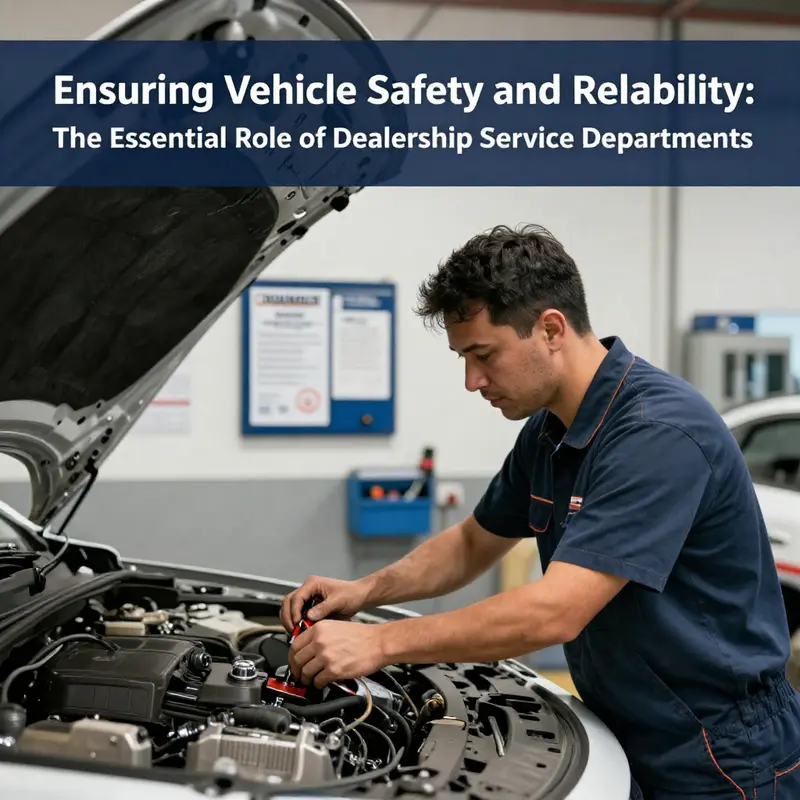
In the modern dealership service bay, safety is not only a reaction to a failed part but a culture woven through every diagnostic decision, repair plan, and customer conversation. The heart of that culture is the technician, whose knowledge is reinforced by rigorous certification and continuous learning. As vehicles become increasingly software-defined, with complex propulsion systems, integrated safety features, and connected networks, the role of the technician has shifted from a technician who fixes problems to a professional who analyzes systems, interprets data, and anticipates failures before they manifest as dangerous faults. Certification programs, particularly those that align with manufacturer standards and widely recognized testing frameworks, provide a common yardstick for competence. They signal to customers and shop leadership that the technician has demonstrated a broad and deep mastery of engine performance, electrical and electronic systems, brakes, suspension, and the increasingly important Advanced Driver-Assistance Systems, or ADAS. The value of certification is not only in a piece of paper but in a defined knowledge base that guides the technician’s daily practice. When a vehicle arrives at the service bay, the technician’s first responsibility is to understand the system as a whole. Modern cars are not simply machines with moving parts; they are networks of sensors, actuators, powertrains, and control units that talk to one another in real time. A fault in one module can ripple across the car’s safety features, changing how brakes respond to a sudden stop, how airbags deploy in a collision, or how stability control manages a slippery curve. Certification programs, and the ongoing education they demand, ensure that technicians can interpret these connections. They train technicians to translate the digital language of fault codes into meaningful, safe repair strategies, and to do so in a way that preserves the integrity of the vehicle’s safety systems. In the dealership environment, this bridging of mechanical intuition and digital literacy is essential. A technician who understands both the mechanical realities of a failed component and the software logic that governs how that component is monitored will diagnose more accurately and repair more reliably. It is this convergence of hands-on skill and data-driven understanding that makes certification a practical asset for customers seeking safety and reliability. The process begins with a robust foundation in mechanical disciplines, but today’s certification pathways extend beyond the engine or the exhaust. They require mastery of electrical and electronic systems, where a single connector or a software update can alter performance and safety. They require familiarity with ADAS technologies, which can include pedestrian detection, lane-keeping assist, adaptive cruise control, and emergency braking. Each of these features depends on a precise interaction of sensors, control algorithms, and actuators. A certified technician is trained to test these features not only in isolation but in the context of the entire vehicle system, validating that the safety functions interact harmoniously with the driver’s inputs and with other vehicle dynamics. The certification journey is not a one-time hurdle but a continuous process of learning and recertification. Vehicle technology does not stand still, and neither can the technician who services it. High-voltage systems in hybrids and electrics demand specialized competencies related to battery management, thermal control, and safe isolation procedures. Software-defined vehicles require a comfort with real-time data streams, complex fault trees, and an understanding of how over-the-air (OTA) updates may alter system behavior after a repair. In this environment, knowledge is not merely about knowing how a part works but about understanding how the part communicates, how its status is reported, and what thresholds define safe operation. ASE-certified technicians, and those credentialed by other recognized manufacturer programs, demonstrate that they have achieved a defined standard of breadth and depth. The ASE framework emphasizes a spectrum of domains—from engine performance to electrical/electronic systems, and from brakes to suspension, with a distinct emphasis on ADAS in today’s market. This blend of traditional mechanical competence with modern electronic fluency provides a reliable foundation for safety-critical work. Yet certification is only part of the story; what happens in the shop depends on a culture of ongoing learning, disciplined processes, and careful attention to safety. The shop floor is a learning environment where seasoned technicians mentor newer colleagues, and where continuous improvement is encoded into daily routines. Certification creates a baseline, but the real value comes when technicians actively apply that baseline to real-world tasks. In practice, that means approaching each diagnostic scenario with a mindset oriented toward safety as the primary outcome. It means verifying fault codes with multiple checks, correlating sensor data with observed performance, and using standardized procedures that trace back to OEM guidelines and service bulletins. The standardized approach acts like a road map in a landscape of evolving technology. It ensures that even when a flashing warning light appears in the instrument cluster, the technician follows a repeatable method that minimizes human error and reduces the chances of overlooking a hidden issue. The emphasis on safety extends beyond the vehicle to the shop environment itself. Certified technicians are often aligned with shop safety programs that cover electrical safety, proper handling of high-energy systems, and the management of hazardous materials. The protocols are designed to protect both people and vehicles. They require using appropriate PPE, applying lockout/tagout procedures when necessary, and maintaining a clean, well-ventilated workspace to prevent fires or accidental exposures. The memory of a past tragedy—a fire incident at a dealership in 2017 that underscored the consequences of lapses in safety—remains a cautionary reminder that accidents in the service bay can have devastating human costs. Consequently, many shops implement stricter controls over flammable fluids, enhance ventilation in painting and finishing areas, and deploy robust fire suppression strategies. These safety investments are not arbitrary but are informed by real-world risk assessments and by the profession’s commitment to safeguarding lives—both the staff who perform the work and the customers who rely on the vehicles afterwards. The effect of certification on reliability is substantial, too. A technician who has earned a recognized credential brings with them a disciplined approach to inspection and test planning. They know the value of documenting every check, every measurement, and every replaced component. This meticulous record-keeping translates into clearer communication with customers, whose expectations for safety and dependability are increasingly high. The service narrative becomes about more than the repair itself; it becomes a transparent dialogue about how safety features were preserved, validated, and tested after any intervention. The customer benefits in practical ways. For one, there is a measurable improvement in the consistency of repairs. Standardized diagnostic steps reduce the risk of misdiagnosis, which in turn lowers the likelihood of unnecessary parts replacement and recurring service visits. For another, there is enhanced confidence in the service outcome. When customers know that the technicians responsible for their vehicles are certified professionals who stay current with the latest safety standards, they gain trust in the repair process and in the dealership’s commitments to long-term reliability. The linkage between technician expertise and customer trust is not incidental. It is a strategic asset for dealerships seeking to differentiate themselves in a competitive market. A certified workforce communicates to owners that the dealership values safety and quality as fundamental business practices, not as optional add-ons. It also aligns with the broader framework of manufacturer standards, which prescribe not only how a particular repair should be performed but also how technicians should approach safety-critical systems in the first place. The result is a service experience that feels rigorous, thoughtful, and capable of safeguarding the vehicle’s performance over time. As with any professional field, communication remains a crucial component of safety and reliability. Certified technicians are trained to translate technical findings into actionable guidance for customers. They can explain why a particular service is necessary, what risks are mitigated, and what subsequent maintenance may be required to sustain safety in the months and years ahead. In this regard, the technician’s certification becomes an enabler of informed ownership. It empowers customers to participate actively in the preservation of their vehicle’s safety features, to monitor warning indicators, and to schedule preventive maintenance at manufacturer-recommended intervals. This collaborative relationship between technician, customer, and dealership forms a feedback loop that contributes to long-term reliability. The integration of certification with everyday practice is not an abstract ideal; it manifests in measurable outcomes. Vehicle safety systems are more consistently calibrated and validated after service, tests verify that ADAS sensors are functioning within specification, and post-repair road testing is conducted with attention to the vehicle’s dynamic behavior. The use of diagnostic software and network tools, taught and validated through certification programs, ensures that technicians can monitor software health, interpret fault codes accurately, and confirm that OTA updates or reprogramming have been completed correctly and securely. In sum, the certification-driven technician embodies a disciplined approach to safety and reliability that scales across the dealership ecosystem. It harmonizes mechanical know-how with digital literacy, aligns daily practices with manufacturer standards, fosters a safety-first shop culture, and builds enduring customer trust. For those who care about the integrity of every mile driven, it is the most tangible link between a vehicle’s potential hazards and a safe, dependable driving experience. For readers seeking a practical touchstone on how such education translates into ongoing professional development, the broader literature and industry guidance emphasize continual learning, hands-on practice, and rigorous assessment. A useful gateway to ongoing education and community dialogue can be found in the industry’s expansive knowledge resources and practitioner communities, where technicians share case studies, diagnostic tips, and updates on new safety-relevant technologies. Meanwhile, dealership leadership benefits from recognizing certification not as a checkbox but as a core capability that informs staffing, training plans, and safety policies. The result is a service organization that not only repairs cars but also protects lives, supports confident ownership, and sustains reliability across the vehicle’s life cycle. For readers who want to explore related discussions on automotive education and professional development, the KMZ Vehicle Center blog serves as a navigational hub for related topics and practical insights into how service departments cultivate safety-minded culture and technical excellence. See more at the KMZ Vehicle Center Blog. KMZ Vehicle Center Blog. And for those seeking formal standards that anchor this practice in global expectations, industry resources emphasize that certification and continuous learning align with recognized safety and cybersecurity frameworks, reinforcing the technician’s role as a guardian of road safety. As the field continues to evolve, the combination of hands-on mastery, formal credentialing, and an unwavering commitment to safe procedures remains the most reliable guarantor of vehicle safety and long-term reliability. External standards and certification bodies offer structured paths that guide this evolution, and their ongoing work ensures that technicians stay prepared to meet the challenges of next-generation propulsion, sensing, and connectivity. For a concise look at the authoritative guidelines shaping modern automotive technician practice, see the official resources maintained by industry certification bodies at their leading websites: https://www.ase.com.
From Protocol to Trust: How Standardized Repair and Maintenance Shape Vehicle Safety and Reliability
Standardized repair and maintenance procedures are the quiet engine beneath every dealership service department’s claim to safety and reliability. They are not merely a checklist of tasks but a cohesive discipline that ties together qualified people, precise tools, and predictable outcomes. In practice, this means that every vehicle, whether a compact sedan or a heavy-duty workhorse, moves through a carefully choreographed sequence of steps that minimize variation, reduce the chance of human error, and ensure that warning signs of trouble do not go undetected. The result is a service experience in which owners can trust that the vehicle they rely on for daily commutes, family trips, or work duties has been serviced according to the highest standards. This is not a one-off act of repair; it is a sustained commitment to maintaining reliability and safety through repeatable, auditable processes that span every phase of a vehicle’s life in the shop.
At the heart of standardized repair is the ISO 18541 series, a globally recognized framework designed to standardize access to automotive repair and maintenance information. This framework creates a common language for technicians, dealership service centers, and fleet operators, enabling accurate interpretation of repair procedures and consistent execution across different vehicles and workshop environments. The value of such standardization extends beyond the immediate repair itself. It translates into a reliable baseline for technician training, for the storage and retrieval of repair data, and for the way service history is documented and shared with customers. In practical terms, ISO 18541 helps ensure that a brake service, a battery diagnostic, or an steering-assistance recalibration is performed with the same level of rigor no matter who carries out the task, what bay the vehicle is in, or which technician is on duty. This uniformity reduces the risk of overlooked steps, misapplied procedures, or inconsistent torque specifications, all of which can compromise safety and performance. As Powell and Topaloglu highlighted in their exploration of proactive maintenance, standardized procedures are the bridge from reactive, unscheduled interventions to a planned, preventive approach that keeps fleets and families safer through fewer unplanned events.
The shift toward proactive maintenance is especially consequential as vehicles become more complex. Modern service procedures must accommodate a growing ecosystem of systems—from traditional mechanical components to advanced driver assistance systems (ADAS), high-voltage electrical architectures, and sophisticated software updates. The standardized framework not only preserves the integrity of these components but actively supports the safe integration of new technologies into the vehicle’s overall safety profile. In this context, the repair information architecture becomes as important as the mechanical skill itself. It ensures that technicians have immediate access to the appropriate service bulletins, calibration procedures, and diagnostic algorithms that relate to the exact configuration of the vehicle they are servicing. When a vehicle presents an unusual fault code, the systematic, standardized approach prevents guesswork and expedites a correct, safe resolution. The benefit to customers is straightforward: more reliable service outcomes, reduced downtime, and greater confidence that the work performed will not introduce new hazards during or after the repair.
As vehicles integrate increasingly complex systems, the responsibility to maintain safety expands beyond the repair bay. There is a growing emphasis on structured risk assessments as a prerequisite to any high-stakes or potentially hazardous repair task. The emerging Safety Management Standard for New Energy Vehicle Repair, for example, codifies the principle that procedures must be augmented by explicit risk assessments, specialized technician training, and clearly defined emergency response plans for hazards such as electrical shock, fire, battery thermal runaway, and even hydrogen leakage in certain energy storage or fuel systems. This is not mere compliance; it is a practical recognition that the transition to electrification introduces new kinds of risk that must be mitigated through disciplined procedures. The standardized approach thus functions on multiple levels: it guides the precise sequence of steps for a given repair, it anchors the training and certification requirements for technicians, and it provides the safety culture with a documented, auditable framework for addressing potential hazards before they materialize.
The tools that enable these procedures to be effective are not limited to the procedural binders and service bulletins. Advanced monitoring systems, including 24-hour real-time data streams and alarm transmission capabilities, play a pivotal role in maintaining reliability beyond the moment of repair. In a dealership setting, these systems provide ongoing visibility into the health of critical components, from braking and steering subsystems to high-voltage battery packs and thermal management circuits. When a component signals a deviation from expected performance, the standardized maintenance approach ensures that the response is not ad hoc but informed by historical data, manufacturer specifications, and the latest diagnostic protocols. Technicians can verify post-repair functionality using defined success criteria, rechecking calibration, sensor readings, and fault code clearance in a manner that mirrors the original diagnostic sequence. This continuity between repair and monitoring helps catch latent issues that might escape a single inspection, reinforcing the garden of safety around the vehicle’s operation.
Alongside the technical rigor, the physical environment of the shop is designed to reinforce safety and reliability. The standardization philosophy extends to the shop’s safety measures: clear signage that communicates high-voltage hazards, no-smoking directives in areas with fumes or solvents, and the disciplined use of static discharge prevention tools. The handling protocols for hazardous materials—coolants, batteries, and other potentially dangerous substances—are codified so that new technicians can quickly align with established best practices. The culture of safety also draws on lessons learned from past incidents within the industry, such as a high-profile fire at a dealership that underscored the human and environmental costs of unsafe handling in a service environment. The response has been not only more stringent PPE requirements but also an evolutionary shift toward proactive safety planning embedded within every repair procedure. In practice, this means that a repair procedure is not a one-dimensional sequence of mechanical steps; it is a holistic protocol that accounts for the human factors involved, from how technicians interact with highly energized systems to how the workspace is oriented to minimize risk during fluid management or battery servicing.
For customers, standardized procedures translate into visible benefits that extend beyond a single service visit. The documentation that accompanies each repair—detailing the tasks performed, the findings, and any recommended follow-up—creates a transparent narrative about the vehicle’s safety and performance. Digital service records can be accessed by owners to view the history of maintenance and major repairs, which supports informed decision-making and helps establish a long-term relationship built on trust. The procedural discipline also acts as a reliable signal to drivers about the expected quality of care their vehicle receives, reinforcing their confidence in the dealership’s capability to keep the car safe on the road. In this way, standardization functions as a customer-facing assurance as much as it is an internal operational system.
The practical integration of these standards into everyday service work is facilitated by the way information is organized and shared across the dealership network. Technicians rely on standardized repair data and the systematic flow of information from initial diagnosis, through repair, to verification. The goal is consistent outcomes, not cookie-cutter responses. Each repair must respect the specific vehicle’s configuration, software version, and prior maintenance history. Yet within that specificity, the standardized framework ensures that the core steps—safety checks, component inspections, calibration or reprogramming where necessary, and post-repair validation—are performed in a consistent manner. When done well, this approach reduces variability in repair quality, makes it easier to train new staff, and enables a more efficient workflow that minimizes downtime without compromising safety. The net effect is a service department that can deliver reliability with a level of predictability that owners can rely on, even as vehicle technology continues to evolve.
To stay closely aligned with the evolving standards landscape, dealerships actively engage with professional communities and ongoing education. The literature on standardized maintenance highlights the importance of translating high-level standards into practical shop floor actions. Technicians are not merely executing tasks; they are applying a living set of guidelines tailored to the specific makes and models they service, constantly updated to reflect the manufacturer’s latest specifications and the industry’s best practices. This dynamic is what allows a standardized approach to remain relevant across generations of vehicles, from traditional internal combustion engines to advanced electrified platforms. It also means that the service department remains adaptable in the face of new safety challenges, because the core principle—procedures designed to protect people and preserve vehicle integrity—remains constant.
For readers seeking a practical lens on how shops implement these ideas day to day, the KMZ Vehicle Center blog offers discussions that translate standards into actionable routines and tips for technicians and owners alike. KMZ Vehicle Center blog This resource helps bridge the gap between theory and practice, illustrating how standardization informs not just what technicians do, but how they think about safety, reliability, and customer trust. As the industry continues to embrace higher levels of automation, smarter diagnostics, and more integrated safety systems, the role of standardized procedures will only grow more central to the promise that dealerships make to every vehicle owner: we will keep you safe, and we will keep you on the road.
The broader takeaway is clear. Standardized repair and maintenance procedures are not a relic of the past but a forward-looking framework that keeps pace with technology while anchoring safety in every action. They enable proactive maintenance, support sophisticated diagnostic workflows, reinforce a robust safety culture in the shop, and enhance transparency with customers. By aligning procedural rigor with skilled technicians, real-time monitoring, and strong risk management practices, dealership service departments deliver reliability that owners can feel each time they turn the key. In a world where a single missed step could compromise safety, the discipline of standardization becomes the quiet guardian of every journey.
External reference: For a formal treatment of the standards discussed, see the ISO 18541 standard, which outlines the expectations and requirements for standardized repair information and vehicle maintenance data. https://www.iso.org/standard/73968.html
null
null
null
null
Final thoughts
In conclusion, dealership service departments play an indispensable role in maintaining vehicle safety and reliability through a comprehensive system of practices focused on expertise, standardization, advanced technology, and a strong safety culture. By prioritizing these aspects, dealerships not only safeguard the vehicles they service but also instill confidence in their customers. Whether you are a private car owner, a used car buyer, or managing a fleet, understanding the dedication and procedures behind these services empowers you to make informed decisions regarding vehicle maintenance and care.