As a Toyota owner, the decision to invest in a Toyota Vehicle Service Agreement (VSA) can be significant. This agreement represents an extended warranty that takes over when your manufacturer’s warranty concludes, ensuring protection against costly repairs for essential components. However, whether it is worth the investment? For local private car owners, used car buyers, and small business fleet operators, understanding the nuances of a VSA is crucial. This article will delve into the pros and cons that accompany a VSA, consider the financial implications, weigh the specifics of mechanics and coverage, and examine how these factors can influence long-term vehicle value and resale options. Each chapter will provide insights that help demystify the complexities surrounding this important decision.
Weighing the Value: Is a Toyota Vehicle Service Agreement Worth It for Long-Term Ownership?
Choosing whether to buy a vehicle service agreement for a Toyota comes down to balancing protection against the cost of potential repairs with your own finances and future plans for the car. It’s not a decision driven by a single factor, but by a mix of risk tolerance, how you use the vehicle, and how you prefer to handle surprises on the road. A service agreement, in essence, is an extension of protection beyond the manufacturer’s original warranty. It promises you predictable budgeting and a cushion against repair bills that can escalate quickly as a vehicle ages. The decision to purchase one, or not, should be approached with a clear-eyed view of what the plan covers, what it costs, and how your life with the car is likely to unfold over the coming years.
To begin, it’s helpful to anchor the discussion in what a service agreement actually does. Think of it as a structured financial shield against breakdowns that could threaten your daily routine or disrupt family plans. The primary appeal is straightforward: after the factory warranty expires, the risk of paying thousands for a major repair—think engine, transmission, or an important drivetrain component—remains high for some models and driving contexts. A service agreement can, in theory, convert those potentially sporadic, high-cost repairs into known, predictable costs. You know what you’ll pay if a covered component falters, you know what isn’t covered (since no policy is all-encompassing), and you often gain the convenience of a repair network that is familiar to the brand’s dealerships. In the right scenario, that predictability is a major asset.
Yet the appeal comes with clear caveats. The initial price tag is a reality that can feel heavy, especially when purchase timing is early in a model year or when you are negotiating the total cost of the car. The upfront cost can run into the low thousands depending on the model, mileage, and the level of coverage you choose. Even if you opt for a moderate plan, you still face deductibles per visit and a list of exclusions that bite when you assume you’re protected. Normal wear items—things like tires, brake pads, and wipers—are commonly excluded, and that’s an important consideration for budgeting. If you drive in a way that minimizes risk—steady maintenance, careful driving, and adherence to service schedules—the probability of a major, out-of-pocket catastrophe diminishes, which can make the VSA seem less essential. The counterpoint is that if you’re the type who relies on the car heavily for daily commutes, road trips, or family logistics, the peace of mind may be worth paying for, even if you never have to claim it.
Another practical angle is the coverage’s structure. Toyota’s service agreements are tiered, offering a spectrum from basic powertrain protection to more expansive packages that cover additional systems, labor, and sometimes extras like roadside assistance. The tiered approach gives buyers the ability to tailor protection to their needs and budgets. The transferability of the plan to a new owner can add value if you think you might sell the car in the future, a factor that can influence resale attractiveness. If you plan to hold the same vehicle for a long stretch or to keep it for a decade or more, the decision hinges on whether the insurer’s protection aligns with your most probable repair costs over that horizon.
We can frame the decision by weighing typical benefits against common drawbacks. The profits of a service agreement lie in cost protection and budget predictability. If a transmission repair or engine issue happens after the warranty ends, the bill can be steep enough to overwhelm even careful savers. A well-structured plan can shield you from that scenario, turning an unpredictable repair bill into a manageable, pre-determined expense. The broader sense of value comes from the psychological comfort of knowing that, should something go wrong, you’re not facing a financial cliff. For some owners, that peace of mind is as valuable as the potential savings on repair costs.
On the flip side, the cost is not insignificant, and the value often hinges on how likely you are to need a repair and how much a covered repair would cost outside of the plan. The sticker price alone does not tell the full story. If you keep the car only a few years, or if it proves to be remarkably reliable, you may pay for protection you never use. If you drive conservatively, perform timely maintenance, and avoid high-mileage wear, you could find yourself paying for a safeguard that sits largely unused in a binder on your shelf. The reality is simpler yet: no one can predict the exact future of any vehicle, even a well-regarded model, with perfect certainty.
The decision, therefore, should rest on a synthesis of concrete numbers and personal circumstances. Start with a straightforward arithmetic exercise: estimate your planned ownership horizon, project typical repair costs for your model and year after the warranty expires, and compare that to the total cost of the service agreement—factoring in deductibles. It’s essential to look not just at the sticker price of the plan but at the real-world payback. Some vehicles are costlier to repair in certain drivetrains or configurations; others tend to exhibit reliability more consistently once past the early years of ownership. For many buyers, the choice is not about whether a component will fail, but about whether the likelihood and magnitude of potential failures justify the cost and complexity of a covered program.
A practical mindset helps here. Gather quotes for the level of coverage you would actually consider, and then identify the average repair costs for your model and year from independent sources and local shops. If the numbers align such that the plan could cover most or all of the repairs you’d likely face, the math starts to tilt toward value. If not, the plan’s value decreases. The deductibles also require attention. Even when a service agreement is in place, you usually pay a per-visit deductible, which is a small but meaningful portion of the overall savings. If you have a high deductible, you might end up paying more out of pocket across several smaller repairs than you saved on bigger, rarer failures. These considerations are especially relevant for owners who drive long distances, operate in regions with harsher climates, or contend with more demanding driving conditions that stress components sooner.
Another layer of complexity comes from the relationship between maintenance and coverage. Many owners assume that maintenance costs are wholly offset by a service agreement, but it’s not that straightforward. Routine maintenance—oil changes, filter replacements, tire rotations, and brake inspections—often falls outside the covered scope or is treated as the owner’s responsibility, regardless of the plan. If you’re diligent about maintenance, you’ll know you’re doing the right things to extend the life of your vehicle; yet you might still encounter a scenario where a non-maintenance issue emerges shortly after a service interval, bringing a claim into a gray area if the item is near the boundary of coverage. Reading the fine print becomes a foundational habit here. Understanding which items are explicitly excluded and how the coverage interacts with pre-existing conditions can spare you from unpleasant surprises at the repair shop.
The broader market context also matters. There are potentially lower-cost third-party providers, and some buyers weigh them against dealer-backed plans. While third-party options can be appealing on paper for their price point, they can involve different networks, claims processes, and service experiences. For some, the dealer-backed option offers a sense of continuity with the car’s service history and access to the brand’s authorized technicians, which can influence long-term satisfaction. This is especially true for complex modern vehicles with advanced drivetrains and electronics where the quality of repairs hinges on the technician’s familiarity with the manufacturer’s specifications and diagnostic tools.
From a consumer’s perspective, the decision becomes a balancing act: is the likelihood of needing a major repair after the warranty period high enough to justify a protected, predictable cost structure? How does your personal budget react to the idea of regular, predictable payments versus the potential for a very large repair bill later? Does the vehicle you own or plan to purchase have a record of reliability in the years immediately following the factory warranty, or is it known in owner circles for inviting expensive, later-life repairs? For some, the answer leans toward “yes,” because the car plays a central role in daily life and maintaining that role requires predictability. For others, the answer is “no,” because they can accommodate future repairs within a savings plan or prefer to stay flexible.
The decision is also impacted by the timing of the purchase. If you’re evaluating a late-model used Toyota with mileage near or beyond the standard warranty, the calculus shifts. The longer you plan to own the vehicle, the more a service agreement can spread out potential risk over time. If the car is relatively new and still within the factory warranty, you might opt to delay the decision until more is known about the vehicle’s long-term reliability in your hands. In either case, it’s critical to quantify your own risk tolerance. Some drivers are naturally risk-averse and find value in fixed costs and security; others prefer to keep options open and avoid tying up capital into a product they may not eventually need.
As you weigh the emotional aspect—the sense of security that comes with coverage—couple it with the financial side, and a clearer picture emerges. The value of a Toyota service agreement can be substantial if you expect to depend on the car for years, drive long daily miles, or operate in environments where repairs could be more frequent or more expensive. The real test is whether the coverage aligns with your projected repair costs, the deductible structure, and your ability to absorb out-of-pocket costs if the plan does not cover a particular item. A thoughtful, numbers-driven approach helps here. Start with how you use the vehicle: is it a commuter workhorse, a family vehicle, or a weekend adventure vehicle? Then map that against the plan’s coverage tiers and the known, model-specific repair cost ranges.
The human element should also guide the decision. Protection often translates to reduced anxiety about the unknown. If that reduced anxiety translates into less stress when considering long trips, or less worry about a major repair interrupting work or family plans, that benefit is real. There is value in keeping your household budget from being disrupted by a repair bill that could otherwise be unpredictable. For some owners, this peace of mind is the most meaningful return on investment; for others, the tangible arithmetic of coverage versus likely out-of-pocket costs dominates the decision. Either way, the choice should be grounded in a clear, documented assessment rather than a quick impression or a single anecdote from a neighbor or a salesperson.
To close the practical loop, consider taking the following approach: estimate the total cost of ownership for the years you expect to keep the car, assuming no claims, and then compare it to the total cost of ownership with a service agreement. Include the upfront price, any required deductibles, and any maintenance that remains outside the coverage. If the break-even point lands several years into the future and aligns with your ownership horizon, the plan could be a sound investment. If the break-even point is far beyond your planned ownership window, or if your projected maintenance costs without the plan already stay within your budget comfortably, the plan may not offer sufficient value.
As you navigate these questions, a careful, structured conversation with the dealership or the financing team can illuminate the specifics. Ask about what the plan covers for your exact model and year, the deductible per repair, the total term of the coverage, and whether the plan is transferable to a new owner if you decide to sell. Inquire about the network of authorized shops, the claims process, and any prerequisites for eligibility like required maintenance intervals. Understanding these operational details is often as valuable as crunching the numbers. It’s not merely about promising coverage, but about how smoothly the protection translates into real-world support when a problem arises.
For readers who want to explore broader maintenance philosophy and practical upkeep that influence the overall value of owning a Toyota, the KMZVehicleCenter blog offers a resource-rich backdrop on related topics. This can help you situate a service agreement within a larger maintenance strategy and understand how routine care interacts with long-term ownership economics. KMZVehicleCenter blog.
In sum, the question of whether a Toyota service agreement is worth it is not a one-size-fits-all verdict. It hinges on your car’s expected reliability, how long you intend to keep the vehicle, your budget, and your tolerance for financial surprises. A well-chosen plan can convert uncertain, high-cost risks into predictable, manageable expenses and can even enhance resale appeal if the contract is transferable. A plan that mirrors your life with the car—to the extent that it covers the most costly, most probable repairs and aligns with your long-term ownership goals—will likely offer genuine value. Conversely, if you anticipate a short ownership window, if you prefer to self-insure through savings, or if your model has a track record of reliability in your hands, the expense may not be warranted.
Ultimately, the decision rests on a concrete analysis of coverage terms, costs, and your own financial and emotional readiness to handle or hedge against the unexpected. Read the fine print, compare the price against probable repair costs, and consider quotes from independent mechanics as part of a broader, informed decision. The goal is not to decide in the abstract, but to align coverage with your vehicle’s life path and your personal approach to ownership. The nuance lies in recognizing that a service agreement is not merely a warranty extension; it is a structured choice about risk, planning, and the future you envision with your car.
External resource for further reading: https://www.toyota.com/vehicles/service-agreements
Counting the Costs and Benefits: A Practical Look at Whether a Toyota Vehicle Service Agreement Is Worth It
When you stare down the decision to buy a vehicle service agreement for a Toyota, you’re really weighing two voices in your head. One wants peace of mind and predictable expenses. The other points to the numbers—the price tag up front and the chance that you may never need major repairs at all. The question is not simply whether an extended warranty is available; it is whether the financial profile of your car, your driving life, and your personal risk tolerance align with the cost and the coverage. In practical terms, a Toyota vehicle service agreement is a structured way to shift the risk of certain mechanical failures from your wallet to a pre-paid plan. It promises that if a covered component fails, you won’t be staring at an unpredictable bill for a major repair. But the promise comes with limits. The plan’s price, the specifics of coverage, and the exclusions all shape whether the deal makes sense for you.
To evaluate the potential value, start with the core financial factors that researchers and practitioners consider when assessing any extended coverage. First, the age and the mileage of the vehicle matter a great deal. A brand-new car, still under the factory warranty, typically carries low immediate risk of failure for major systems. In that scenario, the incremental protection offered by a VSA may not deliver enough incremental benefit to justify the upfront cost. As the car ages and accumulates miles, the probability of a failure in a major system rises. The higher that probability, the more the VSA can pay for itself, especially if you drive the car into a future where you rely on predictable budgeting rather than the mercy of a repair bill that could run into thousands. This is not an all-or-nothing calculus; it is a sliding scale based on how you expect to use the vehicle and how long you intend to keep it. If you intend to keep the car for many years beyond the standard warranty, a VSA becomes more appealing, because the odds you’ll encounter a significant, pricey repair increase with time and with miles.
Second, you should compare the explicit costs of the service agreement with the model’s historical repair profile. It is natural to assume that a well-made product like many Toyota models would have low repair costs relative to other brands. Data from consumer research and industry monitors often show that common Toyota models, such as midsize sedans that remain popular with owners who keep vehicles longer, tend to incur fewer expensive repairs per mile than the broader market. However, even with favorable baseline reliability, the costs of the service plan must still be weighed against the expected repair expenses and the plan’s deductibles, caps, and exclusions. If the plan covers a battery, electronic modules, and the powertrain in substantial ways, the financial case grows stronger. If, on the other hand, the plan offers limited protection for wear items or requires high deductibles for every claim, the anticipated savings may be much smaller.
Third, consider your own financial landscape. A service agreement is a form of budget certainty. If you have robust savings and you can afford a potentially large repair bill without distress, you may choose to self-insure instead of purchasing the plan. If, however, you prefer predictable monthly or annual costs and you want to shield yourself from the shock of a major repair, a VSA offers a way to cap risk. The emotional comfort of predictable budgeting can be a decisive factor for many buyers—even when the objective math is finely balanced. This is why the decision often hinges less on mechanical risk alone and more on financial temperament and personal preference for certainty.
As you weigh these factors, it is essential to understand the terms of the agreement itself. A typical coverage ladder is built around tiers—Basic, Premium, and Platinum—each expanding the scope of covered components. The core elements—engine and transmission—often sit near the center of most plans, but the fine print matters. A high-quality plan may extend coverage to electrical systems, climate control, and even hybrid-specific components, while exclusions carve out many everyday wear items such as tires, brake pads, and windshield wipers. Deductibles are another critical piece. A deductible per repair can erode the cost-benefit advantage if you anticipate frequent small repairs rather than a single, expensive failure. When you read the policy, pay attention to transferability if you plan to sell the car. A plan that transfers to a new owner can preserve resale value and broaden the vehicle’s appeal, a practical benefit that can influence the total cost of ownership over the long arc of ownership.
To put the decision into a more tangible frame, imagine two plausible scenarios, each anchored in how most drivers approach risk. In the first scenario, you purchase a Basic plan at the time of purchase for a value around a thousand to a few thousand dollars, depending on the model and mileage. You use the vehicle mainly for commuting, with maintenance kept up and driving habits that are steady rather than harsh. In this world, the vehicle experiences no catastrophic failures, and the plan pays out little, if at all, during your ownership. The benefit you enjoy is primarily peace of mind and a predictable cost base for budgeting. The question then becomes whether the comfort of predictability justifies the price when the car ends up requiring few or no covered repairs.
In the second scenario, you buy a vehicle with higher mileage or you keep it well beyond the standard factory coverage window. The likelihood of needing a major repair rises as the clock ticks and the odometer climbs. Here, if a breakdown occurs in a covered system, the VSA can transform a potentially catastrophic outlay into a manageable, pre-announced expense. The plan’s value then depends on the actual repair cost, the specific coverage, and the timing of the failure. If the damage is within coverage, the plan reduces or eliminates the out-of-pocket hit. If not, you still might regret the opportunity cost of having paid for protection you didn’t fully use. The challenge is that many drivers cannot perfectly forecast future maintenance needs, pedestrian risk, or how long they will keep the vehicle. That fog is exactly why some people lean on the math and others on the instinct for certainty.
What makes the math tricky is the presence of exclusions and deductibles. Like any warranty, the VSA is not a blanket guarantee against every potential repair. Normal wear-and-tear items—tires, brake pads, windshield wipers—are commonly excluded from coverage or subject to separate costs. Deductibles per repair can add up quickly if multiple incidents occur. The temptation to treat a VSA as a universal shield can lead to overpayment if you underestimate your own driving risk or overestimate how often you’ll utilize the plan. This is where the discipline of comparative analysis matters: you should compare the contract price against the model’s probable repair costs, not against the most dramatic, worst-case scenarios. Industry data and independent assessments often note that certain Toyota models have relatively low repair costs compared with the broader market. That doesn’t erase the possibility of expensive failures, but it does reshape the risk calculus. If you own a Camry or a Corolla, you may find that the average repair expense is modest enough to blunt the incremental advantage of a bundled protection—but there are exceptions depending on transmission configurations, auxiliary systems, or electrified powertrains.
A practical way to approach the decision is to run the numbers you’d actually pay out of pocket in a few years if you choose not to buy the VSA. Estimate potential major repairs based on the vehicle’s age and mileage, and consider whether you would have the liquidity to cover those costs if a major system failed unexpectedly. Then compare that to the VSA’s all-in price, including any deductible, and account for how many of those hypothetical repairs would be covered. If the majority of your potential major repairs would be covered and the deductible is reasonable, the financial logic tilts toward the VSA. If your estimates suggest that you would probably cover most repairs on your own or that the plan’s coverage is relatively narrow for your anticipated scenarios, the plan may be a less compelling choice. This framework becomes even more actionable when you obtain quotes from independent technicians. Getting a second opinion on likely repair costs for your specific model and year can reveal whether the VSA would meaningfully reduce exposure to large bills.
As you navigate these questions, remember to leverage the practical maintenance resources that help you build a clearer picture of ongoing costs. Maintenance intervals, parts replacement schedules, and the reliability profile of your chosen model all feed into the decision. For readers who want a focused look at maintenance planning—especially around routine items like oil changes, filters, and fluid checks—there is a relevant resource you can consult for a deeper dive into cost-conscious maintenance planning, including how to think about interval timing in relation to mileage. optimal oil-change intervals.
Even with careful math, the decision is not wholly about numbers. It is also about how you want to experience car ownership. Some drivers derive comfort from a predictable annual budget for major repairs, a feature that a VSA amplifies. Others prefer to retain flexibility, opting to self-insure against risk and to handle repairs as they arise, especially when they enjoy working on cars or have relationships with trusted independent mechanics who can often perform quality work at a lower, transparent price. In the end, the decision comes down to your risk tolerance, your budget, and how you view ownership over time. If you anticipate keeping the vehicle for many years, if you value clarity in budgeting, and if the plan’s coverage aligns with the systems you care about, a VSA may be worth pursuing. If you’re buying a new Toyota and the factory warranty remains active, if you’re mechanically inclined and confident in self-repair, or if you don’t plan to own the car beyond a few years, the case for purchasing a VSA weakens.
To close this frame of reference, consider an orderly approach to decision-making: (1) identify the coverage you need by listing the major systems that drive your daily use and any components unique to your trim or drivetrain; (2) obtain pricing for the Basic, Premium, and Platinum tiers, noting deductibles and transferability; (3) compare those figures against the likely repair costs your vehicle would incur without coverage, using model-specific data from trusted sources; (4) factor in your liquidity and risk tolerance; and (5) verify the policy’s transferability to improve resale value should you decide to sell. This method does not guarantee a single, universal answer; it yields a personalized verdict that correlates with your finances and your vehicle’s expectations in years ahead. Finally, remember to corroborate the decision with independent maintenance estimates from reputable local mechanics so you aren’t surprised by hidden costs.
External resource: Toyota’s official guidance on service agreement financial benefits and considerations provides model-specific cost scenarios and a structured framework for evaluating the value of coverage over time. https://www.toyota.com/owners/service-agreement-financial-benefits
Weighing a Manufacturer’s Vehicle Service Plan: A Practical Guide
Introduction: A manufacturer’s vehicle service plan sits between the factory warranty and post-sale maintenance. It is not just price; it is a financial tool to manage the risk of expensive repairs. Whether it pays off depends on how you drive, how you maintain the car, and how long you plan to own it.\n\nKey tradeoffs: premiums vs deductibles, coverage scope, exclusions, and the repair network. Plans typically come in tiers: basic, enhanced, and comprehensive. Higher tiers cover more components but cost more. Routine maintenance and wear items are usually excluded.\n\nFactors to consider: vehicle age and reliability, your expected ownership horizon, driving conditions, and maintenance discipline. New or near-new vehicles often have less incremental value from a VSA; older vehicles with higher failure risk may benefit more.\n\nCost considerations: upfront premium, deductibles, annual limits, caps, and how many incidents are covered. Compare manufacturer vs third-party plans for terms and claim experience.\n\nPractical advice: read the fine print, check the network, consider your budget and risk tolerance, and weigh against self-insurance if you prefer setting aside funds.\n\nConclusion: There is no universal answer; decide based on your ownership arc, risk tolerance, and maintenance habits. If the plan aligns with your goals and you value predictable costs, it can be worthwhile; otherwise you may be better off saving for future repairs and relying on routine maintenance.
Beyond the Contract Window: Evaluating Long-Term Value and Resale When Considering a Vehicle Service Agreement
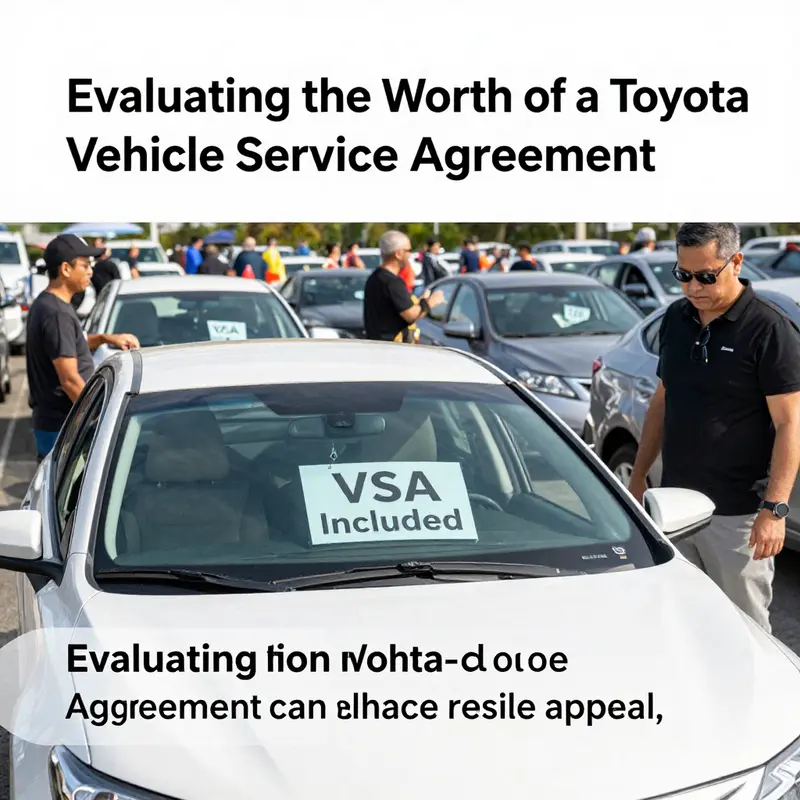
A vehicle service agreement, or a long-term service plan, often arrives with promises of peace of mind and predictable costs. Yet the value of such an agreement in the long run is not a simple arithmetic equation. It hinges on your driving reality, your willingness to shoulder risk, and the financial framework you use to manage uncertainty. The core question, especially when you look beyond the first few years of ownership, is not whether a service plan can cover repairs in theory, but whether it can add meaningful value to you at the moment of sale and over the course of keeping the car. In this sense, the long-term value of a service agreement is less about the specific car and more about alignment with your personal budget, maintenance philosophy, and expected lifecycle of the vehicle. The practical truth that emerges from careful exploration is that resale value is often the weakest link in the chain of benefits that many plans promise. The reason is straightforward: most service agreements, particularly third-party options, are not transferable to new owners. When you sell the car, the buyer cannot take over the remaining coverage in most cases, and you typically cannot recoup any portion of the money you paid for the contract. This non-transferability turns what might feel like a financial hedge into a sunk cost in the eyes of a prospective buyer. The resulting resale dynamic can even create a subtle worry in the market about the vehicle’s history: a buyer may wonder why a seller chose to keep or cancel coverage, what claims were filed, and whether the contract is full of exclusions. These considerations are not about the integrity of the car itself but about the perceived burden of a legacy of coverage that may not move with the title. In practice, this means that a robust service agreement seldom translates into an immediate resale premium. Instead, its value, if any, tends to show up in the buyer’s perception of the car’s total cost of ownership and the seller’s transparent accounting of past repairs and ongoing maintenance obligations. The buyer’s interest in a service plan often rests on the same fault line that guides many maintenance decisions: how likely is a major component to fail once the factory warranty has expired, and how comfortable is the buyer with absorbing the cost of potential breakdowns that could be substantial? If the vehicle has a reputation for reliability and a track record of few expensive repairs after the warranty period, a buyer may view the added protection as redundant or even suspiciously high-cost. The practical outcome is that resale value is generally limited at best, and in some cases-—especially with plans from third-party providers that do not transfer—there may be little or no value any buyer can extract from the existing agreement. The reality of transferability is not a mere footnote; it is a central determinant of the plan’s attractiveness at the point of sale. A buyer who cannot assume the remaining coverage will not pay a premium for it. On the other hand, if the contract is offered as a transferable feature with a straightforward process for the new owner to assume the coverage, some sellers may leverage that as a small, but meaningful, selling point. Yet even then, the transferability does not create a direct resale value in typical auto markets. It simply removes a potential deterrent and can contribute to a smoother negotiation, particularly for buyers who prize predictability and cost control. In the end, most buyers, much like most owners, do not factor a remaining service agreement into the vehicle’s valuation as an asset. They assess value on condition, mileage, maintenance history, and the likelihood of future repairs. The upshot for consumers who are weighing long-term value is clear: if you are purchasing a service agreement primarily to boost resale value, you may be chasing a mirage. If, however, you intend to keep the car beyond the original warranty window and you want predictable protection against catastrophic breakdowns in major systems, the decision is more nuanced. The economics become a function of how likely you are to experience a costly repair, how much you can pay out of pocket if such a repair arises, and how comfortable you are with the possibility of future maintenance costs that could appear without warning. The distinction between the intent to sell soon and the intent to hold for a long horizon matters. A short horizon may render a service agreement less attractive because you might not recoup its upfront cost through any tangible warranty claim, and the resale market rarely assigns a premium for coverage that cannot be transferred. A longer horizon, by contrast, offers a different calculus. If you plan to own the vehicle for many years after the factory warranty expires, a service agreement can serve as a financial guardrail against major repair costs, particularly for high-value systems and components that tend to be pricey to fix. The cognitive benefit—peace of mind—should not be underestimated. The assurance that a large, unusual repair bill will be covered, regardless of how the car is used, can be worth something in its own right. It reduces stress and can simplify budgeting, especially for households that operate on tight margins or for drivers who prefer to allocate resources upfront rather than risk a spike in maintenance costs later. In this light, the decision to buy or skip a service agreement is not a binary choice about value alone. It becomes a broader statement about how one allocates risk, how much reserve is kept for surprise repairs, and how an individual or family frames the total cost of ownership over a multi-year period. A practical way to approach the decision is to anchor it with concrete numbers. Start by comparing the plan’s upfront cost against the expected out-of-pocket costs if a major failure occurs after the warranty expires. This involves looking at the vehicle’s service history, the known reliability profile of the model family, and the typical price tag of repairs for the systems most likely to fail as the car ages. It also means examining the specifics of the plan: what is covered, what is excluded, what deductible applies per repair, and whether the plan covers labor and parts, or only parts. A basic step often overlooked is calculating the break-even point. If you contribute $X to the service agreement now, how many months or miles would you need to accumulate before the amount saved on any given repair equals or exceeds that upfront cost? In many instances, the break-even analysis reveals that, for buyers who already practice good maintenance and drive modestly, the break-even point is far enough into the future that the plan’s value is mainly in risk reduction rather than pure financial return. If you drive aggressively or accumulate miles quickly, the probability of encountering a major failure rises, shifting the balance toward value. But even then, the probability remains a probabilistic calculation. A warranty or service plan does not prevent failures; it shifts the financial risk, and the cost of that shift should be weighed against the probability and severity of failures you’re most concerned about. For many owners, the interplay between maintenance culture and long-term plan value is decisive. A strong maintenance habit—regular oil changes, timely replacement of belts and hoses, careful attention to cooling systems, and proactive diagnostics—often correlates with fewer claims under a service plan and, consequently, a lower sense of necessity for extended coverage. Conversely, if your maintenance history is spotty, or if you anticipate a period of intense use—towing, long highway commutes, or aggressive driving—the protection offered by a service agreement might feel more compelling, as it provides a predictable cost structure in scenarios where maintenance needs could otherwise become unpredictable. The decision framework is further refined by considering alternatives to a traditional service agreement. Some drivers prefer to build their own reserve fund, setting aside a monthly amount that could cover anticipated repairs. Others might opt for more selective coverage, choosing plans that focus on the most expensive possible failures while leaving more minor wear items to self-insure. Yet another path is to rely on the base manufacturer’s warranty, if still active, and to be prepared to absorb out-of-pocket costs for repairs that occur after it expires. The choice among these paths reflects a mix of risk tolerance, liquidity, and confidence in one’s ability to manage maintenance over time. It also acknowledges a broader reality about the market: not all service agreements are created equal. Many third-party plans come with limitations, complex exclusions, and varying transferability terms. These factors can influence resale to some extent, but more importantly, they shape the practical value you’ll experience during your period of ownership. The best approach is to quantify the coverage in a way that aligns with your actual usage. If your car sees light daily driving and short trips, the risk of heavy repair bills in the first several years may be lower, potentially diminishing the need for a robust extended protection plan. If your vehicle is expected to traverse high miles or endure challenging conditions—perhaps frequent heavy towing, extreme temperatures, or rough roads—the likelihood of a costly repair later in the car’s life increases, and a service agreement can offer reassurance against a financial shock. It is also worth considering how a service agreement affects your relationship with a dealership or service network. Some buyers appreciate knowing repairs will be handled by a familiar, manufacturer-backed network with clear terms and predictable pricing. Others may be drawn to the potentially lower upfront cost of third-party providers, even if those plans come with a more complicated claims process. In either case, understanding the claims process, service networks, and coverage limits before purchase is essential. And because the resale landscape can shape a buyer’s impression of the vehicle, clarity about what, if anything, remains of the plan at the time of sale can be a small but meaningful influence on negotiations. For those who want a more nuanced view, the topic of resale value is often approached through the lens of consumer advice and market data. Consumer guidance generally points to the fact that extended warranties, especially third-party offerings, tend not to contribute materially to resale value. The consumer research emphasizes risk awareness and cost versus benefit rather than a guaranteed value add at the time of sale. This is not a call to reject extended protection outright; it is a reminder to factor resale realities into your overall calculus. The best decision is informed by a blend of personal finances, expected ownership duration, maintenance discipline, and the precise terms of the plan under consideration. If the primary motivation is to create a predictable monthly or yearly cost for repairs, and you value that predictability, a service agreement can still make sense. If the core goal is to maximize resale price, the plan is unlikely to be a meaningful driver of value and may, in some situations, complicate the sale. For readers seeking a practical starting point, there are ways to approximate the decision without committing upfront. Gather quotes for the exact coverage you’re considering, including deductibles and exclusions. Compare these quotes against a reasonable projection of repair costs for your specific model and its expected mileage over the years you anticipate owning it. If possible, gather data on typical repair costs for similar vehicles of your model-year and mileage. This approach helps distinguish the psychological comfort of protection from real financial protection. It also clarifies whether the plan’s cost is justified by the actual risk you face. In the end, the value of a vehicle service agreement over the long term rests on a personal balance: how much risk you can tolerate, how much you’re willing to spend up front, and how long you plan to keep the vehicle. The resale angle, while important for negotiating and buyer perception, rarely elevates the plan into a genuine asset. The prudent path for many owners is to treat the decision as part of a broader strategy for managing risk and budgeting for the lifecycle of the vehicle. If you decide a service agreement is the right fit, approach the purchase with eyes open: read the fine print, examine transferability, and compare the overall cost to your likely exposure to major repairs. If you decide against it, do so with a plan for covering maintenance and potential repairs in a way that aligns with your cash flow and long-term goals. For further perspective that complements practical decision-making, see the KMZ Vehicle Center blog for related discussions on maintenance planning and cost management. KMZ Vehicle Center blog. In addition to the general considerations, it can be helpful to review independent analyses of extended warranties to understand how researchers view the trade-offs between protection, cost, and resale dynamics. Consumer Reports has published analyses that shed light on how these agreements function in practice, especially when it comes to transferability and overall value for consumers. External resource: https://www.consumerreports.org/extended-warranties/
Final thoughts
In conclusion, the decision to invest in a Toyota Vehicle Service Agreement should be approached with a clear understanding of your specific needs, driving habits, and financial situation. For local private car owners and used car buyers, the peace of mind that comes from potential comprehensive coverage can outweigh the upfront costs, particularly with older vehicles or those near the end of their factory warranties. Conversely, for short-term owners or those comfortable managing repairs, the VSA may not provide the same value. Fleet operators must weigh the collective needs of their vehicles against budgeting constraints. Ultimately, assessing the pros and cons, financial implications, mechanics of coverage, and the long-term value associated with a VSA can guide your decision on whether it is worth the investment or not.