
Knowing a vehicle’s service history is vital for anyone who owns, buys, or manages vehicles. Service records shed light on a car’s past maintenance, repairs, and overall condition, helping to avoid costly surprises and ensure safety. Whether you’re a local private car owner, a used car buyer or seller, or a small business fleet operator, understanding how to check service histories equips you with the knowledge to make informed decisions. This article explores three key avenues to obtain accurate service information: leveraging third-party platforms for a comprehensive overview, consulting authorized dealerships for authoritative records, and reviewing insurance company data to detect accident-related repairs. Each approach builds a clearer picture of vehicle integrity, empowering you to maintain, buy, or sell with confidence.
Unraveling a Car’s Past in Minutes: Checking Service History with Third-Party Platforms
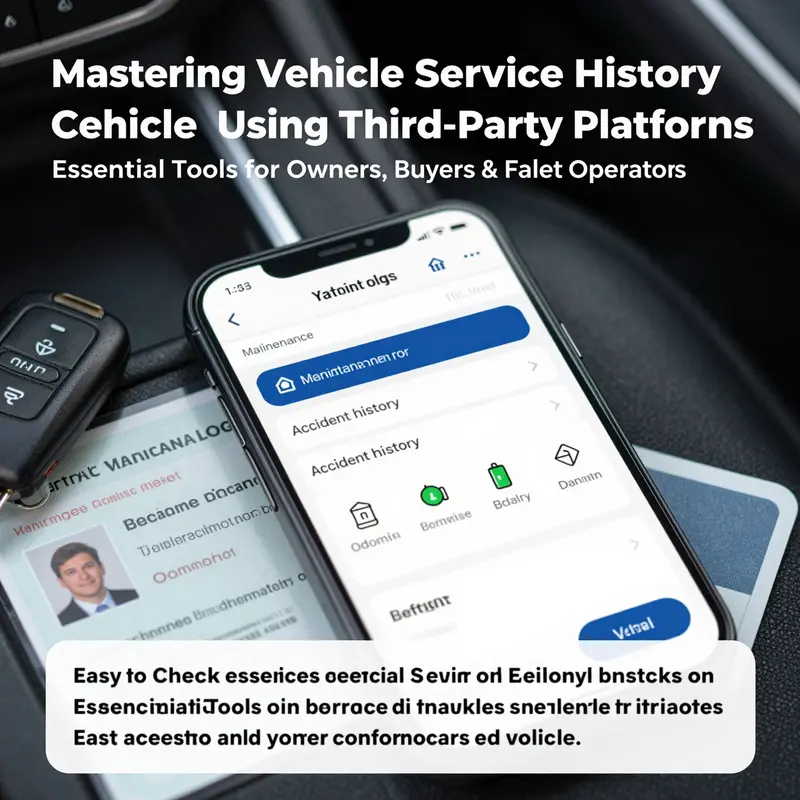
Introduction to speed, breadth, and clarity when you’re researching a used vehicle, nothing beats a quick, comprehensive view of what the car has experienced on the road. In this chapter, we focus on the most efficient lane for that first, critical sweep: third-party platforms designed to pull together maintenance and repair records from a wide network of sources. For many buyers, this approach offers a fast, all-encompassing snapshot that would take hours to assemble through scattered invoices, dealer portals, and personal disclosures. The idea is straightforward. A single query, usually anchored by the vehicle’s VIN or a clear image of its registration, yields a structured report that stitches together data from multiple repair shops, insurance claims, and sometimes even battery status for electric vehicles. The advantage is not merely speed; it is breadth. You gain a panoramic view that helps you spot patterns, inconsistencies, or red flags that might be invisible when you rely on a single source of truth. This is particularly valuable in markets where vehicles have lived in several hands or where repairs have occurred outside the brand’s official network. The third-party approach is not a substitute for due diligence, but it is the most efficient gateway to a robust, data-driven assessment that informs your next steps, whether that means negotiating a price, requesting further documentation, or walking away from a deal altogether.
One practical caveat should be kept in mind: not all platforms report every event, and not every repair leaves a trace in a single database. Data fragmentation is real. Some garages may report to some networks but not others, while courts and insurers can operate under privacy or policy constraints that limit what gets shared. The goal, then, is to use third-party platforms as a high-speed starter pack—then layer in direct checks at dealerships and insurers to fill gaps and confirm the details you care about most. With this approach, you can move from vague concerns to precise questions and, ultimately, to a well-supported purchasing decision. Below, the discussion centers on a leading option in the Chinese market that many buyers rely on for its speed and breadth, while also highlighting practical considerations that apply across similar platforms.
Choosing a reliable third-party platform and how it works. A widely used platform in the landscape is one that offers vehicle maintenance and repair history inquiries through a mobile interface. The typical workflow starts with a WeChat-based entry point, where you can search for the service and choose between a mini-program or an official account. From there, you’ll be guided to a data input screen that accepts either the vehicle’s 17-digit VIN or a clear photo of the vehicle’s registration. The system can process the request in minutes and present a detailed digital report after a swift verification step, which often involves a nominal payment to access the data. The immediacy is a standout feature: you don’t need to wait for mail, and you don’t need to schedule a visit to multiple repair shops to assemble a file. Instead, you see a consolidated history that can include a wide spectrum of information, from routine maintenance events to more consequential records.
In the reports that such platforms generate, you typically find a date-stamped ledger of services and repairs aligned with the vehicle’s odometer readings. Entries may specify the type of maintenance—oil changes, brake work, tire rotations, battery service for EVs, timing belt replacements, and more—and they usually show which parts were replaced or repaired. If a vehicle has been in an accident, an insurance claim trail or repair history will often surface in the same report, sometimes with a claimed repair cost attached. A particularly useful dimension is the vehicle’s status as it relates to liens, storage, or other encumbrances that might affect ownership transfers. For EVs, battery health indicators, if available, can be a decisive factor in assessing residual value and future risk. The breadth of the data is what makes the third-party path so compelling; it aggregates information from multiple channels, including franchised dealer networks, independent repair shops, and insurance data streams, to deliver a more holistic picture than any single source could hope to provide.
What you can expect to see in a typical report is a chronological map of care and concern. You’ll encounter entries that note the service type, the mileage at the time of service, and sometimes the workshop’s identity. You may discover that certain services were performed outside the brand’s network, which is precisely why a cross-check with a dealership can be valuable later. There can also be flags such as odometer tampering indicators or disclosures about a vehicle’s status, which warrant closer inspection or third-party verification. The real strength of this method lies in its ability to surface patterns that would be easy to miss in a piecemeal record—from a cluster of frequent brake repairs at non-brand shops to long stretches without documented service, each pattern telling a story about how the car has lived its life. The narrative that emerges makes it possible to ask targeted questions: Why did the car receive several unrelated repairs in a short period? Was there consistent maintenance aligned with the manufacturer’s suggested intervals, or did services drift with the shop’s preferences? Did the vehicle’s claim history reveal a history of significant accidents, or were the incidents minor and well-documented with repairs that restored the car to peak condition?
The practical value of third-party platforms is not just about the data they collect; it is also about the story they help you piece together. A well-assembled report can become the backbone of your negotiation strategy. If the vehicle has a clean maintenance history with regular, plausible intervals, you gain confidence and may justify a higher offer based on reliability. If, on the other hand, you see red flags—missing services at critical milestones, numerous high-cost repairs that point to urgent wear-and-tear issues, or evidence of odometer tampering—these signals empower you to renegotiate the price, request additional documentation, or walk away without wasting time and money on a deal that could create future risk.
To ground this discussion in a practical workflow, imagine you are evaluating a used car that has drawn your interest through a listing your agent forwarded. You initiate the third-party inquiry and provide the VIN or upload a registration photo. The platform confirms your request, and within a few minutes you receive a structured report. The first layer you examine is the service chronology. Do the dates and mileage align with the vehicle’s age and advertised mileage? Are there any large mileage gaps or clusters of recent, high-cost work that might indicate a potentially expensive next chapter? The next layer focuses on the maintenance scope. Are the routine items—oil changes, filter replacements, brake fluid refresh—documented with clear mileages and timestamps? Has a more invasive repair been performed, such as suspension work, transmission service, or electrical system overhauls? Each item you confirm strengthens your confidence, while any discrepancy invites further scrutiny.
A particularly insightful aspect of these reports is their capacity to reveal consistency across repair channels. Since the data are pooled from multiple shops and insurers, you can observe whether a given repair history shows up in more than one place, which increases its credibility. Conversely, a single isolated entry from a single non-affiliated shop might warrant extra caution, especially if it concerns a critical system like the engine, transmission, or braking; in such cases, you would want to corroborate the entry with the dealership’s DMS records or the vehicle’s insurer claim file. This cross-referencing is where the real value lies. The third-party platform acts as a fast-detection instrument, flagging items that deserve deeper verification rather than providing a definitive, final verdict on the car’s condition.
The data sources behind these platforms deserve attention as well. On one hand, the aggregation from 4S shops and independent repair centers is a strength because it broadens coverage beyond a single network. On the other hand, it requires a discerning reader. Not every workshop reports every service, and not every insurer files every claim in a way that is readily accessible to a third-party platform. The result is a best-effort map rather than a guaranteed ledger. Recognizing this helps you approach the report with the right expectations: use it to identify potential issues, then pursue targeted confirmations that close the loop. A thoughtful reader will not mistake a comprehensive dataset for a flawless history; rather, they will treat it as an important map that guides further inquiry.
In terms of practical steps, begin with a careful input. Ensure the VIN is correct and legible, or, if you choose the registration photo route, ensure the image is clear enough for the automatic text recognition to extract accurate details. You may be asked to choose between a standard and a premium tier of the service, depending on how much information you want the platform to retrieve or how quickly you need the report. A small fee is common, and the payment is typically straightforward. Once the report arrives, read it with a critical eye. If a line item seems ambiguous, such as “engine service” without a clear description of what was done, save that entry for further verification. You can return to the platform later to re-check or download the report for your records, adding it to your line of documents when you prepare to negotiate or finalize a purchase.
The opportunity here is not merely to confirm or deny a single detail, but to assemble a coherent narrative about the car’s life on the road. The moments that stand out—the regularity of oil changes, the timing of major service at appropriate intervals, the presence or absence of high-cost repairs—act as a proxy for predictability of future maintenance costs. You can translate that narrative into a buying decision with greater precision. If the report shows a well-documented history with no red flags, your leverage in price discussions increases; if it shows questionable gaps or questionable repairs, you can push for a discount or insist on further diagnostic checks before committing. The power of third-party platforms is the speed at which this complex, layered information becomes available, enabling buyers to move from curiosity to informed choice in a matter of minutes.
To maximize the value of this approach, consider layering the third-party report with other verification steps. A dealership inquiry can provide official, centrally archived maintenance logs tied to the brand’s dealer network, offering a level of official provenance that complements the third-party data. An insurance check can illuminate accident histories that were significant enough to require claims, which might not be completely captured in the maintenance records. If the vehicle is currently owned, the manufacturer’s own app for service history can provide a direct, owner-centric view of recent maintenance activities and reminders. If you are evaluating a used car from a private seller, asking for copies of service invoices and receipts remains prudent, but approach these documents with the same critical eye you apply to the third-party report: compare dates, mileage, parts replaced, and any labor numbers to ensure consistency across documents. The convergence of these checks—third-party data, dealership records, insurer claims, and owner-supplied invoices—will give you a robust, multi-angled understanding of the vehicle’s service history.
If you want to explore more about how to weave maintenance insights into your broader vehicle-care plan, the KMZ Vehicle Center blog is a convenient starting point. It offers guidance on general maintenance practices, useful checklists, and tips for interpreting service histories when you’re evaluating a used car. KMZ Vehicle Center blog
Ultimately, the strength of using third-party platforms lies in their ability to illuminate a car’s past with a few taps. They democratize data, turning what could be a long scavenger hunt into a quick, structured, and intelligible narrative. They also encourage a more proactive stance toward due diligence. You are not just reading a report; you are building a fact-based argument about a vehicle’s reliability, its expected maintenance needs, and its potential value. In a market where every mile and every repair can influence price and peace of mind, the speed and breadth of third-party history platforms make them an indispensable first stop. They are most powerful when used as part of a layered verification strategy—one that pairs the breadth of a broad data pool with the depth of official dealership records and the context provided by insurance histories and owner records.
For readers seeking a grounded, widely applicable resource on how to approach service history checks beyond this single method, a trusted external reference can provide additional perspectives on data integrity, privacy, and best practices for interpreting vehicle history. Visit https://www.nhtsa.gov for guidance on vehicle safety, maintenance, and consumer information that complements the practical steps outlined here. By combining these sources, you cultivate a disciplined, informed approach to evaluating used vehicles, one that supports smarter purchases and longer, safer ownership experiences.
Beyond the VIN: Trusting a Vehicle’s Service History Through Authorized Dealerships
The history of a vehicle is more than a list of past repairs; it is the most reliable narrative of how a car has been cared for, how it has worn, and what it might reveal about future performance. When a prospective buyer or a careful owner wants to read that story with confidence, the most authoritative source is not a repair shop’s memory or a scavenged file from a seller, but the records stored within the manufacturer’s network. Authorized dealerships, the physical and digital gateskeepers of a brand’s service history, hold the keys to a window that few other sources can truly open. This chapter guides you through the calm, deliberate process of requesting and understanding a vehicle’s service history from these authorized centers, weaving in the practical steps, the kinds of data you should expect, and the insights that will empower a more informed decision. It is a method built on procedure and provenance, not rumor or assumption, and it anchors your evaluation in documentation that is difficult to dispute. As you move through the pages of a car’s past, you will learn how the dealer network stores, verifies, and presents maintenance data, and how to interpret that data in light of a car’s current condition and future reliability.
The journey begins with the recognition that the manufacturer’s service history is anchored in a digital and sometimes physical ledger that ties every visit to a car’s VIN, the single identifier that travelers across borders and owners across decades cannot replace. The VIN is not just a string of characters; it is the conduit to a centralized database that records every service interval, every part replaced, and every diagnostic alert that the car’s onboard computer flagged. The value of these records lies not merely in what was done, but in the timing, the mileage at the moment of service, and the consistency of care. Authorized dealerships are uniquely positioned to access this ledger because they are wired into the manufacturer’s Dealer Management System and service network. When you request a vehicle’s service history from an authorized center, you are tapping into a chain of validation that has its roots in the brand’s official service philosophy: stewardship of the vehicle’s integrity over time.
Begin with preparation. Before you step into a showroom or a service bay, assemble the essentials that will streamline the visit. The 17-digit Vehicle Identification Number is non-negotiable; it is the digital passport that confirms the vehicle you are examining is the same one whose records you seek. If you have access to the registration certificate or the owner’s driving license, bring them as well. These documents help the service advisor cross-check the identity of the car and its owner, ensuring that the records you request are for the exact vehicle in question. You do not need, in most cases, to be the owner to request this information. Dealerships routinely allow third-party inquiries using just the VIN, especially when the prospective buyer is evaluating a vehicle before purchase. Still, calling ahead to confirm what documentation is required can save you time and frustration.
When you arrive at an authorized dealership, steer the conversation toward the vehicle’s official maintenance history rather than a general service log. You can frame the request simply: you want the full service and maintenance history that the brand’s network has recorded for this VIN. The staff will verify the VIN against their records and, if necessary, pull up the data from the manufacturer’s DMS or the broader service network database. The interaction is rarely a leap of faith; it is a transaction of traceable data. The dealership’s role is to verify, authenticate, and present the information in a way that demonstrates not only what was done but when it was done and where the vehicle was serviced within the network. This distinction matters because it is the consistency of dealership care that often determines what the data reveals over time.
As the records begin to unfold, you will encounter a structured portrait of the vehicle’s past. The first dimension is maintenance events: dates and the mileage recorded at each service visit. This chronology helps you identify service regularity, whether services align with the manufacturer’s recommended intervals, and whether the car has lived up to the cadence the brand considers ideal for longevity. The second dimension is the specifics of work performed: the parts replaced, the services carried out, and the labor that accompanied each job. The granular level is where many stories hinge. A replacement of a critical component at a relatively low mileage interval might be routine, while repeated and costly repairs for the same system could signal a creeping issue that deserves closer scrutiny. The third dimension is recalls and updates: not every issue becomes a recall, but every active recall and software update that has been issued by the manufacturer can appear in the dealer’s view of history. These entries provide a measure of proactive maintenance and the vehicle’s exposure to manufacturer-driven improvements.
Beyond the mechanics of maintenance, an authorized history is also a safeguard against gaps that might otherwise slip through the cracks. The records you receive often include notes about recalls and service advisories, which speak to the vehicle’s ongoing relationship with its maker. They may reveal faults detected by the car’s onboard diagnostics, captured as fault codes and logged in the system. As a buyer or a careful owner, you gain insight into how the car has been tracked when issues arose, whether problems were resolved and verified, and whether any outstanding warnings could hint at needed future attention. In essence, the history becomes a map of the car’s health trajectory rather than a single snapshot at the moment of sale.
A printed report is a tangible anchor in negotiations and due diligence. Many dealerships can generate and print a one-page summary or a more detailed booklet that is stamped and signed to attest to its authenticity. A stamped report is valuable because it provides a physical artifact that can be included in a sale file or shown in negotiation to establish credibility. In some cases, the dealership may also offer a digital export or a secure link to an online portal where the history can be reviewed, downloaded, and stored for future reference. Either format—print or digital—serves the same purpose: to deliver a credible, manufacturer-backed record that can be cross-checked with other sources if needed.
The advantages of obtaining service history directly from authorized dealerships are clear and substantial. First, the data come from the manufacturer’s system, which is designed to reduce opportunities for tampering or selective disclosure. This is not to say that records are infallible; there are always operational nuances around how data is logged and who has access. Yet the official channel provides a level of integrity that isolated third-party reports often struggle to guarantee. Second, the records present a coherent narrative with verifiable milestones: the dates, the mileages, the specific maintenance tasks, and any parts replaced, along with notes about recalls. This coherence makes it easier to spot inconsistencies, such as a claimed maintenance interval that does not align with the car’s actual mileage, or a parts replacement that does not match the reported service history.
Third, the overview includes the potential broader context: the history of recalls and manufacturer advisories, which can inform a seller’s transparency and a buyer’s risk assessment. If a car has had recalls addressed within the authorized network, that can reassure a buyer that critical safety updates have been completed, whereas missing recalls might signal oversights or gaps in maintenance that warrant attention. In cases where the vehicle has seen independent shops as well as brand centers, the dealership’s records will still anchor the information in the brand’s official framework, helping you navigate discrepancies and verify the authenticity of external documents. The result is not a single line item but a multi-dimensional timeline that, when read carefully, tells you more about the car’s stewardship than any anecdotal testimony could.
As you digest the history, there are practical cues to watch for that help interpret what the data means for your decision. Look for consistency in mileage at service visits. A well-maintained car should show a steady progression of miles between visits, with no unexplained jumps that would suggest odometer discrepancies. Notice whether maintenance tasks align with manufacturer-recommended intervals; deviation is not inherently alarming, but repeated postponements of critical services—like fluid changes, filter replacements, or brake inspections—may foreshadow future cost or reliability concerns. Pay attention to parts replacements. Replacements that appear too soon or too frequently can signal premature wear or resourceful shop practices that do not match the car’s actual usage. Conversely, missed or skipped maintenance may appear as gaps in the timeline, a sign that the vehicle’s history is less complete than it should be. It is in these details that the value of an authorized-service-history report emerges: the data invites you to read the car’s life rather than merely accept its current appearance.
A note about accessibility and process. You do not have to be the owner to request this information, though some dealerships may have specific verification steps to protect privacy and ensure proper stewardship of the brand’s records. The most straightforward approach is to call ahead and ask if the dealership can run a service history check for a VIN you provide. If the vehicle is in a different region or is part of a large network, you might be directed to the servicing center that operates closest to the car’s current location. In some cases, you can initiate the inquiry in person, while in others, a preliminary phone call or email is enough to set the wheels in motion. If you encounter any friction—such as a refusal to disclose records to a non-owner—do not demand a clash. Instead, politely explain your due diligence objective and ask for guidance on the official process. This approach not only keeps the interaction respectful but also preserves access to the rigorous channels that guarantee data integrity.
As you become more comfortable with the process, you may choose to augment the dealership history with other sources. One robust companion is a third-party vehicle history platform, which aggregates data from multiple repair shops and independent centers. While not a substitute for the official records, these reports can provide a broader panorama, highlighting maintenance performed outside the manufacturer’s network and offering quick insights into odometer readings, accident history, and liens. The recommended route for a buyer who wants breadth without sacrificing reliability is to pair the dealership-provided service history with such third-party checks. In tandem, they create a layered assurance that reduces the chance of undisclosed issues slipping through the cracks. To explore a broader overview of maintenance narratives and cross-checks, you can visit the KMZ Vehicle Center blog, which offers practical guidance and contextual discussions that complement the official data. KMZ Vehicle Center blog
Finally, a word about interpretation and practical decision-making. The official history is a powerful tool, but it does not replace a comprehensive pre-purchase inspection. Use the dealership report as a backbone of evidence while you supplement it with a mechanical inspection, a road test, and, where possible, diagnostic scans that can reveal issues not yet logged in the history. The combination of official records and independent assessment yields a robust, reality-grounded assessment of the vehicle’s condition and future needs. Remember that the goal is not to paint a perfect picture of a flawless car but to build a credible, data-informed view of what the car has required in the past, what it is likely to need going forward, and how much of that wear has already been addressed within the official service network.
In closing, approaching a vehicle’s service history through authorized dealerships is about trust earned through verified data. It is a disciplined path that respects the brand’s standards, honors the care a vehicle has received, and arms you with a transparent narrative to guide decisions. The process is straightforward enough to be practical in a real-world shopping scenario, yet nuanced enough to reveal subtle signals that a quick glance over a used-car listing might miss. As you step through these checks, let the VIN be your compass and the dealership’s records your map. With this combination, you are better equipped to separate genuine maintenance integrity from sparsely documented claims and to move forward with confidence when you decide to purchase, or when you choose to hold a trusted car for years to come. For a broader, ongoing exploration of vehicle maintenance considerations and related topics, the KMZ Vehicle Center blog can serve as a useful companion, offering practical perspectives that align with the seasoned observer’s mindset.
External resource: official service history guidance can be found at the following manufacturer-provided reference, which offers an official process overview and additional context for readers seeking formal procedures: https://www.bmw.com/en/owners/service-and-support/vehicle-service-history.html
Reading the Fine Print: Verifying a Vehicle’s Service Story Through Insurance Records
When you set out to verify a vehicle’s service history, the most immediate impression might be of a neatly kept maintenance log, stamped receipts, and a cascade of service stamps from a familiar dealership network. Yet the truth often lies in a layer that sits beneath routine maintenance—an insurance history that records the events a car has lived through and the repairs that followed. This layer is not a replacement for a complete service log, but it is a crucial companion that can reveal the car’s harsher chapters: collisions, substantial damage, or events that triggered payouts and rebuild efforts. For buyers, this kind of record can explain odd repair patterns, unexpected costs, or gaps in maintenance that would otherwise go unnoticed. The key is to approach insurance records not as a standalone indictment of a vehicle’s past, but as a complementary lens that highlights outcomes and consequences of incidents, and then to weave those findings into a broader verification strategy. The result is a more complete narrative about the vehicle’s life, one that helps you decide with greater confidence whether a car is a known quantity or a risk worth passing on.
To begin, you must recognize what these records do and, just as important, what they do not. Insurance claims history consolidates incidents that led to payouts or formal settlements. It tracks dates, the nature of the event, the estimated or actual repair costs, and sometimes the severity of the damage. The data can illuminate a car that has endured a serious collision years ago and then continued to perform for a long stretch, or it can reveal a pattern of repeated incidents that might signal deeper issues such as frame damage, hidden structural problems, or chronic mechanical stress. In practical terms, this means you can use insurance records to verify the plausibility of a seller’s narrative about major repairs, to check whether the car has a history of total losses or salvage titles, and to spot inconsistencies between what the seller claims and what the record shows. The importance of this layer increases when you are evaluating a vehicle that may have changed ownership multiple times or when the car has seen service in different regions where repair practices and claims handling vary.
Access to these histories is generally governed by privacy and authorization rules, but there are straightforward paths for a diligent buyer. The most direct approach is to contact the current insurer on record or, if you have the vehicle’s VIN, license plate, and the policy number, use the insurer’s customer service channels or official portal to request a copy of the claims history or loss history associated with the vehicle. In many cases, policyholders can log in to a secure portal and review all filed claims linked to that vehicle, along with the dates and outcomes. This is especially helpful for confirming whether a repair was indeed connected to an insured incident, whether there was a settlement, and whether a total loss or salvage event occurred. The process, while straightforward in theory, can involve privacy safeguards. If you are not the owner, you will typically need written authorization from the owner or a notarized consent to obtain the full record. If you are purchasing a vehicle from a private party, arranging this consent is a crucial step; without it, you may only access a limited, non-authoritative snapshot.
Beyond the insurer’s own records, there exists a consolidated, nationwide claims history record that aggregates data from multiple insurers, providing a broader, more standardized view of a vehicle’s incident history. This kind of report can be especially valuable when the car has traveled across borders or has seen service from insurers that did not keep a singular, centralized ledger. It helps to identify significant events such as major collisions, theft recoveries, and substantial repairs that might have occurred while the vehicle was out of a single insurer’s purview. The reliability here rests on the breadth and consistency of the data, which is why buyers are often advised to seek such a record in parallel with the owner’s disclosures and any third-party vehicle history reports. While some markets treat this information as highly sensitive and restrict access, those who can obtain it gain a powerful corroborative tool. When a seller offers a CLUE-like report or an equivalent loss history, you gain an essential data point for triangulating the car’s past with the rest of your verification materials.
When you review a loss history, look for several telling indicators. First, note the dates of major events and the corresponding repair entries. If there is a sudden cluster of high-cost repairs within a short interval, you may suspect a significant, underlying issue—perhaps structural damage or a failure that required extensive replacement work. Compare these dates with the vehicle’s odometer readings at the time of repair, if available. A mismatch between odometer progression and the perceived wear and tear from repairs can signal odometer tampering or misrepresentation, which itself deserves careful scrutiny. Second, examine the nature of the incidents. Collisions, flood damage, or theft recoveries each tell a different story about risk exposure and potential hidden problems. A collision that appears relatively minor on the surface might have hidden frame damage or alignment issues that later manifest as handling or suspension concerns. Conversely, a high-dollar repair associated with a single incident could indicate a catastrophic event that might have cascading effects on components tied to the drivetrain, electrical systems, or braking performance. In any case, look for patterns: recurring repairs of the same component, repeated claims across different years for related systems, or a sudden shift from normal maintenance to sporadic, expensive repairs. These patterns often point to systemic issues that a standard maintenance log would not reveal.
It is also essential to understand the limitations of insurance-derived histories. Routine maintenance events—oil changes, filter replacements, brake pad replacements, tire rotations—do not appear in claims records. If a vehicle has a meticulous maintenance history from a trusted network, those entries should be cross-checked with the service invoices or the dealer’s maintenance portal, but they will not come through an insurance-record pipeline by default. This means that while insurance history can unearth accidents, major damage, or reconstructive work, it cannot substitute for a detailed service log that records preventive care and component wear. Similarly, if the vehicle changed insurers, or if an incident was settled privately without filing a claim, those episodes may be absent from a given history. There are privacy constraints, too: not all jurisdictions permit third parties to pull a complete claims history without explicit authorization from the owner. These boundaries underscore why a single data source rarely yields a definitive verdict. A comprehensive approach—combining insurance history with third-party vehicle history reports, official dealer records, and direct seller documentation—provides the most credible and complete view.
To illuminate how a buyer can assemble this multi-source picture, consider the practical steps in a typical verification workflow. Start with the current owner or the seller and request written authorization for access to the vehicle’s claims history from the insurer. If the seller is cooperative, obtain a copy of the loss history, along with any available documentation that supports major repairs, such as repair invoices, photos, and the vehicle’s service log. Simultaneously, pull a standard vehicle history report from a reputable third-party service and compare the findings with the insurer’s records. While the third-party report will not duplicate the insurer’s data perfectly, it should align on major events and provide a broader context, including past ownership history and reported mileage trends. Finally, reach out to the dealership network, if the car has been serviced at authorized centers, to see whether they can corroborate the incident history with archived repair logs tied to the VIN. The synthesis of these sources creates a robust narrative: the car’s past is not merely a sequence of maintenance visits but a story of how it endured and recovered from adverse events, and how those events shaped its present condition.
In the course of evaluating these histories, buyers often find it helpful to anchor their understanding in a simple, repeatable framework. First, confirm the presence of any significant incidents and the repair outcomes. Second, verify the consistency of the reported event with the vehicle’s current mechanical state and with independent service records. Third, assess whether the incident history corresponds with the vehicle’s reported mileage and ownership timeline. Fourth, consider the implications of the data for future reliability and resale value. A car with a clean, well-documented incident-free period after a serious repair may offer strong long-term prospects, whereas a history peppered with multiple high-cost repairs, even if well documented, can signal higher risk. In all cases, your interpretation should be grounded in cross-source verification rather than a single source’s narrative.
The broader point for readers comes into sharp relief when you place insurance history within the wider verification framework introduced in earlier chapters. Insurance data adds a dimension of risk management and incident tracing that ordinary maintenance logs cannot provide. It helps you understand what happened to the car, not just what was done to it. Yet without corroboration from a dealer service history, owner-provided invoices, or a trusted, third-party history report, the insurance layer remains only a part of the truth. The most effective approach is to weave these strands together until they form a coherent story: a timeline of events, a map of repairs, and a clear sense of the car’s condition and resilience. That synthesis gives you the confidence to move forward, whether you’re negotiating a purchase, deciding whether to invest in a particular repair, or simply choosing a car that aligns with your expectations for reliability and value.
To keep this process anchored in practical steps, you can explore further guidance on the broader verification framework by visiting the KMZ Vehicle Center blog, which offers additional perspectives on vehicle history checks, service records, and how to interpret the data you collect. KMZ Vehicle Center blog. This resource helps you situate insurance-derived history within the larger toolkit of checks that safeguard your purchase. In parallel, when you seek authoritative guidance on obtaining a formal loss history, turn to the official loss history portal hosted by a major data provider. This external resource describes how to request a comprehensive record, what to expect in terms of data coverage, and how to interpret entries in the context of your due diligence. For more information, see the official loss history resource here: https://www.lexisnexis.com/claimreport/ .
As you integrate these sources, you will begin to appreciate how insurance records function as a strategic instrument in the broader art of car-buying diligence. They do not stand alone, nor are they the sole determinant of value. Instead, they illuminate chapters in a vehicle’s life that routine maintenance alone cannot reveal. The narrative you assemble from claims data, when cross-checked against receipts, dealer logs, and the seller’s disclosures, becomes a powerful ally in your decision-making. You will not only know what repairs were made, but the why and how behind those repairs. You will understand whether a repair answered a true systemic issue or a one-off event, and you will be better prepared to estimate future maintenance and potential risk. In this way, insurance history becomes less of a mystery and more of a map—one that guides you toward a smarter, more confident purchase.
In closing, the central truth is straightforward: a vehicle’s past is a mosaic of routine care and extraordinary events. Insurance records illuminate the latter, providing critical context for interpretation when paired with routine service data and dealer-provided history. The best practice is to pursue a layered verification strategy that respects privacy, leverages official channels, and harmonizes data across sources. This approach yields a credible, well-supported picture of the car’s life—one that helps you separate genuine bargains from hidden liabilities and makes a used-vehicle decision with greater clarity. The journey from doubt to certainty is rarely linear, but with insurance histories as a key piece of the puzzle, you gain a sharper focus on what truly matters: the car’s reliability, its resilience, and its real value as your future ride.
Final thoughts
Accessing a vehicle’s service history is a foundational step to ensure transparency, safety, and value retention, whether you own a private vehicle, plan to purchase a used car, or manage a fleet. Third-party platforms offer swift, comprehensive insights that combine multiple data sources, making them ideal for initial checks and broad overviews. Authorized dealerships provide the most authoritative and detailed logs for services done within the brand’s network, granting precise maintenance details. Meanwhile, insurance companies reveal critical accident repair records, which help uncover potential hidden damage or recurring issues. Employing a combined approach leveraging these three methods enriches your understanding of any vehicle’s condition, safeguards your investment, and supports responsible vehicle management. Embrace these tools to drive with assurance and make smarter automotive decisions.