
Motor vehicle service notifications serve as an essential tool for maintaining the health and performance of your car. These automated alerts from your vehicle’s onboard system remind car owners when scheduled maintenance is due, fostering a proactive approach to vehicle upkeep. As we delve into the meaning and importance of these notifications, we will explore how they function, the types of alerts covered, and the technology powering them. Each chapter will reinforce your understanding of this topic, empowering local private car owners, used car buyers, and small business fleet operators with knowledge to keep their vehicles in optimal condition.
Decoding the Dashboard Whisper: How Motor Vehicle Service Notifications Guide Your Car’s Health
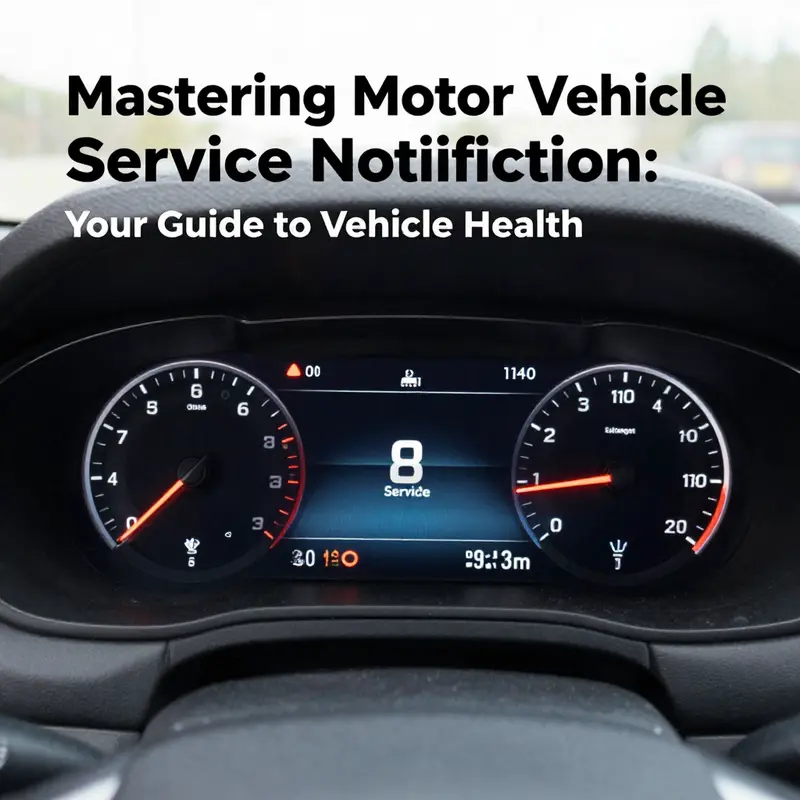
A modern car is a quiet confidant that speaks through its own signals, lights, and messages. When a click of the instrument panel lights up with a message and a symbol, it is not merely a nuisance to ignore. It is the vehicle’s way of telling you something about its health, its needs, and, crucially, the precautions needed to keep you and others safer on the road. A motor vehicle service notification, in its essence, is this conversation translated into a digital prompt. It can mark the point at which a scheduled maintenance task should be performed, or it can flag an emerging problem that demands a timely diagnosis. Understanding what these notifications mean, how they arise, and how to respond can transform how you care for your car, preserve its value, and avoid unnecessary breakdowns. The message is simple in intention, but its implications run deep across performance, safety, and cost, which makes reading the signals with attention all the more important.
To begin with, the service notification is an automated alert generated by the car’s onboard systems. It rests on a foundation of sophisticated monitoring that has become standard in most modern vehicles. The vehicle continuously checks various subsystems as it operates, from the engine’s lubrication and cooling circuit to the health of tire pressure, brake wear, battery condition, and emissions control. When the monitoring system detects that a parameter has deviated from the manufacturer’s prescribed range, or when a maintenance interval is due, it triggers a notification on the dashboard or a central display. Sometimes the message is as simple as a countdown—“Oil change due soon” or “Service due now.” Other times it is a more explicit alert, such as “Check Brake System,” “Engine Maintenance Required,” or a fault-oriented warning like “Check Engine.” In each case, the underlying goal is the same: to prompt you to take action before the problem grows more serious or the service becomes overdue.
At a fundamental level, there are two broad categories of service notifications. The first concerns maintenance reminders that arise from time and mileage data aligned with the carmaker’s maintenance schedule. These reminders organize routine care—oil changes, filter replacements, tire rotations, brake inspections, coolant top-ups, and fluid checks—around the intervals the manufacturer believes will keep the vehicle operating safely and efficiently. The second category concerns diagnostic alerts that reflect current or imminent health issues detected by diagnostic systems. In this case, a sensor reading, a fault code, or a convergence of symptoms prompts the notification because a failing component or a risky condition has been identified. The critical difference is not in the mechanism of alert but in the purpose: the former encourages proactive upkeep, the latter signals an emergent condition that could affect safety or reliability if not addressed.
The technology behind these notifications rests on a blend of onboard diagnostics, software logic, and the vehicle’s internal data lake. A modern car uses an interface known as OBD-II (onboard diagnostics, second generation) or an even more advanced variant within the manufacturer’s network. Sensors monitor oil pressure and temperature, brake pad wear, tire tread depth, battery voltage, coolant temperature, exhaust emissions, and a dozen other vital metrics. The car’s computer compiles this information, applying the factory-defined thresholds and time-based rules. When the sum of this data crosses a threshold—whether because a service interval has elapsed, a sensor registers abnormal readings, or a combination of factors suggests risk—the system issues the corresponding notification. The display may show a familiar icon like a wrench, a general “Service” message, or a more specific code that technicians can interpret to pinpoint the suspected issue.
A common point of confusion is the distinction between a maintenance reminder and a fault alert. A maintenance reminder is generally a forward-looking nudge. It invites you to book a service before a component wears down or loses efficiency; neglecting it may reduce fuel economy, compromise performance, or shorten the life of parts. A fault alert, by contrast, is a signal that there is a measurable abnormality right now. It may reflect a sensor fault that needs recalibration, a failing part that requires replacement, or an issue that could progress quickly if left unchecked. While both kinds of notifications are valuable, they carry different implications for risk and cost. Approaching a maintenance reminder with a plan—finding a trusted service provider, aligning the appointment with your schedule, and ensuring you have the right parts and fluids on hand—helps maintain continuity in car care. When a fault alert appears, it becomes a matter of priority: driving with a suspected fault can be unsafe, depending on the component involved, and a prompt diagnostic can prevent escalation.
Responding to a motor vehicle service notification benefits from a practical framework. For routine reminders, the simplest approach is to treat the message as a maintenance schedule cue. Review the vehicle’s owner’s manual or the manufacturer’s maintenance portal to confirm what the reminder means in your car’s exact configuration. Some cars provide a summarized “oil life” percentage, which estimates how long the engine oil will perform before its effectiveness declines. Others display a service due date or a distance limit, such as miles remaining before a service interval. In many cases, you’ll see a combination of indicators, including a list of components to inspect or replace, such as oil, filters, transmission fluid, brake fluid, and tires. The goal is not to chase a single digit on the maintenance schedule but to maintain an overall balance of performance, safety, and economy.
When the notification references a specific issue rather than a routine service, the course of action is more nuanced. If the message relates to the engine or emissions system, the best practice is to arrange for a diagnostic check as soon as feasible. A professional technician will retrieve diagnostic trouble codes (DTCs) from the vehicle’s computer, interpret them, and determine the probable root causes. This process often involves road testing, visual inspection, and targeted measurements with specialized tools. In some cases, the issue is straightforward to repair, while in others it requires a sequence of steps to identify the exact failing component. For example, a fault related to sensor readings may be due to a sensor itself, a wiring problem, or a related subsystem that affects the sensor’s input. The diagnostic journey is purposeful: it narrows down the possibilities and places the emphasis on accuracy and safety rather than speed.
An equally important aspect of these notifications is their role in preventive care. The modern vehicle is a tightly integrated system where even small inefficiencies can cascade into larger problems. Regular maintenance—driven by the notifications—helps preserve fuel economy, reduces wear and tear, and extends the vehicle’s usable life. Consider oil change intervals, tire rotations, and brake inspections. Oil quality and viscosity influence engine protection, but oil life estimates are contingent on driving style, climate, and engine design. Tire wear affects handling, braking, and efficiency, so timely rotation and proper inflation are crucial. Brake components wear gradually, and even minor reductions in braking effectiveness can have safety implications. By following the service alerts, drivers can maintain the chain of dependability that links mechanical reliability to everyday safety.
Yet, there is another layer to consider: how to integrate these digital prompts into a sensible maintenance plan that respects both manufacturer guidance and real-world usage. The factory schedule is a baseline, but every driver’s pattern is different. A long daily commute, frequent highway trips, or a hot climate all shape how quickly maintenance items approach their limits. Some drivers hit the oil-change threshold earlier than the mileage suggests; others accumulate wear without triggering a reminder because the life of certain components is more influenced by hours of operation and environmental conditions than by miles alone. In practice, the most effective approach is to combine the official maintenance schedule with a personal maintenance log that reflects your driving realities. This might mean scheduling oil changes at a frequency that matches the car’s oil life indicator, while also planning tire inspections around seasonal temperature swings and road exposure. A practical result is a more consistent maintenance routine that aligns with both the machine’s expectations and the owner’s life rhythm.
The social and economic dimensions of service notifications are not negligible either. People often underestimate how small inefficiencies can accumulate into larger costs over time. A slightly neglected oil change can lead to degraded lubrication, higher engine wear, and reduced fuel efficiency. Worn brake pads may seem like a minor expense until a stressed braking system compromises stopping distance. The accumulation of such effects tends to show up not only as higher repair bills but also as reduced resale value and, in some cases, safety risk. The message the car is sending is a reminder that maintenance is not a luxury but a core aspect of responsible vehicle ownership. It is the practical bridge between staying on the road and avoiding avoidable breakdowns. When you respond promptly to a notification, you are investing in reliability, safety, and long-term cost control.
One practical skill worth developing is how to interpret the range of messages you may encounter. A dashboard icon may accompany a textual note, or you may see a blend of both. In many cars, the same symbol used for routine maintenance also doubles as a cue to check certain components if a threshold is approached. It is worth becoming familiar with the specifics in your owner’s manual and, if available, the vehicle’s onboard help section. Some messages can be followed by a suggested service interval or a checklist of tasks that a technician should perform. Others may point you toward a navigation path to a service center or the manufacturer’s official portal where you can review the maintenance plan and update service records. If you have access to a smartphone app connected to your vehicle, you may also see notifications that mirror or extend what appears on the dashboard. These mobile alerts can be a helpful extension of the in-car notification, especially for drivers who want reminders outside of the car’s immediate environment and wish to keep a digital log of all maintenance activities for future reference.
In thinking about what these signals mean for you personally, consider how you can leverage them to improve your car’s longevity without turning maintenance into a ritual of anxiety. A calm, systematic approach works best. When a maintenance reminder appears, plan the visit with your trusted technician, write down what needs to be done, and consider whether any additional checks should accompany the routine service based on your driving conditions. If a fault alert crops up, treat it as a temporary alert that needs a diagnostic confirmation. Do not assume everything is fine or assume it is a major disaster; rather, arrange a diagnostic test to verify whether the issue is transient, sensor-related, or implicates a component that warrants replacement. In both cases, keeping a consistent record—dates, service items, parts replaced—helps you track the vehicle’s health over time and can be invaluable when you sell the car or seek repairs later. The goal is not to chase every notification with a service appointment but to maintain a balanced approach where maintenance is carried out thoughtfully, safely, and efficiently.
To place this in a broader context, the notification system is part of a larger ecosystem of vehicle health management that includes the interplay between driver vigilance, manufacturer guidance, and modern service technology. It is a tool that, when used with care, helps drivers avoid surprises on the road and keeps maintenance aligned with real-world use. The notification is not a verdict but a first step—a nudge toward informed action. The more you understand what the indicator is trying to communicate, the more you can tailor your maintenance plan to your car and your life. And when you do that, you’re not just preserving mechanical performance. You’re protecting the safety of every journey, preserving the vehicle’s value, and supporting a more predictable, cost-conscious approach to ownership.
If you want to explore deeper, consider how to align these insights with practical maintenance planning. For example, combining factory guidance with real-world usage can help you optimize oil changes and other routine services. For a deeper dive into balancing maintenance timing with mileage and time considerations, check out resources that discuss optimal oil change intervals and how time and mileage influence maintenance decisions. optimal oil change intervals (time vs. mileage). This kind of resource can help you translate the factory schedule into a personal plan that respects both your vehicle’s needs and your life schedule.
Ultimately, motor vehicle service notifications are one of the quiet workhorses of modern car ownership. They do not replace your judgment or your responsibility to monitor a vehicle’s performance, but they do provide a reliable, data-driven prompt that helps you act in time. They connect the car’s internal world to your outside world, turning complex diagnostics into actionable steps you can take on a human scale. And as technology continues to evolve, those messages will likely become more nuanced, more precise, and more tailored to how you drive. The core idea remains unchanged: when the car speaks through a service notification, listening closely pays off in safer driving, smoother operation, and a vehicle that serves you well for years to come. For broader context and technical perspectives on how these notification systems operate in contemporary cars, a broader technical overview can be found at external automotive resources, such as the detailed reviews and articles provided by professional outlets like Autocar.
Listening to the Engine: How Motor Vehicle Service Notifications Drive Proactive Maintenance and Safer Roads
In the realm of modern driving, an unfamiliar sound or a flicker on the dashboard no longer signals only a problem to be diagnosed by a human eye. Today’s vehicles act as connected collaborators, quietly watching over themselves and nudging you when attention is due. The motor vehicle service notification is a built-in reminder system that translates complex data from a car’s myriad sensors into actionable guidance for the driver. It is not merely a courtesy alert; it is a design feature that reframes maintenance from a reactive chore into a continuous, data-informed practice. The essence of these notifications rests on the idea that a well-timed intervention can prevent trouble from becoming a breakdown, and that steady upkeep sustains safety, performance, and value across the vehicle’s life cycle. As with many digital tools now embedded in everyday machines, the true power of service notifications lies not in the alert itself but in what follows—the steps a driver takes to interpret, respond to, and integrate those signals into a disciplined maintenance routine.
Under the hood, the modern automobile is a networked system of control units, sensors, and processors. Each subsystem—engine, transmission, brakes, tires, suspension, cooling, electrical circuits—streams data to the onboard computer. When a parameter drifts out of its optimal range, the system enters a state that can degrade efficiency, safety, or reliability. Oil quality and level, tire pressures, brake wear, battery health, cooling system temperatures, and exhaust emissions—all are monitored with increasing precision. Even subtle changes in fuel trim, misfires, or sensor readings can trigger a maintenance notification that asks the driver to take action or to schedule service. In many ways, the notification is the vehicle’s way of translating diagnostic reasoning into practical, owner-facing guidance. It serves as a bridge between the vehicle’s internal analysis and the driver’s everyday responsibilities, much like a trusted coach that flags conditioning gaps before performance suffers.
A central virtue of these alerts is timeliness. When the system identifies a need—say, a low oil level, a failing sensor, or the requirement for an oil change—the message appears promptly. The driver is prompted to verify the situation, consult the owner’s manual, and decide whether to pursue maintenance at the next convenient interval or to address an imminent issue immediately. This immediacy matters. Low oil levels or degraded oil quality, if left unchecked, can accelerate engine wear, reduce lubrication, and heighten the risk of overheating. A notification about tire pressure is equally consequential; under-inflated tires not only consume more fuel but also pose a higher risk of blowouts, especially at highway speeds. The system’s ability to highlight these conditions before they escalate embodies a shift toward predictive maintenance—a practice that recognizes minor degradations as early warning signs rather than after-the-fact failures.
The practical impact of service notifications extends beyond safety and reliability. By guiding timely maintenance, these alerts help preserve the vehicle’s performance envelope. Engine efficiency, smoothness, and responsiveness depend on well-maintained components. A routine oil change at the manufacturer-recommended interval ensures proper lubrication, reduces friction, and minimizes wear on bearings and camshafts. Tire rotations and brake inspections keep handling predictable and effective, contributing to safer stopping distances and stable cornering. When the notification system flags something like worn brake pads or deteriorating tire tread, the driver is empowered to intervene before braking performance is compromised. In this sense, service notifications act as a guardian of the driving experience, maintaining the vehicle’s core capabilities so it can meet daily demands without unexpected downtime.
Beyond the immediate concerns of safety and performance, service notifications also play a meaningful role in protecting the vehicle’s value and the owner’s financial interests. Adhering to maintenance schedules guided by alerts helps sustain resale value, because a documented history of proactive care is a strong selling point. Manufacturers and lenders alike recognize that regular, planned maintenance reduces the likelihood of major, costly repairs and can demonstrate responsible ownership. Warranties often rely on adherence to prescribed service intervals, and timely notifications provide a framework for demonstrating that requirements were met. When a vehicle has a traceable maintenance record aligned to the notifications, the risk of disputes over coverage and claims diminishes. In markets where regulatory or manufacturer guidelines emphasize road safety and compliance, consistent response to service notices becomes part of a broader accountability framework that benefits drivers and the road network as a whole.
The conversation about maintenance notifications also invites consideration of how drivers interface with the information. Not every alert carries the same gravity; some indicate routine maintenance, while others flag urgent concerns. The nuance lies in recognizing which signals require immediate action versus those that can wait for a scheduled visit. For example, a notification about an oil change represents scheduled maintenance that, if neglected, can lead to degraded lubrication and increased wear. A warning about a sensor fault might demand quick attention to avoid a cascade of diagnostic errors or drivability issues. In practice, the driver’s response should balance the guidance from the notification with real-time context—driving plans, available service windows, and the vehicle’s overall condition. A calm, methodical approach—checking the manual, consulting a trusted technician, and weighing the urgency of the alert—avoids unnecessary service costs while preserving safety and efficiency.
Incorporating service notifications into a broader maintenance mindset also means exploiting the potential for personalized intervals. While manufacturer schedules provide a baseline, many drivers accumulate miles in ways that warrant adjustments to those guidelines. Urban stop-and-go traffic, frequent towing, heavy payloads, and extreme seasonal conditions can all influence how often components need attention. The notification system can be a reliable compass in this personalized calibration, nudging owners toward more frequent checks when wear or stress is higher than expected. This adaptive relationship between the vehicle, the driver, and the service ecosystem makes maintenance less about ticking boxes on a calendar and more about sustaining a dynamic balance between performance, safety, and cost.
The implications for practical decision-making extend to how owners choose where to service their vehicle. Service notifications can prompt a driver to seek professional assistance at a certified shop or authorized service center, especially when the message concerns items tied to warranties or safety-critical systems. In some cases, a notification may reference a service bulletin or recall-related action that requires attention from specialists. The National Highway Traffic Safety Administration’s resources on recalls and vehicle safety information remind us that these systems do not operate in isolation; regulatory and safety considerations can elevate the importance of timely responses to certain alerts. The overarching message is that a notification is not an endpoint but a doorway—an invitation to engage with the vehicle’s health in a proactive, informed way.
To bring this concept to life, consider the simple but telling example of tire pressure. Modern tires are designed with sensors that continuously monitor inflation and compare it against programmed thresholds. When a pressure drop is detected, the notification appears, and the driver is alerted to check the tire’s condition. Addressing this promptly not only prevents a potential blowout but also improves fuel efficiency and tire longevity. The same logic applies to more complex scenarios, such as brake wear. A wear indicator within the brake system can trigger a notification when pads are thinning toward their minimum operational thickness. A timely brake service yields safer stopping performance, preserves rotor integrity, and avoids the high costs associated with overdue brake work. In each instance, the notification acts as a catalyst for informed action, weaving together safety, economy, and peace of mind.
Of course, there will be moments when a notification appears that is either a false positive or a sensor glitch. Vehicles are remarkably capable but not infallible. In such cases, the prudent approach is to verify before proceeding to service. This may involve cross-checking the owner’s manual for recommended interpretations, consulting the vehicle’s onboard diagnostic readout, or scheduling a diagnostic with a qualified technician to ensure that the issue is real and not merely a temporary anomaly. A disciplined approach to verification helps prevent unnecessary service visits while preserving the reliability benefits that notifications are designed to deliver. The goal is a measured response that respects the data the car provides while recognizing the limits of automated systems.
As vehicles evolve, so too will the sophistication of service notifications. Electrified powertrains, advanced driver-assistance systems, and autonomous features will expand the range of monitored parameters and the precision of maintenance guidance. The future holds the promise of even more granular reminders, sharper predictive analytics, and tighter integration with service networks. Yet the core purpose remains: to empower drivers to care for their vehicles with clarity, consistency, and confidence. In this light, a service notification is less about a single alert and more about a continuous, collaborative process between human judgment and machine insight. It turns the act of maintenance from a burdensome checklist into a strategic habit that sustains safety, performance, and value across the long arc of vehicle ownership.
For readers seeking practical context on maintenance practices that align with these alerts, there is a wealth of guidance available on reputable topics such as oil-change intervals and maintenance scheduling. For instance, the discussion on oil-change intervals—balancing time and mileage—offers useful perspective on how to translate a notification into an informed service plan. You can explore this resource at the following internal link: optimal-oil-change-intervals-time-vs-mileage. The page delves into how time-based versus mileage-based intervals interact with vehicle usage patterns, helping drivers tailor maintenance to their actual driving conditions rather than a one-size-fits-all timetable. Such nuance reinforces the idea that notifications are most valuable when they connect data-driven insights to concrete, personalized action.
Ultimately, motor vehicle service notifications symbolize a shift toward responsible, proactive car care. They encourage drivers to stay engaged with the vehicle’s health, to treat maintenance as an ongoing conversation rather than a once-in-a-while chore, and to recognize that timely attention protects safety on the road, preserves performance, and safeguards value. The driver who responds to these alerts with deliberate, informed steps becomes a co-creator of a safer driving environment. In a world where roads carry increasing complexity and traffic density, that collaboration between driver and machine matters more than ever. It is a partnership rooted in data, trust, and a shared commitment to keeping each journey steady, efficient, and secure. For those who want to deepen their understanding of safety and recall information, the broader landscape provides additional resources, including official safety notices and recall information published by national authorities. Access to these materials complements the practical, day-to-day guidance embedded in service notifications and reinforces the idea that car care is both a personal responsibility and a public good.
External resource: For a broader safety perspective and recall information beyond general maintenance, you can consult the National Highway Traffic Safety Administration’s recall information page at https://www.nhtsa.gov/vehicle-safety-and-recalls/recall-information-vehicle-safety# to understand how alerts interplay with regulatory safety actions and to stay informed about any industry-wide safety advisories that may influence maintenance decisions.
Decoding Service Notifications: What Alerts Mean and Which Maintenance Tasks They Cover
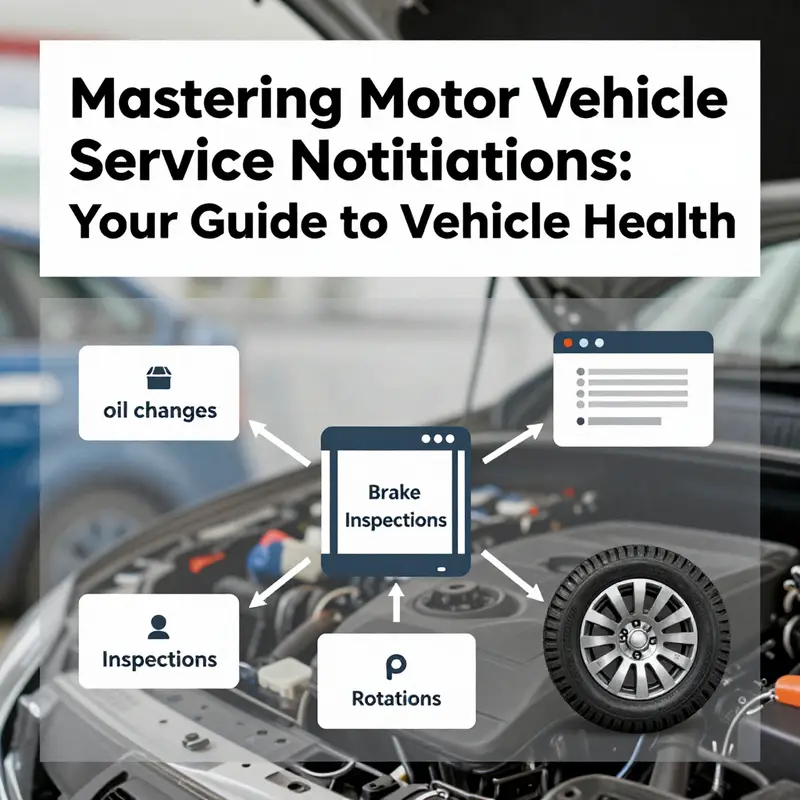
Vehicles today communicate in shorthand through service notifications. These messages tell you when routine maintenance is due and when a system needs attention. They can range from gentle reminders to urgent warnings that require immediate action. Understanding what each alert covers helps you prioritize repairs, avoid unexpected failures, and keep safety systems working as intended.
A service notification usually falls into two broad categories: scheduled maintenance reminders and diagnostic alerts. Scheduled reminders are calendar- or mileage-based prompts for routine tasks. Diagnostic alerts originate from the vehicle’s onboard monitoring systems. Both types aim to preserve vehicle reliability and safety, but they differ in urgency and recommended response.
Scheduled reminders are straightforward. They originate from the maintenance schedule programmed into the vehicle. These messages typically cover oil changes, filter replacements, tire rotations, brake inspections, and other regular tasks. The goal is to prevent wear-related failures. Following these reminders protects engine longevity, fuel efficiency, and braking performance. For example, oil and filter service preserves engine lubrication and reduces heat stress. Tire rotations and inspections help maintain even tread wear and handling. Brake inspections keep stopping distances predictable.
Some scheduled prompts are based on time, others on mileage, and some on driving conditions. Modern systems may use a combination of engine hours, temperature exposure, and load to refine service intervals. This adaptive scheduling often results in alerts that appear sooner for heavy use. When a scheduled maintenance notification appears, treat it as a planned appointment rather than an emergency. Still, don’t postpone essential services indefinitely. Delaying them can increase the chance of component failure and lead to more costly repairs.
Diagnostic alerts are more varied. These messages come from sensors, cameras, and control modules that monitor systems in real time. Diagnostic alerts can indicate simple issues, like low washer fluid, or serious faults, such as a compromised braking function. Many systems classify notifications by severity: informational, cautionary, and critical. Informational alerts require routine attention. Cautionary alerts suggest a system may not be working optimally. Critical alerts demand immediate action or a service visit.
A common diagnostic alert concerns braking systems. The message may say that an automatic braking feature is temporarily unavailable. This means the subsystem that applies brakes in emergency scenarios cannot operate reliably right now. Causes range from blocked sensors and dirty camera lenses to software conflicts and extreme weather. Often the feature restores itself after a restart or once conditions improve. If the message recurs, have a technician inspect sensors, wiring, and software status. Until then, rely on manual braking and increase following distance.
Driver-assistance features that help with steering and speed control can also produce notifications. When lane-keeping or adaptive cruise functions become unavailable, the vehicle signals reduced automation. These alerts often arise from poor visibility, faded lane markings, or obstructed sensors. Electronics may also need recalibration following repairs or updates. While such warnings may not affect the basic driving mechanics, they should not be ignored. Repeated or persistent failures warrant a service appointment to verify sensor alignment and software integrity.
Camera- and radar-based systems are sensitive to contamination and damage. Mud, snow, ice, and road grime can block lenses or reflectors. Worn or scratched lenses can degrade the signal. A quick visual check and gentle cleaning can clear many temporary alerts. Use a soft cloth and the recommended cleaning solution. Avoid abrasive materials that scratch optical surfaces. If cleaning does not clear the alert, the component may be damaged or misaligned.
Engine and emission systems also generate diagnostic notifications. A check-engine style alert indicates the powertrain control module detected a fault. This could be anything from a loose fuel cap to a failing oxygen sensor. Emission-related faults can affect fuel economy and increase pollutant output. While some faults allow you to drive cautiously to the next service, others will trigger limited-performance modes to prevent damage. If the vehicle enters a reduced-power state, schedule service promptly.
Battery and charging systems are similarly monitored. For electrified and hybrid vehicles, notifications can flag charging faults, reduced range estimates, or thermal concerns. For all vehicles, a battery-condition alert signals that starter or accessory performance might suffer. Addressing battery issues early prevents inconvenient no-start situations.
Tire monitoring systems provide another frequent alert source. Low-pressure warnings arise from leaks, seasonal pressure changes, or sensor faults. Maintaining proper tire pressure improves safety, fuel economy, and tire life. If a low-pressure notification persists after inflating tires to the specified pressure, inspect for punctures or sensor failure. A slow leak demands repair; a failed sensor needs replacement.
Many modern notifications include advice on whether the issue is temporary or persistent. Temporary alerts often resolve after the next ignition cycle or a short drive. Persistent or recurring messages are the red flags. They indicate the underlying problem remains. Keep a record of repeated alerts. This history helps technicians diagnose intermittent faults more quickly.
Data logging and remote diagnostics have changed how service centers respond. When a vehicle records an alert, it often stores detailed diagnostic codes. Some systems even upload data to the manufacturer or service network. This allows a technician to review the condition before you arrive. If remote diagnostics identify a software update or a simple recalibration, the fix may be completed quickly. If a hardware fault is detected, the center can prepare parts in advance.
Not all notifications require a dealer visit. Many maintenance tasks are routine and can be handled by qualified independent shops. For oil changes, filters, and tire services, choose a trusted local facility. If the alert relates to complex sensor arrays or proprietary calibrations, specialized equipment may be required. In those cases, a service center with appropriate diagnostic tools is the best option.
Warranty terms sometimes hinge on following service notifications. Failing to address recurring alerts can complicate warranty claims. Keep service records and receipts. These documents show you maintained the vehicle according to recommended intervals and responded to issues promptly. If an alert relates to a safety system, addressing it quickly preserves both warranty coverage and occupant protection.
When a notification appears, start with simple checks. Look for visible damage or contamination. Clean cameras and sensors gently. Verify fluid levels and tire pressures. Reboot the vehicle’s systems by powering off and restarting. If the message clears, monitor for recurrence. If it returns, schedule a diagnostic appointment and provide the technician with the alert text and any conditions when it appeared. Describe recent events, such as driving through heavy rain or a recent vehicle impact. These details help narrow down causes.
Some alerts point directly to software updates. Modern vehicles receive periodic firmware and software revisions. Updates can improve sensor fusion, correct bugs, and restore features. If a notification mentions software or calibration, follow the recommended update path. In many cases, installing the update resolves errant alerts without parts replacement.
Understanding notification language helps you act appropriately. Phrases like “temporarily unavailable” often indicate environmental or transient causes. Phrases like “service required” or “visit service center” indicate a non-negotiable need for inspection. Urgent wording such as “do not drive” or “stop safely” demands immediate cessation of driving and roadside assistance.
Service notifications are a form of ongoing communication between you and your vehicle. Treat them as prompts to preserve safety and performance. Responding to reminders keeps the vehicle on schedule. Investigating diagnostic alerts keeps critical systems functional. Keep records, act promptly on persistent messages, and use a qualified facility for complex repairs.
For guidance on routine maintenance intervals—especially oil changes—refer to manufacturer recommendations and trusted resources. A helpful overview of oil change timing explains the trade-offs between time and mileage for scheduling service and can guide decisions when a maintenance reminder appears: Optimal oil change intervals: time vs. mileage.
For more technical background on how advanced driver-assistance systems detect and report faults, consult an official support article that explains collision avoidance and lane-keeping diagnostics. This resource outlines causes for feature unavailability and recommended troubleshooting steps: https://www.tesla.com/support/autopilot
By recognizing the difference between scheduled reminders and diagnostic alerts, and by knowing how to respond, you keep your vehicle safer and more reliable. Treat notifications as actionable information, not mere noise. That approach preserves value and limits surprises on the road.
Whispers from the Dashboard: Understanding the Technology and Meaning Behind Car Service Notifications
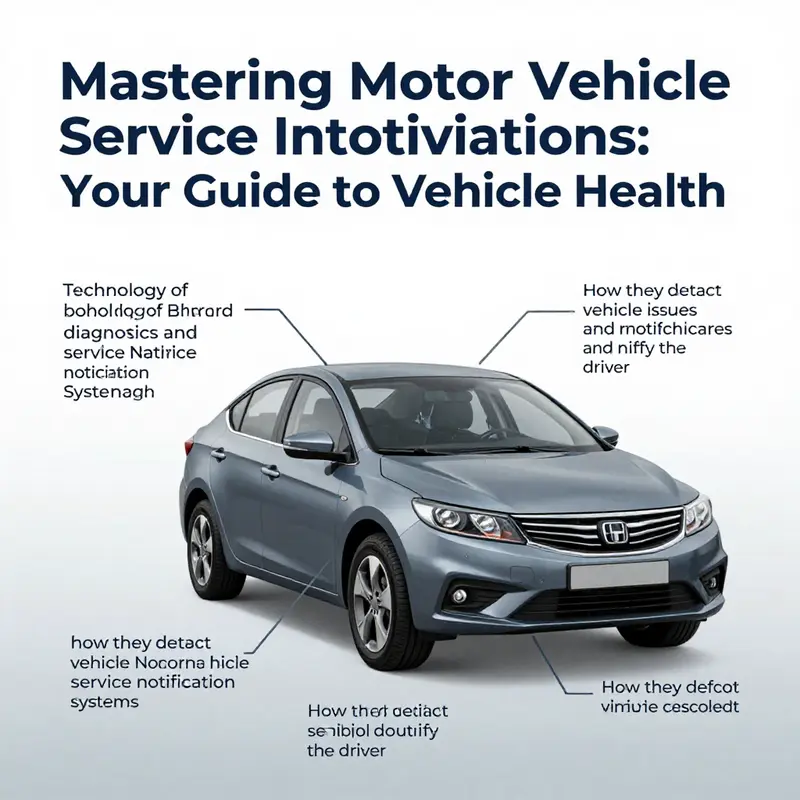
Every time you start your car, a quiet conversation unfolds between its sensors, software, and you. The service notification you see on the dash or in a companion app is not a mere reminder; it is a distilled message drawn from a network of measurements, rules, and predictions. It tells you when to change the oil, rotate the tires, or inspect the brakes, and it may even flag something that requires immediate attention. In this chapter we explore what these notifications mean, why they matter, and how the technology behind them is changing the way we care for vehicles. The core idea is simple: a modern vehicle is a moving data center. It continually collects signals from dozens of sensors, compares them against learned patterns and manufacturer guidelines, and translates that analysis into actionable guidance for the driver. The notification operates at the intersection of maintenance schedules and real-time health checks. It is as much about preventing failures as it is about prolonging performance. When you see a maintenance alert, you are receiving a compact scorecard about your vehicle’s vitality. The scorecard aggregates data on oil condition, fluid levels, tire integrity, brake wear, engine temperature, and even environmental factors that affect wear and tear. The exact mix of signals and the timing of alerts vary from one vehicle to another, but the underlying logic remains consistent: be proactive, not reactive. This proactive stance is what separates modern maintenance from the old model of “if it starts to squeal, fix it.” The old model often meant driving with a problem until a fault becomes obvious or until a roadside failure forces action. The new model recognizes that many failures begin long before the symptom becomes dramatic, and it uses notification systems to nudge owners toward timely checks that prevent breakdowns and extend the life of the car.
The technology behind these alerts rests on a trio of interlocking layers. First is the RFID-based layer, which, in the research landscape, is described as a way to automatically identify vehicles and collect diagnostic data as they move through infrastructure like highways or fueling stations. While not every car is equipped with RFID readers at every checkpoint, the concept showcases a future where the car’s health data can be accessed by the surrounding ecosystem without invasive manual input. In the envisioned model, RFID tags embedded in the vehicle can communicate with roadside readers to relay key engine parameters—oil pressure, tire pressure, engine temperature, and other indicators. Applied at scale, this approach creates an infrastructure that can detect anomalies as vehicles pass through controlled points, enabling a form of real-time health monitoring that complements the vehicle’s internal monitoring. The potential advantage is real-time trend detection and a reduction in downtime because alerts can be triggered not only by the car’s own data but also by external reads that corroborate sensor readings.
Second is the intelligent transportation systems, or ITS, layer. ITS represents the broader philosophy of connecting physical transportation components with digital platforms to improve safety, efficiency, and reliability. In the context of service notifications, ITS can blend a vehicle’s sensor data with traffic conditions, road status, and even predictive maintenance insights drawn from big data analytics. This means the notifications can become more contextual. For example, a tire pressure alert might be interpreted against current road conditions or forecasted temperature swings, converting a simple pressure reading into a more timely maintenance decision. ITS also enables dynamic information sharing with other mobility services, potentially coordinating preventive maintenance windows with traffic flows, fleet schedules, and service depot availability. The result is not just a reminder; it is a smart prompt that considers how your next service fits into the broader rhythm of road life.
Third is the Wireless Inspection and Notification System, or WINS, which ties together hardware and software components to trigger alerts when predefined thresholds are breached. In practice, WINS can collect diagnostic data via RFID-enabled sensors and combine it with onboard sensor inputs. When a parameter crosses a critical boundary—such as oil temperature rising beyond safe margins or brake wear reaching a designated limit—the system can generate immediate notifications. The strength of WINS lies in its ability to translate raw numbers into clear, timely actions. A fleet manager, for instance, can receive a dashboard alert that a group of vehicles requires tire rotations, while an individual driver can see a straightforward message on the instrument cluster that prompts an oil-and-filter service within the next few days. Collectively, RFID, ITS, and WINS illustrate a future where maintenance decisions are informed by constant data streams rather than scheduled guesses.
The core components that make up this ecosystem are surprisingly simple in concept, yet powerful in effect. RFID serves as a robust, low-latency identification and data transmission channel that can enable automatic vehicle registration and data exchange with roadside systems. Onboard sensors remain the heart of the health-monitoring picture, tracking pressures, temperatures, wear metrics, and other vital signs. Wireless communication networks—cellular, Wi‑Fi, or Bluetooth—carry data from the car to the cloud or to nearby roadside units. And cloud-based analytics platforms pull all of these signals together, converting streams of numbers into accessible alerts, trend analyses, and predictive maintenance recommendations. The elegance of this arrangement lies in how the pieces align to produce timely, accurate notifications that drivers can act on with confidence.
When a maintenance alert pops up, it can feel like a nudge toward order in a messy schedule. Yet the choice of whether to act immediately or to schedule a future appointment depends on several factors. Oil changes, tire rotations, and brake inspections are not merely about ticking boxes in a maintenance calendar. They are about maintaining the engine’s efficiency and the vehicle’s safety margins. An oil change, for example, isn’t only about clearing old oil; it’s about ensuring lubrication quality, preventing sludge buildup, and preserving engine longevity. A tire rotation, while seemingly routine, helps even out wear across all belts and corners of the vehicle, preserving grip and braking performance. A brake inspection helps ensure that critical stopping power remains within safe limits. These tasks contribute to reliability, fuel economy, and, ultimately, occupant safety.
The experience for the driver is evolving as well. Notifications are no longer isolated blips on a dashboard; they are integrated into a larger information ecosystem that includes mobile apps, service portals, and even maintenance history logs. The driver may see a notification on the instrument cluster that reads as a crisp reminder, or a push notification on a smartphone that includes a link to a service center appointment form. In some systems, the notification includes an estimated mileage or time window for the upcoming service, plus a snapshot of the affected parameters so the driver can assess urgency at a glance. The nuance here is important: a notification can indicate routine service needs, but it can also signal the onset of a problem that demands immediate attention. A spike in engine heat or a sudden drop in tire pressure could trigger an urgent alert that prompts a stop for a quick inspection, preventing a breakdown in conditions that could worsen with time.
For those who want to dig deeper into the maintenance planning side of the equation, there is value in understanding how maintenance intervals are determined when notifications are involved. The balance between time-based versus mileage-based intervals remains a central question for many drivers. An oil-change strategy, for example, may factor in both elapsed time and miles driven, along with operating conditions, climate, and vehicle age. A well-informed approach looks beyond a rigid clock and considers how the car actually behaves on the road. To explore this idea further, see the discussion on Optimal Oil Change Intervals: Time vs Mileage. This resource offers a thoughtful examination of how intervals can be tailored to real-world usage while still aligning with recommended service windows.
As the notification system grows more sophisticated, the lines between maintenance planning and real-time diagnostics blur in a productive way. The dashboards you consult after a long trip may present a concise health score for each system rather than a laundry list of individual sensor readings. This abstraction helps non-technical users make sound decisions without feeling overwhelmed by data. And in a fleet context, automated routing decisions can be influenced by maintenance alerts. If a group of vehicles shows elevated tire temperatures in the same corridor, a fleet manager can schedule a single maintenance stop for several units, reducing downtime and improving overall efficiency.
All of this points to a broader shift in how we approach vehicle care. Service notifications are no longer passive reminders; they are active elements of a connected mobility system. They embody a proactive philosophy that treats maintenance as a fluid, data-informed process rather than a fixed timetable. The information architecture behind them—RFID-enabled data collection, ITS-driven contextualization, and WINS-triggered alerts—supports a safer, more reliable journey. It also invites ongoing refinement. As more data accrue across diverse driving conditions, algorithms can refine thresholds, tune alert phrasing, and improve the precision of predicted service windows. The result is a smoother experience for drivers and a more resilient operation for fleets.
To connect these ideas to everyday practice, consider how a driver encounters a typical service notification. The alert might say that an oil-and-filter service is due within the next 400 to 600 miles, depending on factors such as temperature swings and driving style. The message may also present a recommended action, such as scheduling an appointment or performing a quick roadside check if a parameter appears unstable. In practice, this is not a single action but a bundle of actions: check fluids, assess tires, review brake wear, and confirm service availability. If the driver follows through, the vehicle benefits from cleaner oil, better lubrication, balanced tire wear, stable braking performance, and a reduced risk of unexpected failures. If the driver delays, the system may tighten its notification cadence, or, in the case of a critical reading, escalate to an urgent alert that warrants immediate attention. The chain reaction is simple: better maintenance leads to fewer breakdowns, longer engine life, and better reliability for the road ahead.
From the perspective of the broader transportation ecosystem, these notifications also represent a step toward more sustainable mobility. When service events are optimized through data, vehicles spend less time off the road for unplanned repairs, and maintenance activities can be scheduled to minimize environmental impact. In addition, intelligent systems can help ensure that maintenance resources—parts, technicians, and service bays—are allocated where they are most needed, reducing waste and improving throughput at service centers. The cumulative effect is a transportation network that is not only safer but also more efficient and environmentally considerate. As with any advanced system, the success of maintenance notifications depends on clear communication, reliable data, and accessible interfaces. Drivers need messages that are easy to interpret, and service providers must have dashboards that accurately reflect real-world conditions. In short, the notification becomes a shared language that couples vehicle health with human decision-making.
Finally, it is worth acknowledging the practical considerations that accompany any ecosystem built on data exchange. Privacy and data governance become relevant when vehicles transmit diagnostic information, especially as the scale of data collection grows. Clear policies about who can access the data, how long it is stored, and how it is used are essential to maintain trust. Reliability is another critical factor. Notifications must be timely and accurate; false positives can erode confidence, while false negatives can endanger safety. Engineers continually test sensors, refine thresholds, and calibrate models to minimize both kinds of errors. The ongoing optimization is part of the journey toward a more connected, responsive vehicle experience.
As we move through this landscape, the central question remains: what does a motor vehicle service notification mean for you? It means a smarter, more proactive approach to vehicle care. It signals that your car is not simply a machine but a partner in your mobility, capable of learning from how you drive and planning maintenance around your real needs. It invites you to participate in a routine that preserves safety, performance, and value. And it points toward a future in which your car and the surrounding infrastructure work together to keep you moving with confidence. For readers curious about how specific maintenance decisions can be aligned with real usage, the discussion of oil-change intervals remains a practical touchstone, linking the technology you read about to the daily choices you make behind the wheel.
External resources offer a deeper dive into the research that underpins these developments. For a broader scientific perspective on RFID-enabled maintenance notification systems, see the Vehicle Maintenance Notification System Using RFID Technology. https://www.mdpi.com/1424-8220/25/11/3217
Final thoughts
Motor vehicle service notifications are more than mere alerts; they are essential components of modern car ownership, effectively bridging the gap between vehicle technology and maintenance needs. By understanding their functionality, importance, types, and the technology that powers them, car owners and operators can enhance their approach to vehicle care. This knowledge empowers you to make informed decisions about your vehicle’s maintenance, ensuring safety and performance are always prioritized. Make it a habit to heed these notifications and prolong the lifespan of your vehicle.