Vehicle service contracts can be crucial agreements for private car owners, used car buyers, and small business fleet operators alike. Understanding the distinctions and benefits of the two main types of vehicle service contracts is essential for making informed decisions that align with your individual or business needs. The first chapter delves into rental and lease agreements, providing insights on how these contracts facilitate vehicle usage without ownership obligations. On the other hand, the second chapter focuses on maintenance and repair contracts, highlighting their significance in ensuring vehicle longevity and performance. Concluding with a comparative analysis, the article aims to equip readers with an understanding of both types of contracts, guiding them to make the best choices regarding vehicle service management.
From Use to Service: The Two Core Vehicle Contract Models Behind How We Drive
Access to a vehicle in modern life comes in many forms, but two core contract models sit at the heart of most consumer and business experiences. They define not only who can use a vehicle and for how long, but also who bears the cost of maintenance, who carries the risk of wear, and what happens at the end of the agreement. When we step back from the details of individual clauses, we can see a simple but powerful distinction: one model centers on the right to use a tangible asset for a defined period, while the other centers on the delivery of a service over a longer horizon. Together, they map the two fundamental ways people and organizations access mobility without owning the vehicle outright. The first model treats the vehicle as a usable asset within a defined time frame and exchange of money; the second treats the vehicle as a financed asset whose use is distributed across a longer period through periodic payments and defined performance expectations. To understand why these agreements matter, it helps to trace their logic from first principles—how each model allocates risk, cost, and responsibility, and how each model shapes practical decisions at the scale of a family road trip or a fleet operation.
Consider a traveler planning a two-week vacation and a small business that needs mobility for sales reps over three years. In the first scenario, the traveler will likely lean toward a vehicle rental, a short-term arrangement designed to meet a temporary transportation need without the obligations of ownership or long-term debt. The rental contract is fundamentally a use-rights agreement. It defines a window during which the lessee or renter gains the exclusive right to operate a specified vehicle. The core transaction is straightforward: a price paid for a period of time, a designated vehicle, and a return at the end of the term. The terms cover practicalities such as where the vehicle is picked up and dropped off, what happens if the vehicle is damaged, and who bears the cost of fuel, insurance, and basic maintenance during the rental term. This model presumes the vehicle is not a long-term financial instrument for the user; instead, it is a temporary asset in service to a specific need. In such arrangements, the rental company often assumes a larger share of the operational risk. They manage the fleet, the routine maintenance, the insurance coverage during the rental window, and the logistics of repeat turnovers that keep the business model viable. The renter, in turn, gains predictability and flexibility, paying higher daily rates that reflect both the premium on convenience and the risk the rental company shoulders through multiple turnovers.
The second model, the vehicle lease agreement, reframes the relationship between use, cost, and ownership in a way that is distinct but complementary. A lease is typically a longer-term arrangement, often spanning two to five years, and is designed to approximate the experience of driving a new or nearly new vehicle without the up-front purchase price. A lease starts with a different financial calculus: the lessee pays for the vehicle’s depreciation during the lease term, plus interest and fees, rather than paying for the entire purchase price. Because the vehicle’s value erodes over time, the monthly payment tends to be lower than a traditional loan for the same car, enabling what many people perceive as more manageable cash flow. But this cost structure comes with its own obligations. Leases usually impose mileage limits and wear-and-tear standards. If a lessee exceeds annual mileage or returns the vehicle with more wear than is deemed acceptable, end-of-term charges can arise. The contract therefore becomes a balancing act—between enjoying the benefits of a newer vehicle and staying within the financial and physical boundaries set by the agreement.
To see how these two approaches play out in everyday practice, it helps to look at the mechanics and expectations embedded in each contract type. A vehicle rental agreement is built around a short time horizon and a high degree of flexibility. The document typically describes a specific vehicle, identified by its make, model, and unique identifier, with a defined pickup and return schedule. It lays out the rent as a periodic payment for the duration of use and sets responsibility for routine maintenance, insurance, and incidentals in a way that reflects the temporary nature of the arrangement. Maintenance under a rental contract is often bundled into the rental package or handled by the rental company during the term. The renter’s responsibilities tend to focus on the condition of the vehicle at return, the timely reporting of incidents, and adherence to rules about fuel, cleanliness, and use. Where damage occurs, the terms specify liability, the process for filing claims, and the potential penalties or fees that may apply if the vehicle is returned with damage beyond normal wear.
This model excels when needs are episodic or uncertain. If a person is traveling for a week-long conference, taking a road trip, or simply needing a car while their own is in the shop, a rental offers access without the long-term commitment. It is particularly attractive when one’s life is not organized around predictable vehicle use, or when the cost of ownership—maintenance, insurance, and depreciation—feels disproportionate to the benefit. The economic logic is straightforward: the renter trades some long-term value for the freedom to decide, on a given occasion, which vehicle to use, how long to use it, and where to use it, all without incurring the burdens of ownership. The rental company, by contrast, manages fleet-wide risk, logistics, and the capital expenditure required to keep a ready roster of vehicles in service. The contract is structured so that the daily or weekly rate not only covers this logistical complexity but also accounts for turnover, cleaning, insurance, and the margin necessary to sustain the business model across a diverse set of customers.
In a lease arrangement, the calculation shifts away from the momentary convenience of a rental toward the ongoing experience of ownership without the burdens of ownership. The lease is, in essence, a financial instrument as much as a usage contract. It shifts the burden of depreciation from the user to the lessor and aligns payments with the vehicle’s expected loss of value over the contract term. The lessee commits to a fixed term, with prescribed parameters about annual mileage and acceptable wear and tear. These constraints are designed to ensure that the vehicle maintains a predictable residual value for the lessor at the end of the term. The lessee also agrees to maintain the vehicle according to the manufacturer’s guidelines, to insure it adequately, and to comply with inspections and service requirements. End-of-lease options provide a range of strategic choices: the lessee can return the vehicle, renew with a new asset, or, in some cases, purchase the vehicle at a predetermined price. Each option is tethered to the contract’s mechanics and the residual value estimates that underwrite the lease’s economics.
The two models also differ in how they map risk. In a rental, risk concentrates on the vehicle’s operational state during the term and the renter’s behavior—how the car is driven, how it is treated, and the likelihood of damage or loss during the use window. The rental company shoulders far greater responsibility for the vehicle’s condition upon return, as well as the broader maintenance and safety standards that keep the fleet reliable. A lease, on the other hand, distributes risk in a way that mirrors the relationship between a consumer and a financed asset. The lessee absorbs responsibility for routine upkeep and adherence to mileage and wear limits, and the lessor assumes the risk linked to the vehicle’s residual value. Yet both contracts converge on a shared objective: enable mobility while transferring the heavy burdens of ownership—value loss, maintenance costs, and long-term depreciation—to the contractual framework that governs the arrangement.
As a reader considers which path aligns with a given situation, it helps to be clear about the practical implications. A short trip or a temporary business engagement often benefits from a rental that can be organized quickly, with minimal paperwork and flexible terms. It is a portfolio approach to risk: you pay for the window of use, convenience is prioritized, and the service provider absorbs much of the logistical load, including routine maintenance during the term and the cost of reconditioning the vehicle for the next user. For individuals or organizations planning for a sustained period of mobility and who want predictable monthly costs, a lease becomes the more economical choice. It ties payment to the asset’s depreciation rather than its full value, typically yielding lower monthly payments and enabling upgrades to newer models on a refresh cycle. It also imposes discipline: mileage caps, wear-and-tear standards, and end-of-term options that require careful budgeting for potential charges if the vehicle’s condition or use exceeds agreed limits.
Both contracts operate within a broader ecosystem of vehicle-related agreements that are related in purpose but distinct in function. Insurance, for example, sits alongside these models as a safety net for risk, but insurance terms are not the same as the core contract. Parking management or other ancillary arrangements may accompany a vehicle use arrangement, yet those contracts address different operational domains. The essential distinction remains anchored in what the contract is primarily governing: the use of a specific asset for a defined period, or the provisioning of a service over a longer horizon that resembles ownership without its full cost. When we hold these two lenses together, the bigger picture becomes clearer: mobility can be organized around the asset that is used and the service that is delivered, and the best choice depends on time horizon, cost structure, and the risk profile a person or a business is prepared to manage.
The practical implications extend beyond the page. For someone who travels frequently for work, the rental model can adapt to changing itineraries with remarkable flexibility. The renter can select different vehicle types to match the trip’s character—compact for city travel, larger for family trips, or a fuel-efficient option for longer journeys—without the obligation to own any of them. This adaptability comes with trade-offs: higher per-day costs, the need to manage fuel and incidentals, and the potential for additional fees if the vehicle is not returned in a specified condition. In contrast, the lease model offers the comfort of a predictable monthly expense and the ability to drive a newer model with modern features, often accompanied by maintenance coverage that reduces out-of-pocket repair costs during the term. Yet it demands discipline: staying within mileage limits, keeping the vehicle in good condition, and budgeting for end-of-lease charges if the terms are not met.
From a business perspective, these two models provide a portfolio of choices that can help manage a fleet’s total cost of ownership and operational flexibility. A company that requires variable mobility for projects across multiple locations may lean toward short-term rentals to scale up or down quickly without long-term commitments to specific assets. A fleet manager seeking to optimize budget predictability while keeping a steady stream of newer vehicles may prefer a leasing strategy, which can smooth expenses, align with depreciation schedules, and offer a structured path to up-to-date technology and safety features for employees. The decision is rarely binary; many organizations blend both approaches to match distinct needs within the same mobility strategy. The important task, then, is to understand the contract’s architecture well enough to anticipate how each term will behave under real-world conditions, from everyday wear and tear to occasional emergencies that require rapid reallocation of resources.
This chapter, grounded in the logic of two fundamental models, invites readers to see vehicle access as a deliberate choice about time, cost, and responsibility. It is not just a legal document; it is a framework that shapes how people move and how organizations plan. When evaluating which path to take, it helps to weigh the horizon you are planning for against the degree of control you want over the asset, the shape of your cash flows, and the kind of certainty you need about future maintenance or end-of-term options. The two pathways share a common goal—mobility without the burdens of ownership—but they diverge in the means by which that mobility is delivered and sustained. As you consider your own mobility needs, this dual lens can illuminate not only what contract to sign, but how to negotiate terms in a way that aligns with your life, your values, and your plans for the road ahead.
For those seeking further practical context and reflections on how practitioners view these distinctions, the KMZ Vehicle Center blog offers additional perspectives and case-oriented discussions that can illuminate how the two models play out across different use cases. KMZ Vehicle Center blog
External resources can provide broader regulatory and policy perspectives that help frame the contractual choices. In particular, official guidance from the U.S. Department of Transportation offers context on how transportation policies interface with consumer and commercial vehicle contracts, helping readers understand limits, protections, and conforming practices that affect both rental and lease agreements. For regulatory context, see https://www.transportation.gov
Two Sides of Vehicle Care: Maintenance Plans and Repair Contracts that Shield Your Ride
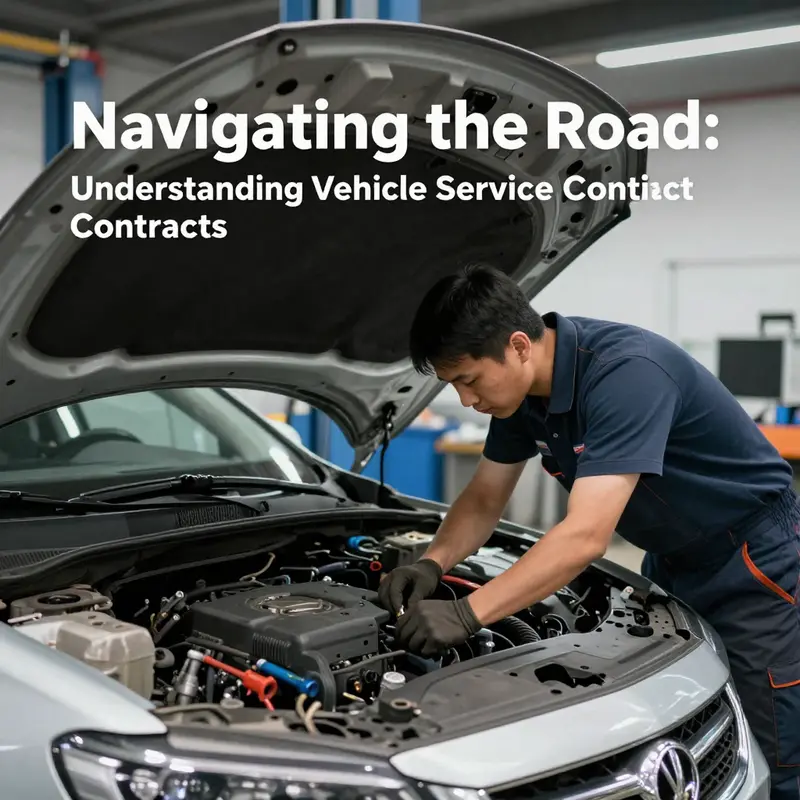
Maintenance plans are a proactive shield. They are built on the premise that regular, planned service preserves the vehicle’s health and minimizes the risk of costly failures that could arise from neglect. These programs typically specify scheduled services, cadence, and whether labor and parts are included. They emphasize routine tasks such as oil changes, tire rotations, brake inspections, fluid checks, and filter replacements. The value lies in prevention, predictability, and potential to extend the vehicle’s life while reducing downtime. The contract usually lists eligible services, cadence conditions, parts requirements, and network expectations. A central feature is the partnership between the owner and the provider: following the maintenance schedule in exchange for a guaranteed price for routine items over a term. The outcome is predictable costs and streamlined service, with the goal of keeping the car in reliable operating condition.
Repair contracts, by contrast, address the events that maintenance cannot prevent. They provide coverage for major failures in drive components, electrical systems, cooling, climate control, and other critical subsystems. These plans are reactive in nature, kicking in when a breakdown occurs, and they may include deductibles, network requirements, and limits on covered components. The practical value is protection against the financial shock of expensive repairs, which can preserve mobility and protect resale value even when the unexpected happens. The cost architecture often reflects risk: plans with broader coverage tend to require higher periodic payments, while more selective coverage offers lower cost but tighter limits.
The two types differ in timing and purpose, but there is no inevitable need to choose one over the other. Maintenance investments emphasize consistency and prevention, while repair protection focuses on risk transfer and financial cap. The most robust owners often pursue a blended approach that combines reliable routine care with a shield against catastrophic costs. Providers may offer bundles that integrate both maintenance and major repairs, recognizing that the real world presents a lifecycle where both prevention and protection matter.
For someone evaluating options, practical steps include identifying priorities, assessing the vehicle’s age and mileage, and comparing total cost of ownership with and without each plan. Important questions include: What is the deductible? Are there caps on visits or dollars per service? Which networks are eligible for service, and do they include trusted local shops? What exactly is covered when a major component fails, and are diagnostics included? A careful read of exclusions and limits typically reveals the true economic value of a plan. It can also be helpful to test whether a plan aligns with your driving pattern, preferred service centers, and willingness to commit to a defined maintenance schedule.
The broader takeaway is that maintenance and repair are not enemies but complements in a comprehensive vehicle care strategy. A well designed program balances predictable maintenance costs with protection against high, sporadic repair bills, creating a smoother financial path through years of ownership. The guidance offered here translates into a practical shopping plan: define priorities, collect quotes, verify coverage details, confirm network options, and keep thorough service histories. When you apply this dual lens, you move from a patchwork of ad hoc costs to a structured plan that supports reliability, value retention, and peace of mind on the road.
External resources can complement these considerations. You may find it useful to consult vehicle maintenance guidelines or provider literature to understand standard coverage levels and common exclusions. For example, some sources offer guidance on maintenance timing and component replacement intervals that help frame contract terms around actual vehicle needs. The goal is to align coverage with the realities of how you drive, how long you plan to own the car, and how much risk you are willing to absorb. The result is a cohesive strategy that treats car care as an ongoing partnership between you, your vehicle, and the service network. For further reading, see Vehicle Maintenance and Repair Guidelines at a reputable external source.
Two Paths of Protection: A Practical Guide to Basic and Comprehensive Vehicle Service Contracts
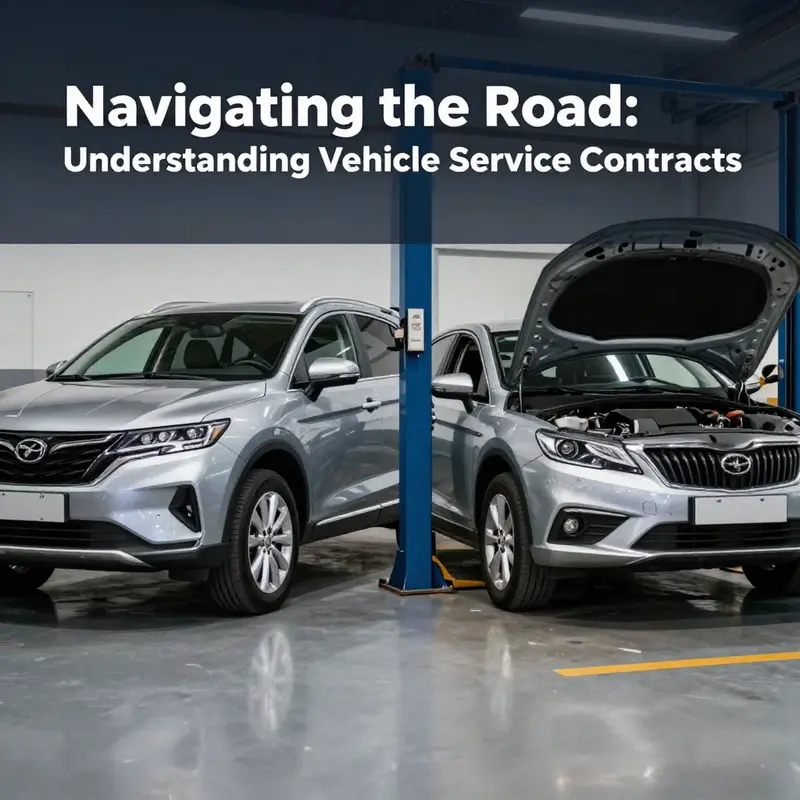
Protection for a vehicle after the initial warranty has expired is a decision many buyers approach with a mix of practical caution and emotional reassurance. The two primary forms of vehicle service contracts—often labeled basic and comprehensive—sit at the center of that decision. They are not mere add ons but a set of promises that shape how a car is cared for, how repairs are financed, and how owners respond to the unpredictability of mechanical and electronic systems as vehicles age. A clear understanding of what each type covers, where it leaves gaps, and how the costs balance against the potential expense of future repairs helps keep expectations aligned with reality. The two paths are distinct in their breadth of coverage, yet they also converge on a shared goal: to reduce the financial shocks that can accompany significant breakdowns.
The basic contract tends to focus protection on the core components that determine whether a car will run reliably, such as the engine, transmission, and driveline. This keeps premiums lower and makes the plan easier to budget for, but it leaves many other systems without coverage and may require out of pocket repairs for non core parts. In this sense it acts like a floor rather than a ceiling on coverage.
Comprehensive contracts broaden the scope to include a wider set of systems that modern cars depend on, from climate control and electrical harnesses to steering, suspension, and often complex software driven features. Premiums and deductibles are higher, but the plan reduces the likelihood of large, unexpected bills and provides greater peace of mind for owners who depend on a vehicle for work or mobility in demanding conditions.
Choosing between the two is a matter of risk tolerance, budget, vehicle age, and expected use. A newer vehicle with advanced technology may justify broader protection, while an older car with a proven core may be well served by basic coverage. Reading the terms carefully for exclusions, caps, and pre existing conditions is essential, as is considering how ancillary benefits such as roadside assistance or rental coverage affect overall value.
In sum, basic and comprehensive contracts offer different philosophies of protection. The best choice aligns with the owner’s financial plan, the vehicle’s condition, and the desire for predictability versus breadth of coverage.
Final thoughts
Understanding the two types of vehicle service contracts—rental/lease and maintenance/repair—offers vehicle owners and fleet operators essential knowledge for effective vehicle management. Rental agreements provide flexibility and ease for temporary vehicle usage, while maintenance contracts ensure your vehicle remains in peak condition with reliable service. By recognizing the unique benefits of each contract type, stakeholders can make informed decisions that best suit their needs, enhancing both personal vehicle enjoyment and operational efficiency for businesses.