
The vehicle service division plays a pivotal role in the automotive ecosystem, catering to the essential needs of local private car owners, used car buyers and sellers, as well as small business fleet operators. This specialized segment is dedicated to maintenance, repair, and servicing of vehicles, ensuring safety and efficiency for all users. As the complexity of automotive technology increases, understanding the basic functions of vehicle service divisions becomes paramount. Moreover, with rapid technological innovations reshaping the landscape, these divisions are evolving to enhance customer experiences. Finally, the economic implications of well-functioning vehicle service divisions resonate beyond individual users, affecting broader market dynamics. Through this article, we will delve into the core functions, technological advancements, and economic impacts of vehicle service divisions, equipping readers with crucial insights into this vital component of the automotive industry.
Keeping Fleets Ready: How a Vehicle Service Division Delivers Reliability and Value
Core responsibilities and how they form a living system
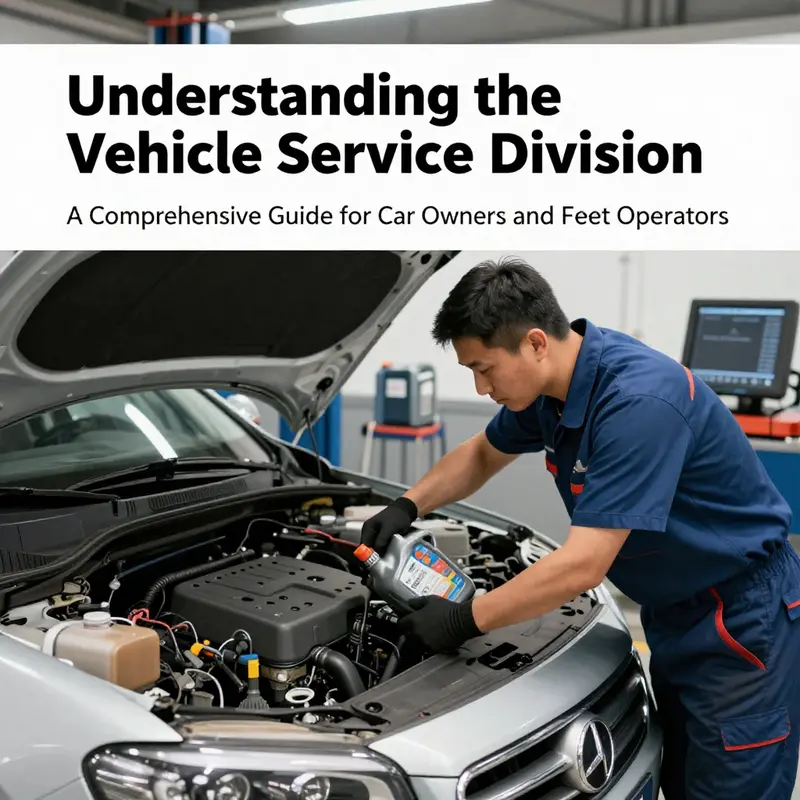
A Vehicle Service Division (VSD) exists to keep vehicles safe, available, and economical to operate. It is more than a workshop or a set of technicians. A VSD is a coordinated system that blends preventive care, rapid diagnostics, inventory control, regulatory oversight, training, and data-driven fleet management. Each element supports the others. Together they reduce downtime, extend vehicle life, and control cost. This chapter explains how those elements work in concert and what makes a VSD effective for any organization that depends on vehicles.
Preventive maintenance lies at the center of most VSD strategies. Scheduled inspections and routine servicing stop small problems from becoming major failures. Oil and filter changes, tire rotations, brake checks, and fluid top-ups follow defined intervals. Those intervals are based on vehicle type, operating duty cycles, and manufacturer guidance. They also reflect real-world conditions like heavy loads, extreme climates, or frequent idling. A disciplined preventive program improves reliability and reduces the risk of roadside breakdowns. It also stabilizes repair costs by shifting spending from emergency fixes to planned maintenance.
To build an effective preventive schedule, a VSD relies on both calendar-based and usage-based triggers. Calendar triggers address time-sensitive items, such as coolant replacement or brake fluid changes. Usage triggers respond to mileage, engine hours, or cycles. For many fleets, nuanced guidance on service frequency matters. When oil intervals are balanced between time and mileage, engines remain protected without unnecessary service. For a practical reference on this balance, see guidance on optimal oil change intervals.
Diagnostics and repair are the VSD’s reactive core. When faults arise, skilled technicians and diagnostic tools locate causes quickly. Modern vehicles include complex electrical systems, sensors, and control modules. Effective diagnostics requires both training and access to up-to-date software and codes. Technicians must translate fault codes into actionable steps. They must also rule out non-electrical causes like mechanical wear or fluid contamination.
A good diagnostics workflow reduces repeated visits. It starts with a clear problem description from the operator. It continues with systematic checks and targeted tests. Technicians document findings and corrective actions in a centralized record. That documentation prevents guesswork on subsequent issues and builds a knowledge base for recurring faults.
Parts and inventory control bridge diagnostics and repair. If the right part is on the shelf, a vehicle returns to service quickly. If not, the vehicle may wait for days. A VSD must balance two competing costs: inventory carrying costs and downtime risks. Overstock increases capital tied up in parts and raises waste risk from obsolescence. Understock increases downtime and emergency procurement expenses.
Effective inventory systems use historical usage data, lead times, and criticality assessments. Common wear items—filters, brake pads, belts—require steady stock. Critical or long-lead components, such as control modules or specialized pumps, need just-in-time strategies or vendor agreements for rapid supply. Mapping parts to vehicle models and typical failure modes reduces search time. Barcode or RFID tracking and automated reorder points improve accuracy and responsiveness.
Fleet management ties all these functions together. It is the nervous system that monitors vehicle location, use, condition, and cost. Fleet managers track mileage, fuel consumption, maintenance history, and assignment patterns. Those data guide decisions on repair versus replacement, redeployment, and scheduling. They also reveal trends—rising fuel use for a particular model, frequent brake jobs on a particular route, or a cluster of electrical faults tied to a specific component.
A VSD applies metrics to measure performance and support decisions. Common metrics include mean time between failures, mean time to repair, downtime per vehicle, maintenance cost per mile, and parts turnover. Tracking key performance indicators clarifies whether maintenance efforts reduce failures and control cost. It also informs budgeting and capital planning for vehicle replacement.
Compliance and safety are non-negotiable responsibilities. The VSD ensures vehicles meet regulatory requirements for emissions, inspections, and certifications. It maintains records for audits and enforces policies on licensing and insurance. Safety is broader than regulatory boxes. It includes vehicle condition checks, recall management, and the application of safety-critical upgrades. A VSD creates inspection checklists that focus on brakes, steering, lights, tires, and emergency systems. It enforces remedial steps before vehicles return to service.
Driver support and training close the loop between vehicles and the people who operate them. Drivers are the first line of defense against vehicle deterioration. Their behavior affects fuel use, wear rates, and safety incidents. A VSD provides guidance on proper operation, pre-trip inspections, and reporting procedures. Training covers topics like correct loading practices, idling reduction, and identifying warning signs. Ongoing communication channels let drivers report defects quickly. Some VSDs run incentive programs to reward careful driving and accurate reporting. Those programs lower repair costs and improve fleet reliability.
Beyond basic training, a modern VSD may deliver specialized instruction. Technicians learn to work with new powertrains, telematics, and diagnostic platforms. Drivers may receive briefings on safe operation of new vehicle features or on environmental practices that reduce emissions.
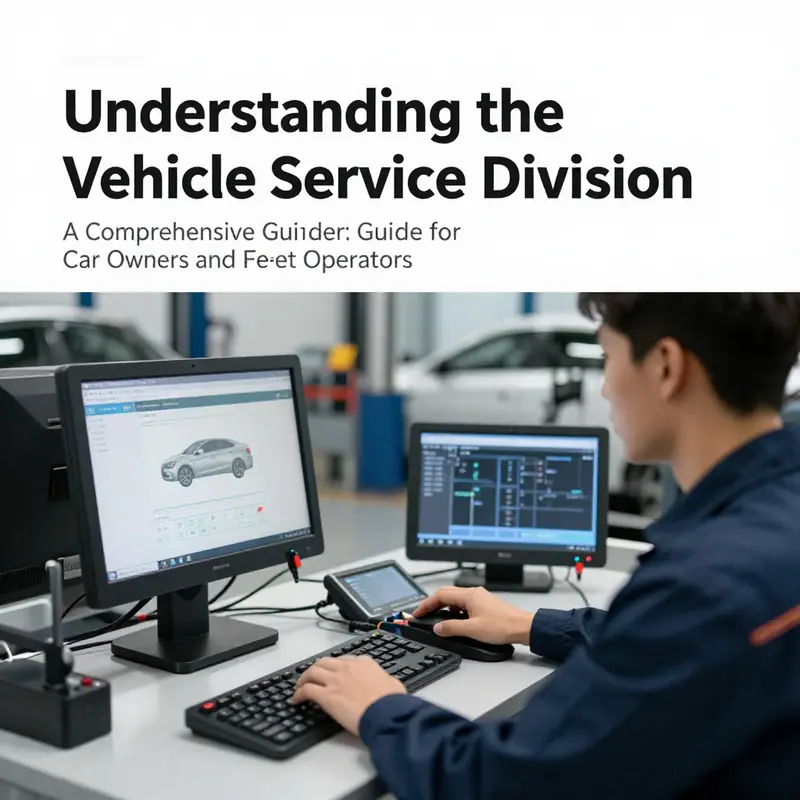
Technology amplifies every VSD function. Telematics collect location, speed, engine diagnostics, and idle time. Maintenance management systems record service events, manage work orders, and schedule preventive tasks. Diagnostic software links vehicle fault codes to repair guides and parts lists. Inventory systems automate reorders and track usage. When these tools integrate, they create a real-time picture of fleet health. Integration reduces manual entry errors and ensures decisions rest on current data.
A practical example illustrates integration. Telematics flags a vehicle with rising coolant temperatures and frequent high idle. The maintenance management system opens a work order. The technician receives a pre-diagnostic report showing engine codes and last service. Inventory records show the required thermostat is available. The repair proceeds without delay. The vehicle returns to service the same day. That sequence reduces downtime and avoids cascading failures.
Operational readiness and contingency planning are often overlooked but essential VSD tasks. Organizations with mission-critical vehicles plan for rapid response to outages. A VSD maintains emergency spares, keeps quick-reference repair guides, and trains rapid-response teams. It also plans for seasonality and predictable surges. For example, winter demands may require pre-winter checks and an inventory of cold-weather parts. Summer workloads may shift to HVAC and cooling system inspections. The plan anticipates supply chain delays and creates vendor relationships to secure emergency support.
Lifecycle cost management is a strategic function. A VSD assesses when repair is more economical than replacement. It models asset life, maintenance cost trends, and resale value. It also monitors technological shifts that affect value. For instance, a new emissions standard or powertrain technology may change residual values. Proper lifecycle planning avoids keeping vehicles that are expensive to maintain. It also prevents premature disposal of assets with significant useful life remaining.
Process design and standard operating procedures make the VSD consistent and auditable. Workflows specify inspection steps, escalation paths, and repair approvals. They define thresholds for emergency purchases and parts ordering. SOPs reduce variability in service quality. They also make training easier and audits smoother. A consistent process ensures that a vehicle gets the same basic care regardless of technician or shift.
Quality assurance and continuous improvement embed learning in the VSD. Post-repair inspections, warranty claim analysis, and root-cause reviews reveal weaknesses. A VSD that learns will reduce repeat failures. It will also improve technician diagnostics and inventory choices. Regular review meetings connect fleet managers, technicians, and drivers. These meetings turn data into actionable plans for reducing cost and downtime.
Vendor and warranty management lowers cost and risk. A VSD negotiates parts and service contracts, monitors vendor performance, and enforces warranty recoveries. Warranties can cover significant repair costs, but only if claims are filed correctly and in a timely manner. A VSD keeps documentation that proves maintenance compliance. That proof supports warranty claims and reduces net repair expense.
Safety culture extends beyond inspections and checklists. It manifests in how the VSD communicates about risk, how it rewards safe behavior, and how quickly it responds to hazards. Safety incidents trigger investigations and corrective actions. Those actions might include design changes to equipment, revised procedures, or additional training. A proactive safety culture reduces incidents and safeguards both people and assets.
Financial controls and transparent reporting keep the VSD accountable. Clear budgets, cost allocations, and variance analyses show where money is spent and why. Reporting links maintenance expense to fleet performance and operational outcomes. Decision-makers use those reports to prioritize investment and to evaluate trade-offs, such as investing in replacement vehicles versus increasing preventive maintenance.
Human capital matters as much as tools. A VSD requires skilled technicians, savvy managers, and responsive support staff. Recruiting and retention strategies include training development, clear career paths, and competitive compensation. Cross-training reduces single-point failures when specialized skills are scarce. A knowledgeable team makes faster, more accurate decisions and improves overall effectiveness.
Sustainability is an increasingly important lens for VSDs. Fuel use, idling policies, and vehicle selection affect emissions and operating costs. A VSD can implement idling reduction programs, optimize routes, and choose low-emission vehicles where appropriate. Those actions reduce both environmental impact and fuel expense. Tracking carbon or fuel consumption metrics ties sustainability goals to operational results.
Finally, customer experience matters for VSDs that support external customers or organizational stakeholders. Clear communication about repair status, predictable service timelines, and transparent cost information build trust. For organizations that provide vehicles to end users, the VSD’s responsiveness affects satisfaction and perceived value.
All these functions coalesce around a single aim: to keep vehicles ready for use while controlling cost and risk. A well-run Vehicle Service Division transforms maintenance from a cost center into a strategic enabler. It uses disciplined preventive care to reduce failures, efficient diagnostics to shorten repairs, smart inventory to eliminate delays, and data-driven fleet management to guide investments. It enforces safety and compliance, trains drivers and technicians, and plans for contingencies. It measures performance and continuously improves.
Successful VSDs are pragmatic and adaptive. They balance long-term planning and day-to-day responsiveness. They invest in tools where return on investment is clear. They document procedures and meet regulatory obligations. They empower drivers and technicians to act quickly and correctly. Together, these practices deliver reliability, value, and operational resilience.
For authoritative guidance on federal approaches to fleet maintenance and standards, consult the U.S. Department of Energy’s Federal Energy Management Program on vehicle maintenance: https://www.femp.gov/fleet-management/vehicle-maintenance
How Technology Is Rewriting the Role of a Vehicle Service Division
Integrating intelligent systems into service operations
A vehicle service division no longer functions only as a bay where technicians swap oil and replace brake pads. It has become a dynamic center where data, software, and human expertise meet to keep vehicles safe, reliable, and efficient across their life cycle. Advances in telematics, artificial intelligence, and connected vehicle systems have shifted the unit from reactive repairs to proactive ownership support. This shift influences every layer of the division: diagnostics, scheduling, parts logistics, workforce skills, customer experience, and the environmental footprint of operations.
Telematics sits at the center of this transformation. These systems capture constant streams of information about vehicle speed, engine performance, battery levels, fluid temperatures, and error codes. In a modern service division, telematics data flows into centralized platforms. There, it is aggregated, normalized, and fed into analytics engines. The result is real-time diagnostics where problems are identified while the vehicle is still operational. This creates a new work rhythm for service teams. Instead of waiting for customers to report a problem, technicians receive prioritized alerts. They prepare parts, allocate staff, and schedule work efficiently. This reduces downtime for customers and increases throughput for the service facility.
Artificial intelligence accelerates the value of telematics. Machine learning models analyze historical and live data to surface patterns that human technicians might miss. These models predict when a component will fail, often days or weeks before symptoms appear. Predictive maintenance moves the service division from a calendar-based schedule to a condition-based plan. Technicians are no longer simply replacing components at fixed intervals; they are intervening when data indicates need. This reduces unnecessary parts replacement and lowers labor costs.
Connected vehicle technologies enable new interactions between vehicles and service divisions. Remote diagnostics allow technicians to interrogate a vehicle while it is off-site. Software updates delivered over the air fix issues inside vehicle control units without a physical visit. For fleets, this means many faults can be remedied remotely, and vehicles can be sent for service only when a hands-on repair is necessary. As a result, scheduling becomes smarter, and capacity is used more effectively.
These technical capabilities change how customer relationships are managed. When a service division knows a battery cell is degrading or a coolant sensor is drifting, it can inform the owner with context-rich recommendations. Automated scheduling, backed by AI, proposes convenient appointment windows. Messaging can include the most likely cause, estimated time in the shop, and a transparent cost estimate. Customers experience a seamless journey, where surprises are reduced and trust increases. Personalized engagement extends beyond a single repair. Data-driven reminders, targeted offers, and tailored maintenance plans strengthen long-term loyalty.
But the story goes beyond customer convenience. Integrating technology boosts operational efficiency. Data-driven workflows reduce diagnostic time and minimize human error. Parts inventories become smarter when telemetry and predictive models signal future demand. Service divisions can maintain smaller inventories and still meet demand, because they know which parts will be required and when. Inventory turns faster, working capital is freed, and obsolete stock is reduced. Similarly, staff utilization improves. Technicians receive pre-diagnostic notes and parts lists before the vehicle arrives. Service bays see less idle time and higher first-time-fix rates.
The transition to battery electric vehicles (BEVs) intensifies these trends. BEVs introduce new architectures, and they demand distinct service skills. High-voltage systems, battery management clusters, and electric drive units require specialists who are trained in high-voltage safety and battery diagnostics. Service divisions must invest in both knowledge and equipment. Diagnostic tools need updates to interrogate battery modules and power electronics. Facilities require safe workspaces and protocols for handling battery cells and high-power charging systems. At the same time, BEVs simplify many traditional maintenance tasks. Without oil changes and complex transmissions, a shift occurs toward software updates, battery conditioning, and thermal management services. Service divisions that adapt will capture new revenue streams while helping owners maximize vehicle longevity.
Digital platforms become the connective tissue tying these changes together. A modern platform centralizes vehicle data, service history, parts availability, technician schedules, and customer communications. It enables remote triage, pre-authorization of repairs, and digital invoicing. Platforms also support analytics that guide strategic decisions. Which services generate the highest margin? Which training programs reduce warranty rework? Which locations are best suited for specialized BEV repairs? With unified data, leadership can answer these questions with evidence.
Innovation also reshapes business models. Some service divisions adopt subscription models that bundle routine maintenance, roadside assistance, and software support. Predictive maintenance capabilities make subscription offers more attractive because the provider can limit unexpected failures and manage costs. Others leverage data to offer pay-for-performance agreements with fleet operators. These contracts tie payments to uptime metrics. The service division becomes a partner in operational resilience rather than a vendor who fixes breakdowns after they occur.
Sustainability plays a growing role in strategic choices. Service divisions that optimize parts replacement and repair schedules minimize waste. Predictive maintenance prolongs component life and reduces scrap. In BEV servicing, battery refurbishing and recycling become central concerns. Service divisions must design workflows for safe battery removal, diagnostics for state-of-health, and channels for recycling or repurposing cells. Moreover, energy management within repair facilities—such as using renewable sources for EV charging and optimizing climate control—reduces emissions. Customers increasingly expect environmentally conscious practices, and service divisions that demonstrate measurable improvements gain competitive advantage.
The workforce is central to this evolution. Technicians need new competencies in software, high-voltage safety, and data interpretation. Training programs evolve from one-off certifications to continuous learning paths. Service divisions invest in simulation tools and remote training modules that accelerate skill acquisition. Pairing experienced mechanics with data analysts produces hybrid roles. These employees can bridge the gap between diagnostic insights and hands-on repairs. Leadership must also rethink recruitment, offering career paths that reward digital literacy and cross-disciplinary expertise.
Technology introduces fresh imperatives in cybersecurity and privacy. Telematics and connected systems create attack surfaces. Service divisions must safeguard vehicle data and protect update channels. A compromised diagnostic tool could enable a malicious firmware change. Robust encryption, secure update signing, access controls, and regular audits are essential. Privacy policies must be transparent. Customers should understand what data is collected, how it is used, and how long it is retained. Ethical handling of data strengthens trust and reduces regulatory risk.
Adopting these innovations demands capital and change management. Facilities need investment to add charging infrastructure, high-voltage tooling, and secure data systems. The return on investment is not always immediate. Leaders must balance short-term financial constraints with long-term strategic value. Identifying pilot projects helps. For example, equipping one location to handle BEV diagnostics and studying throughput, parts usage, and customer satisfaction provides actionable insight. Successful pilots can scale across networks.
Operational KPIs evolve along with capabilities. Traditional metrics like labor hours per job and revenue per bay remain important. New metrics such as predictive maintenance accuracy, first-time-fix rate, remote resolution rate, and average downtime per vehicle become central. Measuring environmental impact, like waste reduction and energy consumption per repair, ties operations to sustainability goals. Data-driven KPIs provide visibility that supports continuous improvement.
Service innovation models combine technology with creative customer propositions. Differentiation can come from enhanced guarantees, uptime commitments, or tailored digital experiences. A service division might offer a mobile technician fleet that performs remote repairs, or it could provide a concierge service that handles logistics for commercial accounts. Integrating diagnostics with customer portals allows owners to view vehicle health, accept recommended repairs, and schedule appointments instantly. Personalization—enabled by AI—means communications feel relevant and timely. These models increase retention and can open new revenue channels such as remote diagnostics subscriptions.
The role of parts and logistics cannot be overstated. As operations become predictive, parts procurement must become anticipatory. Supplier relationships evolve. Service divisions negotiate frameworks that support rapid part delivery, accessible warranty handling, and data sharing for root-cause analysis. For BEVs, the supply chain must include battery-specific components and recycling partners. Inventory strategy shifts toward just-in-time availability for predictable needs, balanced by safety stock for critical components.
Regulatory and safety compliance remains a backbone consideration. Standards for battery handling, emissions, and data protection shape workflows. Staying ahead of regulation requires continuous monitoring and rapid adaptation. Many service divisions set aside resources for compliance teams and invest in certification programs to meet evolving statutory requirements.
Finally, the cultural shift inside the division is critical. Moving from reactive to predictive service changes how teams view their work. Success depends on a culture that values data-driven decisions and continuous learning. Leaders must communicate the vision clearly and provide the tools and training to realize it. When technicians see data reducing guesswork and improving job quality, they are more likely to embrace change.
Internal resources that explain core maintenance timing remain relevant even in a high-tech environment. For owners who want clarity about routine service intervals, resources such as guidance on optimal oil change intervals remain useful references for preventive care and planning. For an accessible write-up on scheduling oil changes by time and mileage, see Optimal oil change intervals.
For a deeper look at the characteristics and impact of telematics innovations in automotive services, the following study offers thorough analysis and context: https://www.mdpi.com/2076-3417/15/1/234
The evolution of a vehicle service division is not simply technological substitution. It is a redefinition of purpose. The division becomes a platform for ensuring vehicle availability, safety, and sustainability over time. Technology empowers predictive, personalized, and efficient care. The divisions that invest in data, people, and secure digital platforms will shape how ownership feels for years. They will also build resilient operations that respond to shifts in vehicle architecture, customer expectations, and regulatory landscapes.
The Vehicle Service Division as an Economic Engine: Maintenance, Customer Experience, and Growth in a Modern Mobility Ecosystem
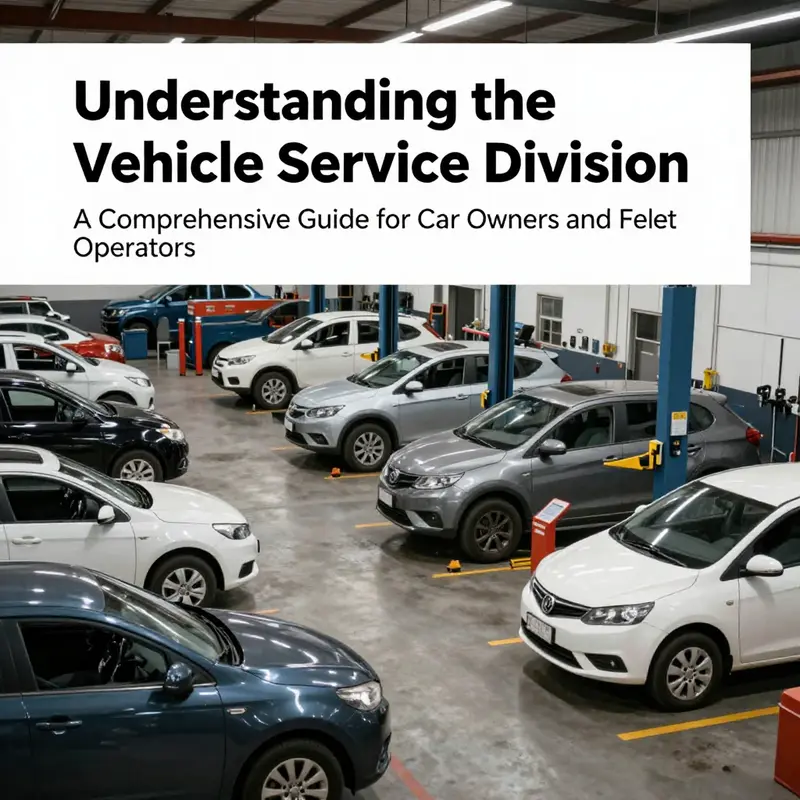
A vehicle service division is more than a workshop that handles oil changes and brake checks. It is a carefully engineered ecosystem designed to sustain vehicle reliability, extend ownership horizons, and knit together a chain of activities that begins the moment a vehicle enters service life and continues through years of use. In its essence, a service division is a multi-capital operation where technical skill, logistics, data, and customer relationship management converge. It must balance the immediacy of repairs with the longer view of fleet health, risk management, and a company’s broader value proposition. When viewed through this lens, the service division emerges not merely as a cost center or a routine maintenance hub, but as a strategic engine that underpins safety, cost containment, brand trust, and economic vitality across the mobility economy. The chapters that explore what a vehicle service division is should, therefore, be read not only as a map of activities but as an account of how routine care becomes a lever for growth and resilience in a complex market environment.
At its core, a vehicle service division encompasses a spectrum of activities that extend far beyond the familiar image of a technician under a hood. Routine services such as oil changes, tire rotations, brake inspections, and fluid replacements are the visible surface. Beneath that surface lies a disciplined orchestration of scheduling, parts supply, and diagnostic workflows. Every appointment is a thread in a broader tapestry: the thread connects with parts logistics to ensure the right components are available when needed; it links with warranty and claims processing to ensure coverage decisions are accurate and timely; it ties into customer relationship management to preserve trust and transparency; and it leans on advanced diagnostic tools and software to identify issues before they escalate. This orchestration is, in practice, the difference between a smooth service experience and a cascade of delays, miscommunications, or unexpected repair costs. A well-run division reduces downtime for the vehicle, lowers the total cost of ownership for the customer, and elevates the perceived value of the service relationship itself.
The scope of a vehicle service division often extends into diagnostics and more complex repairs that require specialized knowledge, high-precision tools, and detailed data analysis. Modern vehicles are built with integrated electronic systems, and many faults are not visible until a diagnostic scan is performed. The service division thus deploys a mix of hands-on mechanical expertise and software-driven diagnostics. The resulting insights feed into maintenance planning, enabling predictive maintenance rather than reactive fixes. Predictive maintenance shifts the emphasis from “fix it when it breaks” to “prevent it from breaking in the first place,” which improves uptime for fleet customers and reduces the likelihood of roadside breakdowns. The diagnostic capability is not an isolated skill set; it is part of an information loop that includes vehicle history, service intervals, and real-time telemetry when available. This loop informs both the technician in the workshop and the customer service advisor in the showroom or fleet office, aligning technical realities with business decisions.
In organizations where the vehicle service division sits within a broader ecosystem—one that includes vehicle sales, financing, and IT infrastructure—the benefits multiply. The service division does not operate in a vacuum. It interacts with sales teams to foster ongoing customer engagement, with financing to reconcile life-cycle costs, and with IT systems to maintain data integrity and operational transparency. The outcome is a seamless experience that spans from the initial sale to long-term ownership. When a customer returns for routine maintenance, the service division has the opportunity to reinforce the value proposition by demonstrating how smart service planning can optimize uptime, protect asset value, and minimize total ownership costs. This continuity is a critical factor in customer loyalty and in the lifecycle economics of the vehicle as an asset class. In many modern fleets, the service division also functions as a control tower for fleet health, coordinating with procurement, risk management, and insurance partners to ensure the fleet remains compliant, safe, and capable of delivering expected performance.
From an economic perspective, the impact of the vehicle service division extends well beyond the direct revenue from maintenance and repairs. In the United Kingdom, for example, the full-service vehicle leasing and rental sector—where service divisions are central to the ongoing lifecycle of the vehicle—has been estimated to contribute a substantial amount of gross value added (GVA) and GDP. The figure of £19.3 billion in GVA underscores the broader macroeconomic footprint of these operations. This statistic reflects direct employment, labor earnings, and the purchase of goods and services that ripple through the economy, including maintenance services, insurance, and fleet management activities. It also highlights how essential maintenance and servicing are to the stability of a national mobility system. When fleets remain well maintained, there is less disruption, fewer warranty disputes, and reduced risk for insurers, all of which stabilizes the broader economic landscape that depends on reliable transportation networks.
This economic footprint is shaped by several interrelated factors. First, the service division is a hub of skilled labor. Technicians, service advisors, diagnostic specialists, parts technicians, and fleet managers all contribute to an ecosystem that requires ongoing training, compliance with safety standards, and adherence to rigorous quality controls. Employment in this space supports disperseely located communities, where local garages and dealer service centers function as essential anchors. Second, the service division acts as a gatekeeper for asset value. Regular, high-quality maintenance preserves or even enhances residual value, especially for lease and rental fleets where end-of-lease conditions determine the next stage for the vehicle. Warranties and claims processes are tightly coupled with the service history, making accurate documentation critical for financial and insurance outcomes. Third, the division supports risk management. Proactive diagnostics identify potential failures that could lead to safety incidents or costly downtime. By catching faults early and scheduling repairs during planned maintenance windows, operators reduce unscheduled downtime and preserve the reliability of their fleet. This reliability, in turn, translates into predictable service levels for customers, which is a key driver of loyalty in a market where customers often evaluate a service provider on uptime as much as on price.
The customer experience is central to the value proposition of any vehicle service division. The experience is not limited to the moment of service drop-off and pick-up. It begins with the convenience of scheduling, the clarity of the service plan presented by the advisor, and the transparency of the estimate. It continues with the technician’s competence, the quality of the diagnostics, and the speed of repair. It culminates in accountability: the sharing of a clear service history, the explanation of what was done and why, and the articulation of preventive steps for the next cycle. In fleets, customer experience translates into reduced administrative friction for drivers and fleet managers, more accurate maintenance budgeting, and better adherence to manufacturer interval recommendations. The human elements—clear communication, honesty about costs, and a genuine concern for asset longevity—are as important as the technical capabilities of the shop floor. A well-managed service division earns trust, allowing a company to differentiate itself not only on price or availability but on the reliability and transparency of its maintenance program.
The operational backbone of a service division is a well-integrated workflow that blends people, process, and technology. Scheduling systems coordinate with technician availability, parts inventories, and workshop capacity to optimize throughputs. A robust parts management function minimizes downtime and reduces emergency procurement costs, which in turn supports steady service margins. Diagnostics tools, scanners, and telematics enable teams to rapidly identify issues and chart the most efficient repair path. Data captured during service visits becomes a valuable asset in its own right: it informs preventive maintenance plans, supports warranty administration, and feeds analytics that help forecast demand for parts and skills. The ability to analyze vehicle history at scale also supports continuous improvement. For example, recurring fault patterns across a fleet can signal the need for supplier conversations or training investments, driving a cycle of optimization that lowers overall life-cycle costs and improves safety outcomes.
The economic implications of this optimization extend to the broader system in which leasing and rental ecosystems operate. When service divisions run efficiently, fleets experience lower downtime and better asset utilization. The financial implications include more predictable maintenance costs for operators, improved cash flow, and greater capacity to offer flexible service terms, which can attract new customers in a competitive market. These efficiencies propagate through the supply chain. Automotive manufacturers, who rely on trained service networks, gain more consistent service demand, which supports parts production and the development of service-related capabilities in their partner networks. Insurance providers benefit from lower incident rates and improved risk management. In turn, insurers can price risk more accurately, while customers enjoy the reliability and safety that come with well-maintained vehicles. The net effect is a healthier economic loop where the service division contributes to employment, business stability, and steady demand across multiple connected industries.
A crucial dimension of the modern service division is its digital maturity. The integration of diagnostic software, vehicle data analytics, cloud-based maintenance records, and customer-facing portals creates a service experience that is transparent and future-ready. Digital maturity enables proactive maintenance scheduling based on actual vehicle usage rather than prescribed intervals alone. It also supports predictive analytics that help managers anticipate parts needs, schedule technician shifts efficiently, and allocate workshop spaces to minimize bottlenecks. The result is a more resilient operation that can weather fluctuations in demand, supply chain disruptions, or sudden regulatory changes. The digital thread connects the workshop to the broader business system, ensuring that information about service needs, warranty eligibility, and customer history remains accessible wherever and whenever it is needed. With this integration, a vehicle service division can deliver a consistent standard of care across disparate locations, maintaining quality while scaling to meet growing fleet requirements.
In discussing the economic footprint of the vehicle service division, it is helpful to consider a concrete, day-to-day example that illustrates how the components come together. Imagine a mid-sized fleet scheduled for a routine maintenance cycle. The service division receives the fleet’s work orders and orchestrates a plan: a diagnostic scan to verify system health, fluid top-offs, tire inspection, brake pad wear assessment, and a set of manufacturer-recommended inspections. The plan includes a parts requisition alongside a technician schedule, aligning with shop capacity and the availability of suitable bays and equipment. When the vehicle returns after service, the system records a complete history for the asset. If additional issues are uncovered, the team can present the options, including potential delays and cost implications, enabling the fleet manager to make informed decisions about timing and budgeting. This scenario demonstrates how a service division functions as a nerve center—absorbing information, coordinating resources, and delivering outcomes that improve asset reliability and customer satisfaction. Every cycle contributes to the overall health of the fleet, which in turn supports the business’s capacity to deliver reliable mobility services to customers who rely on transportation to meet their daily needs and business goals.
The environmental and social implications of a well-run service division also deserve attention. By emphasizing efficient use of parts, reducing unnecessary replacements, and extending vehicle life through preventive care, the division contributes to resource stewardship. The discipline of proper maintenance can also lower emissions by ensuring engines operate within their designed tolerances and that exhaust systems remain in good condition. From a workforce perspective, the division provides opportunities for skilled labor, ongoing training, and career development in a field that increasingly leverages data science, software tools, and remote diagnostics. These human capital aspects are a meaningful part of the sector’s economic contribution because they drive wage growth, skill formation, and regional economic resilience as service networks reach into smaller towns and communities.
Within the broader context of mobility, the vehicle service division plays a role in shaping consumer behavior and expectations. When customers experience consistency, transparency, and reliability, they become more confident in using vehicle-based mobility as a preferred option for daily life and work. This confidence can influence demand patterns across the transport sector, from private ownership to shared mobility and rental models. As fleets adopt more sophisticated service strategies, they tend to demand better data governance, more robust cybersecurity for connected vehicles, and stronger collaboration with manufacturers and third-party providers to ensure that service activities align with safety standards and regulatory requirements. In this sense, the service division acts as a steward of safe and efficient mobility, a role that has clear macroeconomic benefits by reducing downtime, increasing asset utilization, and supporting stable transportation networks that underpin commerce and daily life.
The discussion above would be incomplete without acknowledging the value of external data and published research that quantify the service division’s economic footprint at scale. The figure of £19.3 billion in GVA attributed to the UK’s full-service vehicle leasing and rental sector points to a substantial macroeconomic contribution beyond the obvious revenue streams inside workshop walls. This contribution arises from a combination of direct service activity, ancillary spending in related industries, and the employment that sustains those activities. As the sector evolves with electrification, increasingly connected vehicles, and evolving regulatory demands, the service division will likely continue to adapt to preserve and grow its economic relevance. The core principle remains constant: well-executed maintenance and thoughtful service planning reduce risk, improve safety, and enhance the customer experience, all of which create value that extends far beyond the price of a service check.
For readers seeking practical guidance on maintenance scheduling and the value of timing in service operations, consider the nuanced discussions around oil-change intervals and time versus mileage. This area illustrates how service strategy translates into actionable routines that balance asset protection with cost efficiency. You can explore further details here: Optimal Oil Change Intervals: Time vs. Mileage. The example underscores how even seemingly small decisions—when to change the oil and how often to inspect components—are part of a broader system that optimizes uptime, reliability, and total cost of ownership. To gain a deeper understanding of the policy and economic framework surrounding these operations, and to place them in a wider macroeconomic context, see the Oxford Economics report on the economic impact of the UK vehicle leasing and rental sector: https://www.oxfordeconomics.com/research/economic-impact-of-the-uk-vehicle-leasing-and-rental-sector/.
In sum, the vehicle service division is a central pillar of modern mobility. It integrates technical prowess with data-driven decision making, connects the customer journey to asset performance, and anchors a broader economy through employment, value creation, and risk management. Its influence spans the micro level of workshop routines and the macro level of national economic health. The division’s capacity to deliver dependable maintenance, transparent service experiences, and proactive stewardship of vehicle assets makes it an essential element of any mobility strategy. As vehicles become more sophisticated and fleets grow increasingly complex, the service division will continue to evolve, embracing digital tools, standardized processes, and cross-functional collaboration to sustain safety, reliability, and growth in a dynamic transportation landscape.
Internal link for deeper practical guidance on maintenance scheduling: Optimal Oil Change Intervals: Time vs. Mileage. This resource provides concrete, field-tested insights into how upkeep timing can be optimized to balance risk, cost, and uptime across diverse vehicle types.
Note: The content above is designed to be cohesive with adjacent chapters that explore broader topics such as how a vehicle service division integrates with sales, financing, and IT systems, and how macroeconomic forces shape service spending and employment in the automotive sector.
Final thoughts
The vehicle service division stands as a cornerstone within the automotive industry, providing essential maintenance and repair services that enhance vehicle performance and safety. Understanding its basic functions equips car owners, used car buyers, and fleet operators with the knowledge to navigate their servicing needs effectively. Technological innovations are continually reshaping these divisions, fostering efficiency and improving customer satisfaction. Finally, the economic significance of these divisions extends beyond individual benefits, playing a crucial role in supporting local economies and driving market growth. Embracing the importance of vehicle service divisions empowers car owners and fleet operators to make informed decisions, resulting in better vehicle performance and enhanced ownership experiences.