The way we think about vehicle access is rapidly evolving, driven by innovation and changing consumer preferences. Vehicle subscription services have emerged as a modern alternative to traditional car ownership and leasing, offering flexibility and convenience that cater to the diverse needs of local private car owners, used car buyers and sellers, and small business fleet operators. By bundling key services like insurance, maintenance, and roadside assistance, these subscriptions eliminate hidden costs and long-term commitments, presenting a hassle-free driving experience. In the chapters ahead, we will explore the fundamental workings of vehicle subscription services, delve into their financial implications, examine the benefits for consumers, understand the role of technology, and highlight emerging trends shaping the future of this automotive model.
How Vehicle Subscription Services Work: Flexible Access to Cars Without Ownership
Understanding the model and what it delivers
A vehicle subscription service replaces the typical ownership equation with a single recurring payment. Instead of financing or buying a car, a subscriber pays a flat monthly fee. That fee commonly covers the vehicle itself plus many of the costs owners normally handle: insurance, registration, routine maintenance, and often roadside assistance. The intent is to simplify mobility into one predictable charge, trading long-term financial commitments for short-term flexibility.
At its core, the subscription model bundles expenses and transfers operational tasks to the provider. Subscribers avoid down payments and the hassle of selling or trading in a vehicle. Providers manage fleet upkeep, handle insurance relationships, and coordinate logistics for vehicle swaps and deliveries. The result is a service designed to reduce administrative friction and offer instant access to a vehicle that suits current needs.
What is typically included and why it matters
Packages vary, but most subscriptions include the essentials: the vehicle, insurance or insurance facilitation, regular maintenance, and support services. This combination matters because it addresses the main pain points of ownership—unexpected repair bills, time-consuming service scheduling, and the uncertainty of resale value. When maintenance and repairs are covered, the monthly fee becomes a clearer reflection of mobility cost rather than a partial glimpse that hides other expenses.
Many services also offer flexible mileage allowances, seasonal swaps, and different vehicle classes. A commuter might select an economical sedan for weekday driving, while a family may shift to an SUV for summer trips. These transitional options make subscriptions attractive to people whose vehicle needs change over months rather than years.
Flexibility and choice as practical advantages
The primary draw is flexibility. Subscribers can usually change vehicles within an agreed cadence, such as every month or quarter. That means you can adapt your car to life events without breaking a lease or selling a vehicle. For urban residents, a compact car may be ideal for city streets. For weekend getaways, a larger vehicle or one with all-wheel drive can be swapped in.
Flexibility also extends to contract length. While traditional leases lock customers into multi-year commitments, subscription services often allow shorter terms. This appeals to people in transitional life stages, frequent business travelers, and those who want to evaluate different vehicle types before committing to ownership.
Cost dynamics: simplicity versus long-term value
A subscription can be more expensive month-to-month than a loan payment or a lease. However, it includes services that would otherwise add to the owner’s costs. When evaluating value, compare the bundled monthly price to the total cost of ownership over the same period. Include depreciation, insurance premiums, scheduled maintenance, and potential repair expenses.
For short-term needs or when avoiding upfront capital is important, the subscription model often wins on convenience. Over longer horizons, ownership may be less costly on a per-month basis once depreciation and resale value are factored in. The right choice depends on how much you value flexibility, simplicity, and included services.
How providers operate and why they focus on relationships
Providers manage a fleet and the lifecycle of each vehicle. That requires strong logistics, technology for inventory and reservations, and partnerships with insurers and service centers. The business model rewards providers who keep cars well-maintained and customers satisfied. Repeat subscribers and upsell opportunities—such as premium vehicle tiers or add-on services—drive profitability.
This ongoing relationship differs from a one-time sale. It gives providers regular touchpoints to learn about usage patterns. That data can inform pricing, vehicle selection, and customer experience improvements. For consumers, the benefit is a more responsive service that adapts over time.
Common subscription structures and user experiences
Subscription offerings range from single-vehicle access to multi-vehicle plans. Some services include unlimited swaps within a vehicle class, while others allow upgrades for an extra fee. Additional options may include pay-per-mile plans for low-mileage drivers and premium concierge services for vehicle delivery and pick-up.
User experience is typically app-driven. An app or web portal shows available vehicles, upcoming reservations, and billing details. Support is often handled through a customer service line or in-app chat. The digital-first approach streamlines administrative tasks, making the service appealing to people who prefer minimal paperwork.
Who benefits most from subscriptions
Subscriptions suit those who prioritize flexibility and time savings. Urban professionals, people with variable transportation needs, and those who prefer to avoid ownership hassles gain clear benefits. They also attract tech-savvy consumers who value digital convenience and younger drivers who delay ownership decisions.
Businesses can also use subscriptions for staff mobility or project-specific needs. For small fleets or companies with fluctuating transportation demands, subscriptions offer a way to control costs without long-term capital allocation.
Potential drawbacks and red flags
The most common drawback is cost over long periods. If you plan to keep a car for many years, buying may be a cheaper choice. Another consideration is mileage limits; exceeding those limits leads to additional fees. Availability can also be a problem—popular vehicle types may be scarce in high-demand periods.
Watch for contract details that reduce flexibility, such as long minimum terms or restrictive swap rules. Confirm what’s included and what counts as damage beyond normal wear. Transparency in billing and clear policies around insurance and liability are crucial.
How to evaluate a subscription offer
Look at the full list of included services and any caps on mileage. Compare monthly fees to estimated ownership costs for the same period. Check the provider’s maintenance policies and whether they supply a replacement vehicle during repairs. Evaluate the digital experience—booking, support, and billing should be seamless.
Also consider local service infrastructure. Good partnerships with local repair shops and a reliable delivery network increase the value of a subscription. For practical maintenance insights, resources like the KMZ Vehicle Center blog can help you understand the kinds of service attention vehicles need over time (see KMZ Vehicle Center blog).
Including third-party analysis can help too. For a broader comparison of subscriptions and traditional ownership, refer to industry commentary and expert articles that explore these trade-offs in depth: https://www.forbes.com/sites/forbestechcouncil/2024/07/16/car-subscription-services-vs-traditional-ownership-are-they-actually-convenient/.
Subscription Costs Unpacked: How Vehicle Subscriptions Compare Financially to Ownership
Understanding the monthly fee and what it covers
A vehicle subscription simplifies the monthly cost of mobility. Instead of a large down payment, a single recurring fee covers vehicle access and many related expenses. That fee often includes insurance, scheduled maintenance, registration, and roadside assistance. For many buyers, the immediate appeal is clarity: one predictable invoice replaces multiple variable bills. This model suits people who prize budgeting certainty and minimal administrative hassle.
But the sticker price rarely tells the whole story. Subscription plans can hide restrictions and conditional costs. Typical agreements set annual mileage caps. Exceed those limits and you face overage charges per mile. Early cancellation or mid-term vehicle switches often carry penalties. Understanding these limits is essential before committing to any plan.
How subscriptions compare to ownership over time
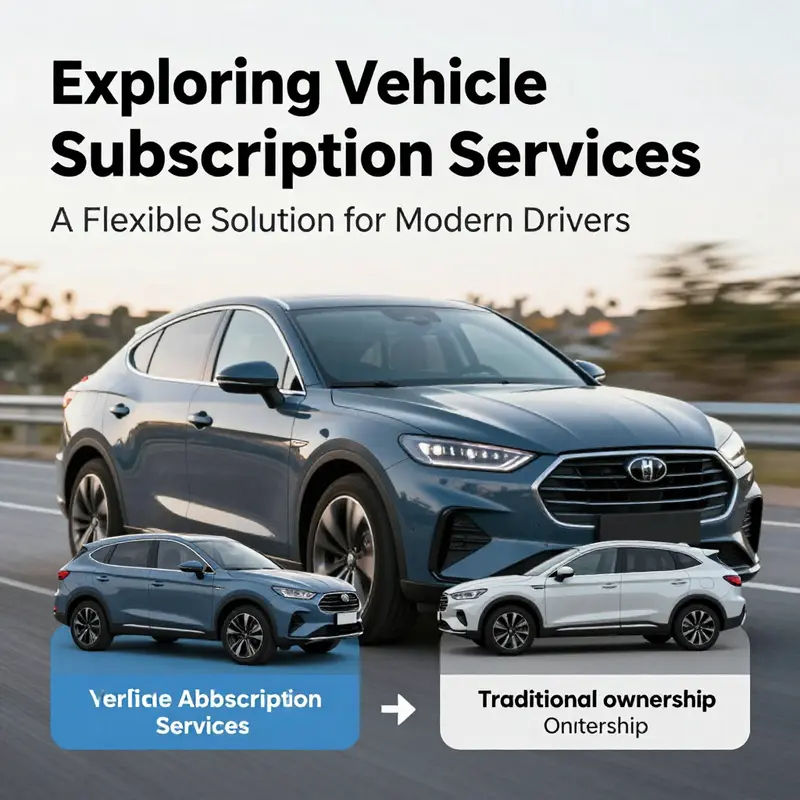
Compare a subscription to ownership by looking beyond monthly convenience. Ownership requires an upfront payment, or financing that spreads that cost over years. Ownership builds equity in an asset. Even though cars depreciate, they retain resale or trade-in value. Subscriptions, in contrast, return nothing at term end. You pay for access, not ownership.
Consider a simple example. A subscription costing $500 per month equals $6,000 per year. Over five years, the cost totals $30,000. A financed purchase of a comparable vehicle might require $400 per month on a loan, plus separate insurance and maintenance. When calculated fully, ownership often proves cheaper across a five-to-seven-year horizon. The precise break-even point depends on vehicle price, interest rates, insurance costs, and maintenance expenses.
For short-term needs, however, subscriptions can be economical. If you need a vehicle for a season, a work contract, or frequent short-term use, subscriptions avoid long-term financing and depreciation risk. They also remove hassles like selling or trading a car, which matters for people who value flexibility.
Hidden costs and usage patterns
A subscription’s all-in price can lull subscribers into underestimating variable costs. Mileage overages are common. If you commute long distances, overage fees accumulate quickly. Also watch for fuel policies, damage fees, and limits on where you can take the vehicle. Some plans charge excessive fees for wear or so-called ‘excessive cleaning.’ These charges convert apparent simplicity into higher total spending.
Another financial trade-off is repeated renewal. Short-term subscriptions encourage frequent upgrades. If you renew a plan every year, your monthly rate can increase, especially if you opt for newer or larger vehicles. Over time, these renewals may cost more than a single financed purchase.
Tax and business considerations
For businesses, subscriptions can be an attractive expense. They often qualify as operating expenses that are easier to deduct than capital purchases. That improves cash flow by shifting transportation costs into regular, predictable accounting lines. For freelancers and self-employed individuals, subscriptions can simplify tax tracking and reduce administrative burdens. However, tax treatment varies by jurisdiction, so consulting a tax adviser is essential.
Businesses should also weigh fleet consistency and availability. Subscriptions provide flexibility for scaling vehicle counts up or down. But when a company plans to use vehicles for several years, buying or leasing may remain the more economical choice.
Insurance, maintenance, and risk transfer
One of the subscription’s biggest selling points is risk transfer. The provider often bundles insurance and routine maintenance, shifting repair risk away from the user. That can protect against repair cost spikes from unexpected mechanical failures.
Yet the bundled insurance may carry higher deductibles or narrower coverage. Always review the policy. Confirm who is responsible for damage caused by negligence. Understand how claims affect premiums. Some providers charge for damage even when insurance covers repairs. These fine points determine whether the bundle offers real value.
When a subscription makes financial sense
Subscriptions suit specific profiles. They fit people who value flexibility and low commitment. Good candidates include urban residents without long commutes, frequent travelers needing temporary wheels, or professionals on short-term assignments. Those who change vehicles often, or who dislike negotiating sales and financing, may prefer subscriptions.
Cost-conscious drivers with predictable, long-term needs usually find ownership cheaper. If you plan to keep the same vehicle for many years, ownership allows that long-term cost advantage. Equally important, owners can reduce monthly costs dramatically once a loan is paid off. Subscribers never reach that point.
How to evaluate and compare plans
Start by calculating the total cost for the period you care about. Include the subscription fee, expected overage charges, and any ancillary fees. Compare that to a total cost of ownership estimate for a purchase over the same period. Include loan interest, insurance, maintenance, taxes, depreciation, and the vehicle’s residual value.
Ask specific questions to reveal hidden costs. What is the annual mileage limit? What counts as excessive wear? Are routine repairs and tires included? What are the insurance terms and deductibles? What fees apply for early cancellation or vehicle swaps? Answers change the effective monthly price dramatically.
Another tactic is scenario planning. Model conservative, average, and heavy-use cases. This technique exposes whether subscription pricing relies on light usage to remain competitive. If so, and you exceed that use, ownership may be the better option.
Negotiation and smarter choices
Subscriptions are still a young market. Providers may offer promotions, longer-term discounts, or custom packages. Ask about discounts for long-term commitments or bundled family plans. If you drive less than average, negotiate a lower rate for reduced mileage. If maintenance is a worry, request clarity in writing on covered services.
Finally, consider hybrid strategies. Some people combine short-term subscriptions for seasonal needs with ownership for a primary vehicle. This approach buys flexibility without sacrificing long-term value.
For a deeper, data-driven understanding of how subscription costs compare to ownership and leasing, consult the Financial Times analysis linked below. The piece provides cost comparisons and market context to help refine your decision.
Internal resource: KMZ Vehicle Center blog
External resource: Financial Times analysis — https://www.ft.com/content/4d7a9b6c-8f1e-4b8a-8e9a-1c8e7b2f9a6d
A Flexible Path to Drive: How Vehicle Subscriptions Redefine Consumer Access to Cars
Imagine a driving arrangement that feels less like a purchase and more like a utility—a service that unlocks mobility without the heavy financial baggage of ownership. A vehicle subscription service offers access to a car through a recurring, all-inclusive fee that covers much more than the vehicle alone. It is not simply a rental or a lease; it is a service designed to fit changing needs and lifestyles. In many markets, this approach is gaining momentum as consumers seek flexibility without the burdens of ownership. The concept rests on a few core ideas: the vehicle is a temporary utility, a hub of mobility rather than a permanent asset, and a platform that merges insurance, maintenance, and convenience into one transparent price.
From the customer’s vantage point, the core appeal lies in convenience. The monthly fee typically bundles insurance, registration, taxes, routine maintenance, tires, and even roadside assistance. With that bundled approach, budgeting becomes simpler because the typical shock of a large auto repair bill or a sudden premium increase disappears behind a steady payment. For households managing tight or unpredictable cash flows, or for professionals juggling multiple trips and family duties, the financial model reduces uncertainty. It also shifts focus from the asset’s price to the quality of the experience—the ease of switching cars when preferences or conditions change, rather than negotiating new loans or trade-ins each time a need shifts.
Flexibility is not an afterthought; it is the service’s raison d’être. Short commitments, the ability to swap vehicles frequently, and even the option to cancel with relatively short notice mean a subscriber can adapt the fleet to the season, the trip, or the life stage. A family with growing kids might want a larger vehicle for a few months, then switch to something sleeker or more efficient as needs evolve. A city resident who commutes by day and explores on weekends could shift between an economical hatchback and a compact SUV without the friction of ownership. For many users, this fluidity is the real reward—the chance to experience different models without the long-tail costs of depreciation, sales, or private resale.
Another pillar is the regular refresh of the fleet. Subscribers frequently gain access to newer vehicles with the latest safety features, driver-assistance systems, and infotainment tech. This matters not just for prestige but for practical reasons: improved energy efficiency, cutting-edge connectivity, and advanced safety tooling can affect everyday driving and peace of mind. Rather than worrying about selling an aging car or absorbing the hit of depreciation, subscribers can transition to a refreshed experience every year or two, keeping pace with evolving technology and regulatory standards around emissions and safety.
In this model, the value is twofold. For automakers and mobility providers, subscriptions create ongoing relationships rather than one-off sales. The architecture of the model invites continuous engagement—service reminders, plan reviews, usage analytics, and personalized offers. From the consumer side, the service stands as a gateway to mobility that aligns with a modern, on-demand mindset. It is marketed not as a substitute for ownership but as a different way to meet the same need: to get from A to B with control over the when, where, and how.
Yet the model is not without questions. Long-term costs can be higher than ownership if a user keeps a plan for many years and accumulates usage that exceeds the value of a purchased vehicle. The predictable monthly number may become less attractive if driving is light or if included mileage proves restrictive. Hidden costs can seep in through excess mileage charges, wear-and-tear fees, or premiums beyond standard coverage if a subscriber’s circumstances change. The balance of cost versus convenience depends on how often someone truly benefits from switching vehicles, how stable their driving patterns are, and how much the comfort of no-ownership costs matters to them. Consumers should weigh the total cost of ownership over several years against the recurring subscription outlay, then decide where their own preferences lie: the thrill and flexibility of trying new models, or the control and potential savings of owning a car outright.
Global markets vary, and Brazil offers a useful lens on how this model evolves. The concept is taking root, but implementation requires adaptation to local tastes, regulatory frameworks, and infrastructure. In emerging markets, a subscription approach can bypass some friction of traditional financing and ownership while addressing the demand for reliable mobility solutions in urban and peri-urban contexts. The emphasis on customization and customer-centric services is shaping how programs evolve, with a trend toward tailored configurations, flexible usage windows, and comprehensive support that makes the approach feel like a service rather than a loan. The core payoff remains consistent: reduce the friction of vehicle ownership while preserving the freedom to choose. For decision-makers and researchers, these patterns underscore how mobility preferences are shifting toward experiences that blend access, convenience, and predictability.
For readers evaluating whether a subscription can fit their life, the bottom line is practical: this model reframes what it means to own or access a vehicle. It shifts the conversation from the sticker price of a car to the day-to-day experience of getting in, driving, and pausing or changing that experience as needs change. If your calendar is busy, your housing situation changes with the seasons, or you simply dislike the idea of managing insurance, maintenance, and resale logistics, a subscription can offer a streamlined path to reliable mobility. It invites a closer look at how much value you place on predictability, variety, and the emotional ease that comes with a service structure designed to adapt as life unfolds.
If you’re curious about the maintenance side of this equation, there is practical guidance on keeping up with essential upkeep that ties directly into subscription thinking. See the discussion on maintenance timing in the article on oil-change intervals: Optimal oil-change intervals: time vs. mileage.
For a broader perspective that situates subscription models within the wider debates about ownership and access, explore external analyses that compare the convenience and costs of subscriptions with traditional ownership: Car Subscription Services vs. Traditional Ownership: Are They Actually Convenient?.
Technology as the Engine of Flexible Car Subscriptions
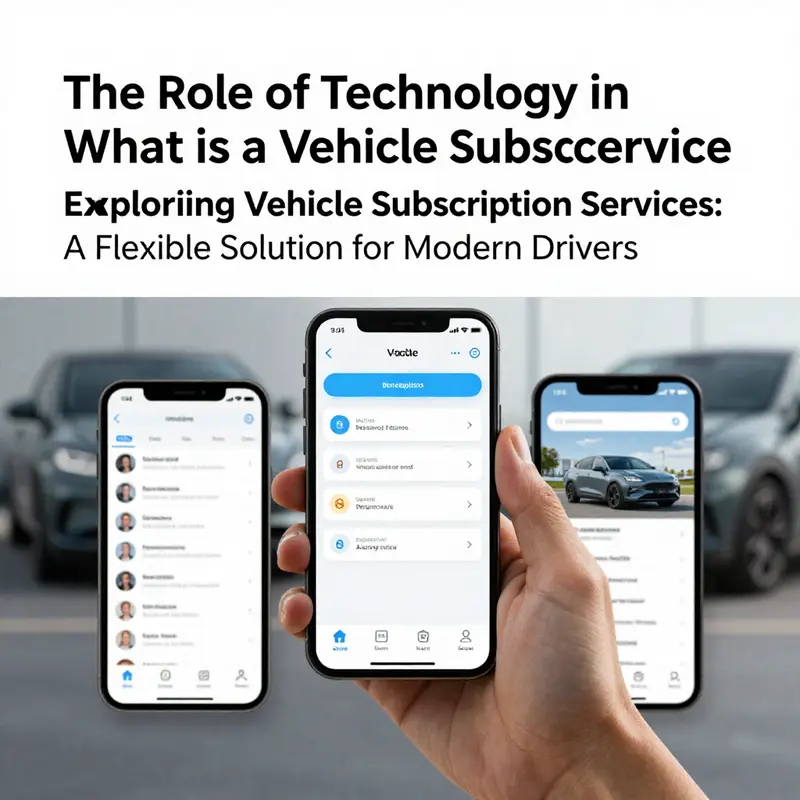
A vehicle subscription service sits at the intersection of mobility and software, and its true strength lies in the technology that binds a constellation of moving parts into a single, user-friendly product. The digital backbone that supports selection, pricing, billing, and the ongoing orchestration of a fleet converts what could be a collection of separate transactions into a cohesive, customer-centric experience. At its core, the technology stack is not merely a convenience; it is the mechanism that makes flexibility scalable, reliable, and transparent for both subscribers and the providers who serve them. In this sense, the subscription model advances not because people want to own fewer vehicles, but because they want to manage the exact right vehicle for the moment, without the friction of ownership. The narrative of modern vehicle subscriptions is a story of platforms, data, and real-time responsiveness.
Central to this transformation is a digital platform that can manage a moving ecosystem: a catalog of vehicle options, a billing engine that adjusts to demand, and a logistics layer that coordinates pickup, return, and maintenance. Dynamic pricing, calibrated for utilization and seasonality, allows providers to balance demand and supply in a way that preserves value for both sides. When demand for a compact city car spikes during weekday commutes and another segment of customers seeks a larger SUV for weekend trips, the system can reallocate assets without forcing customers into a one-size-fits-all plan. This flexibility hinges on data analytics and intelligent forecasting, where historical patterns, real-time utilization metrics, and external variables such as weather or events feed into price signals and vehicle assignments. Rather than rigidly locking customers into a fixed monthly rate, the platform can offer a spectrum of options—shorter or longer usage windows, varying mileage caps, and adaptable add-ons—tailored to individual habits and budgets.
Behind the scenes, the fleet is treated as a living, connected network rather than a collection of static assets. Real-time fleet tracking, telematics, and sensor data empower operators to see where vehicles are, how they’re being used, and when they require attention. This visibility enables two critical outcomes: improved utilization and proactive maintenance. By monitoring vehicle health indicators and predictive maintenance needs, providers can schedule servicing before a breakdown occurs, reducing downtime and extending asset life. This approach lowers total cost of ownership on the provider side and minimizes inconvenience for subscribers, who can expect fewer unexpected service interruptions. In short, automated workflows—from maintenance scheduling to tire rotations and software updates—are not add-ons; they are essential to delivering the seamless, on-demand experience that subscribers expect.
The customer journey in a vehicle subscription is increasingly defined by mobile apps and online portals that serve as control rooms for daily mobility. These interfaces do more than display options; they orchestrate the entire lifecycle of a subscription. A user can browse a curated fleet, choose a vehicle that best fits a given moment, and confirm a switch with a few taps. They can monitor their current plan, track usage, view upcoming charges, and adjust preferences in real time. When a subscriber desires a different vehicle for a family outing or a business trip, the system can present compatible alternatives, check availability, and execute a seamless handoff. The ability to switch vehicles without a lengthy negotiation or a visit to a dealership is the keystone of the model, and it rests on API-driven integrations with insurance providers, maintenance networks, and roadside assistance services. This interconnectedness reduces administrative burden for the provider while delivering a faster, more reliable experience for the customer.
From the perspective of customer support, technology also raises the bar on responsiveness and personalization. AI-enabled chat assistants, escalations routed through service platforms, and self-service diagnostic tools give subscribers immediate access to information and assistance. A well-designed support system doesn’t just solve problems; it anticipates them. For instance, if a subscriber experiences a minor software issue or needs a temporary vehicle swap to accommodate a sudden schedule shift, the platform can guide them through a resolution path, optimize vehicle assignments, and notify maintenance teams of potential follow-up actions. The cumulative effect is increased engagement and satisfaction, because the relationship between a subscriber and a vehicle is no longer episodic but continuous. The service becomes a companion that learns preferences and adapts accordingly, increasing the likelihood that customers renew and expand their usage.
This technological scaffolding also reshapes how providers think about the value proposition. Rather than selling access to a single asset, they offer access to a dynamic capability—the flexibility to choose the right vehicle at the right time, backed by comprehensive support and transparent pricing. By aligning operations with customer behavior, they can create a feedback loop that reinforces loyalty. When customers can see how their choices influence price, vehicle availability, and service quality, trust grows. The data footprint grows too, enabling providers to refine the model, test new configurations, and optimize the fleet mix to match regional preferences. In markets where demand patterns differ—from dense urban centers to more spread-out regions—the platform’s adaptability is vital. The technology makes it feasible to tailor experiences to local preferences while maintaining a consistent brand promise across geographies.
Of course, the promise of technology in vehicle subscriptions comes with challenges that require careful attention. Data privacy and security sit at the top of the list. The platforms collect sensitive information—from location data to billing history and health and usage insights for maintenance—so robust privacy controls and encryption are non-negotiable. Interoperability is another critical area. A subscription service relies on a mosaic of third-party services, insurers, automotive partners, and roadside networks. Seamless data exchange must occur across these boundaries to keep the subscriber experience frictionless. This requires open standards, clear data governance, and ongoing vendor coordination. In addition, the platform must be resilient; downtime translates into canceled trips, misbilling, and lost trust. Redundancy, disaster recovery planning, and continuous testing become core operational practices rather than afterthoughts.
The story in the research landscape underscores a pivotal truth: technology is not a peripheral enhancer but the central mechanism that enables the entire ecosystem to function at scale. It enables providers to deploy the same high-value service to diverse populations while preserving a consistent quality of experience. For subscribers, technology translates into tangible benefits—less time spent arranging transportation, more control over how they move, and fewer surprises in costs or vehicle conditions. For automakers and mobility operators, it opens a new revenue channel and a channel for ongoing customer engagement, turning one-time transactions into long-term relationships that can be nurtured with personalized offers and timely interventions. As the industry matures, the emphasis shifts from simply offering access to a vehicle to delivering a living mobility platform that anticipates needs, responds in real time, and grows with its users.
For readers seeking a deeper sense of how these shifts are unfolding in practice, a glimpse into the broader technology narrative can be found in leading industry analyses. The tech-driven transformation of car subscriptions points to a future where software, analytics, and digital interfaces are as integral to mobility as the tires on the wheels. It is a future where the customer experience is defined by agility, clarity, and uninterrupted support, all enabled by a robust and intelligent technology stack. To explore a complimentary perspective on how technology is reshaping this space, consider the insights shared in the industry discussion linked here: https://www.forbes.com/sites/forbestechcouncil/2025/11/18/how-technology-is-transforming-the-car-subscription-industry/. For readers who want to dive deeper into mobility technology narratives or follow related topics, the KMZ Vehicle Center blog offers ongoing coverage and practical guidance that complements this chapter. Learn more at the KMZ Vehicle Center blog: https://kmzvehiclecenter.com/blog/.
Rethinking Ownership: Vehicle Subscriptions and the Reinvention of Mobility
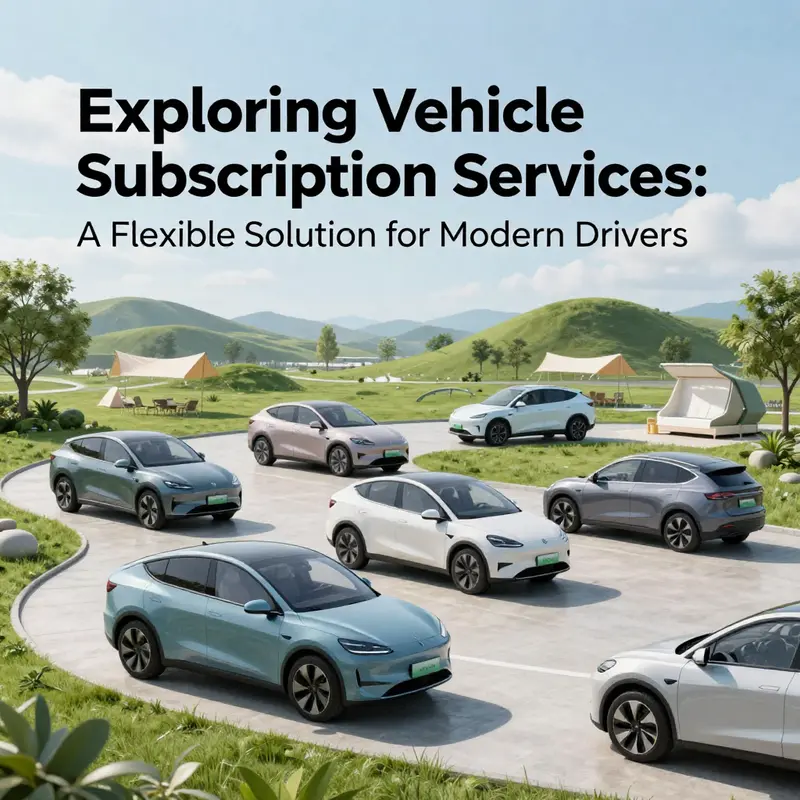
Vehicle subscription services are redefining what it means to have access to a car, trading long-term ownership commitments for predictable monthly fees that often bundle insurance, maintenance, taxes, and roadside assistance. The appeal is clarity and convenience: subscribers avoid negotiating loans or leases and sidestep many of the logistical hassles of ownership, while gaining access to newer vehicles, modern safety systems, and integrated digital services.
Flexibility is a central advantage. Subscriptions let users align vehicle choice with life stages and rhythms: a compact for weekday commutes, a larger vehicle for family trips, or seasonal swaps to suit weather and travel plans. That fluidity becomes more valuable as urban living intensifies and work patterns change, enabling people to match mobility precisely to needs rather than assume a single vehicle will serve every purpose.
For automakers and mobility providers, subscriptions create a different revenue architecture. Instead of a single sale or a multi-year lease, providers cultivate ongoing relationships that generate recurring revenue, rich usage data, and opportunities for personalized upsells and services. Continuous engagement helps optimize product development, fleet utilization, and customer retention while offering a direct channel for testing new offerings and business models.
The emergence of software-defined vehicles amplifies the subscription opportunity. Vehicles increasingly act as platforms where capabilities can be enabled, adjusted, or upgraded over the air. Providers can offer bundles that range from core maintenance and telematics to premium performance or comfort features that are activated for a fee, blurring the line between physical hardware and digital services and creating post-sale monetization paths.
Consumer interest, particularly among younger and tech-oriented demographics, already favors connected and service-based mobility. Many drivers are willing to pay recurring fees when those fees unlock meaningful benefits like connectivity, adaptive driver assistance, and personalized in-car experiences. This shift reflects a broader redefinition of value in mobility: the car as a living platform delivering utility through software and data as much as through mechanical capabilities.
Subscriptions also intersect with sustainability and urban planning goals. By enabling more efficient fleet utilization and facilitating electrification and shared mobility, subscription models can reduce the total number of vehicles required to meet demand and accelerate the transition to low-emission fleets. Integration with payment systems, insurers, maintenance networks, and navigation services can make the experience feel seamless, while AI-driven recommendations could match riders with the right vehicle for a given trip or condition.
In practice, subscribers may keep one vehicle for weekday commuting and switch to another for weekend activities, with usage data informing continuous improvements in vehicle configuration, service responsiveness, and reliability. For practical insights on maintenance and ownership alternatives that tie into subscription thinking, see the KMZ Vehicle Center Blog: https://kmzvehiclecenter.com/blog/
Looking ahead, analysts expect digital ecosystems, personalization, and sustainability priorities to converge and expand subscription adoption. As policymakers, planners, and providers collaborate to balance consumer choice with environmental objectives, subscriptions could become a key mechanism for managing supply, optimizing utilization, and speeding electrification. For a broader market perspective and forecasts through 2026, see this industry outlook: https://www.statista.com/statistics/1357885/global-car-subscription-market-size/.
Final thoughts
Vehicle subscription services signify a shift in the automotive landscape, aligning with modern consumer demands for flexibility and convenience. For local private car owners, used car buyers, and small business operators, these services offer distinct advantages: reduced financial burdens, the freedom to choose different vehicles, and an enriched driving experience without the commitment of ownership. As technology advances and consumer preferences evolve, the vehicle subscription model is poised to become an integral part of the automotive ecosystem, encouraging innovation, customization, and sustainability. Understanding and embracing this model could not only transform how individuals and businesses approach car access but also fundamentally change the future of mobility.