A vehicle service is not merely about repairing mechanical failures; it is an integrated approach to ensuring that a car remains safe, efficient, and enjoyable over its lifespan. For local private car owners, used car buyers, sellers, and small business fleet operators, understanding the comprehensive components of vehicle service is essential. This guide will delve into four key aspects: Maintenance & Repairs, which are vital for vehicle reliability; Vehicle Care & Enhancement, focusing on both aesthetics and functionality; Support & Convenience Services, which add value beyond repairs; and finally, Financial & Mobility Solutions that facilitate flexible car ownership. Each section will illustrate how these services contribute holistically to a vehicle’s performance and the owner’s peace of mind.
Reliability in Motion: How Maintenance and Repairs Shape a Vehicle Service You Can Trust
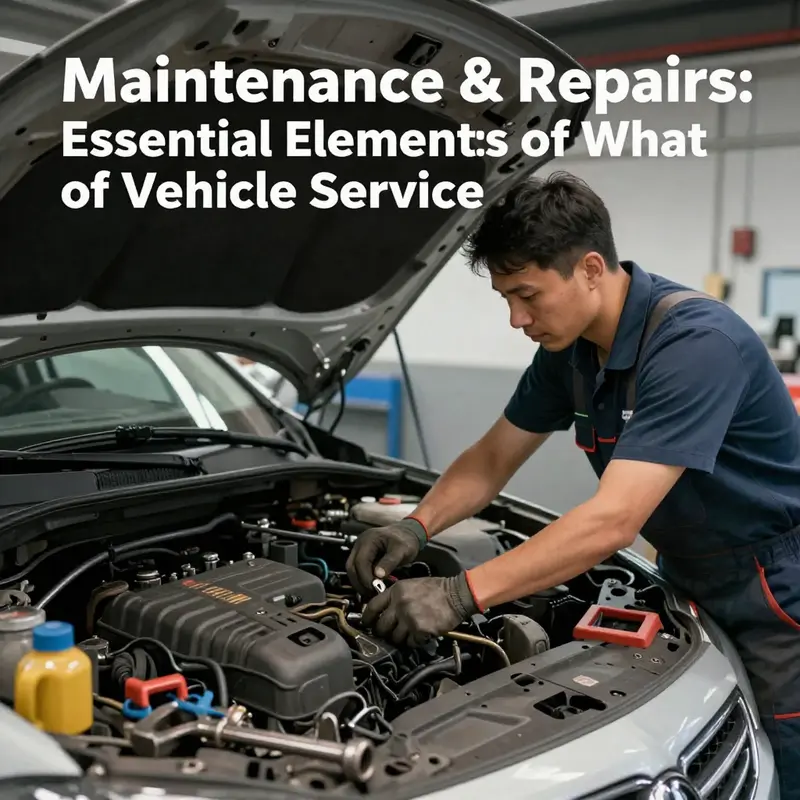
A modern vehicle service is not a checklist of fixes tied to the moment a light flashes on the dashboard. It is a deliberate, ongoing partnership between driver, vehicle, and the technician who translates wear into performance, safety, and value. At its core, maintenance and repairs together form a discipline that honors the car’s life as a whole. The goal is not simply to cure a problem, but to prevent trouble, extend reliability, and keep the experience of driving predictable and safe across thousands of miles. When we look at what a service includes, maintenance and repairs stand as the spine of the ecosystem. They connect routine care with diagnostic insight, frontline safety with vehicle longevity, and immediate convenience with long term ownership costs. The daily rhythm of city commutes, highway trips, and family adventures hinges on a vehicle that can be trusted to start, run smoothly, and stop when needed. The service approach that achieves this relies on both the predictable maintenance schedule and the readiness to address issues before they escalate into breakdowns.
From the moment a vehicle leaves a showroom floor, it begins a quiet, invisible collaboration with time, wear, and the demands of the road. Engine oil, air filters, and spark plugs do not simply exist as parts to be replaced; they are guardians of the engine’s health, ensuring lubrication, cleanliness, and combustion efficiency. Routine oil changes and filter replacements are among the most fundamental acts of care. They are not about chasing a perpetual new-car glow, but about preserving the metal-on-metal relationship inside the engine. Fresh oil clings to metal surfaces, forming a protective film that reduces friction and heat. A scheduled oil change also brings a new filter, which traps contaminants that would otherwise degrade performance. Skipping or delaying this service invites varnish deposits and sludge that escalate wear, curb efficiency, and, over time, threaten reliability.
Yet oil is only part of the story. A comprehensive service recognizes that the engine’s health depends on a network of systems working in harmony. Tire rotation, for instance, may seem like a cosmetic ritual, but it is a concrete warranty on even wear. When tires wear unevenly, handling becomes inconsistent, steering feel changes, and grip under braking can deteriorate. By rotating tires, technicians equalize wear across all contact patches, extend the life of the tire set, and preserve predictable behavior in dry and wet conditions. Inflation checks are equally critical; underinflation saps efficiency and invites excessive heat buildup, while overinflation reduces the contact patch and can quicken wear in the center of the tread. The result is safer, steadier, and more economical driving over the long haul.
The brake system is another pillar where maintenance and repair intertwine with safety. Inspection of brake pads and rotors, along with a careful review of brake fluid levels, is not a ritual so much as a life-preserving check. Worn pads can reduce stopping power and increase the risk of rotor damage, while degraded fluid can lead to spongy brakes or brake fade on steep descents. A service that maps out the braking condition and anticipates replacement needs prevents potential emergencies. It is a quiet act of foresight: replacing worn components before they fail, refreshing brake fluid to maintain consistent pedal feel, and ensuring that the hydraulic system remains free of air and moisture.
Beyond the brakes, the vehicle’s lifeblood—its fluids—demands equal attention. Coolant levels and quality guard against overheating in summer and winter alike. Transmission and power steering fluids ensure smooth gear shifts and precise steering response. Brake fluid, a hygroscopic liquid, absorbs moisture over time, which can lower its boiling point and degrade braking performance. Regular checks of levels and condition are not just maintenance rituals but performance safeguards. A service that tracks these fluids also looks for signs of leaks or degradation, which can indicate a developing issue that, if left unchecked, could escalate into more costly repairs.
The battery, often taken for granted until a cold start becomes a test of endurance, deserves a dedicated health evaluation. A healthy battery supplies reliable cranking power, supports the electronic systems that modern cars rely on, and resists the demands of cold weather. Battery testing during a service does not merely confirm that it holds a charge; it assesses its startup performance, charging efficiency, and terminal cleanliness. Cleaning corroded terminals, tightening connections, and, when necessary, planning a replacement before the failure occurs keeps the vehicle dependable in every season.
Belts and hoses are the unsung guardians of the engine bay. Cracked belts or swollen hoses can fail without warning, triggering overheating, loss of power steering, or even a stalled engine. A routine inspection for wear, cracking, or tension issues helps prevent catastrophic breakdowns. Replacing a belt before it fails is a simple, cost-effective investment in reliability, while replacing cracked hoses prevents the sudden collapse that leaves a vehicle stranded. The service that attends to belts and hoses with a proactive mindset contributes to a smoother, safer drive and reduces the risk of roadside disruptions.
Visibility—lights and wipers—often goes overlooked until darkness or rain reveals a deficiency. A thorough service makes sure headlights illuminate the road adequately, taillights and indicators communicate intent, and wipers clear the windshield efficiently. Functional lighting and clear visibility are not mere conveniences; they are essential safety features, particularly in low-light conditions and extreme weather.
If maintenance is the steady drumbeat of a reliable vehicle, then diagnostics and repairs are the responsive measures that keep the tempo in tune. Vehicles today are intricate ecosystems of mechanical and electronic systems. When a diagnostic scan reveals an anomaly in the engine management computer, fuel system, or emissions controls, a qualified technician translates the data into actionable steps. Major repairs—engine or transmission work, suspension repairs, or electrical system troubleshooting—often require specialized equipment and expertise. A service that blends diagnostics with precise repair work minimizes downtime and ensures that fixes address the root cause rather than merely masking symptoms. This is not a one-and-done approach but a continuous loop of detection, assessment, correction, and verification that the vehicle truly returns to peak performance rather than a quick, temporary remedy.
A well-rounded vehicle service embraces both routine maintenance and the capacity to perform major repairs with clarity and care. The regular maintenance tasks—oil changes, tire care, brake checks, fluid levels, battery health, and belt and hose inspections—are the predictable guardrails. They reduce the likelihood of unexpected breakdowns, preserve fuel efficiency, and sustain resale value. Regular servicing helps the engine run more cleanly and efficiently, which in turn reduces emissions and consumption over time. When the routine work is done consistently, the car wastes less energy warming up, the engine wears less, and the chance of a surprise breakdown diminishes. This is the science behind the simple belief that a car is cheaper to own when it is cared for at regular intervals rather than repaired after neglect.
The practical rhythm of maintenance also translates into real-world cost savings. A small, timely adjustment or replacement can prevent a cascade of downstream problems. It may mean replacing a worn serpentine belt before it snaps and leaves the serpentine system—responsible for driving alternators, power steering, and air conditioning—without essential support. It could be a routine coolant flush that averts an overheating episode in the middle of summer. It may be a battery health check that ensures a cold start in winter does not become a struggle. These are not flashy moments; they are decisive acts that preserve performance and protect against the ruinous costs of major failures.
In this sense, maintenance and repairs are not isolated tasks but an integrated service philosophy. They connect the short-term goal of a smooth drive with long-term objectives such as safety, reliability, and value retention. A service that practices this philosophy speaks to drivers with a language of trust. The car is not treated as a problem to be solved in isolation but as a machine with needs that evolve over time. This approach invites a collaborative relationship: owners learn to recognize the early signs of wear, technicians communicate what they see in clear, actionable terms, and both parties participate in a schedule that fits how the vehicle is used. In practice, that means personalized maintenance plans that reflect driving patterns, climate, and the vehicle’s age, rather than a one-size-fits-all regimen. It also means choosing the right intervals for parts that wear at different rates, rather than simply following a generic timetable.
The value of this integrated approach becomes especially evident when we consider the vehicle’s overall lifecycle. A sound maintenance plan supports safer operation by maintaining brake performance, steering response, and visibility. It supports efficiency by sustaining optimal engine tuning and reducing rolling resistance through properly pressured tires and efficient fuel systems. It supports comfort by maintaining interior and exterior condition through controlled climate and well-functioning systems. It supports resale by keeping the vehicle in better shape and with more complete service records, which many buyers and lenders recognize as a sign of responsible ownership. And it supports peace of mind for the driver, who has a clear understanding of what the car needs and when.
The path to achieving this level of reliability is not solitary. It invites professionals who understand the car as an integrated system and who can move beyond quick fixes to address the why behind a problem. It invites drivers who approach maintenance as a habit rather than a reaction. It also invites a culture of ongoing learning, because as vehicles evolve with new technologies, the intricacies of diagnosis and repair grow more sophisticated. The modern service experience, therefore, is a blend of routine discipline and diagnostic finesse, a combination that keeps the car in its best possible state at every mile.
For readers seeking practical guidance that translates across ages and models, the KMZ Vehicle Center blog offers regular insights on how to approach maintenance and care in everyday terms. It is a useful companion to the formal guidelines you encounter in a service center and a reminder that maintenance is a craft as much as a checklist. KMZ Vehicle Center blog.
As vehicles evolve, so too does the standard of care. The essence remains: a well-executed maintenance and repairs program treats service as the ongoing stewardship of a vehicle’s health. It recognizes that preventive care, timely repairs, and informed decisions are not at odds with convenience or cost, but essential ingredients in a lifecycle of dependable mobility. The result is a car that stays closer to its original performance envelope, a driver who enjoys consistent reliability, and a service ecosystem that rewards foresight with fewer disruptions on the road.
To ground these ideas in recognized practice, many jurisdictions emphasize routine servicing as a core safety requirement. The emphasis placed by official guidance highlights the value of regular checks and preventive work in maintaining roadworthiness and reducing preventable incidents. For readers who wish to explore the official guidance in more detail, a comprehensive overview is available through DVSA’s vehicle service and maintenance guidance. This external resource offers structured information on what maintenance coverage typically includes, why it matters, and how to think about intervals in a way that aligns with real-world driving. You can access the broader guidance here: https://www.gov.uk/government/publications/vehicle-service-and-maintenance-what-you-need-to-know.
In sum, the maintenance and repairs components of a vehicle service form a continuous, adaptive program rather than a one-off event. They are the practical implementation of the idea that ownership is a long-term relationship with a machine that ages with you. When done thoughtfully, this relationship yields a smoother ride, safer roads, and a vehicle that remains faithful to its promises mile after mile. The road ahead is not a straight line, but with the right maintenance mindset, every mile becomes more confident, more efficient, and more enjoyable. The heart of this approach is the conviction that care today prevents surprises tomorrow, and that a reliable car is the most valuable kind of predictability you can invest in.
null
null
Beyond the Wrench: The Support and Convenience Engine Behind Vehicle Service
A vehicle service is more than a sequence of repairs; it is a carefully orchestrated ecosystem designed to keep a car safe, reliable, and comfortable from the moment it leaves the driveway to years later when its owner decides to replace it. The most memorable experiences in a service center often arise not from a dramatic fix, but from the quiet effectiveness of the support and convenience features that run in the background. These services, woven together with maintenance and repair, create a lifecycle approach to ownership. They address the practical needs of modern driving—predictable costs, minimal downtime, and transparent communication—while also recognizing that a car is part of a busy life, not just a machine on a showroom floor. In embracing this broader view, service providers become partners in care, offering a blend of technical expertise, logistical support, and customer-centric options that make owning a vehicle less stressful and more enjoyable.
At the heart of any service experience is comprehensive maintenance—a term that sounds simple but encompasses a spectrum of tasks tailored to the vehicle’s age, usage, and design. Routine maintenance is the first line of defense against wear and unexpected failure. It includes familiar items like oil and filter changes, air and fuel filter replacements, and checks of vital fluid levels such as coolant, brake fluid, and transmission fluid. Yet in practice, maintenance today is a forward-looking process. Modern vehicles are equipped with onboard diagnostic systems that continuously monitor performance and alert drivers to potential issues long before a breakdown occurs. A well-structured service visit therefore becomes a diagnostic walkthrough, where technicians use both traditional inspection techniques and software tools to scan for hidden faults. This proactive approach helps owners avoid cascading failures and unscheduled downtime, turning a predictable maintenance bill into an investment in reliability and resale value.
The tire and suspension segment of service is where protection, performance, and comfort intersect. Regular tire rotation, pressure checks, and tread inspections are not merely about extending tire life; they are about maintaining predictable handling and stopping distances. When alignment or dynamic balancing is required, the benefits cascade through the entire drivetrain and chassis. Four-wheel alignment, for example, is more than a wheel angle adjustment; it reduces tire wear, stabilizes steering, and improves fuel economy. Balanced wheels contribute to smoother acceleration and braking, diminishing stress on suspension components and reducing the likelihood of fatigue-related issues later on. In a world where roads vary from smooth highways to patchwork urban streets, this aspect of service keeps the vehicle predictable and enjoyable to drive. It also reinforces safety, because properly aligned and balanced tires are essential for maintaining traction, particularly in adverse weather or emergency maneuvers.
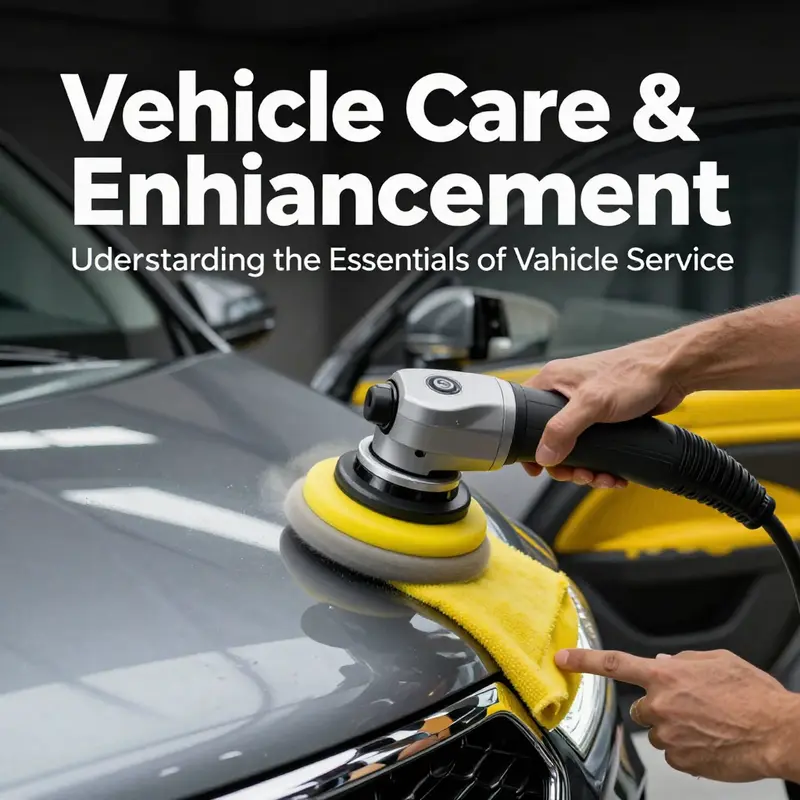
Protection across the interior and exterior surfaces of a vehicle is another pillar of modern service that translates into everyday benefits. Interior detailing goes beyond vanity; it preserves cabin air quality, extends the life of fabrics and leather, and creates an environment that keeps drivers focused and relaxed. Vacuuming, stain removal, upholstery conditioning, and dashboard care all contribute to a cabin that feels cared for and is easier to maintain. Exterior protection, including washing, paint correction, and protective coatings, serves as a shield against UV damage, environmental contaminants, and minor abrasions. Ceramic coatings and sealants, in particular, offer long-lasting gloss and a durable barrier that reduces the frequency of repainting or touch-ups. While customers may perceive these services as aesthetic enhancements, the underlying value is practical: better protection leads to higher resale value and lower long-term maintenance costs.
As vehicles become smarter, the scope of electrical and electronic system servicing expands in tandem. Modern cars rely on complex networks of sensors, actuators, and software to manage everything from engine performance to advanced driver assistance features. Servicing in this area includes software updates, troubleshooting infotainment systems, verifying sensor functionality, and ensuring lighting and warning indicators operate correctly. The technician’s toolkit now often includes diagnostic scanners, software interfaces, and the ability to interpret error codes in the same session as a physical inspection. This integration of hardware and software diagnostics is crucial because a “check engine” light can hide a host of issues, from minor sensor faults to more serious emulsion leaks. By addressing software and hardware together, service centers can deliver a faster, more accurate resolution that keeps the vehicle functioning as the manufacturer intended.
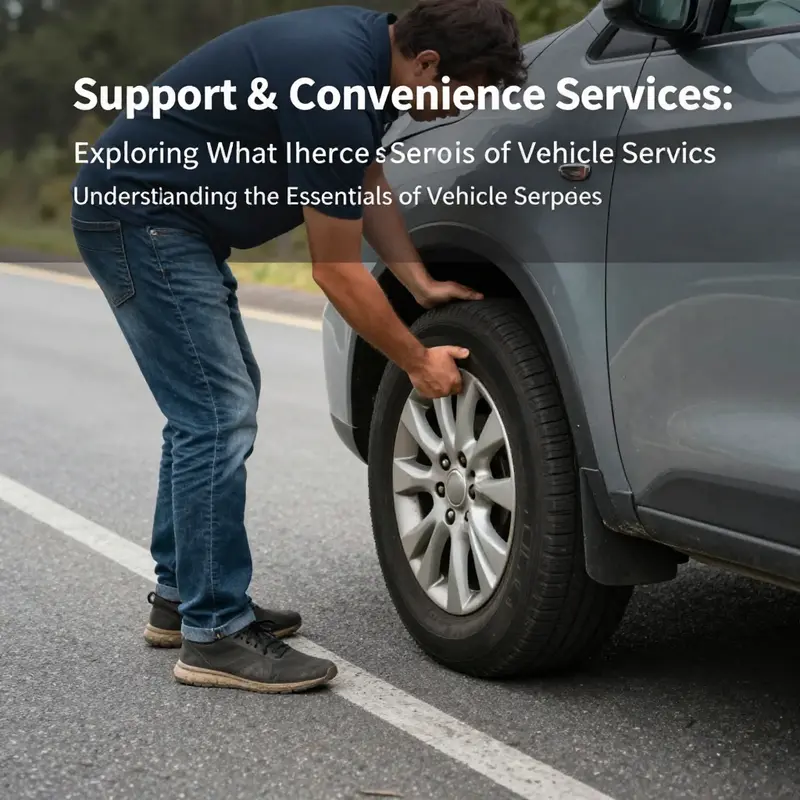
Beyond the mechanical and electronic aspects, there is a suite of convenience perks that are increasingly considered essential to a modern vehicle service experience. Roadside assistance, for example, is a safety net that reduces the impact of an unexpected breakdown. A typical roadside package includes towing, a tire change, a jump-start, fuel delivery, and lockout assistance. This is not merely about getting back on the road quickly; it is about preserving the driver’s plans and reducing the uncertainty that comes with a breakdown. When a vehicle is stranded, the confidence that such support exists becomes part of the driving experience in itself, offering peace of mind that the journey can continue with minimal disruption.
Another convenience layer is vehicle inspection and safety checks. Regular inspections help ensure the vehicle remains compliant with safety standards, performs efficiently, and protects occupants. Depending on the region, these checks may coincide with annual MOT tests, emissions inspections, or other regulatory requirements. For buyers and owners who are weighing the next move, pre-purchase inspections provide unbiased assessments of a vehicle’s condition. For owners, periodic safety checks translate into ongoing assurance that critical systems—brakes, steering, suspension, lighting—meet safety expectations. A thoughtful service plan treats these checks not as a burden but as a safeguard that supports long-term reliability and confidence in the vehicle’s performance.
Insurance and claims support is another facet of the support ecosystem that can ease the administrative burden after an incident. Service centers often help customers navigate the paperwork, coordinate with insurers, and streamline the communications that accompany a claim. This is a distinct comfort, particularly when a car is disabled or when timing is tight due to a work or family schedule. The reassurance that a trusted team will guide the process—from documenting damage to arranging a suitable replacement vehicle—transforms a stressful event into a manageable inconvenience. The goal is not simply to fix the car, but to restore normal life rhythms as efficiently as possible.
Financial and mobility solutions are the final piece in this extended service mosaic. Financing options, leasing plans, and trade-in support enable owners to transition between vehicles with greater clarity and less friction. When you consider a vehicle service as a holistic system, these financial services are more than transactional add-ons; they are part of a continuity plan that helps a driver manage the lifecycle of ownership with a clear view of costs, depreciation, and future mobility needs. A service center that can align maintenance scheduling with financing milestones, or provide transparent trade-in valuations as part of the maintenance conversation, strengthens the sense that you are dealing with a partner rather than a vendor.
The value of this broad, integrated approach becomes especially apparent when viewed through the lens of daily life. A typical service visit is less about a single fix and more about a coordinated set of activities that minimize downtime and maximize reliability. A thorough maintenance assessment may uncover a small issue that, if addressed early, averts a larger, more disruptive repair later. Tire and suspension care that improves ride quality today also contributes to longer tire life and a quieter cabin for years to come. Interior and exterior protection protect the vehicle’s appearance and value, while software updates help the car stay compatible with the latest safety and convenience features. Roadside assistance, inspections, and insurance guidance ease the stress of unexpected events. And financial options give owners a predictable path to keeping their mobility aligned with life’s changing demands.
This integrated approach also mirrors how owners increasingly prefer to interact with their vehicles. The digital era has transformed the service experience from one where you drop off a key and wait for a bill to one where updates, reminders, and service histories are accessible in real time. Apps and online portals can offer appointment scheduling, service progress tracking, and transparent estimates. Technicians can pull up a vehicle’s history, ensuring that each visit builds on the last and that preventive work is aligned with manufacturer recommendations and the vehicle’s unique usage patterns. In many shops, the diagnostic phase is now a collaborative exchange between expert technicians and customers, where findings are explained in accessible terms and verified with data. This transparency strengthens trust and helps owners understand the long-term value of routine maintenance and preventive measures.
For readers who want to explore more about how service centers structure this breadth of offerings, a closer look at industry resources and practitioner guides can be enlightening. The KMZ Vehicle Center blog, for instance, delves into service philosophy, maintenance intervals, and practical tips that illuminate how shops decide what to include in a service package and how they communicate it to customers. The blog serves as a useful companion to the chapter’s themes, offering reader-friendly explanations that complement the more technical discussions here. You can explore it here: KMZ Vehicle Center blog.
Of course, every vehicle and every owner’s situation is unique. A service schedule is never a one-size-fits-all prescription. Age, mileage, climate, and driving patterns all influence what a car needs and when. A modern service plan blends manufacturer recommendations with real-world usage data, and it offers flexible options that align with a driver’s budget and schedule. That flexibility is a key part of the “convenience” in the service equation. If you work long hours, you may value loaner cars or mobile servicing that reduces downtime. If you care deeply about the preservation of a vehicle’s finish, you may prioritize premium detailing and protective coatings. If your driving takes you through remote areas, roadside assistance becomes a critical piece of the safety net. In practice, the most effective service strategy is one that treats maintenance as a trait of good ownership—reliability, predictability, and value—rather than as a series of isolated maintenance chores.
The chapter’s overarching message is simple: a vehicle service that acknowledges and addresses the full spectrum of needs—from mechanical integrity to daily convenience—creates a better ownership experience. It reframes servicing from a cost center into a continuous partnership that supports safety, comfort, and peace of mind. When owners see service as an ongoing collaboration—one that schedules preventive care, facilitates timely repairs, and smooths the logistics of mobility—the car becomes less a potential source of worry and more a dependable partner in daily life. In this sense, the service experience is as important as the vehicle itself. It determines not only how well the car runs, but how confidently its owner can plan, travel, and perform at work and at home.
For those seeking structured guidance, official service checklists and regulatory benchmarks provide a practical backbone to this broader philosophy. They anchor a shop’s recommendations in standardized expectations and help owners compare different service plans with clarity. Readers may wish to consult publicly available checklists that outline the core components of a professional vehicle service, including diagnostic procedures, safety checks, and preventive maintenance milestones. Such resources can help readers interpret the value of a service package and understand what they should expect during a routine visit and at key service milestones. The goal is not to overwhelm with jargon, but to empower owners with a clear sense of what a comprehensive service should cover and why each element matters for safety, reliability, and long-term cost control.
In sum, the scope of a vehicle service has evolved. It now includes a robust suite of support and convenience services that complement mechanical repairs and preventive maintenance. Roadside assistance, safety inspections, insurance guidance, flexible financing and mobility options, interior and exterior protection, software and electrical system care, and real-time communication together create a seamless experience. This integrated model supports drivers in daily life, buffers them against the uncertainties of vehicle ownership, and preserves the vehicle’s value across its life cycle. The outcome is not merely a car that runs smoothly; it is a vehicle that continues to fit into the rhythm of its owner’s life, with less friction, more reliability, and a clearer sense of ownership through every mile.
External resources that contextualize these ideas can offer further depth. For a detailed, official checklist and broader framework of what a professional vehicle service should entail, see the UK-based reference on vehicle service checklists. This resource provides a practical set of standards that help owners and technicians align on expectations and best practices, ensuring that routine visits deliver consistent quality and transparency to the customer.
Flexible Ownership, Predictable Costs: Unpacking the Financial and Mobility Layer of Modern Vehicle Service
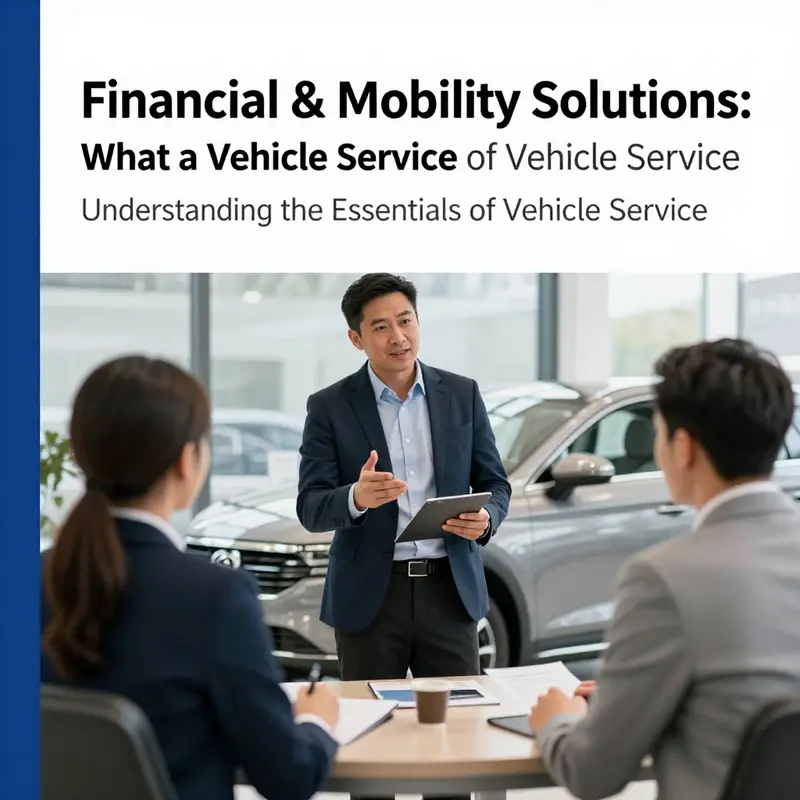
A vehicle service today is less a line-item fix-it menu and more a cohesive ecosystem that blends economics, technology, and lifestyle into a single, predictable relationship with mobility. The shift from owning a car to accessing a service that covers the vehicle, the insurance, the maintenance, the road-side help, and even the occasional replacement vehicle has redefined what it means to travel with ease. At a glance, the idea of paying a monthly subscription for a car may seem like a fashion trend, but when you peel back the layers, it reveals a durable answer to both the financial and lifestyle demands that modern drivers face. The core notion is simple: in a world where urban life, business travel, and multi-modal commuting collide, a vehicle service that bundles essential needs into one transparent package offers a level of certainty that ownership rarely provides. The economic logic sits at the heart of this model, but the value extends far beyond dollars and cents. It is about predictability, resilience, and a frictionless experience that keeps people moving without the ongoing drama of unexpected expenses or the administrative weight that accompanies traditional ownership.
The cornerstone of this approach is Vehicle-as-a-Service (VaaS), a concept that has moved beyond a buzzword to a practical framework used by manufacturers, financiers, and service centers alike. A typical VaaS offering centers on what you receive when you subscribe: the vehicle itself, mandatory insurance, routine maintenance and servicing, roadside assistance, and, in many cases, a replacement vehicle during repairs. All of these elements are folded into a single, predictable monthly fee. The appeal is immediate for urban dwellers facing high parking costs, busy schedules, and a rapidly evolving vehicle landscape where electric powertrains and connected car technology are increasingly standard rather than optional. The financial side becomes a driver of lifestyle freedom rather than a constraint. Instead of worrying about depreciation, repair bills, or a lump-sum purchase price, subscribers enjoy a known monthly outlay that covers almost every facet of vehicle life—and the periodical need for a newer, better, or more fitting model can be met by upgrading to a newer vehicle type within the same bundled framework.
From the outset, the economics are compelling. The upfront financial barrier of buying a car plus the often opaque lifetime cost of ownership—insurance, maintenance, tires, brakes, battery replacements, and the inevitable depreciation—can be daunting. A VaaS model transforms those costs into a single, continuous expense. This change can significantly lower the perceived and real cost of ownership over time, especially when the service provider extends maintenance, roadside support, and even insurance under one umbrella. The predictability is a powerful feature. Consumers can forecast cash flows with far greater accuracy, a clarity that benefits households managing fluctuating incomes or businesses running fleets with tight operating budgets. The long-term certainty is not about erasing risk but about aligning the risk with a provider that spreads it across many customers and a broader set of assets.
Digital platforms are the quiet engine behind this shift. Modern VaaS ecosystems leverage apps and dashboards that let customers manage subscriptions, switch vehicle types, schedule service, and receive proactive alerts about maintenance needs. A user can opt for a compact urban car during the workweek and swap to a larger model for weekend trips, all within a single account and without negotiating a new loan or negotiating a dealership trade-in. The convenience is not merely cosmetic; it is foundational. Vehicle selection becomes a flexible tool for adapting to changing schedules, family needs, or business demands. Service scheduling, reminders, and transparent maintenance histories are synchronized with the vehicle’s telematics, creating a feedback loop that smooths out the rough edges of maintenance timelines and vehicle readiness. This level of control is particularly valuable in an era where mobility needs can shift weekly and even daily.
For many customers, the bundled nature of VaaS quietly reframes what it means to own risk. In traditional ownership, the risk of an unexpected repair or a major component failure sits squarely with the owner. Under a comprehensive vehicle service plan, that risk is distributed across a broader system—the service provider, the insurance partner, and the network of authorized maintenance centers. The result is a security blanket that makes a repair more predictable and less financially painful. There is a practical benefit, too: the model helps shield individuals from the shock of major repairs and non-discretionary expenses, while still delivering reliable mobility. Roadside assistance, included within the package, becomes not only a lifeline in emergencies but a source of reassurance during the inevitable moments when a vehicle falters far from home.
The economics extend beyond the service itself. A flexible ownership framework enables upgrades to newer, more efficient, or technologically advanced vehicles without the typical frictions of selling a current car and buying a new one. The churn of upgrading can be managed within the same subscription, preserving continuity of use and minimizing downtime. For businesses, the implications are even more profound. A fleet can be scaled up or down to match demand, and vehicles can be reassigned between teams with a few taps in a digital portal. The administrative burden of fleet management—maintenance tracking, insurance arrangements, and repair logistics—shifts from a manual, paper-driven process to an integrated, data-rich workflow. That shift frees time and resources that can be redirected toward core operations, making mobility support an engine of productivity rather than an expense center.
This integration of finance and mobility is a response to a broader shift in consumer and corporate expectations. People want clarity, speed, and adaptability. They also want sustainability and efficiency, both in the vehicle technology they use and in the way those vehicles fit into their lives. The alignment with sustainable mobility goals is not accidental. As new powertrains, smarter sensors, and enhanced connectivity enter the market, ownership models that emphasize usage and upgradeability become more compatible with environmental objectives. A subscription that includes maintenance and battery or motor upgradability helps to reduce waste and increase the probability that vehicles stay in service longer in a well-maintained condition. When you couple that with a platform that facilitates smoother scheduling, better monitoring of vehicle health, and easier transitions to newer models, the service becomes a long-term value proposition rather than a short-term convenience.
The practical experience of subscribing to a vehicle service often hinges on how well the offering integrates with real life. A subscriber gains access to a vehicle without negotiating a loan, a down payment, or an extended financing agreement. The monthly fee typically covers routine maintenance intervals—oil changes, filter replacements, tire rotations, and brake inspections—along with essential safety checks and vehicle diagnostics. When a repair needs to be performed, the service network is designed to handle it promptly, with technicians who specialize in the specific vehicle type and with access to genuine parts and centralized scheduling that minimizes downtime. For many, this translates into a reliable motor vehicle that does not demand constant attention to the evolving price of parts or the availability of skilled technicians. The predictable cost, the streamlined process, and the reliability of maintenance work collectively transform the ownership experience into something more like a controlled operating expense rather than an unpredictable capital outlay.
A crucial element of this architecture is the inclusion of insurance and risk management within the package. Insurance is not an afterthought layered on top of ownership; it is embedded in the service construct. This integration simplifies the customer journey by removing the separate, sometimes opaque process of obtaining and managing insurance coverage. It also aligns incentives: the service provider has a stake in keeping the vehicle in good condition and on the road, which tends to produce better risk management and fewer gaps in coverage during repairs or transit between service centers. The bundled insurance often reflects a level of risk-sharing that reduces the likelihood of uncovered costs for the customer, reinforcing the financial predictability that is central to the model.
From a consumer context, the transition to a bundled service model reframes the once-linear relationship with a vehicle into a more dynamic, service-oriented one. The vehicle becomes a platform for living—an enabler of a daily routine, family logistics, work travel, and leisure—rather than a pile of fixed assets that requires careful annual budgeting and strategic planning. The digital interface plays a critical role here, offering real-time updates, service reminders, and an accessible log of maintenance activity. The platform can suggest timely upgrades or swaps based on age, mileage, and projected usage patterns, coupling data-driven insights with human expertise. In other words, the service becomes a companion in travel, not merely a product for purchase. This shift in mindset matters because it changes expectations around what a vehicle service should deliver; it pushes providers to design for continuity, recovery, and flexibility, rather than simply fixing things when they break.
Linking this to the broader landscape, the movement toward integrated financial and mobility solutions is part of a larger rethinking of value creation in transportation. The emphasis is no longer on ownership as the default pathway to mobility but on access and adaptability as the primary currencies of choice. The economic benefits extend to households and organizations alike: lower total cost of ownership over time, elimination of surprise repair costs, and the ability to upgrade to newer, more efficient or technologically advanced vehicles without the friction of selling or trading in a current one. The agility embedded in these models is especially valuable as the market accelerates toward electrification and connectivity. Connected vehicles bring advanced features, remote diagnostics, over-the-air updates, and safety enhancements that further increase the appeal of a service package that ensures uptime and readiness with minimal hands-on management. For urban and business users facing rapid changes in demand and regulatory environments, this agility translates into a strategic asset rather than a temporary convenience.
A final layer of value in this ecosystem is the ongoing optimization enabled by data. Subscriptions collect a wealth of information about usage, wear patterns, and service histories. When this data is analyzed responsibly, it informs not just proactive maintenance scheduling but also product development, vehicle lifecycle planning, and even pricing models that reflect actual utilization rather than theoretical averages. The consumer benefits from tailor-made service experiences—notifications that align with personal schedules, the option to switch vehicle types mid-cycle, and a transparent view of what is included in the subscription and what would require additional charges under a traditional ownership model. The enterprise benefits from clearer budgeting, easier fleet optimization, and the ability to respond rapidly to shifts in demand, seasonality, or regulatory requirements.
For readers exploring this chapter as part of the broader article about what a vehicle service includes, the emphasis on financial and mobility dimensions underscores a core truth: a modern vehicle service is not merely a maintenance plan. It is a comprehensive framework that reshapes how we think about car use, cost, risk, and flexibility. It invites us to imagine a transportation future where the car is a service asset, managed through a digital, customer-centric platform that aligns with evolving lifestyles and organizational needs. If you want to explore the larger context of how these ecosystems are described and developed, you can delve into the KMZ Vehicle Center blog for discussions that broaden the conversation beyond single-service offerings. KMZ Vehicle Center blog.
Meanwhile, the macro story of Vehicle-as-a-Service continues to unfold as a response to the demand for predictable costs, seamless experiences, and the capacity to adapt quickly to a changing world. Deloitte Global’s white paper on Vehicle-as-a-Service captures the essence of this shift: access, not ownership, is becoming the defining value proposition in mobility. The paper argues that value creation in the mobility sector is moving toward bundled experiences that center on usage, flexibility, and longevity of the relationship between the user and the vehicle ecosystem. For readers seeking a deeper understanding of the strategic implications behind this transition, the Deloitte resource provides a rigorous framework that complements the practical experiences described here. External readers can consult the Deloitte Global vehicle-as-a-service white paper for a fuller treatment of the economics, risk models, and strategic considerations that drive this revolution in how we move.
Final thoughts
In summary, vehicle service encompasses a holistic approach to car ownership that goes beyond simple repairs. By understanding the components of Maintenance & Repairs, Vehicle Care & Enhancement, Support & Convenience Services, and Financial & Mobility Solutions, car owners can ensure their vehicles are not only in optimal operational condition but also aesthetically pleasing and financially sustainable. Engaging with these services means investing in longevity, safety, and an overall enhanced driving experience, which is invaluable for private owners, used car buyers, and fleet operators alike.