For local private car owners, used car buyers, and small business fleet operators, understanding vehicle service contracts is essential in navigating the uncertainties of automotive repairs. These contracts, often referred to as extended warranties, serve as a safety net once your manufacturer’s warranty expires, helping to protect you from unexpected and potentially costly repairs. However, not all contracts are created equal; their coverage can vary widely based on provider and plan levels. This article will delve into the specific components typically covered, examine exclusions and limitations, and highlight the critical importance of these contracts for vehicle owners. Each chapter serves to clarify how to make informed decisions regarding vehicle service contracts, ensuring you can maintain your vehicle’s performance without incurring financial strain from repairs.
Beyond the Warranty: A Thorough Look at What Vehicle Service Contracts Cover for Your Car’s Vital Systems
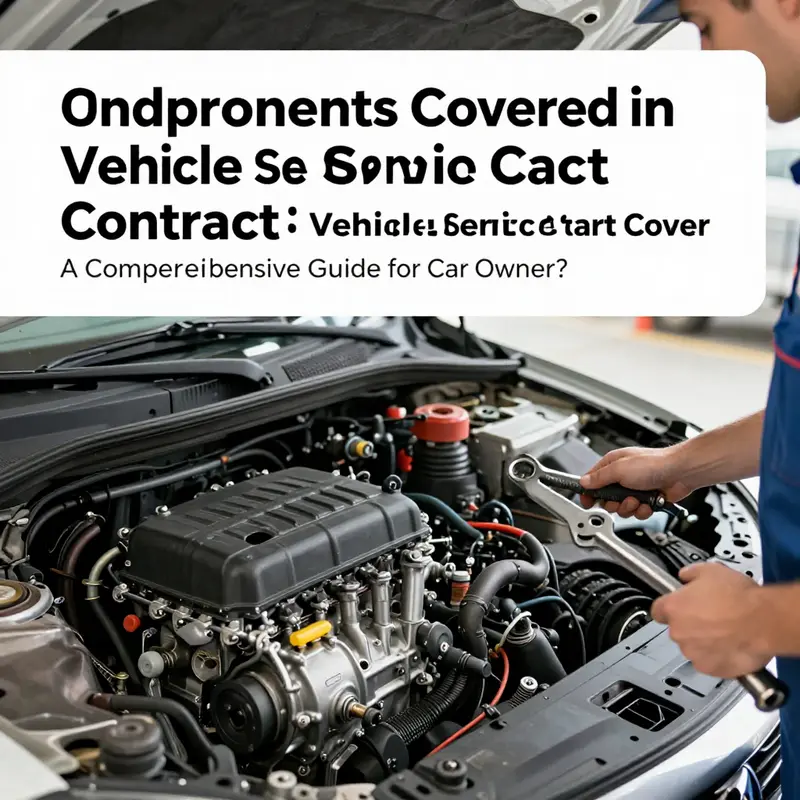
A vehicle service contract is not a substitute for regular maintenance, but it is a calculated shield against the kind of expensive repairs that can follow the expiration of the manufacturer’s warranty. When you buy an extended warranty or vehicle service contract (VSC), you enter a contract that promises to cover specific mechanical and electrical failures in exchange for a predictable cost. The concept is straightforward: you pay a premium over time to limit the chance that a major failure will drain your finances. Yet the value of a VSC hinges on understanding exactly what is covered, what is excluded, and how the coverage is structured. The decision to purchase a VSC should be grounded in the vehicle you own, how you use it, and how comfortable you are with risk. It is a tool for risk management, not a cure for every potential problem on four wheels.
At the core of most VSCs are the parts most likely to wear out as a vehicle ages. The engine, transmission, and drive axles form the backbone of coverage because failures in these areas are typically the costliest and the most disruptive to daily life. Engine coverage, for instance, frequently includes internal components such as the cylinder heads, crankshaft, and the oil pump. These parts are integral to the engine’s operation, and their failure can stop the vehicle in its tracks. Transmission coverage often extends to the transmission casing and internal components like the torque converter. The drive axles, which transmit power from the transmission to the wheels, are likewise commonly included so that a catastrophic failure in the drivetrain does not derail your plans. Together, these elements account for a substantial portion of what owners fear when they think about long-term reliability. They are the reason many drivers gravitate toward a VSC in the first place, especially when the vehicle is already showing signs of aging or when the repair landscape in their region is known to be expensive.
Beyond those fundamental pieces, a solid VSC usually reaches into areas that affect safety, comfort, and usability. Steering and suspension components, such as the power steering pump, struts, and shock absorbers, are often included because a sudden failure there can compromise handling and ride quality in real time. The cooling system is another common focus; coverage can extend to the radiator, water pump, and thermostat. If the engine overheats or loses coolant integrity, the risk of additional damage skyrockets, making cooling-system coverage especially valuable in hot climates or with vehicles that already show signs of cooling weakness. In an era where electronics play a central role in vehicle performance, some plans also cover certain electronic modules. Coverage might extend to engine control modules or transmission control modules, which regulate how the engine performs and how the transmission shifts. When a single failed module can cascade into misfires, poor fuel economy, or improper shifting, this aspect of VSCs becomes a practical safeguard for owners who rely on precise engine management.
Some contracts entice with additional, more lifestyle-oriented coverage. Air conditioning systems are a notable example, with compressors and condensers sometimes included. This can save a family from the frustration of a summer-hot day spent waiting for a repair in a shop that understands the complexities of climate-control systems. A few plans extend to power windows, including the electric motors and regulators, which can be surprisingly costly to fix if they fail and leave a window in a stuck position. Roadside assistance is another frequently offered add-on. Depending on the plan, it can provide towing to a repair facility, tire changes, jump-starts, and in some cases lockout service or fuel delivery. The availability and scope of these extras vary widely by provider and by the tier of coverage you select, so it is essential to compare not just the price but the breadth of protection that aligns with your needs and driving patterns.
With any expansion of coverage comes nuance. The ideal contract for one owner may look very different from the ideal contract for another, simply because vehicles differ in complexity, age, and usage. That is why careful attention to the contract’s exclusions and limitations matters as much as the listed inclusions. Routine maintenance tasks—oil changes, tire rotations, brake pad replacements, and other scheduled care—are generally not covered. This distinction reinforces that a VSC should complement, not replace, regular upkeep. Wear-and-tear items such as tires, windshield wipers, and batteries are often excluded unless explicitly included, typically in higher tiers or more comprehensive packages. Pre-existing conditions may be excluded or subject to waiting periods, and some contracts require adherence to a maintenance schedule or the use of designated service centers to keep coverage valid. These conditions can shape the actual value of the policy in real-world driving, so buyers should read the fine print with a careful eye toward how a plan handles conditions that predate the contract’s start date.
Understanding how coverage is structured helps you gauge what you are paying for and what you can expect in a pinch. Some VSCs follow a named-parts model, where the policy enumerates specific components that are covered. Others are framed around a broader concept of protecting entire systems, but with defined limits that cap the payout per repair or per term. Either way, you are typically looking at a deductible per repair or per service visit, and a maximum payout limit for the term of the contract. The existence of a deductible is a practical feature: it keeps premium costs down and discourages minor, less costly claims while ensuring that bigger repairs are still worth filing. It is also common to encounter a per-claim cap and a term cap, which can shape how many repairs you can realistically cover over the contract’s duration. The claims process itself matters as much as the coverage: know how to start a claim, which shops you can use, and what documentation you will need, such as repair orders and maintenance records.
Price and value are not strictly a function of the contract name or the sticker price. The value you receive depends on how well the plan matches your vehicle’s risk profile. A car with higher mileage, more complex electronics, or a history of past issues might justify a broader, more expensive level of protection. A newer vehicle with a clean repair record might be better served by a plan with a lower premium and a narrower scope, accepting the possibility of paying more out of pocket if a rare failure does occur. In evaluating quotes, you should look beyond the monthly or yearly premium. Ask about the deductible structure, whether there is a cap on how much the insurer will pay per repair, whether the plan transfers if you sell the car, and what happens if you drive outside the home region. You should also consider the length of coverage relative to the vehicle’s expected remaining life and the likelihood of repairs in that window. These considerations tend to determine whether a VSC reduces total cost of ownership or simply adds another line item to your budget.
To navigate this landscape, it helps to treat the contract like a consumer electronics warranty or an insurance policy for a major asset. Start by clarifying the vehicle’s existing issues and its expected remaining life. Collect maintenance records to demonstrate that the vehicle has been well cared for, which can influence claim acceptance in some plans. Read the coverage list as if you were evaluating a shopping brochure: identify every component that would be repaired or replaced and note any components that appear on the exclusions list. Look for any routine maintenance or wear items that could be excluded and ask for real-world examples of repairs that have been paid under similar policies. If you have questions about a specific scenario, request a written clarification before you sign. If a provider refuses to provide written clarifications, that is a signal to proceed with caution.
The practical upkeep of your vehicle remains crucial. Maintaining a careful service history with receipts for all major services helps ensure you are not surprised when a claim is investigated. It is also a reminder that a VSC does not change the fundamental physics of wear and tear; it shifts the financial risk from you to the policy, within the bounds of the contract’s terms. For those who want a broader context on how these products fit into responsible ownership, resources that discuss routine service intervals, maintenance scheduling, and cost-effective care can be invaluable. For practical maintenance context that complements contract coverage, explore resources such as the KMZ Vehicle Center blog, which can be found at KMZ Vehicle Center blog. The blog provides guidance on topics like lift-pump maintenance for diesel engines, optimal oil-change intervals, and general truck maintenance tips for first-time owners, illuminating how everyday care and informed decisions influence vehicle reliability and the value of protection in the long run.
Ultimately, the value of a vehicle service contract hinges on the alignment between what is covered and what you actually encounter on the road. It requires not just a focus on the price, but a thoughtful assessment of your car’s age, its repair history, and the kinds of failures that are most likely to derail your plans. A well-chosen VSC can bring peace of mind by turning unpredictable repair costs into predictable expenses, while a poorly matched plan can become a drain on your finances with little real protection. As you weigh options, remember that coverage is not universal; it is specific to the contract you sign and the terms you accept. If you want broader external context, MarketWatch offers a detailed explainer on what vehicle service contracts cover and how they are structured. Access that external resource here: https://www.marketwatch.com/story/what-is-a-vehicle-service-contract-2026-1234567890123
Behind the Fine Print: How Exclusions and Limits Shape Your Vehicle Service Contract Coverage
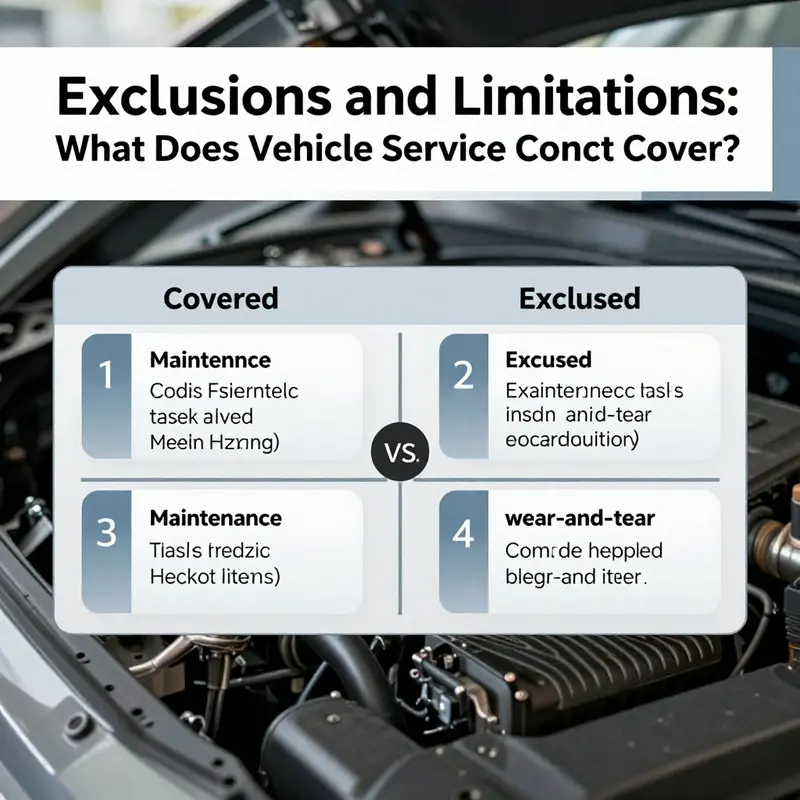
What exclusions and limits really mean for you
A vehicle service contract promises protection against unexpected repair costs. The appeal is obvious: peace of mind and predictable expenses. Yet the real value depends on what the contract does not cover. Exclusions and limitations define the boundaries of protection. They determine whether a single breakdown will be a covered repair or an out-of-pocket emergency. Understanding these boundaries keeps surprises from turning a useful safety net into a costly regret.
Most service contracts distinguish between component failures caused by defects and problems caused by regular use, accidents, or neglect. That distinction sets the tone for common exclusions. For example, routine maintenance tasks such as oil changes, tire rotations, and brake pad replacements are rarely included. These are predictable, recurring costs that manufacturers and service contract issuers expect owners to manage. Contracts focus on major mechanical and electrical failures that can lead to high bills. When reading a contract, look for the words “routine,” “maintenance,” or “wear” and note which parts and services those terms apply to.
Exclusions extend beyond maintenance. Damage from external factors — collisions, weather events, vandalism, or theft — is usually not covered. A service contract covers mechanical failure, not accidents. Comprehensive insurance or specific add-ons are typically needed for those risks. Similarly, cosmetic damage such as dents, paint chips, or upholstery wear is outside the scope of most plans. Contracts aim to repair functioning systems, not restore appearances.
Wear-and-tear items receive special attention in contract language. Batteries, tires, windshield wipers, light bulbs, and brake pads are frequently excluded. These parts have finite lifespans and wear gradually with use. If a battery fails due to a manufacturing defect, some plans might cover it. But many contracts expressly exclude components that fail from normal degradation. Read the definitions closely. The words “wear,” “wear and tear,” and “serviceable items” often signal these exclusions.
Pre-existing conditions form another major exclusion category. A problem discovered before purchasing a contract commonly falls outside coverage. Providers protect themselves from paying for issues that already existed. This is why many contracts require a pre-purchase inspection or limit coverage to defects that appear after the start date. If your vehicle shows symptoms before you sign a contract, those symptoms are likely to be deemed pre-existing and therefore ineligible.
The way repairs are authorized also limits practical coverage. Many contracts require service at approved facilities or dealerships. That restriction serves two functions: it helps ensure quality repairs, and it controls costs. However, it can be inconvenient if you travel or live far from authorized centers. Check whether the plan allows emergency repairs at independent shops, and whether those repairs need pre-authorization for reimbursement. Some providers offer reimbursement for emergency repairs not conducted at approved facilities, but only if you obtain approval within a set time window.
Financial caps and claim limits shape how far a contract will go. Contracts may set an annual or total lifetime limit on covered repairs. They may also limit the number of claims you can file in a period. These caps matter when a vehicle develops multiple problems or a single, expensive failure. A contract that sounds generous might still leave you liable once caps are reached. Pay attention to aggregate limits, per-claim limits, and any sub-limits for specific systems like the electrical or drivetrain components.
Deductibles and payment responsibilities are another layer to examine. Many plans require a deductible per visit or per repair. Others might charge a coinsurance percentage. These out-of-pocket costs can vary widely and affect the cost-benefit of the plan. A low monthly payment with high deductibles could leave you paying more than anticipated when a breakdown occurs. Compare dollar amounts, not only monthly premiums, to understand the effective protection a contract provides.
Time and mileage limits echo the scope of coverage. Contracts are written to cover a specific period or mileage span. After those limits, the responsibility reverts to the owner. Some plans offer renewable terms or transferability if you sell the vehicle. Transferability can increase resale value, but it often comes with conditions. The contract may require an administrative fee or require that the vehicle remains free of major unresolved defects at transfer.
Some exclusions hinge on how the vehicle was used. Commercial use, racing, off-roading, or ride-sharing often fall outside standard coverage. Using a personal vehicle for business or high-stress activities raises the likelihood of failure. Providers manage that risk by excluding these use cases or by requiring specialized commercial contracts. If you operate a vehicle for business, verify whether your personal contract covers that usage.
Maintenance record requirements are common and critical. Many contracts require adherence to the manufacturer’s recommended service schedule. This may include timely oil changes, filter replacements, and inspections. If a covered failure is tied to poor or skipped maintenance, the claim can be denied. Keep receipts and service records. Some plans explicitly list the maintenance items you must perform and the intervals at which they must be completed. If maintaining your vehicle yourself, save parts receipts to prove proper service.
The language within the contract defines what constitutes a “covered repair.” Some plans cover assemblies rather than individual parts. For instance, they may agree to replace an entire transmission assembly rather than a single sensor. While this often simplifies repair decisions, it can also mean the provider will choose a cheaper replacement assembly. Understand whether the contract promises new, rebuilt, or refurbished components, and whether aftermarket parts are acceptable.
Claim filing procedures and timelines deserve early attention. A denied claim often stems from failing to follow the contract’s process. Some providers require pre-authorization for non-emergency repairs. Others impose strict filing deadlines after a repair or incident. Keep a copy of the contract in your glove compartment and store digital copies of repair invoices. Quick and correct adherence to claim steps improves the success rate when you need coverage.
Exclusions for specific systems appear regularly in contract fine print. For example, air conditioning compressors, catalytic converters, and electronic modules sometimes have limited or conditional coverage. Modern vehicles use complex electronics that can fail due to software issues or environmental exposure. Contracts may exclude failures caused by aftermarket modifications or improper installations. If you add accessories or modify systems, ensure those changes do not void coverage.
Geographic exclusions can affect traveling owners. Some contracts limit coverage to certain regions or countries. International travel or long-term relocation might void coverage. If you frequently cross state lines or travel internationally, confirm whether the contract provides roadside assistance or out-of-area benefits. Roadside assistance itself might be an optional add-on, not a standard inclusion.
Finally, be wary of vague language. Terms like “reasonable wear” or “owner negligence” can be interpreted broadly. A reputable provider will define ambiguous terms. If definitions are absent or unclear, ask for clarification in writing. When in doubt, request examples of covered and excluded claims. Clear, concrete language reduces disputes.
Awareness of exclusions and limitations lets you evaluate whether a service contract fits your needs. A plan that excludes common failure points or imposes onerous limits may offer little real protection. Conversely, a well-structured contract with reasonable caps, clear maintenance requirements, and accessible repair networks can provide meaningful relief from unexpected repairs.
Consider pairing a vehicle service contract with preventative care. Following scheduled maintenance, and addressing minor issues early, reduces the chance of large failures. For owners who perform maintenance themselves, understanding required intervals is useful; guidance on proper oil change timing and maintenance balance can reduce risk and preserve eligibility under a contract. For a practical maintenance guide, see this discussion about optimal oil change intervals: optimal oil change intervals.
When evaluating offers, compare written contract terms rather than sales summaries. Ask for a sample copy and read the full exclusions and limitations section. If a term seems unfair or unclear, request a written amendment or look for another provider. Also, weigh the cost of the contract against anticipated repair expenses. If the contract excludes the components most likely to fail on your vehicle, it may not be worth the price.
In short, exclusions and limitations determine the protective value of a vehicle service contract. They decide what you will pay for and what the provider will cover. Read the fine print, verify maintenance obligations, and confirm authorized repair rules. Doing so ensures your contract aligns with your driving habits, service access, and risk tolerance. For further detail on vehicle service contracts and their scope, consult a current overview from a trusted source: https://www.marketwatch.com/story/what-is-a-vehicle-service-contract-2026-11708325641
Beyond the Warranty Window: A Thoughtful Exploration of What a Vehicle Service Contract Covers

When a vehicle leaves the protective shadow of the manufacturer’s warranty, many owners wonder where protection ends and exposure begins. A vehicle service contract, more commonly called an extended warranty, is designed to shift some of the financial risk associated with major repairs from the owner to a third party. Yet the value of that protection depends on the specifics of the plan, the age and reliability history of the vehicle, and how closely the owner uses and maintains the vehicle. Rather than seeing the contract as a universal shield, it helps to view it as a carefully tailored risk management tool. A well chosen contract can cushion the blow of a costly failure, but a poorly chosen one can add cost without meaningful coverage. The question at the heart of any decision is not simply does it cover something, but how it covers it, under what circumstances, and for how long. This chapter traces the logic of coverage, peels back the typical structure of plans, and grounds the discussion in the practical decisions vehicle owners must make in the real world of driving, repairs, and budgets.
Coverage details occupy the core of any vehicle service contract. A typical plan guards against failures in a broad set of mechanical and electrical systems that represent the heart of most repair bills. Engine components, the transmission, the driveline, cooling system parts, and the emissions control subsystem are commonly listed as core areas of protection. The engine and transmission often stand at the center of coverage because failures in these parts tend to be among the most expensive and disruptive to daily life. When a plan expands beyond the basics, it often includes the cooling system, which can encompass items such as the radiator, water pump, and related housings; the fuel system, including fuel injectors or fuel pumps in some policies; and the emissions control system, which may cover sensors and actuators tied to exhaust regulation. In many markets, a robust plan will also touch the climate control system, sometimes expanding to the air conditioning compressor, and may extend to certain electrical modules that orchestrate modern vehicle functions. The range of protection is not random; it reflects both the typical failure patterns observed in vehicles at the ages where these contracts come into play and the strategic priorities of the underwriters who design them.
The exact scope of coverage, however, lives on the contract itself. Two broad tracks emerge in the market: basic protection that centers on the core powertrain—often labeled as powertrain protection—and more expansive, bumper-to-bumper coverage that draws in a wide array of systems and components. The powertrain plan typically includes the engine and transmission, and sometimes the drivetrain, which encompasses components like axles and differentials. These are the parts most prone to catastrophic failures that leave a vehicle immobile and demand significant repair cost. Bumper-to-bumper plans, by contrast, aim to extend protection to a larger portion of the vehicle’s systems, sometimes including the climate control, electrical components, and select electronic modules. The practical effect is that a customer choosing a higher tier gains broader protection but at a higher price, while a more focused plan offers cheaper premiums but fewer covered scenarios. Within this spectrum, a purchaser must weigh the probability of failures in their particular vehicle and their own tolerance for risk against the incremental premium. The dialogue between coverage breadth and cost becomes a central theme of evaluating a service contract.
Maintenance plays a dual role in shaping the value of coverage. On one hand, properly maintaining the vehicle can reduce the likelihood of breakdowns that trigger a claim, thereby preserving the utility of the contract over its term. On the other hand, many contracts come with exclusions that hinge on adherence to maintenance schedules or the use of approved service centers. This interplay means that a contract is not a passive shield but a contract built on expectations about how the vehicle is cared for. Routine maintenance tasks such as oil changes, tire rotations, brake pad replacements, and other wear parts routinely fall outside the scope of most extended warranties. They are typically considered the owner’s ongoing responsibility, unless a higher tier explicitly includes them. This distinction matters because a contract can be attractive precisely when a vehicle’s expected wear profile and failure likelihood align with what the plan covers, while routine maintenance remains the owner’s obligation. For older vehicles or those with higher mileage, the decision to purchase can hinge on whether the policy’s exclusions and limits still align with the owner’s risk tolerance and financial planning needs.
The language of exclusions is where many buyers gain clarity or face frustration. Most contracts carve out routine maintenance, wear-and-tear items, and issues arising from accidents or neglect. Tires, brake pads, wiper blades, batteries, and sometimes even the air filters are commonly excluded unless a higher tier or a specialized rider is chosen. Pre-existing conditions can also be a sticking point. A vehicle that has already shown certain failures before the contract starts may find those parts excluded from coverage, depending on the contract’s rules and the provider’s policies. Some plans require the vehicle to be serviced at authorized centers or at minimum adhere to a specified maintenance schedule. The practical effect is that coverage is not simply a blanket promise to pay for any repair; it is a contract that expects a disciplined approach to vehicle care and a clear accounting of what was repaired, when, and how. Understanding these exclusions before purchase is essential to avoid unpleasant surprises during a covered claim.
Money matters shape the decision in equally tangible ways. Contracts come with deductibles, per-visit caps, and sometimes annual or overall limits on coverage. A deductible shifts a portion of the cost to the owner for each covered repair, and it can be set at a fixed amount or a percentage. Some plans cap the number of repairs or the total payout over the life of the contract. If a vehicle is expected to require infrequent but expensive repairs, a plan with a modest deductible and a high payout limit can be appealing. Conversely, for a vehicle with a strong reliability record and a low probability of major failures, a plan with no deductible might not be cost effective if the premium is too high relative to the expected value. The decision framework thus hinges on balancing the probability and cost of potential failures against the price and terms of the contract. This is where the owner’s risk tolerance comes into sharper focus. A risk-averse driver may prefer the predictability of a fixed annual cost, while a risk-tolerant driver might favor keeping money in hand and paying for repairs as they occur, particularly if the vehicle shows a reliable track record.
Beyond the mechanical particulars, a contract is also an agreement about the repair ecosystem. Many plans depend on using a network of authorized repair centers. This model provides the underwriter with a higher degree of control over the quality of repairs and the cost of parts, but it can also constrain the owner’s freedom to choose a nonstandard shop or to use a preferred technician. The trade-off between investment protection and repair flexibility becomes a practical concern for owners who value convenience, geographic coverage, or the ability to work with a trusted local shop. The contract may require the use of OEM parts or specified substitutes, which can influence both the cost and the perceived value of the coverage. For some, the peace of mind that comes from a network of trusted technicians and guaranteed parts is worth the potential premium or limited choice; for others, the same constraints are a reason to opt out.
A natural question arises when weighing any extended warranty: how long does the protection last, and what happens when the vehicle ages beyond the original maintenance window? Most contracts extend coverage for a defined term measured in years or miles, whichever comes first. Some buyers encounter a middle ground where coverage fades gradually as the vehicle ages or accumulates miles, a concept sometimes described as pro-rated benefits or limited timing. The decision to purchase often correlates with the vehicle’s current stage in its life cycle. A relatively new vehicle with a track record of reliability, still under an extended warranty that kicks in after the manufacturer’s term, can offer a compelling hedge against unforeseen failures during the early years of ownership. In contrast, an older vehicle with high mileage faces a different calculus: the likelihood of a claim rises while the opportunity for cost savings from the contract may diminish if the vehicle is already near the end of its useful life.
To illuminate the practical path through this landscape, consider a hypothetical scenario that captures the logic of decision making without anchoring to a particular brand or model. Imagine a mid-life sedan with 70,000 miles on the odometer. The owner has a history of regular maintenance and a preference for predictable budgeting. A powertrain only plan would cover the engine and transmission, offering protection against the most expensive potential failures and providing a stable annual premium. A higher tier, perhaps a bumper-to-bumper plan, would extend protection to a broader set of components, including some electrical modules and the climate control system. If the owner’s typical driving miles per year are moderate and the vehicle has shown strong reliability in this segment, the incremental premium for bumper-to-bumper protection might be difficult to justify, especially if the owner is meticulous about ongoing maintenance and has funds reserved for potential repairs outside the contract. On the other hand, if the vehicle has a history of intermittent failures in areas such as the cooling system or electrical modules, a broader plan could produce more value by reducing the risk of expensive, unpredictable repairs and stabilizing monthly or annual ownership costs. The decision becomes a dance between historical reliability, projected maintenance needs, and the owner’s readiness to manage risk with an insurance-like product.
A subtle but significant dimension of this decision is how a contract interacts with maintenance discipline. The maintenance schedule that the vehicle follows can influence whether certain repairs are deemed covered. If the owner adheres to specified service intervals and uses approved service centers, a claim in the future is more likely to be honored. If maintenance lapses or the repair outcomes point to neglected care, a claim could be delayed or denied on the grounds of noncompliance with the contract terms. For this reason, prospective buyers often value clear guidance about what maintenance is required, what constitutes proper service, and which centers qualify under the plan. The contract thus becomes a partner in care, not merely a financial instrument to pay for a future failure. The more carefully a vehicle is cared for in accordance with the contract terms, the more likely it is that the promise of protection translates into real-world relief when a major component falters.
An essential thread in the conversation about coverage is the distinction between coverage for failures and the coverage of scheduled maintenance. Routine service activities—oil changes, tire rotations, brake checks, and filter replacements—are typically the owner’s responsibility. These activities, though critical to vehicle health, do not usually trigger a claim because they are part of normal wear and ongoing upkeep rather than failures in the sense a warranty contract contemplates. Some buyers may be drawn to premium plans that include maintenance services or allow for maintenance credits. These options can be appealing for those seeking more predictable ownership costs or for drivers who prefer a simplified budgeting approach that bundles service and repair costs. When maintenance is bundled into a policy, the contract’s value proposition shifts from merely guarding against sudden, high-cost repairs to offering a more integrated approach to sustaining a vehicle’s performance over time.
The practical implications of choosing a contract extend into how owners compare offers and shop for coverage. A simple price comparison is not enough. Prospective buyers should read the contract with a careful eye toward the exact language of what is excluded, what is included, and what the limits are. They should examine deductibles, per-claim charges, and any caps on the total payout. They should consider whether the contract transfers to a new owner if the vehicle is sold, a feature that preserves resale value and offers a form of financial security to prospective buyers who plan to trade in or sell the car. Another factor is the availability of a clean and accessible claim process. A contract that promises broad coverage but delivers a slow, opaque, or opaque claim experience may undermine its perceived value, even if the written terms look favorable. In practice, the best contracts combine clear coverage, realistic exclusions, predictable costs, good repair network access, and a straightforward claims process.
To ground these ideas in a resource you can consult while planning a maintenance schedule and evaluating coverage, consider the guidance on maintenance and service intervals available in broader maintenance literature. For example, there is a dedicated discussion of how to time oil changes and other routine maintenance in relation to time and mileage, which helps owners align personal maintenance habits with contract terms. This kind of alignment is valuable because it reduces the risk that a future repair claim is undermined by a misalignment between maintenance and contract expectations. See the article on oil-change intervals time versus mileage for a practical reference point that complements the coverage questions discussed here. optimal oil-change intervals time vs. mileage
As you navigate the decision, it is useful to keep in mind the broader purpose of a vehicle service contract. The most meaningful protection emerges when the contract matches the vehicle’s likely failure profile, the owner’s risk tolerance, and the budget for ownership costs. For a vehicle with a relatively low probability of major failures, a basic plan paired with disciplined maintenance may offer sufficient protection at a reasonable price. For a vehicle with a heavier burden of potential failures, a broader plan can deliver greater peace of mind, even if it requires a higher premium. The key is clarity about what is in and out of scope, a pragmatic understanding of limits and allowances, and a realistic assessment of how the contract will function in the practical life of owning and operating the vehicle. In the end, the value of a vehicle service contract lies not in the abstract idea of protection but in the concrete, day-to-day experience of confidently facing the road ahead, knowing that major, unplanned repair costs are less likely to derail your plans.
For readers seeking a balanced overview of what extended warranties cover and how to assess them, a detailed consumer perspective offers helpful context. A respected consumer guidance resource outlines common inclusions and exclusions, the typical terms you should expect to negotiate, and the strategic questions to ask before signing any agreement. This external reference can complement the internal considerations described here and help you approach the decision with a clear set of criteria and an informed expectation of the value a contract might deliver. You can explore a comprehensive analysis at the external resource provided in the references.
External reference for further reading: Consumer Reports on extended warranties and how to buy them, which lays out core considerations for coverage, exclusions, and decision making. https://www.consumerreports.org/vehicles/extended-warranties-what-they-cover-and-how-to-buy-them-a209851637/
Final thoughts
In conclusion, understanding what vehicle service contracts cover is crucial for local private car owners, used car buyers, and fleet operators. These contracts provide essential protection against expensive repairs, but it’s equally important to recognize their exclusions and limitations. By carefully considering the specific components covered and the details of the plan, you can ensure your investment is safeguarded. Ultimately, a well-chosen vehicle service contract not only enhances your peace of mind but also keeps your vehicle running optimally without unexpected financial burdens.