
Maintaining your vehicle is crucial for its longevity and safety. Vehicle service encompasses a variety of tasks aimed at ensuring your car functions properly and efficiently. Whether you are a local car owner looking to enhance routine maintenance, a used car buyer wanting to ensure your investment is sound, or a small business fleet operator aiming for optimal performance, understanding what vehicle service includes is essential. This guide delves into three key areas: Core Maintenance and Repair Services, Advanced Technical and Diagnostic Services, and Specialized Vehicle Functions. Each chapter highlights critical components of vehicle service, giving you the knowledge to make informed decisions and keep your vehicle in top shape.
Keeping Your Car Reliable: Essential Maintenance and Repair Services Explained
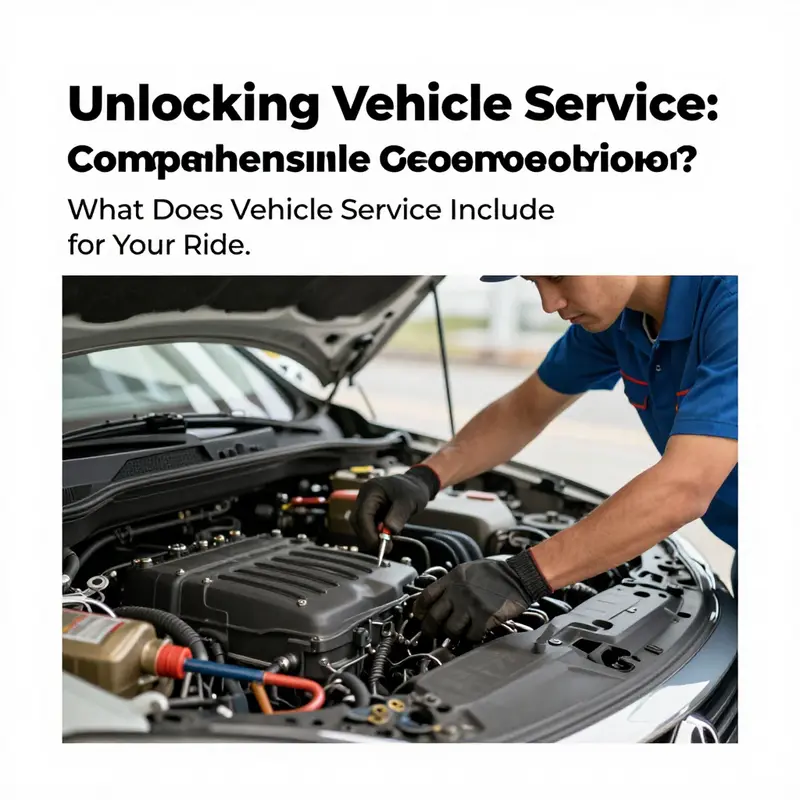
Core Maintenance and Repair Services Explained
A vehicle’s life depends on two parallel actions: steady, preventive care and prompt, skilled repair when something goes wrong. Core maintenance and repair services combine those actions into a single purpose: keep the vehicle safe, efficient, and dependable. This chapter walks through those services as a unified whole. It explains what technicians check, what they replace, and why every task matters to a vehicle’s performance and longevity.
Routine maintenance forms the foundation. Simple, regular tasks prevent wear, preserve systems, and reduce the chance of sudden failures. The most visible routine item is the engine oil and filter change. Fresh oil lubricates moving parts, carries heat away, and prevents sludge buildup. Replacing the oil filter keeps contaminants from circulating. The timing and frequency depend on driving style, load, and oil type. For guidance on when to change oil, consult resources on optimal oil change intervals that balance miles and time. Regular air filter replacement follows. Clean air improves combustion and protects sensors. Spark plugs are next; worn plugs cause misfires, poor fuel economy, and rough idling. Inspecting and replacing them at intervals keeps combustion efficient and emissions low.
Brakes are a safety-critical area where preventive checks save lives. Technicians examine pad and rotor wear, fluid condition, and caliper function. Brake fluid absorbs water over time, reducing hydraulic performance and raising corrosion risk; periodic fluid changes restore feel and safety. A brake inspection often uncovers related issues, such as uneven rotor wear from a stuck caliper or suspension geometry problems that accelerate pad wear. Tires also receive regular attention. Technicians check tread depth, air pressure, and sidewall condition. Tire rotation evens wear across the set. Balancing and wheel alignment preserve handling, reduce vibration, and extend tire life. Proper tire care improves fuel economy and reduces the chance of blowouts.
Battery and charging system health are essential for starting and electronics. Battery testing measures charge capacity and cold cranking ability. Technicians clean terminals, check hold-downs, and verify alternator charging voltage. Poor connections can mimic a failing battery. Modern vehicles have complex electrical loads. A weak alternator or corroded cable can lead to no-start situations or intermittent faults. Preventive electrical checks find small issues before they cause major failures.
Cooling and transmission systems require scheduled service. Cooling systems corrode and collect scale over time. A coolant flush and concentration check restore boiling and freezing protection, and reduce corrosion inside the engine and heater core. Hoses and the radiator receive inspection for soft spots or leaks. Transmissions need fluid and filter changes on a schedule. Clean transmission fluid maintains hydraulic function and reduces wear on clutches and bands. For vehicles driven hard, towing frequently, or operating in extreme heat, shorter service intervals may be required.
Suspension and steering systems get regular inspections too. Shock absorbers, struts, ball joints, tie rods, and bushings wear progressively. When components degrade, handling deteriorates, braking distances increase, and tire wear patterns change. Professionals monitor these parts and replace what’s necessary to restore safe steering response. Exhaust systems, belts, hoses, and windshield wipers are other components that receive regular checks and timely replacement.
While preventive work dominates routine service, repair work restores a vehicle when faults appear. Repairs range from small component replacements to major mechanical overhauls. Engine repairs may involve diagnosing misfires, replacing gaskets, or rebuilding cylinders. Transmission repairs can be as simple as replacing a solenoid or as complex as a partial rebuild. Exhaust work includes repairing leaks and replacing mufflers or catalytic converters. Replacing belts and hoses eliminates failure points that can lead to overheating or sudden breakdowns.
Electrical and electronic repair have grown in importance. Modern vehicles rely on numerous sensors and control modules. Technicians pull diagnostic trouble codes using OBD scanners to find faults. They test wiring, connectors, and individual electronic modules. Some repairs require replacing sensors such as mass airflow sensors, oxygen sensors, or camshaft position sensors. Others involve repairing wiring harnesses damaged by corrosion or rodent activity. Increasingly, software updates and module reprogramming are necessary to clear faults or improve system behavior.
Bodywork and paint repair complete the range. Collision damage requires structural assessment, parts replacement, and refinishing. Even minor dents and paint scratches affect vehicle value and can expose metal to corrosion. Professional body repair restores structural integrity and aesthetics. Paint correction and targeted panel replacement protect against rust and maintain resale value.
Emergency and roadside services bridge planned maintenance and repair. Towing, jump-starts, flat tire changes, lockout assistance, and fuel delivery help drivers resume travel. Technicians who perform roadside service also diagnose immediate causes. For example, multiple jump-starts may reveal a failing alternator or parasitic battery draw, prompting a deeper repair. Emergency response reduces risk to passengers and helps preserve the vehicle from secondary damage caused by continued operation under fault conditions.
Accurate diagnosis avoids unnecessary repairs. Technicians combine visual inspection, mechanical tests, and electronic diagnostics to pinpoint issues. A symptom like a rough idle might stem from vacuum leaks, spark plug wear, fuel delivery problems, or sensor faults. A methodical diagnostic approach isolates the true cause and guides efficient repair. Skilled shops document findings and use quality replacement parts to restore function.
Alignment and balancing illustrate the interplay of maintenance and repair. Uneven tire wear can indicate alignment drift, worn suspension parts, or wrong tire pressures. Correcting alignment improves handling and promotes even tire wear. Wheel balancing eliminates vibration and prevents premature wear to bearings and steering components. These services often accompany tire replacement or suspension repair.
Regulation and quality standards shape how shops deliver services. Many regions require businesses to register and meet consumer-protection rules. These regulations ensure transparency in pricing, proper disposal of hazardous materials, and clear repair authorizations. Following standards also means technicians receive proper training and certification. Compliance reduces risk of improper repairs and gives owners recourse when work does not meet expectations. For authoritative regulatory guidance, refer to official transportation ministry resources that outline repair business management and consumer protections: https://xxgk.mot.gov.cn/jygl/fgzc/202108/t20210811_3645749.html
The landscape of core services is changing with technology and powertrains. Electric vehicles introduce new service priorities, such as battery health management and high-voltage system inspections. They reduce the need for oil changes and many moving-part repairs. Hybrid systems require combined attention to both internal combustion and electric subsystems. Repair shops adapt by training technicians and investing in specialized tools. The rise of driver assistance systems and connected vehicle platforms also adds diagnostic complexity. Sensors used for automatic braking, lane keeping, and adaptive cruise control need calibration and verification after repairs. Technicians must validate sensor alignment, software versions, and system performance to preserve safety features.
Quality service balances preventative care with targeted repairs. A well-designed maintenance plan follows the manufacturer’s schedule. It lists fluid change intervals, inspection points, and component replacement timelines. Staying on schedule minimizes the chance of sudden failures. When repairs are needed, written estimates and documented authorization protect both owner and shop. Good shops explain what they found, why parts must be replaced, and what benefits the repair provides. They prioritize safety-critical repairs and recommend cost-effective solutions for non-essential items.
Parts and warranties matter. Genuine parts often match original specifications. High-quality aftermarket parts can provide good value when chosen carefully. Warranty handling ensures covered repairs are completed correctly. Shops also maintain parts supply chains to minimize repair delays. Good inventory management shortens downtime and reduces the need for temporary fixes.
Detailing and protection services extend the idea of maintenance into preservation. Professional cleaning, paint corrections, and protective coatings help prevent corrosion and wear. Applying protective films or undercoatings protects metal surfaces and finishes. While cosmetic, these services contribute to long-term value and reduce future repair needs caused by environmental damage.
In daily use, small habits help make professional service more effective. Keeping a vehicle clean exposes problem areas earlier, such as leaks or rust. Monitoring warning lights and unusual noises lets owners act before damage escalates. Recording service history helps technicians track recurring issues and makes it easier to diagnose complex faults.
Ultimately, core maintenance and repair services keep a vehicle safe and reliable. Preventive maintenance reduces the frequency and cost of repairs. Skilled diagnosis and timely corrective work restore systems when failures occur. Together, these services protect performance, preserve value, and support the vehicle through many miles and years. For more detail on proper service scheduling and oil change timing, see guidance on optimal oil change intervals.
From Codes to Confidence: Advanced Diagnostics and Predictive Care in Modern Vehicle Service
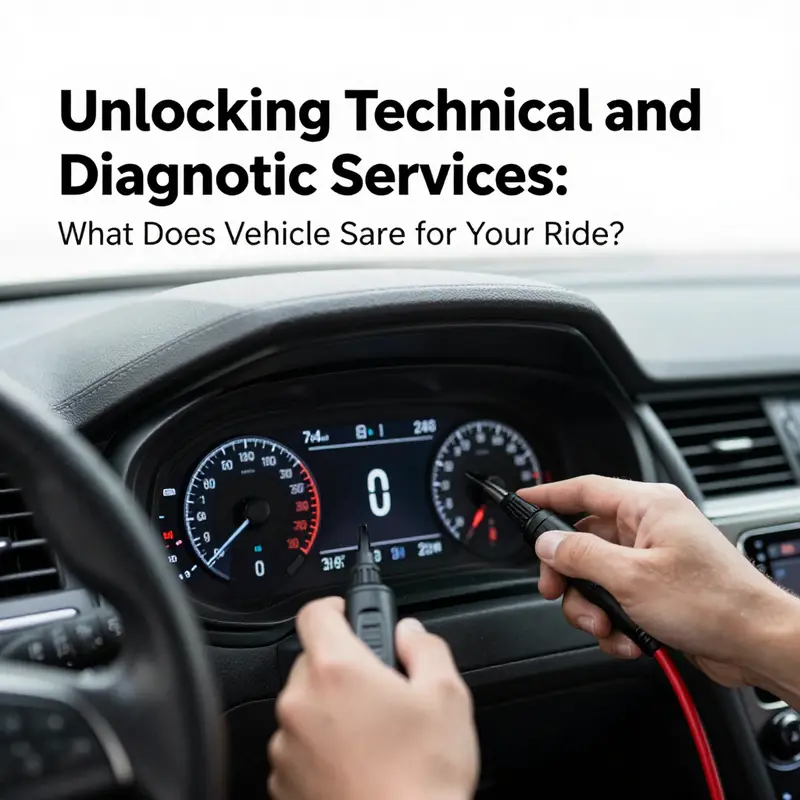
The landscape of vehicle service has moved beyond routine maintenance and tire rotations. Today’s work centers on reading the vehicle’s dialogue—fault codes, sensor streams, and software states—and translating data into reliable performance and safer operation. This chapter surveys the layer of advanced diagnostic services that sits at the heart of contemporary vehicle care, where electronics, software, data, and human expertise converge in an ongoing conversation between vehicle and technician. The shift from reactive fixes to proactive health management redefines what it means to keep a vehicle safe, reliable, and efficient in an era of digital systems and electrification.
Remote diagnostics and monitoring sit at the forefront of this transformation. Modern vehicles generate streams from dozens of sensors—temperatures, pressures, voltages, currents, and RPMs—updated in real time. Telematics extend visibility beyond the shop, granting technicians access to health indicators while the car sits in a driveway or on a remote lot. When data signals an emerging issue, the diagnostic picture becomes clearer before a warning light appears, enabling prevention over cure. This capability also allows service intervals to be tailored to the vehicle’s actual operating pattern, which varies with climate, load, and driver behavior. The result is fewer breakdowns and a more predictable maintenance journey.
Predictive maintenance, driven by AI and machine learning, forecasts failures before they occur. Diagnostic systems compare historical data with current readings to identify patterns that historically preceded a failure mode. For example, a gradual decline in battery charging efficiency, correlated with temperature and usage, may signal impending degradation that could affect crank power in cold starts. By analyzing thousands of cases, the system can estimate remaining useful life and propose servicing windows that fit the owner’s schedule and budget. The practical benefit is reduced downtime and longer life for critical components. For shops, predictive maintenance turns guesswork into evidence guiding parts stocking, technician training, and appointment planning.
Electronic and diagnostic scanning have evolved in parallel with remote and predictive functions. High-precision tools read fault codes with granularity and contextualize them against live sensor data and historical trends. A single code may point to multiple causes; correlating that code with performance data narrows the field to the most plausible culprits. This approach enhances human judgment rather than replaces it, yielding more repeatable, data-driven validation after repairs. Technicians use standard OBD-II scans plus access to broader software suites to monitor system performance, verify repairs, and confirm issue resolution.
Diagnostics extend beyond the engine to the web of electronic control units that manage braking, suspension, climate control, and driver assistance. Scans verify subsystem health, reveal latent faults in adjacent circuits, and generate durable records for future visits. The aim is a holistic view of vehicle health, ensuring that repairs restore full functionality across subsystems and that no hidden issues remain.
Data-driven vehicle health reports translate raw codes into narratives about performance, emissions, efficiency, and safety. Reports include actionable recommendations, a prioritized repair plan, and transparent timelines and costs. Delivered digitally, owners gain convenient access to health status, historical service data, and upcoming maintenance milestones, which strengthens trust and engagement in the repair process.
Digital workflow integration ties diagnostic tools to shop management and customer communication, creating a seamless pipeline from fault identification to parts ordering to road testing. Customers can track diagnostic status, review the data that informed decisions, and observe post-repair test results in real time, enhancing transparency and collaboration. The end result is a faster, more efficient diagnostic-to-repair cycle and a more confident customer.
Electrification adds new safety and training demands. High-voltage systems, battery management strategies, and regenerative braking require specialized skills and equipment, yet the diagnostic framework remains the same: observe, contextualize, validate, and plan for reliable operation. As electric propulsion becomes more widespread, advanced diagnostics become more central to everyday service.
Beyond technology, governance of data—privacy, ownership, consent, and retention—has become essential. Clear policies, secure handling, and transparent data practices build trust when software-driven decisions affect safety-critical functions.
For professionals, ongoing education and cross-disciplinary collaboration keep diagnostic work fast, accurate, and aligned with owners’ expectations for reliability and cost efficiency.
Beyond the Wrench: Specialized Vehicle Functions That Define Modern Vehicle Service
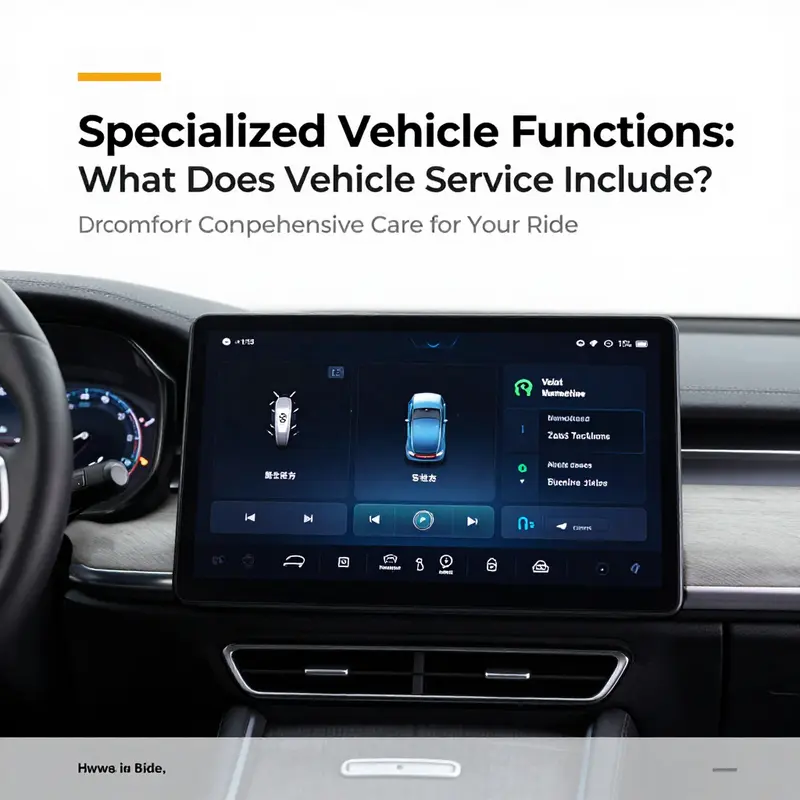
People often picture vehicle service as a routine of oil changes, tire rotations, and the occasional brake job. In truth, the service ecosystem surrounding a modern vehicle is far more layered and interconnected. It blends preventive care, corrective maintenance, and a growing suite of specialized functions that enable a car to operate safely, efficiently, and with a tailored touch. When you look at the full map of what service includes, you see not a single set of tasks but a network of duties that span mechanical work, electronic diagnostics, software management, and customer support. This integrated approach, rather than isolated fixes, protects the value of the car over time, reduces downtime, and supports a homeowner or fleet manager in planning maintenance around real needs rather than fixed calendars. In this light, specialized vehicle functions become the true backbone of service.
At the core lie routine maintenance and repair, the foundation that keeps engines singing and brakes responsive. Routine maintenance covers oil and filter changes, coolant and brake fluid replenishment, and components like wiper blades and batteries that degrade with use. But beyond these familiar tasks, technicians perform systematic inspections of brakes, suspension, steering, tires, electrical systems, and climate control. This is not mere checklists; it is a risk-management discipline designed to identify wear, compute remaining life, and prevent failures that could disrupt daily life. When maintenance becomes a continuous conversation between the vehicle and the shop, the line between repair and prevention dissolves, and service starts to feel like a personal stewardship of the machine.
Into this routine enters diagnostics and inspection, a realm driven by electronics and software. Modern vehicles rely on a network of controllers that exchange data in milliseconds. Diagnostic testing uses specialized tools to read error codes from the onboard computer, verify sensor outputs, and map the fault to a likely cause. Technicians then perform deeper inspections, sometimes using sensor simulators, oscilloscopes, or scope-based tests to confirm a fault before replacing a part. Precision here matters because a misjudged fault can lead to unnecessary parts replacement, wasted time, and uncertain safety margins. The diagnostic process also frames predictive maintenance as a practical option, allowing fleets and individual owners to anticipate issues before they arise, rather than reacting after a breakdown.
Even more transformative are the advanced technical and diagnostic services, where electronics turn from passive components into active problem-solving partners. Software updates are routinely deployed to engine control units, infotainment software, and driver-assistance systems to improve efficiency, fix defects, and unlock improvements in usability. In some cases, updates arrive over the air, reducing the need for a shop visit. Engineers continually refine algorithms for braking, traction, and adaptive cruise control, and technicians validate changes against test procedures that simulate real driving. Electronic system repairs reach beyond traditional hardware to address complex subsystems such as ABS, airbags, and cabin controls. In this space, the technician’s toolkit blends mechanical skill with software-savvy problem-solving, and customers benefit from improved safety and a more refined driving experience.
Against this evolving backdrop, the concept of specialized vehicle functions emerges as a defining axis of modern service. It is not merely a collection of binaries and sensors, but a layered interface between the vehicle’s hardware and the software that orchestrates it. As cars become part of a larger digital ecosystem, service providers must master both the physical mechanics and the data languages that describe the vehicle’s state. The specialized functions act as a translator and a conductor: they translate sensor readouts into actionable insights and conduct control commands that adjust the car’s behavior in real time. This dual role is particularly evident when we consider how a vehicle’s data is accessed, secured, and used to maintain safety and comfort.
One clear articulation of specialized function appears in the realm of Android Automotive. VehicleService is a core native service that interfaces the operating system with the vehicle’s hardware. At a practical level, it relies on a hardware abstraction layer, or HAL, to present a standardized API for accessing vehicle data and issuing control commands. The HAL shields the software from the complexity of myriad hardware implementations, making it possible for developers to rely on predictable data such as speed, fuel level, tire pressure, engine temperature, and door lock status. This standardized data stream enables the OS to drive climate and seat settings, adjust windows, and coordinate with safety features without exposing the driver to raw sensor chatter. It also furnishes the safety net that allows automated features—such as automatic emergency braking or blind-spot monitoring—to access sensor data in a secure, auditable manner.
From a safety perspective, specialized vehicle functions are the bridge between perception, decision, and actuation. Real-time data access enables the system to monitor sensor fusion outputs and trigger protective actions when anomalies appear. The same data stream that manages climate comfort can, in integrated modes, support seat-position memory for drivers with different preferences, reduce heated steering wheel load on cold mornings, or adapt mirror angles to a driver’s height. The architecture must guard privacy and integrity, ensuring that data is accessed only by authorized components and that commands cannot be spoofed or misused. In this sense, the specialized functions support not only driver assist features but also a broader commitment to robust cybersecurity and resilient safety systems that protect occupants in diverse conditions.
Beyond safety and convenience, specialized functions influence how vehicles age and how owners experience ownership over time. Lifecycle management benefits from a holistic view that blends maintenance history, diagnostic trails, software versioning, and parts provenance. When a service provider records oil changes, wear readings, and successful software updates in a unified ledger, it becomes possible to forecast replacement intervals, optimize part-stock, and minimize unexpected downtime. The integration extends to the customer’s broader ecosystem: appointment scheduling, warranty claims, and post-repair follow-ups become part of a seamless service journey rather than fragmented encounters. In this way, specialization supports both resale value and the owner’s confidence that the vehicle remains usable and well cared for across years and miles.
This integrated approach is not limited to the mechanical and electronic core. A broad suite of specialized vehicle functions spans the entire lifecycle, including emergency roadside assistance and recovery, which functions as a safety net when a vehicle breaks down or is involved in an incident. The service ecosystem positions technicians to deploy on-site support, coordinate towing, or arrange temporary mobility options if needed. While not glamorous, these services reduce the disruption associated with failures and build trust in the servicing network. In parallel, body and paint care rounds out cosmetic and protective needs—from routine detailing to refinishing after accidents—and it contributes to preserving value and aesthetics. When owners combine paint protection with ceramic coatings or film, the car’s surface becomes more resilient, but more importantly, the ownership experience remains satisfying and enduring.
Specialized vehicle functions also cover personalization and performance enhancements. Auto modification and decoration include tasteful upgrades that reflect the owner’s style without compromising safety or reliability. Even seemingly small changes—upgraded floor mats, window tinting, or sound-damping materials—have implications for comfort, acoustics, and thermal behavior. For high-end projects, refinements may involve interior finishes, seating upgrades, or advanced audio integration, all carefully planned to preserve vehicle integrity and meet warranty requirements. In parallel, advanced mobility and support services expand the value proposition by offering vehicle delivery, trade-in evaluations, recycling, and connected services that align with modern expectations of convenience and sustainability. Taken together, these offerings illustrate how specialized functions create a richer, more versatile ownership proposition rather than simply fixing what breaks.
Financial and insurance services weave a pragmatic layer into the specialized functions. Service providers often package auto loans, lease financing, and insurance products in ways designed to smooth ownership. They may also assist with insurance claims processing and damage assessments after an incident, accelerating recovery and reducing friction. While finance is not service in the mechanical sense, it underpins the ability to act when maintenance becomes urgent or a repair requires specialized parts. This is an example of the ecosystem at work: multiple disciplines collaborating to keep a vehicle on the road, with predictable costs and clearer pathways to resolution. The knowledge transfer dimension—where technicians share expertise about maintenance schedules, interpretation of codes, and best practices for safe driving—rounds out the service experience, reminding owners that professional guidance is part of ongoing care rather than a one-off transaction.
Advanced mobility and support services further illustrate the sophistication of modern vehicle service. These services may include vehicle delivery, trade-in evaluations, recycling programs, and coordinating with smart city infrastructure for smoother traffic management when possible. They reflect a broader view of mobility that extends beyond the vehicle itself to the urban and technological ecosystems in which it operates. The service provider thus becomes a partner in maintaining not only a machine but also a driver’s confidence in travel, a confidence that comes from knowing the vehicle is monitored, updated, and supported through every mile. In this environment, specialized vehicle functions are not optional extras but essential capabilities that enable a dependable, responsive, and resilient driving experience.
For readers seeking practical context and ongoing discussion about how these specialized functions translate into everyday service, the KMZ Vehicle Center blog offers accessible commentary and examples. It links the theory of design and safety with hands-on maintenance and keeps pace with rapid changes in automotive technology. KMZ Vehicle Center blog.
Finally, as vehicles become more connected and autonomous, the role of specialized vehicle functions will only grow deeper. The vehicle service landscape will increasingly balance preventive care, real-time monitoring, and human expertise, with data-driven decisions guiding when, where, and how to intervene. Technicians will need to stay current with software updates, evolving safety standards, and new diagnostic modalities, while owners will appreciate a service experience that anticipates needs, preserves value, and supports safe, confident driving. For authoritative standards and qualification in this evolving field, see https://www.ase.com.
Final thoughts
Proper vehicle service is more than just a checklist; it’s essential for both performance and safety. By understanding the core maintenance and repair services needed, the advanced diagnostics available, and the specialized functions modern vehicles offer, you can ensure your vehicle remains reliable throughout its lifespan. Whether you’re a private car owner, a used car buyer, or a fleet manager, prioritizing these services will lead to better vehicle management and peace of mind on the road.