
Proper vehicle servicing is crucial for maintaining safety, performance, and longevity of your car. Whether you’re a local private car owner, a used car buyer, or a small business fleet operator, understanding the servicing process can save you time and money. This guide will detail the five essential stages of vehicle servicing: 1) Initial Customer Interaction & Diagnosis, 2) Detailed Inspection & Diagnostic Process, 3) Repair & Maintenance Execution, and 4) Quality Assurance & Final Checks. With this knowledge, you’ll be better prepared to tackle any vehicle issues that arise and ensure a smooth and efficient service experience.
Opening the Path: How Warm Encounters and Diagnostic Rigor Shape a Seamless Vehicle Service
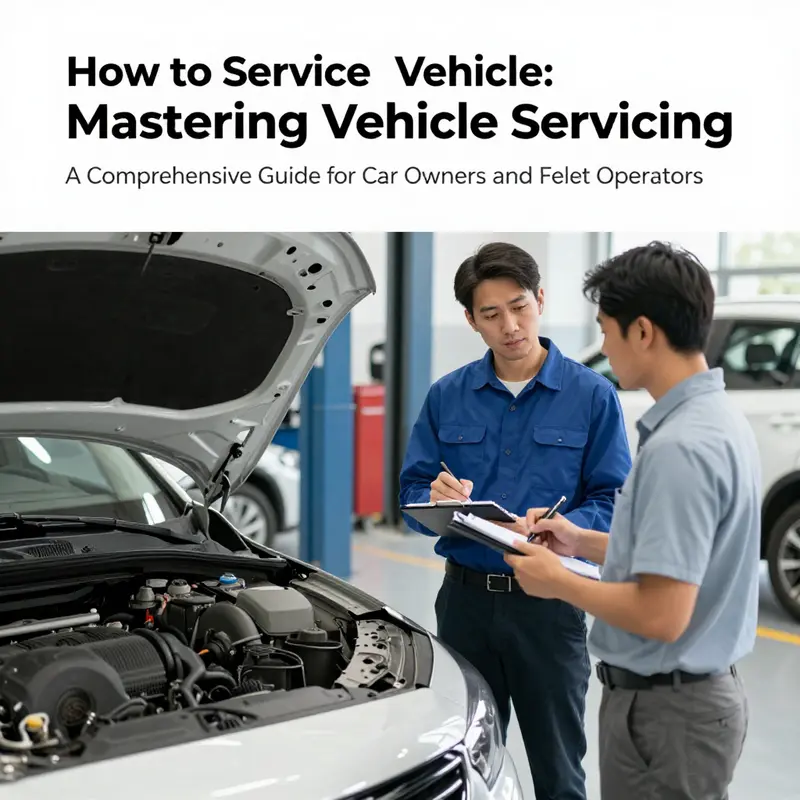
The moment a vehicle owner pulls into a service center, the outcome of the visit often hinges more on the human moment than on the engine itself. The opening act is the greeting, the listening, and the setting of a baseline that builds trust and clarity for what follows.
From the first contact, the tone matters. A warm welcome, a comfortable space, and a clear outline of what will happen next help the owner relax and participate in the process. People bring anxiety to a service visit—the fear of unexpected costs, the disruption of time, and the worry about what lies beneath the hood. An attentive host can reduce that anxiety before a wrench is turned, signaling respect for the customer and the vehicle alike.
The diagnostic journey then begins with listening. Open ended questions invite the owner to describe the issue in their own words, while the advisor notes the symptoms and the owner’s expectations for a satisfactory outcome. A baseline inspection follows, documenting existing damage and confirming what is present with a simple signature on a pre inspection sheet. This step creates a mutual contract: the customer agrees to what is there, and the shop commits to careful handling and clear communication about what will change during the service.
With information gathered, the team uses a structured approach to diagnosis. Tools like an OBD scanner translate computer signals into actionable insights, but human senses remain essential. Visual checks, listening for unusual sounds, feeling for vibrations, and even smelling for burning fluids all contribute to a complete picture. The goal is to isolate the root cause efficiently while understanding how it interacts with other systems in the vehicle.
When presenting options, the advisor offers a core fix, a thoughtful preventive plan, and a cost conscious alternative that leverages compatible parts. Each option is accompanied by a detailed estimate, and a clear line asks the customer to confirm the plan before any work begins. This collaborative dialogue respects the owner’s time and budget while promoting reliability and safety.
The scene behind the scenes follows a carefully managed workflow: a precise work order, informed scheduling, and rigorous adherence to manufacturer specifications. The final handover reaffirms what was done and why, and the advisor demonstrates the fix when possible, reinforcing confidence in future visits. The overarching message is that service can be predictable, fair, and reassuring when empathy, transparency, and ongoing communication are baked into every step.
Under the Hood: From Vigilant Inspection to Precise Diagnostics in Vehicle Servicing
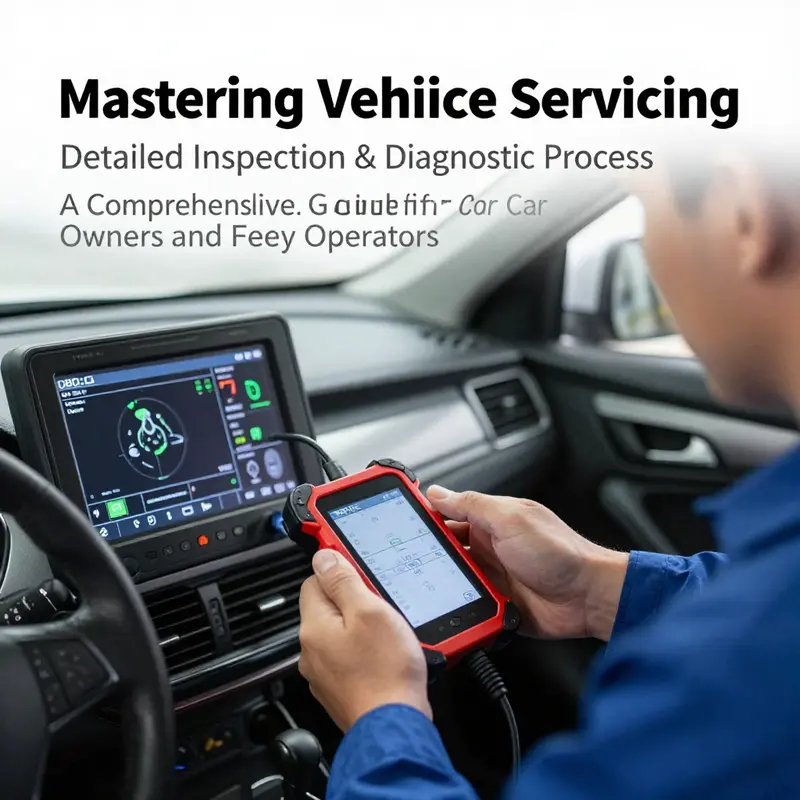
The heartbeat of any successful vehicle service is the disciplined sequence that begins the moment a vehicle enters the bay and ends only when a clear, evidence-backed verdict is reached. This chapter follows that path, tracing how a modern service moves from a careful, multi-sensory inspection into the diagnostics that diagnose with precision and explainability. It is not a single test or a quick fix; it is a conversation between the driver’s observations, the vehicle’s behavior, and the technician’s methodical reasoning. The goal is to identify the root cause with confidence and to prepare a repair plan that is both technically sound and transparent to the customer. In this approach, inspection and diagnosis are not separate tasks but two halves of a single, cohesive process—an exchange that builds trust while safeguarding reliability and safety.
From the moment the car arrives, the service begins with a calm, structured intake that echoes the needs of the driver. A warm greeting, attentive listening, and a careful note of the symptoms set the stage. The advisor records not only what the customer is experiencing—be it a knocking from the engine, a pulling sensation in the steering, or a persistent brake squeal—but also the vehicle’s history. When these conversations align with what the technician observes in the car’s physical state, the path toward a truthful diagnosis becomes clearer. The initial inspection is practical and visual: the exterior is scanned for obvious damage, rust, or wear; tires are checked for tread depth and evenness; fluid levels are assessed and topped up as needed; and the battery is examined for corrosion, loose connections, and overall health. This is not merely about catching leaks or low fluid; it is about reading the vehicle’s current state in the language of physics and wear—a language that can reveal how well the last service was performed and whether any upcoming maintenance is overdue.
The inspection moves from surfaces to systems. In the engine bay, the visual and tactile cues are joined by an understanding of what the vehicle’s maintenance history anticipates. The air filter is checked for dirt and restriction; belts and hoses are examined for cracks or signs of wear; and the condition of the engine oil is assessed by color, consistency, and level. A dirty oil sample, a pale or milky hue, or a smell of fuel all signal deeper conditions that may require attention. The transmission deserves equal scrutiny: the fluid’s level, color, and smell can speak volumes about friction and wear, and a test drive helps reveal how the transmission responds to throttle input, including any delayed engagement, slipping, or harsh shifts. Suspension components—shock absorbers, ball joints, tie rods—are assessed for leaks, play, and stiffness; steering systems are checked for smoothness and noise; and the brake system is a focused point of attention, with the pad thickness, rotor wear, and the brake fluid’s condition all measured to establish whether the vehicle is safe to operate in the near term.
Exhaust integrity matters too, especially in terms of leaks or unusual noises that could point to corrosion, loose connections, or damaged components. The electrical system, a modern vehicle’s neural network, is examined with a careful eye for illumination, harness integrity, and visible signs of corrosion or damaged insulation. Lighting, fuses, relays, and the charging system all come under scrutiny because even small electronic faults can cascade into limited visibility, erratic sensor readings, or compromised performance. Yet even with a battery of checks, the most decisive information often comes from a focused conversation with technology: the OBD-II system. An engine computer holds fault codes that point to specific subsystems, but codes are not verdicts on their own. They serve as a map to potential trouble—a starting point for deeper investigation, not a conclusion. Real-time data streams measured by the scanner—engine RPM, fuel pressure, battery voltage, sensor readings—provide a dynamic picture that helps technicians separate symptoms from root causes.
The diagnostic phase, though tech-forward, remains grounded in old-fashioned, multi-sensory detective work. When the electronic readout is ambiguous, the team uses a systematic approach that blends the precision of technology with the intuition cultivated by years of hands-on work. The “split-check” method—dividing the system into sections and verifying the presence or absence of symptoms in each segment—helps isolate whether a fault lies in fuel delivery, ignition, sensing, or actuation. A parallel technique, the “replacement” method, involves substituting a suspected component with a known-good counterpart to see if the symptom resolves. While not always practical for every part, these methods provide a structured framework for troubleshooting intermittent or complex issues that electronics alone cannot resolve. In practice, the technician moves back and forth between code data and physical tests, reconciling what the computer says with what the vehicle reveals through sound, vibration, heat, or feel. This reconciliation is where true diagnostic confidence is forged.
OBD-II codes are interpreted through context. Each code points to a subsystem or sensor, but it’s the live data stream and the vehicle’s behavior that confirm or refute a candidate fault. A misfire code, for example, might arise from a faulty coil, a degraded spark plug, or a vacuum leak. The technician’s task is to verify which of these possibilities aligns with the data trend, the maintenance history, and the observed symptoms. A camera-style inspection might document a cracked hose or a frayed belt, but a live pressure reading or a fuel trim value can reveal whether the issue is mechanical wear, a sensor anomaly, or a borderline condition that will soon become a fault if left unaddressed. This balanced approach—honest data, honest inspection—ensures the diagnosis is robust and repeatable, not a fortunate guess. Safety considerations accompany every step: the use of proper PPE, the correct securing of the vehicle when work occurs beneath it, and adherence to a protocol that protects technicians and the car alike.
As the data coalesces into a plan, technicians translate what they have found into a concrete, staged work order. This is where the diagnostic insights meet practical repair strategy. The work order lays out the required parts, the tools, and the estimated time, aligning with the manufacturer’s specifications and the vehicle’s service history. The shop manager coordinates scheduling to minimize downtime and to ensure parts availability. Throughout this period, the service advisor remains a bridge between the technical team and the customer. They explain what was found, why it matters, and what needs to be done—breaking down complex ideas into clear, actionable explanations. The customer gains a clear picture of the problem, the proposed fix, and the anticipated outcomes. In this moment, the service experience becomes less about fear or anxiety and more about informed decision-making and shared responsibility for vehicle safety and reliability.
The inspection and diagnostic phase does not end with a diagnosis alone. A crucial element is transparency about the condition of the vehicle and the relative urgency of the repairs. For many drivers, timely maintenance can prevent more serious problems that may require expensive repairs later. The technician may recommend a plan that includes both immediate safety-related work and longer-term preventive maintenance. The aim is to craft a balanced approach that protects the driver’s safety, extends the vehicle’s life, and aligns with the driver’s needs and budget. The final handover, therefore, is not just about delivering a bill; it is a clear, itemized explanation of what was found, why it matters, and what the next steps will be. If any questions arise, the advisor walks the customer through the evidence—the codes, the test-drive notes, the observed wear—and connects them to the recommended actions. This level of clarity reduces post-service friction and fosters trust, turning what could be a stressful experience into a confident, collaborative process.
The practical value of this approach is evident in everyday maintenance and in periods of high mileage or seasonal travel. A comprehensive inspection and a careful diagnosis can catch developing issues before they become urgent. It gives technicians a precise starting point for repairs, which reduces unnecessary parts replacements and helps ensure that every fix is necessary and effective. The sophistication of modern diagnostics does not diminish the importance of meticulous hands-on checks. Oil condition, belt wear, fluid levels, and brake depth are still vital signs of a vehicle’s health. The difference lies in how these signals are interpreted. When a technician integrates OBD-II data with a tactile feel of the drive and a visual inspection of components, they arrive at conclusions that are both reproducible and explainable to the customer. The process is designed to be thorough without being invasive, and it respects the vehicle’s complexity while focusing on clear, practical outcomes.
For readers seeking a broader perspective on ongoing maintenance planning and how diagnostics fit into long-term vehicle care, the KMZ Vehicle Center blog offers a wealth of practical guidance and industry insights. KMZ Vehicle Center blog.
As the diagnostic phase moves into the hands-on repair stage, the groundwork laid during inspection and testing becomes the blueprint for work performed. Yet the value of a well-executed inspection and diagnostic process extends beyond any single repair job. It shapes the customer’s confidence in the service experience, reinforces safety, and supports the integrity of the vehicle over time. When done well, it translates into smoother future visits, fewer unnecessary repairs, and a clear understanding between driver and technician about how best to protect the vehicle’s performance and safety as it ages. The path from vigilant inspection to precise diagnosis is therefore not just a technical sequence—it is a philosophy of servicing that treats every vehicle as a system and every symptom as a clue to a broader, safer truth about how the car operates in daily life.
The discussion here maps onto the broader architecture of vehicle servicing, where diagnosis feeds repair planning, and repair performance feeds onward maintenance strategy. The cycle is continuous rather than linear: inspection informs diagnosis, diagnosis informs action, action informs follow-up checks, and those checks feed future inspections. In this flow, a well-conducted inspection and diagnostic process becomes the backbone of a service experience that is predictable, transparent, and respectful of the customer’s needs. It matters not only what is fixed but also how the team communicates about it, how the problem is framed, and how the customer perceives the value of the service performed. This clarity helps reduce anxiety, aligns expectations, and builds lasting trust, turning routine maintenance into a disciplined practice that keeps vehicles safer and more reliable on the road.
To reinforce the point, consider the safety implications of a precise diagnostic. A failing brake fluid that is low and contaminated cannot be addressed with a single component replacement; the root causes may involve moisture ingress, wear, or a leak that requires tracking and sealing. A misfiring cylinder may demand a spark plug and coil check, but the conclusion must be supported by fuel trim data, misfire counts, and a test drive that reproduces the symptom. The diagnostic process, therefore, is not about replacing parts at random; it is about confirming with data, validating with experience, and validating again with testable outcomes. Only then can the service team present a plan that is both efficient and capable of restoring the vehicle’s reliability while preserving its safety margins.
That is the essence of the detailed inspection and diagnostic process—the fusion of careful hands, careful data, and careful communication. It is a collaborative, iterative journey that ends not with a speculative fix but with a well-supported, customer-centered plan. The next stage, the actual repair and maintenance execution, builds directly on this foundation, translating diagnosis into action with precision, efficiency, and a continued commitment to transparency. The path from inspection to repair is, at its core, a pathway to trust—a pathway that keeps drivers confident and vehicles performing at their best.
External resource for deeper reading on vehicle inspections: https://www.autocar.co.uk/article/car-maintenance/complete-guide-vehicle-inspections-what-you-need
From Diagnosis to Road-Ready: Mastering Repair and Maintenance Execution
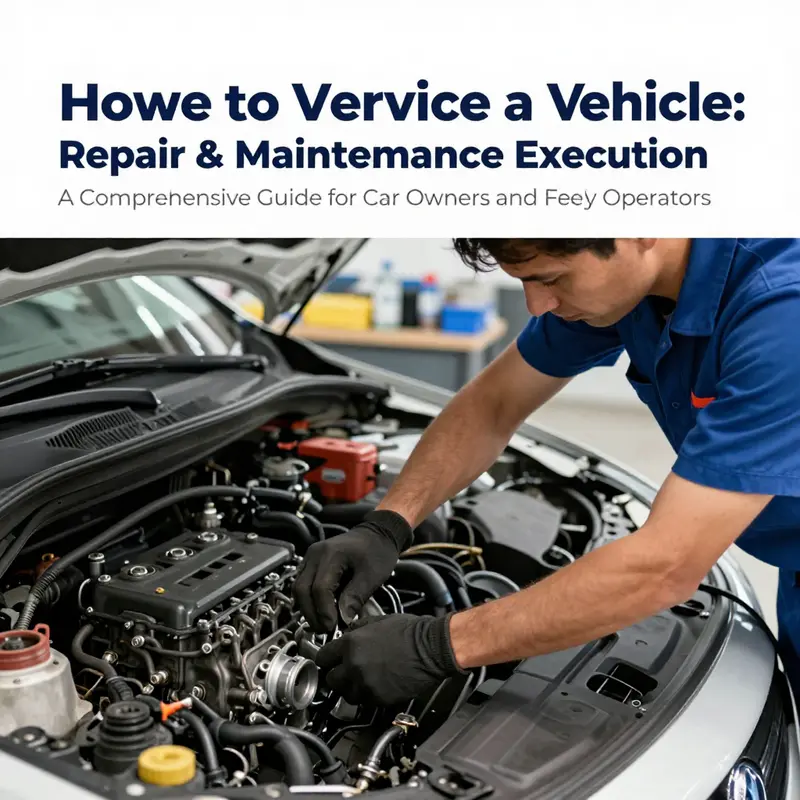
When a vehicle leaves the service bay, the journey it takes is the culmination of a tightly choreographed sequence that begins long before the driver signs off on a bill. Repair and maintenance execution is more than swapping parts; it is a disciplined process that translates diagnosis into reliable performance. The goal is to restore safety, reliability, and owner’s confidence while preserving the vehicle’s integrity and history.
Executing a repair starts with a clear, step-by-step plan that aligns with the manufacturer’s specifications. Technicians replace and reseat components with the correct torque, lubrication, and connectors, while technicians verify live data and conduct functional checks as work progresses.
Quality control and clear communication complete the cycle. A rigorous post-repair inspection, a road test, and a documented Certificate of Completion confirm that the repair meets standards and that the vehicle is road-ready. Transparent handoffs to the customer ensure understanding and trust, turning a repair into lasting maintenance and safety.
Data-driven reviews close the loop: service histories, parts quality, and outcome measurements feed into ongoing training and improved procedures. The result is not just a fixed problem, but a durable improvement in the vehicle’s reliability and in the owner’s confidence.
Quality Assurance in Action: Final Checks That Restore Confidence and Keep You Safe on the Road
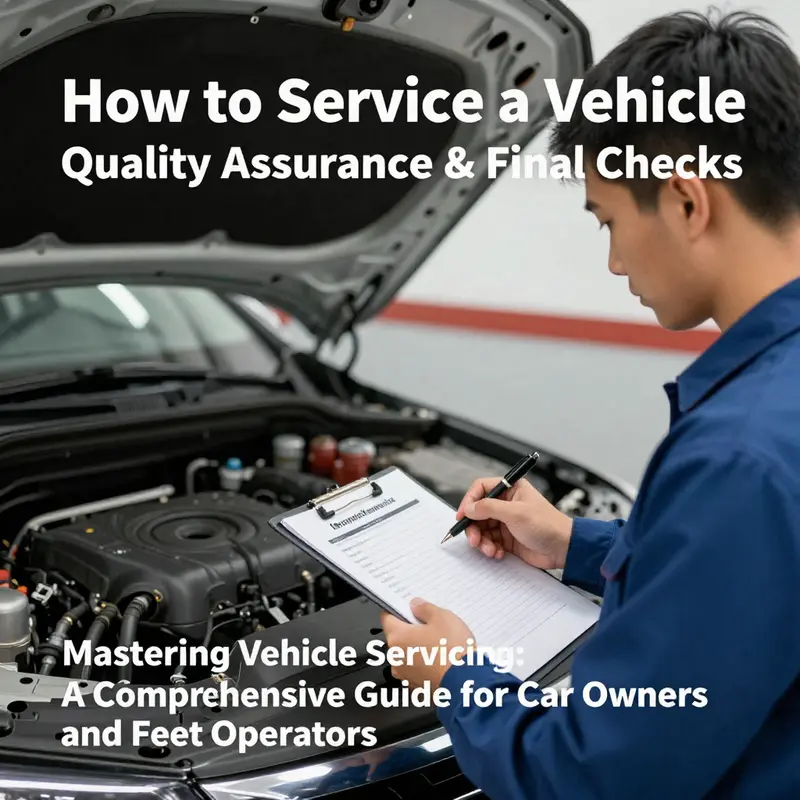
When a vehicle comes out of the workshop, it is not enough that the repair or service has been completed to specification. Quality assurance (QA) in vehicle servicing is the disciplined process that ensures every bolt is tight enough, every fluid level is correct, every function operates as intended, and every potential issue is addressed before the car returns to its owner. QA is the quiet backbone of trust in a service center. It isn’t a single test or a single tool, but a holistic approach that weaves standardized procedures, skilled technicians, and precise diagnostic capability into a seamless sequence. The aim is simple and uncompromising: safety, reliability, and longevity. The road, after all, does not forgive improvisation, and the best service is the one that makes the car feel like it is new again—only backed by a transparent record of what was done and why it was necessary.
Quality assurance begins long before the vehicle is handed back to the customer. It starts with the way a service is planned and executed. Adherence to manufacturer-recommended service intervals remains a foundational principle. When technicians align their work with those intervals, they preserve warranty coverage, maintain performance targets, and reduce the risk of repeating issues that could have been prevented with scheduled maintenance. This is not a rigid ritual but a calibrated discipline that respects the manufacturer’s engineering intent while allowing the technician to account for the vehicle’s individual history and current condition. The diligent service provider does not treat these intervals as a ceiling but as a baseline, a reference point that guides every inspection and test performed during the visit.
The choice of parts is another pillar of QA. Genuine or OEM-approved components are selected to guarantee compatibility and durable performance. This is not about branding or prestige but about safeguarding the vehicle’s safety systems, electronics, seals, and mechanical interfaces. A high-quality repair is not merely about restoring function; it is about reinstating the integrity of the system so that it can withstand the next miles without surprise. When parts are sourced thoughtfully and installed correctly, the likelihood of premature wear, leaks, or failure diminishes significantly. In a world where technicians juggle a growing number of models and configurations, selecting the right part based on the vehicle’s specification and service history is a decision that has a direct bearing on road safety.
Modern vehicle servicing blends the precision of digital diagnostics with the intuition born of experience. The diagnostic landscape is vast, and QA relies on both data-driven insights and human judgment. An OBD-II scanner connected to the vehicle’s computer provides fault codes, real-time data streams, and a window into electronic control modules. But QA does not stop at reading codes. It extends to a multi-sensory examination that keeps the human element central. A technician will visually inspect for wear or leaks, listen for unusual mechanical noises, feel for abnormal vibrations or heat, and even smell for signs such as burning insulation, oil, or coolant residues. This holistic approach is essential because a fault code may point to a symptom rather than the root cause. The diagnostic process is often a loop: data points raise questions, a targeted check confirms or refutes, and the outcome informs the repair plan.
Within this QA framework, there is also a methodical approach to isolating faults that can be intermittent or intricate. Techniques like the split-check method—the practice of dividing the system into sections to isolate the fault—help technicians narrow down suspect areas without unnecessary part swapping. In cases where a component could be the culprit but cannot be conclusively proven with a single test, the replacement method—carefully swapping suspected parts—may be employed, always with supporting data and a plan to verify the result. The goal is not to chase symptoms but to confirm a root cause, and to do so in a way that minimizes downtime and cost for the customer. This is the heart of QA in a modern service center: processes that are repeatable, auditable, and transparent, without sacrificing the speed and efficiency that customers expect.
A closely linked aspect of QA is data logging and ongoing health monitoring. The best service centers treat each visit as part of a car’s evolving history. Every inspection finding, every diagnostic reading, every part replacement is recorded with precision. Over time, this creates a rich dataset that allows technicians to identify trends, predict when a component might need attention, and propose proactive maintenance before a breakdown occurs. For the customer, this translates into peace of mind: a vehicle that is cared for with foresight rather than only reacting to a problem after it appears. Digital diagnostics and data logging also facilitate smoother communication with the customer. When a service advisor explains that certain readings indicate healthy engine timing, stable battery voltage, or an aging brake fluid, the language is grounded in concrete data rather than abstract assurances. The customer can see the logic behind the decisions and the rationale for every recommended service.
As QA permeates the entire service workflow, the final checks phase becomes the culmination of a rigorous process rather than a last-minute formality. Final checks are not simply a quick once-over; they are a comprehensive, deliberate verification that all work has been completed to the required standard. A thorough final inspection begins with a detailed verification of the work order: were all required parts replaced, were factory torque specifications met, and did the technician follow the exact repair procedures prescribed by the vehicle’s service manual? This is followed by a functional validation that spans the vehicle’s critical domains. The braking system must respond precisely, the steering should feel linear and stable, the suspension must absorb irregularities while maintaining control, and the exhaust and emissions components must operate within expected limits. It is essential to verify that no new issues have emerged during maintenance. The final test drive is a focal point in QA, a controlled, multi-scenario evaluation that simulates real-world driving: urban stop-and-go, highway cruising, gentle acceleration, and deliberate braking under varied weather and road conditions. Only after these checks are the systems confirmed to be in their intended state.
Cleaning and presentation are often underestimated components of QA, yet they play a meaningful role in the customer experience. A vehicle that has been repaired or serviced should leave the shop looking as cared-for as the performance indicates. A clean exterior free of fingerprints, a spotless cabin free of debris, and a thorough inspection of exposed components—hoses, connectors, and under-hood areas—signal to the customer that the service was conducted with meticulous attention to every detail. This attention to cleanliness is not vanity; it reduces the risk of missed faults, as a clean engine bay makes it easier to spot leaks or damaged wiring on subsequent inspections. When the technician and service team take pride in the vehicle’s appearance, it reinforces the sense that the work has been completed to the highest standard and that the customer can trust the results.
Documentation is more than paperwork. It is the record that legitimizes the QA process. A precise, itemized service report communicates what was done, why it was necessary, and what the customer should monitor in the coming weeks. It should include the parts replaced, fluids changed, service intervals observed, and any findings that were addressed. The documentation serves multiple purposes: it supports warranty claims, assists in future scheduling, and provides a transparent trail that can be reviewed by the customer at any time. When the service advisor walks through the report with the owner and points to the new parts, readings from the diagnostic tool, and evidence of test-drive results, the customer gains confidence. They know not only that the work completed but also that the work will be tracked, reviewed, and recalled if anything changes in the vehicle’s health.
The customer journey through QA does not end with the handover. A robust post-service follow-up closes the loop. This step isn’t a mere courtesy; it is an opportunity to confirm that the vehicle remains performing as expected and to address any evolving concerns quickly. A brief call or email a few days after service can confirm that the vehicle is delivering the desired performance, and it offers a channel for customers to report issues they notice only after they have time to adapt to the repaired system. Proactive communication, a hallmark of quality service, communicates a commitment to ongoing support rather than a one-off transaction. In peak travel periods or during seasonal spikes in vehicle usage, this proactive stance can be especially valuable. The service center may offer targeted inspections or reminders about forthcoming maintenance milestones, reinforcing the sense that the center is a long-term partner in the owner’s vehicle ownership journey.
For readers seeking practical resources or broader context on how quality service is implemented across the industry, a broader hub of guidance exists in the online community. The KMZ Vehicle Center blog provides accessible content from professionals who value clear, actionable information. To explore more insights and tips that complement the QA focus of this chapter, you can visit the hub here: KMZ Vehicle Center blog.
The cumulative effect of these QA practices is a service experience that is both predictable and reassuring. When a customer senses that the workshop has a disciplined, data-informed approach, they are more likely to trust the results, accept recommended maintenance, and return for future needs. The aim is not merely to fix what is broken but to build a durable relationship based on transparency, competence, and ongoing care. This is the essence of quality assurance in vehicle servicing: a collaborative, evidence-based process that aligns the technician’s expertise with the owner’s expectations and the vehicle’s safety requirements. The road test, the measurement of performance, and the careful documentation together create a foundation for confidence that endures beyond the moment of service.
As we move forward in the broader article, the focus on QA and final checks will continue to interweave with other critical threads of servicing: how technicians stay current with evolving technologies, how service teams communicate with customers, and how preventive maintenance strategies extend a vehicle’s life. The next chapters will illuminate how ongoing learning, effective handovers, and collaborative problem-solving reinforce the reliability that drivers rely on, day in and day out. For now, the core message remains clear: quality assurance is not a final act but an ongoing discipline that translates expertise into safer roads and more dependable vehicles. For those who want to see how this discipline translates into real-world outcomes, external expert perspectives can provide a broader lens on best practices, safety standards, and the evolving standards of modern servicing. See, for example, the work of established automotive press and industry observers at https://www.autocar.co.uk/ for a contemporary perspective on quality service and road safety.
Final thoughts
Understanding how to service a vehicle effectively is invaluable for any car owner or fleet operator. By mastering the steps of initial customer interaction, detailed inspections, repairing and maintaining vehicles, and ensuring quality assurance, you can enhance your vehicle’s performance and extend its lifespan. The knowledge gained from this guide not only prepares you for dealing with vehicle issues but also instills confidence in managing your automotive needs. Remember, regular servicing contributes significantly to safety and reliability on the road.