For many car owners, used car buyers, and small business fleet operators, understanding vehicle service contracts is essential. This financial tool provides a safety net against unexpected repair costs, ensuring peace of mind on the road. However, the process of determining how much these contracts cost can be intricate, as multiple variables come into play. The following chapters will guide you through the nuances of vehicle service contract pricing, including the factors influencing costs, comparisons among various providers, and ultimately, the value these contracts bring in terms of potential savings. By the end, you’ll have a comprehensive grasp of vehicle service contracts’ roles in budgeting and vehicle maintenance.
Behind the Price Tag: Reading the True Cost of Vehicle Service Contracts in a Changing Market

Choosing to purchase a vehicle service contract is not simply a financial decision about a fixed price. It is a forward-looking plan to manage risk, align maintenance expenses with your budget, and pick a level of protection that matches how you use your vehicle. The cost structure for these contracts is shaped by more than the sticker price; it is a mosaic of factors that interact with your car’s specifics, your driving habits, and the type of protection you want. When you step back from the headline numbers, a deeper question emerges: what does the price really cover, and is the price fair for the protections you gain? The answer begins with an understanding of the range and the reality that there is no single price tag that fits every vehicle or every driver. In many cases, a multi-year service contract sits somewhere in the broad band of roughly $1,500 to $3,500, translating to about $100 to $150 per month for the major providers. That framing gives a useful sense of scale, but it also invites questions about how those numbers are calculated and what drives them up or down for a given vehicle.
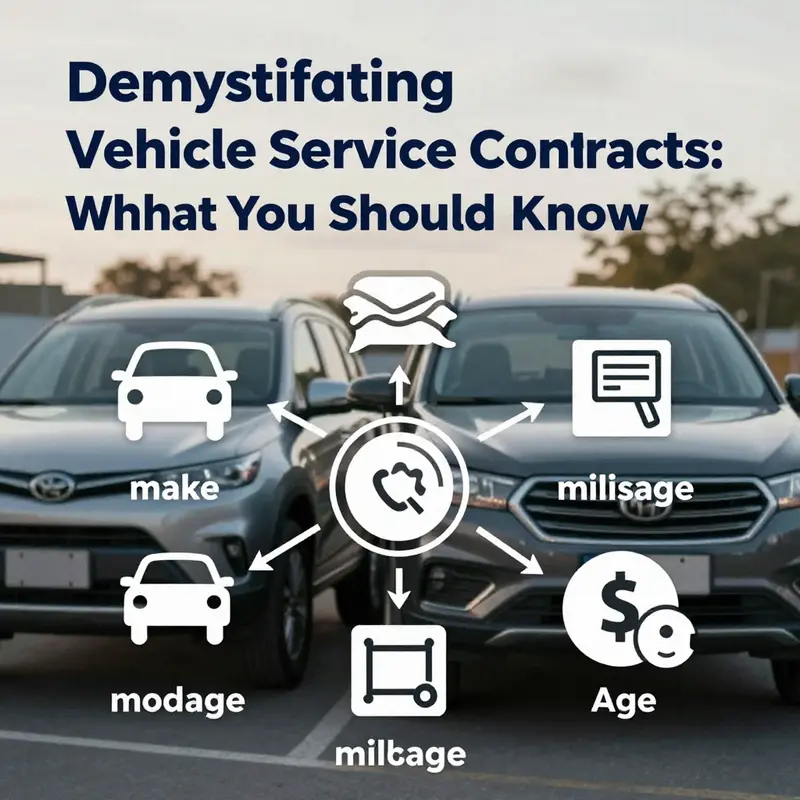
The landscape of pricing is not uniform because the contracts are tailored to specific needs and scenarios. Vehicle make and model carry different inherent risks. A high-tech modern engine with advanced electronics might demand more costly parts and more elaborate labor when a repair is needed, which in turn raises the premium. Age and mileage matter as well: an older vehicle with higher miles tends to present a greater likelihood of claim, which can push the contract price higher. The level of coverage matters just as much as the car itself. A basic maintenance plan that covers routine services will be cheaper than a comprehensive package that includes major repairs, component replacements, and extended warranties. The length of the contract is another lever—longer terms distribute the risk over more years, which usually means a higher upfront cost but potentially more protection against future price shocks. Finally, the provider and the contract’s terms shape the bottom line. Different administrators design deductibles, service networks, and reimbursement rules in ways that can materially alter the out-of-pocket consequences for a claim. In short, you are not simply buying a product; you are negotiating a tailored risk management arrangement, and the price is the outcome of many interacting decisions.
To bring this into sharper relief, consider how costs can appear in real-world procurement settings. In a government context, where contracts govern fleets or maintenance services, the price per event or per service can vary widely depending on the scope and requirements. For example, a maintenance contract at a toll collection center might be priced around 2,860 RMB per session, which is approximately $400 USD. A separate fleet-services agreement for a school district’s vehicles might specify a repair cost of 9,690 RMB, roughly $1,350 USD, for a broader set of services. Another contract for a primary school fleet could be valued at 6,390 RMB, about $900 USD. These figures illustrate that per-service costs can span a broad spectrum—from a few hundred dollars to well over a thousand—based on what is included, how quickly service is delivered, and the complexity of the work. The point is not to draw a direct parallel to consumer contracts, but to underscore a fundamental truth: price for vehicle-related services is highly sensitive to scope, risk, and expectations of service delivery. When you translate that insight to a private consumer context, the same logic applies, but the format shifts from per-session pricing to a bundled annualized premium that promises a wider shield against larger, unexpected costs.
For individuals exploring private vehicle service contracts, the same questions apply, but the answers are often filtered through personal usage patterns and the lifecycle stage of the vehicle. A basic maintenance plan may cover routine parts and services, such as oil changes and inspections, with relatively predictable costs. A comprehensive plan can extend to major repairs, drive-system components, and sometimes even electronics or hybrid components, depending on the provider’s design. Extended warranties may add another layer of protection, sometimes overlapping with the manufacturer’s warranty or cautiously extending beyond it. Each tier has a different price tag, and adding features like roadside assistance or rental-car reimbursement pushes the monthly or annual cost higher. The practical takeaway is that the price is a proxy for risk transfer: what level of certainty are you buying against the possibility of expensive, unexpected repairs?
To navigate these waters, it helps to frame the decision around value rather than price alone. A consumer should start by pinning down the likely cost of repairs if no contract exists and then weigh that against the contract’s premium. If a typical repair bill for the vehicle’s common failure points averages several hundred dollars, a contract that covers most or all of those components may offer meaningful protection, particularly if it also reduces uncertainty about labor costs and availability of repairs. Yet there is a caveat: not every potential repair will be covered, and every policy carries exclusions, caps, and deductibles. Some drivers encounter benefits that far surpass cost, while others discover that their vehicle’s reliability, driving environment, or ownership horizon makes a pay-as-you-go approach more economical. The variability in cost, both within the consumer market and in public procurement contexts, requires a careful, personalized evaluation rather than a quick algebraic calculation.
Pricing is also shaped by how you maintain the vehicle and how you use it. A well-documented maintenance history can influence the perceived risk to a provider, potentially lowering the premium if the vehicle demonstrates discipline in upkeep. Conversely, a vehicle that has a history of frequent repairs or a high likelihood of component failure may push the price higher. In practice, this encourages buyers to consider not only the car’s past but the future maintenance plan they are willing to adopt. A plan that aligns maintenance with recommended intervals—oil changes at proper intervals, timely tire and brake service, and the proactive replacement of wear items—helps reduce the risk of catastrophic failures that could trigger large claims. The balancing act is subtle: you want enough protection to cover major failures without paying for coverage that protects against events with low probability or low cost.
This is where the broader picture matters. When you evaluate costs, you should consider more than the headline premium. Executives of maintenance programs often talk about total cost of ownership, which includes not only the sum of premiums but also the value of avoided or mitigated out-of-pocket expenses, the convenience of covered labor, and the predictability of annual budgets. A bundle that spreads the cost of potential repairs over several years can make cash flow smoother and provide peace of mind, especially for drivers who rely on their vehicles for essential daily tasks or run a fleet where downtime is costly. Yet the value is highly personal. A person who drives a relatively new vehicle with a robust factory warranty might find less incremental value in a long, comprehensive plan, while someone with an older car and high mileage could find substantial protection in exchange for a modest premium relative to the risk absorbed by the contract.
Pricing transparency remains a central concern. The murkiness that sometimes surrounds service contracts—what is covered, what requires extra payment, what the deductible is, and how reimbursement works—can turn a seemingly straightforward decision into a maze. Buyers often find themselves asking: what exactly is included in this price? Are preventative maintenance tasks truly included, or are they billed separately? Are breakdowns covered if they stem from wear and tear versus a sudden mechanical failure? Are there limits on the number of covered claims per year or over the life of the contract? Importantly, many plans impose waiting periods or require vehicles to be serviced within a specified network to qualify for coverage. These details can dramatically alter the practical value of the contract, even if the upfront premium looks reasonable.
To navigate these intricacies, it makes sense to collect multiple quotes and compare them on a like-for-like basis. But comparison should go beyond premium numbers. You want to understand the scope of coverage, the inclusions and exclusions, the deductible structure, the duration and renewal terms, the process for filing a claim, and the speed and quality of service historically reported by other customers. A good approach is to ask the provider to map your likely repair scenarios to the contract language. For example, if your vehicle is known to experience a particular failure mode after a certain mileage threshold, does the contract step in to cover such a failure, and under what conditions? If you own a vehicle with specialized components or technology, does the plan cover diagnostical work, labor rates, and replacement parts at current market prices? These are not esoteric questions; they are practical checks that determine whether the price is delivering genuine protection or simply locking you into a future obligation with limited upside.
An often overlooked but crucial aspect of the decision is maintenance planning. The price of a service contract should be weighed in light of how well you can maintain the vehicle to avoid costly repairs. For instance, proper oil-change intervals, tire rotations, brake inspections, battery health checks, and coolant system maintenance can significantly reduce the likelihood of expensive failures. This is precisely why one can find value in resources that discuss maintenance timing and intervals, such as guidance on optimal oil-change timing in relation to usage patterns. For those who want to connect maintenance timing to their contract decision, the notion of time versus mileage becomes an essential consideration. You might ask whether the plan rewards regular maintenance or merely patches over major breakdowns. The more your maintenance cadence aligns with proven best practices, the more leverage you gain in negotiating favorable contract terms and in extracting the maximum value from the protection you purchase. For a more in-depth look at how maintenance intervals can influence overall vehicle costs and service decisions, you can explore further details at the linked resource optimal-oil-change-intervals-time-vs-mileage.
Ultimately, the decision to buy a vehicle service contract rests on your tolerance for risk, your expected total cost of ownership, and your confidence in the vehicle’s reliability at your chosen price point. If you drive less and plan to replace your vehicle within a few years, a lighter coverage option or a shorter-term plan might make more sense. If you depend on your vehicle for daily commuting in a high-demand environment, or if you own a vehicle with a history of higher repair costs, a more comprehensive plan could reduce the stress of potential downtime and repair bills. Regardless of the path you choose, the core idea remains the same: price is not a standalone measure of value. The real value lies in how well the contract aligns with your vehicle’s risk profile, your budget, and your willingness to accept or transfer that risk. This alignment is what differentiates a prudent purchase from a premium that you pay but may not fully realize in the form of actual savings.
For readers who want a broader sense of how maintenance and repair costs intersect with long-term protection, consider looking at industry perspectives on maintenance planning and budgeting in conjunction with contract costs. While the numbers will differ from private consumer offerings, the core lessons hold true: premiums are a function of risk, coverage, and the expected use of the vehicle. A thoughtful buyer will approach the process as a joint optimization of price, coverage, and practical value, rather than a simple arithmetic comparison. In doing so, you achieve a clearer map of when a vehicle service contract makes economic sense and when prudent maintenance alone, funded as you go, better serves your needs. And as you refine your understanding, you will be better prepared to navigate the negotiation with providers, secure terms that reflect your vehicle’s reality, and choose a plan that offers real financial protection without paying for more than you require. For those who want to anchor their decision in solid maintenance planning, the linked resource above serves as a useful companion to the broader discussion on pricing and coverage in this chapter.
External resource: For a broader overview of how vehicle service contracts are described in consumer-facing financial guidance, see this external article: https://www.investopedia.com/terms/v/vehicle-service-contract.asp
null
null
Pricing the Road Ahead: Understanding Vehicle Service Contract Costs Across Providers and Plans
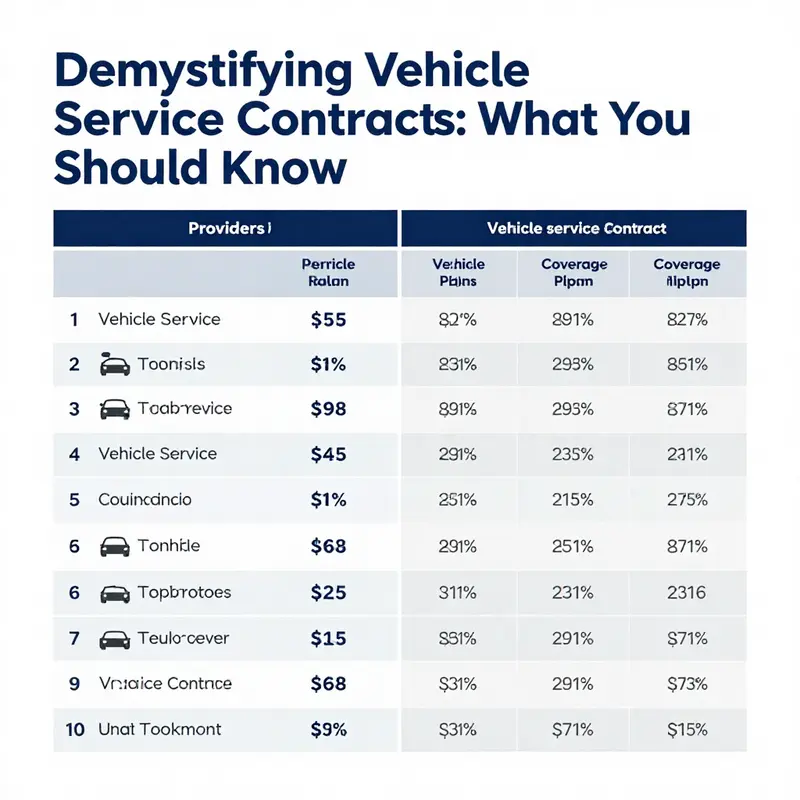
Purchasing a vehicle service contract, often referred to as an extended warranty, is less a single price than a bundle of choices about protection, timing, and risk. For many drivers, the starting point of the decision is a familiar range: multi-year plans commonly fall between about $1,500 and $3,500, with major providers typically charging roughly $100 to $150 per month for comprehensive coverage. Those numbers function as a useful compass, not a fixed toll booth. The actual bill you see—monthly or upfront—depends on a constellation of factors that reflect the vehicle itself and the specifics of the plan you choose. The vehicle’s make and model matter, as do its age and mileage. A newer car with advanced electronics may justify higher protection because of potential repair costs and the complexity of components. Conversely, an older vehicle with higher mileage can push the price in either direction, depending on the plan’s design and the provider’s risk assessment. In short, price is a moving target shaped by risk, coverage, and the negotiated terms of the contract, not by a one-size-fits-all sticker price.
From the outset, it’s important to differentiate between the tiers of coverage. A basic plan that covers only the essentials tends to be leaner on monthly cost but thinner on protection. A more comprehensive plan, by contrast, can bring in extras that many drivers find valuable—roadside assistance, rental car reimbursement, and sometimes mechanical breakdown insurance. Each added benefit raises the monthly price or the upfront premium, but it can also shift the perceived value of the contract when a repair is needed on a long road trip or during a busy family month when a rental car is a practical necessity. The way these add-ons stack up over time is where a lot of the economic sense behind the decision is made. For someone who drives a lot, travels frequently, or owns a vehicle with historically costly components, the additional protection may translate into a smoother cash flow in the event of a breakdown. For others, the incremental costs may overshadow the probability and impact of repairs.
The pricing story here also features a spectrum of exclusions, deductibles, and claim processes that can dramatically alter the real-world value of a plan. A lower monthly price might come paired with a higher deductible or a narrow set of covered components. In such cases, a single major repair could eclipse years of modest savings, leaving you to pay the deductible and potentially incur out-of-pocket costs for items not explicitly listed as covered. On the other side, there are plans with broader coverage and lower deductibles, but those benefits come at a higher price point. It’s not unusual to see a plan with a deductibile as low as a few hundred dollars and a wide array of covered items, plus extras such as trip interruption or rental car reimbursement, that pushes the monthly cost well above the more minimalist options. The key is to read the fine print and understand what is truly included and what is not. The difference between “covered” and “not covered” can be moot in terms of monthly price if the exclusions swallow the benefits when a real repair arises.
When you step back and compare providers, the landscape becomes a collage of price signals and policy design. The price you pay is only part of the story. A lower upfront cost might mask stricter eligibility rules or more limited coverage that complicates a claim or delays reimbursements. Some sellers entice buyers with attractive certificates of affordability, only to reveal, upon closer inspection, that many common repair scenarios fall outside the approved list or that pre-existing condition clauses apply. Others price aggressively but lock in a host of premium services that can add value during ownership, such as better parts reimbursement terms, longer service windows, or more flexible transfer options if you decide to sell the car. The art of shopping for a vehicle service contract, therefore, is not simply about chasing the smallest monthly payment. It’s about understanding how the plan behaves when a repair hits and how that behavior aligns with your driving pattern and risk tolerance.
In practice, the market consists of providers that offer a spectrum of customizable plans. Rather than naming specific brands, it’s helpful to think in terms of the plan architecture: base coverage, enhanced coverage, and premium coverage, each with its appropriate price tier and a different balance of inclusions and exclusions. A basic plan may cover major engine or transmission failures in a straightforward, predictable way, while a more expansive option could add coverage for electrical systems, cooling systems, and increasingly complex onboard computer modules. The decision framework shifts from “can I afford the monthly payment?” to “does this plan cap my exposure to repairs in the places I drive and the miles I accumulate?” For some, the peace of mind that comes from a higher level of protection is worth the extra cost; for others, the flexibility to allocate those funds toward routine maintenance or emergency savings makes a less expensive, more focused plan preferable.
A practical approach to pricing is to request quotes from multiple providers and compare apples to apples. This means ensuring you’re evaluating plans with equivalent coverage at comparable deductibles and with similar terms. It also means being honest about your expectations: will you need a rental car while your vehicle is in the shop? Do you routinely drive long distances or carry family under tight schedules? The more accurately you can mirror your actual use case in a quote, the more meaningful the comparison becomes. Importantly, quotes should be considered alongside the claims process. A plan that promises broad protection but requires a tedious approval process or lengthy reimbursements may erode the value of the coverage when you actually need it. Look for clarity on what triggers a claim, how quickly repairs are approved, how parts reimbursement works, and what happens if the provider goes through a change of ownership. These elements shape the real-world value of any price tag.
To round out the picture, it helps to consider maintenance as part of the overall cost of ownership. Routine service and preventive care are the backbone of keeping a vehicle out of the shop, yet they also contribute to the economic calculus when a service contract is on the table. Regular maintenance costs—oil changes, tire rotations, brake service, and other scheduled care—do more than keep a car running smoothly. They influence the likelihood of claims and the timing of repairs under a service contract. For example, a vehicle that is kept on a strict preventive care schedule may Experience fewer unexpected failures, potentially reducing the perceived value of a high-cost, broad-coverage plan while still benefiting from the stability of a predictable repair budget. Conversely, a vehicle that tends to accumulate miles rapidly and experiences wear in high-stress systems might benefit more from a plan with robust coverage and lower deductibles, even if it carries a higher monthly price. In this way, the personal maintenance strategy and the pricing structure of the service contract intersect, shaping whether the contract is worth the investment.
As you weigh the costs, consider the long horizon of ownership. If you plan to keep the vehicle for many years and expect parts costs to rise over time, a higher tier plan with generous coverage and lower deductibles can feel like prudent budgeting. If you anticipate trading the vehicle within a few years or if you buy a vehicle with a high odds of becoming a maintenance-heavy model, a lighter plan or even skipping coverage could be the smarter choice. The balance is highly individual, and it hinges on the specific car, your driving profile, and how risk-tolerant you are. In this light, the question shifts from “What is the price?” to “What is the price for what I actually drive?” That reframing helps avoid paying for protection you may never need, while still safeguarding against the large, unexpected bills that would disrupt a carefully built budget.
Maintenance schedules themselves play a subtle but meaningful role in this calculus. Routine service events, such as oil changes, encapsulate the ongoing maintenance costs you will bear regardless of whether you carry a service contract. The interval and intensity of those services can tilt the economics of protection. For example, if you follow a longer oil-change interval to maximize engine longevity, you may shift the likelihood of certain repairs in a way that either tightens or loosens the value proposition of a given plan. Conversely, a more aggressive maintenance routine can reduce the probability of some failures and, again, influence the plan’s value. For guidance on how to think about maintenance intervals in relation to ownership costs, you can explore resources such as the article on optimal oil-change intervals. optimal oil-change intervals.
The decision-making path is not purely financial. It also carries practical and emotional dimensions. A driver who travels extensively for work or who relies on a vehicle for family logistics may prize the protection against downtime more than the cost savings. The idea of being able to hand over a repair bill to a policy rather than paying out of pocket can provide a reassurance that resonates beyond the math. Others may view the same option as a burden, preferring the flexibility to direct funds toward savings or a more diversified risk approach. The human elements—trust in the provider, confidence in cash flow, and comfort with the claim process—often determine which price point feels like the best fit.
In the end, the market offers a spectrum, and the smart shopper constructs a decision framework that mirrors their values and their vehicle’s realities. Gather the facts, compare plans with harmonized coverage and deductibles, and step back to examine how maintenance, usage, and risk intersect with the price. The goal is not merely to minimize monthly outlays but to optimize the balance between protection and flexibility—so that when the inevitable repair looms, the plan you chose contributes to a smoother, more predictable path forward rather than becoming a surprise financial hurdle. The road ahead, after all, is not just about reducing costs today; it is about safeguarding against the high costs that can surprise you tomorrow, and doing so in a way that aligns with how you drive, how you maintain your vehicle, and how you want to live with the car you count on.
For readers who want to dig deeper into pricing landscapes and plan details, a broad external perspective can help complement the local quotes you gather. See a detailed external resource here: https://www.carshield.com/.
The Shield of Peace: Calculating What Vehicle Service Contracts Cost and How They Translate to Real Savings
When a vehicle moves from the boundless optimism of new-car ownership into the uncertain terrain beyond the factory warranty, the question of whether to buy a service contract becomes less about price and more about future cost discipline. A service contract, in its broadest sense, is a promise that certain repairs will be covered if the car experiences failure after the manufacturer’s coverage ends. It is a way to convert the unpredictable, often steep, bills of car repair into a more predictable monthly or upfront expense. The decision hinges on a blend of math and psychology: how likely are major repairs to strike, and how much is the driver willing to pay to avoid the emotional sting of a large unexpected bill? The numbers themselves are simple enough to understand on the surface. For most major providers, a multi-year plan comes with an upfront price that typically lands in the range of about $1,500 to $3,500. In many cases, this is packaged as a monthly payment of roughly $100 to $150, especially when paid over the life of the term. Those figures are not random. They reflect the insurer’s risk assessment, the breadth of coverage, the vehicle’s make and model, its age, and how aggressively the policyholder plans to use the car in years to come. And yet a price tag on a contract is only half the story. The other half lies in what the contract actually covers and, perhaps more important, what it declines to cover. The spectrum of coverage runs from basic protection that targets the most common, high-cost failures to more comprehensive plans that promise to repair or replace a wide swath of components. The language of those plans matters as much as the dollars attached to them because it defines the boundaries within which a claim will be honored. In practical terms, this means that two contracts with the same monthly premium can end up feeling very different when a transmission failure occurs or when an engine trouble crops up after tens of thousands of miles. The differences often hinge on exclusions, deductibles, repair networks, and claim limits, as well as on the provider’s interpretation of what qualifies as a covered repair. It is a reminder that the decision to buy a service contract is as much about reading the fine print as it is about counting dollars and cents.
The price you pay for coverage, and the value you receive in return, are shaped by several interlocking factors. Vehicle make and model sit at the top of the list because certain brands have known failure patterns and higher repair costs. A sedan with a simple, robust powertrain might present far less risk than a premium SUV with a complex drivetrain and advanced electronics. Age and mileage also play starring roles. An older car, or one with high mileage, naturally carries a higher probability of needing major repairs. When a car is assessed for a service contract, the likelihood of future claims is weighed against the cost of the contract itself. A vehicle that has shown a stubborn pattern of reliability in consumer reliability histories may still offer a reasonable return on a contract, particularly if the owner wants the certainty of predictable operating expenses. A car that has begun to exhibit intermittent, expensive failures, on the other hand, might tilt the balance toward the contract as a hedge against catastrophic single-cost repairs.
The value proposition becomes clearer when we translate anticipated repairs into potential savings. Transmission replacement, for example, can run anywhere from two thousand to four thousand dollars, depending on the car and the extent of the damage. Engine repairs and other drivetrain failures, which can be even direr in terms of cost, are the sorts of events that turn a monthly premium into a relatively small price to pay for peace of mind. A service contract that covers such major components can prevent a single repair from derailing a family budget, especially in households where transportation is essential for work, school, or caregiving responsibilities. The arithmetic of this choice often collapses to a simple idea: if you expect to incur repair bills that approach or exceed the contract’s total price over the term, the contract has a strong case for being worth it. If, however, you plan to drive a relatively low-risk vehicle and you are comfortable with the odds of minimal repair costs, the contract’s annualized cost might not justify the protection it offers.
Yet the math is not always that clean, and the personal calculus matters as much as the numbers. The worth of a service contract is shaped not only by objective repair costs but also by risk tolerance, the financial cushion a driver already carries, and the utility of peace of mind. A driver who dislikes debt and wants to cap spending every month may value a fixed premium and predictable maintenance budget, even if the probability of a major repair is uncertain. Conversely, a driver who already enjoys a strong emergency fund and who trusts a car’s reliability history might prefer to self-insure—pay for repairs as they arise and avoid the ongoing premium. This is where the decision becomes less about a single statistic and more about lifestyle and risk management. The contracts themselves, too, vary in how they distribute that risk between the driver and the provider. Some plans require deductible payments per repair, others cover the repair in full with only a limited number of covered components, and a few adopt a blend of the two approaches. Those structural differences matter at the moment of claim and can shape the perceived value of the plan long after the initial purchase.
For readers seeking comparable clarity, the story often turns to real-world scenarios and careful shopping. It is useful to compare the upfront price of a contract with the total expected cost of future repairs, adjusting for the frequency of anticipated claims. In a situation where a vehicle has a history of expensive failures, a contract that covers major components may clearly outperform a pay-as-you-go approach. The opposite can be true for a car with a robust reliability record and modest expected repair costs. The real value, then, lies not only in the price tag but in the degree to which the contract aligns with the vehicle’s risk profile and the owner’s risk appetite. Reading the fine print, as well as exploring the network of authorized repair shops, becomes a critical step in this alignment. A contract that looks attractive on price but imposes limited repair options or a narrow network can yield frustrations when a necessary repair arises far from a preferred service center. These nuances are often the difference between a plan that brings real financial relief and one that merely adds a fixed monthly obligation to a household budget.
The practical approach to assessing worth is to ask a few focused questions. First, how old is the vehicle, and what is its current mileage? Both factors tip the odds toward more frequent and more costly repairs as the car ages or collects miles. Second, what has been the car’s reliability history in independent data sources and owner reports? A car with a track record of electrical troubles, transmission concerns, or unexpected engine issues deserves closer scrutiny when considering a contract. Third, what are the terms of the contract itself—deductibles, coverage limits, exclusions, and the list of components covered? A seemingly generous monthly rate can evaporate in value if the plan excludes the very component most likely to fail. Fourth, what would be the out-of-pocket cost if a covered repair is deemed non-covered or if a deductible is applied? Finally, how does the contract handle claims—how quickly are repairs approved, what is the process to find an authorized repair facility, and what happens if the car is out of town or out of the country? These are not abstract concerns. They determine whether a service contract translates into real savings or simply a financial commitment with murky benefits.
The decision framework gains further clarity when a buyer digs into real-world pricing and options. Detailed pricing and plan options can vary by vehicle, but the central trade-off remains stable: a higher premium can unlock broader coverage and reduce out-of-pocket costs in the event of a major failure. A well-structured contract can—and often does—provide substantial cost avoidance on large-ticket repairs, but not every repair will be covered, and not every plan is built equally. The choice, therefore, rests on a careful balance between your vehicle’s expected repair profile and your willingness to pay for the certainty of coverage. For readers who want to explore pricing and coverage options for their specific vehicle, reputable resources and comparison pathways can help. A practical step is to gather quotes from several providers, compare the covered components, check whether the plan requires you to use a specific network of repair shops, and verify whether your preferred mechanic is compatible with the contract’s terms. In addition, a helpful perspective comes from exploring a general information hub, such as a vehicle service contract overview on a trusted automotive information site, to ground the decision in a broader context. If you’re looking for a broad repository of discussion and guidance on contract options, the KMZ Vehicle Center blog provides accessible coverage across related topics and can offer a starting point for understanding how contracts are discussed in everyday terms. You can explore more at the KMZ Vehicle Center blog.
Even with the best research and the most favorable numbers, a service contract is not a universal answer. Its value is highly contingent on individual circumstances. A family that depends on a single vehicle for daily commuting may find the predictability of monthly payments particularly appealing, even if the likelihood of a major repair remains uncertain. A second vehicle used primarily for weekend trips, on the other hand, might present fewer opportunities for a claim and thus might not justify the ongoing premium. Moreover, the contract’s value can be affected by the behavior of maintenance and repairs itself. If a vehicle is well-maintained and its service history demonstrates disciplined upkeep, the probability of major, unexpected failures can decrease, slightly diminishing the anticipated value of a contract. Conversely, if the car has already shown or is prone to expensive failures, the protection provided by a contract can be a meaningful safeguard against large, disruptive costs. In short, there is no one-size-fits-all answer. The best approach is to treat each car and owner as a unique equation, where the inputs include the car’s age, mileage, reliability history, planned usage, willingness to pay for risk mitigation, and the specific terms of the contract under consideration.
As readers navigate this decision, it is helpful to recall that claims activity is not guaranteed to be uniform. Even in contracts that deliver against the big-ticket repairs, not every repair will be claimed. Some drivers may go years without needing any covered service, while others will encounter a handful of events that justify the original decision to purchase protection. This uneven distribution is part of what makes the contract a form of risk management rather than a simple price-for-coverage transaction. The peace of mind that comes from knowing that a major failure can be addressed without a sudden financial crisis can itself be a valuable form of return, especially for households that value financial planning predictability. For those who embrace this perspective, the question becomes not only how much a contract costs but how much risk you’re willing to transfer from yourself to a provider.
In the broader landscape of vehicle ownership, the topic of service contracts sits alongside many other considerations about long-term costs and financial strategy. Expenses such as routine maintenance, tires, fuel efficiency, and depreciation all compete for attention and dollars, yet a service contract sits at the intersection where major, unpredictable repair costs threaten to upset household budgets. If one takes a long view, a service contract can be seen as a hedge against the kind of surprise that can derail both travel plans and financial stability. It is not an endorsement of reckless spending, but rather an invitation to consider how much cost volatility you are prepared to tolerate and how much you value the comfort of predictability when life requires you to move from place to place with a reliable vehicle. The literature and consumer guidance converge on the idea that the worth of such contracts is highly personal and highly situational. For some, the total outlay over the term will feel like a bargain that delivers clear, tangible savings on major repairs. For others, the same outlay will feel like a prudent but unnecessary hedge. The difference, again, comes down to the specifics of the car, the driver, and the terms of the plan.
If you want to make sense of this decision with more structure, consider this practical path: gather several quotes, compare the per-repair provisions, check the deductible structures, test the service network, and read consumer reviews about claim experiences. Then weigh the total projected cost of the contract against the most likely repair scenarios for your vehicle. If you find that a large proportion of those scenarios would be covered under the plan and would cost more if paid out-of-pocket, the contract appears more compelling. If the likelihood of a covered repair and the contract’s terms do not align well with your vehicle’s risk profile, it may be reasonable to opt for self-insurance or a less comprehensive plan that targets only the specific areas where you anticipate risk. In all cases, the best decision rests on an honest assessment of risk, cost, and personal preference—an approach that will help you navigate not just the price of coverage, but the true value it may deliver when the road ahead becomes uncertain.
For readers who want additional context and a broader discussion of how these plans function in practice, a comprehensive resource explains the fundamentals and common questions that arise when evaluating a vehicle service contract. It can provide a grounded reference as you compare different offers and consider your vehicle’s path through time. As you explore, remember that the conversation around repair costs and protection is ongoing, and the best answers emerge from careful comparison and thoughtful reflection rather than from price alone. If you’re looking to broaden your view beyond the specifics of pricing and coverage, you can visit the KMZ Vehicle Center blog for a broader set of discussions on vehicle maintenance and costs. See the KMZ Vehicle Center blog for more insights.
External reference: https://www.edmunds.com/vehicle-service-contract/what-is-a-vehicle-service-contract/
Final thoughts
Understanding how much vehicle service contracts cost and the various factors influencing those costs is vital for car owners and fleet operators alike. By analyzing the pricing from different providers and weighing their potential savings against the cost of unforeseen repairs, you can make informed decisions about investing in such contracts. Ultimately, a vehicle service contract can safeguard your investment, offering financial security and peace of mind as you navigate the roads.