The decision to purchase a vehicle service contract, often referred to as an extended warranty, remains a contentious topic among car owners and buyers. With a wealth of discussions available on platforms like Reddit, potential buyers navigate a landscape filled with mixed reviews and varied personal experiences. For local private car owners, used car buyers, and small business fleet operators, understanding the nuances of these contracts is essential for making informed decisions. Each chapter in this article will delve into essential points of view from the Reddit community, highlighting user experiences, cost-benefit analyses, common coverage issues, the need for coverage on older vehicles, and alternative suggestions that can serve as effective strategies. By the end of the article, readers will gain a comprehensive perspective to determine whether a vehicle service contract aligns with their specific needs and priorities.
Reddit Reflections on Extended Warranties: Weighing Costs, Coverage, and Peace of Mind

Reddit discussions about vehicle service contracts offer a window into how ordinary car owners think about risk, money, and the unpredictable gremlins of modern automobiles. These conversations are not polished sales pitches or lab reports; they are snapshots of decisions made under monthly budgets and the dread of a suddenly failing component on a road trip. Taken together they reveal attitudes toward extended warranties that mirror the broader question this article asks: are these plans worth it? The answer is never simple. It depends on the car, ownership plans, and how you balance the peace of mind against the cost of a contract that may or may not pay for itself.\n\nOne recurring thread is the real world value after the factory warranty ends. Posters share stories of repair bills for engines and transmissions once coverage ends. In those moments a service contract can feel like a lifeline, moving a potentially ruinous expense into a predictable annual premium. The emotional payoff matters: knowing you have a plan reduces anxiety about major failures and makes long term ownership more appealing. Yet the numbers do not always clearly favor purchase. The same threads note that dealership contracts are often priced above the actuarial value. The sticker price can be inflated, and coverage may not align with what a typical owner wants. Gaps in coverage mean routine maintenance items may be excluded or require a specific plan tier, reducing practical value for daily use.\n\nThe emphasis on reading the fine print is clear. Deductibles, coverage caps, exclusions, and the provider network all matter. Some stories recount denied claims due to pre existing conditions or procedural requirements. The lesson is not that every contract is a trap but that evaluating value requires a careful audit before signing. For many, delaying or skipping an extended contract is sensible for new cars with long factory warranties. If you plan to own the car only a short time, the benefit may be small. For older cars with a track record of repairs, a service contract can cushion the hit of major failure. The decision is deeply personal and depends on risk tolerance and how you drive.
Cost-Benefit Analysis of Vehicle Service Contracts Discussed on Reddit

Reddit threads about vehicle service contracts reveal a landscape of personal narratives, cautious skepticism, and occasional moments of reassurance. They are not, by any means, neutral mathematical analyses; they are lived experiences where a single expensive repair can tilt the scales toward a sense of having bought protection, or toward the realization that the protection was a poor bet. When readers ask whether a service contract—often marketed as an extended warranty—is worth it, they are really asking about the likelihood and cost of future failures, the reliability of a particular vehicle, and their own financial flexibility. The result is a patchwork of anecdotes rather than a single, sound financial formula. Yet that patchwork matters. It shapes how many potential buyers approach the purchase, how deeply they scrutinize the contract’s terms, and how they weigh guarantees against the comfort of predictability in a budget they already manage month to month.
One common refrain on Reddit is a warning about dealership-initiated contracts. The perception many users share is that these plans are priced high relative to the coverage they actually deliver. The suspicion is not merely cynical; it is rooted in everyday repair realities. Users point out that things as routine as brake work, tire replacement, or belts and hoses—services most drivers expect to pay for during a car’s lifetime—often fall outside the auspices of these contracts or are covered only under narrow circumstances. In practical terms, that means paying a premium for protection that doesn’t shield against the very repairs most people fear incurring. The resulting feeling is that the contract is more about the seller shifting risk off their balance sheet than about delivering genuine, anticipatory protection for the buyer. And yet, the Reddit chorus is not monolithic. There are voices that argue for the contracts, especially for drivers who expect to keep their vehicle beyond the original warranty or who drive a model with a track record of expensive, high-impact failures.
In those discussions, the fault line often centers on vehicle age and reliability. For a car with a solid reliability history and a manufacturer’s warranty still in effect, many Redditors conclude that a discretionary contract adds cost without meaningful protection. The risk, they say, declines as long as the car remains within or near its factory coverage and when maintenance costs stay predictable. On the other side, owners of older vehicles or of models known for substantial repair bills may see a different calculus. If a car has known reliability challenges or if the owner intends to keep it for many years after the warranty expires, a service contract can resemble a form of financial insurance against the unknown. The logic is straightforward: if a major failure—such as a transmission, engine, or essential powertrain component—could strand a car in a way that costs tens of thousands to fix, the upfront premium of a contract might look like a prudent hedge against a major outlay.
Yet Reddit’s shared insights also emphasize a crucial practical step: be prepared to read the fine print with a magnifying glass. The terms themselves are where contract value either materializes or dissolves. Coverage details can vary dramatically between plans and providers, and a buyer’s perception of “coverage” may not line up with the contract’s legal definitions. Some threads highlight the distinction between major powertrain protection and ancillary services such as rental car reimbursement or roadside assistance. A plan that sounds comprehensive can still expose a buyer to gaps at the moment of claim—gaps that force out-of-pocket payments that erode any perceived savings. The frequent caveat from Redditors is to map every exclusion, every deductible, and every maintenance prerequisite. If the contract requires servicing at certain dealerships or specific brands of parts, those requirements can further dilute the contract’s value by increasing the amount of money spent to access the protections.
Beyond the direct cost and benefit lie questions of timing and budgeting. A service contract is typically an upfront investment, bundled into a monthly payment or financed with the vehicle purchase. The decision, then, sits alongside all other budget priorities: mortgage or rent, groceries, student debt, or retirement savings. In a practical sense, buying a contract is a bet on whether the buyer’s future self values predictability enough to justify the cost. For some, a predictable monthly expense with a perceived ceiling on repair bills is worth the peace of mind. For others, the same money could be allocated to a dedicated emergency fund that grows with every month, offering a flexible cushion that adapts to the car’s actual needs as time passes. Reddit discussions capture both impulses—one that prizes certainty and one that values autonomy from a third party’s coverage framework.
A recurring theme is the idea of “goal-aligned financing” for maintenance. If a driver’s goal is to minimize unexpected, large repairs while maintaining a certain lifestyle or budget discipline, the contract can be framed as a risk-transfer instrument. But risk transfer is only as good as the probabilities it borrows from. If the vehicle’s failure rates and the maintenance costs are uncertain, the contract’s value becomes a moving target. This is where the Reddit community’s collective wisdom often nods toward more systematic methods. An informed consumer can estimate a rough expected value of the warranty by weighing the probability of a major failure within the contract’s window against the coverage offered, the deductible, and the contract’s total cost. In practice, this means listing the most probable expensive repairs for the vehicle model in question and comparing those potential costs against the contract’s price tag plus any deductibles. It is a rudimentary actuarial exercise, yet a surprisingly effective one for individuals trying to decide the night before a purchase decision.
Another layer of complexity arises when considering the vehicle’s current state. A car with a clean maintenance history, regular service, and no recurring issues is a different proposition from a vehicle showing early signs of wear in the transmission or cooling system. Reddit users frequently advise, almost as a heuristic: if the car drives smoothly today and the parts that tend to fail have historically caused trouble within the warranty window, the contract’s potential payout becomes more tangible. If the car’s future is likely to stay within the known, routine repair zone, the contract’s benefit may be minimal. In contrast, with a vehicle that has already accrued repair expenses, the contract can resemble a preemptive strike against future uncertainty. This variable, personalized calculus is what makes Reddit commentary so diverse and so dependent on individual circumstances.
In addition to personal experience, there is a broader, practical takeaway that threads consistently emphasize: do not treat the contract as a substitute for disciplined financial planning. A well-constructed budget that allocates money toward a repair reserve often outperforms a fixed, monthly churn that accompanies the contract. The reserve approach has the advantage of maintaining flexibility; it allows choices about repairs, timing, and the use of funds for other goals. It also avoids the possible trap of paying for coverage you never utilize. And while a fund of emergency savings is rarely as convenient as a single insurance-style policy, it remains a transparent and adaptable hedge against the unpredictable costs of vehicle ownership.
For readers who want a more actionable path, the Reddit community often suggests a few steps that synthesize their experiences with practical planning. First, obtain multiple quotes for the same level of coverage from different providers, and read the fine print with someone versed in contract language if possible. Second, compare coverage against a clean, documented maintenance history and the vehicle’s reliability record. Third, model the potential out-of-pocket costs of major repairs without the contract and with the contract, including deductibles and any service fees. Fourth, consider setting up a dedicated repair fund that mirrors the size of the contract’s annual cost but retains control over the timing and selection of services. Finally, seek guidance from trusted service centers on the likelihood of common failure modes for your specific model, as those insights often illuminate the gaps that contracts fail to fill. The practical advice in these threads is not a substitute for formal analysis, but it does provide a grounded framework for making a complex financial decision within real-life constraints.
In this sense, Reddit serves as a living laboratory where the question of value is answered not by abstract models alone but through the lived costs and benefits of owners who have faced repairs, budgets, and the friction of unexpected breakdowns. The community’s wisdom is not a single verdict; it is a mosaic of scenarios, each colored by the vehicle’s age, the owner’s risk tolerance, and the available financial cushions. It is precisely this mosaic that makes a comprehensive cost-benefit analysis essential for readers who want to move beyond anecdotes. While Reddit can spark the initial curiosity and highlight practical pitfalls, a more formal treatment—one that factors in failure rates, maintenance costs, and the probability of claims—is necessary to arrive at a defensible conclusion about value. That is the purpose of bridging anecdotal insight with scholarly work.
For readers seeking to ground their judgment in a broader evidence base, a rigorous cost-benefit analysis of warranty policies offers a sharper lens. Academic and industry studies provide structured methodologies for evaluating how warranty terms impact the total cost of vehicle ownership. One recommended resource is a study featured on ScienceDirect, which examines the economics of warranty and repair policies with attention to failure rates and maintenance costs. This kind of analysis helps translate the subjective impressions gathered from Reddit into quantitative expectations that can inform a decision about whether a service contract is worth it in a given situation. It is not a guarantee of value, but it does provide a framework to estimate the balance of risk and reward over the long horizon of vehicle ownership.
As readers move from the discussion boards to more formal sources, it is valuable to remember that knowledge aggregation—combining personal experience with empirical research—yields the most robust guidance. The Reddit threads illuminate what people fear, what they hope to protect against, and how they allocate scarce dollars in uncertain times. The academic literature complements that by offering a disciplined way to estimate probabilities and costs across a population of vehicles and drivers. Together, they form a more complete picture of whether a vehicle service contract is worth it, given a specific car, a specific budget, and a specific horizon.
For those who want a more hands-on route to practical guidance, you can explore broader maintenance conversations on the KMZ Vehicle Center blog, which aggregates tips on maintenance intervals, critical checks, and the realities of owning and operating larger, work-oriented vehicles. KMZ Vehicle Center blog
External resources can deepen understanding beyond the anecdotal evidence of forums. For a rigorous cost-benefit perspective, see this study on warranty and repair economics: Cost-Benefit Analysis of a Single-Unit System with Warranty for Repair.
Red Flags and Realities: Common Coverage Gaps in Vehicle Service Contracts, as Reddit Readers See Them
Reddit threads about vehicle service contracts often read like a mosaic of lived experiences. Some posters describe peace of mind that comes from a service plan, while others recount a string of frustrations that leave them feeling used after a costly signup. The core takeaway from these discussions is not a blanket verdict but a careful weighing of circumstances. The worth of a service contract hinges on the vehicle you own, how you use it, how long you plan to keep it, and how thoroughly you read the small print. Taken together, Reddit users describe a landscape where value is not baked into the pitch but earned through scrutiny, negotiation, and a clear-eyed view of what might happen to your wallet when a major repair hits.
One of the most persistent themes is the lack of clarity in contract terms. People often assume that an extended warranty covers the big, scary failures and the routine wear items that keep a car running. In practice, many contracts define “covered components” narrowly. They may carve out wear-and-tear items or routine maintenance, even if the issue seems related to a broader system. Brake pads, timing belts, or windshield wipers are frequently cited as examples of things that buyers assume are included but aren’t. This mismatch between expectation and reality fuels disputes later on, when a service brake system or a timing-related repair is framed as an excluded wear item or as a non-covered element because it happened to fail while the vehicle was beyond a certain mileage threshold. The language used in these documents can feel precise to a salesperson but opaque to a car owner who is focused on getting back on the road, not parsing legal jargon.
The second thread in Reddit’s discussion is the experience of claiming. Even when a repair squarely falls within a stated coverage area, claim approval can feel like a process designed to slow you down. Posters describe long wait times, inconsistent responses, and a stepwise process that makes you prove things you already know: the part failed, the repair is necessary, your vehicle is the right type for coverage. Ambiguity in the contract language often becomes the real gatekeeper. A minor documentation issue—like not using an approved repair shop or failing to obtain a pre-authorization—can become the reason a legitimate claim is delayed or denied. Some users report that the provider’s customer service offers little visibility into where a claim stands, leaving owners in limbo as the clock ticks and the bill climbs.
Deductibles and out-of-pocket costs mount as the third recurring concern. The upfront price tag of a service contract can be tempting, but Reddit threads frequently reveal a much different math once a claim or two is filed. High deductibles—sometimes perched around $100 to $200 per visit—can dramatically erode the value of coverage when multiple repairs are needed within a short period. In some cases, the deductible applies per repair rather than per visit, turning a single large failure into a cascade of out-of-pocket costs. When drivers face repeated breakdowns on an aging, potentially less reliable vehicle, the math often tilts away from a contract toward self-insurance—a deliberate choice to set aside money in a dedicated fund rather than pay ongoing premiums that may or may not pay off when trouble hits.
Restrictions on where repairs can be performed form another major friction point. Several Reddit users recount that plans require using specific, sometimes dealer-affiliated, service networks. These restrictions can inflate the cost of maintenance and create friction if a preferred indie shop or a trusted mechanic is near the neighborhood. For drivers who rely on a non-dealership network for faster service or lower labor costs, these patterns can feel like a hidden tax. The sense of control over the repair experience—choosing the shop, negotiating prices, and scheduling around life demands—gets narrowed when the contract dictates the location of work and the chain of authorization required before the work begins.
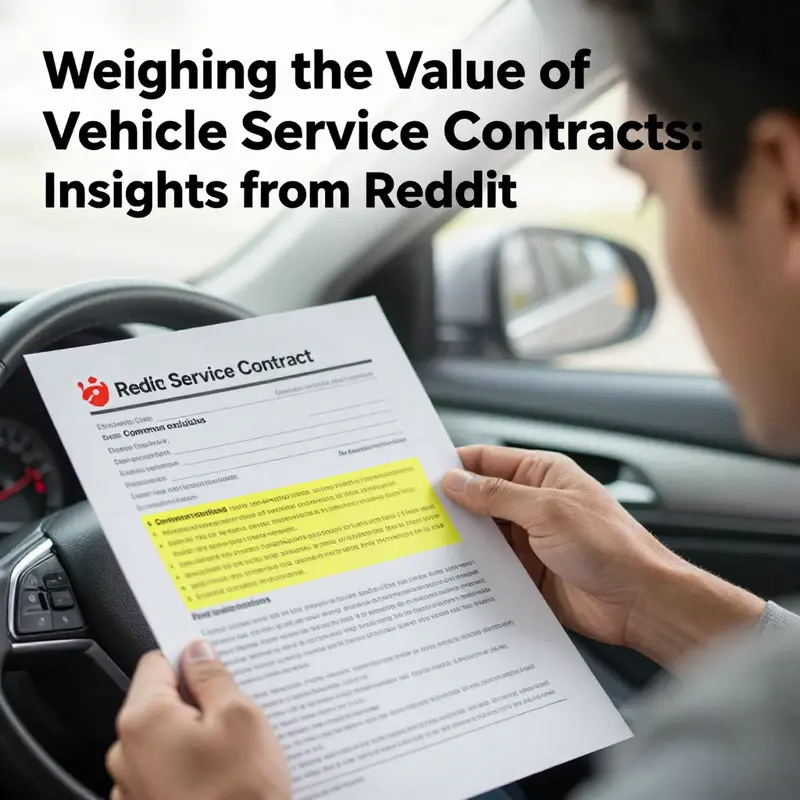
Perhaps the most critical lesson from Reddit is the importance of reading the fine print before signing. Post after post highlights the mismatch between glossy marketing and the practical protections written into a policy. People remember the salesman’s pitch about “comprehensive coverage, no surprises,” only to discover later that coverage bats away key components or imposes unexpected exclusions. This caution extends beyond the contract itself to the reputational health of the provider. Independent reviews, third-party rating sites, and community feedback become essential tools when evaluating a vendor’s reliability. Some Redditors go as far as to check with consumer protection channels or local business bureaus to gauge the history of a provider before committing.
In practical terms, what does this mean for someone weighing a service contract against paying for repairs out of pocket? It means stepping through a process that starts with a realistic assessment of your vehicle’s track record. If you own a newer, generally reliable car with a robust factory warranty, a service contract can feel unnecessary and expensive. The risk of catastrophic failure is lower in the short term, and your chance of needing major repairs within the warranty period is limited. On the other hand, if you drive an older model with known reliability quirks, or if you intend to keep the car well past the factory warranty, a service contract offers a form of financial protection against major failures such as engine or transmission issues. The decision hinges on your willingness to accept the contract’s terms, your confidence in the provider, and your readiness to absorb potential out-of-pocket costs that aren’t clearly covered.
For readers who want to approach this decision with discipline, a few practical steps reliably emerge from Reddit’s collective experience. First, insist on a clean, detailed listing of covered components and exclusions. Ask the salesperson to walk you through each item, especially parts that typically fail in your specific model or age range. If you hear terms like “wear items” or “not covered under normal usage,” press for concrete definitions, not euphemisms. Second, request a sample claim form and a recent claims history from the provider. Seeing how often legitimate claims are paid, and how often they’re denied or delayed, gives a sense of the day-to-day realities that the marketing gloss hides. Third, discuss the deductible structure openly. Seek plans with the lowest possible deductible per repair and consider whether a per-visit, per-repair, or per-incident deductible makes the most sense given your expected usage and repair profile.
Another crucial step is to examine the repair network. If your preferred independent shop is excluded or if the policy imposes costly in-network restrictions, factor that into the total cost. You may find that the convenience of easy dealership scheduling comes at a price that is not just higher per hour but also higher in total out-of-pocket risk. If you value choice and convenience, you’ll want to weigh the practical costs of staying within a network against the potential savings of a broader network and the possibility of finding a trusted independent mechanic who can perform work at lower labor rates.
Reading the fine print also means checking whether the contract includes maintenance-related items that, in many cars, become necessary as the odometer climbs. Items that degrade with time rather than simply wear out may fall outside coverage. Meanwhile, some contracts include optional add-ons that cover components you would not expect to see on a standard policy. In these cases, the incremental cost may be low, but the incremental value could be high if those components fail—yet the terms for those add-ons can be opaque. The balance between a modest premium and a useful add-on is a delicate one, and Reddit users often find that the more add-ons you have, the more opportunities there are for exclusions and disputes.
To anchor this discussion in a broader, practical context, consider how you manage risk on your own terms. A thoughtful approach blends education with a simple financial plan: determine an annual budget for unexpected repairs, set aside money in a dedicated fund, and monitor the car’s reliability profile as it ages. If the fund grows faster than actual repair costs, you have the option to discontinue the contract and keep the money for preventive maintenance or future needs. If the fund is slow to grow or the repair risk feels unpredictable, a carefully chosen contract could reduce exposure to a potential financial shock. The key, as Reddit’s community emphasizes, is not to rely on marketing but to quantify your own risk and to choose coverage that aligns with that risk profile.
For readers seeking ongoing maintenance guidance that informs these decisions, practical tips and context can be found in longer-running maintenance resources that align with the kinds of issues raised here. A reliable starting point is the KMZ Vehicle Center Blog, which offers general maintenance guidance and approach-focused advice for car owners navigating complex repair decisions. You can visit it here:
As you move toward a final decision, you’ll also want to compare the value proposition against a straightforward savings strategy. If you’re the kind of owner who keeps a car for more than a few years, and you have the discipline to fund an explicit repairs reserve, you might find that self-insurance provides more flexibility and less friction than a contract with vague coverage boundaries. Alternatively, if your vehicle is prone to major failures in later years or if you lack a ready reserve to handle high-cost repairs, a well-structured contract could offer predictability and peace of mind. The decision is not purely financial; it’s also about your comfort with risk, your tolerance for administrative hurdles when a claim is filed, and your willingness to navigate a patchwork of terms that often reads more like a legal document than a user guide.
Red flags in the literature and in real-world discussions are not a verdict in themselves. They are a compass that points you toward asks and checks you should perform before you hand over money. If a contract seems too glossy to be true, it probably is. If it requires you to lock into a dealer-only service model with restricted access to mechanics you trust, you’re trading convenience for potential cost. If the deductible per repair is steep and the coverage window short, the economics may favor paying for repairs out of pocket, especially if the repairs are unlikely to occur within the coverage window. If, after lifting the hood on the policy, you still feel uncertain, it may be wiser to sit with the numbers for a few days, discuss with a trusted mechanic, and compare with a reasonable savings plan. In the end, Reddit’s most practical wisdom is not a definitive answer but a method: ask hard questions, demand clarity, and test the plan against your own driving life. That approach keeps you ready for the next unexpected repair, whether you choose to embrace a contract or to trust your own savings.
External resource: https://www.reddit.com/r/AskAutoInsurance/
Reliability at a Crossroads: Weighing Vehicle Service Contracts for Older Cars, as Reddit Debates
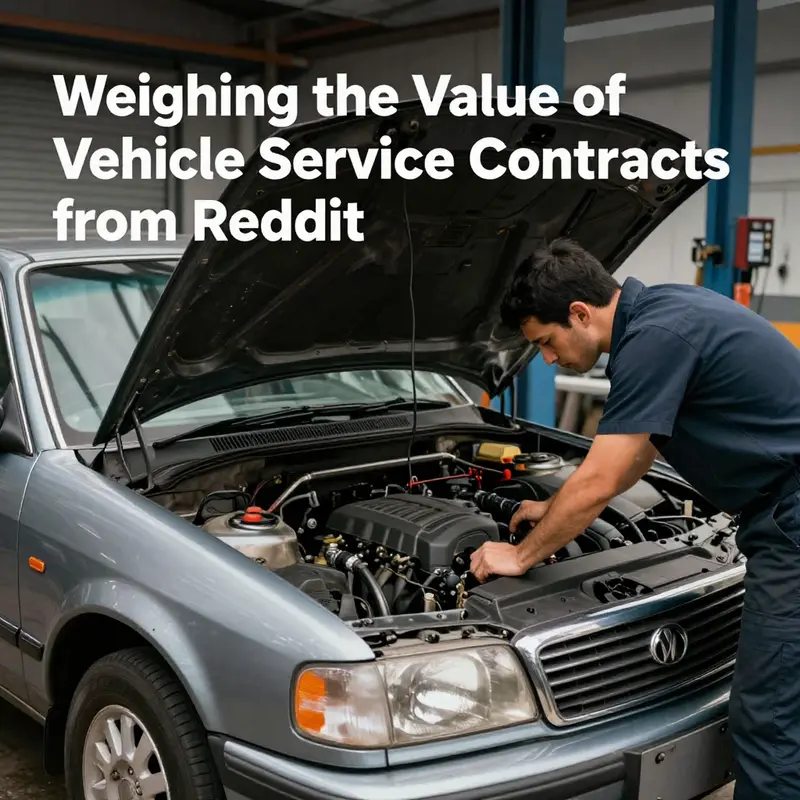
When people on Reddit start talking about vehicle service contracts for older cars, the conversation often centers not on shiny new warranties but on real-world fragility and budgets. The threads reveal a spectrum of experiences: some owners rely on a safety net, while others discover that protection does not fit the potholes their aging wheels hit. The heart of the discussion is not a single yes or no, but a calculation of risk, cost, and timing. In older cars, the odds of notable repairs rise with each mile. The engine might keep running smoothly, or it might stall at a stoplight due to a worn timing component or an electronic module that misbehaves. Electrical gremlins that used to plague late models can migrate toward earlier years as the car accrues miles. Redditors note that age and mileage do not predict every failure, but they tilt the odds. For some, that tilt justifies the safety net; for others, the net still feels too expensive given exclusions and claims hurdles. The conversations typically read like receipts and risk registers, colored by personal tolerance for uncertainty and repair cost trajectories. A recurring theme is the paradox of higher failure risk paired with mixed protective value. The contract might cover big-ticket items but exclude routine wear items like brakes or tires, and many plans rely on original parts or approved part lists that may not fit the car as it ages. Another frequent point is the paperwork labyrinth: prior authorization, proofs, and delays can erode the value of a payout. The practical takeaway is to do due diligence: compare plans, verify the fine print, and consider your car’s reliability history and how long you intend to keep it. Some owners find value choosing a plan with transparent terms, a reasonable deductible, and broad coverage for the components most likely to fail, while others prefer to self-insure with a healthy emergency reserve. The broader insight is that there is no universal answer; the decision hinges on the car, the owner’s risk tolerance, and the planned horizon of ownership. For readers seeking a concrete approach, assemble the car’s maintenance history, forecast future maintenance costs, and weigh them against the contract’s price, including premiums and deductibles. In the end, Reddit discussions frame vehicle service contracts as a nuanced risk management tool rather than a universal solution.
Rethinking Protection: How Redditors Weigh Alternatives to Vehicle Service Contracts and Build Financial Resilience

When people start talking about vehicle service contracts, the conversation often boils down to risk and timing. Reddit threads on topics like reliability, maintenance, and the true cost of ownership reveal a spectrum of experiences that rarely fits a one-size-fits-all answer. The chorus you hear in r/PersonalFinance, r/Auto, and r/ConsumerTips is less about whether an extended warranty is good or bad in theory and more about whether it makes sense given a particular car, a person’s long-term plans, and the financial cushions available. The reality is that a service contract is not a universal shield; it is a financial instrument that can either shield against big, unpredictable bills or become a pricey add-on that covers little of what you actually need covered. In this sense, the Reddit conversation mirrors the broader truth about car ownership: predictability matters, but so does context. A reader with a brand-new vehicle still under full factory coverage may not need additional protection, while someone who plans to keep a high-mileage sedan well past its original warranty could find value in a mechanism that reduces the likelihood of a catastrophic repair draining savings. The nuance is what makes Reddit a useful sounding board; it exposes how people weigh risk, not merely the mechanical odds of a breakdown. The threads consistently emphasize that the heart of the decision is understanding reliability histories. Before even thinking about a contract, many contributors advise looking at makes and models known for longevity and low maintenance costs. If a car has a proven track record for engine and transmission durability, the appeal of a costly add-on fades, because the baseline expectation is that the vehicle will require fewer, not more, expensive repairs as it ages. This line of reasoning often segues into a broader commitment to preventive care. The discussions insist on regular maintenance as a first line of defense against the kind of failures that contracts typically promise to cover. Adhering to the manufacturer’s recommended service schedule—oil changes, filter replacements, brake inspections, cooling system checks—creates a kind of financial insurance by reducing the probability of major, surprise repairs. The logic is simple: timely maintenance can keep a vehicle out of the “mud” of expensive, unplanned repairs that a warranty would otherwise try to cushion. There is a practical wrinkle here that Redditors never ignore. Even when a car is under a factory or manufacturer-backed warranty, many posters caution that post-warranty life is where the financial planning really matters. If a vehicle is likely to need substantial repairs after the original coverage ends, some folks prefer a self-insurance approach—setting aside money in a dedicated repair fund rather than paying ongoing premiums for a contract that may not cover what you fear most. A recurring theme is the value of building a personal safety net that aligns with individual risk tolerance. For those who want a safety net without the rigidity of an add-on plan, the simplest strategy is to create a repair fund. Regular contributions, scaled to the vehicle’s age and expected maintenance horizon, can provide a buffer for unexpected issues like transmission wear or suspension problems. The amount needed isn’t a mystery if you start from evidence: what tends to fail in a given model, how much replacement parts typically cost, and how the likely lifespan translates into a few big-ticket repairs. In many cases, Redditors describe a practical, almost old-school approach: pay yourself first. If you’re worried about facing thousands in a one-time repair, you fund that risk in advance rather than paying a vendor for a policy that may or may not pay out when you actually need it. This shift toward self-insurance resonates in parallel with a broader consumer trend toward financial preparedness. When people ask how to approach vehicle ownership as a long-term financial obligation, the answer often centers on building the kind of cushion that reduces the fear of a single, ruinous fix overshadowing all other goals. It’s not merely about saving for tires or brakes, but about anticipating the moment when the car must shoulder the cost of something major—engine work, a failed transmission, or a major electrical overhaul. The Reddit discourse also highlights practical alternatives to traditional contracts that don’t rely on third-party warranties. One such alternative is to leverage the manufacturer’s own warranty coverage to its fullest extent. If the car is still under the factory warranty or a certified pre-owned program carries a robust extended warranty, many users argue that buying extra coverage from a dealership is unnecessary. This position rests on the premise that the most reliable protection comes from the entity most directly connected to the car’s original design and parts. Yet another widely discussed option is to consider Certified Pre-Owned (CPO) vehicles. CPO programs tend to offer warranties that are more comprehensive, better regulated, and backed by the manufacturer compared with aftermarket add-ons. They are not perfect, but they are often more predictable in scope and terms, which makes it easier to evaluate the true cost of protection against the actual risk of failure. In the same breath, Redditors frequently point to the benefits of independent repair shops as sources of real-world savings and flexibility. A contract can lock you into a network that might be limited by geography or by the terms it enforces. Independent shops, by contrast, can provide a broader price range and more transparent labor charges. The upshot is that a well-informed owner can trade the feeling of security that a warranty promises for the tangible advantage of shopping around for mechanics who can diagnose issues quickly and accurately without inflating costs. To operate in this space without losing sight of the big picture, many enthusiasts advocate arming yourself with diagnostics and health checks. An inexpensive OBD2 scanner and periodic code monitoring can reveal early signs of trouble, enabling timely intervention before problems escalate into expensive repairs. This approach aligns with the broader Reddit strategy of proactive maintenance: know what’s happening under the hood, act early, and maintain an ongoing record. When it comes to evaluating any contract, the conversations caution against add-on plans sold at the dealership, especially those with opaque terms. The path toward financial clarity lies in shopping for plans with clear coverage lists, transparent deductibles, and a broad network of approved repair centers. If you still choose to explore a contract, the recommended practice is to go beyond the glossy brochure and do a line-by-line comparison of what is covered, what is excluded, and how deductibles work across different scenarios. The ultimate message is not glib: the right protection is the one that matches your actual exposure. For some, that exposure is higher in the early years with a vehicle that has known reliability issues; for others, it’s lower because the car enjoys a reputation for durability and the owner has a sizable savings cushion. The Reddit conversation converges on a core principle: financial preparedness beats marketing. Rather than relying on a single policy to mitigate all risks, consider the blend of reliability data, maintenance discipline, warranty leverage, and personal savings that collectively reduce the chance of a major, out-of-pocket event. This pragmatic stance helps explain why some readers treat service contracts as a luxury for others, a necessity for still others. It also explains why the most practical road map isn’t a universal contract but a personalized plan built from knowledge and readiness. If you’re trying to translate Reddit’s wisdom into a concrete approach, start with the fundamentals. Research reliability histories for your specific make and model. Create and stick to a maintenance calendar that aligns with the manufacturer’s recommendations. If a manufacturer warranty is still active, map out precisely what it covers in the next several years and compare that to the cost and scope of dealer-provided contracts. Build a repair fund with a realistic monthly target that scales with the car’s age and expected wear. Consider a certified pre-owned option if you want the comfort of a warranty-backed program that’s less opaque than typical aftermarket offerings. If you prefer a more hands-on approach, identify a network of independent shops that you trust and learn ballpark labor rates for common repairs. Use diagnostic tools to monitor the health of major systems and set thresholds for preventive action. And whatever you decide, document your decision and reassess it as your vehicle ages and your finances evolve. The Reddit community’s contributions are valuable not because they provide a single answer, but because they illuminate how real people weigh the consequences of protection versus risk. Practically speaking, the story that emerges is one of balance: protection when protection is genuinely needed, and discipline when protection is not the best use of scarce dollars. For readers who want to explore more on the topic of alternatives to vehicle service contracts and how people weigh those choices in everyday life, a useful starting point is the broader conversation on consumer finance forums, including discussions around saving for repairs and choosing between warranty plans and self-insurance. If you’re curious about a maintenance-focused resource that can help you implement some of these ideas in your own scenario, you can visit the KMZ Vehicle Center blog for practical guidance on upkeep and preventive care, including insights on how to plan for routine maintenance and avoid unnecessary costs. Optimal oil change intervals: time vs mileage. For a deeper dive into the Reddit discussion that inspired these reflections, you can review the discussion linked in the detailed research notes. External perspectives and real-world experiences are essential to shaping a plan that fits your vehicle and your life. External reference: https://www.reddit.com/r/PersonalFinance/comments/1a8m4kx/alternativestovehicleservicecontractsandwhat/.
Final thoughts
Navigating the world of vehicle service contracts can often feel overwhelming, especially with the multitude of opinions shared online. As demonstrated through Reddit discussions, experiences vary significantly based on individual circumstances, the types of vehicles owned, and personal preferences regarding financial planning for repairs. While some find value in extended warranties for older or less reliable cars, others see them as unnecessary expenses, particularly for newer, reliable models still under warranty. Ultimately, thorough research and an understanding of one’s specific needs are crucial for making informed decisions about whether to invest in a vehicle service contract. Car owners and buyers should carefully weigh the pros and cons, consider alternative strategies, and prioritize their unique situations to ensure the best possible outcomes for their vehicular investments.