
As electric vehicles (EVs) gain popularity among private car owners, used car buyers, and small business fleet operators, understanding their maintenance needs has become essential. While EVs are known for requiring less frequent servicing compared to internal combustion engine vehicles, they still demand careful attention to ensure safety and optimal performance. This guide delves into the specific servicing requirements of EVs, highlighting important maintenance tasks, battery health management, brake system considerations, and the significance of software updates. By exploring these key areas, we aim to empower you with the knowledge needed for responsible vehicle ownership and maintenance, enhancing your EV experience.
Do Electric Vehicles Really Need Servicing? Demystifying Maintenance for a Quietly Complex Powertrain
Electric vehicles often arrive with an air of inevitability about their maintenance: fewer moving parts, fewer oil changes, and a promise of reduced trips to the shop. Yet the simpler mechanical footprint does not translate into a maintenance-free ownership experience. Servicing an EV remains essential, not as a punishment for the vehicle’s complexity but as a safeguard for safety, performance, and longevity. The logic behind servicing EVs is not a contradiction but a refashioning of routine care around a powertrain that operates with entirely different physics. When you peer under the hood of an electric drive system, what you find is a compact, highly efficient set of components—the battery pack, the electric motor, and the power electronics—that work in concert with a handful of supporting systems. The engine oil you never change, spark plugs you never replace, and timing belts you never inspect do not march into an EV’s maintenance schedule; instead, you encounter a different perennial triage: battery vitality, thermal management, and software health. This shift mirrors the broader idea that maintenance is about preserving a return to safe, efficient, and reliable operation rather than adhering to a checklist of parts that simply do not exist in the same form as in traditional cars. It is easy to forget that the term servicing is broader than oil changes and wheel alignments. In an EV, periodic attention to the battery, the cooling system, the brakes, the tires, and the charging hardware is what keeps the vehicle performing as designed. The difference lies not in the frequency of care but in the focus of care. Consider the battery pack—the heart of the vehicle. Modern lithium-ion packs are designed to endure thousands of charge-discharge cycles and to resist gradual degradation that would blunt range over years. Still, their health is not guaranteed by luck. Manufacturers commonly warranty substantial portions of the battery life, often 8 years or 100,000 miles, a reminder that battery health is a key maker-or-breaker of long-term value. The practical implication for drivers is straightforward: monitor the battery’s state of health, avoid habits that accelerate wear, and respect charging practices that support longevity. Regular checks become a habit tied to the battery’s well-being—an investment in performance that pays dividends in range stability and resale value. In many cities and regions, this translates into a service cadence that is less about dramatic overhauls and more about calibrated tune-ups. Major services in EVs tend to occur less frequently than in ICE vehicles—often every couple of years or after tens of thousands of miles. But even with longer intervals, the importance of routine care remains. A typical service might include diagnostics for battery cooling efficiency, inspection of the high-voltage connectors, and verification that thermal management fluids are at the appropriate level and condition. The cooling system itself deserves attention not because it is flashy but because it directly influences battery performance and longevity. If the coolant becomes dirty or exhausted, the system’s ability to regulate temperature can wane, potentially impacting charging speed, battery efficiency, and safety margins during aggressive driving or hot weather. A comprehensive approach to cooling is not a luxury; it is a prerequisite for consistent performance, particularly in climates with wide temperature swings or frequent fast charging sessions that place the battery under thermal stress. Then there is the matter of energy transmission routines—the charging port and cables. The interface between the car and the power source is a potential point of wear, especially with frequent plugging and unplugging, outdoor exposure, and the use of fast chargers. Keeping connectors clean, intact, and properly seated is more than a matter of convenience; it is a matter of safety and reliability. The charging hardware’s health influences not only daily usability but also your charging speed and, by extension, the vehicle’s daily energy budget. Beyond the battery and cooling, the mechanical sides of an EV still require thoughtful attention. Regenerative braking, which is the common approach in many EVs to harvesting energy during deceleration, tends to reduce wear on brake pads and rotors compared to conventional braking. Yet that does not make brakes expendable. Periodic brake inspection remains important because wear can still occur, and components like the brake fluid must be checked for moisture content and performance. Tires are another practical battleground. The very physics of an EV—heft from battery mass and torque delivery—translates into different wear patterns and often faster tread loss. Regular tire rotation and wheel alignment checks help maintain even wear, optimize handling, and preserve fuel economy in the broad sense of efficiency, even though EVs do not consume fuel in the traditional sense. The human side of maintenance in an electric vehicle is increasingly a software story. Software updates—over-the-air or during service visits—range from minor bug fixes to enhancements in range estimation, safety features, and vehicle usability. The vehicle’s computer system learns from use, and updates can alter how the car behaves in traffic, how it manages energy, and even how it interprets sensor data for safety systems. Keeping the software current is, in many cases, as important as keeping the physical components in good shape, because software can unlock improvements that make the car feel newer and safer to drive. The trend toward continuous improvement means that maintenance is no longer a one-and-done event but a season of updates, calibration, and occasional recalibration of systems after new features land on a car’s software stack. With this mindset, owners often discover that servicing an EV is less about replacing parts and more about validating integration: confirming that software and hardware remain harmoniously aligned as the vehicle evolves and as charging ecosystems expand around it. Attention to the charging ecosystem also matters. The charging port is a gateway to the car’s daily vitality, and neglect here can lead to nuisance issues—miscommunications with the charger, degraded charging speed, or, in worst cases, conductive faults. Regular checks of the port, the cable, and the onboard charger’s condition are a practical safeguard for day-to-day reliability. Balancing all these considerations is the central task of EV ownership: integrating a cadence of care that respects the unique demands of a high-voltage system while recognizing that many components—like the drivetrain and battery—do not require the same routine interventions as an ICE vehicle. The net effect is a maintenance rhythm that is often lighter on the calendar but not lighter in importance. It is a rhythm that rewards disciplined attention to the battery’s health, the cooling system’s condition, the tires’ wear rate, the braking system’s integrity, and the evolving software that governs performance and safety. This rhythm also invites a more proactive mindset: owners who track charging habits, temperature exposure, and usage patterns tend to see more predictable performance and longer life from their EV’s core systems. For anyone seeking practical guidance, the starting point is the vehicle manufacturer’s service schedule, which provides model-specific intervals and checks. It is common to find recommendations around battery cooling fluid refresh cycles, brake fluid checks, and a cadence for software updates. While the idea of fewer services may be appealing, it is the quality and relevance of those services that matters. Regular, targeted servicing can prevent small issues from becoming costly problems while maintaining the vehicle’s value. An informed owner also benefits from understanding how driving style and climate influence maintenance needs. Frequent rapid charging, extreme heat or cold, and heavy daily duty cycles can accelerate certain wear mechanisms, particularly around the battery and charging components. Conversely, steady speeds, moderate climate exposure, and balanced charging practices can support long-term performance. The overarching message is clear: an EV is not maintenance-free, but its maintenance is more about preserving a precise balance between battery health, thermal management, and software integrity than about replacing a long list of traditional consumables. For readers who want a concise guide aligned with this perspective, the internal resource available at KMZ Vehicle Center’s blog offers a practical framework for thinking about EV maintenance in everyday terms. The guidance there translates the science of EV systems into approachable habits, from monitoring charging behavior to recognizing when to schedule a check-in with a technician. See the linked resource for more on how to approach ongoing care without feeling overwhelmed. For a broader, authoritative context on how electric vehicles are managed on the road today, you can consult the U.S. Department of Energy’s Alternative Fuels Data Center, which provides official information on the current landscape of electric vehicle technology, charging infrastructure, and maintenance considerations. This external reference is a helpful companion as you plan routine care for your EV and navigate the evolving standards of the field. In short, servicing an electric vehicle is a disciplined commitment to safeguarding a quiet but complex powertrain. The payoff is reliable performance, consistent range, and a longer, more valuable lifecycle, all of which stem from attention to battery health, cooling performance, brake and tire wear, and the software that governs every drive.
For more practical guidance, consider exploring the resources in the linked blog and keeping the official maintenance schedule in view as your roadmap. KMZ Vehicle Center’s blog offers a practical, user-friendly perspective on EV care that complements the technical details described above. And for official guidance on electric vehicles and related maintenance considerations, consult the U.S. Department of Energy’s Electric Vehicles page: https://afdc.energy.gov/vehicles/electric_vehicles.
Do Electric Vehicles Need Servicing? A Thorough Guide to Vital EV Maintenance
Electric vehicles have reshaped our expectations for car care, suggesting a future with simpler upkeep and fewer trips to the shop. Yet the reality is more nuanced. EVs do require servicing, but their routine maintenance tends to be less onerous and less frequent than that of internal combustion engines. This difference stems from the core design of electric propulsion: there is no engine oil to change, no exhaust system to corrode, and far fewer moving parts that wear out. Still, the underlying rule holds true for all vehicles powered by electricity or gasoline alike. Regular checks are essential for safety, performance, and longevity, and the smartest EV owners treat servicing as a proactive habit rather than a reactive afterthought. The result is a vehicle that stays reliable, efficient, and ready for the next road trip, whether it is a daily commute or a weekend adventure.
The central contrast between EVs and their gasoline counterparts sets the stage for understanding maintenance. An internal combustion engine is a symphony of belts, pistons, and vital fluids that demand frequent attention. Engines require oil changes, spark plug replacements, timing belt inspections, transmission fluid tops, and a cascade of cooling system checks. Electric drivetrains, by contrast, are built around simplicity and resilience. There are no engine oil changes to schedule, no fuel filters that clog from impurities, and no complex fuel injection timing to monitor. Fewer moving parts mean fewer points of failure in theory, but it also means that care must be directed toward the parts that do exist and the systems that manage them. In this light, servicing an EV becomes a matter of safeguarding the battery, ensuring the electrical and thermal systems remain within safe operating parameters, and keeping the software that controls the vehicle current and reliable. The aim is not simply to prevent breakdowns but to preserve performance, extend range, and protect the investment represented by a modern EV.
Battery health sits at the heart of any EV maintenance plan. Modern lithium battery packs are built to endure many years and many miles with minimal degradation, but that does not mean they are invincible. Battery health monitoring is a routine part of EV ownership, often handled through the vehicle’s own diagnostic systems and the manufacturer app. What owners should expect is a clear readout of state of health and current range estimates that reflect how the pack performs under typical driving conditions. Periodic checks for abnormal temperature rises, unexpected range loss, or irregular charging behavior are practical safeguards that can catch issues early. These checks are not about chasing perfection but about catching early signs of aging, potential thermal management problems, or charging irregularities before they impact daily usability. The battery is trained to hint the owner when it needs attention, and recognizing those signals is a key skill for the modern EV driver.
Tire care is another aspect that deserves thoughtful attention. EVs tend to be heavier than their ICE counterparts because the battery adds significant mass to the vehicle. This extra weight can translate into faster tire wear, particularly in the shoulders and edges of the tread where traction peaks during acceleration. Regular tire inspections, correct inflation, and timely rotation help maintain grip, efficiency, and even wear across all four tires. The maintenance mindset for tires is not about punishing the tires but about preserving safety and efficiency. Properly inflated tires roll more easily, waste less energy, and deliver consistent braking performance. Because EVs often deliver instant torque, the first moments of acceleration can tax tires more quickly than a traditional car, making proactive rotation and tread checks a wise habit.
Braking systems in EVs deserve a nuanced discussion. Regenerative braking—where the motor feeds energy back into the battery during deceleration—dramatically reduces wear on friction brakes. That is a practical advantage, but it does not eliminate the need for brake inspections. Periodically, the brake pads and rotors should be checked for wear to ensure reliable stopping, particularly in emergency situations or during low speed city driving where friction brakes may engage more frequently. A good approach is to monitor brake performance and discuss any changes in pedal feel with a technician. In some driving scenarios or weather conditions, the vehicle may rely more on friction braking for safety, and that is when the wear catches up. Routine checks guard against diminished braking capability and help preserve the full effectiveness of the braking system over the life of the vehicle.
The cooling system is another critical thread in the EV maintenance tapestry. Battery packs and power electronics generate heat during normal operation, and liquid cooling systems act as the climate control for the high voltage components. Over time, coolant levels can drop due to minor leaks, and cooldown efficiency can wane as the system ages. Regular coolant level checks and periodic replacement according to the manufacturer schedule are essential. Neglecting this aspect can lead to elevated temperatures, degraded battery performance, and shortened life expectancy for power electronics. The cooling loop is a relatively quiet hero in the EV story, silently keeping performance stable and protecting the battery from the heat that can erode capacity.
Software updates deserve a place of honor in the maintenance mindset of modern EVs. Unlike conventional cars that rely on periodic dealer visits for software adjustments, many EVs receive over the air updates that refine driving dynamics, safety features, and efficiency improvements. Keeping software current is not a cosmetic upgrade. It can unlock better range estimates, improved regenerative braking profiles, enhanced vehicle security, and even bug fixes that improve daily usability. The line between a car and a connected device blurs here, and owners who embrace updates tend to enjoy the most reliable, up to date driving experience. Of course, software updates may require a charging connection and a short period of online status to complete, but the payoff in performance and resilience is real.
Beyond these core areas, routine checks extend to practical, everyday aspects. Wiper blades should be replaced as they wear, just as lights need periodic inspection for brightness and function. The charging port and connecting cables deserve a dusting and inspection for any signs of wear or damage, ensuring the charging routine remains smooth and safe. These details matter because EV charging is not merely about moving energy; it is also about safety, reliability, and the confidence that the vehicle will accept a charge when needed. For owners who want to deepen their understanding while staying practical, the KMZ Vehicle Center blog offers accessible guidance on general maintenance concepts and upkeep habits that apply across vehicle types. See the KMZ Vehicle Center blog for more context and reflections on routine care.
In practice, major servicing intervals for EVs tend to be less frequent. Many manufacturers recommend a more streamlined service cycle, often every 2 to 3 years or 30 000 to 40 000 miles, a cadence that reflects the simpler hardware in the drivetrain and the enduring reliability of the battery and electronics when properly cared for. Yet the exact schedule remains manufacturer dependent, and following the official service plan is prudent. A well designed EV maintenance routine combines proactive checks with attentive observations. It treats the vehicle as a system where the battery, thermal management, software, and mechanical components are interdependent. A shift in one area—such as creeping battery temperature in heat or a subtle drift in range—should prompt a professional diagnostic before it becomes a hardship on everyday driving.
The overarching message is that servicing an EV is not a ritual of constant intervention but a disciplined routine that respects the unique engineering of electric propulsion. It involves safeguarding the battery through consistent health monitoring, preserving performance with careful tire and brake management, protecting the thermal backbone with diligent cooling maintenance, and staying current with software that governs efficiency and safety. This approach protects not only the vehicle but also the investment owners make when they choose an EV. Warranty considerations, residual value, and long term peace of mind all ride on adherence to a thoughtful service plan. And while the appearance of maintenance plans may look simpler on the surface, they require vigilance and a willingness to engage with the vehicle’s evolving systems as technology advances.
For anyone navigating the transition from a conventional car to an electric one, the learning curve is real but manageable. The shift from an engine oil change to a battery health check, from a spark plug replacement to a software update, reframes maintenance as a conversation with the vehicle itself. The car becomes less of a mechanical artifact and more of a connected system that speaks in diagnostic messages, energy efficiency metrics, and remote software alerts. Listening to those signals with a steady routine turns servicing from a potential burden into a practiced habit that yields safer driving, longer battery life, and a more predictable ownership experience. In short, do EVs need servicing? Yes, but the servicing is targeted, purposeful, and increasingly integrated with the vehicle through digital health checks and remote updates.
As always, when in doubt, consult the owner manual and talk with an authorized service provider who understands the specific model you own. The manual will outline the recommended service intervals and any special requirements unique to your battery chemistry or thermal management configuration. Regular service bookings help preserve warranty coverage and maximize the vehicle’s value, especially as new software features and updates continue to roll out. For broader maintenance perspectives that extend beyond EVs into the wider world of vehicle upkeep, you can visit the KMZ Vehicle Center blog, which offers accessible insights into routine care across different vehicle types. KMZ Vehicle Center blog
For readers seeking a concise external reference that frames maintenance in a regulatory and practical context, the Energy Department provides a clear overview of why and how EV maintenance matters. This resource emphasizes that while the maintenance landscape for EVs tends to be simpler, neglecting regular checks can still impact safety, efficiency, and longevity. External resource: https://www.energy.gov/articles/does-my-electric-vehicle-need-maintenance
Battery Health as the Engine of EV Servicing: Sustaining Performance, Safety, and Longevity
Electric vehicles rely on a high voltage battery pack and a battery management system that require regular attention to maintain performance and safety. The core of EV servicing is battery health management, which focuses on monitoring temperature, state of charge (SOC), charging patterns, and cell balance to minimize degradation over time. A healthy pack delivers consistent range, predictable acceleration, and reliable regenerative braking. In practice, this means understanding how heat, charge depth, and charging rate shape aging, and adopting a routine that keeps cells within their safe operating window.
Maintenance actions are typically simple and preventive: verify cooling system operation, inspect electrical connections and cables, and ensure software and firmware are up to date. Technicians look at battery temperatures, verify SOC trends, and confirm charging equipment is safe and functional during routine visits. Owners can support longevity by using home or workplace charging for daily top-ups, avoiding routine reliance on very high-rate charging, and keeping records of charging habits and climate conditions so anomalies can be spotted early.
In short, battery health is the engine of EV reliability. Thoughtful servicing—focused on the BMS, thermal management, and charging strategy—protects performance, safety, and longevity across years of use.
Braking for the Long Run: Regenerative Braking, Servicing Realities, and the EV Brake System
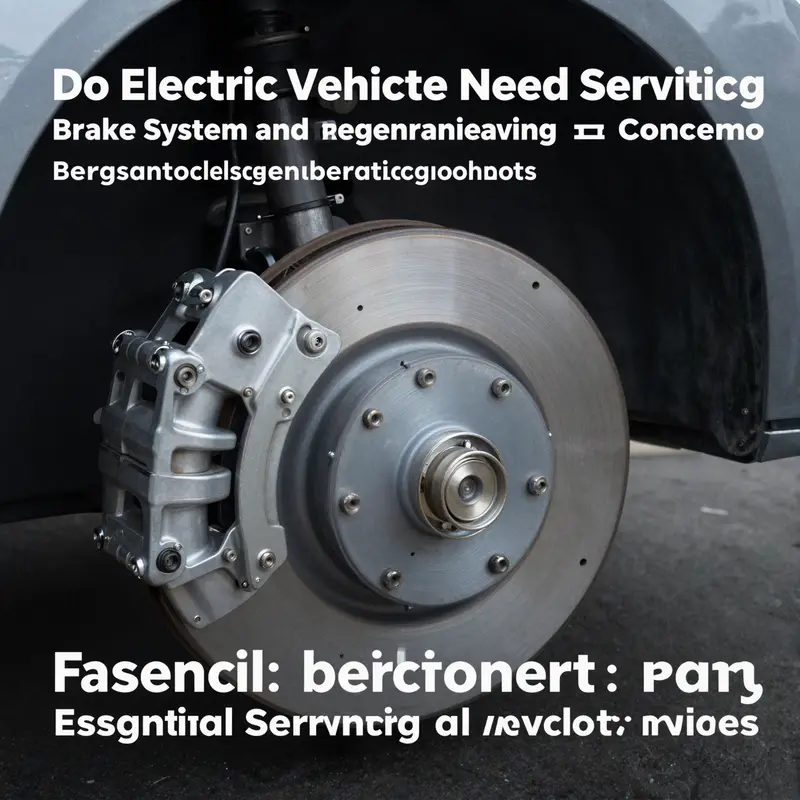
Electric vehicles require braking system maintenance, and the brake system remains a critical area to monitor even as regenerative braking changes how often friction brakes are used. Regenerative braking reduces wear on pads and rotors but does not eliminate the need for inspection, service, and occasional component replacement. The brake system in an EV combines digital control with traditional hydraulics, a blend that rewards proactive maintenance with safer stops and longer component life.\n\nRegenerative braking converts the kinetic energy of a moving car into electrical energy to recharge the battery. When you ease off the accelerator or brake lightly, the motor acts as a generator and the resulting current flows back to the battery. The vehicle slows down with little or no use of friction brakes, extending pad and rotor life in many daily driving situations. But friction brakes still have a role, especially during emergencies or high demand, and their wear patterns can become more evident if there is underlying damage.\n\nThe practical consequence is a shift in how drivers and technicians approach servicing. The regenerative system handles most deceleration in everyday driving, but the mechanical brakes must take over in certain situations. Emergency stops, high speed deceleration, or when regenerative braking is limited will activate the friction brakes to ensure predictable stopping power. Regular brake inspections remain a cornerstone of EV maintenance.\n\nFrom a maintenance perspective, the most visible impact is on pad and rotor wear. Because friction brakes are used less often, pads wear more slowly and rotors run cooler under normal use, but wear is not eliminated. Aggressive driving, frequent rapid stops in city traffic, or heavy loads can still increase brake usage. Technicians check pad thickness, rotor condition, caliper operation, and the hydraulic lines for leaks and pressure consistency.\n\nBrake maintenance also covers the supporting components, such as brake fluid, which is hygroscopic and can absorb moisture over time. Moisture can lower the fluid’s boiling point and reduce braking performance, so regular checking and periodic replacement are important for safe stopping in all conditions.\n\nModern EVs often include wear sensors and brake-by-wire controllers. Routine services commonly include caliper boot checks, fluid leakage checks, and diagnostics to verify alignment between regenerative and friction braking, ABS functionality, and the vehicle electrical systems that coordinate stopping power with the battery management system and thermal controls.\n\nThe recommended cadence for brake inspections tends to reflect the reduced usage in normal driving while allowing for wear and fluid quality monitoring. A typical guideline is an inspection every 15,000 to 30,000 miles, or sooner if pedal feel changes, unusual noises occur, or the vehicle pulls to one side during braking. Many vehicles also provide maintenance reminders based on pad thickness or diagnostic data to front-load servicing.\n\nIn regions with hills or frequent descents, regenerative braking may be limited and friction braking plays a larger role for longer sequences. Thermal management of rotors and pads remains important because excessive heat can affect braking performance and, in turn, the efficiency of the drive system. Regular inspection of the cooling provision for the drivetrain helps ensure consistent braking response.\n\nThe service landscape for EV brakes also reflects changes in technician training and consumer expectations. Brake-by-wire architectures, regenerative braking strategies, and software diagnostics are now core parts of EV maintenance. A well trained technician can interpret sensor data, identify wear trends, and distinguish normal regenerative operation from developing faults.\n\nFor practical guidance, consider brake servicing as a broader maintenance habit. If you drive mostly in stop-and-go traffic, pad life may extend but routine checks are still prudent. If you drive in heavy or high-load conditions, treat brake wear as a real possibility and monitor pedal feel and noises. A well maintained brake system works with the vehicle’s motor controller, battery management, and thermal controls to deliver safe stopping power and long-term reliability.
Servicing Reimagined: How Software Updates Redefine the Ongoing Care of Electric Vehicles
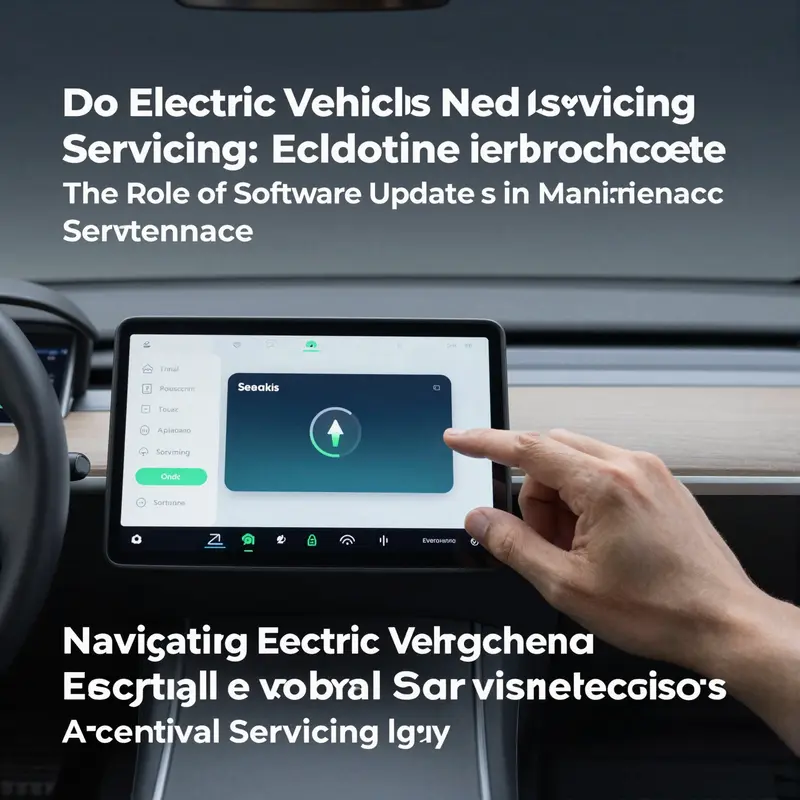
Electric vehicles do require servicing, but the way we think about servicing shifts dramatically when the powertrain is electric. The traditional maintenance playbook for internal combustion engines—oil changes, spark plugs, timing belts, exhaust checks—meets a very different landscape in which the engine is largely absent and the propulsion relies on batteries, high-voltage systems, and intricate software. The core argument for ongoing care remains intact: EVs still need regular attention to safety, reliability, and performance. What changes is where the emphasis falls. Instead of a calendar of mechanical interventions, many routines now hinge on software health, battery management, thermal control, and the cadence of over‑the‑air updates that keep the vehicle current without requiring a trip to the shop. This transformation is not a utopian promise of zero maintenance, but a shift toward proactive, digital-first care that can cut downtime and, in many cases, reduce the long‑term cost of ownership. The thread that binds all of this is software—how it is delivered, how it is maintained, and how it interacts with the vehicle’s hardware to preserve or even enhance performance over time. The concept of maintenance thus becomes a dialogue between the car and the cloud, a relationship that evolves with every update and every new feature that lands through the airwaves.
A defining feature of modern EV servicing is the ability to deploy software updates wirelessly. Over‑the‑air, or OTA, updates let manufacturers push refinements and fixes without requiring the owner to bring the vehicle in. This capability touches several facets of car care. First, it can sharpen performance. A seemingly small adjustment in battery management or regenerative braking can translate into meaningful improvements in range or responsiveness. A climate control tweak might squeeze a bit more efficiency from the battery during extreme weather, or an update to the software that governs how the thermal system allocates cooling may better protect battery health on hot days. Second, OTA updates address safety and reliability. Bug fixes that affect stability, charging behavior, or sensor fusion with ADAS (advanced driver‑assistance systems) can be rolled out quickly, reducing the risk that a known issue remains in the vehicle’s software for months. Third, OTA updates can expand the vehicle’s capabilities. A feature repeatedly requested by users—perhaps a refined charging optimizer or a smarter charging routine for varied electricity costs—can arrive later in a seamless, nonintrusive way, effectively giving the car more value over time without a physical visit.
The practical effect of software updates on maintenance is twofold. On one hand, routine service tasks that once demanded a physical visit are increasingly resolvable through software. If a battery management algorithm needs refinement, the fix can arrive OTA, and the vehicle can operate with improved efficiency or safety on the next drive. If a climate control module benefits from a tweak to its energy management, the update is delivered remotely. If a bug affects regenerative braking efficiency, a small software adjustment can restore the intended behavior, sometimes without any user action beyond acknowledging a prompt. On the other hand, there is an enduring, tangible layer of maintenance that remains stubbornly physical: tires, brakes, suspension, the cooling system, charging ports, and the 12V electrical system all require periodic inspection and service. The wheels still wear out; brakes still need attention, even if regenerative braking reduces wear; the suspension system still bears the load and the potholes; the charging cable and port must be kept clean and functional. These tasks are essential for safety and performance and typically require a hands‑on check at regular intervals, even as software keeps the vehicle running smoothly in between.
Battery health sits at the center of the EV maintenance conversation, and software is its most intimate companion. Modern EV batteries are designed to endure many years and thousands of cycles with minimal degradation, but their performance is not simply a matter of chemistry. Battery management systems monitor temperature, state of charge, and cell balance to optimize longevity and safety. The software that governs these systems continually analyzes data gathered during every drive and charging session. That means the user may not notice a sudden drop in range, but over time software updates can fine‑tune how aggressively the battery is heated or cooled, how quickly it charges, and how much energy is diverted to auxiliary systems. The result can be a slow, steady maintenance dividend: a longer effective range, more consistent charging behavior, and better protection against thermal stress. This is not a replacement for periodic battery health checks but a reassurance that, with the right software stewardship, the battery can age gracefully while supporting the driver’s evolving needs.
From a safety perspective, software updates also play a critical role in keeping drivers protected against evolving threats and flawless in their operation of ADAS features. The software that underpins lane‑keeping, adaptive cruise control, emergency braking, and other sensor‑driven systems is complex and interdependent. As vehicles gather more data from cameras, radar, and lidar sensors, the potential surface for software vulnerabilities grows. OTA updates provide a mechanism to patch vulnerabilities, improve fault tolerance, and refine sensor fusion algorithms so that the driver assistance stack remains reliable under a broader set of real‑world conditions. This ongoing digital maintenance helps keep the vehicle not only current but safer in the face of changing environments and new regulatory or safety requirements. It also reinforces the principle that the most important maintenance may occur behind a screen, rather than under the hood. Yet it is precisely this screen‑driven maintenance that makes it vital for owners to enable updates, confirm the device is connected, and allow the car to be refreshed when the manufacturer issues a new software bundle.
A subtle but important consequence of OTA updates is the shift in the consumer experience. Where ICE vehicles could require several visits for a major service every few years, EV owners often encounter a model where many routine improvements arrive without any scheduling friction. This has the practical effect of reducing the inconvenience and downtime associated with owning a modern car. A software update can arrive at a time that minimizes disruption, perhaps overnight or during a period when the car would otherwise be idle. For owners, this means maintenance becomes less about waiting in a service bay and more about managing updates in the background while the vehicle remains available for daily use. That convenience does come with a caveat: software is not a substitute for all maintenance. The vehicle still relies on human technicians to inspect tires for uneven wear, assess suspension components after rough roads, verify the cooling system’s integrity, and ensure the charging port remains clean and properly connected. The driving experience now hinges on a hybrid model of care—software care that prevents and fixes issues proactively, paired with regular physical checks that address wear and tear that software cannot directly manage.
To navigate this evolving landscape, owners gain a clearer sense of the appropriate cadence for more traditional services. The industry guidance that has emerged suggests that major services may be needed less frequently in EVs—often every two to three years or around 30,000 to 40,000 miles—while routine checks for tires, brakes, and the cooling system continue on a schedule similar to ICE vehicles. Still, the exact timing is not a universal constant. Climate, driving style, charging habits, and the particular vehicle architecture will shape the recommended intervals. The best path remains to follow the manufacturer’s service schedule and use software updates as a distinct, ongoing line of defense for performance, efficiency, and safety. In practice, this means renewing the software layer on a regular rhythm, while treating the mechanical and safety components with the same diligence that has always characterized responsible vehicle ownership.
The merging of software and service has a social dimension as well. As cars become more connected, the maintenance ecosystem—dealerships, service centers, mobile technicians—must adapt. Some tasks can be completed remotely, while others require specialized equipment to test high‑voltage systems or to calibrate ADAS sensors. Owners should anticipate a service experience that emphasizes data, diagnostics, and calibration rather than a full complement of oil changes. This does not render local service centers obsolete; it simply invites a more precise set of tools and expertise, focused on the digital backbone of the vehicle and the physical realities of wear and tear. Guidance becomes less about clock‑driven reminders and more about a calibrated assessment that blends software health checks with traditional inspections. When done well, maintenance becomes a coordinated routine where software updates arrive like smart software patches and the physical checks align with wear patterns and safety thresholds.
For readers seeking practical perspectives on how to manage this balance, the KMZ Vehicle Center blog offers accessible insights into maintenance planning and care strategies (the internal link can connect readers to that hub for broader context). Keeping abreast of evolving maintenance practices through a trusted automotive resource helps owners tailor their approach to the specifics of their model, climate, and driving profile, while staying aware of the broader shift toward software‑driven care. As the industry continues to refine OTA deployment, the expectation is that the cadence of updates will become even more seamless, with new features and refinements arriving at intervals that align with daily life rather than with service center schedules.
In sum, servicing an electric vehicle is no longer a binary decision between “do I service or not?” and “do I replace parts?” It is a continuum that blends software stewardship with hands‑on maintenance. OTA updates make the car smarter over time, fix issues rapidly, and frequently extend the vehicle’s efficiency and safety. Yet the physical side of maintenance remains essential: tires must be rotated, brakes checked, the cooling system kept in good order, the charging port kept clean, and the 12V battery tested. Owners who embrace this dual approach—stay current with software updates, follow manufacturer maintenance windows, and remain attentive to the mechanical wear that software cannot prevent—will likely experience a smoother ownership journey with fewer unexpected disruptions. The software updates do not replace a responsible care routine; they augment it, transforming how we think about the lifecycle of an EV and how we maximize the value of a vehicle that evolves with every new software release. For a deeper, more technical overview of how software updates reshape maintenance, see Electric Vehicles and Software Updates Explained.
Final thoughts
In conclusion, while electric vehicles do require servicing, their maintenance needs are typically less intensive than those of traditional vehicles. Regular checks on battery health, brake systems, tire wear, and software updates are essential for maintaining optimal performance and safety. Understanding these maintenance practices not only prolongs the lifespan of your EV but also enhances your driving experience. As the EV market continues to grow, being proactive in maintenance will ensure that both private car owners and fleet operators can enjoy the benefits of clean and efficient transportation for years to come.