
Understanding vehicle service costs is essential for every car owner, whether you’re maintaining a personal vehicle, buying or selling used cars, or managing a fleet for your business. The costs associated with maintaining vehicles can vary significantly based on several factors including the type of service, the vehicle’s make and model, and even your geographical location. In the following chapters, we’ll explore the standard costs for basic maintenance, delve into the higher expenses tied to advanced repairs, assess the implications of luxury vehicle servicing, and finally examine how regional differences affect service rates, providing you with a comprehensive understanding of vehicle service costs tailored to your unique needs.
The True Price of Routine Servicing: Navigating the Real Costs Behind Basic Vehicle Maintenance

Understanding what it costs to keep a vehicle healthy is less about chasing the lowest price and more about balancing reliability, safety, and long-term value. The price you pay for routine maintenance is not a single number but a spectrum shaped by the vehicle’s make, model, age, how you drive, where you live, and the service option you choose. A basic oil change, tire rotation, air-filter swap, and a quick brake-inspection visit can all fall on a common price range, yet those same tasks can balloon into meaningfully higher totals when labor rates are steep, parts require specialty ordering, or the vehicle demands more than routine care. To navigate this landscape, it helps to think in layers: the baseline costs you should expect, the factors that push those costs up or down, and the practical steps you can take to budget and verify pricing without sacrificing safety or performance.
At the core of basic maintenance is the oil change. It is the most frequent service many drivers encounter and, for modern engines, often involves synthetic oil and a new filter. Nationally, the typical price for an oil change hovers roughly between fifty and a hundred twenty dollars. That spread reflects variations in oil type (conventional versus synthetic), the motorcraft or filter used, and the labor rate at the shop. In more urban settings or at larger dealerships, the price can tick higher, sometimes entering the mid-range of the two-figure spectrum or just above. The oil itself remains the biggest determinant in the cost: synthetic oils, while pricier per quart, are designed to offer superior protection and longer service intervals. Yet even within the same city, a nearby independent shop might present a leaner price than a dealership because of lower overhead or a different pricing philosophy for basic labor. This is one of the reasons many drivers choose to schedule oil changes with providers who publish transparent, car-specific pricing online, reinforcing the notion that routine care need not be opaque or punitive to the wallet.
Following oil changes, tire rotation and balance is another predictable line item. Rotating tires, which helps ensure even wear and extends tire life, typically costs between fifty and eighty dollars. The exact figure hinges on whether you need only a rotation or if balance work is also required, as well as the wheel setup (steel versus alloy wheels, run-flat tires, or heavier-duty applications may affect labor time). A critical but often overlooked factor is the alignment check that frequently accompanies worn tires. When technicians notice misalignment during a rotation, they may recommend realignment, which adds to the bill but contributes to longer tire life and steadier handling. Even when you don’t see a dramatic wear pattern, a quick alignment or caster check can prevent uneven tire wear, preserving performance and safety down the road. That is the overarching theme of basic maintenance: small, timely investments today pay for themselves through avoided major repairs and the preservation of safe, predictable driving.
Air-filter replacement is another foundational service. The cost for replacing the engine air filter typically falls in a lighter range, around twenty to fifty dollars. The variance here is driven mostly by filter quality and vehicle design. Standard filters are the norm, but some engines require higher-performance filters or special housings that can elevate the price slightly. Even so, air filters are a relatively modest expense compared with other maintenance items, and neglecting them can degrade engine efficiency and air intake quality over time. A fresh filter helps maintain proper air flow, which supports fuel economy and engine performance. The cumulative effect of small maintenance steps—keeping the air clean, the oil refreshed, and the intake system unburdened—arrives not as a single dramatic leap in performance but as a steady, reliable baseline that reinforces overall vehicle health.
Brake-system care is a more variable category but a critical one for safety and long-term cost. A basic inspection of brake pads is often included in routine visits, but if pads need replacement, the cost can range from roughly one hundred fifty to three hundred dollars per axle, materials and labor included. This spectrum acknowledges that pad choice matters—different materials deliver varying levels of wear resistance and stopping power—and that some vehicles require more extensive hardware or hardware-specific fasteners. Early pad replacement can actually save money by preventing rotor damage, which could push the total into a much higher tier. When brakes begin to squeal, grind, or feel spongy, it’s a signal that timely attention is needed. Addressing the issue promptly not only reduces the risk of a sudden failure but also preserves the condition of rotors and calipers, contributing to a smoother braking experience and potentially lower future costs.
Battery check-and-replacement costs add another layer of nuance. Many service shops offer free battery tests, recognizing that a surprising number of reliability concerns trace back to a weak or failing battery. If replacement is needed, prices typically fall in a range of about one hundred twenty to two hundred fifty dollars, depending on the vehicle’s electrical demands and the battery type required. Some modern vehicles demand maintenance-free or AGM batteries with higher cold-cranking amps, which can push the price up. It is worth remembering that battery health is a forward-looking investment; a sudden failure on a cold morning can leave you stranded, and the cost of a roadside tow or an emergency jump-start often dwarfs the price of a preventive battery replacement when the test confirms a need.
What these line items share is a common thread: predictable, recurring expenses that vary mainly by the vehicle’s specifics and the service channel you choose. The make and model you drive matters because some engines require specialty parts, tighter tolerances, or more labor for otherwise routine tasks. A luxury or specialty vehicle, for example, can command higher labor rates and may require unique parts sourced through specialized channels. This is not merely about sticker price; it reflects the broader ecosystem of service where availability, skill level, and equipment can influence what you pay. The vehicle’s age also matters. Older cars with higher mileage may need more frequent maintenance checks, additional fluids, or sensor calibrations, nudging the total cost of a single service upward, even if each individual item remains priced within typical ranges. Vehicle age also affects the probability of ancillary issues appearing during a routine service—things like worn belts, corroded connections, or degraded gaskets that require attention when the technician has the hood open and diagnostic tools ready.
Beyond the direct price of parts and labor, regional dynamics play a substantial role. Urban environments tend to see higher labor rates, elevated shop overhead, and more stringent environmental or disposal fees. Rural or smaller-town shops may price more competitively, but they might have longer wait times or fewer scheduling options. These geographic and market differences help explain why the same service can feel like a bargain in one place and a noticeable expense in another. The practical takeaway is simple: if you are planning a maintenance visit, it’s worth calling a few nearby shops for a quick quote, asking what is included in the price, and whether there are any extra charges like shop supplies or disposal fees. Transparent pricing expectations reduce surprises and build trust between you and the technician, a factor that matters as much as the bottom line when you’re maintaining a vehicle you depend on.
To bring this into a more actionable frame, think about maintenance not as a one-off price but as a calendar and mileage plan. Most drivers benefit from aligning basic services with a regular interval—commonly every five to seven thousand miles for oil changes in many vehicles, with tire rotations every other oil change or in accordance with tire supplier guidelines. Following a regular schedule tends to minimize the risk of unexpected failures and helps you budget by spreading costs across predictable intervals. It also makes it easier to spot when a service item becomes atypically expensive, signaling a more thorough diagnostic check may be warranted. For guidance that ties intervals to specific oil-change recommendations, see resources that map intervals to time and mileage in detail, such as this page: Optimal oil-change intervals (time vs. mileage). This kind of targeted resource can help you calibrate your own maintenance plan to the way you drive, the climate you inhabit, and the design of your particular engine.
Cost awareness, however, should not become cost anxiety. The goal is not to wring every possible dollar from a service but to ensure you understand what you’re paying for and why. When a shop explains that certain parts or procedures are necessary for safety or longevity, the rational response is not to haggle down the price at the expense of reliability. Instead, ask questions about alternatives, potential early-warning signs to watch for at home, and whether the technician can provide a maintenance history printout or a diagnostic summary. This approach helps you differentiate between essential maintenance and optional add-ons, which is particularly important if your budget is tight. It also supports you in making a plan that keeps the vehicle dependable without compromising safety.
For those who want to anchor their expectations with broader benchmarks, recall that cost estimates for basic maintenance vary widely by geography and service channel, and that price quotes should ideally be accompanied by a transparent breakdown of parts, labor, and any shop fees. If you know your vehicle’s current mileage and recent service history, you can build a more precise forecast for the next 12 to 24 months. In practice, this means maintaining a simple record of when you last changed the oil, rotated tires, monitored brake wear, and tested the battery. With that history in hand, you can anticipate the most likely needs and approach the budget with confidence rather than conjecture. It is also prudent to take advantage of digital platforms or shop portals that publish car-specific pricing, because these tools are designed to reflect your vehicle’s year, make, model, and mileage, reducing the guesswork that often accompanies a manual price inquiry. As part of the broader maintenance landscape, these tools help you align expectations with reality, supporting smarter decisions about when to service, where to go, and how to value the service you receive.
In the broader ecosystem of maintenance budgeting, it is useful to consider maintenance costs as investments in long-term reliability rather than as occasional expenses. Regularly performing the fundamental services keeps the engine clean, the fuel system efficient, and the braking system responsive. It also supports resale value by presenting a well-documented maintenance history, a factor many buyers weigh when evaluating a used vehicle. While the exact price tag for basic maintenance can swing, the disciplined approach of following a scheduled care plan—paired with thoughtful shop selection and clear price expectations—creates a predictable, manageable cost trajectory. This is especially important as vehicles age and their maintenance needs evolve; you will most benefit from a strategy that evolves with the car, rather than attempting to compress every potential service into a single year.
As you map out your maintenance plan, remember that reliable pricing information exists beyond your local shop. Manufacturer service estimators, while not a substitute for a hands-on diagnostic, can provide a baseline for what a given service should cost on average. And for a broader view of maintenance economics across the United States, industry price guides compiled from real-world service data offer a helpful yardstick. For readers seeking a transparent market-wide benchmark, a widely cited reference side-by-side with local quotes can help you discern whether a proposed service feels priced in line with typical expectations. The interplay between local quotes and national benchmarks is where you gain the clearest picture of the true cost of basic vehicle maintenance, enabling you to plan with greater confidence.
In sum, the standard costs of basic vehicle services—oil changes, tire rotations, air-filter replacements, brake inspections, and battery checks—sit within approachable ranges, yet each service is imbued with nuance. The driver’s choice of vehicle, the maintenance interval, the shop’s pricing structure, and the geographic market all shape the final bill. A proactive approach—checking local quotes, consulting manufacturer guidance, and keeping a tight maintenance log—transforms maintenance from a recurring fear of overcharges into a predictable, affordable, and ultimately safer practice. For readers who want to deepen their understanding of oil-change intervals in particular, the linked resource provides a practical lens on how time and mileage interact to determine when an oil change is truly due, which can in turn influence your budgeting and scheduling decisions. And to place these local estimates within a broader context, the external maintenance-cost reference offers an overarching look at typical price ranges across the market, helping you calibrate expectations as you plan future services.
External reference: RepairPal’s broad maintenance-price guide can provide additional context for baseline costs and how they trend across vehicles and regions. RepairPal: Average Car Maintenance Prices
Reading the Price Tag of Advanced Vehicle Services: What Drives the Cost of Complex Repairs
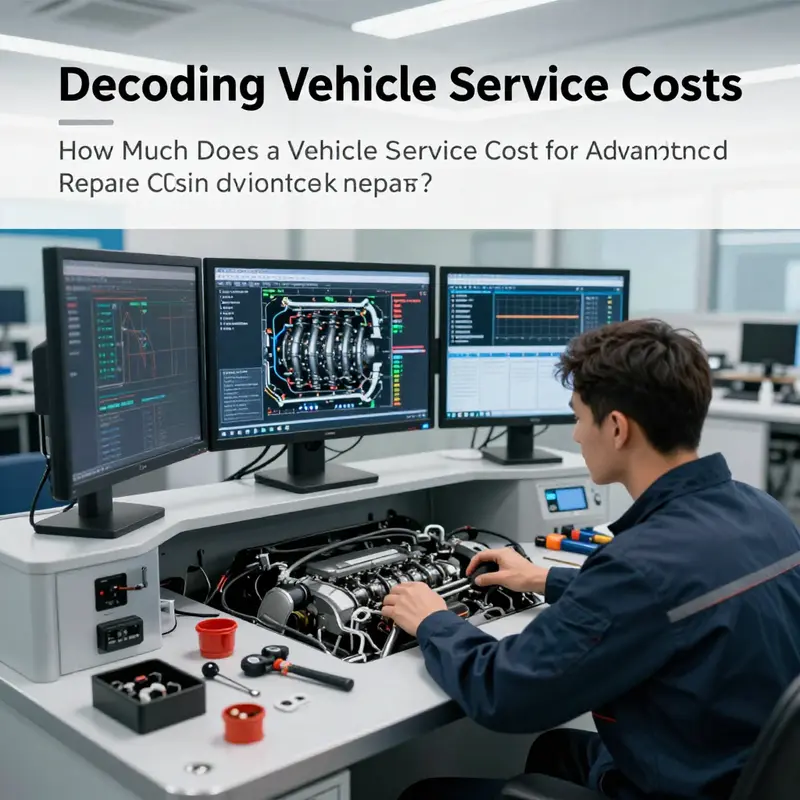
When a dashboard warning lights up and a technician says the issue requires advanced diagnostics, car owners often brace for sticker shock. The price of advanced repairs is not a single line item but a dynamic sum shaped by labor, parts, diagnostics, and the vehicle’s unique demands. In the realm of complex work, the cost is driven by several intertwined factors that interact with the type of vehicle, the shop performing the service, and the location of the service center. Understanding these drivers helps drivers set reasonable expectations and approach quotes with a clear eye. For broader context and more practical maintenance tips, you can explore the kmzvehiclecenter blog at kmzvehiclecenter.com/blog/.
The core cost drivers begin with labor. Labor costs are the backbone of most repair bills, especially when the fault requires time consuming, specialized procedures. In first tier, high end workshops, the hourly rate tends to be the highest in the market, around ¥10 per hour, though there can be fluctuations of up to about 30 percent depending on the exact location and the task at hand. Second tier shops typically charge around ¥8 per hour, while third tier workshops may be closer to ¥5 per hour. There are also special cases where urgent repairs or machining work are needed; in those instances the rate can rise to around ¥14 per hour, with about a 20 percent fluctuation. It is not unusual for complex repairs to extend over many hours, letting labor costs accumulate rapidly even if the hourly rate does not appear extreme at first glance.
Beyond the clock on the work bench, the parts and materials used to fix a car play a critical role in the final price. Replacement parts run a wide gamut in price and quality, and the choice between OEM parts and aftermarket alternatives often defines the bill. OEM parts, while offering the best fit and reliability, come at a premium. Aftermarket or non-OEM parts can be a more economical option, but the quality and compatibility can vary, potentially affecting long term performance and reliability. The impact on cost grows with the size and complexity of the component being replaced. A minor component can be inexpensive, while a complex assembly, such as a major engine component or a transmission-related part, can push the total well into the higher end of the spectrum.
Diagnostic fees add another layer to the cost structure. When a fault is not visible or easily traced, shops perform specialized tests to pinpoint the issue. These diagnostic services often come with their own price tags. Standard testing sometimes includes government or regulatory checks, such as a light-duty vehicle technical grade appraisal at around ¥100 or an environmental inspection at about ¥30. In addition, diagnostic stations or independent testing centers may levy extra service fees, generally ranging from ¥50 to ¥200 depending on the region and the sophistication of the tests required. In metropolitan areas with high demand and crowded schedules, these charges can be higher, reflecting not just the test itself but the value of rapid diagnostic turnaround.
Putting these elements together, there is no fixed price for advanced repairs. The total cost can range from a few hundred yuan for a relatively straightforward fault diagnosis to more than ¥10,000 for extensive repairs requiring significant labor and high-cost parts. A simple diagnostic that confirms a fault might be relatively affordable, but once the diagnosis points toward a more serious engine overhaul or a sophisticated transmission issue, the bill can grow quickly. Vehicle complexity matters, and so does the job location. A luxury or highly engineered model demands specialized knowledge and tools, which translates into higher labor time and often more expensive parts. In urban centers, where the cost of living and labor is higher and the demand for skilled technicians is intense, prices tend to be higher than in rural or smaller towns. The repair shop itself also matters: a shop with a reputation for precision and advanced diagnostics may price more, but the value there is often a greater likelihood of accurate repairs and a longer-lasting fix.
For readers seeking a sense of practical expectations, imagine that a mechanic calls out a need for a comprehensive fault diagnosis and a subsequent part replacement. The diagnosis could cost a few hundred yuan, while the repair might require several hours of labor and a set of parts that could range from modest to substantial. The most important takeaway is that the price you see is a reflection of multiple layers: how long the work will take, what parts are required, the quality level of those parts, the diagnostic effort, the shop’s location, and the vehicle’s complexity. This is why a single quote often evolves into an itemized, line-by-line estimate that may still adjust as the work progresses.
To navigate this landscape, it helps to approach estimates with a plan. Ask for a written, itemized quote before any work begins. Request a clear breakdown of labor time, hourly rate, and the anticipated total hours, along with a detailed list of parts and their sources. If OEM parts are proposed, ask for an alternative with aftermarket equivalents and a comparison of price and anticipated performance. Though OEM parts fit best and are tested for reliability, the cost difference can be substantial, and in some cases a high quality aftermarket option may suffice for the intended use of the vehicle. Discuss potential diagnostics that may lead to additional checks once the repair is underway and ask whether the shop can offer a time-and-materials estimate rather than a fixed price, so you are prepared for any scope changes.
The conversation about pricing is also a conversation about expectations and risk. While a manufacturer’s official service estimator or diagnostic tool can provide a baseline, it is not always a substitute for the on-site assessment. A qualified technician who can physically inspect and perform tests on the vehicle is still essential, especially for advanced systems that require hands-on evaluation and live data. In this sense, the price of an advanced repair is not merely the sum of parts and hours but the value of expertise, accuracy, and the assurance that the repair will address the root cause rather than merely hiding symptoms.
For readers who want to see how such factors appear in a broader maintenance conversation, consider exploring more topics on the blog. The internal resource at kmzvehiclecenter.com/blog/ provides context and tips that can help you prepare for future visits and understand maintenance cycles beyond the immediate repair.
When the time comes to choose a shop, you will likely weigh the balance between cost and confidence. It is tempting to chase the lowest hourly rate, but the cheapest option can end up costing more in the long run if the repair is not performed correctly or if subpar parts fail prematurely. Conversely, choosing a high priced shop with a spotless track record for complex repairs can offer peace of mind and long-term reliability that justifies the premium. The right choice often hinges on the specific repair scenario, the vehicle’s value, and your tolerance for risk. In practical terms, some families tuck away a contingency in their maintenance budget for advanced repairs, recognizing that when the car needs a sophisticated fix, the bill will likely reflect the complexity rather than a base hourly charge alone.
The conversation around price is also evolving as vehicles become more technologically sophisticated. Modern cars increasingly rely on integrated systems, software updates, and hybrid or electric powertrains, all of which can require specialized training and tools. The result is not only higher labor hours but also a greater likelihood of needing software reprogramming, sensor recalibration, and thermal management adjustments. All of these elements add layers to the final bill, underscoring that a service price is a snapshot of the technical challenge presented by the vehicle at that moment.
In summary, the cost of advanced vehicle services is a dynamic sum rooted in labor time and rate, parts choice, diagnostic rigor, vehicle complexity, and regional economics. It is not fixed, but it is predictable to the extent that a well-structured quote, backed by a clear explanation of what will be done, helps you align expectations with reality. When you understand these drivers, you can approach repairs with a clearer sense of what you are paying for, why the quote looks the way it does, and how to navigate the range of options that can influence the total. For those who want a broader reference point, see the external resource on typical repair costs at https://www.consumerreports.org/car-repair/average-cost-car-repair/ for a general market perspective.
External resource: https://www.consumerreports.org/car-repair/average-cost-car-repair/
The Hidden Toll of Power: Understanding Service Costs for High-Performance Luxury Cars

Maintaining a high-performance luxury car is as much about protecting an investment as pursuing speed. Routine maintenance for these machines remains a predictable budget item, but the baseline is higher because engineering is specialized, parts are scarce, and software controls demand precise calibration. Across mainstream luxury models, annual maintenance might hover in a few hundred to a few thousand dollars; for performance-oriented machines, the bill can escalate quickly when components are engineered for peak temperatures, sustained loads, and track-ready performance. The cost drivers include turbochargers and intercoolers, high-flow fuel systems, precision brakes, and tires that are expensive to optimize for grip and stability. Labor tends to be more intensive because technicians must follow OEM guidelines, use dedicated diagnostic tools, and perform software updates that interface with steering, stability control, and traction systems. In addition, the need for high-grade fluids, specialty lubricants, and alignment procedures tailored to performance suspension adds to the annual expenses. Beyond parts and labor, preventive care—such as pre-season cooling-system checks, brake-system inspections, and detailed maintenance logs—helps preserve handling, braking response, and resale value. These cars reward careful budgeting, disciplined maintenance schedules, and relationships with service providers who understand the car’s operating envelope. While the headline costs may seem daunting, proactive planning and informed choices about tires, wear items, and warranty coverage can help manage total ownership costs over years of spirited driving and daily use.
Regional Price Maps: Why Vehicle Service Costs Swing Across Locations and What It Means for Your Wallet
“
Final thoughts
Navigating the costs associated with vehicle services can be daunting, but understanding the factors that contribute to these expenses can empower car owners, used car buyers, and small business fleet operators to make informed decisions. From standard oil changes to complex repairs and luxury service considerations, the knowledge gained from this discussion is invaluable in managing vehicle maintenance effectively. Ultimately, your vehicle’s health should be a priority, making it essential to invest wisely in its servicing needs while being aware of regional cost disparities. A proactive approach to vehicle maintenance not only preserves your vehicle’s integrity but also enhances its longevity and performance.