
The ‘Service Vehicle Protection System’ warning on a Jeep Compass can be alarming for any driver. It signifies potential issues within the vehicle’s critical safety and driver assistance systems, prompting the need for immediate attention. Understanding the indicators of this warning and the steps required to diagnose and rectify the problem is essential for both local car owners and small business fleet operators. In this guide, we will explore the warning indicators that signal system malfunctions, walk through a step-by-step diagnostic approach, and discuss when it may be necessary to consult a professional for advanced repairs. Regardless of your knowledge level, this article aims to empower you with the insights needed to navigate the complexities of the Jeep Compass’s Service Vehicle Protection System.
Decoding the Service Vehicle Protection System in the Jeep Compass: Reading Warnings, Tracing Faults, and Restoring Confidence on the Road

Across the evolution of modern driving, the protective logic built into a vehicle’s electrical and electronic systems has become as important as the engine’s power itself. On a Jeep Compass, the Service Vehicle Protection System (SVPS) warning is a signal that something in the vehicle’s safety net—the electronic stability control, anti-lock braking framework, and related driver-assistance modules—may not be performing as it should. The warning is not a single, simple fault code but a broad alert that the integrity of the vehicle’s protection system could be compromised. Because these systems are intertwined with the powertrain, braking, steering, and even emissions management, a problem can propagate subtly through the network, triggering warnings that feel disproportionate to any one symptom. In practice, seeing SVPS means you are being asked to investigate a network of possibilities, from something as minor as a loose gas cap to something as complex as a failing sensor array or a short in a critical control module. To navigate this, one needs both a careful diagnostic mindset and a practical sense of priorities so the drive home remains safe and the vehicle’s longevity isn’t sacrificed to a quick, misguided fix.
The first thing to understand is that SVPS is a system-wide caution rather than a single fault. The warning is designed to alert the driver that essential safety features could be compromised under certain conditions, such as low traction, uncertain steering response, or inconsistent braking behavior. Because the Jeep Compass relies on a network of sensors—wheel speed sensors, yaw and steering angle sensors, pressure sensors, and various feedlines connecting the body control module, powertrain control module, and engine control unit—the trigger can emerge from multiple corners of this network. The interconnectedness means a small glitch in one part can ripple across the system, prompting the light to come on as a precautionary flag rather than an outright failure of one component. The pragmatic takeaway is that SVPS should be treated as a call to careful, methodical diagnosis rather than a rush to replace parts or reset the indicator in the hope of a cure.
In the practical world of ownership, the most productive way to approach SVPS begins with a calm assessment of the immediate driving environment. The driver should first look for other warning signals on the instrument cluster. If you notice accompanying lights—an ABS, traction control, or engine/maintenance light—the probability that the issue lies within the same generalized safety domain increases. This co-occurrence doesn’t necessarily pinpoint the root cause, but it narrows the field. A cluster of lights can hint at a shared system or a common electrical problem such as a drainage on the battery, a grounding fault, or a sensor that feeds multiple controllers. The next step—if you can do it safely—is a short, decisive reset: switch off the ignition, wait about thirty seconds, and restart. This reset can clear transient software glitches that occasionally set off the SVPS without any actual hardware fault, especially if the car has recently undergone a significant temperature swing or a sudden electrical discharge. If the SVPS persists after the reset, it is time to progress to more concrete checks.
One of the simplest, most effective checks is the condition of the fuel system interface, specifically the fuel cap. A loosely seated cap can cause a cascade of warnings related to fuel system integrity, pressure maintenance, and emissions controls that feed into the broader protection network. A cap that is not firmly tightened can allow tiny leaks that alter pressure readings, and modern vehicles interpret those subtle shifts as signs of possible malfunctions in critical controls. The fix, often, is straightforward: ensure the cap is snug, then perform a test drive to see if the SVPS reappears. If the warning remains, the next steps become a matter of systematic data gathering rather than quick fixes.
Here the diagnostic journey enters the realm of data, a place where the OBD-II scanner becomes an essential companion. Reading diagnostic trouble codes (DTCs) stored in the vehicle’s controllers transforms guesswork into traceable signals. The SVPS itself is not a single code; it will be accompanied by codes that reference the particular subsystem failing to meet its expected parameters. Interpreting these codes is a skill that grows with experience, but some general patterns tend to emerge across many Compass units. For instance, codes tied to wheel speed sensors often point toward the anti-lock braking system or traction control module. A fault in a wheel speed sensor can manifest as erratic wheel speed data, which then cascades into improper ABS or ESC behavior, drawing the SVPS into the warning chorus. Electrical wiring issues—such as a damaged harness, corroded connectors, or a poor ground—can also generate a spectrum of codes that involve the body control module or the powertrain module, signaling a broader connectivity problem rather than a single sensor failure.
Beyond the mechanical and sensor-focused possibilities, there is also the reality of software and control modules. Modern vehicles run on sophisticated software that coordinates dozens of subsystems. A software glitch or an out-of-date calibration can momentarily confuse the controllers, triggering SVPS even when the hardware appears to be functioning. In such scenarios, the codes may indicate a need for module reprogramming or calibration rather than a straightforward part replacement. It is essential to recognize when the root cause likely lies in software. In those cases, attempting a repair without access to the proper diagnostic tools and software updates risks repeating the problem after a reset or, worse, causing unintended consequences in other systems.
The diagnostic process then becomes a careful triage about what to fix first. The root-cause analysis often starts with the easiest checks—secure the gas cap, verify the battery’s health and terminal cleanliness, and inspect the most accessible wiring harnesses at the sensors located near the wheels, the brake components, and the vehicle’s control modules. A wearable checklist approach can help, but it must be combined with the constraints of what the owner can responsibly handle. If you are comfortable with basic automotive electronics, you can perform a thorough visual inspection for obvious signs of damage: frayed insulation, loose connectors, or signs of moisture intrusion in the electrical bays. Do not push beyond what you can safely do. The risk of causing more damage is real if you start testing live circuits without proper knowledge and instrumentation. If nothing obvious surfaces from the audible and visual checks, and the DTCs point toward more complex components, a professional diagnostic becomes the best course of action.
Addressing the root cause is where the chapter’s philosophy becomes practical: treat the symptom, not the signal. A faulty wheel speed sensor might require replacement or harness repair for that circuit. Damaged wiring harnesses often necessitate careful repair and re-sealing to prevent future corrosion. If a control module is implicated, reprogramming or, in stubborn cases, module replacement may be required. In many instances, the solution hinges on a combination of corrective actions—for example, replacing a faulty sensor and repairing a damaged harness, followed by a reprogramming step that ensures all modules read the corrected data in a synchronized way. The reality for most Jeep Compass owners is that the first fix is rarely a single bolt or a single code; it is a path of tests and corrections that gradually restores the integrity of the vehicle’s safety network.
Another facet to consider is the role of the vehicle’s driving history and usage context. A vehicle that has endured a persistent exposure to rough roads, heavy loads, or frequent cold starts may experience accelerated wear in sensors and wiring. In such cases, the SVPS warning can appear more frequently or sporadically as shielded areas of the network degrade. This doesn’t absolve the driver from responsibility but reframes the issue as a predictable maintenance challenge. The knowledge that protective systems are sensitive to environmental stressors can encourage a proactive maintenance approach, where routine checks and timely sensor replacements are scheduled before an issue becomes a safety concern. The importance of regular maintenance becomes tangible when you connect the dots between a well-maintained electrical system and the reliable performance of the vehicle’s stability and braking features in adverse conditions.
As the diagnostic journey progresses, it is prudent to consider the availability and limitations of professional tools. While a basic OBD-II scanner can reveal a broad set of codes and provide a direction for diagnosis, certain advanced systems and the most precise fault localization require specialized diagnostic software and equipment. A dealership or an authorized service center will have access to the factory manuals, service bulletins, and calibration files that are not accessible to the general public. These resources are not mere luxuries; they are essential for accurate diagnosis and safe repair. The modern Jeep Compass relies on a cascade of software safeguards and interlock logics designed to prevent the vehicle from operating in a configuration that could compromise safety. Attempting to bypass these safeguards with makeshift solutions not only risks increasing the repair cost but also raises significant safety concerns for the driver and passengers. The prudent course is to involve qualified technicians when the SVPS remains lit despite basic checks and after you have identified the likely fault through codes and instrumentation.
The decision to seek professional help inevitably intersects with the realities of repair costs and timing. A critical, practical perspective is to balance the urgency of correcting a warning against the cost and feasibility of a repair. If the SVPS is accompanied by symptoms such as hard braking, unexpected traction control interventions, or noticeable changes in steering response, the situation becomes safety-critical and warrants prompt professional attention. On the other hand, if the vehicle is running smoothly in daylight, with no abnormal handling, and the SVPS appears to be a mild, intermittent warning that clears with a re-start, a measured approach that includes a software update or sensor testing by a qualified technician may be appropriate. In all cases, documenting the codes and the observed behavior is invaluable when presenting the vehicle to a service professional. The more precise the history you provide—what triggered the warning, the conditions at the time, the presence of other warning indicators—the faster and more effectively the root cause can be identified and corrected.
An important practical note emerges toward the end of this diagnostic arc: while this chapter emphasizes methodical problem finding and staged repairs, the ultimate objective is reliability and safety. The SVPS serves as a guardian that protects steering, braking, and stability under potentially risky conditions. When the guardian’s signal is in doubt, the best practice is to lean toward thorough verification with proper tools and professional oversight. This is not a surrender to cost or complexity but a commitment to preserving the vehicle’s safety envelope. The journey from noticing a warning light to returning to a road-ready state is rarely a single decision; it is a sequence of carefully validated steps that honors the vehicle’s design philosophy and the rider’s responsibility to safety.
To readers who want to pursue further practical reading without delaying the cycle of maintenance and repair, there is value in expanding the knowledge base through trusted automotive resources. For example, a broad range of maintenance discussions can be found on the dedicated automotive information hub that hosts practical insights on routine servicing, component testing, and the broader philosophy of vehicle health. This resource can offer context and supplementary guidance for readers who want to develop a deeper understanding of how sensor networks, wiring integrity, and control modules interact under real-world conditions. (Internal resource: KMZ Vehicle Center blog.) By following these embedded discussions, a Jeep Compass owner can cultivate a more confident, informed approach to SVPS warnings and related systems, improving the odds of a timely, safe resolution without unnecessary trips or misdiagnoses.
As the diagnostic odyssey culminates, the emphasis returns to the reality that modern vehicle protection systems are a web of interdependent parts. The SVPS warning is a signal to verify the cohesion of that web. It invites a careful sequence: confirm non-threatening simple causes, extract and interpret the diagnostic codes with patience, inspect sensors and wiring for visible faults, and then decide whether a repair can be handled in-house or requires professional calibration and reprogramming. It is worth repeating that ignoring the warning is not an option, because it can herald a chain reaction of safety vulnerabilities that could compromise steering or braking performance in demanding conditions. The Jeep Compass is designed to safeguard the driver through proactive detection and correction, and a responsible owner recognizes that safeguarding these features is part of ongoing vehicle maintenance. Proper diagnosis, professional intervention when needed, and timely updates to software and hardware components together restore the integrity of the SVPS and preserve the vehicle’s protective purpose on the road.
For those who want to bridge the gap between theory and practice, the path forward includes consulting official documentation and seeking informed, professional assistance when the situation exceeds basic checks. The official owner’s manuals provide the most authoritative explanations of warning indicators and recommended procedures, and they should be treated as a primary reference. You can access the official manuals and service guides for the Compass to understand the exact wording of warnings in your model year, the recommended service intervals, and the official steps for diagnosis and repair. This resource is an indispensable anchor for any owner who intends to responsibly manage SVPS-related concerns over the life of the vehicle. (External reference: https://www.jeep.com/owners/manuals/)
In closing this examination of the Service Vehicle Protection System, the underlying message is clear. The SVPS is not a single, isolated fault to be fixed with a single bolt or a quick reset. It is a safety-conscious signal from a sophisticated web of sensors, controllers, and software that requires careful interpretation, a measured approach to repairs, and, when necessary, the expertise of a trained technician. The result is not just a repaired light but a restored confidence in the vehicle’s capability to protect its occupants under a broad spectrum of real-world driving conditions. The Jeep Compass is designed to keep drivers safe, and restoring the SVPS to green status is a collaborative effort between thorough diagnosis, precise repairs, and responsible driving. By following a disciplined diagnostic path, paying attention to the context of the warning, and leveraging both professional resources and reputable informational hubs, owners can navigate SVPS warnings with clarity and safety as their guiding priorities.
Decoding the Service Vehicle Protection Signal: A Guided Diagnostic Journey for the Jeep Compass
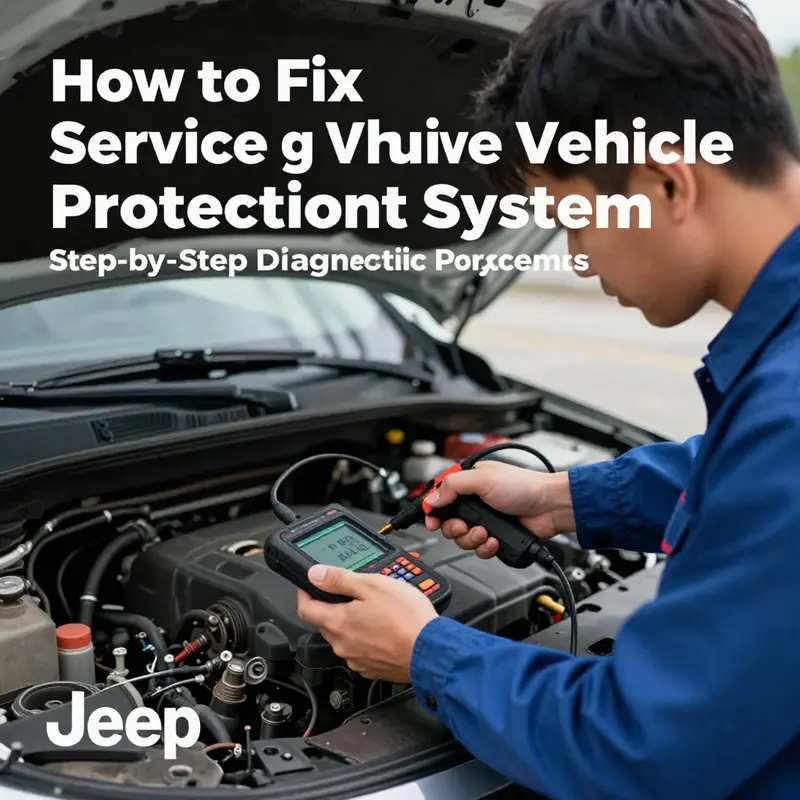
The moment a Service Vehicle Protection System VPS warning lights up on a Jeep Compass, a driver steps into a moment of uncertainty. It is a signal that sits at the crossroads of safety, security, and reliability. Unlike a routine oil pressure alert or an ancillary malfunction, the VPS warning threads through the vehicle’s most sensitive safety and monitoring circuits. It can involve the anti theft immobilizer, the body control module, the electronic stability features, and the interconnected network that keeps important systems communicating. Ignoring the warning is not wise, because in some configurations the VPS can influence whether the engine starts or how the vehicle behaves as it moves. This chapter unfolds a coherent, step by step diagnostic journey that blends common sense checks with precise electronic diagnostics. The aim is to empower a reader to progress from a vague alert to a specific root cause, all while understanding when it is prudent to seek professional help. The approach is practical, grounded in the kinds of symptoms owners report and the troubleshooting logic that makes sense to technicians who work on modern electric and electronic control systems. The steps described here build on a foundational idea: a VPS warning is rarely a single faulty component but often a chain of small issues that reveal a larger electrical or security system theme. By paying attention to patterns and keeping a calm, methodical pace, a technician or a diligent owner can reduce downtime and avoid unnecessary repairs.
The journey begins with a careful observation of the dashboard. The VPS light does not usually appear in isolation. It often travels in the company of other warning lights. The first habit is to scan the instrument cluster and note which other indicators glow or flash. A cluster that includes lights for the ABS, the stability control, or the battery can point to a shared electrical problem or to a compromised power supply that affects multiple modules. The sense is that a failing battery or a poor electrical connection can cause transient communications faults across the vehicle network. This initial survey helps the reader avoid chasing a symptom that is only loosely related to VPS, saving time and expense. It also sets the stage for a closer look at the vehicle’s power discipline, because modern safety systems rely on clean, stable electrical input to function reliably.
A recurring theme in VPS diagnoses is the health of the battery and the condition of battery connections. The Compass is a modern, highly electronic system, and a weak battery can cause momentary dips in voltage that ripple through the control modules. The battery’s resting voltage matters, but more important is its ability to hold voltage under load. A practical test is to measure the battery voltage with the engine off. A healthy, fully charged battery typically reads around 12.6 volts or higher when at rest. If the voltage sags below roughly 12.4 volts, or if the readings swing widely when a load is applied, it signals an aging or compromised cell. Corrosion on the terminals or loose cable connections can also provoke intermittent faults that resemble software glitches. Cleaning corrosion, tightening terminals, and routing cables away from heat sources prevent a lot of nuisance triggers. If the battery has more than three to four years of service life, replacement becomes a strong consideration. The reason is simple: once a battery loses its reserve capacity, the VPS and other safety features can misbehave under everyday driving conditions, particularly in cold weather when the system requires more power to hold state and run sensors.
Even in the absence of obvious corrosion or loose connections, a deliberate reset of the VPS memory can be useful. The reset is not a cure-all, but it clears transient faults that linger in the vehicle’s embedded controllers. The reset procedure involves a controlled power-down and a brief period of no power to the vehicle’s electronic modules. In practice, one would turn the ignition off, wait a moment, then disconnect the negative terminal of the battery for an interval—commonly around 15 minutes. After the wait, reconnect the terminal, turn the key to the On position without starting the engine, and wait a short time to see whether the VPS light extinguishes. If the light remains or reappears after a few seconds, that suggests a deeper fault that will require more diagnostic work. It is important to note that a reset can erase learned data in some control modules and may require reinitialization procedures for certain systems. For a typical owner, the goal of the reset is to determine whether the VPS fault is a temporary blip or a persistent condition that will not respond to a refresh of memory alone. It is not a substitute for diagnosing root causes but a useful first diagnostic step that often reveals whether the issue is weathered by a power issue, a sensor fault, or a communications fault within the vehicle network.
The key fob and its communication with the immobilizer are frequent culprits in VPS related events. The VPS is intimately linked to the vehicle’s security and immobilization logic. If the fob battery is near end of life, or if a recent reprogramming of the remote has occurred either during a service visit or a door lock event, the system can interpret a normal start as a fault. The remedy is straightforward but sometimes overlooked: replace the key fob battery, typically a CR2032, and reprogram the fob according to the manufacturer procedure. The reprogramming step ensures that the vehicle recognizes the fob’s signals reliably, restoring the expected handshake between the key and the immobilizer. A careful ear for the vehicle’s prompts during this process is essential. If the user observes repeated failures to communicate with the fob, it might indicate a deeper problem with the immobilizer transponder in the key or a fault in the receiver coil within the ignition switch. Those issues usually require professional tools and procedures to reestablish proper authentication and signal integrity.
Once the basic power and key communications have been addressed, the diagnostic journey shifts toward data collection. The modern vehicle is a network of control modules that exchange information over digital buses. The OBD II port becomes a gateway to the vehicle’s onboard diagnostics. A capable scanner that supports the vehicle’s protocol allows retrieval of a bucket of Diagnostic Trouble Codes DTCs. These codes are not universal truths; they are pointers that narrow the scope to a system or a component. For VPS focused faults, common codes may involve the immobilizer, the body control module, or loss of communication with a safety system. Examples include immobilizer related codes or messages that indicate a timeout of communication with a central gateway or body control. While memory codes can fade after a reset, a persistent or recurring code cluster is a reliable signal that something in the system remains unsettled. The reader should approach code interpretation with care. Not every code demands immediate replacement parts; many faults are situational—cold weather, poor sensor readings, or intermittent harness issues can generate a fault while the underlying cause is simpler and less expensive to fix. Still, the codes set the direction for the repair plan and help prioritize the steps that should come next.
With the DTCs in hand, the focus narrows to wiring and grounding. The vehicle’s safety and security systems rely on precise sensor signals and robust electrical grounds. A damaged wiring harness, especially around the BCM or ignition switch, can produce faults that mimic more serious module failures. The inspection involves looking for signs of heat damage, chafed insulation, or loose connectors. Ground points, particularly the main grounds under the hood and near the firewall, are worth a close look. A poor ground can inject noise and voltage instability into the system, leading to unpredictable behavior of the VPS. Addressing those wiring issues often pays dividends in a short time. If a harness is damaged, or a connector shows signs of corrosion, replacing or repairing that segment is typically more cost effective than chasing software fixes.
As the diagnostic process progresses, the engineer in the driver’s seat often encounters a juncture where software or module programming becomes the bottleneck. The VPS and immobilizer depend on a consistent set of parameters within the vehicle’s control software. If there is a persistent fault after battery replacement, fob reprogramming, and wiring checks, the next step is reprogramming or reflash using official tools available to certified service centers. That path ensures that the modules operate with the latest calibrations and security logic. It is essential to recognize that such an operation typically requires a factory scan tool and access to service manuals. These resources are not generally available in consumer diagnostic kits, and attempting a DIY reflash without proper tools risks bricking the vehicle’s electronics or permanently disabling certain functions. Therefore, when the VPS remains stubbornly active after all routine checks, the prudent choice is to schedule service with a qualified technician who has access to the proper software and documentation.
A practical anchor in this journey is an awareness of the official guidance that governs VPS related issues across model lines. In real-world practice, the most authoritative guidance is delivered through the vehicle manufacturer’s service bulletins. These bulletins lay out model specific procedures, troubleshooting sequences, and reprogramming steps that engineers have vetted for reliability. For readers who want to see the exact framework that technicians rely on when VPS warnings arise, the relevant technical service bulletin covers a spectrum of vehicles and outlines the recommended steps to diagnose and reset the VPS in common scenarios. You will find that the bulletin emphasizes a network oriented approach and makes clear that the sequence of checks—from battery health to immobilizer communication to module reprogramming—maps directly to practical outcomes in the shop. This is more than a checklist; it is a blueprint for interpreting the warning through the lens of how the vehicle actually processes information and maintains security and safety across its systems.
The path to resolution is rarely linear, and it often requires weighing several potential root causes against the costs and risks of escalating to a dealership. For a reader who wants to connect the dots between symptoms and solutions, it helps to have a narrative that ties the stages together. The VPS light may appear because of a simple voltage dip that clears with a battery replacement, or it may signal a more stubborn issue with the immobilizer transponder or the body control module that governs security features. Each scenario has a different implication for the owner: whether the engine can start, whether the vehicle remains drivable, and how much time and money the repair is going to require. The diagnostic strategy proposed here emphasizes methodical progression, careful data collection, and a balanced decision about when to seek professional diagnostics and reprogramming. It is not sensational; it is grounded in the reality that modern vehicles rely on a dense fabric of sensors, wires, connectors, and software that must all stay in harmony for safe operation.
For readers who want a sense of the broader maintenance context, consider how this VPS diagnostic approach intersects with routine vehicle care. Regular battery checks, maintaining proper tire pressure, and keeping the electrical system clean of corrosion are all foundational practices that reduce the likelihood of VPS triggers. These basic steps do more than prevent a single warning; they stabilize the electrical environment in which the entire vehicle network operates. A calmer electrical environment translates into fewer false alarms and more predictable performance from driver assist and safety features. The philosophy here is proactive: treat the VPS warning as a signal that prompts a quick yet thorough check of power, communication, and security subsystems rather than as a mystery to be solved with guesswork. The more you understand the roles of the battery, the fob, and the control modules, the more confident you become in diagnosing efficiently and safely.
In practical terms, the diagnostic journey can be summarized as a sequence that begins with the least invasive steps and ends with professional intervention when necessary. Start with a visual and sensory survey of the VT cluster for correlated lights. Move to testing battery health and securing terminals. If the VPS persists, perform a controlled power reset to clear transient faults. Confirm the integrity of the key fob and its battery, and reprogram if needed. Next, pull diagnostic trouble codes with a capable OBD II scanner and interpret the results within the context of immobilizer and body control systems. Then, inspect wiring and grounding with attention to critical points and harness segments. If all these steps fail to resolve the alert, prepare for a professional diagnosis and potential reprogramming, using factory level tools and latest service documentation. There is a strong probability that the root cause lies in an interplay of components that only a trained technician can synchronize. This is the moment where the reader steps from troubleshooting as a DIY exercise into the realm of factory supported diagnostics, where the stakes are safety and reliability, and where timing matters to avoid being stranded or compromised on the road.
To anchor this chapter in authoritative direction, it is useful to acknowledge the specific resources that shape the diagnostic expectations. The most relevant guidance comes from the official service documentation that details VPS diagnosis and resetting procedures across Jeep and related models. This source presents model-aligned, stepwise instructions designed to resolve VPS related concerns with a combination of sensor checks, power management, and secure communication verification. While the practical steps described above are widely applicable, the manufacturer provided guidance offers model-to-model nuance, including exact sequences and limitations that technicians must respect when working on the vehicle’s safety system. For readers who desire deeper technical confidence, the official bulletin serves as a reference point to understand why each step matters and how the vehicle’s logic prevents operation when key security or sensor integrity is questionable. The knowledge of such guidance helps frame the diagnostic journey as a disciplined process rather than anecdote or guesswork. In short, this is not just about turning a light off; it is about safeguarding the vehicle’s critical safety envelope and ensuring the vehicle can perform as designed when it is needed most.
For ongoing reference and deeper exploration of maintenance topics related to vehicle protection and electrical reliability, readers may explore the broader automotive maintenance resources available in our blog. The repository contains practical advice related to routine vehicle upkeep and troubleshooting that complements the VPS diagnostic journey described here. To access a repository of related topics, visit the kmz vehicle center blog. It provides articles and insights that tie into the themes of power management, sensor health, and system reliability across different vehicle families. kmzvehiclecenter blog: https://kmzvehiclecenter.com/blog/
As the chapter nears its practical edge, consider the practical mindset that underpins effective VPS troubleshooting. Treat the VPS warning as a multi-layer signal rather than a single fault. Think in terms of three layers: power and grounds, communications and data integrity, and security authentication. Within the power layer, you examine the battery, alternator, and major harness grounds. In the communications layer, you verify that the immobilizer, BCM, and other control modules can talk to each other without interruption. In the security layer, you confirm that the immobilizer and key transponder are recognized and that the vehicle grants starting authorization only when the identity is proven. The layers are not disjoint; they form a single ecosystem. Each step you perform tightens the net around the root cause and reduces the chance of unnecessary replacement parts that fail to address the underlying problem. When you finally clear the VPS warning, you can be confident that you have not just silenced a light but reestablished the integrity of the vehicle’s essential safety and security systems.
In closing, the diagnostic traversal laid out above is a practical framework. It aligns with common-sense troubleshooting while respecting the complexity of modern vehicle electronics. It is a plan that owners and technicians can adopt, adapt, and apply with care. It is not merely about getting back on the road; it is about restoring confidence in the systems that keep a driver safe, the vehicle secure, and the journey uninterrupted. The VPS warning, properly approached, becomes a signal that the vehicle is prompting a check of its most critical safety and monitoring networks. When followed with disciplined troubleshooting and supported by professional diagnostics when needed, the path to resolution is clear and efficient. For those who crave further guidance and real-world examples, the broader automotive maintenance landscape offers ample case studies that illustrate how similar VPS related faults have been resolved across a variety of makes and models. To further reinforce this chapter with the authoritative context described earlier, refer to the official service bulletin that outlines the diagnostic sequence for VPS issues across Jeep models, including the Compass. This resource provides a definitive framework to understand and address VPS faults in a systematic way: https://www.jeep.com/owners/service/technical-bulletins/
Guarding the Journey: A Practical Guide to Fixing the Service Vehicle Protection System in the Jeep Compass

The moment a modern SUV lights up with the Service Vehicle Protection System warning, it can feel like a siren for the safety nets that keep you safe on the road. For the Jeep Compass that warning signals a network level issue among sensors, modules, and control units rather than a single failed part. The goal is to approach the problem calmly with a structured plan that balances quick checks with professional diagnostics when needed.
The SVPS is a network of sensors and controllers. When a wheel speed sensor, tire pressure sensor, ABS module, or other module reports a fault, the system flags a warning to prevent unsafe operation. In many cases the issue is a simple, inexpensive fix such as a loose connection or a tire with low pressure. In other cases the fault is deeper and requires specialized tools and software to diagnose and repair.
Do not ignore the warning even if the vehicle drives normally. Symptoms can be intermittent and some faults do not show obvious performance changes right away. A methodical approach helps you identify the root cause without unnecessary trips to the shop. Start with basic checks and then move to more advanced diagnostics if the light persists.
Begin with a calm inspection and a short safety focused checklist. Look for multiple warning lights, unusual noises, or chimes associated with the SVPS. If you are driving, note whether steering feels heavy, there is vibration, or the brake pedal feels different. Do not push beyond your comfort level and drive cautiously when conditions are poor.
First steps include a reset: turn off the engine, wait a moment, and restart. If the SVPS light returns, the condition is persistent. Next, inspect tires and TPMS. Check tire pressures, look for signs of slow leaks, and verify wheels were not recently rotated or replaced without a TPMS relearn.
Also check battery connections and basic electrical grounds. Tighten terminals, clean corrosion if present, and inspect fuses related to safety and control systems. A damaged harness near the engine bay or fuse box can cause intermittent faults. Recheck after a short drive to confirm the light behavior.
If the basic checks do not resolve the issue, read the codes with an OBD II scanner. Codes can point to wheel speed sensors, tire sensors, ABS or ESC modules, or steering angle sensors. A simple code read lets you triage whether a sensor, harness, or module is involved. If you do not own a scanner many shops offer free scans or a reasonable diagnostic fee.
Interpreting codes is the next skill. A wheel speed sensor fault is common, especially on rough roads or after tire work. Some faults require only a sensor replacement or wiring repair; others may require software updates or reprogramming of modules. If the problem persists after basic repairs, professional diagnostics are warranted.
The repair path usually follows a hierarchy: fix the root cause, re test the system, and verify normal operation with a road test. Replacing a damaged wheel speed sensor or repairing wiring is common. If wiring or software is involved, use manufacturer approved procedures and tools and consider a reflash or module reprogramming when needed.
Note that some faults require specialized diagnostic equipment beyond consumer tools. If the SVPS light remains on after basic work, or you notice changes in vehicle behavior, schedule a professional diagnostic. A dealer or qualified independent shop can perform the necessary calibrations and software work to restore full functionality.
In closing, treat the SVPS warning as a structured problem rather than a mystery. A disciplined approach that starts with basic checks, moves to data driven diagnostics, and escalates to professional help when required will keep your Compass safe and dependable. For additional guidance see the Jeep owners manual and official technical resources, and check resources from OEM portals for manufacturer specific procedures.
Final thoughts
Addressing the ‘Service Vehicle Protection System’ warning on your Jeep Compass is vital for ensuring your safety and maintaining vehicle performance. Through careful observation of warning indicators and systematic diagnostic procedures, many issues can be resolved without the immediate need for professional assistance. However, understanding when to seek expert help can save time, money, and stress in the long run. By following this guide, both private car owners and fleet operators can confidently tackle this warning, ensuring their vehicles run smoothly and safely on the road.