
Service vehicles play a fundamental role in the automotive and infrastructure sectors, often overlooked by casual car owners and small business operators. These vehicles, equipped with tools and necessary equipment, are pivotal in providing on-site repair and maintenance services. For local private car owners, understanding the utility of service vehicles can enhance their appreciation for the support systems available for their vehicles. This article delves into the different facets of service vehicles, revealing their significance in everyday roadside assistance, specialized repair services, and critical utility infrastructure. Each chapter unveils layers of insight ranging from the basic definitions to the essential roles these workhorses play in our lives.
Service Vehicles Explained: Roles, Design, and Modern Fleet Models

What a service vehicle is and why it matters
A service vehicle is a motor vehicle whose main purpose is to deliver maintenance, repair, or support tasks at the point of need. Unlike passenger cars designed primarily for transport, service vehicles are work platforms. They carry technicians, tools, spare parts, and often diagnostic equipment. They arrive where problems exist — at the roadside, at a business site, inside a building plant, or at field infrastructure — and turn a vehicle into a temporary workshop. This practical role makes service vehicles indispensable across many industries, including utilities, telecommunications, HVAC, transportation, and vehicle repair networks.
Across organizations, a service vehicle is as much an operational asset as a tool chest or a specialized instrument. It is configured to reduce downtime for the customer or asset being serviced. That objective shapes every decision about the vehicle: size, payload, upfit, inventory, communications, and safety features. When a service vehicle is well chosen and properly equipped, a single visit can restore operations, minimize repeat work, and prevent further failures.
Service vehicles appear in a range of body types. Service vans and box vans are common for mobile mechanics and HVAC technicians. Flatbed and tow trucks provide recovery and heavy-duty repair support. Pickup trucks with service bodies carry tools and small equipment for utility crews. In specialized fields, vehicles include bucket trucks for working at height, utility bodies with integrated compressors and welders for infrastructure repair, and trailers converted into mobile labs for on-site testing. Each variant reflects the task it supports: some prioritize storage and organization, others power generation and work platforms, and others mobility and compactness for urban jobs.
What distinguishes a service vehicle from a general-purpose business car is intent. A company car used mainly for sales travel may be a business asset, but a service vehicle is actively designed or outfitted for field service. It must hold parts, secure tools, provide safe work access, and often support power or compressed air. In many organizations, this distinction matters for licensing, insurance, and procurement rules.
Design and outfitting: turning transport into a workshop
The value of a service vehicle lies in its outfitting. Interior organization is crucial: shelves, drawers, bins, and mountings prevent tools from shifting in transit and reduce search time on-site. Workbenches, vise mounts, and fold-down tables allow technicians to perform repairs efficiently. Exterior features such as ladder racks, lift gates, and secure side compartments improve access and safety.
Power supply is another key feature. Many service vehicles include auxiliary batteries, inverters, onboard generators, or PTO-driven equipment. These systems power diagnostic testers, welding gear, lights, and climate control in mobile workspaces. Compressed air systems and hose reels are standard in plumbing, HVAC, and some mechanical service vehicles. For larger repairs, cranes or hydraulic lifts may be integrated into the chassis.
Diagnostics and communications equipment are now standard. Modern service vehicles carry tablets or rugged laptops with remote access to schematics, parts catalogs, and repair databases. Telematics devices track vehicle location, usage, and maintenance needs. Built-in Wi-Fi or cellular hotspots let technicians upload reports, order replacement parts, and communicate with dispatch. Inventory management software on the vehicle helps track parts used during a job, reducing stockouts and billing errors.
Safety and ergonomics are part of design. Interior lighting, slip-resistant steps, fire extinguishers, and first-aid kits are common. Properly designed service vehicles include ergonomic storage heights to reduce lifting injuries. Locking compartments secure tools and prevent theft. Visible markings and emergency lighting help the vehicle operate safely on roadways and work sites.
Operational models and fleet strategies
Organizations manage service vehicles in several ways. Ownership used to be the norm: companies buy, upfit, and maintain their fleet. Owning gives control over specifications and branding. It also requires capital, fleet maintenance staff, and disposal planning.
Leasing and rental offer alternatives. Short-term rentals fill seasonal peaks or special projects. Leasing reduces capital outlay and transfers some maintenance responsibility to the lessor. The rise of subscription-based models has broadened options. Under a subscription arrangement, organizations access vehicles and fleet services for a recurring fee. This approach can bundle maintenance, replacements, and telematics under a single agreement. It reduces capital burden and improves flexibility, letting organizations scale the fleet up or down with demand. Deloitte Global has explored these mobility trends under the Vehicle-as-a-Service concept, noting how usage-based models change how fleets are acquired and managed. https://www2.deloitte.com/global/en/pages/about-deloitte/articles/vehicle-as-a-service.html
Fleet managers balance vehicle availability, technician schedules, and geographic coverage. They use routing and dispatch software to minimize travel time and maximize first-time-fix rates. Data from telematics and job history informs decisions on vehicle allocation. For example, a mobile mechanic who frequently attends heavy repairs might be assigned a van with a comprehensive parts inventory. Conversely, low-demand routes might be served by smaller, more fuel-efficient vehicles.
Service vehicles are also part of integrated business processes. Work-order systems generate dispatches and capture time, parts, and outcomes at the point of service. This end-to-end visibility improves billing accuracy and supports continuous improvement. When service vehicles have good data feeds, managers can identify common failures and adjust inventory or training to prevent repeat calls.
Regulatory, licensing, and insurance considerations
Regulatory rules can affect service vehicle configuration and operation. Vehicles used to transport hazardous materials need appropriate placards and secure storage. Work at height may require fall-protection systems and specialist vehicle certifications. Municipal permits may limit where certain vehicles can park or operate, particularly in urban cores.
Drivers and technicians may require licenses beyond a standard driver’s license, depending on vehicle weight or onboard equipment like cranes. Employers must ensure certifications for specialized tasks, such as working near energized lines or operating compressed gas systems. Insurance policies differ for service vehicles: they must cover tools in transit, third-party liabilities on-site, and equipment damage. Proper classification of a vehicle in insurance and accounting systems prevents coverage gaps and tax misclassification.
Maintenance and lifecycle management of service vehicles
Service vehicles must be maintained not only for mobility but for uptime as mobile workshops. Preventive maintenance programs schedule oil changes, brake checks, and inspections for auxiliary systems like generators and compressors. A neglected compressor or inverter can make a vehicle useless on a critical job.
Component life extends beyond the chassis. Drawer slides, shelving fasteners, hinges, and lighting commonly fail under heavy use. Fleet programs that track these components reduce unscheduled downtime. Many organizations use a combination of time-based and usage-based intervals. Telematics and condition-monitoring sensors now help predict failures before they occur. Scheduled refurbishments are also part of lifecycle planning. Upfitting can be reused when retiring a chassis, but compatibility and safety must be verified.
Refueling and energy strategy matter. Fuel management is a large cost center for service fleets. For diesel or gasoline vehicles, route planning and idling reduction lower overall consumption. As electric vehicles become viable for service roles, managers assess charging infrastructure, range under load, and power availability for onboard equipment. Some fleets pair electric chassis with onboard battery systems dedicated to tools, reducing reliance on idling or fuel-based generators.
Technology integration and the modern service vehicle
Technology has reshaped the concept of a service vehicle. Telematics provide location, speed, idle time, and fault codes. Real-time data helps dispatchers direct the nearest qualified technician. Connected diagnostics let a technician start with a vehicle’s failure codes before arrival. Augmented reality and remote support enable specialists to guide field technicians through complex repairs.
Inventory control systems reduce overstock and ensure technicians carry the most used parts. Scanning parts at the point of use updates central inventory and triggers replenishment. This reduces carrying costs and improves first-time-fix rates. Mobile payment and invoicing let technicians complete transactions onsite, improving cash flow.
Security systems protect mobile inventories. GPS tracking, immobilizers, and remote alerts deter theft. Secure keys and tool inventory systems ensure accountability and reduce loss.
Practical use cases across industries
Service vehicles perform a variety of missions. Roadside assistance and tow services restore mobility for stranded vehicles. Mobile mechanics perform on-the-spot repairs, saving customers towing and workshop visits. Utility trucks repair power lines, gas mains, and water infrastructure. Telecommunications vans install and troubleshoot network equipment. HVAC service vans bring diagnostic tools, refrigerant recovery, and replacement parts for climate systems. In each case, the vehicle’s layout is tailored to the task: long narrow shelving for cable reels, heavy duty mounts for pole equipment, or temperature-controlled compartments for sensitive components.
For fleet operators, service vehicles provide internal support. A delivery company might use service vans to maintain its own trucks and avoid outsourcing repairs. Municipalities dispatch service vehicles for streetlight maintenance, sign repair, and public works. In industrial plants, mobile service units move between machinery to reduce production downtime.
Purchasing and upfitting decisions
Choosing a service vehicle begins with the job profile. Consider payload, storage needs, workspace, power requirements, and worksite access. A vehicle that looks suitable on paper must be evaluated under expected conditions: will it navigate narrow alleys, or must it carry heavy equipment? A well-planned upfit includes modular systems that can evolve with changing needs.
Upfitting should follow safety and regulatory standards. It must be professionally installed and documented for insurance purposes. When possible, fleets standardize upfits to improve spare parts commonality and technician familiarity. Standardization reduces training time and speeds repairs.
Total cost of ownership should guide decisions. Initial purchase price is only part of the equation. Consider fuel or energy costs, maintenance, upfit depreciation, downtime costs, and resale value. Subscription and leasing models can be attractive when they bundle maintenance and include predictable costs.
Human factors: training and work practices
A service vehicle is only as effective as the people who use it. Proper training in equipment use, safe lifting, and incident response reduces injuries and improves job outcomes. Technicians benefit from training in inventory management, diagnostic tools, and communication systems. Regular safety briefings and vehicle inspections encourage a culture of care.
Ergonomics influence job satisfaction and productivity. Thoughtful drawer height, lighting, and workbench placement reduce strain. Vehicle cleanliness and organization matter both for morale and for efficient work.
Trends shaping the future of service vehicles
Electrification will reshape many service roles. Electric chassis offer lower operating costs and quieter operation, but fleet managers must account for charging time and power demands for onboard equipment. Modular upfitting that allows rapid interchange of specialized modules supports flexible fleet usage.
Subscription models and shared fleets will continue to grow. These models let organizations access specialized vehicles without large capital commitments. As data systems improve, predictive maintenance, remote diagnostics, and fleet analytics will increase first-time-fix rates and reduce idle time.
Sustainability considerations are rising. Lightweight materials, route optimization, and alternative fuels reduce environmental impact. At the same time, regulations and urban policies may favor low-emission service vehicles in dense areas.
Service vehicles are work tools, mobile workshops, and frontline representatives of organizations. Their design, technology, and management determine how quickly problems get fixed and how effectively operations are supported. A thoughtful approach to specification, outfitting, maintenance, and human factors turns a vehicle into a reliable extension of service capability.
For practical guidance on maintaining the vehicles that support field operations, explore detailed maintenance tips and schedules like these truck maintenance recommendations for first-time owners: https://kmzvehiclecenter.com/truck-maintenance-tips-for-first-time-owners/
For more on the shift to usage-based vehicle models, see the Vehicle-as-a-Service discussion by Deloitte Global: https://www2.deloitte.com/global/en/pages/about-deloitte/articles/vehicle-as-a-service.html
Mobile Lifelines: How Service Vehicles Power Roadside Rescue and Repair
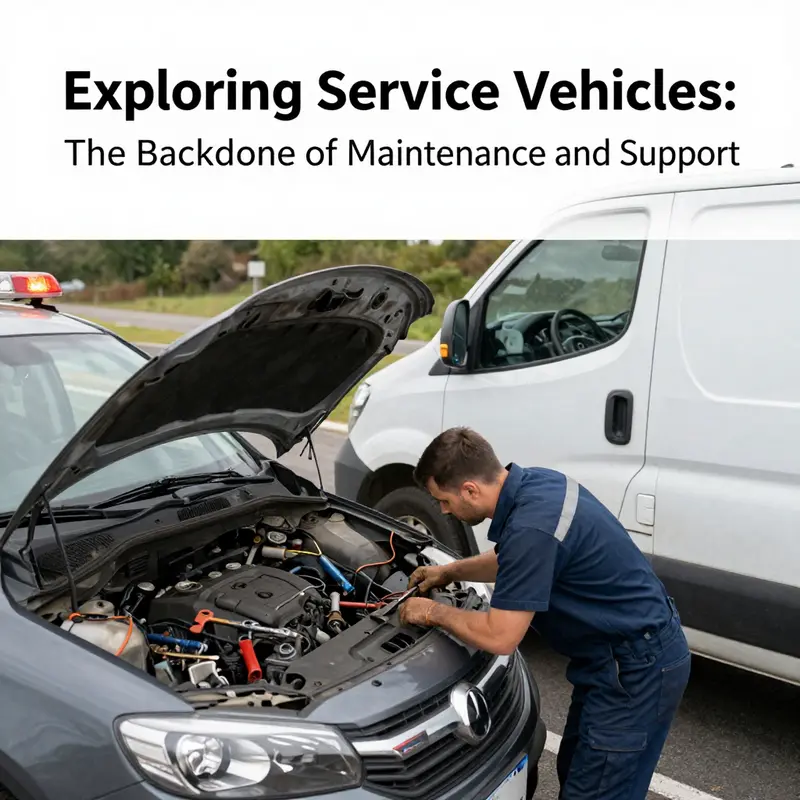
Service vehicles function as the mobile backbone of roadside assistance and repair services. They arrive where a stranded vehicle stopped. They carry tools, parts, and personnel. They bridge the gap between a roadside problem and a full repair shop. In practice, a service vehicle is both a transport machine and a small, mobile workshop. It enables immediate fixes, safe towing, and the rapid assessment needed to minimize downtime for drivers and fleets.
A service vehicle’s most visible duty is towing and recovery. When a vehicle cannot roll under its own power, the service vehicle secures and transports it. The operator stabilizes the disabled vehicle, attaches it to the tow rig, and moves it with care. This process requires trained operators and specialized equipment. Winches, flatbeds, wheel lifts, and rigging all play parts. The right choice of towing method protects the disabled vehicle and keeps other road users safe. Well-executed towing reduces secondary damage and simplifies follow-up repairs.
Equally important is the on-site repair capability that many service vehicles offer. Modern units often carry diagnostic tools, battery starters, tire repair kits, and a stock of common parts. Technicians can perform tasks that restore basic drivability. That may include battery jumps, fuel delivery, flat tire changes, fuse replacements, and starter motor or alternator checks. These on-scene fixes save hours that a tow-and-wait workflow would otherwise cost. They also reduce congestion at repair facilities. For drivers, the immediate benefit is clear: a faster return to the road.
Beyond quick fixes, service vehicles act as mobile diagnostic platforms. Portable scan tools and handheld testers fit neatly into service vans. Technicians connect to a vehicle’s electrical systems and retrieve fault codes. They interpret results to advise on repairs or temporary workarounds. This capability changes how repair decisions are made. Instead of guessing at a fault, technicians base interventions on real-time data. This reduces misdiagnosis and unnecessary towing, while improving repair accuracy once the vehicle reaches a workshop.
Service vehicles also perform a critical logistics role. They transport disabled vehicles to shops, shuttle parts between locations, and move components that are too large for courier services. For many roadside providers, the service vehicle is the final leg in a chain of logistics that includes call intake, dispatch, route planning, and repair scheduling. Efficient routing of service vehicles cuts response times. It cuts fuel and labor costs. Sophisticated dispatch systems assign the closest qualified vehicle. This reduces the period a driver waits on the roadside.
Customer experience is shaped heavily by the appearance and conduct of service vehicles and their crews. A clean, well-marked vehicle projects competence and trust. A courteous, knowledgeable technician calms stressed customers. Simple actions matter: rapid arrival, clear explanation of the issue, and transparent cost estimates. These behaviors influence whether customers choose the same provider later. For companies, that means investing in uniform vehicle outfitting and in soft-skills training for technicians.
The interior layout and equipment choices transform a vehicle into a service platform. Shelving systems secure parts and tools. Workbenches and lighting enable repairs at night. Onboard compressors and generators power pneumatic tools and diagnostic lights. Storage solutions prevent damage to expensive tools and keep the vehicle organized. Careful design reduces the time technicians spend searching for parts. It also enhances safety, preventing loose items from shifting during transit.
Safety and compliance govern many aspects of service vehicle operation. Technicians must secure work zones with cones and reflective signs. They must follow towing regulations and weight limits. Proper load distribution prevents trailer sway and mechanical strain. Regular inspections of straps, winches, and mounts ensure they function reliably. For companies, compliance reduces liability and insurance costs. For technicians, it prevents accidents that can cause injury or damage.
Staffing and training make service vehicles effective. Drivers require certifications for heavy towing and commercial vehicle operation. Technicians need mechanical knowledge, electrical diagnostics skills, and familiarity with modern vehicle electronics. Training covers safe lifting, battery handling, and the correct use of diagnostic tools. Ongoing education keeps crews current with new vehicle platforms and repair methods. Cross-training drivers in basic mechanical procedures improves first-response outcomes on the roadside.
Route planning and dispatch technology optimize how service vehicles are used. Telematics feeds location, speed, and vehicle health data to dispatch centers. Real-time information directs the nearest qualified unit to a call. Dispatchers prioritize calls based on severity and resource availability. This coordination reduces response times and makes better use of equipment. Predictive analytics can anticipate peak demand, allowing companies to stage vehicles in high-need areas.
Fleet management practices sustain reliability across many service vehicles. Preventive maintenance schedules reduce breakdown risk for the rescue vehicles themselves. A service vehicle that fails in the field creates two emergency events instead of one. Regular oil changes, brake inspections, and suspension checks maintain safety and minimize downtime. For truck operators, maintenance guidance and checklists help non-mechanical staff spot wear before it causes failure. Useful resources on maintaining service and work vehicles can improve uptime; for practical maintenance guidance see truck maintenance tips for first-time owners.
Financial considerations shape vehicle selection and outfitting decisions. Outfitting a vehicle with specialized gear increases initial cost. However, greater capability reduces subcontracting and towing expenses. Companies weigh purchase and retrofit costs against operational savings. Lease and financing options make sophisticated rigs accessible. Insurance premiums, fuel efficiency, and repair frequency affect a vehicle’s total cost of ownership. Strategic investments often prioritize versatility, enabling a single vehicle to handle multiple call types.
Integration with repair facilities is a common requirement. Service vehicles often act as the first step in a larger repair workflow. The mobile team diagnoses and stabilizes the vehicle. The vehicle is towed or delivered to a repair shop for a full fix. That requires communication between field crews and shop technicians. Digital reporting tools transmit diagnostic codes and service notes. This continuity shortens repair time and reduces repeated diagnostics. It also helps shops order the right parts before the vehicle arrives.
Service vehicles must adapt to the diversity of modern vehicles. Electric vehicles, hybrids, and advanced driver assistance systems introduce new repair considerations. Technicians require safety training for high-voltage systems. They need insulated tools and procedures to avoid electric shock. Diagnostic tools must support communication protocols used by new vehicle platforms. As vehicle technology evolves, service vehicles change with it to remain effective.
Operational scale affects service vehicle strategy. A small roadside company may run a few vans with generalist technicians. Large operators deploy specialized rigs for heavy recoveries, mobile workshops, and long-haul incident response. Larger fleets invest in advanced software for scheduling and inventory management. Smaller fleets prioritize flexibility and low operating cost. Both scale models aim to meet response-time goals while controlling expenses.
Branding and visibility help roadside companies attract recurring customers. Service vehicles are moving billboards. Clear visual identity makes them easy to spot for stranded drivers. They also communicate professionalism to other road users and repair partners. Investing in legible markings and reflective livery pays off by improving recognition and safety at night.
Environmental considerations are growing in importance. Fuel-efficient engines and alternative fuels reduce emissions from service fleets. Route planning minimizes idle time and unnecessary driving. Some providers outfit vehicles with efficient generators and LED lighting to lower fuel consumption. These steps align fleet operations with regulatory trends and public expectations.
Insurance and liability management are essential. Service providers must carry coverage for towing operations, property damage, and bodily injury. Driver screening and documented safety training reduce claims. Accurate records of service actions and incident photos protect providers in disputes. Clear contractual agreements set customer expectations for cost and liability.
Finally, the human dimension ties these aspects together. Service vehicles succeed because skilled people make them useful. The interplay between vehicle capability and technician judgment determines outcomes. A well-equipped vehicle cannot replace a poorly trained operator. Conversely, a skilled technician expands the value of modest equipment through creative problem solving. Investing in both machines and people yields the fastest, safest, and most reliable roadside response.
For a practical look at how service vehicles perform in real rescue scenarios, and the types of roadside assistance commonly provided, see the authoritative overview at the AA’s roadside assistance page: https://www.aa.co.uk/roadside-assistance
On-Site Power, Parts, and People: The Essential Role of Service Vehicles in Keeping Infrastructure Running

A service vehicle is more than a means of getting from one place to another. It is a deliberately designed, mobile operational hub built to extend a company’s capability directly to where work is needed. At its core, a service vehicle carries people, tools, parts, and often diagnostic and measurement equipment to the field so maintenance, repair, or support tasks can be performed without requiring a return trip to a fixed workshop. This simple idea—bringing the workshop to the site—has transformed how industries manage reliability, uptime, and safety. It has also shaped how fleets are designed, how technicians are trained, and how regulatory and financial considerations interplay with everyday field operations. The concept is broad enough to cover a spectrum of vehicles, from compact vans that host a portable toolkit to larger trucks that hold a mobile workshop, complete with power generation, climate control, and substantial storage for bulky parts. Yet the unifying thread remains: service vehicles exist to ensure service happens where it is needed, when it is needed, with the least possible delay or disruption to the work at hand.
The fundamental functions of a service vehicle can be described with a few clear terms. On-site service delivery is the primary mission. A vehicle arrives at a location with personnel ready to diagnose, repair, or install. It carries the tools, spare parts, and sometimes specialized equipment required for that job. It can also act as a mobile workshop, offering a workspace where technicians can clean, measure, adjust, or assemble components directly at the job site. This combination of mobility and capability is what makes service vehicles indispensable across sectors with dispersed operations or complex infrastructure networks.
Final thoughts
In summary, service vehicles are vital assets in the automotive and infrastructure sectors, providing critical support through on-site repairs and maintenance. Whether it’s a mobile mechanic assisting a driver in distress or a utility vehicle keeping essential services operational, these vehicles exemplify reliability and practicality. For local private car owners and small business fleet operators, recognizing the importance of service vehicles can enhance their understanding of vehicle care and the inner workings of essential services. Thus, as you explore your vehicle maintenance options, keep in mind the unsung heroes—service vehicles—that stand ready to lend assistance whenever needed.