Deciding whether to purchase a vehicle service contract (VSC) can be a daunting task for car owners and fleet operators alike. With varying benefits and potential pitfalls, understanding the intrinsic value of these contracts is essential. This guide will explore the circumstances under which a VSC is justified, the costs associated with such contracts, strategies for effectively navigating the market, and measures to protect consumers from potential scams. Each chapter will illuminate critical aspects that could impact your decision-making process related to extended warranties.
The Real Value Test: When a Vehicle Service Contract Is Worth the Money

Deciding whether a vehicle service contract is worth the money is rarely a one-size-fits-all answer. It asks you to weigh your own risk tolerance against a set of practical realities: how you use your car, how old it is, how reliable the make and model tend to be, and how much security you want against the next surprise repair bill. In many cases, the answer lies in the intersection of long-term ownership plans and the economics of maintenance. For someone who intends to keep a car well beyond the factory warranty period, a well-structured service contract can offer a predictable path through the murk of potentially escalating repair costs. For others, especially those who own newer, dependable vehicles or who drive modestly, the same contract can feel like a costly hedge that never pays out. The truth rests less on the contract itself than on how well it aligns with your personal ownership blueprint and your willingness to navigate the fine print that comes with coverage.
The timing of a service contract matters as much as the vehicle’s age. Factory warranties typically cover the first few years or a certain mileage threshold, after which major components like the engine or transmission can become expensive if they fail. The current ownership landscape adds another layer: Americans are keeping their vehicles longer than ever. The average ownership duration has crept up to about 46.1 months, a notable rise from roughly 40 months a little more than a decade ago. This trend increases the likelihood that you’ll encounter a repair need after the original warranty expires, which is precisely when a service contract can either save you from a shock or become an unnecessary expense, depending on the specifics of your plan and your car’s history. The decision, then, hinges on the odds you assign to a costly failure and your willingness to handle a potentially covered-but-difficult-to-claim patch through a third-party insurer.
Beyond longevity, the nature of your vehicle and your driving habits shape the calculus. Some vehicles have reputations for expensive repairs or complex electronics, and owners of these models may find peace of mind in knowing a fixed premium or deductible cap applies if a major component falters. Others drive with meticulous maintenance and a track record of reliability, in which case the upside of a VSC diminishes unless the plan offers meaningful protections that align with your risk profile—such as roadside assistance or rental-car reimbursement during a covered outage. A well-structured contract can also translate into budget predictability. When the premium and deductible are set, you can plan around an anticipated expense rather than facing an open-ended risk that could spike into the thousands of dollars in a single repair event.
The practical benefits of a VSC often extend beyond the mechanics of the engine and transmission. Many plans bring conveniences that matter on a stressful day: roadside assistance, access to a loaner or rental car, and coverage that helps you stay mobile during a breakdown away from home. These inclusions can be priceless in certain circumstances, turning what would be a disruptive incident into a mere hiccup in your daily routine. But the upside is not universal. It’s essential to look past the glossy sales pitch and examine what’s actually covered. In many contracts, wear-and-tear items—the tires, brake pads, wiper blades, and even some electronic components—are only partially covered or clearly excluded. In practice, that means you may still face out-of-pocket costs for routine maintenance or for issues outside the policy’s defined scope. The gap between what you expect and what you get is often the source of disappointment and, in some cases, resentment toward the contract itself.
A candid financial comparison is essential before signing on. The price tag on a VSC can range widely, sometimes from about $2,500 to $4,500 upfront, or as much as $1,000 a year for broader coverage. Those figures can be a significant portion of a vehicle’s annualized ownership cost, especially if you never file a claim. If you drive a relatively reliable car and maintain it well, the math can tilt toward “overpriced insurance” rather than value. The risk you accept when you purchase a plan is the possibility that you’ll never use it, yet you’ve paid for it in full. Conversely, if you own a model with a known history of expensive repairs or you simply want the shield against unpredictable costs, the protection can feel reasonable and even essential.
But no contract exists in a vacuum. The claims process is a critical real-world test that is rarely glamorous. Consumers often report friction when trying to get a claim approved. Delays, technical denials based on obscure policy language, and sometimes a sense that the insurer lacks deep knowledge of the vehicle can sour the experience. The frustration is compounded if pre-existing conditions aren’t handled in a straightforward way or if the terms require maintenance records that are difficult to assemble precisely. Add to that the possibility of coverage gaps, where certain components are listed as covered only under narrow circumstances, and the allure of a simple, protect-at-all-costs solution fades fast. It’s a reminder that coverage is only as valuable as the provider’s reliability in honoring it when the need arises.
One of the most important cautions is overlap with existing warranties. If your car is still under manufacturer coverage, buying an extended contract early can produce overlapping protection—money spent for redundancy. The incremental value, if any, comes from the post-warranty window where the VSC bridges the most expensive repair risks. To determine whether that bridging is worth the cost, you need to weigh the odds of a major failure against the certainty of fixed costs, the quality of the coverage, and the provider’s track record in paying legitimate claims. This is where due diligence becomes more than a formality. It means looking beyond the glossy brochure to evaluate a provider’s reputation with consumer organizations and the better business bureau, understanding how pre-authorization works, and verifying whether the contract’s exclusions are reasonable given your vehicle’s known issues and your driving pattern. The practical question often reduces to: Do you trust this plan to deliver meaningful protection when you need it most?
In pursuit of a prudent decision, it helps to compare quotes from multiple providers and to read the full contract, paying special attention to exclusions, caps, and any maintenance requirements. A careful read should reveal whether the policy demands precise maintenance records as a prerequisite for coverage, whether pre-existing conditions are barred, and whether there are loopholes that might undermine your expectations. For many readers, this diligence is the difference between acquiring a reliable safety net and purchasing a complicated form of insurance you don’t actually need. A practical approach is to balance the cost against the protection offered, and to assess whether your risk tolerance, driving style, and ownership horizon align with the plan’s structure.
For readers who want a practical, theory-meets-reality lens, a focused, maintenance-oriented reference can help bridge the gap between concept and daily life. Consider exploring maintenance resources that discuss how routine care interacts with long-term ownership costs. For instance, the topic of oil-change intervals—time versus mileage—offers insight into how small, ongoing expenses accumulate and how they factor into the broader calculus of ownership costs and risk. Optimal oil-change intervals—time vs. mileage is a useful reminder that responsible maintenance is part of the ownership equation that any VSC decision should reflect. It won’t decide your fate, but it can sharpen your understanding of how much of your budget is already committed to keeping the car in reasonable shape, which in turn affects how much you should be willing to lock in with a contract.
In the end, the question is not merely whether a service contract will or won’t pay off in broad strokes. It’s whether a specific plan from a vetted provider aligns with your car’s risk profile and your life plan. The bottom line remains pragmatic: vehicle service contracts can be worth the money for those who plan to own their car through and beyond the warranty period, whose vehicle history predicts costly repairs, and who prize predictability and access to convenient services. They are less likely to be worth it for newer, exceptionally reliable cars or for drivers who can absorb incremental repair costs without distress. The responsible path is to compare options carefully, read the fine print, verify the provider’s reputation with reputable sources, and consider whether current insurance or maintenance arrangements already cover the core risks. For many, a well-chosen, affordable service contract from a trusted provider can be a smart financial safety net—worth pursuing when it truly fits your needs and isn’t merely a sales pitch. External research from independent consumer studies reinforces the point: broad analyses suggest that the value of extended warranties depends heavily on personal circumstances and policy specifics, rather than universal appeals. For a comprehensive, independent analysis, see Consumer Reports’ study on extended warranties. https://www.consumerreports.org/vehicles/are-extended-warranties-worth-it-a175919/
When Vehicle Service Contracts Are Not Worth the Money: Reading the Fine Print and Making a Smarter Choice

The allure of an extended warranty is simple enough to understand: a single purchase that promises protection from unexpected repair costs as a car ages. Yet the plain truth is more complicated. For many drivers, vehicle service contracts fail to deliver the value they expect. The math behind these agreements often hinges on a statistic that many buyers overlook until a repair bill lands: only a minority of vehicles actually needs major service once the factory warranty ends. In practical terms, that means most people pay premium after premium for protection they never use. Industry analyses reflect this reality, with claims rates typically hovering in the mid‑single digits to low teens in percent terms, and even the most comprehensive plans drawing on large pools of money while rarely redistributing substantial funds back to the consumer. In other words, the odds are stacked against the average owner recouping a meaningful portion of the upfront cost through saved repairs. It’s not simply a matter of luck; it’s a function of how often a car experiences costly failures after the warranty expires and how generous or restrictive the contract’s terms prove to be when a claim is filed. This is where the decision to purchase becomes less about fear of a future breakdown and more about a careful assessment of probability, cost, and personal tolerance for risk. A closer look at the practical experience of filing a claim helps illuminate why buyers often feel trapped by the promise of certainty. The path from a problem to a payout with many service contracts is not always a smooth one. Consumers report delays in approvals, inconsistent updates from claims representatives, and disputes about whether a given issue falls within coverage. Even when a problem appears to fit the contract’s scope, the fine print often contains caveats that complicate the path to reimbursement. Maintenance records, mileage caps, and pre‑existing condition clauses can all erode the likelihood that a repair is covered when it matters most. And when a provider runs into financial or operational trouble, there can be lingering concerns about service continuity or even the company’s ongoing viability. All of this transforms a supposed safety net into a source of stress during a time when simplicity and reliability are most valuable. The broader economic picture compounds these concerns. Cars have become more expensive to buy and repair, and people are keeping their vehicles longer than ever. The average ownership horizon has stretched well beyond the few years that typically bound the original warranty period, yet the much‑promised protection may not align with that extended timeline. In households that intend to stay with a car for five, seven, or more years, the window of real benefit from a third‑party contract narrows as miles accumulate and wear‑and‑tear items demand attention regardless of whether a major component fails. What looks like a prudent hedge at purchase can become a misaligned expense a few years later when the vehicle remains reliable, or when the maintenance stream is steady enough that the cost of keeping the car running outpaces the outlay on a contract that rarely pays for itself. This misalignment is sharpened by the existence of a growing market where aggressive sales tactics and cleverly structured plans flood the showroom floor and the online marketplace. In some cases, aggressive sales pitches obscure essential details, and the consumer leaves with a contract that appears comprehensive but, in practice, offers sparse coverage for the very problems most likely to arise. It is difficult to shake the impression that the industry has learned to sell certainty rather than deliver true value, and that uncertainty itself becomes a selling point. Within this landscape, the prudent buyer takes a step back to ask a few essential questions about personal risk, the car’s reliability history, and the purchase context. Are you planning to keep the car past the original warranty? Does your model have a known propensity for costly repairs or complex electronics? Is your budget better served by predictable monthly costs or by a flexible fund that grows with your needs? These questions, simple as they sound, guide many to a different path: instead of defaulting to a third‑party contract, they choose to build a dedicated repair fund, shop for clear terms, and invest in smart maintenance. The idea is not to dismiss protection altogether but to ensure that what you buy actually aligns with your circumstances, rather than filling a sales funnel with a promise of safety that may never be realized. For those who still want a form of protection, the emphasis shifts from “more is better” to “the right coverage at the right price.” It matters not only what is covered but how it is covered, and at what cost to you in premiums and deductibles. A well‑structured approach often involves comparing multiple quotes, reading the contract in its entirety, and paying particular attention to exclusions that could negate coverage for common wear‑and‑tear items such as tires, brake pads, or windshield wipers. It also means evaluating the claims process—how quickly a claim is approved, whether an authorization is required before a repair, and what documentation is necessary to secure a payout. Because the truth is that even legitimate contracts can feel burdensome if the claims staff are slow or unresponsive, a buyer must weigh the emotional cost of potential hassle alongside the financial cost. The literature on vehicle service contracts often highlights a broader truth: the value of protection is highly dependent on individual circumstances. If you drive a model that has a known pattern of expensive repairs, or if you routinely take long trips in regions where a breakdown could be costly or inconvenient, a contract purchased from a reputable, transparent provider could still pay off. Conversely, for one of the more reliable and well‑maintained vehicles, the premium may simply outpace the likelihood of needing a major repair. This is where discernment matters most. A thoughtful decision rests on disciplined budgeting, honest risk appraisal, and an understanding of your vehicle’s particular profile. It also involves recognizing when to walk away and to instead fund your future repairs directly. For many, that means diverting the monthly cost of a contract into a purpose‑built repair reserve and letting the vehicle’s reliability be the actual guardrail against large, unexpected bills. When a contract is still contemplated, the criteria should be stringent: seek a plan with transparent terms, a straightforward claims process, robust consumer protections, and a track record of honoring claims. Beyond this, the advice remains practical and grounded: obtain multiple quotes, scrutinize the fine print, verify the provider’s legitimacy with consumer watchdogs, and consider integration with any maintenance or insurance coverage you already rely on. The goal is not to demonize every extended warranty but to empower readers to avoid being steered toward protection that doesn’t fit their reality. Some readers may find the approach of prudent risk management more compelling than any promise of stress-free ownership. For others, a carefully chosen contract remains a reasonable hedge. Either way, the underlying principle is consistency and honesty with oneself about the things you can control—the money you save, the maintenance you perform, and the peace of mind you actually need. To support that, the path forward is simple: do the due diligence, compare options, and align your choice with how you use your car and how you prefer to handle uncertainty. For further practical guidance that translates these ideas into concrete steps, you can explore the broader discussion in the KMZ Vehicle Center blog. KMZ Vehicle Center blog. And for a broader, independent assessment of whether vehicle service contracts are worth the investment, see external analyses such as the one from J.D. Power, which examines the economics and claims dynamics behind these products. External perspective from J.D. Power.
Balancing Risk and Recurrence: The Real Financial Footprint of Vehicle Service Contracts
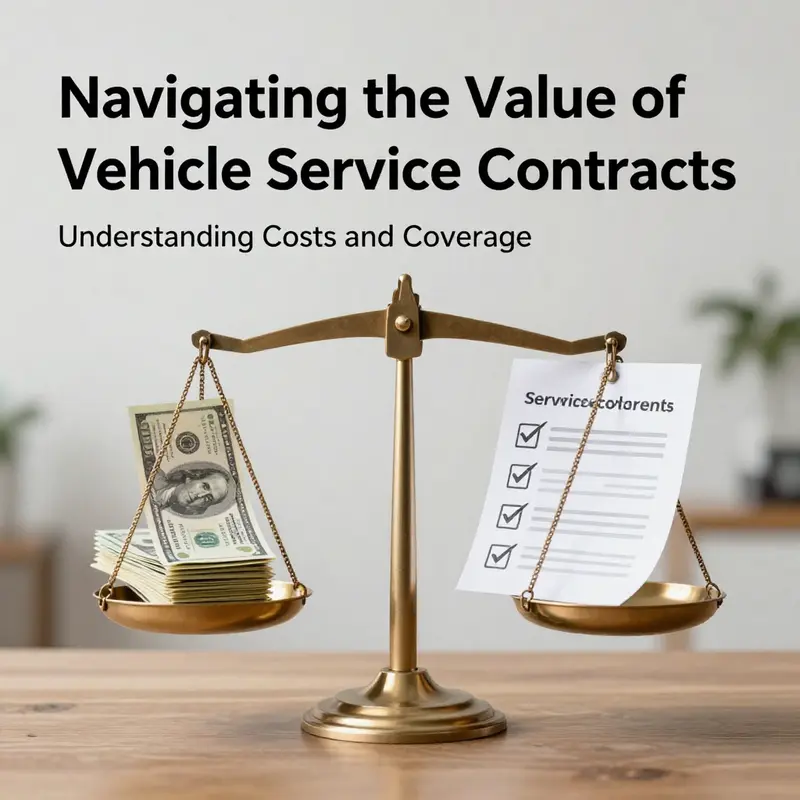
The financial appeal of vehicle service contracts often rides on a single idea: predictability. If you’ve watched repair bills climb as cars age, the allure of a fixed premium, a defined deductible, and a cap on out-of-pocket costs can feel like a shield against the unexpected. Yet to judge whether a service contract is worth the money, you must look beyond the headline price and into how coverage lines up with your driving life, your vehicle’s history, and the likely repair landscape of your chosen model. This chapter untangles the money side of extended warranties, not as a sales pitch but as a practical, numbers-driven discussion that mirrors real ownership. In doing so, it connects with the broader question of whether such contracts fit when you’re weighing the cost against the risk, the timing against your plans, and the peace of mind against the possibility that coverage never pays out and you’re left with a sunk expense.
First, consider the scale of the price. Across the market, a multi-year vehicle service contract tends to land in a broad range, roughly between $1,500 and $3,500. That spread captures a spectrum of coverage choices—from plans that center on the engine and transmission to those that promise broader protection for drivetrain, electronics, and other major components. The exact number you’ll see is not a random artifact but the result of a few practical variables: the make and model of the car, its age and mileage at the time you purchase, the length of the term, the deductible you choose, and the total payout limits embedded in the contract. Luxury brands, newer luxury models, or vehicles with complexity-heavy powertrains tend to push premiums higher, while older, more basic configurations may sit toward the lower end. It’s a reminder that the price is not a single universal figure but a mirror of risk assigned by the insurer or provider.
The coverage narrative also matters as you size up value. Most contracts promise protection for major powertrain areas—the engine, the transmission, and the drivetrain—with the intent of shielding you from the kind of catastrophic repair bills that can derail a budget. But since the line between coverage and cost is shaded by exclusions and limitations, the math changes quickly once you read the fine print. Routine maintenance items—things like brake pads, tires, or windshield wiper blades—are usually outside the coverage envelope. Worn components tied to normal use are frequently carved out, as are repairs arising from neglect or insufficient maintenance. The more comprehensive the contract, the more likely it is to include allowances for some wear items, but even then, many policies still exclude wear and tear or require proof of timely maintenance. This is not merely a paperwork concern; it is a practical one: if you are the driver who keeps meticulous maintenance records and your car has a history of needing major mechanical attention, a broad plan could be attractive. Conversely, if your vehicle has a proven track record for minimal repairs, a high-priced, highly comprehensive plan may offer little payoff.
From there, expectations must ride alongside the realities of the claims process. A contract that looks generous on paper can still disappoint if the claims experience hinges on burdensome requirements or opaque denial criteria. Some customers encounter delays or denials for technical reasons that feel hair-splitting, while others encounter providers that seem to vanish when a claim is most needed. This risk is not theoretical: the ecosystem around extended warranties has, at times, been marred by aggressive sales tactics, firms with complex or inconsistent administration, and providers that dissolve after a large claim, leaving customers with what looks like coverage in name only. The Federal Trade Commission has highlighted these scams and harmful practices, underscoring why diligence before purchase is essential. In short, a contract can deliver real relief if it pays out when you need it and the provider remains solvent and responsive; it can feel like a trap if the paperwork becomes a barrier to reimbursement and the promise evaporates when a claim arises.
A crucial financial lens is the concept of overlap with the factory warranty. If you buy an extended contract while your vehicle still enjoys manufacturer coverage, you may be paying for protection you already have in place. The practical question becomes whether you anticipate costs that would not be covered by the factory warranty or whether the contract adds value in areas that the factory plan excludes or limits. If you expect to keep the car long enough that the factory warranty ends but you do not anticipate frequent repairs, the contract’s value hinges on your ability to predict the likelihood of later failures and the severity of those failures. For buyers who intend to trade in or sell the car before the warranty window closes, the math shifts again: resale value might not meaningfully reflect contract investments, and the buyer could be saddled with an inherited contract that does not fit their plans. These timing questions are not merely theoretical; they shape the real-world decision about whether the upfront expenditure earns its keep across the years of ownership.
To judge the dollars-and-cents logic, consider a simple framework. If you own a vehicle with a known propensity for expensive repairs—whether due to a history of costly engine or electronic-systems issues, or if you are buying a model with a reputation for challenging maintenance—the odds of needing a covered repair within the contract period rise. In such cases, the contract can yield meaningful savings, especially if it includes a deductible you are comfortable absorbing and a payout limit that adequately covers the repairs you fear most. On the other hand, if your car has demonstrated reliability, and you regularly maintain it, you may find that the contract protects you against events that are unlikely to occur, thereby turning the insurance-style purchase into a disproportionate cost. The decision, then, is not simply the sticker price; it’s the probability-weighted value of protection that aligns with your driving life and risk tolerance.
A practical step in the analysis is to map out your annual risk. How often have you faced repairs that exceeded a couple of hundred dollars? What is your tolerance for an unexpected $1,000 or $2,000 repair bill? If you answer with a preference for budgeting certainty—having a fixed monthly or annual outlay with a known deductible—the contract begins to look more attractive, especially if you expect costs to climb as the mileage grows. Conversely, if you have a comfortable emergency fund and a vehicle that has shown itself to be robust, you might prefer to self-insure against repairs and allocate that portion of the budget toward other priorities or toward a longer-term maintenance fund that you can control. In either case, the decision should be anchored by a clear comparison: total upfront cost of the contract plus expected deductible, versus the realistic probability and size of future repairs without the contract plus the insurer’s payout limits. This is the heart of the financial implication: it is a personalized equation, not a universal price tag.
For those who want to dive deeper into decision factors and to see how other owners weigh the pros and cons, a practical resource is available through the broader automotive content ecosystem. A solid starting point is the reflective, reader-driven material you can find in the KMZ Vehicle Center blog, which offers nuanced perspectives on maintenance planning, costs, and coverage considerations. Reading broadly helps calibrate expectations and sharpen the questions you bring to quotes and providers. KMZ Vehicle Center blog
In evaluating quotes, seek transparency. Ask about deductibles, coverage limits, and the exact components included under the umbrella of “major systems.” Request a list of exclusions and a pre-approval of any repairs that might be excluded due to maintenance gaps. Confirm whether the provider requires pre-authorization for repairs and how disputes are resolved. Look for providers with straightforward terms and a proven history of honoring claims—evidence you can corroborate through consumer protection channels and reputable reviewing bodies. It is also wise to compare the contract against the current factory warranty status. If your car is still covered by the original manufacturer warranty, ask whether there is value in delaying the extended coverage until the factory term expires, or whether the provider offers a plan that complements the warranty rather than duplicating it. The goal is to find a balance between protection and price, a plan that doesn’t impose a greater financial burden than the risk it mitigates.
Finally, anchor your decision in a disciplined process. Gather quotes from multiple providers, read the full contract text—especially the exclusions—and verify the provider’s reputation with independent watchdogs and consumer protection agencies. If you decide to proceed, choose a reputable plan with clear, predictable terms that align with your ownership horizon. A well-chosen, affordable service contract from a trusted provider can be a smart financial safety net—yet it remains essential to ensure that the coverage actually fits your needs and isn’t merely a sales pitch. The question of worth, then, becomes a matter of fit: does the contract sit at the intersection of your risk tolerance, your vehicle’s repair profile, and your willingness to absorb or avoid future bill shocks? When it does, it can offer genuine protection against the financial disruption that a serious breakdown could cause—and that is, after all, the core purpose of these agreements.
For readers seeking broader pricing context beyond the mix of options and terms, a detailed breakdown is available at an external resource that explores the typical costs associated with vehicle service contracts. This can provide a supplementary frame for the numbers discussed here and help you assess the long-run economics of your decision. https://www.insurance.com/vehicle-service-contract-cost/
Decoding the Extended-Warranty Equation: Weighing Costs, Coverage, and Peace of Mind in Vehicle Service Contracts
The landscape around vehicle service contracts is shifting as ownership patterns evolve and the complexity of modern cars grows. Americans are holding onto their vehicles longer than ever, with ownership spans steadily lengthening as reliability improves in some segments and maintenance costs rise in others. Against this backdrop, extended protections that promise budget predictability and practical peace of mind appear more relevant to a broader slice of drivers. Yet relevance alone does not seal the deal. A thoughtful buyer weighs cost against potential benefits, the realities of maintenance, and the chances of ever needing repair. This chapter follows that line of thinking in a way that keeps the focus on everyday decision making rather than hype, recognizing that the value of a vehicle service contract hinges as much on personal circumstance as on the general market mood. When the goal is to keep a car beyond the factory warranty while avoiding a crippling repair bill, a service contract can offer a meaningful shield. When a car remains reliably inexpensive to maintain, or when the terms are opaque or restrictive, the contract starts to look like insurance that pays out only rarely. The key is to separate wishful thinking from the practical math of ongoing ownership.
In many cases the most persuasive argument for a service contract is longevity. If you expect to keep your car well past the expiration of the original warranty, the likelihood of major components—engine, transmission, or critical electronics—needing attention without notice increases. The cost of a single failure can run into the thousands, and a fixed premium plus deductible can deliver budget predictability in a way that is attractive for households facing growing repair costs elsewhere. The data points you to consider include your vehicle’s track record for expensive repairs, the specific model’s maintenance history, and your tolerance for uncertainty when the next big expense hits. Some models carry a reputation for expensive, hard-to-diagnose failures, especially as turbocharged engines and complex electronic systems age. In those cases, the value proposition of a well-structured plan becomes clearer: a steady outlay now can prevent a cascade of unplanned costs later, with the added convenience of a single point of accountability if a repair claim needs filing.
Yet the equation is not one-size-fits-all. The upfront price tag of a comprehensive plan—often cited in the range of a few thousand dollars—and the possibility that you may never file a claim are meaningful considerations. If you drive a model with a history of exceptional reliability and you adhere to a disciplined maintenance schedule, the odds tilt toward paying for maintenance out of pocket, especially if the contract’s coverage excludes wear items like tires and brakes. The bottom line is anchored in risk exposure: if your risk of a significant failure is high and your budget is better served by predictable payments, the contract can be worth it. If your risk is comparatively low or a competing protection plan already covers the key exposures, the incremental value declines.
The story becomes more nuanced when you assess what a contract actually covers. Wear and tear, routine maintenance, and accidents are frequently outside the scope of protection, and many contracts exclude components that fail due to improper maintenance or aftermarket modifications. Even with a broad menu of covered items, exclusions are common, and precise maintenance records can become a gatekeeper to claims. The possibility of gaps is not merely a theoretical worry; it has real consequences for how you experience ownership. If a repair is technically covered but the provider imposes tight prerequisites—such as mandatory use of specific service networks, or strict definitions of “normal wear”—the practical value of the policy can erode quickly. And then there is the claims experience itself. A contract might promise convenience or rapid service, but some third-party providers can introduce delays, bureaucratic hurdles, or denials based on narrow technicalities. The risk is not merely financial; it is relational—whether you trust the process to actually return your vehicle to peak condition without dragging on for weeks.
The FTC has highlighted troubling patterns in this space, including aggressive sales tactics and situations where providers disappear when claims arise. Those warnings are not mere anecdotes; they reflect a clear risk in the market. A careful shopper should approach a contract with a healthy dose of skepticism, verify the provider’s financial stability, and read the terms with attention to the fine print. A reputable provider matters as much as the coverage itself, because a strong protection plan is only as good as the company standing behind it when a claim is filed. In this sense, the decision to buy should be guided not only by the coverage scope but by the reliability of the company offering it. The bottom line then becomes a balance of the likelihood of a meaningful claim, the transparency of the contract, and the credibility of the provider. If those factors align with your circumstances, the value proposition strengthens significantly.
Beyond personal risk and contract clarity, market dynamics are reshaping how these products are presented and perceived. There is a growing consumer demand for extended coverage, driven in part by higher repair costs and a broader awareness that a longer ownership horizon is now common. As dealerships and independent providers respond, the selling approach is becoming more proactive: addressing common objections up front, clarifying what is and isn’t covered, and illustrating how a plan can align with a long-term ownership strategy rather than merely serving as a sales impulse. Educating customers about the long-term financial protection available through VSCs is essential. Consumers often overestimate the scope of factory warranty and underestimate the cumulative effect of maintenance costs over five to seven years. A well-constructed explanation can highlight how a plan extends protection beyond the initial warranty, what the fixed premium buys in terms of predictability, and how added benefits such as roadside assistance or rental reimbursement fit into the overall ownership experience.
A critical part of this education involves tailoring plans to individual needs. Different drivers have different risk profiles: a daily commuter racking up miles, a family vehicle subject to varied road conditions, or a shop-accustomed owner who treats the car as a tool rather than a luxury. Data-driven insights are increasingly used by dealers to tailor recommendations. By analyzing customer behavior, maintenance history, and local cost-of-repair data, sales teams can propose coverage that matches the most likely failure points and the user’s tolerance for risk. The end result is a sense of partnership rather than pressure—a shift from selling a policy to shaping a protection plan that complements a customer’s approach to ownership. In this context, the VSC becomes less a single product and more a configurable element of the ownership experience, integrated with maintenance scheduling and budgeting tools. The value proposition grows when plans are aligned with the vehicle’s technology trajectory, including software-dependent systems and evolving EV architectures, which increasingly demand ongoing updates and diagnostics that can be costly without a structured protection framework.
To support this approach, dealerships and other providers can benefit from a disciplined, data-informed process. Start with transparent quotes that show the true cost of the plan, the deductible, and the covered components. Clearly delineate exclusions and maintenance requirements, and provide concrete examples of typical claims and timelines. This clarity reduces friction in the decision-making process and reinforces trust. A thoughtful strategy also recognizes that a well-designed plan is not a substitute for good maintenance; it complements preventive care by offering a safety net for substantial, unexpected failures that occur despite careful upkeep. For readers seeking a practical, consumer-oriented resource on how to navigate these choices, the KMZ Vehicle Center blog offers comprehensive guidance and a balanced perspective on maintenance, ownership costs, and protective options. KMZ Vehicle Center blog
In the end, the question of whether a vehicle service contract is worth the money hinges on fit. If you intend to keep a car beyond the factory warranty, have a model with a history of expensive repairs, and choose a reputable provider with transparent terms, a well-chosen plan can be a prudent safeguard. If your vehicle has demonstrated strong reliability, your maintenance routine is disciplined, and the potential for major failures feels limited, the contract may be expensive insurance with uncertain payoff. The discussion should not end with a generic yes or no. It should end with a clear, personalized assessment: what is the real risk of a major failure, what is the true cost of that risk without protection, and how does a plan alter the balance of those factors over your intended ownership horizon? The thoughtful consumer will compare quotes, confirm coverage boundaries, verify reputations through independent channels, and weigh the contract against other protections already in place from standard warranties or maintenance plans.
For readers seeking a broader macro view of how market forces are reshaping the VSC landscape, the evolving mix of technology, supply chain dynamics, and consumer expectations is not incidental. It is shaping what protection looks like in 2026 and beyond, including the increased relevance of software-driven maintenance and the heightened importance of data-driven recommendations. This broader context helps to keep the decision grounded in realism: extended protection is a financial tool, not a magic shield. Used thoughtfully, it can support smoother ownership, predictable costs, and fewer later surprises. Used uncritically, it becomes a lingering expense that erodes value. The best practice remains the same: know your vehicle, know your risk, know the terms, and know the provider. When those elements align, a vehicle service contract can be a meaningful part of a disciplined, long-term approach to ownership. For a deeper understanding of how current and future automotive market trends are shaping the VSC landscape, refer to broader industry analysis and stay attuned to shifts in technology, supply chains, and consumer behavior: 2026 Automotive Market Trends: Navigating Volatility and Innovation.
Guarding Your Wallet: How to Spot and Sidestep Scams in Vehicle Service Contracts
Navigating the world of vehicle service contracts requires a careful blend of skepticism and practical due diligence. These products promise protection against costly repairs once the factory warranty expires, but the landscape is crowded with tactics that can mislead even careful shoppers. The core idea behind consumer protection in this space is simple: understand what you’re buying, verify who you’re buying from, and insist on clear, transparent terms before money changes hands. When you approach a potential extended warranty with that mindset, you reduce the chances of ending up with a contract that looks good in the moment but leaves you dealing with ambiguity, delays, or denied claims when you need help most. This is especially important given how many people are keeping cars longer and facing the prospect of repairs beyond the original warranty window. In that context, a well-chosen contract can provide real value; in others, it can become an overpriced pocket of risk masquerading as protection.
The most common traps are straightforward, yet surprisingly effective at closing a sale. Aggressive sales tactics at the dealership surface as soon as a customer sits down to sign, often accompanied by a hard deadline that pressures you to commit before you’ve had time to read the small print. The precious seconds spent on the showroom floor can turn into years of obligations if the contract’s coverage is misrepresented or if the real benefits are buried in pages of technical jargon. It’s not unusual for manufacturers or third-party providers to emphasize the more glamorous promises—like full “comprehensive coverage” or “lifetime protection”—while quietly carving out large exclusions that render those abstract terms meaningless in practice. A sharp line between what is covered and what is not can often be found in the pages labeled as warranties, exclusions, and maintenance requirements, but many buyers only skim those sections in a rush to close the deal. The result is a policy that feels reassuring but delivers far less when a claim actually arises.
Another familiar ruse is vague language. Promises about coverage that sounds all-encompassing—“comprehensive,” “protects everything,” or even “lifetime guarantees”—are frequently paired with conditions that are almost never satisfied in the real world. A so-called lifetime plan might apply only to the original owner or be limited by time, mileage, or the specific components included in the contract. In many cases, important protections are written behind fine print that requires meticulous maintenance records, specific service providers, or adherence to a rigid schedule. The consumer who signs quickly, without clarifying every term, may discover later that a routine failure is classified as wear and tear or excluded due to a missed annual inspection. It is this ambiguity that turns a comforting marketing narrative into a frustrating experience when a repair bill looms.
Fraudulent operators poison the market as well. Some outfits offer faux service contracts through online platforms or cold calls, presenting a cheap, simple option that sounds almost too good to be true. The price is attractively low because the provider has little intention of delivering real coverage; when a claim is filed, the company vanishes or denies payment on a loophole that wasn’t explained during the sale. A wise consumer treats any offer that arrives unsolicited with suspicion and takes immediate steps to verify legitimacy before parting with money. Checking registration with state authorities, consulting the Better Business Bureau, or confirming membership in recognized trade associations can unmask these frauds. A legitimate offer will not mind transparent questions, will provide written proof of coverage, and will welcome a reasonable review of the contract’s terms.
The protective path starts even before you set foot in a dealership or click to buy online. Take time to compare contracts from multiple providers and to read the entire document with a careful eye on exclusions, caps, deductibles, and service limitations. One practical approach is to extract the contract’s core offerings—engine, transmission, major electronics, cooling systems—and cross-check them against your vehicle’s maintenance schedule and current mechanical needs. If the policy excludes a component that you already know is a frequent failure point for your model, the contract’s value evaporates. It is equally important to assess the claims process itself. Some providers boast about rapid reimbursements, but when a claim is filed, the evaluation can drag on because of technicalities, required pre-approvals, or a labyrinth of required documentation. A smooth claims experience is rarely accidental; it reflects how well the provider communicates, how predictable the criteria for approval are, and how resistant the company is to denying legitimate repairs on spurious grounds.
From a consumer-protection perspective, one of the strongest safeguards is transparency. If you must ask for clarification, and you receive evasive answers or partial responses, you should walk away. Don’t rely on the seller’s assurances about “industry standards.” Insist on plain-language explanations of what is covered, what is excluded, how maintenance must be documented, and what steps to take if a part fails. A reputable provider will support your right to request and receive written explanations, policy terms, and schedule-of-benefits. The more you can anchor your decision in these documents, the less you’ll rely on the salesperson’s memory, which is often the vehicle for misstatements.
To anchor your decision in practical protections, consider how your current risk profile aligns with the contract’s structure. If your vehicle is one with a history of expensive repairs or if you anticipate higher mileage than average in the first few years after the factory warranty lapses, a contract that covers major components can be a meaningful hedge against unpredictable repair costs. On the other hand, if your car is known for reliable performance and your own maintenance habits are exemplary, the contract may not be worth the upfront and ongoing costs. In this calculus, the price tag matters, but so does the probability of a claim and the size of the claim relative to the premium you pay. A high annual premium with a small deductible might seem appealing, but if you seldom file a claim, that premium becomes a financial sinkhole rather than a shield.
A crucial part of staying protected is knowing your rights and the channels available if you suspect a scam or feel the need to challenge a contract’s terms. The Federal Trade Commission’s guidance on vehicle service contracts emphasizes that consumers should verify the provider’s legitimacy, check for licensing where applicable, and report scams to authorities when encountered. The FTC also underscores the importance of comparing terms and avoiding high-pressure sales tactics. This guidance is a practical reminder that the decision to buy should be deliberate, not impulsive, and that red flags—such as promises that sound too good to be true, or pressure to sign immediately—should trigger a pause and a thorough review. For readers seeking an accessible overview of these protections, the FTC’s consumer information page is a reliable starting point.
To deepen your understanding, you may wish to explore additional perspectives and practical insights from a trusted automotive information source. For example, the KMZ Vehicle Center blog offers thoughtful coverage on vehicle maintenance, reliability, and how to navigate common service decisions with your finances in mind. Reading a broad range of experiences can help you calibrate expectations about what is reasonable in a service contract and what isn’t, especially when you translate those insights to your own vehicle and budget. You can visit the blog to gather practical, real-world considerations on maintenance intervals, cost management, and the long-term financial implications of keeping a vehicle beyond its factory warranty. KMZ Vehicle Center blog.
Ultimately, the question of whether a vehicle service contract is worth the money does not have a single yes-or-no answer. It depends on your driving patterns, the vehicle’s reliability history, and how much risk you are willing to assume for potential future repair costs. But regardless of where you land on that spectrum, a disciplined, informed approach can dramatically tilt the odds in your favor: buy only from reputable providers, insist on written clarity, compare multiple offers, verify the provider’s legitimacy, and understand the claims process in full before you commit. If you follow these steps, you will be far less vulnerable to scams and far more likely to secure a contract that genuinely adds stability to your car ownership costs rather than an additional source of financial anxiety. For those who seek a clear, reliable path to protection without surrendering control of the decision, these practices are not merely advisable—they are essential. And if you ever feel uncertain, returning to reputable consumer guidance and independent information can help reaffirm your choices and keep you firmly in the driver’s seat when negotiating coverage for your vehicle.
External resource for further guidance: https://www.consumer.ftc.gov/articles/0198-vehicle-service-contracts
Final thoughts
In summary, vehicle service contracts hold potential value depending on your individual circumstances, vehicle history, and future plans. Awareness of when these contracts are beneficial, the intricacies of their costs and coverage, and the necessity to protect oneself from scams enhances your experience and finances. It is crucial to stay informed and make decisions based on careful consideration of your unique needs, ensuring that your investment in vehicle protection aligns with your driving habits and future plans.