
When purchasing a used vehicle, understanding its service and maintenance history is crucial for ensuring its longevity and reliability. A well-documented vehicle history provides insights into previous ownership and maintenance that can influence your buying decision. This guide will explore effective methods of checking vehicle service history, tailored to the needs of local private car owners, used car buyers and sellers, and small business fleet operators. We will delve into third-party platforms, insights from authorized dealerships, and the invaluable records provided by insurance companies to ensure you are well-informed before making a purchase.
Reading the Car’s Past: How a Third-Party History Platform Uncovers Maintenance, Mileage, and More
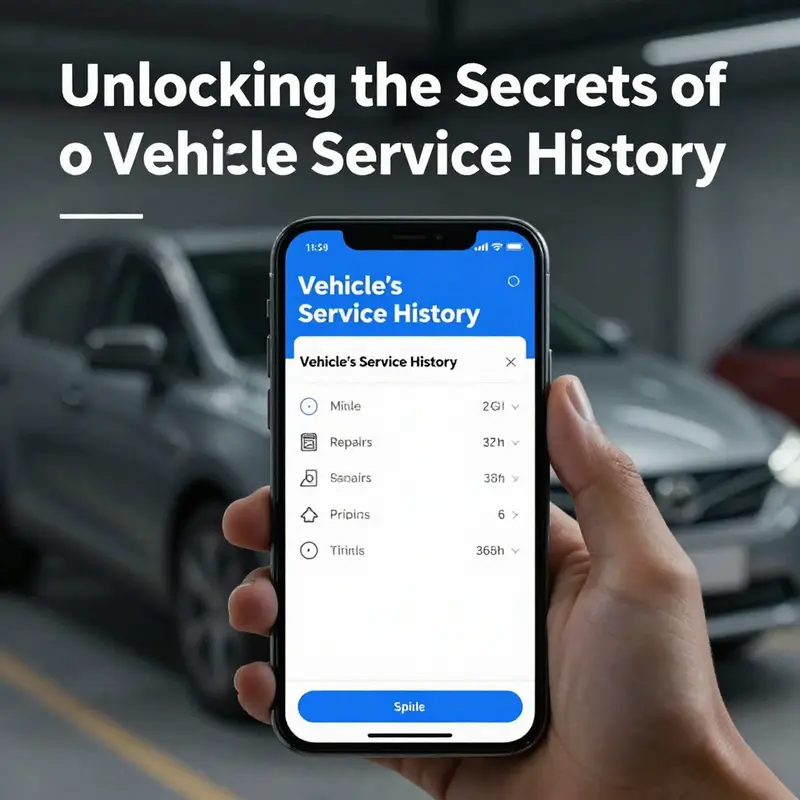
When you are weighing a used car, a glossy exterior and a clean title can mask a history worth knowing. The truth about a vehicle’s past often hides in plain sight—in service orders, mileage logs, and repair notes that tell a story about how the car was cared for and what challenges it has faced. A third-party vehicle history platform is designed to pull that story together. It aggregates records from multiple sources—official service networks, independent repair shops, and insurers—into one accessible report. For a buyer navigating a crowded market, this type of platform can be a compass, pointing out patterns that aren’t visible from photos or a quick roadside drive. It is also a practical tool for owners who want to confirm their car’s history or safeguard against hidden issues when reselling. The value lies not just in what it shows, but in how quickly it helps you connect the dots between miles driven, maintenance performed, and the vehicle’s overall condition today.
To begin, the essential step is choosing a reputable platform. In markets where such services are common, practitioners emphasize platforms that have established data-sharing relationships with a broad network of sources. The appeal of the third-party route is its speed and breadth: instead of waiting on a single dealership’s records or chasing down individual shops, you receive a consolidated view that can reveal gaps, inconsistencies, or red flags across multiple data streams. Once you decide on a platform, the workflow tends to follow a familiar rhythm, whether you’re a cautious private buyer or an analyst screening several vehicles in a short period. The path from curiosity to a confident evaluation rests on a simple sequence of actions that centers around one crucial piece of information—the VIN.
The process commonly begins with access. You log into the platform either via a mobile interface or a web portal. The design philosophy behind these services is to be user-friendly rather than intimidating; you should be able to start a search with just a few taps or keystrokes. Inside, you’ll locate a service function explicitly labeled something like Vehicle Maintenance and Repair Record Query or a similarly intuitive term. The goal is clear: obtain a history that spans maintenance events, mileage milestones, and sometimes ancillary data such as insurance claims. The platform prompts you to provide vehicle identifiers, and this is where the practical details come in. The easiest option is to upload a photo of the vehicle’s registration certificate or the driving license, documents that contain the VIN in a readable format. If you would rather, you can manually enter the VIN. Either path will trigger the platform to begin gathering data from its network.
What follows is a short interval during which the platform processes the request. The speed depends on the breadth of data available and the platform’s connections. In most cases, you will receive a structured report within minutes. The resulting document—often presented as an organized, readable timeline—offers several core components. First, there is a chronological record of maintenance and repair events. Each entry typically lists the date of service, the mileage at the time, and a succinct description of the work performed. It may name specific tasks like oil changes, brake service, or a belt replacement, and it can enumerate parts that were replaced or serviced. This level of detail is particularly valuable because it allows you to see whether the vehicle received preventive maintenance at appropriate intervals or if it underwent irregular or unexpected work that could signal prior neglect or unusual wear.
Beyond the routine maintenance items, many platforms integrate additional insights that extend the value of the report. Some services include a flag for mileage verification, indicating whether the odometer reading aligns with the documented service milestones. This is a practical check against odometer tampering, which, when detected, can drastically alter the perceived condition of a car. Other platforms go further by offering accident history notes and insurance-related records, which help reveal structural or cosmetic damage that may not be obvious during a casual inspection. In aggregate, these elements provide a broader view of a car’s life cycle—from the early years of routine servicing to the moments that tested its resilience.
The reliability of the information is built on the platform’s data network. The more sources the platform aggregates from, the more comprehensive the history tends to be. In some markets, this can include data from four main kinds of sources: OEM or franchise-dealer service centers, independent repair shops, insurance claim records, and sometimes government or regulatory data sets. The practical upshot is that you gain visibility into patterns that suggest a car was consistently looked after, or, conversely, one that shows long stretches of inactivity punctuated by unexpected repairs. A well-constructed report can also illuminate patterns of maintenance that align with the vehicle’s age and mileage, helping you assess whether the car’s upkeep makes sense or if something seems out of phase.
Interpreting a third-party report requires a careful eye and a patient mind. The objective is not to treat the document as the final verdict on a car, but rather as a powerful piece of the overall assessment puzzle. Start by scanning for consistency: do the maintenance dates cluster around regular intervals, such as every six or twelve months or every few thousand miles, depending on the car’s service plan? Look at the types of services performed. Routine oil changes, brake fluid flushes, and coolant service are predictable indicators of normal maintenance, while repeated late or skipped services can be red flags. Check the mileage associated with each service entry. A steady mileage progression that matches the vehicle’s odometer readings supports credibility; abrupt jumps or dips might warrant a closer check. If the report lists major components replaced—timing belts, water pumps, or transmission work—note the age of the vehicle and whether the timing aligns with commonly recommended maintenance windows. While major repairs aren’t necessarily disqualifying, they do shift the risk profile and usually require a deeper inspection to understand the long-term impact on reliability.
If the platform you’re using also includes incident data, you’ll want to interpret that in the same careful way. An accident or insurance claim entry can vary in significance depending on the type and severity of the damage. Minor fender-bender records may not impact long-term reliability, but a history of significant structural damage or repeated claims could signal underlying issues that should be explored with a professional mechanic. The presence of a repair history tied to a major incident can also influence a buyer’s negotiation strategy. When these findings appear, you are not simply reacting to a single item; you’re recalibrating your assessment of the car’s overall risk profile.
The convenience of a third-party history platform is matched by the responsibility it places on you as a reader of the report. The document is a snapshot in time, not a standalone guarantee of condition. The data it contains should be cross-validated with other sources. In the context of a broader check, you would still want to confirm details with the vehicle’s owner in a transparent conversation, request the original service records if available, and arrange a professional pre-purchase inspection. The combination of data-driven insight and hands-on verification is the most robust path to a well-informed decision. A useful starting point for understanding how to interpret reports and what to focus on is the kmzvehiclecenter blog, which explains the nuances of reading maintenance histories and spotting potential red flags. kmzvehiclecenter blog.
Yet the value of a third-party platform is not limited to the data itself. It also changes the conversation you have with the seller. A clear, well-documented history can shift a negotiation from an emotional bargain to a fact-based assessment. If the report reveals that the car has not received timely maintenance, or that there were sudden repairs on critical systems, you can ask pointed questions about maintenance gaps and the current state of those systems. Asking for clarification—whether the owner can account for a long service gap or provide receipts for recent work—helps you gauge honesty and transparency in the transaction. In some cases, the presence of a solid maintenance record can justify a premium, especially when it aligns with the car’s age and overall condition. In other cases, it can justify a price reduction if it reveals a history of neglect or recurring problems. Either way, the report informs your negotiation strategy with concrete data rather than guesswork.
The practical workflow remains straightforward. After you obtain the report, you extract the highlights that matter most for your decision: the freshness of maintenance, the consistency of mileage progression, and the presence (or absence) of major repairs. You cross-check these findings against a planned inspection and a test drive. You look for a logical maintenance timeline: a car that received timely oil changes and tire rotations and then shows a spike in brake work or suspension service after a certain mileage threshold may reflect normal wear, while a sudden cluster of major replacements at a relatively low mileage could indicate an unusual operating history or prior abuse. The goal is to synthesize the data into a coherent narrative about how the car lived its life, which in turn informs how you might care for it going forward or decide not to proceed.
A caveat remains essential. No single report is foolproof. Data gaps exist when a service is performed at a small, local shop that does not feed into the platform’s network, or when an insurance claim is settled privately and not reported to the other data sources. Some vehicles may have service entries that look complete on the surface but were never logged in a system that the platform can access. That is why these platforms work best when used as a first-pass tool in combination with additional checks. If a report triggers concerns, you should consider requesting official dealership records for corroboration or arranging a professional inspection to verify the conditions of critical components. The interplay between data-driven insight and hands-on verification helps you navigate the uncertainties inherent in used-car shopping.
From a practical standpoint, you can leverage the report in several proactive ways. First, you can verify maintenance patterns against the vehicle’s age and typical service intervals for that model. If you notice that a car of a certain age shows unusually sparse maintenance, you can ask the seller to explain the gaps and, if necessary, adjust your offer to reflect higher risk. Second, you can use the report to guide your inspection checklist. A car that has recent brake work paired with older tires may indicate the brake system has been prioritized while other wear items were neglected; a mechanic’s eye will probe those trade-offs to assess overall safety. Third, you can compare multiple vehicles with similar price points but different maintenance footprints. A vehicle with a clean maintenance record may offer more reliable long-term ownership than one with a spotty history, even if the upfront price is slightly higher. Finally, you can build a narrative for your negotiation that references specific entries in the report. If the oil change frequency was consistent, you can commend the seller for proper care; if not, you can request a concession or a plan to bring the car up to standard before purchase.
As you move through these steps, keep in mind the broader context of the article and the surrounding chapters. The third-party history approach complements direct records from the seller and the official dealership networks. By using a platform that aggregates diverse sources, you gain a more holistic view of the car’s past—without relying on a single repository of truth. In practice, this means you start your diligence with a broad scan, then narrow your focus as you gather corroborating details from other sources. If you are curious to explore related discussions on maintenance philosophy and best-practice timing, you can turn to additional resources in our wider content library. The blog hub provides context and practical tips on topics like oil-change intervals, diesel maintenance, and owner-guided maintenance planning, which can deepen your understanding of the implications behind the maintenance entries you see in a third-party history report.
Remember that the overarching aim of using a third-party history platform is to illuminate the car’s past in a way that informs your future. It helps you avoid assuming that a clean exterior equals a clean history. It helps you recognize patterns that suggest consistent care or, conversely, neglect or mismanagement. It equips you to have an informed conversation with the seller and to approach the next steps with clarity and confidence. And it sets the stage for the next chapters, where we explore how to corroborate these findings with official records, or how to weigh the added confidence of a dealer-backed maintenance history against the risk profile of a private-sale purchase. In short, this method is not a replacement for due diligence but a powerful accelerant to a more thoughtful, data-informed decision.
External resource for further reading: https://www.nhtsa.gov
Trust Bound to the Brand: Verifying a Vehicle’s Service Footprint Directly Through Official Dealership Records

When you set out to verify a used car’s service history, you are not merely chasing a list of past repairs. You are tracing a vehicle’s life through the lens of its authorized service ecosystem. The most authoritative path involves reaching into the brand’s official service network, where the records are curated in a centralized database that ties together every maintenance event logged at authorized centers. This approach rests on the premise that the data, while not infinite, carries a high degree of accuracy and completeness for work performed within the manufacturer’s own network. To navigate this path effectively, you begin with a simple realization: dealership access is the gateway to the most trustworthy portion of a vehicle’s service history. The process is straightforward, though it requires preparation and a clear understanding of what the dealership can—and cannot—tell you about the vehicle you are considering.
Into the world of authorized service centers you step with the VIN in hand and an understanding of how the brand’s centralized records flow. The VIN, a unique identifier etched into the vehicle’s hardware long before its first ignition, sits at the heart of most inquiries. It is the key that unlocks a database designed to log every service event, every component replaced, and every routine maintenance task performed at an authorized location. The first step, then, is practical: locate the VIN with certainty. In many cars, it rests where the windscreen meets the dashboard on the driver’s side, visible from the outside through a small inspection window. It may also appear on the vehicle registration document itself. You want to avoid ambiguity here; a single incorrect character can lead to a misalignment in the records. Once you have the VIN, you approach the dealership not as a casual browser but as a deliberate seeker of a verified narrative about the car’s service history.
Visiting an authorized branch of the brand is more than a courtesy; it is a formal interval in your due diligence. You can go to any branch of the brand you are considering, since the dealership network is interconnected through a centralized manufacturer system. The expectation is that the staff will be familiar with the standardized procedures for retrieving service histories. When you arrive, you are greeted not by a sales pitch but by a service representative who understands the exact kind of data you need: a complete maintenance timeline, dates of service, mileage at the time of service, parts replaced, any labor notes, and a summary of major repairs. The information is not merely a list of timestamps; it is a curated record that, ideally, highlights the car’s health over time. The dealership’s system will pull this data from the manufacturer’s internal records, drawing on service receipts generated at authorized service centers, warranty work documented by the brand’s network, and the bulletin-driven maintenance reminders that corporate engineers pushed out to technicians.
To access the service history, the staff will ask for a few specific documents. The vehicle registration certificate, a form of government-issued identification, and the VIN are the baseline requirements. If you are not the registered owner, you may be asked for written authorization from the owner along with a copy of their ID. These safeguards are in place to protect privacy and ensure that the data is released only to the rightful party or someone with legitimate authorization. It is prudent to carry both the VIN and a copy of your own identification, and if you are buying through a private sale, a copy of the bill of sale or proof of ownership can help smooth the process. With these materials, the service desk will submit a request to the manufacturer’s database. In some cases, the dealership might require a formal form, a written consent, or a short verification call to authenticate the request, particularly if you are not the registered owner. The time between submitting the request and receiving the full report can vary, but the most efficient branches often provide a preliminary summary within the same visit and deliver the complete documentation electronically shortly after.
The report you receive from the dealership is designed to be comprehensive. It typically includes all maintenance performed at authorized centers since the vehicle’s manufacture or the start of its record-keeping in the system. You will see service dates, the mileage recorded at each service, the parts that were replaced, and the labor performed. There are often notes on the type of service completed, such as routine oil changes, filter replacements, brake service, timing belt checks, and any software updates or recalls that were addressed in the service visit. The level of granularity matters. In many brands, the report will also specify the exact parts or parts numbers used, the technician’s notes explaining why a particular service was performed, and the recommended next service interval. This last point can be invaluable for assessing how closely the vehicle followed the manufacturer’s recommended maintenance schedule, and it can illuminate any deviations that might signal a longer service cycle or more intensive care needs.
One of the most important reasons this method is valued is its authoritative provenance. The data originate in the manufacturer’s own ecosystem, captured by technicians who use standardized diagnostic tools and workflows. When a dealer logs a service event, the entry becomes part of a chain that can be traced back to the original instruction, the particular model’s service schedule, and the parts catalog that was in effect at the time of service. Because the record is inseparable from the brand’s service network, it reduces the risk of missing critical information. It minimizes the chances that a patchwork of receipts from independent shops would present an incomplete picture. Yet this strength also brings a clear limitation. The official 4S or brand-authorized history typically includes only the work performed at authorized centers. If the car was serviced exclusively at independent garages, or if specialized repairs were carried out by non-network shops, those events may not appear in the dealership’s report. That is why the authoritative value of this route comes with the practical caveat: it offers a robust core history, but it should be supplemented with other sources to complete the picture.
As you explore the dealership report, you will cross-check the narratives you already have with the new data you receive. You might notice that the maintenance intervals align with the brand’s recommended schedule, which is a reassuring sign of disciplined care. Conversely, gaps in service entries can spark questions. A long period with no recorded maintenance, especially in a vehicle with significant mileage, could indicate that the car was not attended to as regularly as the manufacturer intends. Gaps deserve closer inspection: you want to determine whether the vehicle was used in a way that may have stressed certain systems without corresponding maintenance, or whether the records simply reflect a period when service occurred at non-dealer shops that did not report back to the manufacturer’s database. In such cases, you would want to seek corroborating evidence from other sources.
The dealership’s report will also highlight items that might require attention based on the distance logged between services. If, for example, a timing belt replacement or a brake service occurred at a particular mileage, the report can help you gauge if the next recommended maintenance window is approaching. This insight can inform your negotiation strategy and even your decision about whether to pursue the purchase. The ability to anticipate upcoming service needs, grounded in the brand’s own maintenance logic, can be a decisive factor in a buyer’s mind, especially when you are weighing risk against price. It is this sense of forward-looking clarity—rooted in the manufacturer’s framework—that makes the official dealership history so compelling. Yet as powerful as this data is, it remains essential to view it as one piece of a larger puzzle.
In practice, many buyers recognize the value of incorporating additional sources to build a fuller story. The dealership history can be cross-referenced with data from third-party vehicle history platforms, which aggregate information from multiple channels, including independent repair shops, insurance records, and sometimes public incident databases. These platforms can reveal patterns that a single-brand report might miss, such as a sequence of non-dealer repairs that aligns with a larger maintenance philosophy but occurred outside the manufacturer’s network. The most reliable approach often involves a layered verification strategy: start with the dealership’s official record for accuracy and depth, then supplement with third-party histories to capture activity beyond the authorized network. This layered approach, when combined with a thorough physical inspection, provides a well-rounded view of a car’s service history.
Physical inspection remains a critical complement to any paper trail. A report can tell you when a part was replaced, but it cannot always reveal the quality of workmanship or the condition of the component after installation. A trained eye can detect incongruities that documentation may not fully capture. For example, you might observe corrosion around a brake rotor or unusual wear patterns suggesting abnormal operation. These observations can raise questions about maintenance timing, driving conditions, or potential hidden issues that the history alone cannot fully explain. The interplay between documentary evidence and hands-on assessment is where a buyer’s confidence truly deepens. When you have a clear sense of both the recorded service history and the car’s current physical state, you are better positioned to judge whether the vehicle’s past care aligns with your expectations for reliability and longevity.
It is worth noting that many brands now offer online portals or mobile apps that give owners direct access to their own service histories. These portals can empower you as a prospective buyer because they offer a direct line to the vehicle’s ongoing care narrative. While not all brands provide the same level of access to non-owners, and even when available, the information displayed in these consumer-facing portals tends to mirror but not replace the dealership’s formal report. If you have the chance to view a portal login during the process, observe the kinds of data presented, how easy it is to download records, and whether the portal indicates upcoming maintenance around the current mileage. Even without access, knowing that such portals exist helps frame your expectations about how much of the history you might reliably obtain directly from the manufacturer.
For readers who want to expand their understanding beyond the dealer experience, the writing sometimes turns to practical, real-world resources. A helpful step is to consult the brand’s official documentation and support channels through the dealership network. In addition, many owners and prospective buyers find it useful to explore related maintenance guidance on reputable automotive information platforms. Where appropriate, you can visit a trusted automotive blog to gain context on what a complete maintenance history typically looks like and how to interpret common entries. For readers looking for ongoing maintenance considerations that extend beyond the exact vehicle in question, the KMZ Vehicle Center blog offers a broad range of practical tips and considerations. You can explore further insights at the KMZ Vehicle Center blog to better understand how routine care translates into long-term reliability. KMZ Vehicle Center blog
The chain of evidence you collect also benefits from strategy. When you request the manufacturer’s records, consider asking for a brief explanation of any items that appear unusual or unexpected. If you see repeated service events tied to a particular system that seem irregular or out of sequence, ask the dealership to clarify whether there were recalls, software updates, or field service campaigns associated with those entries. If the dealership cannot resolve your questions, you have a right to escalate the matter through the brand’s customer service channels or to seek a second opinion from another authorized branch. In many markets, the brand’s network is structured to support such inquiries, acknowledging that the purchase of a used car is a major decision that benefits from transparent information flow.
When you take this approach seriously, you may find that the official dealership route not only provides a solid historical backbone but also serves as a framework for your broader due diligence. It anchors your assessment in the manufacturer’s maintenance philosophy and the vehicle’s authenticated care history, while you round out the narrative with independent verification and a hands-on appraisal. The result is a well-supported judgment about whether the car you are considering has enjoyed consistent, quality maintenance, and whether its current condition aligns with its documented past. It is a method that respects the integrity of the brand’s service ecosystem, acknowledges the limitations of any single source, and ultimately supports a more confident, informed purchase decision.
In closing, the process is both practical and methodical. You begin with the VIN, you approach an authorized dealership, you present the necessary documentation, and you receive a detailed report that traces the car’s maintenance journey within the brand’s official network. You interpret the data with a critical eye, recognizing both its strengths and its gaps. You supplement with third-party histories where appropriate, and you perform a thorough physical inspection to verify the narrative with tangible evidence. This integrated approach—combining authoritative dealership records with broader data sources and careful hands-on evaluation—offers the most reliable path to confirming a vehicle’s service history before you commit to a purchase. For readers seeking additional context on vehicle maintenance considerations, the KMZ Vehicle Center blog provides a broader perspective on how routine upkeep translates into reliability and longevity; you can explore related topics there to deepen your understanding of service history within the broader maintenance landscape.
External resource: An example of an official, manufacturer-level service history portal can be consulted here to understand the kind of data that brands typically provide to owners and authorized representatives: https://www.bmw.com/en/owners/services/service-history.html
Reading Insurance History for Used Cars: A Practical Guide
When evaluating a used car, insurance claims history can complement service records and pre-purchase inspections. It can reveal accidents, major repairs, and recurring issues that may not be documented elsewhere.\n\nAccess to this information is governed by privacy laws and requires proper authorization from the policyholder. If you are the buyer, obtain written consent or have the owner authorize you to view the records. Insurers may provide a formal claim history report, a summary, or download-ready documents.\n\nLook for patterns in frequency, severity, and end status. Repeated large claims or repeated repairs in the same system can signal underlying problems. A long gap without claims can be positive for low usage, but in some cases may hide neglected maintenance.\n\nCross-check insurer data with maintenance logs, the seller’s documentation, and a professional inspection. If discrepancies arise, request clarification or walk away. Use the insurer data as part of a broader due-diligence mosaic, not as a standalone verdict.\n\nFinally, document the sources you obtained and keep copies for future reference.
Final thoughts
Understanding how to check a vehicle’s service history is an essential aspect of making informed decisions when buying or selling used cars. By utilizing third-party platforms, accessing official dealership records, and reviewing insurance company documentation, you can compile a comprehensive view of a vehicle’s past. This information not only aids in avoiding potential pitfalls but also helps establish trust between buyers and sellers, ultimately contributing to a smoother transaction. Implement these strategies to ensure you invest in a reliable vehicle that meets your needs for safety and performance.