
Understanding your vehicle’s service history is vital for any car owner, used car buyer, or fleet operator. A complete and transparent record not only fortifies the longevity and performance of your vehicle but also reassures you of a wise investment. This guide will explore five robust approaches to access your vehicle’s service history, empowering you to make informed decisions whether you’re managing your personal car, purchasing a pre-owned vehicle, or overseeing a fleet. By leveraging third-party platforms, reaching out to authorized dealers, utilizing manufacturer apps, reviewing original service documents, and employing strategic tactics for buying used cars, you will navigate the complexities of vehicle maintenance with confidence.
Tracing the Road Behind Your Car: Checking Your Vehicle’s Service History via a Third-Party Platform
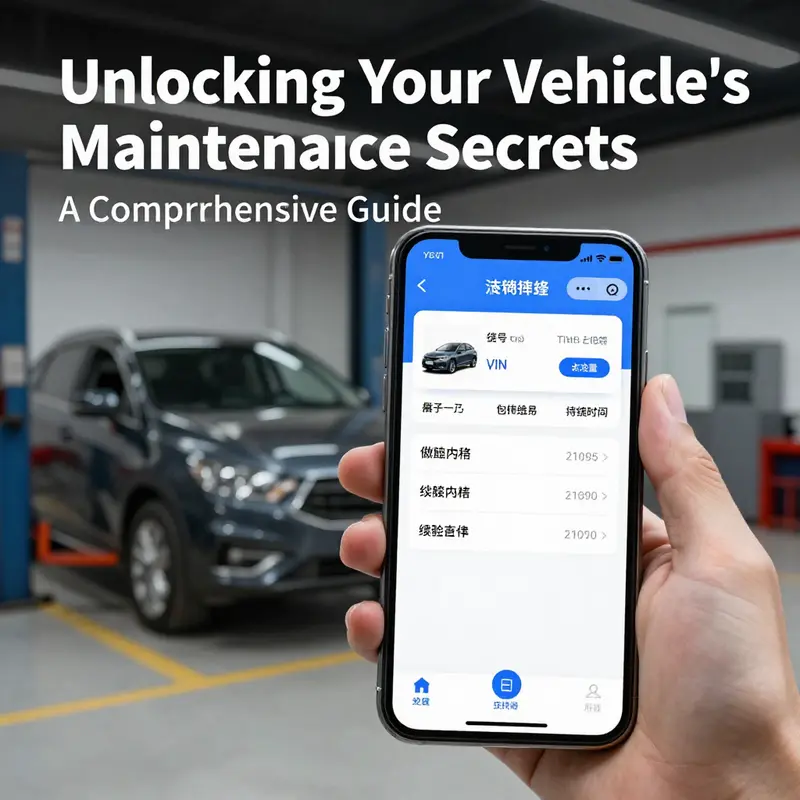
Unraveling a vehicle’s history begins with a clear understanding of why a service timeline matters. The service history is not just a ledger of visits; it is a map of wear and maintenance across miles, a record of parts replaced, and a trusted signal about how the car has been cared for. A complete history can reveal patterns, such as frequent minor repairs that hint at underlying issues, or a stray occurrence like a single high mileage service that may correlate with previous accident repairs. For someone buying a used car, this history becomes the most concrete anchor in the decision-making process; for current owners, it is a planning tool that helps schedule maintenance before issues become costly.
The fastest and most convenient route to a broad picture is through a third party vehicle history platform. These services aggregate data from multiple sources, including authorized dealerships and large repair networks, often spanning a wide geographic area. The result is a unified report you can access on a smartphone or a computer. In practice, this means opening your preferred app on your phone, or a web portal, and selecting the vehicle history check feature. In China many users perform this through a WeChat mini program or official account. The process is straightforward: you start the lookup by entering the vehicles VIN, the 17-digit identifier that uniquely distinguishes every car. If you do not have the VIN handy, it is usually printed on the registration certificate, and a smaller sticker on the lower left corner of the windshield will also display it. The platform may also accept a clear photo of the registration certificate if you prefer to upload instead of typing, but accuracy in the VIN is essential because an incorrect number will generate an unusable report.
After you submit the request, the platform processes the data and returns a report. A typical vehicle history report includes detailed maintenance and repair items with dates, accompanying mileage, and a description of the services performed. It often lists replaced parts, part numbers when available, and notes about any accidents or insurance claims that have been filed. A useful report also shows the vehicle status, such as whether it is under mortgage, involved in a legal seizure, or flagged for odometer concerns. Odometer verification is a particularly important feature, as it helps you detect potential tampering and gauge whether the indicated wear aligns with the recorded mileage. The strength of third party history platforms lies in their breadth. They pull data from many different shops and repair centers beyond a single dealer, offering a more comprehensive snapshot than a single brand’s database could provide. Yet this breadth is a double-edged sword: data depend on participation. If a vehicle has spent long periods with independent garages that do not feed data into the platform, those records may be sparse or missing entirely. The report is a guide, not a guaranteed history, and it should be read alongside other sources of information.
The method also has practical limitations tied to local conditions. The speed and depth of the report can vary by region, the platform’s data partnerships, and even the vehicle’s age. Some platforms may charge a fee for full access to the complete history, while basic glimpses or limited detail might be offered for free. Given these variables, use the third party history as a starting point. If the results reveal specific events that require deeper verification, you can pursue additional routes for official documentation. For example, if the history shows service at a particular brand network, you can contact that brand’s authorized 4S dealer directly to confirm the records stored in their internal Dealer Management System. Those records tend to be the most authoritative, often listing exact part numbers, labor times, and the technician who performed the work. The catch is that this method reveals only the records from that brand’s network, so it may exclude independent garages. If your car has seen a lot of independent maintenance, you might not see those details in an official factory file—but you will still gain a reliable baseline from the third party report.
In many cases a manufacturer app or official website can complement the history check. Many car brands offer owner portals that link directly to the maker’s database. After creating an account and registering the vehicle, you can view a service timeline, recall notices, and upcoming maintenance recommendations. This direct connection is highly reliable, and it often stays more up to date than third party aggregations. For buyers, the combination of a third party report plus access to the maker’s own timeline provides the clearest picture. And for sellers, having both sources helps demonstrate transparency and build trust with potential buyers. Beyond digital resources, there is value in physical documentation as well. If you are evaluating a used car, ask the seller for the original service book or maintenance manual, and request copies of repair invoices from the shops that performed work. The tangible records can be cross-checked against digital data and help locate any inconsistencies. The process of verification becomes more robust when you approach it from multiple angles rather than relying on a single source.
As you consider the various paths to obtain a complete service history, remember that the objective is not only to confirm past work but also to anticipate future needs. The history can reveal patterns suggesting time for belt replacements, brake service, or fluid refreshes before problems emerge. When you have the chance to read the data, you can map the last services to the current maintenance interval and plan ahead. For ongoing maintenance, it can be helpful to consult practical resources that address day-to-day care and routine checks. See the truck maintenance tips for first-time owners for a practical orientation to keeping a vehicle healthy during the early years of ownership. truck maintenance tips for first-time owners.
In sum, the most efficient route to a reliable service history is to start with a third party platform for a broad, quick view. If you notice entries related to a particular brand’s network, follow up with the dealer for the official record. And when possible, combine data from the maker’s app with the authenticity of physical documents. Keep the VIN accurate and consistent across sources to ensure you receive the correct information. The path through these sources can feel like assembling a mosaic, but when you see the complete picture—the dates and mileage lining up, parts listed with part numbers, and any flagged issues—you gain confidence in the car’s past and clarity about its future maintenance needs.
Beyond checking history, staying proactive matters. Use the timeline to align maintenance with manufacturer recommendations. Set reminders in your calendar or app for scheduled services; consider creating a personal log to track changes you notice on the car’s behavior. If you are shopping, compare two or three sources to look for inconsistencies; when in doubt, request a direct inspection from a trusted technician. Privacy and data security should also guide your approach. Use trusted devices and secure networks when accessing history reports, and avoid sharing your VIN on public forums or insecure websites. The more careful you are about data quality, the more useful the history will be for you over the lifetime of the vehicle.
As a final note, external resources can provide broader guidance on how to approach used car history checks and buyer due diligence. For consumer guidance on safe and informed used-car purchases, see an external resource at the end of this chapter: https://www.consumer.ftc.gov/articles/0054-buying-used-car
null

null
From the Dealer’s Ledger to Your Phone: Verifying Service History Via Manufacturer Apps and Websites
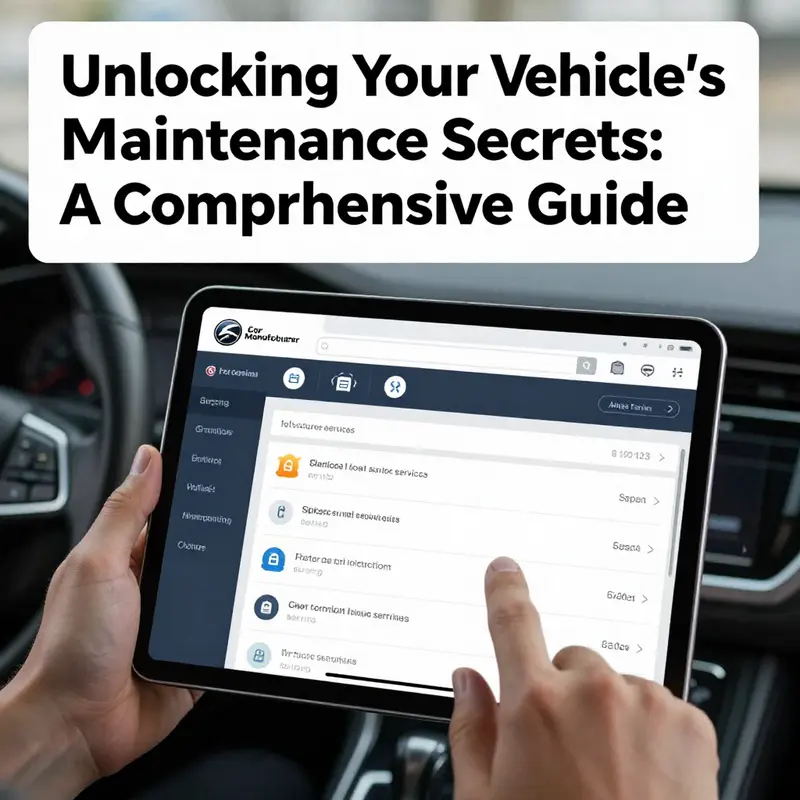
When you want the most reliable picture of your vehicle’s service history, the source matters as much as the method you choose. Manufacturer apps and official websites connect you directly to the network that serviced your car, whether that network is the brand’s own dealerships, certified service centers, or integrated maintenance systems. This channel often yields the most accurate timeline of scheduled services, repairs, and even notes from technicians. It is a quiet buoy to the buyer and a reassurance to the seller, because the data comes from the dealership network that performed the work, and it is updated in a format that mirrors the way the manufacturer tracks maintenance across its entire fleet.
To begin, the first move is practical and straightforward: download the official app for your car’s brand or visit the brand’s website and log into an owner account. The names of these tools vary—some brands call them ConnectedDrive, Mercedes me, my BMW, or Porsche Connect—yet the underlying purpose remains the same. After installation, create an account if you don’t already have one. Use a reliable email address or phone number, and enable any offered security features such as two-factor authentication. In many cases, you will be asked to verify ownership through documents or by confirming details about the vehicle. This initial setup is more than a formality; it’s the secure doorway to authoritative data about your car’s service history.
The next step is to link your vehicle to the account. The process is designed to be user-friendly, but it hinges on a single, crucial identifier: the Vehicle Identification Number, or VIN. You will typically be prompted to enter the 17-character VIN during registration or within the app’s vehicle settings. The VIN is the key that ties every service entry to your particular car, ensuring you don’t mix up histories from other vehicles you may own or have borrowed. You can usually find the VIN on the windshield’s corner, on the driver’s side dashboard, or in official documents like the registration or insurance papers. Some apps also offer a scan feature that reads the VIN from a photograph or a label, which can save time and reduce entry errors.
Once the vehicle is linked, the app presents a curated view of the service history. This is where a unified, vertically organized timeline shines, because it consolidates data from multiple dealerships within the brand’s network into one place. You’ll see past maintenance events with dates and the odometer readings at the time of service. The types of services logged can span routine oil changes, tire rotations, brake inspections, and more complex repairs. One of the most valuable facets is the level of detail in these entries: you may be able to view the specific service codes, the parts replaced or inspected, whether any recalls were addressed during the visit, and notes left by technicians. Depending on the brand and the dealership network, you might also see the labor charge, the part numbers, and even which technician conducted the service when the information was recorded in the Dealer Management System and synchronized to the app.
The beauty of this approach is the alignment with the official servicing path your car followed. For a shopper or a seller, that alignment offers historical integrity: the record is not anecdotal or scattered across private files but is instead tied to the manufacturer’s official ecosystem. You may find that some brands also flag upcoming maintenance based on your current mileage and service history, turning the app into a proactive maintenance assistant. In this way, the app can function as both a historical ledger and a forward-looking planner, helping you decide when to schedule a checkup, oil change, or part replacement before problems arise. When the timeline includes reminders or prompts, you gain the practical advantage of staying ahead of wear and tear rather than reacting to symptoms after they appear.
Privacy and security are worth considering as you explore these tools. Access to your vehicle’s service data is typically protected by strict authentication and owner verification. It is common for the app to require you to confirm changes only from the linked account, and for access to be limited to the owner or authorized users. If you share the vehicle with a partner or family member, you can often add additional profiles with defined permissions, ensuring that sensitive data remains controlled while still enabling family-wide vehicle maintenance oversight. The emphasis on secure access is more than a courtesy; it helps prevent tampering with records, which is essential if you ever need to verify history for resale, warranty claims, or insurance purposes.
A practical note emerges as you navigate these digital records: while the manufacturer app is a rich source, it does not always capture every single event. Some vehicles may have been serviced at independent shops or at non-brand facilities without their data syncing into the brand’s system. In those cases, the history you see in the app might be incomplete. If you suspect gaps, a comparative approach makes sense. Check against the original service documents kept by the owner, such as the service book or repair invoices, and consider cross-checking with a trusted third-party vehicle history platform for a broader view. This blended approach often yields the most comprehensive picture, and the timelines on the manufacturer’s app can be used as the backbone of that cross-check. For readers curious about how to align these approaches, our piece on Optimal oil change intervals: time vs mileage offers a grounded discussion on scheduling and maintenance cadence that complements the exacting records you pull from the manufacturer’s records.
Another benefit of using official apps is the direct linkage to recalls, service campaigns, and important manufacturer updates. If a safety-related bulletin affects your model, you may find the notification appear in-app, sometimes with links to scheduling portals or authorized service centers. This adds a layer of proactive care to a service history that would otherwise be a historical archive. For prospective buyers, the presence or absence of recall work within the app can also influence decisions. A clean, consistently updated service history within the brand ecosystem can boost confidence in the vehicle’s past care, while gaps might prompt a closer read of how the car was maintained outside the dealership network.
As you use the app, a few best practices help preserve accuracy and ease of use. Double-check the VIN you entered before linking, as a single character error can pull up a completely different vehicle’s service history. If the vehicle is new to you or you’ve recently acquired it, take a moment to review the most recent entries and confirm that the dates line up with your memory and receipts. When logging into the app, keep your device’s security features enabled and periodically review the linked accounts to ensure only authorized users retain access. If you encounter missing data, contact the brand’s customer service or your nearest dealership; sometimes data is in transit between the DMS and the app, and a quick refresh can restore a near-complete record.
The journey from a dealer’s ledger to your palm may feel ceremonial, but it is deeply practical. With the official records, you gain a trustworthy baseline for your vehicle’s history, a clear map of past maintenance, and a reliable lens through which to view future care. This method stands as the core of your strategy to understand what has been done, what remains due, and how your car has aged under the brand’s care. It also dovetails with the broader landscape of vehicle history checks, offering a precise, brand-aligned counterpoint to third-party summaries. For those who want to explore a related maintenance conversation, a related read on oil-change cadence can provide deeper context about how service intervals align with the history you’re viewing in the app. Optimal oil change intervals: time vs mileage.
In the end, the manufacturer app or official website is more than a repository; it is a dynamic interface that translates years of dealer notes into accessible insight. It helps you understand not just what was done, but when it was done and how the vehicle responded at the time. When combined with other sources, this approach becomes a robust, transparent picture of your car’s life—one that aids in maintenance planning, resale confidence, and even negotiation when you buy or sell. Embrace the direct line to the vehicle’s history, and let the app’s timeline guide you forward with clarity.
External resource for readers seeking broader guidance on vehicle-history verification: https://www.consumerreports.org/car-maintenance/how-to-check-car-history/
Reading the Car’s Past Through Its Paper Trail: How to Check Service History by Reviewing Original Documents
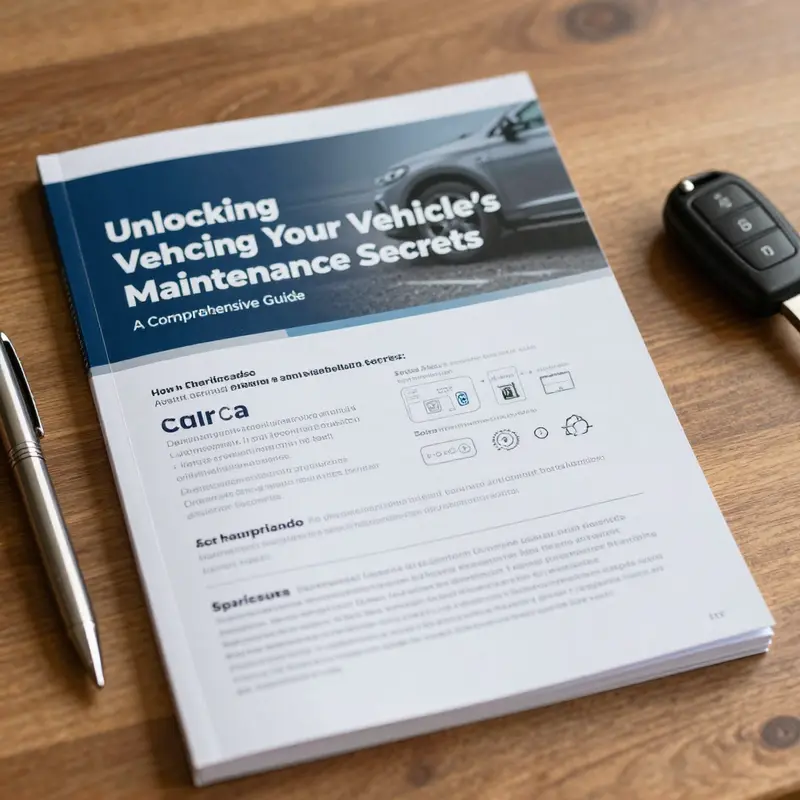
The original service documents tucked away in a glovebox or stored in a file box are more than receipts. They are a tangible record of a vehicle’s care, telling a story of how well— or how poorly— it has been maintained. When you look at these records closely, you can reconstruct the life of a car much more accurately than by relying on sentiment or a single recent service invoice. This is especially important when you are evaluating a used car, negotiating a price, or planning future maintenance. A methodical review of the paper trail, or its digital equivalents, helps you understand not only what happened, but also what should happen next. In practice, this means assembling every piece you can find, laying it out in chronological order, and then reading between the lines for consistency, thoroughness, and any gaps that may point to potential trouble ahead.
Begin with the basics: locate every record you can. Gather not only the obvious documents—the invoices and receipts from dealerships or independent shops—but also maintenance logs or a service book that came with the vehicle and any digital records you’ve saved on a computer, in email threads, or in cloud storage. The goal is to assemble a continuous thread that stretches from the day the car rolled off the lot to the present moment. If the vehicle was new to you, the service book often sits in the owner’s manual package and is designed to be a lifelong companion for owners to log oil changes, inspections, and repairs. If you’ve acquired the car secondhand, request any paper trail the previous owner has kept and be prepared to cross-check those documents with what the seller presents and what you can verify elsewhere. In this chapter, we will explore how to extract the most meaningful information from these documents and why each detail matters for your confidence in the vehicle’s history.
As you sift through each record, pay attention to four core elements that tell you most about the car’s care: the date of service, the mileage at the time of service, the type of service performed, and the parts that were replaced or repaired. The date and mileage together reveal whether maintenance occurred on schedule. For example, if an oil change is recorded at 12,500 miles but the manufacturer’s interval suggests every 5,000 to 7,500 miles, you’ll know the vehicle may have been neglected in certain periods, or you’ll see evidence of a missed service. The type of service is equally telling. Routine maintenance like oil changes, filter replacements, brake inspections, and tire rotations show you how diligently the owner kept up with preventive care. More significant repairs—such as a timing belt replacement, transmission work, or cooling system overhauls—offer clues about the car’s reliability and the likelihood of future issues. When a record lists the specific parts that were replaced, you gain another layer of insight. Part numbers, if present, can help you verify whether the correct specifications were used and whether higher-quality components were installed. And finally, labor hours and costs can frame the financial history of the vehicle, revealing how demanding the work was and whether the pricing aligns with typical expectations for similar services in your region.
A critical step is to verify the authenticity of each document. Genuine records often bear an official stamp or seal from an authorized service provider. These marks are not foolproof, but they set a baseline for legitimacy. Cross-check the information across multiple documents. Do the dates line up with the mileage? Do the part names and numbers align, or do you see contradictions that suggest a record was added later or altered? If you encounter uncertainty, take the proactive step of contacting the service provider directly. A quick phone call or email to the dealership or repair shop can confirm whether a particular record exists and whether the details match their internal systems. In many cases, the provider can print or email a copy of the official service history file, which adds a layer of verification that a single invoice may not provide.
As you read through the sequence of events, look for patterns that tell you more than any single entry. A well-documented history usually shows a steady cadence of maintenance aligned with the manufacturer’s recommendations. Long gaps between services—even if a few major repairs occurred—can be a warning sign that preventive care was neglected for extended periods. Conversely, a history heavy with repairs for the same component can reveal a recurring issue or perhaps a design flaw that needs ongoing attention. Major repairs, such as engine or transmission work, require extra scrutiny because they can influence the vehicle’s reliability and resale value. If the records show repeated visits for the same subsystem within a relatively short timespan, you’ll want to assess whether the underlying problem is resolved or if new trouble is simply migrating from one component to another.
Another layer to consider is the source and scope of the records themselves. Original dealer maintenance documents often carry the most weight, especially if the vehicle was serviced through the brand’s authorized network. These records tend to include precise part numbers, labor charges, and even the name of the technician who performed the work. On the other hand, independent repair shops can provide valuable information, especially about non-warranty work or repairs that the brand’s network did not address. The key is to understand the scope of what you are seeing: are you looking at the entire life of the vehicle, or only the portion covered by a single network? If there are gaps, determine whether they are due to lost papers, a lapse in record-keeping, or services performed at shops that never issued formal documentation. If the latter is the case, you may need to lean more on other sources—such as the VIN-linked digital history reported by third-party platforms—to fill in the blanks. For many readers, combining original documents with digital histories creates the most robust picture, and a blended approach often yields the most confidence when buying or maintaining a vehicle.
In practical terms, you will often need to reconstruct a timeline from scattered pieces. Start by laying out the records in chronological order. Then annotate each entry with a simple question: Was this service routine maintenance or a repair? Was the mileage appropriate for the service type? Were there any parts replaced that could indicate a higher service complexity? If you find a service entry without a clear purpose or with ambiguous notes, consider calling the shop to request a clarified work order or invoice. The goal is not just to collect receipts but to understand the intent behind each entry and how it fits into the car’s overall life story. This approach also helps you determine whether a seller is withholding information or whether a gap exists due to a period when the car was not in regular use.
To keep you grounded in the practice, think of the service history as a living document rather than a static file. Your interpretation should be informed by current maintenance guidelines and the vehicle’s expected service intervals. When in doubt, consult the broader maintenance literature, which you can access through related resources. For a broader discussion and practical tips on maintaining a vehicle in alignment with its service schedule, you can refer to the blog for practical maintenance guidance, available here: the blog.
Reviewing original service documents is also a valuable exercise when you are preparing to sell a car, not just when buying. A well-kept paper trail can support a higher asking price by demonstrating a consistent maintenance history and transparent ownership records. Conversely, a sparse or questionable history can become a talking point for buyers who want to adjust the price to reflect potential hidden risks. In either case, presenting or examining the original documents with care helps both sides come to a fair understanding of the vehicle’s condition and expected longevity. Remember that the reliability of your appraisal improves when you combine direct documents with other historical checks. Where records are missing or unclear, you can compensate by obtaining a recent, reputable history report, consulting with the vehicle’s current service providers, and using manufacturer-provided maintenance portals to cross-verify what you find in the paper trail.
As you finish your review, you will see that original service documents, when read with care and cross-checked against other sources, offer a clear window into a car’s past: how it was cared for, when it needed attention, and how well its owners managed its ongoing health. They also empower you to make informed decisions about future service needs, potential risk areas, and the car’s continuing value. If you are preparing to purchase, this disciplined approach reduces uncertainty and helps you avoid overpaying for a vehicle that has hidden maintenance issues. If you are maintaining a car you already own, the habit of keeping and reviewing these documents becomes a powerful tool for planning preventive care and budgeting for upcoming services. For further reading and related guidance on maintenance intervals and practical day-to-day tips, you may also explore additional resources, including official safety and service guidelines provided by recognized authorities: https://www.nhtsa.gov.
Reading the Car’s Past: A Practical Guide to Vetting a Used Vehicle’s Service History Before You Buy

When you’re shopping for a used car, you’re essentially buying a story about the vehicle’s past—and that story is written in its service and maintenance records. A solid history helps you gauge reliability, understand what kind of wear the car has endured, and spot red flags before money changes hands. The core idea is simple: the more complete the history, the less you’ll wonder about unplanned repairs in the near future. Yet gathering that history isn’t a single, one-click task. It requires a layered approach that combines data from trusted sources with a careful review of the documents left behind by previous owners. The starting point should always be a clear, verifiable trace of maintenance that goes beyond sentiment and guesswork. What you’re after is a timeline—dates, mileages, parts replaced, services performed, and any incidents that might have altered the car’s value or safety. A complete timeline is not a luxury; it’s a safeguard that helps you assess whether the price on the table reflects reality, or masks a history of illness that could become expensive to treat after you’ve bought in.
One of the most efficient ways to assemble that timeline is through a trusted third-party vehicle history platform. These services operate like crowdsourced archives, pulling maintenance and repair records from a wide network of garages and repair centers rather than focusing on a single brand or a single shop. The value here is breadth and speed: you can see a more holistic picture of how the vehicle has been cared for over time. When you pull a report, you’ll typically find a record of maintenance visits, service intervals, parts replaced, and, crucially, any accident or insurance events linked to the car. You’ll also see odometer readings recorded at each service, which helps you detect potential rollbacks. This kind of data is especially useful when you’re evaluating a used car that has traveled across different owners and service ecosystems. It provides a perspective that a single dealer or a private seller might not be able to offer.
The exact landscape of platforms varies by region, but the underlying value remains consistent: a consolidated view of service history that removes the guessing from your decision. If you’re in a market where multiple shops feed into a central service history repository, you can expect to obtain a near-complete picture of the car’s maintenance activity. You’ll want to confirm a few things as you review the report: whether the maintenance dates align with the odometer, whether parts that were replaced are consistent with the vehicle’s age, and whether any notes indicate major work that might require future attention. This level of detail is what separates a cautious buyer from a confident one. While the convenience of a single click is alluring, the real value comes from cross-checking the third-party history with other sources to build a robust understanding of the car’s health.
Of course, there’s no substitute for direct access to the source. If the car has consistently been serviced within a specific brand’s authorized network, contacting the dealership that handled most of its work can yield the most authoritative records. These department-level histories live in the dealer’s internal systems, sometimes within individualized maintenance files tied to the VIN. A request to view the official maintenance and repair file can reveal exact part numbers, labor entries, and even notes written by the technician who performed the service. This level of specificity is invaluable when you’re attempting to confirm whether a particular problem area—such as the cooling system or the braking system—has received proactive attention. The caveat is that brand-specific records capture only the work conducted within that network, so independent garages or non-brand shops won’t appear in this slice of history. If you purchased a vehicle that spent time outside that brand network, you’ll need to supplement with other sources.
In many cases, the vehicle’s official manufacturer app or website can become a direct link to the truth behind the dents and the gleaming showroom photos. Several carmakers now offer owner portals where you can link your vehicle by VIN and access a timeline of scheduled service and completed repairs. The data originates from the manufacturer’s perspective and tends to be highly accurate and up-to-date, reflecting the latest service campaigns and recalls that may not be captured elsewhere. If you have access to such an app or portal, consider it as a pivotal check against other sources. A mismatch between the manufacturer’s records and a third-party report doesn’t automatically condemn the car, but it does deserve closer scrutiny to determine which entry is more complete and timely.
No history is complete without examining the documents left by the previous owner. A well-preserved service book, along with repair invoices and work orders from the garages that serviced the car, provides tangible proof of care. Scan the entries for consistency: do the dates and mileages line up with the car’s stated mileage? Are there long gaps or clusters of activity around certain periods that might indicate periods of heavy use or neglect? The physical records can be particularly persuasive in a private sale because they demonstrate transparency and accountability. Missing records, inconsistent entries, or a seller who is reluctant to share paperwork can be strong red flags. In those moments, your confidence in the car should hinge on whether you can corroborate the data with independent sources and whether any gaps can be reasonably explained by a seller’s documented maintenance history.
Beyond maintenance logs, you should also consider the vehicle’s insurance claim history as part of the overall risk assessment. Insurance records can reveal whether the car has sustained significant damage in the past and the extent of repairs that may have been required. Access to these records typically requires proof of ownership or authorization, and some insurers provide online portals for authorized customers. Recurrent claims related to bodywork, frame damage, or airbag deployments can signal structural issues that warrant a closer mechanical inspection. While not every claim translates into future trouble, a pattern of frequent claims is worth noting and warrants professional eyes during a pre-purchase inspection.
For buyers who enjoy a hands-on, tech-friendly approach, an OBD2 diagnostic scan can supplement the history review. An OBD2 reader connected to a smartphone app can surface diagnostic trouble codes that were stored in the car’s ECU or that reappear after being cleared. This real-time data may reveal latent issues that the maintenance log doesn’t capture, such as intermittent sensor faults or past engine misfires that didn’t lead to a full repair entry. It’s important to view this as a corroborative tool rather than a replacement for the historical record. The goal is to use every available tool to confirm consistency across the vehicle’s reported maintenance, current condition, and any latent issues that could influence long-term ownership costs.
When you weigh all these sources together, the best practice for a used-car buyer becomes clear: rely on at least two independent methods to triangulate the history. A third-party history report provides breadth, while a direct dealership or manufacturer record adds depth. A seller’s documented history offers transparency, and an OBD2 check can surface current condition signals that documentation might miss. This layered approach doesn’t just help you verify what was done in the past; it strengthens your understanding of the car’s future reliability and its true value. To anchor this approach in practical steps, you can use the internal link to a guide on optimal oil-change intervals by mileage as part of your broader review of a car’s maintenance philosophy. optimal oil-change intervals by mileage can provide insight into whether the car’s maintenance cadence aligns with manufacturer recommendations and with the kind of usage you plan.
As you prepare to negotiate, keep the conversation focused on evidence, not emotion. Ask for the VIN, request the latest service printout, and compare it against any third-party report you obtained. If the numbers don’t align, request explanations, verify the dates and mileages, and consider a professional inspection before finalizing the purchase. A buyer who uses a structured, multi-source history-check strategy is much less likely to walk away with a vehicle that carries unknown mechanical debt. Remember, a used car is a bundle of promises and risks. The more thoroughly you read its past, the more accurately you can forecast its future. And with a clear, verified history, you’ll be better prepared to assess price, plan maintenance, and decide whether the vehicle fits your needs and budget.
External resource: https://www.carproof.com/
Final thoughts
Checking your vehicle’s service history is an essential practice for all car owners and buyers. By utilizing a combination of third-party platforms, authorized dealer contacts, manufacturer resources, and original documentation, you can gain a complete view of your vehicle’s maintenance history. These steps not only ensure a sound investment but also contribute to the ongoing health and performance of your vehicle. Take charge of your automotive journey, armed with comprehensive service history knowledge to enhance your ownership experience.