
For local private car owners, used car buyers and sellers, and small business fleet operators, understanding a vehicle’s service history is crucial. This knowledge not only influences the present value of the vehicle but also impacts future maintenance and safety. Fortunately, numerous online resources allow you to check a vehicle’s service history comprehensively. From tailored third-party platforms providing extensive records to official dealership channels that ensure reliability, and insurance records that reveal past accidents, each avenue offers unique insights. This guide will delve into these various methods, helping you navigate the digital landscape of vehicle history checks.
Tracing a Vehicle’s Past Online: The Power and Limits of Third-Party Service History Checks
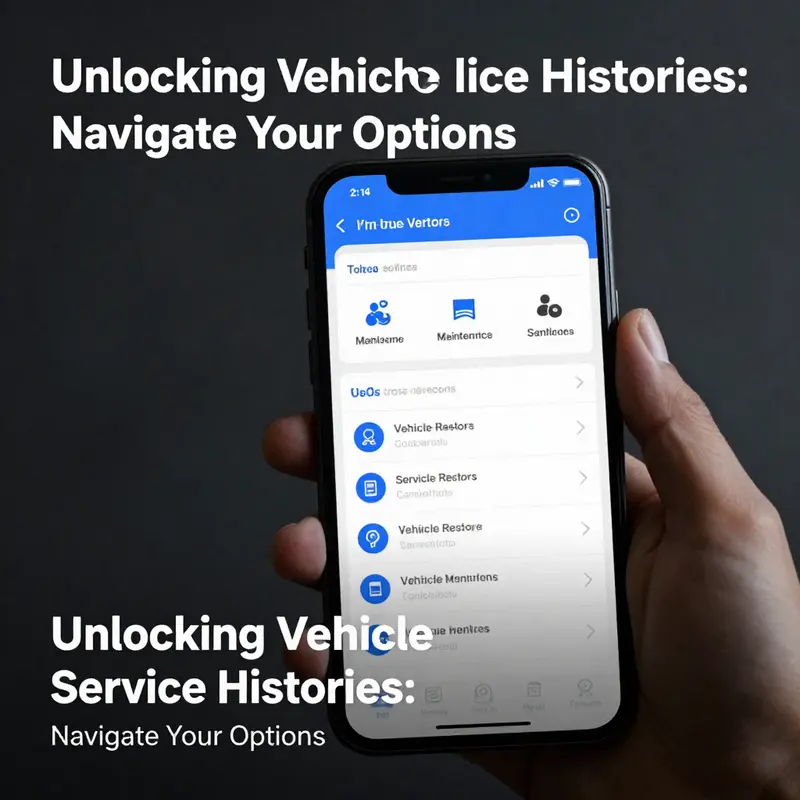
When a buyer sits down with a used car, the questions seldom end with “Does it run?” Instead, the deeper questions arise: Has this car been maintained regularly? Were there major repairs that could affect reliability or safety? What about hidden damage from an accident or an engine issue that didn’t show up on the odometer? In the digital age, the answers to these questions increasingly come from online service history checks. They offer a practical, data-driven lens through which to view a vehicle’s life, often before a test drive or a physical inspection. The logic is straightforward: a vehicle carries a history, and that history leaves digital traces. The challenge is collecting those traces into a coherent, trustworthy picture. This is where third-party platforms—web-based services that aggregate information from multiple sources—enter the conversation. They serve as a bridge between disparate records scattered across maintenance shops, dealerships, insurers, and, in some regions, government registries. The strength of these platforms lies in breadth. They pull from many sources, cross-checks, and public records, with the aim of presenting a panoramic view of a vehicle’s service and repair life. The approach is not a replacement for professional inspection, but it is a powerful precursor. It can reveal red flags that warrant deeper investigation and help buyers calibrate expectations about what a car has endured and what it might require next.
A core element guiding these checks is the VIN, the 17-character Vehicle Identification Number that uniquely identifies each motor vehicle. Entering the VIN into a check or uploading a registration-card image is typically enough to fetch a report. This process hinges on accuracy. A single digit mistaken in the VIN can pull up a completely different vehicle’s history, leading to confusion, wrong assumptions, and potential missteps in the buying process. For this reason, accuracy at the outset matters as much as the data itself. Beyond the VIN, the practicality of online checks often rests on how accessible and user-friendly the platform is. Some services offer mobile apps for on-the-go checks; others provide web interfaces. The most useful experiences tend to be straightforward: you input or scan the VIN, you’re guided to a report, and the report lays out a timeline of service events in clear terms. Customers learn to read these records with a careful eye, focusing not only on what is there, but also on what might be missing. A comprehensive history can illuminate the car’s maintenance cadence, revealing whether routine services were performed on schedule and whether key components—brakes, tires, belts, fluids, timing systems—received timely attention.
The breadth of data matters as well. In robust third-party histories, you’ll typically see a blend of service entries and more episodic data points. Service entries show dates, mileage at service, items serviced, parts replaced, and occasionally labor charges. Some reports summarize the presence of maintenance categories like oil changes, brake work, or coolant service, while others present a fuller narrative, including details such as part numbers, shop notes, or technician recommendations. Insurance-related information sometimes appears, especially if the car was involved in an incident that led to a claim. In regions where vehicle registries and insurance ecosystems cooperate, you may even find data points like mileage certification or title status updates. The implication for a buyer is meaningful: a consistent pattern of preventive maintenance—oil changes at regular intervals, timely brake and tire replacements, and documented inspections—builds confidence in the vehicle’s ongoing reliability. Conversely, gaps in service history can prompt questions about where, when, and why maintenance occurred. Was a major repair performed at an independent shop that doesn’t share data with broad history aggregators? Did a chain of regular services occur at multiple, inconsistent addresses that suggest checkered ownership or a lack of continuity in care? These questions matter when you weigh the car’s real-world condition against its asking price.
Yet no history is flawless, and no single source should be treated as the final word. Third-party platforms shine in breadth, but they depend on the data they receive. If a repair occurred at a shop that does not participate in data sharing, that service might not appear in the report. If a vehicle’s ownership changed hands in a way that interrupted data flow—for instance, a private sale that bypassed official channels—crucial maintenance events could slip through the cracks. In practice, this means buyers should approach online checks as highly informative but not definitive. A well-rounded due diligence process couples an online history with a professional pre-purchase inspection, a physical walk-through of the vehicle, and, where possible, corroboration from the source of maintenance records. In other words, the online check should be the first step in a layered evaluation, not the final verdict.
What distinguishes the most helpful third-party histories is not merely the quantity of data, but the clarity with which it is presented. A good report will present a chronological timeline of maintenance events, a summary of ownership and title status, and a flag for any entries that require closer scrutiny. It may also include a graph or a table illustrating mileage over time, which can reveal suspicious mileage fluctuations or odometer anomalies. The ability to visualize the car’s maintenance cadence over the years helps buyers set realistic expectations about the car’s future needs. For example, if the report shows a long span with no recorded maintenance, a buyer might wonder whether the car was neglected or simply serviced by a shop that did not share records. Conversely, a dense cluster of maintenance events around a particular period could indicate a major repair or a protocol shift in the vehicle’s operation, such as a system replacement or a significant component upgrade. In either case, the narrative becomes a guide to the car’s life story and a predictor of its near-term reliability.
A practical consideration for anyone using these platforms is how to interpret the data in the context of regional practices. In some markets, maintenance is highly standardized, and shops follow manufacturer-recommended intervals with meticulous notes. In others, maintenance is more fragmented, with a mix of independent garages and brand-specific service centers. The aggregator approach benefits from this diversity, because it captures a spectrum of maintenance experiences. It also means that a user’s confidence grows as the report combines routine maintenance data with any available evidence of significant repairs or safety-related work. When present, official records from an OEM’s service network carry particular weight. They are often the most detailed and trustworthy source of maintenance events, including exact service descriptions, parts used, and labor times. Where these records exist, they tend to anchor the history with a level of reliability that stands up to scrutiny. The limitation here remains inherent: not every car has a complete record in the authorized network, and not every service history is captured in one place. Thus, while the best third-party histories strive to approximate the full story, buyers should remain mindful of the possibility that gaps exist and plan their decision around a combination of sources.
To illustrate how this plays out in practice, consider the general workflow a buyer might follow. First, you locate a vehicle of interest and retrieve the VIN from the registration documents or the vehicle itself. You then access a reputable online history-check platform, which may be accessible via a web interface or a mobile app. You enter the VIN or upload a photo of the registration certificate and request the report. The platform assembles data from multiple streams and presents a consolidated history, usually with a clear summary of ownership, mileage, and maintenance. You review the maintenance entries for consistency with the car’s claimed miles and with the expected service schedule for that model. If the report shows routine oil changes every six months or every 5,000 miles—and the dates align with the car’s reported odometer readings—that’s a positive sign. If, however, you notice a long stretch with no service entries and several urgent repair episodes that appear out of sequence with the odometer, you have a warning flag. The next step could be to request additional records from the seller or to commission a professional inspection to determine whether the car’s condition aligns with the story the history suggests.
An important caveat sits here in plain sight: online checks are part of a broader diagnostic toolkit. They are most effective when combined with direct verification from sources that hold primary records. In many markets, the most authoritative data comes from the vehicle’s brand-authorized service network. If the car has logged service at a single dealership group across its life, contacting that network directly often yields the most detailed, objective, and verifiable data. The information you receive from a brand channel can include precise service dates, parts replaced with specific part numbers, labor times, and notes about any non-routine repairs. This level of detail is invaluable for assessing the likelihood of future maintenance needs and for verifying claims about the car’s condition. If the vehicle has a mixed history—some services at authorized centers and some at independent shops—the history becomes more complex, but still informative. It can reveal how frequently a car was serviced, whether key components were consistently attended to, and whether any major repairs might influence future reliability. In such cases, the third-party platform’s strength lies in joining the dots across sources and offering a more complete mosaic than any single source could provide.
If you are in a market where consumer privacy and data-sharing rules shape what is accessible online, you may encounter additional layers of complexity. Access to a vehicle’s full service history can be restricted to the owner or to authorized agents. In these scenarios, legitimate checks still offer value because they help buyers identify likely gaps and questions to raise with the seller. They also help buyers calibrate their expectations about potential repair costs and maintenance schedules before committing to a purchase. It is worth noting that many buyers find it prudent to complement online checks with a professional inspection. A trained technician can examine the engine, transmission, brakes, suspension, electrical systems, and other critical components to detect hidden wear or recent repairs that may not be fully captured in the digital record. The inspection can also verify the plausibility of the reported maintenance history by validating the presence and condition of recently replaced parts, fluids, and hardware.
For readers who want to deepen their understanding of maintenance contexts while exploring these digital tools, the broader literature and community resources can be helpful. A reader can explore the general maintenance philosophy by visiting our own maintenance-focused hub, which offers a variety of articles and tips that help connect routine care with long-term vehicle health. The hub provides practical guidance on aligning service intervals with driving conditions, operating environments, and vehicle design. It also explains how preventive care translates into reliable performance and lower total ownership costs over time. Click-through guidance to these resources can be a valuable supplement to the online history check, giving buyers a fuller sense of what constitutes responsible maintenance and the kinds of records that matter most when assessing a used car’s value.
When presenting a history report to a seller, a buyer can use the information to frame a transparent conversation about the vehicle’s past. For instance, if the report highlights a period of extensive brake work and a timing belt or chain service, the buyer can ask for receipts and verify whether the work aligns with manufacturer recommendations for the specific model and year. If the report shows several oil changes clustered within a short timeframe—perhaps a sign of a dealer or shop adjusting maintenance history to appear meticulous—the buyer might request a more detailed breakdown of the work performed and the driving context during that period. These kinds of inquiries are constructive rather than confrontational; they seek to align the narrative with the realities of the car’s operation and to ensure that a potential investment is grounded in verified facts rather than assumptions.
In sum, third-party online service history checks offer a powerful lens for evaluating a used vehicle. They amalgamate data from an array of sources into a digestible, chronological account that helps buyers identify patterns, gaps, and potential red flags. They are especially valuable when used in tandem with official records from the vehicle’s brand network and supplemented by an expert physical inspection. The most effective approach treats online history as a map—not the terrain itself. It points you toward areas that deserve closer scrutiny and provides confidence when the data points line up with the car’s claimed story and expected maintenance path. If you’re curious to explore broader discussions on vehicle care and maintenance practices that complement history checks, consider visiting the blog that collects practical tips and insights on keeping vehicles in top condition. It can be a useful companion resource as you navigate the complexities of buying, owning, and maintaining a car.
For further reading and a broader view of the topic, you can visit our blog for a range of related articles that illuminate how maintenance decisions affect vehicle life cycles and reliability. kmzvehiclecenter.com/blog
External resource: https://www.carfax.com/
Official Dealerships: The Reliable Way to Check Vehicle Service History Online

When a reader asks how to verify a vehicle’s service life with confidence, the most dependable answer points toward the manufacturer’s authorized service network. Official dealerships are not just points of sale or repair shops; they are gateways to a curated archive that records every scheduled maintenance, every part replacement, and every diagnostic note within a brand’s own system. This is not about convenience alone. It is about data integrity, chain-of-record trust, and the assurance that what you read reflects the true path the vehicle has followed on the road. In an era when a broad array of third-party histories can fill gaps, the official dealership route stands out for its authority and its emphasis on completeness. The practical payoff is a report that mirrors the vehicle’s life with a fidelity that is hard to match elsewhere, especially when you are evaluating a used car with a value hinged on meticulous maintenance.
To understand why this method remains a cornerstone, picture the lifecycle of modern vehicles as a sequence of logged events. Each service visit creates a data point that travels from the technician’s hands to the dealership’s service system, increments the vehicle’s service history, and is then synchronized with the broader dealer network. When the same vehicle returns for another appointment, the new entry updates the existing file, preserving continuity. The result is a monolithic record that, in theory, travels with the vehicle forever. In practice, the dealership system is designed to be tamper-resistant, with access governed by strict identity verification and ownership authorization. The net effect is a document that not only lists the what and when, but also preserves the order and context of maintenance work, including the rationale behind the service and the notes from the technician.
Accessing this archive, however, hinges on steps that balance privacy with transparency. The process is intentionally straightforward because it must work for current owners, prospective buyers, and third-party evaluators who have legitimate interest. The first principle to keep in mind is the necessity of identification and proof of ownership. The dealership will typically request a government-issued photo ID and documentation that ties you to the vehicle—usually the registration or title. If you are not the registered owner, you may be asked to provide a notarized authorization or a formal power of attorney, depending on jurisdiction and the dealership’s policy. Ownership verification is not merely bureaucratic; it protects the vehicle’s sensitive data and helps ensure that the history you obtain is shared with the right person. Once this hurdle is cleared, the dealer can retrieve the service history from the brand’s internal records and present it to you in digital form or as a printed report. The digital option is increasingly common, with secure PDFs or a viewable online portal that you can download or forward to a lender, a prospective buyer, or a safety inspector.
What exactly does the official service history encompass? At its core, you should expect a chronological ledger that captures every preventive maintenance action and every repair deemed necessary by the manufacturer’s guidelines. Oil and filter changes, scheduled brake inspections, tire rotations, and fluid refreshes are standard entries. But the record can go deeper. It can show parts that were replaced with specific part numbers, details about the labor performed, and the duration of each service episode. Technician notes may provide insights into wear patterns, unusual noises observed during inspection, or recommendations for future maintenance. In a well-maintained database, you might even see warranty claims, recalls that were addressed within the dealership network, and the dates when the vehicle’s software or firmware was updated. Because the data originates from the original brand’s service ecosystem, the report often includes a consistent nomenclature for services and standard codes that are recognizable to service staff across the network, reducing ambiguity that can otherwise cloud a buyer’s understanding.
One practical advantage of this approach is precision. The official record reduces the risk of misreporting that can occur when a vehicle’s service history has to be pieced together from disparate sources. Independent shops, DIY work, or non-authorized garages may perform legitimate maintenance, but their entries might sit outside the core brand ledger. With the dealership’s archive, you can read the history as the brand’s own engineers did, with the same diagnostic frameworks they used during routine maintenance checks. For buyers, such precision translates into a more reliable estimation of remaining value, confident risk assessment, and a clearer sense of how the car has aged. For sellers, documenting that the vehicle has undergone consistent service at an authorized network reassures potential buyers about the car’s care and the integrity of the records themselves.
A well-prepared buyer can maximize the value of this path by aligning expectations with the realities of data access. The dealership will acknowledge that not every service action outside the brand’s own network will appear in the official history. Independent work, non-warranty items, or cosmetic repairs performed at third-party shops may not be logged in the brand’s core file. This is not a failure of the system; it is a reflection of how data travels in the real world. The official history, when read honestly, provides a solid baseline: a trustworthy core record that can be complemented by third-party histories, accident reports, and claims data to present a comprehensive picture. In other words, the official dealership history is a robust backbone, while supplementary records can fill in peripheral chapters of the vehicle’s life. When you are evaluating a used car, you want the strongest possible backbone to anchor your assessment, and that is precisely what a dealership-derived service history provides.
To translate this into actionable steps, the path begins with locating the authorized channel for the brand in question. This is not a one-size-fits-all path, because each brand maintains its own network and access policies. Some brands centralize access through a single portal that aggregates service histories across the network; others route you to the local dealership that has the best direct connection to the vehicle’s file. The most important practical rule is to initiate the request at the point where the vehicle’s most recent service took place, if known. Why? Because the most current entries are often the most complete, and the staff there will already have the vehicle’s file open, ready to share the latest data. If you do not know where the vehicle was last serviced, an initial inquiry at the brand’s official service channels or a visit to the nearest authorized dealership can guide you toward the correct portal or location.
Once you enter the authorized channel, you will typically be asked for the 17-digit Vehicle Identification Number (VIN). The VIN is the key to unlocking the history. It is the vehicle’s unique fingerprint, and it must be entered with precision. A single character can lead to a mismatch in the record and yield an incomplete or incorrect history report. In practice, travelers who carry the vehicle’s registration document usually find the VIN printed there, often visible on the dashboard through the windshield or on the door jamb. The dealership staff will verify the VIN against the vehicle in their system, ensuring that you are querying the correct record. If you are not the owner, you may need to provide additional authorization documents and, in some cases, a copy of the power of attorney that designates you to request the information on the owner’s behalf. Privacy and security policies are designed not to impede legitimate checks, but to guard the vehicle’s sensitive data.
As the official report is assembled, you will receive a document that you can read line by line. A well-structured report should begin with basic identifiers: the VIN, the model, the year, and the vehicle mileage at the time of each service. It should then present a maintenance timeline, showing every service date and the interval since the last visit. The next sections are typically more granular but equally informative. Part numbers for replaced components can be listed, giving you a precise sense of what was installed and whether genuine parts or their equivalent were used. Labor hours may appear alongside the tasks performed, a detail that helps you gauge the scope of each intervention. In many cases, notes from technicians accompany the entries, describing observed wear, potential concerns, and the technician’s assessment of the vehicle’s condition. A comprehensive report may also indicate whether an item is under warranty, whether related recalls were addressed, and whether software updates were performed to address known issues or to improve performance.
The value of this level of detail becomes clear when you are weighing a purchase price or negotiating with a seller. Suppose the record shows a series of scheduled maintenance tasks performed on time, with genuine parts, and without any red flags in the technician’s notes. Such a history can add confidence to the car’s long-term reliability and can support a stronger financing position for a buyer. On the other hand, a report that shows missed services or gaps in the maintenance timeline can help a buyer identify potential risks and plan for future maintenance expenses. It is not a verdict in itself; it is a diagnostic tool that helps you form an informed judgment about how much value the vehicle deserves and what it might cost to bring it back to peak condition.
From a storytelling perspective, the official dealership history is a narrative you can trust to a degree that surpasses other sources. It tells a coherent story of care, attention, and adherence to manufacturer guidelines. It is less likely to be marred by incomplete entries or inflated repair histories than histories pieced together from multiple independent sources. Yet, it is not the final word on a vehicle’s condition. It is a trusted core, which you should read alongside other evidence. A modern buyer should balance the official record with a professional inspection that focuses on areas not always captured in service logs, such as hidden corrosion, structural integrity, and the current state of wear components—especially in high-mileage examples. In practice, the best approach is to combine the official service history with a hands-on inspection, a scrutiny of the vehicle’s documentation, and, when possible, a comparison with independent vehicle history reports to spot any inconsistencies.
To further ease readers into the practicalities, consider the general timeline of how a session with the manufacturer’s service network unfolds. You arrive or you connect through a secure digital channel, present your credentials, and confirm the vehicle’s identity with the VIN. The staff then retrieves the history and, if you wish, composes a report tailored to your needs. If you are buying, you may request a certificate of authenticity or a stamped record to accompany the sale, which some buyers find reassuring when negotiating a price or securing financing. If you are the seller, you might prepare a clean, transparent summary of the vehicle’s maintenance life to present to a potential buyer, enhancing trust and accelerating the sale. The process is designed not to trap you in a maze but to illuminate the vehicle’s life with clarity and accountability. And because this pathway depends on a brand’s own data assets, it offers the strongest alignment between the vehicle’s actual maintenance pattern and the narrative you present to others.
For readers who want to dip into a broader ecosystem without abandoning the credibility of the official channel, a complementary resource is the brand-neutral maintenance literature and the general guidance available through a central hub for automotive care. Those who explore such sources often discover the value of a cross-check: using the official dealership history as the anchor and enriching it with broader context from general maintenance guidance and independent verification. The synergy is powerful because the dealership record provides a trustworthy backbone, while the supplementary information fills in practical details about ongoing care, potential future needs, and the realistic costs of ownership. If you want to explore a more expansive view of maintenance planning and upkeep practices that complement what you learn from the official history, you can visit the community blog hub that covers a wide range of topics from routine inspections to the timing of proactive tune-ups. For readers who want a direct pointer to this broader conversation, the following link offers a concise overview and practical tips: kmzvehiclecenter blog.
As you consider the various routes to verifying service history, the core takeaway is simple. Official dealerships provide the most authoritative archive of a vehicle’s life, rooted in the manufacturer’s own maintenance standards and records. The data you obtain through this channel is structured to minimize ambiguity, supports precise verification of service intervals, and often includes explicit notes about parts and labor. While no single source can guarantee every repair ever performed, the dealership-backed history is, in most cases, the strongest foundation for understanding a vehicle’s true maintenance trajectory. It is the backbone that lends credibility to every statement you make about the car’s past and informs every decision you make about its future.
In the end, the choice of how to verify a vehicle’s service history will depend on context. If you prize authenticity and data integrity above all, start with the brand’s authorized network. If you need a broader sense of the vehicle’s overall care that includes independent services, supplement the official record with other trustworthy sources. The key is to approach the process with preparation and patience: bring the VIN, bring your identification, and be prepared to collaborate with the dealership staff to access the precise documentation you need. When you do, you will gain access to a robust narrative of the vehicle’s maintenance journey that can support a confident purchase, a transparent sale, or a well-informed ownership plan. And when you want to continue deepening your understanding of maintenance best practices beyond the historical record, the linked resource above can serve as a practical companion in your ongoing study of vehicle care.
External resource for further reading: https://www.ford.com/owners/service-history/
null
null
Final thoughts
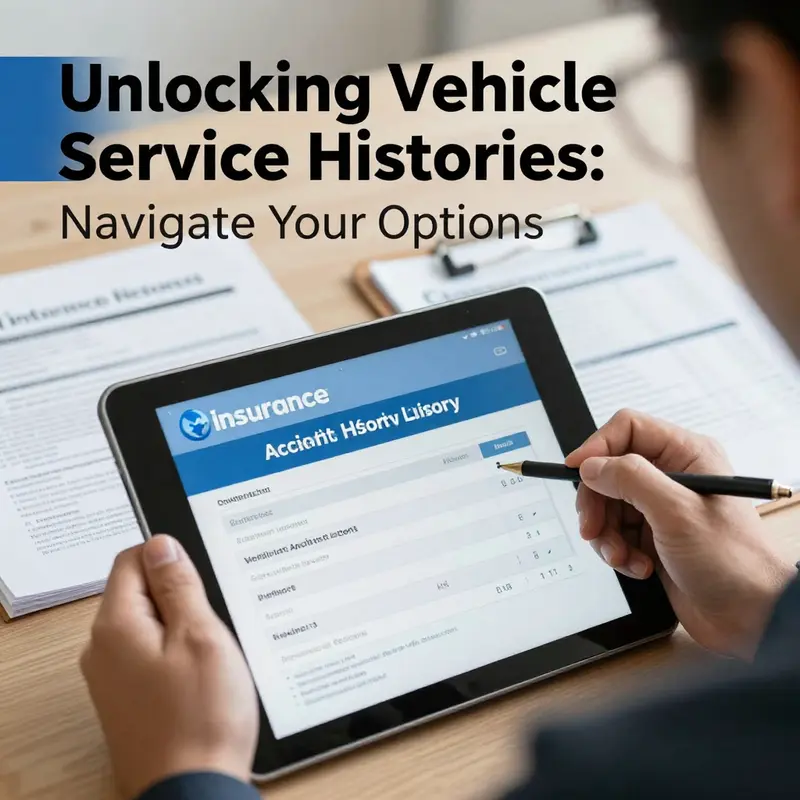
Navigating the maze of vehicle service history options online is essential for local private car owners, used car buyers and sellers, and small business fleet operators alike. By leveraging third-party platforms, contacting official dealerships, and accessing insurance records, you can gather the comprehensive information needed to make informed decisions. Ensuring a vehicle’s reliability and safety largely hinges on understanding its past, and with these resources at your disposal, you’re well-equipped to uncover critical service history details.