
Understanding the service history of a vehicle is crucial for maintaining its value and ensuring a smooth ownership experience, whether you’re a private car owner, a used car buyer, or a small business fleet operator. Service history can unveil vital details about a vehicle’s maintenance, repairs, and accident records, giving you insights into its overall condition. Each chapter in this guide will walk you through the most effective methods for checking service history online: first, using powerful third-party data platforms; next, through the authoritative channels of official 4S dealerships; and finally, by tapping into insurance company records to assess any accident history. By the end, you’ll be equipped with essential knowledge to make informed decisions regarding your vehicle.
Casting a Wider Net: Checking Vehicle Service History Online Through Third‑Party Data Platforms
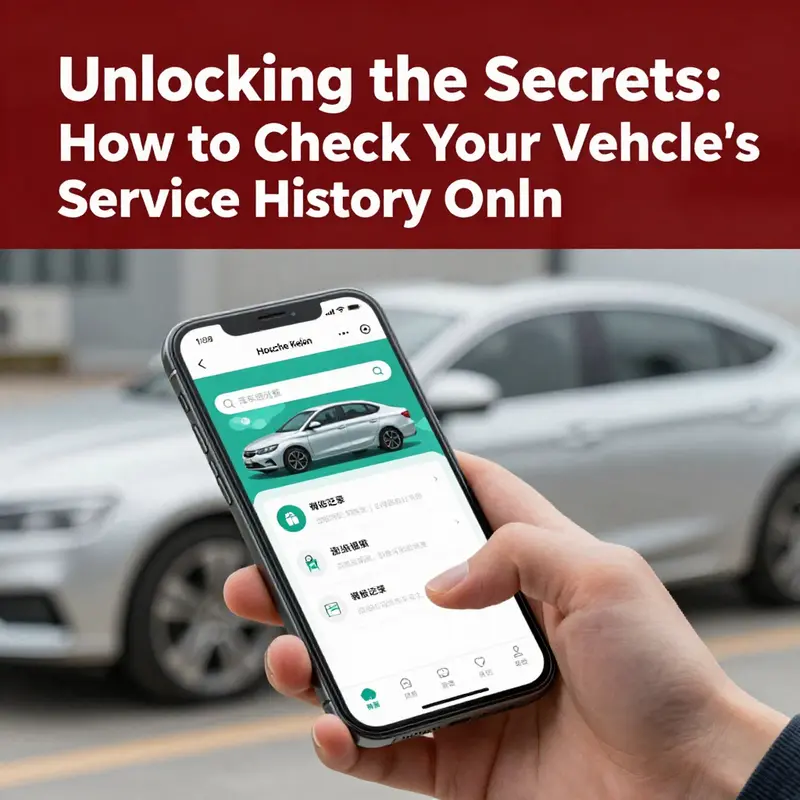
When a used car crosses your path, the first impression is often the photos and the price. But the true story hides in the records, and in today’s market those records are increasingly accessible online through third‑party data platforms. These platforms act like digital bridges, connecting data from many sources—thousands of repair shops, a broad network of dealerships, and insurers—so you can assemble a fuller, more reliable history without chasing paper trails across town. Rather than relying on a single dealership’s picture of a car’s past, you gain a panoramic view that can reveal patterns you might otherwise miss. This broader approach matters because service histories are not created equal. Some cars come with meticulous maintenance logs from state‑of‑the‑art service centers; others have gaps that only show up when you compare multiple data streams. Third‑party platforms offer a practical solution to this challenge, turning a potentially opaque record into a transparent, machine‑readable report that you can weigh alongside your own inspection findings. In many markets, these platforms are the most convenient and comprehensive starting point for evaluating a vehicle’s reliability and true condition before you decide to buy, lease, or invest further.
To understand why these platforms have become so central, imagine the data ecosystem behind them. A single garage or a brand’s authorized service center may keep detailed notes about parts installed, labor codes, and recurring issues, but those records are dispersed. A traditional buyer would have to visit multiple shops, request records, and piece them together. A third‑party platform aggregates data from a wide array of sources, forming a mosaic rather than a single tile. When the platform works correctly, you see not only the dates of service and the tasks performed but also the scope of the vehicle’s use in the months or years before you consider ownership. It can flag patterns such as frequent part replacements, recurring problems that suggest a mechanical temperament, or gaps in the service timeline that could indicate sections of the vehicle’s life were neglected. The net effect is a more informed decision about value, potential risks, and what it would cost to bring the vehicle to a desired reliability level.
A particularly valuable dimension of third‑party reports is the inclusion of accident and insurance history, when available. The platform can incorporate records of claims tied to the vehicle, including the nature of the incident, the severity, and whether the repairs completed match the reported event. This layer of information is especially important for used‑car shoppers who want to assess potential hidden damage or lingering issues that aren’t immediately visible in the car’s exterior. In addition, because the platform aggregates data from insurers as well as service centers, you sometimes gain visibility into the vehicle’s insurance landscape, including policy status and changes over time. This enriched picture helps you assess risk and negotiate with greater confidence.
Another critical component is the vehicle’s current status. A robust report will signal whether the car is mortgaged, seized, or otherwise encumbered, revealing legal or financial claims that could complicate ownership. This is not a trivial point; a car that is currently encumbered may pose unexpected obstacles to transfer of ownership or financing. The mileage data is often cross‑verified against odometer readings from service events, providing a check against possible odometer tampering. In markets where such verification is a priority, the platform’s synthesis of mileage signals can be a decisive factor in evaluating a car’s wear and expected remaining life.
Of course, no single source is a panacea. The strength of third‑party platforms lies in convergence, not perfection. They excel at presenting a comprehensive, high‑level picture that includes maintenance histories, parts, repair histories, and insurance touchpoints. Yet they share a limitation common to all data aggregators: the depth and breadth of coverage depend on the sources feeding the system. Records from large, well‑established 4S network shops and major repair facilities are well represented, but maintenance performed only at independent, smaller garages may be incomplete or missing. Some vehicles may have a patchier photo of their life if the owner’s history is scattered across many small operators who do not participate in the platform’s data network. This reality underscores a foundational principle: use third‑party history checks as a strong pointer, not an absolute verdict. The most thorough approach combines the online check with a diligent physical inspection and, where possible, corroboration from multiple data streams such as dealership records and insurance claims.
As you begin to interpret a third‑party report, a few practical habits help ensure you extract maximum value. First, always verify the VIN before submitting a query. A single error in the identifier can mislead you into viewing the wrong vehicle’s history or none at all. A careful eye for mismatches, such as the VIN’s make, model year, or country of registration, can save a lot of confusion. If the report arrives with gaps, note them and consider cross‑checking with other sources. An authoritative 4S dealership channel can provide the most granular, model‑specific details, including repair itemization, part numbers, labor codes, and even the technician who performed the work. However, this path is often limited to the brand’s network. Pair an official dealership inquiry with a third‑party history check to triangulate a more accurate picture.
The practical value of this approach becomes clear when you apply it to a real evaluation scenario. Suppose you’re considering a used car with an above‑average asking price. The third‑party history might show a consistent maintenance pattern, with regular oil changes, tire rotations, and brake services at appropriate intervals, alongside a few major replacements. If insurance and accident data also indicate a clean record, you gain reassurance about the vehicle’s past. If the report reveals a prior accident, you can examine whether substantial structural work or airbag deployments occurred and whether ongoing maintenance appeared to address after‑care needs. If a car’s current status shows no mortgage or seizure, you gain a smoother path to ownership. In practice, a buyer who uses these online checks in concert with a thorough physical inspection—checking for rust, frame damage, leaks, and the condition of critical systems like the engine, transmission, brakes, and suspension—is far more likely to avoid unexpected repair bills after purchase.
In the broader workflow of vehicle evaluation, third‑party online checks serve as a gateway to deeper research rather than a final verdict. They help you screen out obviously problematic candidates and prioritize the cars that merit closer scrutiny. The next steps then become a blend of targeted dealership inquiries and independent inspections. If the history suggests unusual wear in a short time frame, or if the vehicle’s mileage seems inconsistent with the service dates, you might want to request additional verification from a trusted dealership or a qualified technician. Some buyers even use the online report to guide negotiations, presenting the data you’ve collected as evidence when discussing price adjustments or warranty considerations. After all, a well‑documented maintenance timeline can be a powerful lever when you’re trying to secure a favorable deal that reflects the car’s true condition and expected future costs.
To keep you anchored in practical action, this chapter also points you toward additional reading and context that can deepen your knowledge. For readers seeking ongoing guidance on car maintenance topics and informed buying decisions, a broader resource like the KMZ Vehicle Center blog offers regular insights into how service histories tie into broader vehicle care. See the post at kmzvehiclecenter.com/blog/ for related discussions and practical maintenance tips that complement the online history checks. This kind of resource can help you interpret the numbers in a way that aligns with real‑world care, such as understanding the implications of maintenance intervals, the difference between routine service and major repairs, and how mileage patterns translate into future costs. The linkage serves as a bridge from history to ongoing care, reinforcing the idea that an online check is a step in a longer, informed ownership journey.
As you navigate the online landscape, keep in mind that no single source will capture every detail of a vehicle’s life. The most robust approach combines third‑party online checks, official dealership data when available, and insurance records where applicable. This triangulated method minimizes blind spots and gives you a multi‑angle view of the car’s past. It also highlights the limitations you should acknowledge before committing to a purchase. You’ll likely encounter instances where the online data points to a clean history, yet a physical inspection uncovers issues that require mitigation. Or you may find a car with a spotless service record but a history of minor collisions or frame concerns that warrant a more cautious valuation. In all cases, the online check should be treated as a crucial component of your due diligence, not the entire decision framework. Your judgment, supported by data, experience, and professional assessments, remains the ultimate arbiter of value and risk.
Finally, as you bring together these threads—the online history, the dealership feed, and your own hands‑on inspection—you’ll develop a more confident sense of what you’re buying. The era of moving through a used‑car purchase with incomplete records is receding, replaced by a more transparent, data‑driven process. Third‑party platforms democratize access to information that once required a web of calls and visits, turning scattered records into a coherent narrative. The key to success is curiosity paired with method: ask questions about gaps, verify every critical data point, and use the history as a guide toward a well‑founded decision rather than a door to certainty. If you keep this mindset, you’ll leverage the strengths of online history checks to their fullest, while staying grounded in the tangible realities of vehicle condition through professional inspection and careful negotiation.
For readers who want to explore further, consider visiting the KMZ Vehicle Center blog for ongoing discussions about maintenance practices and vehicle care strategies, accessible at the link above. The practice of checking service history online is not a one‑off step; it’s a habit that supports smarter, safer ownership decisions over the life of a vehicle. And while online checks provide a powerful early warning system, they are most effective when paired with a thorough physical evaluation and professional advice, ensuring you understand not only what the car has done but what it will require in the years to come. External references can also enrich your understanding of the data you’re viewing. For a foundational overview of VINs and their role in documenting a car’s history, see https://en.wikipedia.org/wiki/Vehicleidentificationnumber.
Tracing Truth in a Car’s Past: Verifying Service History Through Official 4S Channels

When you set out to verify a vehicle’s service history, the strongest signals come from the source—the manufacturer’s own ecosystem. Official 4S channels, delivered through brand-specific apps or their public accounts, promise a direct line to the car’s maintenance diary. They are built to capture every authorized service action recorded within the brand’s network, including the dates, mileages, parts changed, and even the technicians who performed the work. This makes them a cornerstone for anyone evaluating a used-car purchase or simply seeking reassurance about a vehicle’s past. The path to these insights is straightforward, but it rewards careful attention to identity verification, data scope, and how to read the records once they appear on screen. The process also offers a perspective that complements third-party data platforms and insurance records, helping you assemble a more complete history while avoiding gaps that might mislead your judgment.
The journey begins with the most accessible entry point: the brand’s official app or its public account on a widely used platform. You do not need to visit a dealership in person or rely solely on external aggregators to start; instead you can initiate the lookup from the comfort of your home or office. The premise is simple, yet the outcomes can be surprisingly rich. Install the brand’s official app on your mobile device or, if you prefer, subscribe to the brand’s public account on the appropriate social platform. The exact naming and interface will vary by brand, but the underlying logic is consistent: you create an account, bind your vehicle to that account, and then access a dedicated section labeled something like “My Car,” “Vehicle Management,” or “Service History.” If you already own the vehicle, you will often use your mobile phone number to register and verify your identity. This step is not just a courtesy; it is a security measure designed to protect sensitive maintenance data from being accessed by unauthorized hands.
Binding the vehicle to your account hinges on a single, crucial identifier: the 17-digit Vehicle Identification Number. This VIN is the universal key to your car’s service ledger within the brand’s system. It appears on the registration certificate, the vehicle’s windshield corner, and many official documents. When you enter the VIN in the app or public account, the system cross-checks it against the manufacturer’s records to confirm that the vehicle is associated with you and that the data will be delivered to the correct user. In some cases, the system may require you to upload photographs of the registration or provide a copy of your driver’s license for verification. This extra step helps ensure that the service history data is accessed only by the rightful owner or an authorized representative.
Once binding is complete, the real work begins: navigating to the service history section. In most interfaces, you will find a clearly labeled area such as “Service History,” “Maintenance Records,” or “Service Log.” This is where the narrative of the vehicle’s life starts to unfold. What you will see can be remarkably granular. Expect entries that include the date of service, the mileage at the time of service, the type of maintenance performed (oil changes, brake pad replacements, transmission fluid flush, tire rotations, battery checks, software updates, etc.), and the specific parts replaced or serviced. In many cases, the record will also identify the workshop or authorized service center that performed the work, along with the technician’s initials or name. This level of detail is a major advantage when assessing the vehicle’s condition, because it helps you understand not just what was done, but precisely when and under what operating conditions.
The value of this official channel becomes even clearer when you compare it with other sources of history. Third-party data platforms aggregate information from a broad network of dealerships and repair shops, yielding a comprehensive but sometimes uneven picture. The official channel, by contrast, tends to be the most authoritative repository for the brand’s own service events. It is less likely to omit entries that the manufacturer’s systems recognize as legitimate services, repairs, or recalls. For a thorough evaluation, many buyers use the official service history as the backbone of their assessment and then supplement it with data from other sources to fill in any gaps.
There is also a privacy and security dimension worth noting. Access to the full service history is typically restricted to the registered owner or an authorized party. If you are shopping for a car on someone else’s behalf, you may need a signed authorization or a power of attorney that permits you to view the records. This constraint is not a barrier to due diligence; it is a safeguard that helps prevent the misuse of sensitive information. When you encounter a request for authorization, treat it as a natural part of the process and respond with the appropriate documentation. The outcome is a precise, authoritative ledger of maintenance events that you can trust as a baseline for further inspection.
The depth of data in official records is meaningful in multiple scenarios. If you are considering a used car purchase, you can plan for potential future maintenance by noting the typical service cadence and the earliest upcoming maintenance items. The history may reveal recurring issues that a particular model tends to exhibit, or it may confirm that the vehicle has been kept within the manufacturer’s recommended service framework. In addition, the records can illuminate the vehicle’s life story—whether it spent a long period in storage, whether it consistently received timely service, or whether there were gaps in maintenance that warrant closer scrutiny during a physical inspection. Even when you discover a good maintenance history, you should still verify the condition of critical components during a hands-on evaluation, but the official records give you a reliable, data-driven starting point.
One practical nuance to keep in mind is data scope. Official channels are excellent for capturing maintenance and repair activities that occurred within the brand’s authorized network. That is where the strongest precision lives: the dates, the exact services performed, the exact parts used, and the professional who performed the work. However, the system may not automatically capture every minor repair performed outside that network. If a vehicle’s owner brought it to independent garages or non-brand-affiliated workshops for routine checks or non-standard fixes, those entries may not appear in the official service history. This does not negate the value of the data you do obtain, but it does explain why a complete picture sometimes requires cross-checking with other sources. The prudent approach is to view the official service history as a solid backbone and then look to third-party data or the vehicle’s physical condition to fill any remaining gaps.
To enhance your understanding, consider combining the official service history with a careful physical inspection. The records may indicate the timing and nature of parts replacements, but you will still want to confirm the condition of those parts in person. For example, an oil-change entry is informative, but you will gain better certainty by inspecting the oil’s color and viscosity, the oil filter’s condition, and any signs of leaks around the drain plug. Similarly, a brake service entry can be paired with a test of braking performance, rotor wear indicators, and pad thickness measurements. The goal is to harmonize the digital history with the tactile, real-world signals you gather during a road test and a pre-purchase inspection. This integrated approach reduces the risk of buying into a story that looks complete on paper but hides underlying issues in the chassis, the drivetrain, or the electrical system.
From a practical standpoint, the steps to access official 4S channel histories are designed to be repeatable and user-friendly. The same process that helps a current owner manage routine maintenance also serves a prospective buyer who wants to verify a vehicle’s background before committing to a purchase. You begin with identity verification, proceed to bind the vehicle, and then review a structured list of maintenance entries. If any part of the process seems unclear, you can consult the brand’s help resources or contact customer support through the app or public account. In some cases, the system may display a status flag for certain records, such as a recall update, service campaign, or safety advisory. While not every entry will carry a safety alert, the visibility of such notices within the service history interface adds a layer of protection by alerting you to items that may require immediate attention.
A final note on how this chapter fits into the broader search for vehicle history: official 4S channels are one piece of a larger puzzle. They connect most directly to the brand’s own maintenance ecosystem and, by design, emphasize accuracy and provenance. To build an especially robust understanding of a vehicle’s past, pair this data with information from other sources. For example, cross-checking with an insurer’s claim history can confirm whether an accident claim aligns with the service events, while third-party data platforms can broaden the view to include service activity at a wider array of repair shops. Keeping an open mind about data sources helps you avoid overreliance on a single channel and reduces the risk of surprises after purchase.
If you are interested in ongoing maintenance and practical maintenance strategy, consider exploring related insights in our broader body of content. For deeper discussion on maintenance fundamentals and practical tips, you might find value in the resources we publish on our own blog, where reflective guides and checklists are designed to complement the official histories with actionable care routines. For a starting point that delves into related topics and connects to practical maintenance workflows, visit the KMZ Vehicle Center blog. KMZ Vehicle Center blog.
In closing, reading a vehicle’s service history through official 4S channels offers a dependable foundation for assessing a used car’s past. It gives you access to a well-structured archive of authorized services, including precise dates, mileages, and the people who performed the work. While no history is perfect and some activities outside the brand’s network may be missing, what you do obtain through these channels is typically the most trustworthy subset of maintenance data available. When combined with careful physical inspection and, where appropriate, supplementary data from other sources, it becomes possible to form a clear, evidence-based view of a vehicle’s reliability, condition, and expected future maintenance needs. The result is not just a list of past services, but a narrative you can weigh with confidence as you decide whether a used car deserves a place in your home and your life. For readers who want to extend their understanding of maintenance best practices beyond what the official history reveals, the broader maintenance resources and guides in our collection complement this approach, offering practical tips that help you keep your vehicle in peak condition between major service events. And if you’re curious about related maintenance strategies, you can explore additional topics and guidance in our article catalog.
External resource for further reading: https://www.consumer.ftc.gov/articles/0216-safe-buying-used-car
Reading the Insurance Ledger: Verifying a Vehicle’s Service History Online Through Insurer Records
A used car is more than its paint and upholstery; it carries a story written in the small, almost imperceptible lines of its service and incident history. For many buyers, this history is the most trustworthy compass in the decision-making process. While most people intuitively understand that regular maintenance matters, the real value in a vehicle’s past often lies in the claim and repair records kept by insurance companies. These records can reveal occurrences a dealer or private seller might not disclose, from a major collision to a sequence of repairs that, taken together, signal a pattern rather than an isolated incident. Online access to insurer records can offer a lens into the car’s history that is difficult to obtain from a simple service log or a single maintenance bill. The challenge, however, is not whether such data exists but how to access it responsibly, accurately, and in a way that respects privacy and security while still yielding useful insight for the buyer.
To begin, the premise is straightforward: insurance records are by design a record of risk management. When a vehicle is involved in an incident or when it undergoes significant repairs, insurers generate a claim history tied to the vehicle, often linked to the VIN, license plate, and the policy number. This means that, in practice, you are not looking at a complete diary of every oil change or tire rotation. Instead, you are looking at a curated set of events that were serious enough to trigger a claim or a formal repair when the vehicle was under an insurer’s umbrella. The result can be remarkably informative. A pattern of several high-cost claims in a relatively short span may suggest recurring issues with a particular component or bodywork, or perhaps an underlying condition that complicates repairs. A single high-ticket claim could indicate a one-off collision or theft-related claim that still has a bearing on the car’s condition and resale value. In short, insurer records can anchor your assessment in verifiable events rather than in impression or anecdote, which is especially valuable when evaluating a used car from a private seller or a long-dormant owner.
The process is not as simple as pulling a single universal report. Insurance data is typically siloed within each insurer’s digital ecosystem and governed by privacy rules designed to protect policyholders. This means you cannot expect a universal, all-in-one history from a single login. Rather, you will engage with each insurer that previously covered the vehicle, if you can identify them, and then aggregate what you learn. The good news is that with a thoughtful approach, you can assemble a robust picture of the vehicle’s past, corroborate information across sources, and identify red flags that deserve closer scrutiny during an inspection or a test drive.
First, identify the likely insurers. Start with the vehicle’s current and recent owners, but also consider the possibility that a vehicle changed hands across its lifetime. If you have access to the prior owner or a trusted intermediary, ask for the policy numbers or at least the names of the insurers that covered the vehicle in the past. In some cases, the car’s registration documents or old insurance cards may list the previous insurer or a policy reference that can help you trace the history. You may need to move beyond memory and consult professional records. Even if the past owner no longer has the documents, a well-connected insurer representative or a licensed broker might help you reconstruct the insurer history through anonymized, privacy-compliant channels. The key is to acknowledge up front that this part of the search can involve some detective work, and you should be prepared to verify your identity and authority before any data is released.
Once you have a sense of which insurers might hold records for the vehicle, access their official channels. Each insurer maintains a customer portal or a secure mobile app designed for policyholders. Your goal is not to find a general public archive but to access a claims history or service records section within the portal. You will be asked to verify your identity, which may involve uploading a government-issued ID, answering security questions, or providing authorization from the policyholder. If you are the current owner, the path is often smoother, because you can sign in with the existing policy credentials. If you are not the policyholder, you may need written authorization, a power of attorney, or a notarized letter attesting that you have permission to view the vehicle’s history. These steps protect sensitive data but can add friction to the process. Preparing in advance is worth the effort because the time you spend gathering authorization will reduce the risk of unsuccessful lookups later.
With identity verified, navigate to the portion of the portal labeled something akin to Claims History, Service Records, or Policy Management. The terminology varies, but the concept is consistent: you are retrieving a record of events that the insurer has adjudicated or processed in connection with the vehicle. You will be asked to enter identifiers such as the VIN, license plate number, or policy number. The VIN is generally the most reliable entry point because it uniquely identifies the vehicle across all insurers, even if the plate changes with ownership or jurisdiction. If you do not have the VIN, the license plate can also work, but it may yield broader results or require additional verification steps. In some systems, you can upload a photo of the registration certificate to extract the necessary data automatically, which reduces transcription errors and speeds up the lookup. Accuracy at this stage is critical, because a single mistyped digit can point you toward a different vehicle, or worse, return an empty set of records that leaves you guessing.
When the records appear, take a careful, almost clinical pass at the data. Insurance claim histories typically include the incident date, a brief description of the event, the claim or reference number, and the payout amount. They may also reveal the types of damage (collision, theft, weather-related damage, or vandalism) and sometimes the repairs performed or approved by the insurer. Some portals also indicate the status of a claim—whether it was closed, settled, or disputed—and whether the vehicle was deemed a total loss in a given event. Another layer you may encounter is repair records associated with a claim. Some insurers maintain a record of the repairs that were authorized or financed through the claim, but the level of detail can vary. In many cases, you will see a summary rather than a line-by-line breakdown of every component or labor item. This is where cross-referencing with the vehicle’s maintenance log becomes essential, especially if you are trying to separate routine service from issues linked to an incident.
It is important to interpret these records with a critical eye. A claim history can reveal red flags that do not appear in standard maintenance invoices. For instance, a pattern of repeated cosmetic or structural repairs in a region that experiences frequent accidents may indicate a higher likelihood of hidden frame damage, alignment issues, or structural repair that can influence drivability and safety. On the other hand, a single event years in the past that has been fully repaired with no subsequent related repairs may have little bearing on current condition, though it is still part of the vehicle’s legacy and can affect resale value. The timing of repairs relative to odometer readings is also telling. If expensive repairs cluster around a period of unusually low mileage, it could hint at a previously unrepaired defect that required later, more costly intervention, or at least a maintenance-readiness issue that should be addressed before you commit to a purchase.
If you are fortunate enough to locate a claims history across multiple insurers for the same vehicle, you gain a rare, triangulated view of the car’s history. Compare the events reported by different insurers and look for commonalities. Do multiple insurers mention the same collision in a given year? Do repair timelines align with the car’s known maintenance milestones? This triangulation can help verify the consistency of the story and mitigate the risk of an information gap from any single source. In some cases, you may uncover a discrepancy—such as a repair date that does not align with the vehicle’s odometer or a claim that appears to be missing from one portal but is documented in another. Discrepancies are not necessarily fraud; they may reflect clerical differences, data migration gaps, or different interpretations of repair scope. Your role as a buyer is to document these inconsistencies and pursue clarifications before you finalize a purchase.
The practical value of insurer-based service history is most pronounced when you are evaluating a used car with a patchwork maintenance record. Consider a vehicle that has undergone several heavy repairs but has since appeared mechanically solid and is backed by a long service life. Insurance records can reveal whether those repairs were truly the result of a major accident or if they were successive, small, unrelated incidents that, in aggregate, might suggest a different risk profile. They can also highlight events that a private seller might not recall or disclose—such as the point at which a major component was replaced or when a claim required the vehicle to be immobilized for a stretch of days or weeks. When you assemble these insights with a physical inspection and a detailed maintenance history from a trusted source, you approach a far more reliable assessment than you would by looking at maintenance receipts in isolation.
The process is intellectually rewarding, but it is not without limitations. Insurance data is not a substitute for a transparent, pre-purchase inspection or a full maintenance log from a certified technician. Not all maintenance events generate an insurance claim, and not all insurers will provide a complete repair narrative beyond the claim itself. Independent garages, aftermarket shops, and even brand-specific service centers may perform maintenance that never triggers an insurance claim. Consequently, while insurer records are a powerful component of the due-diligence toolkit, they should be used in concert with other sources. A comprehensive approach—combining insurer data with the vehicle’s service invoices, a professional inspection, and, when possible, a vehicle history report that aggregates multiple data streams—offers the fullest, most reliable view of the vehicle’s past.
To enhance the value of insurer records further, you can lean on a well-curated repository of automotive knowledge for context. For example, a resource hub maintained by a broad automotive information organization provides guidance on how to interpret the kinds of events you might see in insurer records and how to translate those events into practical implications for ownership. It helps you translate dates and dollar figures into a story about reliability, safety, and ownership costs. If you are curious to explore more background on the ecosystems that host and interpret vehicle histories, a concise overview is available in the KMZ Vehicle Center Blog, which aggregates insights from industry professionals and enthusiasts alike. KMZ Vehicle Center Blog. This single gateway can point you toward articles on maintenance patterns, inspection checklists, and decision-making frameworks that complement insurer data without replacing it.
Ultimately, the objective of checking insurer records online is to reduce uncertainty. It is not a guarantee of success, nor does it replace the value of a physical examination by a qualified mechanic. But when approached with discipline—identifying insurers, verifying identity, requesting the relevant claims and service histories, and cross-checking with maintenance records—you gain a more nuanced understanding of the vehicle’s condition and its risk profile. The more sources you can corroborate, the more confident you will feel in your assessment, whether your aim is to negotiate a better price, avoid a potential lemon, or confirm that a well-maintained vehicle truly has the history you expect.
To keep the process navigable, it helps to think of insurer records as one piece of a larger mosaic. You will not walk away with a complete diary of every oil change or tire rotation, but you will often obtain a reliable record of major repairs, accident-related events, and the general trajectory of the vehicle’s ownership and care. In many cases, this information can be the decisive factor that distinguishes two seemingly similar used cars. The approach requires patience and organization, but the payoff is clarity in a purchase that might otherwise be clouded by incomplete information. As you prepare to move from inquiry to verification, consider documenting your steps, noting which insurers you contacted, what data you requested, and how the vehicle’s records align with the maintenance history and the mechanic’s assessment. This diligence not only improves your current evaluation but also builds a reference that future buyers may value when you decide to sell.
For those who want a broader, more integrative approach, remember that insurer data can be complemented by other robust sources. A third-party data aggregator can consolidate information across multiple insurers, presenting a cohesive report that includes claims history, repairs, and other vehicle status indicators in minutes. When you encounter such a service, ensure you understand the scope and limitations of the data, and confirm that the aggregator’s data-sharing practices align with privacy and consent standards. Keep in mind that while these platforms can dramatically speed up the process, they do not replace the need for careful interpretation and verification of each data point. The goal remains the same: assemble enough verified information to form a reliable judgment about the vehicle’s past and its likely future performance.
If you are seeking additional avenues for context and understanding, a deeper dive into related topics can be found in reputable automotive resources. These resources are not endorsements of any particular product or service, but rather educational companions that help you interpret the signals you uncover in insurer records. As you integrate insurer data into your overall assessment, you may also wish to consult a trusted mechanic’s insights on how specific repairs or incidents would affect performance and longevity. And for readers who want to explore related maintenance themes while waiting for insurance records to load or to corroborate your findings, there are practical guides on maintenance schedules, fluid service intervals, and inspection techniques that can augment your understanding of the vehicle’s condition. Exploring these ideas in one place can be especially helpful once you are ready to translate the story behind insurer events into concrete action steps, such as negotiating with a seller or planning future maintenance. If you are curious to see how other car owners think about these questions, you may find it useful to browse the accessible discussions in the KMZ Vehicle Center Blog, which serves as a hub for practical guidance and real-world experiences. KMZ Vehicle Center Blog.
In closing, insurance records are a potent, often underutilized resource in assessing a used car’s history. They offer a window into the vehicle’s past that is grounded in verifiable events, providing a counterbalance to subjective impressions and scattered receipts. By approaching insurer data with a clear plan—identify insurers, verify identity, retrieve claims and repair histories, and integrate this information with the broader maintenance narrative—you transform uncertainty into a structured picture of risk and reliability. The journey may require time and careful coordination, but the resulting clarity can empower you to make a more informed purchase, negotiate more effectively, and plan for a future where ownership costs align with what the car has proven it can endure. And as you navigate the archives, you will likely strengthen not only your understanding of this particular vehicle but also your ability to read the vehicle histories of the other cars you will encounter along the road ahead.
External perspective can further illuminate the path. A trusted external resource on how to interpret insurer records and how to reconcile them with other data sources can provide practical, profession-tested guidance. For additional nuance, you can consult an external insurer records resource that offers broader guidance on policy history and claims interpretation. It is a useful complement to the hands-on steps described above and can help you frame questions to ask a seller or an insurance representative if a discrepancy arises. external insurer records resource
Final thoughts
In conclusion, accessing a vehicle’s service history online is essential for maintaining informed ownership, whether you are a private car owner, a prospective buyer, or a fleet operator. Each method discussed offers unique advantages, from the comprehensive insights provided by third-party data platforms to the authoritative records from official dealerships and critical information available through insurance companies. By leveraging these resources, you can ensure your decisions are grounded in accurate and thorough information. Do not overlook the importance of service history – it is a key factor in evaluating the longevity and reliability of your vehicle.