
Understanding the date a vehicle was placed in service is crucial for private car owners, used car buyers, and small business fleet operators. Knowing this date can affect everything from insurance policies to resale value and maintenance schedules. This guide will explore various reliable methods to find this important information, ensuring that you can confidently navigate the vehicle registration landscape. Each chapter will build on the principles of obtaining official documentation and utilizing both online and offline services effectively.
Tracing the First Day on the Road: How to Find When a Vehicle Was Placed in Service Through Registration Certificates
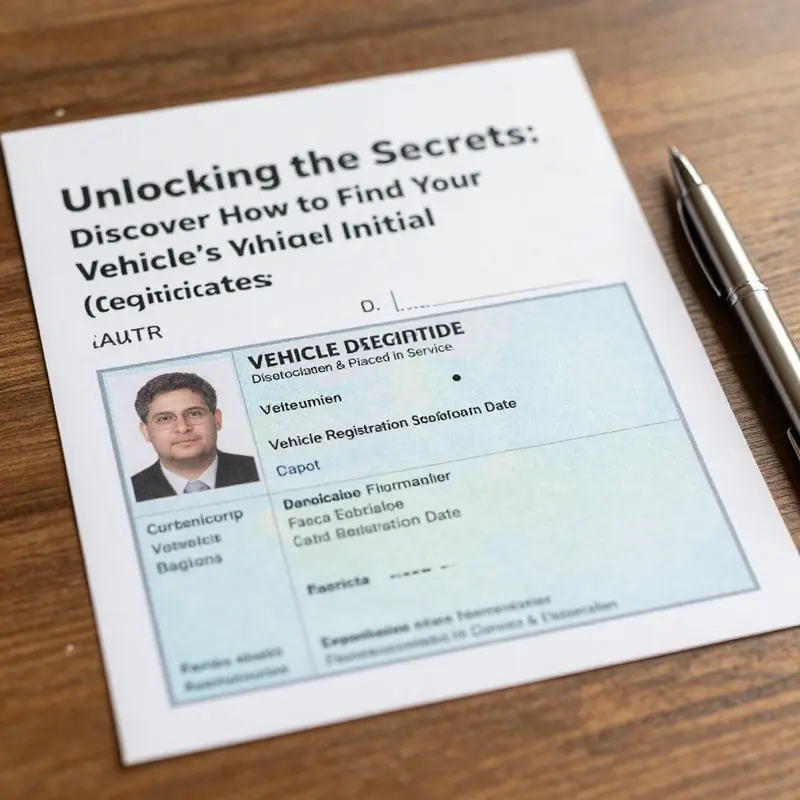
The exact moment a vehicle becomes eligible to roam public roads is not always the moment it rolls off the production line. In many records, the critical date is when the vehicle is placed in service—the first time it is officially registered and licensed to operate. This date matters for depreciation calculations, tax treatment, insurance eligibility, and even certain loan or leasing terms. It also provides a reliable anchor for a vehicle’s age when buyers assess value and for regulators verifying compliance with safety or emissions standards. Understanding where to look and how to verify the information can save time and reduce disputes later in ownership transitions. The clearest and most authoritative source is the vehicle’s registration certificate, often called the title in many systems. This document records the official first registration date—the moment the vehicle was registered with the local DMV or equivalent authority. When you possess the title, you hold the most direct evidence of when the vehicle entered service under public records. The date recorded on the title is not merely ceremonial; it marks the official start of the vehicle’s legal life on the road and establishes the baseline for later registrations, renewals, and compliance checks. If you are investigating a vehicle you may purchase, the title should be your first stop, and it should be cross-checked against any other official paperwork you obtain later.
If the title isn’t readily available, the next most reliable route is to consult the current registration card or recent renewal notices. In many jurisdictions, these documents print or display the same initial registration date that appears on the title. While the information may be presented in a slightly different format or wording, the original registration date remains consistent. This path is practical for owners who have moved or stored documents in a filing system, and it often avoids the need to request additional records from the DMV. The so-called green card, or registration certificate, is another common repository for the initial registration date in several states. It functions as a portable record of vehicle registration and, in practice, serves as a concise reference for the vehicle’s legal status and history. If you are not the owner, you may need to obtain permission from the current owner or another authorized party to access this information. Clear authorization reduces the risk of delays or denial at the DMV window and keeps process integrity intact.
Beyond paper records, the VIN—the vehicle’s unique identification number—opens doors to digital verification. Many state DMVs provide online portals that let you enter the VIN to pull up the vehicle’s registration history, including the first registration date. This approach is especially useful when you cannot locate physical documents or when you want to confirm consistency across records. Access to these portals can require proof of ownership or a legitimate interest, such as a purchase, insurance claim, or legal proceeding, but the payoff is a consolidated view that aligns the VIN with the registration timeline. Online checks typically carry a small fee and may require you to confirm your identity or relationship to the vehicle. In practice, you might visit an official DMV page and follow prompts to retrieve the first registration date. The steps are usually straightforward: locate the VIN on the vehicle or title, enter it into the portal, and request the record. Some states also allow you to search by license plate number but still require ownership verification and the VIN for detailed data.
For those who prefer a broader historical perspective, third‑party vehicle history services compile data from multiple sources and can reveal the first registration date, owner history, and other milestones. These services aggregate information from DMV records, insurance databases, and other feed streams to present a longitudinal view of a vehicle’s lifecycle. While they can be highly helpful for prospective buyers seeking context, it is prudent to treat their findings as supplementary rather than definitive. Cross‑checking the reported first registration date with the title, the current registration card, and the VIN portal helps guard against anomalies such as clerical errors or mismatched records. This layered approach is a practical way to reduce the risk of disputes over a vehicle’s age or its eligibility for certain benefits or programs.
Where records exist, the old‑fashioned route remains meaningful: the DMV remains the custodian of official records. If you are unable to locate the necessary documents in your files, visiting or calling your local DMV office can be a productive move. DMV staff can guide you through the process of obtaining a vehicle history record or a registration verification. In many cases you will need to bring the VIN and the license plate number for faster processing, and you may be asked to demonstrate legitimate interest. A personal visit can be especially helpful in complex cases, such as inherited vehicles, out‑of‑state transfers, or vehicles with multiple ownership changes. The DMV’s human reach, while slower than online inquiries, offers a direct line to the official record and can resolve ambiguities that online portals might not fully clarify.
An important nuance helps keep expectations realistic: the first registration date is distinct from the vehicle’s manufacturing date. The VIN can reveal the year the car was built, but the registration date reflects when the vehicle was first placed into service and licensed. A typical pattern might show a vehicle manufactured in 2021 but first registered in 2022. This distinction matters for depreciation schedules, tax eligibility windows, and insurance underwriting. Recognizing this difference helps prevent misinterpretations that could lead to incorrect valuations or misaligned coverage.
As you pursue these records, cultivate a clear plan of action. Start with the title if it is available, then move to the current registration card or renewal notices. If those do not deliver a definitive answer, turn to the VIN through official DMV portals and, if needed, to a DMV in‑person visit. If you still need corroboration, a reputable third‑party history report can fill gaps and provide additional context—ownership chronology, odometer readings, and documented events that accompany the vehicle’s life in public records. In any case, align your findings across multiple sources to verify consistency. When used in a buying decision, this corroboration is not just prudent; it becomes essential protection against misrepresentation or data gaps that can surface after closing a deal.
For readers seeking ongoing guidance and practical perspectives on vehicle documentation, a visit to the KMZ Vehicle Center Blog offers related discussions that extend these ideas into daily maintenance and ownership considerations. Such resources can complement the more formal routes described above by translating record findings into actionable steps for financial planning, insurance scrutiny, and maintenance scheduling. KMZ Vehicle Center Blog
In sum, the vehicle registration certificate stands as the primary, most authoritative source for the initial placement in service. It is the anchor you will rely on in most ordinary situations, from valuation discussions to tax filings and ownership transfers. The processes described—checking the title, reviewing the current registration card, querying VIN in official portals, and consulting the local DMV—form a cohesive workflow. When discrepancies arise, cross‑checking across the certificate, the VIN, and the DMV’s official records is not merely recommended; it is essential. The goal is to arrive at a precise, defensible first registration date that can withstand scrutiny, whether you are documenting a personal asset, validating a purchase, or preparing a loan application.
External resource: for an official VIN lookup guide from a state DMV, see the California DMV page at https://www.dmv.ca.gov/portal/dmv/vin/ for direct instructions and authority on how to retrieve registration histories. This page provides context for what the VIN data represents and how it connects to the first registration date across compliant records.
Unlocking the Placed-in-Service Date: Reading Registration Cards, Titles, and Notices

When you need to know when a vehicle was placed in service, the date you care about is not the moment of manufacture or the day you bought it. It is the date the vehicle was first registered and placed on public roads—its initial or placed-in-service registration date. This date matters for insurance, depreciation, eligibility for certain programs, and the historical narrative you’re constructing about a vehicle’s life. The trail to that date is typically found in official paperwork, and the most authoritative source is the formal record kept by the state’s motor vehicle authority. The journey to uncover it is as much about understanding what those documents mean as it is about knowing where to look. As you search, you’ll discover that the language on these records varies by state, but the underlying principle remains the same: the first registration marks the moment the vehicle was legally placed in service on state roads, a milestone that gives the record its official weight.
The clearest and most trustworthy place to start is the vehicle’s title—the certificate of title, sometimes referred to as the pink slip in common parlance. This document is the government’s record of ownership, and it also carries the crucial marker you’re seeking: the date of first registration. On the title, you’ll find a field often labeled something like “Date of First Registration,” “Initial Registration Date,” or simply “Registration Date.” In practical terms, this is the date the state acknowledges the vehicle began its life on public roadways under current ownership and a recorded registration. If you have the title in hand, you’re looking at the most direct path to your answer. It is, in many respects, the most accurate and official source of truth for when the vehicle entered service.
If the title isn’t accessible—perhaps you’re evaluating a vehicle you don’t own or you’re dealing with a decommissioned file—the next layer is the registration card itself, sometimes called the registration certificate, or the green card in some regions. In many states, the registration card presents the original registration date or the date the vehicle was first registered. The renewal notices you receive from the DMV can also carry the same date, since the renewal follows the initial registration by the state’s monitoring systems. The language on these documents may vary, but the essential data—the date the vehicle was first registered—remains the anchor. When you’re not the owner, you may need to coordinate with the current owner or obtain proper authorization to access these records. The process may require proof of interest or consent, but the path to the date remains straightforward: the first registration date on the record is the placed-in-service date.
Beyond the title and the registration card, another valuable venue for confirmation is the official registration certificate, sometimes colloquially referred to as the green card. States differ in their paperwork and labeling, but the core idea is the same: a government-issued document that confirms the vehicle’s registration status. In states that still rely on a green-card system, this certificate frequently contains the initial registration date in the same area of the document where the registration details are listed. If you’re reconstructing a vehicle’s service timeline, this certificate can corroborate what you found on the title, strengthening your confidence that you’ve pinpointed the correct date.
For those who want to verify the date remotely, many state DMVs maintain online portals that allow you to retrieve vehicle history information by entering the VIN. In practice, these portals can reveal the first registration date, along with other items such as the vehicle’s history, ownership transfers, and sometimes odometer information. Access to these records often requires proof of ownership or a documented interest in the vehicle, and there is typically a small fee. When you use the VIN-based history search, you are tapping into a centralized stream of data that the DMV maintains to ensure that the service entries align with the official record book. It’s a practical option when you’re trying to corroborate details without handling physical paperwork, and it can often save a trip to the DMV office.
As you weigh your options, consider that each approach has its own type of authority and its own practical constraints. A title is the definitive source, but not always immediately accessible. A registration card or renewal notice can be easier to obtain, yet may require careful interpretation to ensure you’re reading the correct line. The green-card-style certificate offers another layer of verification, especially when cross-checking against other documents. Online VIN-based searches provide a convenient, rapid way to cross-check, though you should be mindful of fees and the need for proof of ownership. In all cases, the goal is to triangulate the first registration date so you have a reliable foothold on when the vehicle was first placed in service.
One practical tip that helps keep the process efficient is to view the date fields not as abstract numbers but as the vehicle’s living timeline. The initial registration date is more than a stamp on a page; it marks the moment the vehicle began its public-service life under the law. If you’re analyzing a car’s history for a purchase, for example, the date can tell you a lot about the vehicle’s lifecycle. A late first registration relative to the model year could indicate a late introduction into service, a potential delay in sale, or a fleet-driven use pattern. Conversely, an earlier registration date tied to a newer model year might reflect multiple owners before the vehicle hit the street. These nuances matter when assessing value, maintenance history, and reliability.
To keep the process accessible, think of the documentation as a set of concentric sources rather than a single document. Start with the title as the primary source of truth. If that is unavailable, move to the registration card or renewal notices, then to the green-card certificate where applicable. When you can, supplement with an online VIN check through an official DMV portal. Finally, for a broader history that helps validate the registration date and builds a fuller narrative of ownership and use, a registered history report can be a useful cross-check. In this approach, the goal is not to replace official records but to corroborate them, to ensure the date you identify genuinely reflects when the vehicle was placed in service on public roads.
For readers seeking practical pathways and a general guide to navigating DMV records, a helpful starting point is the broader resource hub that outlines how these records are organized and accessed in everyday practice. It can offer a user-friendly overview of the kinds of documents that carry the vital dates, how to interpret them, and how to move from one document to another with confidence. If you’re exploring this topic as part of a broader effort to understand vehicle history and maintenance, you can refer to the blog hub for additional context and practical tips, which you can access here: kmzvehiclecenter blog.
In summary, the primary sources for discovering when a vehicle was placed in service are straightforward: the Vehicle Registration Card, the Vehicle Title (pink slip), and the Registration Notice. These documents are official records kept by government authorities and reliably identify the initial registration date. When possible, corroborate the date by checking the VIN-based history through an official DMV portal, and, if needed, consult a comprehensive vehicle history report to corroborate ownership and use patterns. Remember that the registration date is distinct from the manufacturing date; the difference is a truth about timing rather than a distinction in the vehicle’s identity. A vehicle may have left the factory in one year but not entered service until the next, a nuance that often emerges in the timelines you assemble during this search.
To provide a broader frame for legal and practical considerations, you may also want to consult current DMV guidance for your state, as the exact wording on forms, the labels used for the dates, and the availability of online tools can vary. When it comes to reliability and due diligence, combining the strongest official records with corroborating online checks offers a robust path to confirming the placed-in-service date. And in the end, this date anchors the vehicle’s documented life on the road, tying together ownership history, insurance assessments, and the story you’re building about its past use and value. External resource: https://dmv.ny.gov
Tracing the Placed-In-Service Date: Navigating DMV VIN Lookups to Uncover a Vehicle’s Start on the Road

The moment a car first becomes eligible for public roads is not defined by a single universally labeled date. In practice, the date most people care about—the one that marks when a vehicle was placed in service—lives in a set of official records that begin with the vehicle identification number (VIN) and a state’s registration system. Understanding this date is not only a matter of curiosity; it anchors insurance eligibility, tax considerations, resale value, and the integrity of a vehicle’s history when you’re evaluating a used purchase. The core truth is simple: the placed-in-service date is typically the date of the vehicle’s first registration in a given state, which signals the moment the vehicle was legally placed on public roads. That date may align with the model year or come later, depending on dealer timing, import processes, or owner-specific arrangements. The path to uncovering it, however, can be pursued through several reliable avenues, each with its own balance of accessibility, cost, and official weight. The most authoritative source remains the title—often colloquially called the “big green book”—because it records the date the vehicle was first registered. If you hold the title, you hold the clearest answer. But not everyone has the title in hand, so there are other avenues that can lead you to the same endpoint without crossing into guesswork.
When the title isn’t readily available, the next-best route is to examine the vehicle’s current registration card or renewal notices. These documents frequently carry the original registration date, especially in states where the date is printed with clarity. The registration certificate itself—sometimes referred to locally as a green card—can be a surprisingly reliable proxy for that first registration moment. It’s common in several states for the certificate to retain the initial in-service date, which makes it a practical, if sometimes underutilized, source. The caveat is that access may require being the owner or having the owner’s explicit cooperation, or at least a legitimate need, such as transferring ownership or verifying insurance. In these cases, contacting the current owner or the DMV with proper authorization is the prudent course, rather than attempting to force access through informal means.
Beyond physical documents, modern DMV systems increasingly offer online tools that leverage the VIN to pull up official vehicle information, including the first registration date. The process begins with the VIN—a 17-character identifier that sits on the vehicle’s dashboard, door frame, and various documentation. States have built VIN lookup portals into their official websites to streamline verification, especially for buyers, insurers, and lenders. The user enters the VIN, sometimes after confirming ownership or authorized interest, and then the portal returns a packet of data drawn from government records. In many cases, you’ll see a field labeled as the first registration date or the date the vehicle was placed in service, accompanied by the title status and a history of registrations in that state. The experience is typically straightforward, but it’s important to be mindful that not all states present identical data fields or terminology. Some portals may emphasize “first registered” while others might display “placed in service” or similar phrasing.
The practical steps to using a DMV VIN lookup are simple in outline, yet they warrant careful execution. Start by locating the VIN on the vehicle—most commonly on the lower left area of the dashboard visible through the windshield, or on the driver’s door jamb. Once you have the VIN, navigate to your state’s DMV portal and search for terms like “VIN check,” “vehicle information inquiry,” or “title and registration history.” You may be asked to sign in or verify your status as an owner, or to provide proof of interest if you’re not the owner. If you proceed as a buyer or researcher, prepare to demonstrate legitimate access, which could involve presenting a contract, insurance information, or a financing agreement. The cost varies by state and service level; some portals offer free checks for basic data, while others charge a modest fee for a more detailed history that may include registration dates, title status, and lien information. For many, a quick lookup yields the original registration date and confirms whether the vehicle is still in the original state of registration or has moved between jurisdictions.
A word about the relationship between registration dates and the date a vehicle is placed in service helps prevent misreading the data. The first registration date is the date the state accepted the vehicle for on-road use. That date may be close to the model year or a few months later, depending on when the vehicle arrived in the state and when the new registration was processed. The manufacturing or build date, sometimes inferred from the VIN’s model year code, is a separate datum and often appears in manufacturer databases or third-party VIN decoders. Weaving these dates together gives a fuller picture: the vehicle’s build date points to when the car came off the line, while the placed-in-service date tells you when it entered the practical world of streets and highways. This distinction matters in warranty timing, insurance billing, and even the perceived value of a used vehicle, where buyers sometimes equate early delivery with wear and tear.
When you turn to third-party history services—those that assemble VIN-based reports from multiple data sources—you gain access to a consolidated view that can corroborate the DMV data. A standard history report will typically include the first registration date, previous owners, odometer records, and any reported incidents. The benefit here is the broader context these reports provide, which helps you verify the authenticity of the placed-in-service date while also uncovering any discrepancies that deserve closer scrutiny. However, one should exercise caution with third-party sources: the data, while useful, is only as good as its feed and its update cadence. If the DMV shows a date, but a private history source omits it or presents an ambiguous entry, you’ll want to weigh the reliability of each source and, if needed, confirm with the DMV directly.
If you live in a state where navigating the DMV website feels opaque or tedious, or if you’re confirming a vehicle’s history as part of a larger purchase decision, consider in-person or phone inquiries. DMV offices can issue a vehicle history report or a registration verification, and staff can guide you through the correct process to access the precise documents you’re seeking. Bringing the VIN and the license plate number speeds up the session, reducing back-and-forth and potential delays. While this approach may require a little more time, it often yields the most authoritative confirmation, especially in cases where ownership is contested or where access to records must be substantiated for legal or insurance reasons.
In practice, the most robust path for confirming the placed-in-service date combines several elements. Start with a government-backed VIN lookup for the original registration date, cross-check that datum against the title and the registration certificate, and then, if needed, supplement with a state-issued vehicle history report from a reputable, privacy-conscious provider. This triangulation minimizes the risk of relying on a single source and helps ensure you’re not basing a decision on a date that may be misinterpreted or out of date. If you’re in the market for a used vehicle, this layered approach also provides a solid framework for comparing vehicles with confidence. In addition to the official channels, you can consult practical checklists and explanations at your own pace by visiting the KMZ Vehicle Center blog, which offers context and scenarios that illuminate how these dates affect buying decisions. KMZ Vehicle Center blog.
Finally, remember the real-world takeaway: the placed-in-service date is a record of when the vehicle entered public service, not necessarily when it left the factory. You may see a vehicle manufactured in a prior year but first registered in the current year, or a model year that aligns with the build date while registration occurs later due to logistics or dealer timing. This nuance matters because it influences everything from insurance premium calculations to the interpretation of a vehicle’s overall history. For transparency and accuracy, verify the date through the DMV VIN lookup, confirm it against the title and registration certificates, and, when possible, obtain a consistent narrative from a third-party history service to corroborate what the official records show. Your diligence in cross-checking these sources helps ensure you’re accurately tracing when the vehicle truly began its service on the road.
External resource for authoritative guidance: California DMV VIN Check. https://www.dmv.ca.gov/wm/dmv/vin/
Tracing the Moment a Vehicle Was Placed in Service: Leveraging Third-Party History Reports for the First Registration Date
Determining when a vehicle was placed in service hinges on the moment it first enters official records, a date most people recognize as the initial registration date. This date signals the point at which the vehicle was legally placed on public roads and recognized by the state’s motor vehicle authority. For anyone assessing a used vehicle, especially when the physical papers are incomplete or inaccessible, third-party history reports offer a reliable pathway to the truth. These services pull from a broad spectrum of sources—title records, registration histories, insurance claims, and even prior keeper information—to assemble a coherent timeline of a vehicle’s life. In practice, what you gain from a VIN-based report is not merely a single date, but a tapestry of corroborating data points that illuminate when the vehicle first went into service, how it traveled through ownership, and how its record was kept along the way. The date of first registration, typically listed by the DMV or equivalent authority, is the official marker that the vehicle was introduced to public roads. It is distinct from the manufacturing date, which marks when the vehicle came off the assembly line. The two dates rarely align perfectly, and understanding their relationship helps buyers and sellers avoid misinterpretations that can affect value, insurance, and legal responsibility. The value of third-party history services lies in their ability to bridge gaps when the owner cannot present the title or when records are scattered across different jurisdictions. These tools aggregate data from multiple channels, increasing the likelihood of locating the first registration date even if the primary document has been misplaced or lost. When you approach a report with this mindset, you begin to treat the VIN as a key that unlocks a door rather than a single token that confirms a single fact. You will see dates presented in various formats and contexts, sometimes with phrasing like first registered, first issued, or initial title date. Interpreting these clues requires a careful eye and a willingness to cross-check with official records. If a report shows a first registration date that differs from the date printed on a renewal notice or registration card, that discrepancy should trigger additional verification rather than an assumption. A responsible buyer conducts due diligence by verifying the third-party data against primary sources whenever possible, because the chain of custody for a vehicle’s history is only as strong as its weakest link. In this respect, third-party history services serve as a powerful complement to direct DMV records, not a replacement for them. They provide a practical, accessible route to the information when you lack the title, when you need a quick historical snapshot, or when you want to corroborate what you already suspect about a vehicle’s provenance. The process often begins with the VIN, the universal identifier that persists across ownership changes, insurance events, and registration renewals. A credible report will extract the earliest date associated with the vehicle’s registration across jurisdictions and, when possible, align it with the production date gleaned from the VIN’s embedded date code. A typical report will also surface auxiliary data that can further illuminate the timeline: the original country or state of sale, the first registered state, and any gaps in the vehicle’s documented service history. For a prospective buyer, this matrix of information is invaluable. It not only clarifies when the car first appeared on public roads but also helps assess consistency with the car’s odometer history, history of accidents or title issues, and whether the vehicle might have sat idle for extended periods before being put back into service. The clarity you gain from a third-party report comes with caveats. Not all data sources feed into every report, and some jurisdictions may have more robust record-keeping than others. There can be lags between official records and what a report displays, and occasional inaccuracies can creep in when records are misfiled or misread. This is why, even with a strong third-party history, you should perform cross-checks. If possible, request the title or a certified copy of the vehicle’s registration from the current owner, and compare it with the date shown in the history report. A deliberate cross-verification reduces the risk of relying on an incomplete or outdated entry. Think of a first registration date as a baseline—a starting point for establishing a vehicle’s service timeline. In some cases, the first registration date may reflect the initial sale in a different jurisdiction, or it may mark a transfer during a period when the vehicle was still new and awaiting its first full registration in a new state. The distinction matters, because insurance requirements, tax assessments, and even certain warranties can hinge on when the vehicle was first registered rather than when it was manufactured. A practical example helps crystallize this distinction. Suppose a VIN reveals production data indicating the vehicle rolled off the line in 2021, while the report lists the first registration date as May 15, 2022. The implication is that the vehicle was produced in 2021 but was not placed into service on public roads until the spring of 2022. This pattern is common with certain imports, lease returns, or re-registrations following a title transfer. It underscores why reliance on a single data point is insufficient. A robust assessment considers the production timeline, the first registration date, and the odometer trajectory across ownership periods. In the end, the best practice for anyone buying or selling a vehicle is to treat the third-party history report as part of a broader verification strategy. Use it to triangulate the first registration date, but corroborate with the title, the current registration card, and, when feasible, the VIN-based production data. If you are concerned about the completeness of the report or about possible data gaps, consider requesting a formal vehicle history report from the DMV or a trusted authority, particularly when legal or insurance claims are involved. If you do need guidance on how to interpret the data, there are resources that explain the interplay between VIN codes, manufacturing dates, and registration histories, and they can help you navigate any ambiguities that arise in a crowded data landscape. For readers who want a practical touchpoint as they explore these tools, the approach should feel collaborative rather than confrontational: ask questions, request documents, and cross-check dates across sources. When you align the first registration date with the VIN’s production data and with the odometer history, you develop a clear, defensible narrative about when a vehicle truly entered service. This clarity is especially important for a deliberate buyer or a careful seller who wants to avoid misrepresentation, protect value, and ensure that ownership records reflect a true life story rather than a convenient shorthand. If you’re seeking additional perspectives on vehicle history and ownership considerations, the KMZ Vehicle Center Blog offers broader context on maintenance and ownership topics that can complement the data you gather from third-party history reports. You can explore these insights here: KMZ Vehicle Center Blog. As you build your own due diligence checklist, remember that the initial registration date is not the manufacturing date. The distinction matters because it anchors the vehicle in a real-world timeline of use, ownership, and stewardship, which ultimately informs investment decisions, insurance planning, and legal responsibility. With a careful balance of third-party data and official records, you can establish a reliable, defendable sense of when a vehicle was placed in service. This integrated approach helps you move from guesswork to confidence, making every used-car decision more informed and less risky. For official procedures and deeper guidance on verification, consult your local DMV resources and consider the direct line of inquiry they provide for vehicle history and registration records. External resource: DMV Information
Direct DMV Dialogue: Verifying the Date a Vehicle Was Placed in Service Through Your Local Office
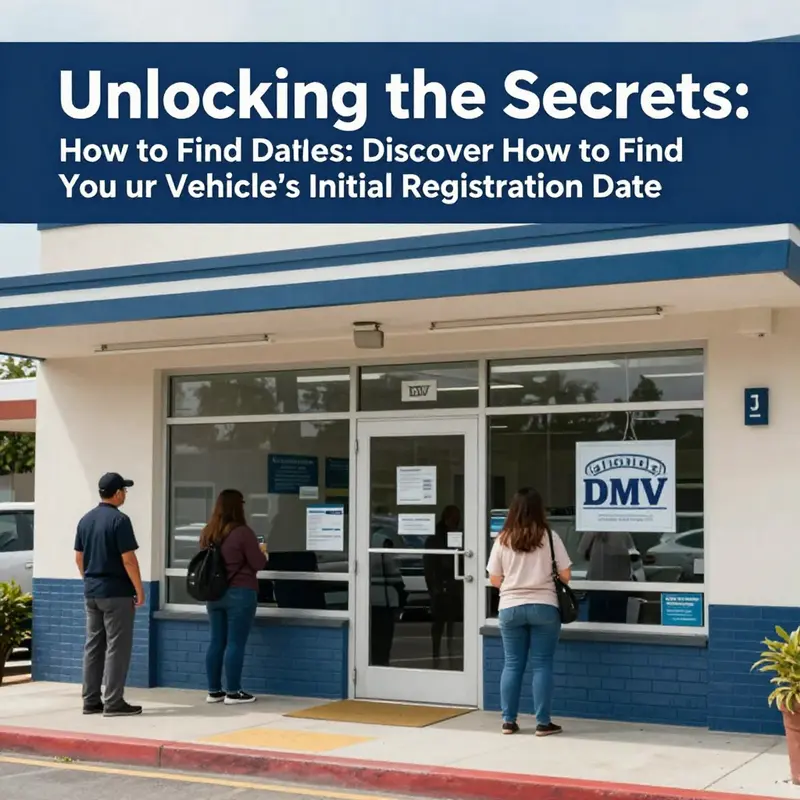
When you need the exact date a vehicle was placed in service, the most trustworthy answer sits in an official file held by your local Department of Motor Vehicles. This isn’t a date stamped on a receipt or buried in a generic vehicle history report; it is the first registration date recorded by the state that legally marks the vehicle’s entry onto public roads. Understanding why that date matters helps frame the steps you’ll take next: accuracy matters in insurance, leasing, and resale, and the DMV’s record is the most authoritative source in the chain of custody for a vehicle’s public life. While it’s possible to glean clues from the title, renewal notices, or third‑party history services, those sources are ultimately secondary to what the DMV can confirm in a direct inquiry. The path to the truth begins with a decision about how to reach the DMV and what you’re prepared to present on the day you ask for the record.
In many states, the direct approach—speaking to a DMV representative in person or via official channels—offers the clearest route to the exact first registration date. Online VIN lookups and history portals exist, and they can be convenient, but they often still require proof of ownership or lawful authorization before the DMV will disclose details tied to a specific vehicle. The key is to treat the DMV as the primary source and use other avenues only to supplement or verify what you obtain from the official record. If you’re documenting a vehicle’s timeline for insurance, a lease, or a sale, you’ll eventually want to see the date reflected in the official record rather than relying solely on a secondary report.
Before you pick a method, assemble the essential facts that will speed the search. Your VIN is the core identifier; the license plate number can help, too, especially if the plate has changed over time or if you’re querying a vehicle with multiple registration periods. A current address or contact information for the registered owner can be useful, though many DMV systems will honor a request from an authorized party even without every detail in hand. A government-issued photo ID is typically required if you’re visiting in person, and you may need to establish your interest in the vehicle—such as being the owner, a prospective buyer under a legitimate inquiry, or an attorney acting on behalf of a client.
If you choose to go in person, you’ll likely begin at a service window or a dedicated vehicle records desk. The clerk will explain what form to fill and what documents to present. In some jurisdictions, you’ll submit a record request, and the DMV will retrieve the official file that contains the first registration date. In others, you’ll explain your purpose, and the clerk will guide you toward the appropriate process. Either way, the date you’ll receive is the DMV’s first registration date, sometimes labeled as the date the vehicle was placed in service. This distinction—between when a car was manufactured and when it was registered for road use—matters, and a careful reader will notice that the latter is the operational milestone the DMV keeps. A simple example helps: a car manufactured in 2021 could receive its first registration in 2022. The manufacturing date is a separate data point found on the VIN record, but the registration date marks when the vehicle was legally placed into service.
Online inquiries can streamline the process, especially for those who cannot visit a local office easily. Many DMVs offer VIN-based searches through official portals or through affiliated service pages. These portals may require you to prove your ownership or your legitimate interest in the vehicle. The steps typically involve entering the VIN, possibly a license plate, and then paying a modest fee for a records search. After that, you’ll receive a report that includes the first registration date, the vehicle’s current status, and sometimes a lineage of ownership. If you’re navigating this route, remember that the database you access is still an extraction from the DMV’s official system, and any date you rely upon should be cross-checked with the formal record if precision is critical.
For those who aren’t the owner, the process becomes more nuanced. The DMV often requires authorization from the owner or proof of authorized interest. This might take the form of a signed release, a letter of authorization, or a power of attorney. It’s not unusual for a clerk to request additional identification or documentation to confirm your rights to request the vehicle’s history. These safeguards exist to protect sensitive information, but they can also lengthen what would otherwise be a quick lookup. If you find yourself in this scenario, prepare to explain your legitimate purpose—insurance evaluation, legal inquiry, or transfer of ownership—and present any supporting documents that demonstrate your stake in the record.
In the context of practical reliability, keep in mind that the DMV’s first registration date is an authoritative indicator of when the vehicle entered service in the eyes of the state. It does not convey the exact moment of manufacture, nor does it always reflect the precise calendar date of a dealer’s initial sale if a vehicle changed hands before the current owner’s registration. Some states record the date directly on the title, while others embed it within a separate registration record that the DMV can disclose upon request. If the title is available, it remains the quickest corroboration of the initial registration date. If the title is not accessible, the registration card—often nicknamed the green card in some states—can also be surprisingly informative. In many instances, the original registration date is clearly printed on the card or in the accompanying documentation that accompanied the initial issuance.
Beyond the strict mechanics of how you request the information, consider the broader purpose you’re serving by obtaining the placed-in-service date. For insurance, the date can affect coverage eligibility, rating factors, and the assessment of a vehicle’s age for policy purposes. For leasing or financing, accurate dates can influence terms and residual calculations. For a prospective buyer or seller, a verified in-service date helps ensure transparency about a vehicle’s history and mitigates odometer or misrepresentation concerns. The reliability of the DMV as a source becomes especially important when disputes arise or when legal tasks require documented proof. In those moments, the direct, verifiable record stands apart from estimates, memory, or external reports.
If you’re already oriented toward the most direct route, you might be weighing the merits of using an intermediary service or relying on a title’s stated date. It’s worth noting that third-party vehicle history services can be valuable for a broad view of a car’s lifecycle, including incidents and ownership transitions, but they do not replace the official first-registration date held by the DMV. They can, however, help you prepare for your DMV visit by compiling a dossier of known variables and potential questions. For those who want a practical starting point, the following approach tends to be efficient: confirm your need with the DMV and then assemble the necessary identifiers, make a plan to visit or contact, and be ready to present proof of ownership or authorization as required.
If you’re curious to see a practical sample of what the broader research landscape looks like, a quick read through a general resource hub can provide context while you prepare for a DMV inquiry. For instance, a basic overview available on the KMZ Vehicle Center blog offers insights into vehicle history considerations and how different records relate to a car’s lifecycle. This can serve as a helpful primer before you step into the official process. KMZ Vehicle Center Blog.
Once you’ve secured the first registration date from the DMV, you’ll have a solid anchor for the vehicle’s chronology. You can then compare this date against the VIN history, the title’s data, and any other documentation you’ve gathered. If discrepancies arise between documents, treat the DMV record as the controlling reference and use the process to resolve them with the agency directly. The end result is a clear, auditable point in time when the vehicle became legally operable on state roads.
In closing, the most reliable path to the exact placed-in-service date is a direct engagement with the local DMV—via in-person visit, official phone line, or sanctioned online portal—and a careful collection of identifiers and authorization as required by your jurisdiction. The DMV’s record is the authoritative source; other avenues serve to corroborate or prepare you for the inquiry. This approach aligns with the practical needs of legitimate inquiries and supports a transparent, well-documented vehicle history that stands up to scrutiny in insurance, leasing, and sale discussions. For jurisdictions that emphasize the formalities of ownership and proof of interest, this disciplined method remains the best way to secure an accurate, legally defensible date. If you’re aiming for precision and peace of mind, start by scheduling a DMV inquiry and bring the VIN, the plate history, and your ID. The truth, recorded in state archives, awaits your request.
External resource: https://www.dmv.ny.gov/vehicle/titles.htm
Final thoughts
Determining the date a vehicle was placed in service is an essential process for ensuring proper ownership documentation and maintaining your vehicle effectively. Through various methods—ranging from checking the vehicle registration certificate to utilizing DMV services and third-party history reports—you can obtain accurate information. Equipping yourself with this knowledge not only enhances your understanding of your vehicle’s history but also supports better decision-making for future purchases or sales. Utilize these strategies to confidently track your vehicle’s registration journey.