Introduction
All Honda enthusiasts know the incredible performance and reliability of the K20 and K24 engines. However, many are unaware of a lurking problem that could jeopardize that hard-earned loyalty—the dreaded Honda VTC actuator rattle. This noise often emerges upon cold starts, leaving drivers with an unsettling sense of dread about their vehicle’s health. In fact, statistics show that neglecting regular oil changes can lead to costly repairs; replacing a VTC actuator can set you back around $2,800 at a dealership. My first encounter with this issue happened last winter; the rattle echoed unsettlingly, reminding me just how crucial timely maintenance is to a car’s wellbeing.
One of the primary culprits behind this issue is sludge buildup caused by infrequent oil changes. Oil plays a vital role in keeping engine components lubricated, and without regular changes, it can degrade and become ineffective. As a result, the vital parts like the VTC actuator may struggle, leading to noises that no driver wants to hear. As one professional stated, “Timely oil changes using genuine Honda oils and filters could prevent VTC actuator failure.” Understanding the importance of adhering to oil change intervals and embracing Honda maintenance tips can save you from not only annoying rattles but also prevent extensive engine damage down the road. Join me as we delve into how to keep your Honda’s engine running smoothly by prioritizing regular oil changes and addressing any mechanical concerns promptly.
Neglecting regular oil changes can lead to serious issues for your vehicle, especially in Hondas with K20 and K24 engines. Here are the main problems that can arise if you don’t change your oil on time:
- Engine Damage: Old oil fails to lubricate your engine properly, causing more friction. This can lead to overheating and serious harm, possibly requiring expensive repairs or even a new engine.
- VTC Actuator Failure: One major concern is the failure of the Variable Timing Control (VTC) actuator. If you don’t change the oil regularly, sludge can build up and block the actuator’s movement, causing the grinding noise many Honda owners fear. One source states, “Timely oil changes using genuine Honda oils and filters could prevent VTC actuator failure.”
- Costly Repairs: If the VTC actuator fails, repairs can be very expensive. It can cost about $2,800 to replace it at a dealership, adding a big extra cost to your maintenance budget.
- Worsening Problems: Ignoring oil changes can lead to even pricier problems later on. An expert warns, “It’s critical to address the issue immediately to prevent more bothersome (and expensive) problems.”
- Decreased Performance: If you change your oil infrequently, sludge and debris can build up, making your engine work less efficiently. You may notice lower fuel economy and slower acceleration, which affects your overall driving experience.
- Complete Engine Failure: In extreme cases, not changing the oil can result in catastrophic engine failure because of insufficient lubrication. This could mean a car that isn’t driveable and needs a total engine rebuild or replacement.
Skipping oil changes affects both your car’s performance and your wallet. Keeping a regular oil change schedule is essential for your vehicle’s health and longevity. Remember, regular maintenance can help you avoid stressful and costly repairs in the long run.
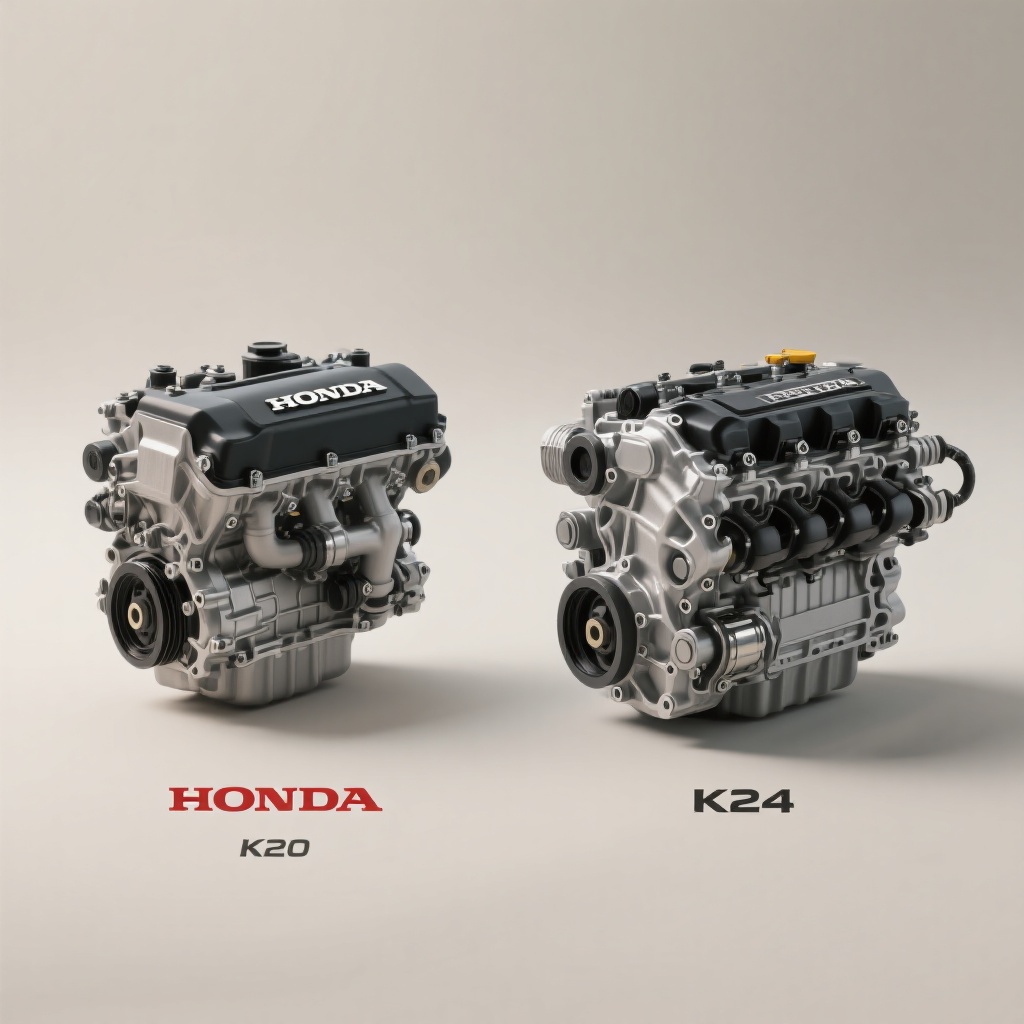
This image showcases Honda’s K20 engine on the left and K24 engine on the right, highlighting their features and design.
Recommended Oil Change Intervals for Honda K20 and K24 Engines
When it comes to Honda’s K20 and K24 engines, understanding the oil change intervals is essential for maintaining optimal performance and longevity. Here are the recommended intervals based on various factors:
- Oil Type:
- Mineral Oil: Change every 5,000 to 7,500 kilometers (3,100 to 4,600 miles).
- Semi-Synthetic Oil: Change every 7,500 to 10,000 kilometers (4,600 to 6,200 miles).
- Full Synthetic Oil: Change every 10,000 to 15,000 kilometers (6,200 to 9,300 miles).
- Driving Conditions:
Your driving habits significantly influence oil degradation. If you often drive in urban congestions, extreme temperatures, or dusty environments, you might need to change your oil more frequently. Frequent short trips, aggressive driving styles, and heavy loading can also lead to faster oil degradation.
- Vehicle Age:
As vehicles age, they may experience increased wear and tear. Older K20 and K24 engines might require more frequent oil changes, regardless of mileage, to ensure effective lubrication and performance.
- Regular Checks:
Always monitor your oil condition, especially for vehicles with high mileage. Look for discoloration, odor, or other contaminants, and consider changing the oil if it appears degraded before reaching the specified mileage.
Practical Maintenance Tips
- Use Quality Oil: Always choose a Honda-recommended oil type, preferably SP-grade 0W-20 for most models, as it ensures optimal performance and protection.
- Change Oil Filter: Each time you perform an oil change, be sure to replace the oil filter to avoid contaminants from re-entering the engine.
- Consult Your Owner’s Manual: Refer to your Honda’s owner manual for model-specific guidelines, as some modifications may alter maintenance needs.
- Consider Seasonal Changes: Adapt oil viscosity to climate conditions; for hotter climates, consider using a higher viscosity oil to protect against heat degradation.
- Set Regular Maintenance Intervals: Even if you don’t reach the mileage limits, schedule at least an annual oil change to combat moisture buildup and ensure your engine runs smoothly.
By adhering to these oil change recommendations and staying conscious of various influencing factors, K20 and K24 engine owners can maintain their vehicles in prime condition, prevent costly repairs, and enjoy a more reliable driving experience.
| Maintenance Type | Cost | Frequency | Long-term Savings |
|---|---|---|---|
| VTC Actuator Replacement | $2,800 | Once (if needed) | Large upfront cost, high impact on budget |
| Regular Oil Changes + Maintenance | $300 – $600/year | Every 5,000 – 15,000 km | Substantial savings over time; prevention of costly repairs |
| Total Estimated Cost Over 5 Years | $2,800 (one-time replacement) | N/A | N/A |
| Total Estimated Cost Over 5 Years | $1,500 – $3,000 (ongoing maintenance) | N/A | Prevents VTC actuator failure and other issues |
Identifying Early Signs of VTC Actuator Issues
Recognizing the symptoms of VTC actuator problems early can prevent costly repairs down the line. Here is a guide to help you identify potential issues:
- Cold Start Rattle: A loud rattling or grinding noise during cold starts that lasts for 1 to 2 seconds. This is often the first sign of a failing VTC actuator, especially after the vehicle has been sitting for several hours. Paying attention to this symptom can allow you to take action quickly before further damage occurs.
- Check Engine Light: Following the cold start rattle, if the check engine light activates and displays codes such as P0011 or P0341, this might indicate a malfunction of the VTC actuator. Ignoring this warning signal can lead to more severe issues, so it is crucial to address it promptly.
- Rough Idling: Noticeable roughness when idling or a fluctuating RPM can be symptomatic of VTC actuator failure due to improper timing of the engine’s operation. This symptom is another warning sign that needs immediate attention to avoid bigger complications.
- Decreased Performance: A decrease in engine performance, especially hesitation during acceleration, can be associated with VTC actuator issues. Recognizing this performance drop as an alarming sign allows for preventative measures to be taken without delay.
- Oil Pressure Warnings: Receiving warnings about low oil pressure may indicate that the actuator is not functioning correctly. Taking these warnings seriously connects to the larger theme of proactive maintenance that can help avert extensive damage.
When to Seek Professional Help
If you notice any of these symptoms, it is crucial to consult a professional mechanic immediately to prevent further damage to your engine. Ignoring these signs can lead to more severe problems, such as timing chain tensioner failure or complete engine damage. Regular maintenance and timely oil changes can significantly reduce the risk of VTC actuator issues significantly. Be proactive in keeping your vehicle in top condition!
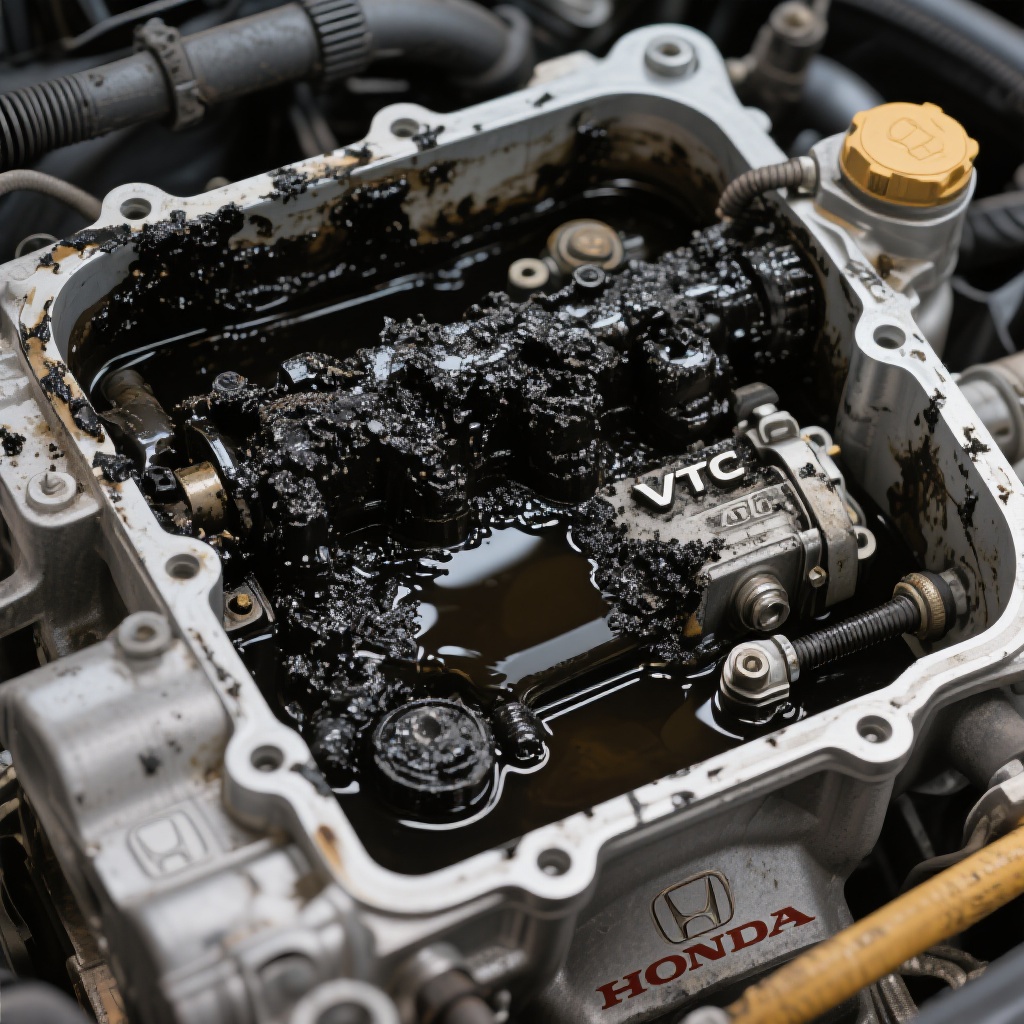
This image visually represents the sludge buildup in an engine, highlighting the accumulation of thick black sludge around vital engine components, emphasizing the need for regular oil changes to prevent serious damage.
Practical Maintenance Checklist for Honda Engines
Maintaining your Honda engine ensures its longevity and performance. Follow this checklist diligently to keep your engine in top shape:
1. Regular Oil Changes
- Frequency: Depending on the oil type and driving conditions:
- Mineral Oil: Change every 5,000 to 7,500 kilometers (3,100 to 4,600 miles).
- Semi-Synthetic Oil: Change every 7,500 to 10,000 kilometers (4,600 to 6,200 miles).
- Full Synthetic Oil: Change every 10,000 to 15,000 kilometers (6,200 to 9,300 miles).
- Tip: Always use Honda-recommended oil, and change the oil filter each time.
2. VTC Actuator Inspection
- Frequency: Inspect during every oil change or every 15,000 kilometers (9,300 miles).
- What to Check: Look for any signs of wear or sludge accumulation. Listen for rattling noises during cold starts.
3. Engine Air Filter Replacement
- Frequency: Every 30,000 kilometers (18,600 miles), or more frequently in dusty conditions.
- Tip: A clean air filter ensures proper airflow to the engine, enhancing fuel efficiency.
4. Spark Plug Replacement
- Frequency: Replace every 100,000 kilometers (62,000 miles) or as specified in your owner’s manual.
- Tip: Ensure you use OEM plugs for optimal performance.
5. Timing Chain/Tensioner Inspection
- Frequency: Inspect during every major service, usually at 100,000 kilometers (62,000 miles).
- What to Check: Ensure proper tension and look for any signs of wear or damage.
6. Cooling System Service
- Frequency: Inspect every 24,000 kilometers (15,000 miles) and flush every 48,000 kilometers (30,000 miles).
- Tip: Keep coolant levels topped up, and ensure there are no leaks.
7. Brake Fluid Inspection
- Frequency: Check at every oil change, and flush every two years.
- Tip: Old brake fluid can absorb moisture, leading to decreased brake performance.
8. Transmission Fluid Check
- Frequency: Inspect every 60,000 kilometers (37,000 miles). Change fluid as needed.
- Tip: Use Honda-recommended transmission fluid types for optimal performance.
9. Tire Rotation and Alignment
- Frequency: Rotate tires every 10,000 kilometers (6,200 miles) and check alignment annually.
- Tip: Proper tire maintenance helps with handling and prolongs tire life.
By following these maintenance tasks at the recommended intervals, you can help ensure your Honda remains a reliable and enjoyable vehicle for years to come. Don’t overlook any signs of mechanical issues, and consult a professional when necessary to keep your engine running smoothly!
Conclusion
In conclusion, maintaining your Honda’s engine through timely oil changes and proper maintenance is crucial for both performance and longevity. As discussed, neglecting these basic yet vital practices can lead to severe consequences, such as engine damage, the infamous VTC actuator failure, and other costly repairs that add a heavy financial burden to car ownership. For instance, the cost of replacing a VTC actuator can exceed $2,800, an expense that can be easily avoided with a commitment to regular maintenance.
Regular oil changes are essential as they prevent sludge buildup, ensuring that all engine components function optimally. Clean oil not only lubricates but also aids in heat dissipation, protecting your engine from the risk of overheating and premature deterioration. Furthermore, understanding the recommended oil change intervals, depending on your driving conditions and oil type, significantly contributes to a prolonged engine lifespan.
The evidence is clear: investing a little time and money into maintenance can lead to substantial savings in the long run, reducing the risk of unexpected mechanical failures and enhancing your overall driving experience. Proactive maintenance allows you to enjoy the reliability and performance that Honda vehicles are known for, ensuring that they remain a source of pride and satisfaction for years to come. Therefore, stay vigilant and adhere to a regular maintenance schedule – your engine will thank you for it!
| Oil Type | Viscosity | Benefits | Ideal Change Interval |
|---|---|---|---|
| Mineral Oil | Typically 5W-20 | Affordable, readily available, basic engine protection | 5,000 to 7,500 kilometers (3,100 to 4,600 miles) |
| Semi-Synthetic Oil | 5W-30 or 0W-20 | Enhanced protection, better performance in varying conditions | 7,500 to 10,000 kilometers (4,600 to 6,200 miles) |
| Full Synthetic Oil | 0W-20 | Superior protection, optimal performance, less sludge buildup | 10,000 to 15,000 kilometers (6,200 to 9,300 miles) |
Call to Action
Check your oil and schedule regular maintenance to ensure your Honda remains in prime condition. Staying on top of oil changes and being vigilant about these symptoms can save you from unexpected repairs in the future.
For reliable Honda oil change recommendations, consider visiting Honda’s official service page for detailed guidelines and to understand the importance of maintaining your vehicle’s performance.