
Proper vehicle servicing is paramount for maintaining performance, safety, and longevity. The frequency with which you should service your vehicle is contingent upon various factors, including manufacturer recommendations, your unique driving conditions, and the type and age of your vehicle. For most vehicles, a general rule of thumb is to conduct services every 10,000 to 15,000 kilometers or every 6 to 12 months, whichever comes first. This article will explore each of these influencing factors in detail: the manufacturer’s recommendations, how driving conditions can impact servicing needs, the critical importance of regular maintenance, and the role of inspections in ensuring safety standards.
Reading the Schedule: Manufacturer Recommendations as the Backbone of Vehicle Servicing
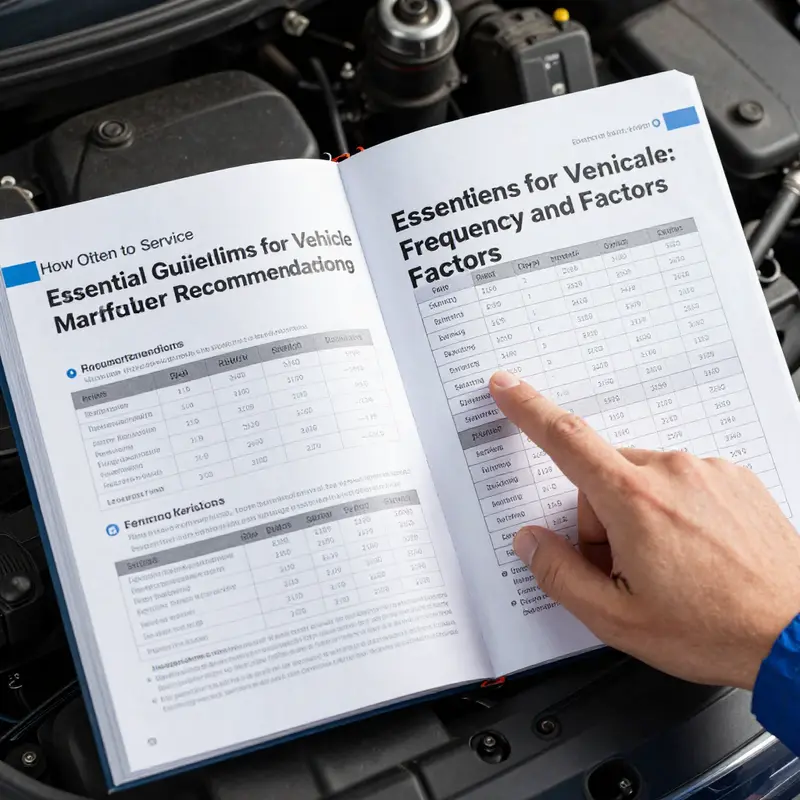
When you own a vehicle, the most trustworthy compass for maintenance is the schedule laid out by the manufacturer. It is built on years of testing, engineering insight, and real-world data that translate into a maintenance cadence meant to preserve performance, safeguard safety, and extend the life of the vehicle. Yet this cadence is not a one-size-fits-all decree etched in stone; it is a framework that reflects how the vehicle was designed to work, the environment in which it is expected to perform, and the kind of stresses it will endure over time. The chapter you are reading now invites you into that framework—not as a recipe carved in permanent ink, but as a living guide that you adjust with practicality, observation, and a clear appreciation for the purpose behind each maintenance task. In this sense, the recommended intervals function as a conversation between the machine and the road, with the owner acting as the interpreter who translates the manufacturer’s intent into everyday care.
At its core, the typical service interval is a balancing act between mileage and time. For many modern vehicles, the manufacturer’s guidance centers on two complementary measures: distance traveled and elapsed time since the last service. The range most factory schedules settle on sits roughly around every 10,000 to 15,000 miles, or about 16,000 to 24,000 kilometers, with inspections or maintenance tasks prescribed on a time cadence—often every 12 months, whichever comes first. This pairing of mileage and time recognizes that engines do not wear solely because they accumulate miles; they age with time as seals dry, fluids degrade, and components lose some of their fresh-steel efficiency. The reminder that a service is due based on both miles and months helps accommodate both heavy highway usage and the slow deterioration that accompanies aging components.
However, the landscape of vehicle design has evolved. Some high-performance or technologically advanced models operate under tighter intervals because the components experience higher stress. Others, equipped with modern synthetic oils and advanced lubrication systems, may extend intervals for oil changes while still requiring attention to transmission fluid, coolant, and brake fluid with professional diligence. The manufacturer’s manual is not merely a collection of numbers; it is a maintenance philosophy that aligns with the engine’s architecture, the transmission’s hydraulic requirements, the cooling system’s capacity, and even the electrical sensors that track wear indicators. In practice, you will often find that the manual details multiple tasks and their associated intervals: oil changes, filter replacements, tire rotations, brake inspections, fluid checks, belt or chain inspections, and the suspension and steering checks that keep the vehicle responsive and predictable on the road.
The practical upshot for drivers is straightforward: treat the manual as your operating manual for safety, reliability, and cost control. Adhering to the specified schedule is not about obeying a bureaucratic rule; it is about maintaining the vehicle’s warranty integrity, protecting fuel efficiency, and reducing the risk of unexpected failures. When a service is overdue, the wear items that the schedule guards against—such as worn oil, contaminated coolant, or degraded brake fluid—can escalate into more expensive repairs or compromise performance. The warranty around many modern vehicles takes a careful watch over service history; neglecting the prescribed maintenance can, in some cases, complicate warranty coverage. In other words, following the schedule is a prudent form of risk management, not a mere ritual.
The time element in the schedule also accounts for aging fluids and materials that do not wear out in a linear fashion with miles alone. Engine oil, for example, can degrade not only with miles but also with heat cycles, contamination, and short trips that never allow the engine to reach optimal operating temperature. This is why many drivers who live in climates with large temperature swings or who frequently make short trips discover that a shorter interval—toward the lower end of the recommended range—better protects the engine. Dusty or sandy environments, frequent towing, and aggressive driving can accelerate wear on many systems, from air filters to brakes to differentials. In such conditions, it is reasonable to adopt a more conservative service cadence—sometimes as frequent as 5,000 to 7,500 miles (8,000 to 12,000 kilometers)—to keep the vehicle from premature wear. The core idea here is not to fear maintenance but to tailor it to the realities of your driving life, while still respecting the manufacturer’s framework.
An intelligent approach, then, blends the manual’s guidance with observation. Many modern vehicles come equipped with maintenance reminder systems. These are not decorative dashboards but data-driven prompts that translate the car’s actual condition into service needs. They monitor driving patterns, sensor data, and fluid life estimates to determine when a particular task should be performed. In this sense, the reminder system can outperform a rigid schedule, especially for drivers whose patterns differ from the average. If the car says a service is due in a few hundred miles because the system detects elevated wear or aging fluids, it is wise to heed that alert as seriously as you would a calendar cue. Those reminders exist precisely to prevent the very situation where you notice a problem only after a road-imposed clue—like a creeping loss of performance or a dashboard warning light—that would have been easier to address earlier.
The real-world application of these ideas becomes most meaningful when you recognize how your vehicle’s design and your daily routine interact. A vehicle that spends most of its life cruising on highways at steady speeds may drift along the upper end of the interval without issue, thanks in part to consistent engine loading and predictable thermal cycles. A vehicle that is constantly making short trips from cold starts to city stops or one that tows heavy loads may accumulate wear more quickly in the oil, cooling system, and brakes, necessitating more frequent checks. The manufacturer anticipates such variances by embedding a maintenance plan that includes a sequence of tasks with specific triggers. Oil changes often lead the charge, as they directly influence lubrication quality and engine life. Filter replacements follow to keep contaminants out of critical systems. Fluids—transmission, coolant, brake, and power-steering, where applicable—are scheduled to maintain hydraulic performance and prevent corrosion or phase separation. Then there are inspections of belts, hoses, brakes, steering components, suspension, and tires—the human-scale checks that catch wear before it becomes a performance problem.
The broader message is that the maintenance schedule is a living document, not a static decree. As you read it, you should keep in mind the vehicle’s design intent and your life on the road. This is where the intersection of regulation and routine care comes into play. For instance, in Western Australia, modifications to a vehicle—such as changes to the body, engine, or dimensions—can trigger annual inspections to ensure continued roadworthiness. Likewise, vehicles repaired after a write-off must pass an inspection before licensing. These regulatory touchpoints remind us that maintenance is part of a larger ecosystem of safety, accountability, and reliability on the road. They illustrate how the care of a vehicle extends beyond a simple service interval and into the realm of ongoing compliance and safety standards. Official information on vehicle inspections in such contexts is accessible through relevant state authorities, and these requirements sit alongside the manufacturer’s schedule as guides that help keep vehicles fit for duty.
For those who prefer a practical, discoverable path, the owner’s manual remains the most authoritative source. It is the document that translates the abstract idea of “service frequency” into concrete steps. It will outline the exact services required at each interval, including what to check, what to replace, and what to test. It will also indicate the recommended quality and specification for lubricants and fluids, which can be surprisingly specific—engine oil viscosity, transmission fluid type, coolant formulation, and brake fluid compatibility all matter. If your driving is anywhere near the edge of what the manual describes—whether that means frequent urban stop-and-go, heavy towing, or operation in extreme heat or cold—lean into the more conservative end of the schedule. You are not wasting time or money by prioritizing proactive care; you are aligning with the design intent of the vehicle and preserving its reliability for the long haul.
In the space between the manufacturer’s schedule and the day-to-day realities of road use, there is room for thoughtful decision-making. A reasonable routine is to plan annual checks that cover fluid levels, filters, and wear indicators. Use the mileage milestones as strong markers, but let the driving environment and lifestyle modulate the exact timing. If you notice performance changes, unusual noises, smells, or vibrations, do not wait for the next fixed date. Schedule a diagnostic check promptly. The objective is not simply to avoid breakdowns; it is to keep the vehicle performing as intended, preserving fuel efficiency, maintaining safety standards, and protecting the resale value that depends in part on a well-documented maintenance history.
To keep this approach grounded and actionable, consider a simple mental model: treat the schedule as a recommended minimum, not a ceiling. If your vehicle accumulates miles rapidly through long highway journeys, you may reasonably expect to reach the mileage threshold sooner rather than later. If your daily use consists mainly of short trips that keep the engine from reaching full operating temperature, those fluids and seals age faster, and the time-based considerations become more critical. If you combine both heavy use with extreme conditions—dusty roads, high temperatures, frequent towing—the margin for delay narrows even further. In all cases, the goal is to meet or beat the manufacturer’s maintenance expectations, and to adjust the timing in a way that respects the specific conditions of your vehicle’s life on the road.
A practical advantage of embracing the schedule is that it creates a predictable rhythm for maintenance planning. You can coordinate service visits with a trusted shop or dealership, align them with your calendar, and budget for expected costs. When service intervals are routinely observed, you also gain a clearer audit trail for resale. Buyers and inspectors often value consistent service histories; they reflect responsible ownership and attention to the vehicle’s ongoing well-being. And while it is tempting to push intervals to the limit to save money in the short term, the longer-term math tends to favor regular, quality maintenance. The small costs of routine service pale beside the potential price of an avoidable failure or a warranty dispute triggered by skipped steps.
If you are looking for a starting point that aligns with general industry guidance, a conservative default is to plan service every 10,000 to 15,000 miles (approximately 16,000 to 24,000 kilometers) or every 12 months, whichever comes first. This rule accommodates most everyday driving while leaving room to adjust upward in the face of harsh conditions or demanding usage. Keep in mind that some vehicles may carry different schedules; others may present oil-change intervals that are more generous thanks to advanced lubricants and engine design. The manual, and the maintenance reminder system if your car has one, are your best signals for when to intervene. If you want to explore the nuances of oil-change intervals further, a deeper dive into the topic can be found in related articles, such as the one dedicated to optimal oil-change intervals time versus mileage, which discusses how oil type and driving patterns influence service timing. optimal-oil-change-intervals-time-vs-mileage.
In sum, the question of how often to service a vehicle is answered by a combination of the manufacturer’s carefully tested schedule, the realities of how you drive, and the vehicle’s life story. Engines are sophisticated, but the logic of maintenance is simple: keep the essential fluids clean, the filters free of contaminants, the belts and hoses intact, and the mechanical linkages primed for safe operation. Do this on a cadence that respects the manual, adapts to your climate and usage, and leverages modern reminder systems to stay on track. When in doubt, consult the vehicle’s owner manual or a certified mechanic who can translate the schedule into a concrete, time-bound plan tailored to your car, your climate, and your road conditions. And as you maintain this routine, remember that the ultimate payoff is a vehicle that delivers consistent performance, dependable safety, and a longer, more reliable life on the road.
External resource: For a broader, evidence-based view of vehicle maintenance scheduling, you can consult Consumer Reports’ Vehicle Maintenance Schedule, which synthesizes testing and practical data across many makes and models: https://www.consumerreports.org/cars/vehicle-maintenance-schedule-a92187555/
The Road Wears the Car: How Driving Conditions Shape When You Service Your Vehicle

Deciding how often to service a vehicle is rarely a simple math problem between miles and months. It is, instead, a negotiation between the car’s design and the life the road gives it. Manufacturers publish maintenance schedules based on controlled testing, but those schedules assume typical usage, steady climates, and reasonable road quality. In the real world, every drumbeat of the engine is influenced by where you drive, how you drive, and the environment that surrounds you. The broad rule of thumb—service every 10,000 to 15,000 kilometers, or roughly every 6 to 12 months, whichever comes first—offers a practical baseline. It is important, however, to treat that baseline as a starting point rather than a hard ceiling. The chart of your vehicle’s needs changes with the roads you travel and the favors or fevers the machine endures on them. Regular servicing is not a luxury; it is a form of protective maintenance that keeps performance steady, safety intact, and expensive repairs at bay. A well-documented service history also makes it easier to pass inspections and licensing requirements in places that require roadworthiness verification. These general ideas provide a framework, but the more precise answer—how often to service—depends on a careful reading of two things: the conditions under which you drive and the age or type of your vehicle. In practical terms, the road you choose has a direct say in the maintenance rhythm you adopt. That rhythm should be guided by a mixture of the manual, the mechanic’s eyes, and your own experience behind the wheel.
Driving conditions, perhaps more than anything else, determine the pace of wear and the urgency of checks. Under normal driving, the engine and its supporting systems accumulate miles with a relatively even cadence. You may find that the oil regime suggested by the manufacturer—an oil change every 5,000 to 7,500 miles, or their kilometer equivalent—fits comfortably into your life. Yet when the car spends most of its time in conditions that fry oil quality or accelerate contamination, the same manufacturer’s schedule starts to feel too relaxed. Short trips are a prime example. When an engine never reaches a proper operating temperature, moisture and fuel residues linger in the oil and within engine compartments. The oil can degrade faster than you would expect, and filtration systems must work harder to keep contaminants at bay. In these cases, the interval stretches or compresses toward a more frequent change—potentially every 3,000 to 5,000 miles, or about 4,800 to 8,000 kilometers. It is not simply about the dirtiness of the oil; it is about the cumulative toll that heat, acid formation, and oxidation take on gaskets, seals, and turbomachinery. The same logic applies to stop-and-go traffic, where repeated acceleration and deceleration cycles heat up catalytic converters and exhaust components, stressing the exhaust, air-fuel sensors, and oil-cooling pathways. In extreme temperatures, hot or cold, the oil’s viscosity shifts, leading to changes in lubrication performance that can hasten wear. If a vehicle tows heavy loads or regularly operates under a heavy load for long periods, the engine’s stress rises again, and so should vigilance over intervals for oil changes, filters, and fluids. Dusty or off-road environments compound this effect. Dust bypasses basic filtration more readily in some conditions, abrades seals, and accelerates clogging in air and fuel filters. The consequence is a more rapid escalation of wear on pistons, rings, and valve trains. In all these scenarios, fluids and filters deserve more frequent scrutiny. The lesson is not that you must abandon the manufacturer’s guidance, but that you must adapt it to your daily reality.
In practice, this adaptation begins with understanding the role of one component within the broader lifecycle of the vehicle: the engine’s lubrication system. Engine oil is more than a fluid that keeps metal surfaces apart. It acts as a heat sink, a carrier for contaminants to be collected by filters, and a shield that reduces friction between moving parts. When driving conditions press your oil toward its limits, the oil’s protective ability deteriorates faster. The rule of thumb for oil changes—every 8,000 to 12,000 kilometers under normal conditions (roughly 5,000 to 7,500 miles)—reflects a balance between replacing oil before it loses its lubricating capacity and not changing it so frequently that you waste money and energy. In harsher environments, the interval shifts toward the lower end of that range or even beyond. And the simple practice of warming the engine before draining old oil has real benefits: it helps the used oil flow more freely, flushing out contaminants more effectively. A brief warm-up, just a few minutes, can make the draining process more complete and the new oil’s protective layer more effective from the moment you start driving again.
The broader question of climate and geography adds further nuance. In harsher climates, maintenance schedules tighten. A study exploring real-world conditions across German-brand passenger cars used in Kazakhstan and Poland underscored a vital point: the actual operating environment can demand intervals that depart from standard laboratory-based recommendations. Temperature extremes, road quality, altitude, dust levels, and driving patterns all converge to shape how quickly lubricants degrade, how quickly filters clog, and how quickly components show wear. The takeaway is clear: maintenance must be tailored not only to mileage but to actual usage patterns and environmental context. If you live where winter temperatures plunge or summer heat tests the cooling system, or where roads are peppered with dust and rough patches, you should expect to tighten your maintenance discipline. You might find yourself checking fluids more often, inspecting belts and hoses on a more cyclical basis, and scheduling more frequent oil and filter changes. The goal is not to chase a schedule that looks good on paper but to preserve performance and safety in the conditions you actually encounter.
To translate this into a practical approach, begin with the owner’s manual as your base map, then calibrate that map using your daily route and climate. If you face frequent severe conditions, use a more conservative interval for oil changes and filter replacements, and don’t hesitate to shorten the distance between visits to your mechanic. A simple habit—keeping a service log and recording odometer readings, trip types, and notable driving anecdotes—helps you observe patterns over time. It becomes easier to notice if you’re consuming more oil than before, if you’re seeing more exhaust smoke during startup, or if you’re hearing unusual engine noises that didn’t exist previously. These signs, while not definitive on their own, are prompt signals to check the oil level, the quality of the oil, and the condition of the filters and tires. It is also wise to keep frequent checks of non-lubricant systems—brakes, tires, suspensions, and cooling components. Severe driving conditions often put unusual stress on these parts, amplifying the risk of safety-related failures if they are neglected in favor of a longer-than-necessary service interval. In other words, the frequency of service becomes a holistic gauge of the car’s health, not merely a date on a calendar or a number on an odometer.
Connecting these ideas to the day-to-day experience behind the wheel, think about the way your typical trips unfold. Do you drive short hops across town every day, never letting the engine reach its optimal operating temperature? Do you pull a trailer or caravan, or regularly traverse dusty ranch roads or mountain tracks? Are you routinely caught in urban traffic that compels constant idling, stop-and-go cycles, and high engine load during brief bursts of acceleration? Each of these patterns can warrant a closer look at the vehicle’s service cadence. The aim is fidelity to the vehicle’s needs rather than rigid compliance with a one-size-fits-all timeline. A quiet engine, consistent performance, and reliable response to steering and braking inputs are all indicators that your maintenance schedule is aligned with real usage. If you notice a change—more frequent top-ups, a drop in fuel efficiency, or a lag in throttle response—these signals should prompt a review of the maintenance plan. In some cases, you may decide with your mechanic to shift your service window to better reflect your environment, while also ensuring you adhere to essential checks of fluids, filters, tires, and brakes. The core idea is simple: adapt the schedule to your road, not the other way around.
This approach also has practical advantages when it comes to inspections and roadworthiness. In jurisdictions where modifications or substantial repairs trigger mandatory inspections for licensing or safety checks, keeping a robust service history and up-to-date maintenance is not just prudent but essential. For instance, where modifications to bodywork, engine, or dimensions can lead to annual inspections, or where vehicles repaired after a write-off must pass inspection before licensing, a disciplined service routine helps demonstrate ongoing roadworthiness and reliability. In such contexts, a traceable maintenance record becomes part of the vehicle’s overall health story, a narrative that reinforces safety and compliance alongside performance. While the exact rules vary by region, the underlying principle remains constant: regular maintenance supports a safer driving experience and reduces the risk of costly, last-minute failures that could jeopardize safety or licensing.
For readers seeking a concise yet practical anchor, consider the balance reflected in professional guidance for maintenance intervals under varying conditions. The standard guidance suggests maintaining oil changes every 8,000 to 12,000 kilometers under normal operating conditions, with a bias toward the lower end if you encounter frequent severe driving. This guidance aligns with the broader rule that routine service—oil changes, filter replacements, brake fluid checks, tire inspections, and fluid level audits—should be performed with a sense of ongoing observation rather than a single, annual deadline. If you want to explore a concrete example of how to interpret and apply intervals in the context of time versus distance, you can consult the article on optimal oil-change intervals time vs mileage, which offers a targeted lens on balancing mileage with calendar time in setting maintenance plans: https://kmzvehiclecenter.com/optimal-oil-change-intervals-time-vs-mileage/. This resource provides practical perspectives on how to tailor oil-change timing to your vehicle’s usage profile without sacrificing engine health.
In summary, the frequency of vehicle servicing must reflect the driver’s reality—the road, the weather, the climate, and the load carried. It is not enough to follow a generic timetable; the clock must be wound by the road you actually travel. Short trips, hot or cold extremes, dusty trails, and towing duties all compress the window in which oil and filters can perform optimally, while more forgiving environments may allow some leeway. The mechanic is both translator and adviser, turning the signals from your car into actionable maintenance steps. A well-documented service regimen, informed by both the owner’s manual and real-world experience, supports longevity, reliability, and safety. It also provides a clearer path to pass any required inspections with confidence, reinforcing a broader commitment to roadworthiness as a daily practice rather than a one-off event. If you want a practical starting point, begin with the manufacturer’s baseline, adjust for your environment, and maintain a habit of checking fluids and wearing parts. Let the road guide your service intervals, and your vehicle will repay that consideration with consistent performance, predictable reliability, and safer driving for years to come. For readers seeking deeper context on how severe driving conditions alter maintenance needs, the Motors Trends discussion offers a broader view of when to service under challenging conditions: https://www.motortrend.com/features/when-to-service-your-vehicle-severe-driving-conditions/.
null
null
The Service Schedule Compass: How Often to Service Your Vehicle and Why Inspections Matter
A vehicle’s service schedule is less a stubborn deadline than a compass that points toward safety, reliability, and long-term value. It sits at the intersection of what the manufacturer prescribes, how you drive, and the age and overall condition of the car. The driver who understands this intersection avoids the expensive surprises that come from neglect while also sidestepping the pressure to overservice a car that is still fundamentally sound. In practical terms, the cadence you adopt should reflect three core realities: the guidance offered by the manufacturer, the realities of your daily routes and climate, and the vehicle’s lived mileage. When these elements are aligned, the routine maintenance becomes a shield against sudden breakdowns and a guarantee that safety systems stay responsive in real-world conditions.
Manufacturer guidance serves as the starting point. Most modern books on vehicle maintenance present a cadence that blends mileage and time. Some engines demand attention on a shorter loop, especially if you face stop-and-go urban traffic, frequent short trips, or heavy loads. Others tolerate longer spans between visits if the engine operates in mild conditions and uses premium fuels or synthetics. The bottom line is simple: consult the owner manual first. The manual translates the car’s design into a structured plan, outlining service intervals that reflect the engine tolerances, lubrication needs, and component wear profiles engineered into your specific model. If you’re unsure or your driving profile changes—say you start towing, switch to more aggressive driving, or move from city to rural roads—the smart move is to seek a certified mechanic for a tailored recommendation. They can translate the manufacturer’s baseline into a practical schedule that accounts for your real-world use, not just the idealized conditions in a brochure.
Usage and environment shape how aggressively you should adhere to that baseline. A car that spends most days on highways at steady speeds is generally easier on its components than one that spends hours in city traffic, repeatedly accelerating and braking. In hot or cold climates, extreme temperatures stress fluids and battery systems differently, which can justify more frequent checks of coolant levels, air conditioning performance, battery health, and rubber seals. If you regularly drive on dusty dirt roads, or if your vehicle carries heavy loads or a trailer, the brakes, tires, and suspension will experience accelerated wear. In these cases, the practical service interval can shift toward the shorter end of the recommended spectrum. Conversely, vehicles with low annual mileage and little harsh usage can often space out the visits a bit more, provided they are well maintained during each service and inspected for any wear that might not be obvious during routine driving.
Across regions, many owners settle on a cadence that balances time and distance. A common practical guideline is to service roughly every 5,000 to 10,000 miles or every 6 to 12 months, whichever comes first. This approach acknowledges that engine oil degrades with time and use, and that other systems—brakes, tires, fluids, and electrical components—need periodic attention regardless of miles. In other markets, a kilometer-based cadence is more common, such as every 10,000 to 15,000 kilometers within a year. Either way the emphasis remains: use-time and use-distance both govern when service is due, and the safest choice typically errs on the side of regular checks rather than postponing.
To translate these guidelines into action, every owner should treat the owner manual as a living document. The manual provides the baseline schedule, but it is also a resource for understanding what constitutes a service beyond counts of miles or months. A routine service is not simply a stopgap for a tired engine; it is a health check that confirms the vehicle’s ability to stop, steer, and accelerate safely. It is a chance to verify the integrity of the braking system, the condition of tires, the level and quality of fluids, the reliability of lights and the electrical system, and the responsiveness of the battery and charging system. It also gives a mechanic the opportunity to notice subtle signs that something is approaching its wear limit—a small leak here, a changing brake-pade bite there, a tire with uneven wear that may indicate a misalignment. Each of these observations, if addressed early, can extend the life of the vehicle and prevent a larger, more costly repair later.
The core checklist that tends to be part of any standard service is straightforward and practical. The brakes are inspected for wear and a sense of pedal feel. Tires are checked for tread depth, proper pressure, and signs of uneven wear that could signal alignment or suspension issues. Fluids receive careful scrutiny: engine oil, coolant, brake fluid, transmission fluid, and even windshield washer fluid are assessed for level and condition, with changes performed as needed. The lights and electrical systems are tested to ensure every function—from headlights to turn signals to interior indicators—works reliably. The battery and alternator are evaluated for health and charging efficiency, a crucial check in preventing a roadside surprise. Finally, suspension and steering are examined for worn components that could compromise handling. Taken together, these checks create a safety net that aligns the car’s current state with the expectations you have around performance, responsiveness, and reliability.
Delays in servicing often stem from the belief that minor issues will self-correct with time. In reality, small wear patterns compound. A brake pad that is just within the safe threshold today can become a safety concern a few weeks later, and a tire with uneven wear may reveal a mounting problem or an alignment issue that, if left unaddressed, will escalate into uncomfortable vibration, reduced fuel efficiency, or a dangerous handling characteristic. Regular inspections, therefore, are not a luxury but a practical habit that preserves both safety and the vehicle’s value. They are also a continuing assurance that your car remains compliant with the safety expectations set by regulatory bodies in many jurisdictions. The goal is not to chase the latest trend in maintenance but to maintain a consistent, performance-focused approach that keeps the car predictable and dependable.
Driving conditions and the specifics of the vehicle itself also shape how often you service. A compact car with a light duty cycle in a temperate climate can follow the manufacturer’s baseline more closely than a heavy-duty vehicle that operates in extreme heat, requires frequent towing, or endures long stretches of dusty, corrosive air. Diesel engines, turbocharged units, and engines with complex fuel systems often require attention to fuel filtration, air management, and cooling components at a rhythm that reflects their particular stress profile. The same applies to vehicles with modified components or after significant repairs where the roadworthiness and safety checks must reflect the new reality of the vehicle’s operation. The practical upshot is that the schedule is a living plan, not a static calendar. It should adapt to how you drive, where you drive, and how the vehicle behaves over time.
A useful perspective comes from recognizing how regulation intersects with everyday maintenance. In some regions, safety inspections are scheduled not just to confirm the vehicle’s current state but to ensure continuity of roadworthiness after certain modifications or after substantial repairs. For example, in Western Australia, vehicles that have undergone body, engine, or dimensional changes may be subject to an annual inspection to confirm that the vehicle still meets road-safety standards. Likewise, vehicles repaired after a write-off must pass an inspection before licensing. While these rules vary by jurisdiction, they underscore a broader principle: regular, thorough checks are essential to safety and legal compliance, not merely a bureaucratic formality. The instinct to keep a vehicle within a healthy service window is part of responsible ownership, echoing the broader public interest in safe roadways and reliable transport.
The conversation about service frequency would be incomplete without acknowledging the role of authoritative safety frameworks. In the United States and many other markets, safety standards and maintenance practices are shaped by national organizations that stress proactive inspection, timely maintenance, and prompt attention to any signs of degradation in critical systems. Adhering to these inspection intervals helps prevent unexpected breakdowns, preserve performance, and help ensure that vehicles stay within the safety envelope defined by regulators and manufacturers alike. For a detailed guide on vehicle maintenance schedules and safety checks, see the official resource from the U.S. Department of Transportation. The guidance there emphasizes a balanced approach to maintenance, combining the manufacturer’s schedule with practical checks in response to real-world use. This broader context reinforces the idea that servicing is not an isolated event but part of a continuous process that supports safety and reliability on every trip.
When it comes to translating guidance into a practical routine, a simple, repeatable approach often works best. Start with the owner manual and establish a baseline based on your typical usage. Track both mileage and calendar time, and set reminders as your reminder system, whether it is a digital calendar, an app, or a simple notebook in the glovebox. If you notice changes in how the car feels—less smooth acceleration, longer stopping distances, a squeal from the brakes, or a vibration in the steering—don’t wait for the next planned service. Treat those cues as urgent signals that something is amiss and require faster attention. If you drive in harsh conditions or tow regularly, lean toward the shorter end of the baseline, but always have a trusted mechanic validate the need for a more frequent cadence rather than relying on guesswork. And remember the oil-change question: many modern engines benefit from a more nuanced approach that weighs time since the last change as well as miles traveled. For a deeper dive into how oil-change intervals can be calibrated for time versus mileage, see the article on Optimal oil-change intervals—time vs. mileage.
In practice, this means you’ll typically schedule a routine service before the car reaches a point of diminishing returns. You’ll inspect brakes for wear, ensure tires have adequate tread and proper pressure, and confirm that all essential fluids are at their correct levels and in good condition. You’ll test the lights and the electrical system, and you’ll verify the health of the battery and alternator. You’ll also check the suspension and steering for play or wear that could compromise handling. Each of these checks serves a dual purpose: verifying current safety and identifying early signals that a part may soon require replacement. This forward-looking approach is what turns servicing from a cost center into a long-term investment in safety, reliability, and resale value. It is also what enables a driver to plan ahead, budget for maintenance, and avoid the cascading failures that can follow a neglected routine.
The ultimate goal is not to chase a perfect, one-size-fits-all schedule but to craft a flexible, well-informed plan that aligns with how you use your vehicle and where you drive it. It means recognizing that every car has its own rhythm—one car may tolerate longer intervals with full synthetic oil and gentle driving, while another may demand more frequent attention to cooling systems or fuel filters. It means acknowledging that environmental factors—dust, heat, cold, humidity—alter the way components age and how fluids behave. And it means staying vigilant for the subtle signs that safety and performance depend on timely intervention rather than on a calendar alone. With a thoughtful approach, the service schedule becomes not a burden but a reliable framework that keeps your vehicle performing at its best, while preserving safety for you, your passengers, and everyone on the road. The next chapter will continue this thread by examining how to tailor maintenance to specific vehicle types and how to balance preventive maintenance with the realities of ownership costs, without losing sight of safety and roadworthiness.
External reference: For additional safety guidance and official safety standards, see the U.S. Department of Transportation’s vehicle safety information: https://www.transportation.gov/vehicle-safety
Final thoughts
Understanding how often to service your vehicle is crucial for ensuring safety, longevity, and performance. By adhering to manufacturer recommendations, considering specific driving conditions, prioritizing regular maintenance, and complying with necessary inspections, vehicle owners can significantly reduce the risk of costly repairs and enhance overall driving safety. Always consult your owner’s manual for tailored guidance and remember that proactive maintenance can lead to a vehicle that serves you well for years to come.