
Understanding the frequency of vehicle servicing is crucial for maintaining your car’s performance and safety. Local private car owners, used car buyers and sellers, and small business fleet operators all benefit from knowing when to have their vehicles serviced. This guide will break down general recommendations, adhere to manufacturer guidelines, and assess how driving conditions affect service frequency. By following these insights, you can make informed decisions that enhance the reliability and lifespan of your vehicle.
Finding the Right Servicing Rhythm: How Often to Service Your Vehicle for Longevity, Safety, and Peace of Mind
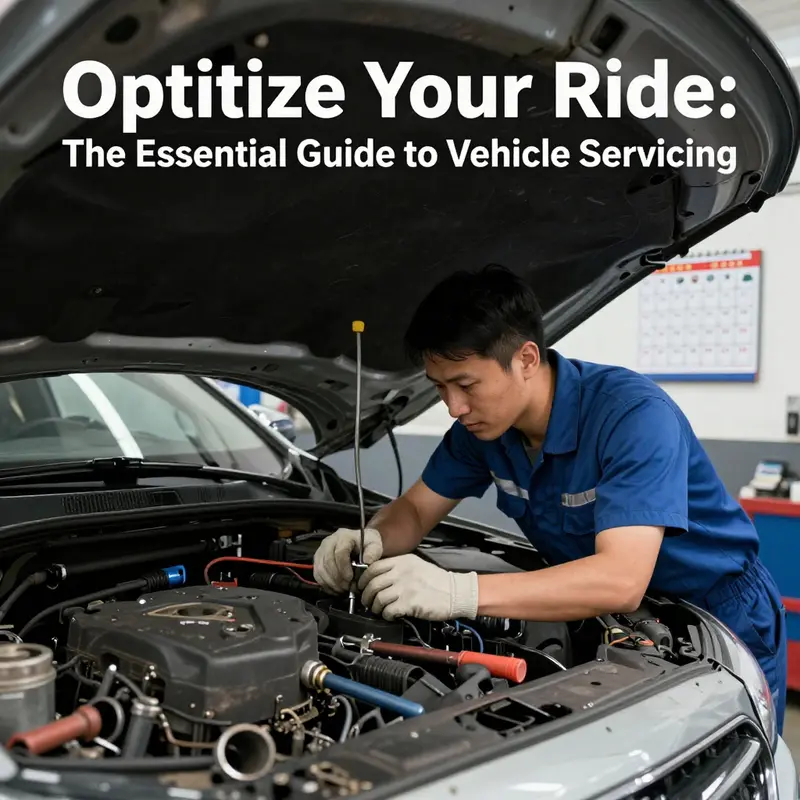
Every car carries a calendar of expectations built into its design, a maintenance rhythm that keeps it reliable, safe, and efficient. The question of how often you should service a vehicle does not have a single, universal answer. Instead, it is a conversation between the car’s engineering, your driving life, and the manufacturer’s recommendations, all moderated by the realities of wear, environment, and usage. When you step back and listen to that conversation, a few core ideas emerge that allow you to tailor maintenance to your specific situation without falling into either over-servicing or neglect. This chapter weaves those ideas into a single, continuous narrative about rhythm and responsibility, showing how a disciplined approach to servicing translates into fewer surprises on the road, steadier performance, and better long-term value for your investment.\n\nThe starting point is recognizing that servicing is preventive medicine for a machine that is exposed to heat, vibration, dust, moisture, and countless miles of operation. A basic rule of thumb is that a vehicle should be serviced at regular intervals to ensure the engine remains well-lubricated, the filters stay clean, the brakes remain responsive, and the tires wear evenly. These sessions are not merely about replacing worn parts; they are about verifying that the car’s systems continue to function as the manufacturer intended, under the specific loads and conditions you subject it to. Yet the cadence of those sessions is not carved in stone. It bends and shifts with who you are as a driver and where you drive. In the broadest terms, newer vehicles tend to be serviced on a longer clock and longer miles than older, high-mileage machines, but even this generalization shifts with climate, road conditions, and how aggressively the car is driven.\n\nTake, for instance, the contrast between city commuting and highway touring. A commuter who spends most days crawling through congested streets experiences frequent engine starts and stop-and-go cycles. The engine never reaches its optimal operating temperature, and the exhaust and fuel systems contend with incomplete combustion while the car idles in traffic. This pattern accelerates wear in parts like the oil, air filters, and catalytic converter, and it can also stress the transmission and brakes more than steady highway driving. In such cases, a more frequent servicing schedule can be prudent even if the odometer reads only modest miles. Conversely, a vehicle that spends long stretches on highways, cruising with minimal stop-and-go, tends to accrue wear more slowly in some areas and more quickly in others—such as tires and fluids under sustained heat. In those circumstances, longer intervals between visits might be appropriate, provided the car’s onboard reminders or the manual’s guidance still point toward regular checks.\n\nThe manufacturer’s recommendations form the backbone of any servicing plan. All vehicles come with a maintenance schedule that specifies not only when to service, but what to service. This schedule is a synthesis of engineering data, field experience, and safety standards. It considers the expected life of critical components and the conditions in which the vehicle is commonly operated. In practice, this means that the interval—whether defined by miles or by time—must align with the car’s design and with how you use it. Some manufacturers now lean on onboard diagnostic systems and reminder programs that calculate maintenance needs from sensors and actual driving patterns. In these cases, following the system’s prompts can be a sound approach because the reminders reflect real-time wear and usage rather than a fixed calendar. Yet even with such reminders, the owner’s manual remains a vital compass. It translates the automaker’s expectations into concrete actions you can perform, or at least discuss with a trusted technician.\n\nTraditional wisdom has long suggested servicing every six months or every 5,000 to 10,000 miles, whichever comes first. This cadence has a strong logic when the vehicle is older or subjected to frequent city driving, where the cumulative effects of short trips can accelerate the degradation of engine oil and filters, and where brake components may require closer inspection due to stop-and-go traffic. But more recent guidance reflects how modern engines and fluids behave under typical operating conditions. Many manufacturers now propose intervals closer to every 10,000 to 15,000 miles or roughly once a year, especially for drivers who mostly traverse highways and maintain steady speeds. This shift mirrors improvements in oil chemistry, filtration efficiency, and overall engine tolerances, which allow longer durations between service without compromising reliability. If your driving is predominantly routine and moderate—think regular commutes with mostly highway miles—the longer interval can be both efficient and safe. The key, always, is to stay mindful of the car’s signals and the manual’s instructions.\n\nImportantly, the vehicle’s climate and environment can tilt the balance toward more frequent visits. In extremely hot or cold climates, engines work harder to reach and maintain operating temperatures, and coolant systems must manage wider temperature differentials. Dusty or sandy environments introduce particulates that can clog filters more quickly and wear pistons, throttle bodies, and air intakes. Short trips—where an engine never fully warms up—also foster moisture buildup in the oil and exhaust systems and can erode fuel efficiency. In such settings, a 5,000 to 7,500-mile interval or six-month service plan can be a prudent choice, even if a highway-focused car would otherwise be comfortable with longer intervals. The reality is that environment, more than any other factor, shapes the rate at which wear accumulates and, therefore, the speed at which you should inspect and replenish vital fluids, measure tire tread and brake condition, and update filters.\n\nA practical approach is to view maintenance as a rhythm rather than a rigid schedule. The rhythm grows from the owner’s manual, but it is tuned by the daily life you lead in your vehicle. It means checking the oil level and condition regularly, listening for unusual sounds, and noting changes in performance, fuel economy, or braking response. Small cues—an oil spot under the car, a slight engine knock on cold starts, or a dashboard message that lights up after a drive—should not be dismissed as inconsequential. Each cue is a data point that can point to an evolving need for service. The moment you begin to ignore such signals, you risk letting a developing fault mature into a costly repair or, worse, a safety issue. This is where service becomes not a routine chore but a disciplined habit, woven into your vehicle’s daily life as a way to protect your time, your investment, and your safety.\n\nThe services themselves fall into a familiar, repeatable pattern, although the specifics can vary with the car’s age and design. The core tasks—oil changes, tire rotations, brake inspections, fluid level checks, and filter replacements—form the spine of preventive care. An oil change is the most visible, and often the most misunderstood, service. Fresh oil reduces friction, cleans away microscopic contaminants, and helps the engine preserve efficiency and power. Yet oil is not a universal constant; different engines require different viscosities and formulations. The service interval for oil depends on the oil’s quality, the engine’s design, and how the vehicle is used. Synthetic oils, for example, often allow longer intervals than conventional oils, but the car’s specification still matters. The right interval is the one listed by the manufacturer for your exact engine, not the one that sounds convenient based on a generic rule of thumb.\n\nTire maintenance—rotations and inspections—speaks to the other end of the vehicle’s life. Rotating tires helps equalize wear across all four wheels, extending tire life and preserving handling characteristics. This matters not only for performance but for safety. Uneven tire wear can lead to unpredictable grip, reduced braking efficiency, and, in extreme cases, blowouts. Brake inspections check pads, rotors, calipers, and the overall hydraulic system. Brakes are one of the most critical safety systems, and even a small pad thickness that falls below a safe threshold should trigger service. Fluid checks cover everything from brake fluid to coolant, transmission oil, and power steering fluid. Fluids degrade over time, collecting moisture or becoming contaminated, which can compromise lubrication, cooling, and hydraulic pressure. Replacing filters—air, fuel, and cabin—keeps the engine breathing clean air and maintains cabin air quality, while preventing contaminants from degrading performance or triggering sensors.\n\nBeyond these standard items, more modern vehicles may incorporate diagnostic systems that extend the maintenance envelope. Onboard maintenance reminder systems monitor several variables: engine temperature, fluid levels, and even the lifespan of wear items like brake pads or battery health. When a reminder appears, it is a signal that proactive maintenance is prudent. Relying solely on the reminder without understanding the underlying condition can be short-sighted, but ignoring it entirely is arguably folly. A balanced approach blends the systematic cadence prescribed in the manual with the real-time insights provided by the car’s diagnostics. In this regard, the reminder system acts as a mirror reflecting how your driving life interacts with the vehicle’s design, encouraging you to check and service when the car indicates something is off.\n\nOne practical way to think about intervals is to translate the numbers on the page into a calendar and a road map that reflect your actual mileage and time. If you drive 8,000 miles a year and mostly on highways, you might fall into a regime where the yearly service aligns with the 10,000 to 15,000-mile guideline. If you are at the opposite end of the spectrum, driving 12,000 miles of urban, stop-and-go usage in a climate with seasonal extremes, your schedule might resemble the shorter end of the spectrum, with more frequent visits to ensure oil, filters, and fluids stay in their optimal ranges. The same logic applies when you consider time: if you haven’t reached the manufacturer’s prescribed mileage window but a year has elapsed, you still may want to service to refresh fluids and check wear items—especially if the vehicle has sat unused for extended periods, which can cause seals to dry out or batteries to degrade.\n\nThe bottom line is simple: stay aligned with the vehicle’s design while listening to the life you impose on the car. If you treat the service intervals as a floor rather than a ceiling, you’ll be prepared to respond to the realities of wear with a proactive mindset. The goal is to keep the vehicle performing as intended, with consistent oil performance, clean air and fuel systems, properly functioning brakes, and tires that grip predictably across wet and dry surfaces. This is what sustains performance, safety, and cost efficiency over the life of the vehicle. It also preserves the car’s value, since a well-maintained car commands more respect in the market and fewer concerns for any prospective owner.\n\nTo provide a frame for readers who seek a crisp summary, consider the following practical rule of thumb: for many modern cars, a balanced approach may be to service roughly every 10,000 to 15,000 miles or once a year, whichever comes first, with adjustments upward for drivers in demanding conditions or with vehicles showing signs that maintenance is due. If your daily life involves heavy city use, dusty environments, extreme temperatures, or frequent short trips, lean toward the shorter end—closer to six months or 5,000 to 7,500 miles. The exact cadence will vary, but the logic remains constant: regular checks keep the car in its optimal state and help you avoid surprises on the road.\n\nListeners who want more depth on how to tailor intervals to time versus mileage can explore a deeper discussion of oil-change intervals, which explore the nuanced balance between time and mileage and how professional recommendations translate into real-world practice. For a focused look at this aspect, see optimal oil-change intervals—time vs. mileage. The guidance there complements the broader maintenance cadence by highlighting how oil performance and engine cleanliness interact with your driving habits. In addition, the importance of routine maintenance is underscored by a broader set of resources from reputable automotive outlets that compile schedules and practical tips for staying on track with service needs over the life of a car. Keeping up with these intervals, in concert with your vehicle’s diagnostic signals, contributes to smoother operation and lower risk of unforeseen failures. As you plan ahead for service visits, you also confer with a trusted technician who can interpret the car’s health data within the framework of the manufacturer’s guidance.\n\nIn this light, the servicing cadence emerges not as an arbitrary rule but as a thoughtful, adaptive practice. It respects the car’s engineering while acknowledging the driver’s life—how far, how fast, where, and under what conditions the vehicle truly travels. When this philosophy guides your approach, maintenance becomes a reliable partner rather than a quarterly burden. You gain more than peace of mind: you gain consistency, predictable costs, improved safety, and the confidence that you and your vehicle can navigate whatever roads lie ahead. The road is long, and the car’s needs change over time; your habit of listening, checking, and acting decisively is what keeps the journey steady. In the chapters that follow, you will see how this rhythm fits into broader maintenance strategies, from tire care to fuel system health, and how to translate this knowledge into a practical plan that suits your vehicle, your environment, and your life on the road.\n\nExternal reference: https://www.autoblog.com/2023/06/14/vehicle-service-intervals/
The Interval Equation: Decoding Manufacturer Guidelines for Vehicle Servicing
When a car is built, every component is engineered to work within a carefully tuned maintenance window. The interval between visits to a service bay is not a random number. It is a structured guideline set by the manufacturer, reflecting what is believed to be the balance between performance, reliability, and cost for that specific model. To car owners, this can feel abstract: a list of numbers in a manual, boxes to check, and warnings that sometimes speak in a language you only half recognize. Yet understanding this interval equation is central to protecting the investment you made when you bought the vehicle, preserving its safety and efficiency, and avoiding the surprises that follow neglected needs. As a practical matter, the recommended cadence is a blend of time and distance, and in the modern automotive landscape that blend is more nuanced than ever before. The task, then, is to translate the manufacturer’s cadence into everyday driving life without turning maintenance into a tedious ritual that never seems to end. In pursuing that balance, one finds that the right servicing schedule is less about ticking boxes and more about aligning the car’s needs with the realities of how you use it. This approach becomes even more critical when the vehicle in question is a relatively new type of automobile—one whose advancements center less on heavy mechanical upkeep and more on software, electric powertrains, and a broader ecosystem of sensors that keep the car “healthy” from within.
Across the industry, a widely cited baseline is to service every six months or every 5,000 to 10,000 miles, whichever comes first. This interval is a practical midpoint that works for many traditional internal combustion engines, where oil changes, filter replacements, and brake checks form the backbone of routine care. If you drive under normal conditions—long highway trips, steady speeds, relatively little stop-and-go—the interval may drift toward the longer end of that spectrum. It is important to note, however, that this is a general rule, not a universal one. The vehicle’s owner’s manual should always be your primary reference, because it contains the manufacturer’s exact expectations for your specific model. A family sedan may tolerate longer stretches between visits, while a compact that tacks up heavy daily use—city driving with frequent short trips, rolling hills, and variable speeds—will often demand more frequent checks. The principle remains constant: the goal of routine service is to keep the essential systems—oil and filters, brakes, tires, steering, suspension, and the ignition or propulsion health of the vehicle—in a state where wear is predictable and manageable, not sudden and costly.
In the evolving landscape, new cars have begun to redefine what “maintenance” means. For many modern models, the manufacturer’s schedule emphasizes software updates and comprehensive inspections over routine oil changes as the central act of servicing. The essence of maintenance, then, shifts from a purely mechanical checklist to a broader assurance that software, sensors, and critical hardware are aligned, calibrated, and ready for any road. When the engine is no longer the only major component that requires attention, the service interval still hinges on mileage and time, but the balance changes. In practice, many makers now propose a cadence around ten thousand miles or once a year for ordinary driving, especially if you spend most of your time on highway corridors with minimal start-stop cycles. Yet this is not a hard-and-fast rule for every vehicle. The driving environment matters as much as the vehicle’s age. Short trips, repeated cold starts, dusty surroundings, or extreme temperatures can accentuate wear and tear in ways that demand a shorter interval. In such cases, the car may signal the need for service sooner than the calendar based guideline would suggest. Short trips, for instance, keep the engine and transmission from reaching an optimal operating temperature, which can lead to higher fuel and oil consumption relative to longer trips. Dusty environments can clog air filters faster and accelerate wear in intake systems, while high temperature swings can affect tires, brakes, and battery health.
For a more concrete example, consider a popular electric utility vehicle from a leading maker. In this case, the manufacturer frames servicing as a mixture of annual inspections and mileage-based checks, with particular emphasis on software for performance optimization and system health. The interval in this scenario often lands around an annual inspection or every 20,000 miles, whichever comes first. The annual inspection focuses on brakes, suspension, tires, and battery health, along with other critical subsystems that ensure safe operation and continued reliability. Importantly, even in electric vehicles where oil changes are not part of routine maintenance, the interval remains rooted in the same principle: regular oversight prevents small problems from becoming large, expensive ones later. A note that accompanies any vehicle of this type is the need to vigilantly monitor warning indicators, especially those linked to safety systems and tire pressure—the kinds of signals that often precede more evident failures. If a tire-pressure monitoring indicator flashes for a minute when you power on the vehicle, it signals a fault in the system and warrants immediate scheduling of service through the manufacturer’s app or portal. Likewise, tire pressures can drop in cold weather. A guide I’ve found consistent across many makes is that tire pressure can fall by roughly one psi for every six-degree Celsius drop in ambient temperature. This relationship may vary slightly with tire compounds and wheel sizes, but the rule of thumb remains a practical reminder to check and adjust tire pressure as seasons shift. These seasonal changes are not mere numbers on a gauge; they directly affect handling, braking efficiency, fuel economy (or energy efficiency in electric powertrains), and tire life. Addressing them promptly is a matter of safety and cost effectiveness rather than an optional fashion.
The broader takeaway is that manufacturer guidelines are not one-size-fits-all prescriptions carved in stone. They are informed recommendations designed to optimize performance and longevity given the car’s engineering, the expected operating environment, and the way the owner uses the vehicle. This is why the owner’s manual is your most reliable tool. It explains the exact cadence for your model and how to interpret the recommended intervals in light of your driving conditions. If you drive mostly on smooth highways in temperate climates and you don’t accumulate miles quickly, your maintenance needs may cluster toward the higher end of the spectrum. If your driving involves frequent short trips, sustained hot or cold spells, heavy dust exposure, or aggressive driving patterns, a shorter interval might be the prudent choice. In either case, the key is proactive management rather than reactive fixes. Waiting for a warning light to flicker or for a roadside breakdown to remind you of maintenance is a path that invites avoidable risk and expense.
It is also worth recognizing the growing role of software in vehicle health. A number of manufacturers now deploy system monitoring that analyzes data from dozens of sensors to predict when a component will fail or require service. Software updates can improve efficiency, fix bugs, and refine performance, but they do not now eliminate the need for scheduled checks. The software serves as a front line for efficiency and safety, while a human or a certified technician performs the deeper inspection of mechanical wear and tear. When the car’s computer reports a potential issue—whether it’s a minor fault code, a calibration drift, or a tire sensor anomaly—the service interval can be accelerated to address the risk promptly. This synergy between software and hardware means that the service schedule is often a living plan, adjusted in response to telemetry and real-world use, rather than a static calendar entry.
What does this mean for everyday owners who want to avoid surprise repair bills and ensure safe operation? It means starting with the manufacturer’s schedule and then honestly assessing your own driving context. If your daily routine is heavy on city cruising with frequent stops, you should likely favor more frequent checks—perhaps near the lower end of the mileage band or around the six-month mark, depending on the model and the manual’s guidance. If you spend long hours on the highway with steady speeds, you might operate near the higher end of the recommended range. Either way, the process should be proactive, not reactive. Regular inspections do more than catch worn brakes or worn tires in time; they can reveal subtle signs of irregular wear, battery health concerns in electric vehicles, and calibration needs that, if left unaddressed, could compromise performance and safety.
A practical way to integrate this cadence into a busy life is to align service visits with predictable milestones. For many households, calendar reminders tied to the car’s odometer are a simple yet effective tool. If you are transitioning from pure time-based thinking to mileage-driven planning, you can use a hybrid approach: schedule a service every six to twelve months and verify, during that visit, whether you have crossed the mileage threshold that would prompt a more thorough inspection. It is also helpful to consider the type of maintenance that tends to accumulate as a function of time versus distance. Oil changes, filter replacements, and brake fluid checks are processes that clearly respond to time and miles, but tire rotation, wheel alignment, and brake pad evaluation often respond to a combination of both. The goal is not to chase a clock or a gauge in isolation; it is to maintain an honest portrait of the vehicle’s condition and to respond with appropriate care before minor issues become major repairs.
From the point of view of the owner who wants a clear, reliable reference, there is value in embracing a policy of frequent but well-targeted checks. If the schedule allows, you might arrange a maintenance loop that includes tire rotation, brake inspection, and a general inspection of lights, wipers, and fluid levels at regular intervals. For vehicles that rely heavily on efficient energy management and complex electronics, you may also prioritize software health checks or a software update appointment that is grouped with a physical inspection. In all cases, you should keep track of your vehicle’s maintenance history. A well-documented log builds a narrative of care, helps you anticipate which components will soon require attention, and can support resale value by demonstrating a disciplined ownership approach. To reinforce the idea that maintenance is about ongoing care rather than a single act, imagine maintenance as a relationship with your car—one in which you listen for hints, respond with timely service, and adjust the tempo as conditions change.
As you navigate this landscape, the idea of an authoritative reference grows more important. For those seeking to deepen their understanding of how intervals relate to specific parts of the maintenance equation, there is an opportunity to explore a focused treatment of how time and mileage influence oil-change decisions. The concept is simple on the surface, yet it invites a thoughtful, model-aware approach. For more on balancing time and mileage in oil-change intervals, you can consult the article titled “Optimal Oil Change Intervals: Time vs. Mileage” which delves into how service cadence interacts with engine wear and oil quality over different driving patterns. Optimal Oil Change Intervals: Time vs. Mileage This resource can help you translate the general guidance into a plan tailored to your car’s engine design, oil specification, and climate.
The chapter’s overarching message remains consistent: your vehicle’s servicing needs are an interplay of manufacturer guidance and your actual usage. The manual provides the baseline; your conditions—climate, miles, trip types, and maintenance history—shape the adjustments. In practice, this means that a well-informed owner will consult the manual, reflect on their driving reality, and schedule visits that honor both the time and distance aspects of maintenance. It means recognizing that modern cars, especially those with heavy emphasis on software, may front-load their health checks and feature remote diagnostics that help technicians prepare for service. It means understanding that the purpose of service is not only to replace parts that are visibly worn but also to calibrate systems for optimal performance, verify safety-critical components, and ensure that the vehicle remains reliable and efficient in the long run. It also means recognizing the value of professional service centers and the role of a trusted technician who understands how the car responds to your specific driving style and environment. When you work with a shop that understands your model’s nuanced needs, you gain a partner who can tailor the cadence to your life while preserving the car’s health. This is especially important for vehicles that rely on a mix of mechanical and electronic systems, where a small misalignment in one domain can cascade into broader issues elsewhere.
In sum, the manufacture’s guidelines for servicing are not a stubborn timetable to follow without question. They are a structured framework designed to protect safety, reliability, and performance while recognizing that the car and its use evolve over time. A thoughtful approach is to start from the manufacturer’s cadence, adjust for your conditions, stay vigilant for warning signs, and document your maintenance history so you can sustain the health of the vehicle across the years. As the automotive industry continues to integrate software, sensors, and data analytics into the core of vehicle health, this cadence will likely remain dynamic, with more precise, data-driven recommendations emerging for each model. The best practice for any owner is to keep the manual handy, listen to the car’s signals, and schedule service with a plan that respects both time and mileage—an interval that becomes a reliable ally in the long journey of vehicle ownership. For readers seeking a practical starting point, consider the general baseline of six months or 5,000 to 10,000 miles as a broad guideline, while staying attentive to the demands of your climate, patterns of use, and the specific recommendations in your manual. And, as always, when in doubt, consult a certified service center or the manufacturer’s official guidance to ensure you are following the best course for your car’s unique needs.
External reference for official guidelines: https://www.tesla.com/support/service-and-maintenance
Under Pressure: How Driving Conditions Rewrite Your Vehicle’s Service Schedule

The question of how often you should service your vehicle is a moving target. The cadence depends on the car’s design, your driving environment, and the clock on the owner’s manual. In practice, most drivers follow a baseline: a service every six months or every 5,000 to 10,000 miles, whichever comes first. This interval covers oil and filters, brakes, tires, fluids, belts, and the cooling and emission controls. But the right cadence does not live in a vacuum. It is shaped by how you drive, where you drive, and how the maker envisions wear under those conditions. This chapter explains how driving conditions become a weather forecast for maintenance, turning a yearly ritual into a tailored program that matches your reality on the road.
Under normal driving conditions—paved roads, moderate temperatures, light stop-and-go, and a well-tuned engine—the manufacturer’s schedule often holds. The general guideline is 10,000 to 15,000 miles between major service items or once a year, whichever comes first. Routine checks like oil and filter changes, fluid level checks, brake inspection, tire rotation, and quick diagnostics on the exhaust and emissions systems fit this interval. The aim is to minimize small problems, maximize fuel efficiency, and extend major components’ life. Highway driving, with long steady speeds, tends to support a longer interval; frequent short trips and urban stop-and-go can make that interval feel generous and may prompt earlier checks.
Severe driving conditions accelerate wear and require more frequent maintenance. Categories include frequent short trips, extreme heat or cold, heavy traffic with constant acceleration and braking, towing heavy loads, rough or unpaved surfaces, dusty, salty, or polluted air. These conditions push components beyond normal expectations, affecting engine, transmission, brakes, and tires. Because wear is cumulative, your maintenance plan should respond to actual usage, not just calendar or odometer. The goal is to preempt breakdowns by recognizing wear is a function of conditions on the road, not a universal constant.
Take short trips as a first example. When you run 5 to 7 miles at a time, the engine may not reach full operating temperature. Oil and coolant may not shed moisture and fuel residues, accelerating wear. The transmission and differential stay cooler for less time. The synthetic-simulated protection some vehicles benefit from is less able to act as a guard against wear. The result is faster wear than on longer trips. Many drivers who habitually take short trips tighten cadence to around 5,000 miles or every six months, even if odometer is modest. This protects against incomplete warmups. Over time, repeated cold starts stress gaskets, seals, and sensor readings, supporting a proactive maintenance rhythm when your routine involves frequent short hops.
Temperature extremes impose their own tolls. In heat, engine oil breaks down faster; the cooling system components are stressed. In cold weather, repeated starts in low temperatures place a high initial load on the engine. The oil remains viscous, causing friction and energy losses until the engine warms. The battery, starter, and belt-driven accessories face greater stress in cold starts. In these scenarios, a cadence around 5,000 miles or every six months is a practical floor, with more frequent checks if you notice performance changes or routinely drive in these conditions for long periods. The winter driver relying on the car for daily commutes must recognize that cold starts and ice formation add to the wear budget, often tipping the balance toward more frequent inspections of the battery, alternator, and fuel system.
Heavy traffic compounds those stressors. City driving with frequent stops and starts keeps brakes and tires busy while the engine works to maintain momentum during congested periods. The engine may idle longer, accumulate more condensation in the oil, and accumulate fuel dilution from stop-start driving. Brakes heat and cool rapidly, which can accelerate wear on pads, rotors, and hydraulic systems. Towing adds another layer of strain: the engine must generate higher torque, the transmission handles higher temperatures, and the cooling system runs harder to maintain safe operating temperatures. This environment often warrants more frequent checks of braking components, transmission fluid, and cooling performance, and a service cadence around 5,000 miles or every six months becomes a sensible baseline for vehicles that regularly endure this kind of mileage pattern. In cities where gridlock is common, a maintenance plan that includes more frequent brake system checks, along with battery and electrical system tests, helps prevent the loss of critical stopping power or unexpected electrical inconvenience in the cold mornings or humid evenings.
Rough or unpaved roads also compress the service window. Jarring conditions can loosen exhaust hangers, wear suspension bushings, and subject the steering and drivetrain components to higher impact loads. The engine air intake can ingest more dust, which may contaminate the air filters and, if the filter is overwhelmed, introduce particulates into the intake and combustion chamber. In dusty environments, engine wear can climb even if the odometer mileage remains modest. The same logic holds for salty conditions near coastal areas or in winter salting. Salt accelerates corrosion on metal surfaces, including brake calipers, exhaust pipes, and chassis hardware. When you operate in such conditions, a more frequent service cadence—often 5,000 to 7,500 miles or twice a year—helps ensure rust and wear do not remain unnoticed. The perspective here is practical: you aren’t chasing a perfect odometer figure; you’re managing actual wear signals that show up in everyday driving. If you routinely navigate broken pavement or farm roads, you may also look at suspension alignment and steering components more frequently to preserve handling and safety.
The specific impacts of severe driving conditions extend beyond the obvious. Short trips cause moisture buildup in the engine oil, and that moisture is not easily expelled during infrequent high-temperature cycles. Extreme heat accelerates oil degradation and can shorten oil life, sometimes more quickly than the gauge on the dash would suggest. Cold weather increases the mechanical strain of startups, which can also hamper battery life and alternator efficiency. When vehicles are forced to operate under heavy loads, components such as the alternator, belts, and cooling system run harder; the increased mechanical stress translates into higher risks of belt wear, hose leaks, and overheating. Transmission fluids can break down more quickly under heavy load or in extreme heat, reducing lubrication and heat dissipation. This is why service intervals tighten in such environments, and the rule of thumb around 5,000 to 7,500 miles or twice a year becomes a maintenance anchor to protect more expensive systems. The result is that drivers in demanding environments should view the engine oil, transmission lubricant, brake fluid, and cooling system as a cohesive network whose health signals are interdependent.
Best practices for handling a variable driving environment start with listening to the car and to the manual. The owner’s manual remains the ultimate authority because manufacturers calibrate their maintenance schedules to match the engineering of each model. The manual will tell you when specific items like timing belt replacement, coolant flushes, or spark plug changes are recommended. Beyond the manual, modern vehicles offer onboard diagnostics that monitor subtle indicators—oil life estimates, coolant temperatures, spark plug performance, battery health, and tire pressures. When a warning light flickers or a message appears about service due soon, treat it as a real signal rather than a suggestion. The digital dashboards of today provide a practical bridge between the theoretical intervals and the actual wear state of your car. If you regularly encounter harsh conditions, those on-board signals can be especially helpful, so you don’t rely solely on calendar-based or mileage-based guidelines. In addition, keeping an eye on tire wear and rotation schedules helps maintain predictable handling and even wear across tires, a concern that becomes more critical when the vehicle navigates rough roads or heavy loads frequently.
Another factor is the choice of lubrication. High-quality synthetic oils often resist breakdown better in extreme temperatures and long-service intervals. For drivers who frequently endure harsh climates or heavy-use scenarios, a synthetic or synthetic-blend oil can maintain viscosity and protective film longer than conventional oils. That said, not every engine benefits from the same grade or type of oil, and the correct specification should come from the owner’s manual or a trusted technician. The general idea is to balance oil change frequency with oil quality, cooling capacity, and the engine’s own tolerance for load. In practical terms, this can translate into a slightly adjusted interval that still honors the manufacturer’s core recommendations but gives you a cushion against the unpredictability of real-world conditions. While many people chase the longest possible service interval, the smarter strategy is to optimize the combination of oil quality and service timing in light of how you actually drive. This is particularly relevant for engines with high thermal loads or those that see frequent towing, where a mid-range synthetic blend can offer improved protection without the cost of full synthetic every time.
Regular checks are an easy, repeatable habit that pays back in reliability. Checking fluid levels—engine oil, transmission fluid, brake fluid, coolant, power steering fluid, and windshield washer fluid—at least every month can help spot declines that signal a service is due sooner than the odometer would indicate. Tire condition and tread depth matter, along with tire pressure. Brake pads and rotors should be inspected for wear, because worn brakes can compromise stopping distance and safety. Worn belts and hoses should be found before they fail, which can cause breakdowns or overheating. The goal is not to chase a perfect schedule but to maintain a living map of your car’s health. Keeping a simple service log—dates, mileages, services performed, and any unusual observations—provides a historical record that helps you adjust future intervals with confidence. When you plan maintenance around the actual performance and wear of your vehicle, you’re making decisions that reduce the likelihood of surprise failures and costly repairs. In scenarios where you frequently encounter diverse road surfaces or load conditions, adding a quarterly check of the cooling system and battery can prevent surprises that would otherwise force a more extensive repair down the line.
There is real value in a flexible cadence that matches your routine rather than clinging to a rigid plan. The conventional six-month or five-thousand-to-ten-thousand-mile rule is a reliable baseline, a starting point that suits many drivers. But if your driving often includes short trips, extreme heat, rugged roads, heavy towing, or salty air, expect to shorten the interval accordingly. Conversely, if you drive mostly on sustained highways in temperate climates, you might extend the interval slightly, while still keeping a close eye on the oil-condition indicators and the diagnostic messages from the vehicle’s computer. This approach is not about over-servicing or under-servicing; it’s about aligning maintenance with actual experience. The aim is to preserve reliability, safeguard resale value, protect fuel efficiency, and reduce the probability of unexpected breakdowns. Over time, your car becomes more than a mechanical asset—it becomes a reflection of how well you understand the conditions under which you drive and how you respond to those conditions with informed care. The practical upshot is a maintenance routine that adapts as your life and work patterns change, ensuring the car remains a dependable partner in daily life rather than a distant, reactive project.
For broader context, the Department of Energy’s Fuel Economy site offers guidance on how driving habits influence efficiency and maintenance needs, reinforcing the idea that weather, terrain, and usage patterns matter to longevity and cost of ownership. The Drive Tips page provides practical reminders about driving behavior that can affect wear and fuel use. This resource helps frame maintenance as not just a scheduled ritual but part of a larger ecosystem of reliable operation and fuel-conscious driving. While the site does not replace your manufacturer’s instructions, it complements them by highlighting how daily choices on the road translate into wear patterns that maintenance should address. The universe of maintenance is not confined to a single pamphlet; it grows out of your everyday driving and the car’s design responses to those patterns.
For a deeper dive into balancing oil-change timing with mileage, see the discussion on Optimal oil change intervals (time vs. mileage). This resource can help you decide whether you lean toward time-based changes or mileage-based changes, or a hybrid that suits your landscape of driving. It also invites you to consider how to track oil life in conjunction with your driving habits, a practical step toward turning a generic schedule into a personalized plan. The takeaway is that a thoughtful, condition-aware cadence not only protects the engine but also aligns maintenance with the realities of daily life, making service visits fewer and more purposeful.
Final thoughts
Regular vehicle servicing is essential, not just for compliance with manufacturer guidelines, but also for adapting to your unique driving conditions. By performing timely maintenance, whether you’re a private car owner, a used car buyer, or managing a fleet for your business, you can enhance the longevity and reliability of your vehicles. Adhering to recommendations tailored to your specific circumstances will ultimately keep you safer on the road and improve performance.