In an age where vehicle ownership entails ongoing maintenance and repairs, vehicle service contracts provide essential protection against unexpected costs. For local private car owners, used car buyers, and small business fleet operators, understanding how to sell these contracts is crucial. This guide empowers you to grasp the essentials of vehicle service contracts, navigate legal frameworks, strategize sales, design appealing product offerings, and build trust in your service. Learn to maximize the benefits of these contracts while meeting the diverse needs of your clientele.
From Coverage to Confidence: Mastering the Art of Selling Vehicle Service Contracts
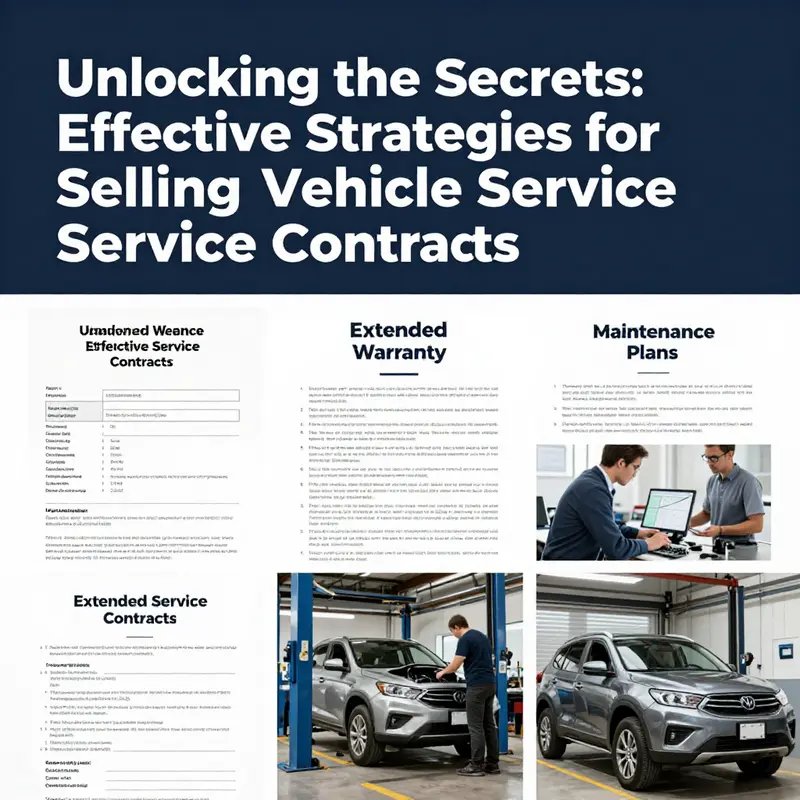
A well-structured vehicle service contract is more than a promise to pay for repairs; it is a bridge that carries a buyer from worry to certainty. When a customer sits in a dealership chair or on the showroom floor of a service facility, they bring with them a blend of pride, optimism, and a quiet fear of what could go wrong after the manufacturer’s warranty lapses. The way a seller navigates that moment determines not only whether a contract is signed but also whether the buyer feels heard, respected, and protected in the long term. The core task is not to press for a sale but to illuminate the value of protection in terms that resonate with real-life concerns. In practice, this means presenting the contract as a practical tool that converts uncertain future costs into predictable, manageable expenses. It means shifting the focus from the sticker price of coverage to the lifetime cost of ownership most buyers fear the most: surprise repairs that can derail monthly budgets and savings plans. And it requires a posture of transparency that matches the consumer’s desire for honesty with the seller’s need to maintain a responsible business relationship that stands the test of time.
Understanding the product at a fundamental level is the first prerequisite. Vehicle service contracts come in a spectrum that runs from basic maintenance plans to more comprehensive coverage, extending beyond the original factory warranty to address major components such as engines, transmissions, and electrical systems. The practical implications of these categories must be communicated with care. A basic maintenance plan often covers routine services—oil changes, tire rotations, fluid replacements—while a comprehensive plan targets repairs that can surprise even the most meticulous owner after years on the road. An extended warranty, meanwhile, pushes the coverage horizon further, offering protection against costs that could otherwise disrupt a family budget. But the value of any contract rests on precise terms: what is covered, what is excluded, how deductibles operate, and the process by which a claim is evaluated and paid. The claim pathway matters just as much as the coverage itself, because a smooth, predictable experience with claims reinforces trust and reduces friction in the buyer’s decision.
To sell with integrity, one must also be fluent in the legal and regulatory landscape that frames service contracts. Compliance is not an obstacle to sales but a foundation for credible guidance. Each jurisdiction may impose disclosure requirements, cooling-off periods, and constraints on how terms can be marketed. The salesperson who understands these rules already speaks to customers in a tone of responsibility rather than rhetoric. This means clearly stating what the contract covers and what it does not, including any waiting periods or exclusions that might apply to wear and tear or cosmetic issues. It also means informing customers of their rights to cancel within a specified window and the steps they must take to exercise that right without penalty. Beyond avoidance of misrepresentation, practical compliance protects the seller from disputes and helps maintain a reputation for reliability. The best-selling approach therefore blends accurate information with empathy: explaining how coverage translates into real protection, even when a roadside emergency or a sudden breakdown occurs far from home.
A professional sales process emerges from disciplined preparation and a respect for the buyer’s time and financial constraints. Such a process starts with knowledgeable staff who can articulate the contract’s benefits in plain terms. Avoiding technical jargon is not a concession to simplicity; it is an acknowledgment that clarity builds confidence. The salesperson should be able to answer questions about deductibles in everyday language, describe the claims process in steps, and outline the duration or mileage limits without making the contract feel like a maze. This clarity is tied to the seller’s ability to align the product with the customer’s actual needs. A used-car buyer with high mileage, for example, may find greater value in a plan that emphasizes major component protection, as the likelihood of future repairs rises with age and wear. In contrast, a new-car owner might prioritize a plan that complements the remaining manufacturer warranty rather than duplicating it. The tailoring of options—perceived as careful listening rather than pressure selling—turns a generic product into a personalized safeguard.
Pricing strategy and option design also play a decisive role in acceptance. A well-structured portfolio offers tiered options—Basic, Premium, Platinum, or their equivalents—so customers can choose the level that matches their finances and risk tolerance. Flexible payment terms—upfront, monthly, or annual—reduce resistance for buyers who fear the impact on their cash flow. Add-ons, such as roadside assistance, rental-car reimbursement, or trip interruption coverage, can elevate perceived value without forcing customers into a single, rigid choice. Yet the strength of these options rests not on extravagance but on clarity about trade-offs: higher tiers come with more extensive coverage but at higher cost, while the lower tiers protect against the most common, high-cost surprises. The challenge for the seller is to illuminate these trade-offs in a way that respects the customer’s budget and personal risk profile, rather than pushing one-size-fits-all propositions.
Transparency, rightly emphasized, becomes a trust-building engine that supports long-term relationships. Written documentation that is precise and accessible helps prevent disputes and misaligned expectations. The contract should spell out the claims process, waiting periods, and all exclusions in plain language. Third-party validation—partnerships with reputable insurers or service providers—can lend additional credibility, particularly for buyers who are risk-averse or who have previously encountered opaque sales experiences. Customer reviews and testimonials further reinforce confidence, especially when they reflect straightforward disclosures about what was covered and what was not. When buyers feel that the seller has nothing to hide, they are more likely to view the contract as a transparent tool rather than a persuasive incentive. This credibility is reinforced in every conversation by a willingness to pause, answer questions, and revisit the customer’s budget and maintenance plans, ensuring that the purchase makes sense in the customer’s terms and not merely in the seller’s agenda.
Technology and marketing play a supportive, not substitutive, role in this process. An effective online presence can educate buyers about what service contracts cover and why they matter, while digital tools such as quote calculators and quick approval paths reduce initial friction. These tools should be designed to empower rather than pressure: customers can explore options at their own pace and review terms before a face-to-face discussion. Online education also creates a natural bridge to human interaction, where a trained representative can translate online findings into actionable choices. Targeted messaging, grounded in an understanding of the buyer’s life stage and vehicle use, helps prospects see how a contract aligns with their practical needs—for example, a commuter who faces frequent miles and variable road conditions may value predictable maintenance costs and prompt repairs more than a buyer who drives sparingly.
Within the realm of operations, claims handling is perhaps the most tangible proof of a contract’s value. A customer who experiences a breakdown wants a process that is fast, respectful, and effortless. An efficient claims workflow, with online filing options, clear status updates, and responsive customer support, reduces anxiety and enhances satisfaction. Fast turnaround times and proactive communication—informing clients about what is required to validate a claim, estimate repairs, and coordinate accommodations such as a rental vehicle when needed—translate into trust and repeat business. Those outcomes reinforce the sale’s integrity and create advocates who will share their positive experiences, which, in turn, strengthens the overall reputation of the selling organization.
To sustain success, ongoing evaluation is essential. Managers should monitor a handful of key indicators: customer satisfaction scores, frequency of claims, and renewal rates. Feedback loops—from customer surveys, frontline staff, and service partners—are the fuel for product and process improvements. As market dynamics shift, contract terms should adapt in a manner consistent with consumer expectations and regulatory developments. The objective is not to chase short-term wins but to cultivate durable value that translates into long-term loyalty. In this light, every sale becomes part of a larger narrative about financial preparedness, responsible stewardship, and the peace of mind that comes from a well-structured safeguard.
For those seeking further guidance on the regulatory and procurement context that underpins formal agreements, industry readers can consult official guidelines and best practices that illuminate how contracts should be framed in relation to consumer protection and public procurement requirements. A practical starting point is the broader body of guidance on service contracts published by reputable regulatory authorities and industry bodies. These resources reinforce the principle that selling vehicle service contracts is as much about ethical behavior and transparent communication as it is about product features and price points. As you continue to refine your approach, keep in mind that the strongest sellers are those who listen first, explain clearly, and tailor options to the customer’s real-world needs, not merely to hit quarterly targets. For ongoing education and sample insights from the field, our team maintains a regularly updated hub that you can explore through the main blog page.
In this spirit, the journey from coverage to confidence is continuous. It is rebuilt with every customer interaction into a clearer, more trustworthy experience. The goal is not to win a single sale but to earn a customer’s confidence to protect their vehicle and finances for years to come. As you move from initial introductions to confirmed commitments, let your dialogue stay anchored in the buyer’s perspective: help them see how coverage aligns with their budget, their driving patterns, and their peace of mind. In doing so, you connect the practical mechanics of a contract with the emotional comfort that a well-chosen protection plan provides, turning a routine purchase into a prudent, forward-looking decision. For readers seeking additional practical tips and ongoing education, you can find further resources and perspectives on our blog, which offers accessible content designed to support informed consumer choices and professional growth in selling vehicle service contracts.
External resource: https://www.ftc.gov
Forging Trust Within the Rules: The Legal Framework for Selling Vehicle Service Contracts in Washington
Selling vehicle service contracts is as much about trust as it is about coverage. In Washington State, the path to credible, durable sales runs through the law. Chapter 48.110 of the Revised Code of Washington establishes a comprehensive regulatory framework designed to protect consumers who purchase extended coverage for their vehicles. This framework is not a maze to navigate after a sale; it is a clear map that shapes how contracts are defined, how they are offered, and how claims are handled. When a seller operates within these rules, the conversation shifts from adversarial negotiations to a shared understanding of risk, protection, and predictability. The result is not simply compliance; it is a foundation for lasting customer relationships built on transparency and reliability. This alignment between law and sales philosophy turns what could be a complicated product into a straightforward, value-focused proposition that customers can trust from the first moment of contact.
At the heart of the Washington framework is a precise definition. A vehicle service contract is an agreement to repair or replace covered components of a motor vehicle beyond the manufacturer’s original warranty period. This definition sets the boundaries for what is offered and how it is described to the buyer. A crucial practical consequence is that every service contract offered for sale in the state must be registered with the Washington State Department of Licensing (DOL). Registration signals to regulators that the provider operates within an established system and accepts ongoing oversight. Yet registration is only the starting line. It is complemented by a mandatory, standardized disclosure document. This disclosure must spell out the contract terms, the coverage limits, the exclusions, and the conditions under which claims will be honored. It creates a singular reference point that a customer can examine side by side with other options—whether that is a manufacturer warranty, a separately funded maintenance plan, or a do-it-yourself approach. The document’s clarity matters as much as its accuracy, because it anchors trust in the sales conversation and in the decision the customer ultimately makes.
The Washington approach is also very much about protecting the consumer in real time. Deceptive practices are expressly prohibited: misrepresenting the scope of coverage, withholding important limitations, or employing high-pressure sales tactics to secure a purchase. Beyond honesty in disclosure, the law imposes strict recordkeeping and reporting requirements. Every disclosure, every sale, and every subsequent claim interaction creates an auditable trail. For a customer, this means a paper trail that can be revisited, reviewed, and understood if questions arise later. For the seller, it means accountability and consistency. When a customer asks to see proof of coverage, the seller must provide a written contract with a clearly defined claims process. Noncompliance carries meaningful consequences—fines, penalties, and even the revocation of the right to sell service contracts in the state. Those penalties are not theoretical; they represent real risks to a business’s credibility and continuity.
This legal structure informs, and one could argue elevates, the day-to-day sales process. Training becomes a frontline priority rather than a compliance afterthought. A well-informed sales team can compare coverage types honestly, explain how a contract complements or differs from the manufacturer’s warranty, and help customers weigh their risk tolerance and budget. Language matters just as much as numbers. Clear, plain-English explanations help customers translate protection into everyday needs, such as avoiding surprise repair costs or converting unpredictable bills into predictable monthly payments. The disclosure document, when used well, becomes the narrative backbone of every conversation. Present it early, walk through its sections in plain terms, pause for questions, and avoid rushing toward a signature. The goal is not simply to sell a contract but to ensure informed consent—a decision made with comprehension, not pressure.
The practical implications extend beyond the point of sale. Compliance with Washington’s regime affects how contracts are administered after the sale, too. The claims process benefits from a simple, accessible pathway for filing, whether online or by phone, with straightforward documentation requirements and realistic timelines for determination. Customers experience care when they can track progress, understand why a determination was made, and receive timely communication—even in cases where a claim is denied for an stated exclusion. The law also shapes expectations regarding cancellation rights and cooling-off periods. Honoring these terms promptly reinforces credibility and fosters goodwill that can translate into future business, referrals, and renewals. When a program is designed around predictable outcomes and transparent decision points, the customer feels protected regardless of the eventual claim outcome. And that sense of protection is a core driver of long-term loyalty.
For practitioners seeking to balance compliance with growth, a practical, repeatable process is essential. Before offering a contract, confirm registration status with the DOL and maintain an internal checklist that ensures every presentation includes a published disclosure. Train staff to avoid ambiguous promises and to describe coverage in relation to maintenance needs and the vehicle’s existing warranty. When discussing options, frame conversations around value and certainty, not just price. A common misperception—one that savvy sellers can dispel by design—is that insurance-like protection is inherently complicated. The truth is that Washington’s framework, when explained clearly, becomes a straightforward tool for reducing risk and smoothing out financial uncertainty for customers. The law supports a long-term perspective: it protects buyers, legitimizes the seller, and lays the groundwork for ongoing relationships built on trust.
One practical reminder is the importance of aligning sales practices with the broader ecosystem of vehicle care education. Customers who understand the role of maintenance, the timing of services, and the relative cost of major repairs tend to value coverage more highly when they can see the connection between protection and practical vehicle ownership. To reinforce this educational thread, practitioners can connect customers with accessible resources that discuss maintenance planning and routine care. For example, the KMZ Vehicle Center blog offers straightforward insights into vehicle upkeep and maintenance considerations. This internal resource can serve as a companion to the formal disclosure, helping customers contextualize their decision within a broader maintenance strategy. See the KMZ Vehicle Center blog for additional perspectives on keeping vehicles in good condition over time. KMZ Vehicle Center blog.
Ultimately, Washington’s legal framework is a compass, not a constraint. It points sellers toward a model of ethical, transparent, customer-centered sales that reduces friction, improves clarity, and enhances trust. Those benefits ripple through the business: higher customer satisfaction, clearer expectations for claims, and stronger renewal and referral potential. To stay aligned with the requirements while sustaining growth, businesses should weave compliance into everyday practice—before, during, and after the sale. Begin with registration diligence, and ensure every customer encounter is anchored in a standardized disclosure, delivered in accessible language. Maintain meticulous records, and train staff to respond with empathy and clarity whenever questions arise. The end result is a selling program that stands up to scrutiny and, more importantly, stands up for the customer’s interests.
For those seeking formal regulatory anchors beyond the disclosure itself, state authorities provide detailed guidance and updated rules. The Washington Department of Licensing administers the registration and disclosure requirements and offers resources to help businesses stay current with any legislative changes. For detailed regulatory guidance, consult the Washington State Department of Licensing at https://www.dol.wa.gov. Keeping this resource in view ensures that as a seller you embed compliant practices into your everyday sales rituals and evolve alongside the regulatory landscape.
From Trust to Tangible Value: A Practical, Customer-Centric Approach to Selling Vehicle Service Contracts

When a customer chooses a vehicle service contract, they are not merely selecting coverage; they are deciding how they want to face the future of their vehicle. They are weighing the sting of an unexpected repair bill against the calm of predictable expenses. The most effective sales approach, therefore, begins with a clear understanding that the contract is not a transaction alone but a relationship built on trust, transparency, and shared responsibility. This relationship flourishes when the seller connects the product directly to the customer’s daily realities: the wear revealed by age and miles, the anxiety around large maintenance costs, and the desire to keep a household budget stable in the face of uncertainty. In practice, that means shifting from a pitch about features to a conversation about outcomes. It means explaining how a plan reduces financial risk, rather than simply listing what it covers. It means demonstrating that the seller has thought about what happens after purchase, how claims are processed, and what rights the customer retains if plans change. In short, the most persuasive case for a vehicle service contract rests on clarity, empathy, and consistency across every stage of the customer journey.
Understanding the product deeply is not a mere technical exercise. It is about translating categories—basic maintenance plans, comprehensive plans, and extended warranties—into meaningful options that align with real driving patterns and vehicle life cycles. A Basic Maintenance Plan, for instance, should be framed as protection against routine disruptions that can derail a budget—the cost and inconvenience of oil changes, tire rotations, and fluid replacements. A Comprehensive Plan is presented as a safeguard against the kind of major repairs that can strain an older vehicle or a high-mileage commute. An Extended Warranty, meanwhile, is positioned as a prudent step for buyers who anticipate the longer horizon, when a car’s age multiplies the probability of expensive failures. The key is not to overwhelm with jargon but to articulate how each tier translates into fewer worries, clearer budgeting, and more time on the road doing what matters most to the driver.
In parallel with product literacy, the legal and ethical frame must be front and center. Regulatory landscapes vary by jurisdiction, but the constant is the requirement for clear, conspicuous disclosures and honest communication. Customers deserve to know what is covered, what is excluded, and what the cancellation rights look like. They deserve to understand waiting periods, claim procedures, and any cap on benefits. Transparency is not a tactic; it is a cornerstone of trust. When a customer feels fully informed, they are more likely to approach the purchase as a cooperative decision rather than a high-pressure moment in the showroom. This is particularly important given that customers often replay the purchasing experience through the lens of future repairs. If the process feels opaque or if there are hidden costs, the contract becomes a source of anxiety rather than protection.
A professional sales process emerges from routine, not gimmickry. Training your team to listen first, to ask questions about driving habits, vehicle history, and future plans creates the bridge between need and solution. The language used in conversations matters as much as the content of the plans themselves. Clear, honest language—without condescension or techno-jargon—helps customers feel seen and heard. A useful frame for conversations is to describe VSCs as a form of budget insurance: they offer peace of mind, protect against high-cost repairs, and turn unpredictable maintenance into predictable monthly expenditures. To reinforce credibility, sales conversations should incorporate real-world examples of how plans function in practice, including the ease of filing a claim and the speed with which legitimate needs are addressed. Storytelling that centers on relief from financial stress often resonates more powerfully than a recital of policy terms.
The way options are presented should be deliberately flexible. Tiered pricing allows customers to tailor a plan to their finances and risk tolerance. Flexible payment arrangements—upfront, monthly, or annual—reduce the barrier to entry and align with how families actually manage cash flow. Add-on features like roadside assistance, rental car reimbursement, or trip interruption coverage can be positioned as practical extensions of the core protection, rather than superfluous frills. When these options are framed within a clear value proposition—reassurance during breakdowns, continuity of daily life, and the ability to absorb unexpected costs without derailing plans—the decision becomes simpler and more confident.
The heart of trust lies in transparency. Written documentation should be comprehensive yet readable, with a clear claims process, defined waiting periods, and explicit exclusions laid out in plain language. Third-party validation from reputable insurers or service providers signals credibility beyond the dealership’s assurances. And authentic customer testimonials, presented with consent, provide tangible proof that real people have benefited from coverage. These elements are not behavioral niceties; they are essential signals that the provider stands behind its commitments.
Technology and marketing play critical roles in delivering on that trust. An accessible online presence that educates prospects about VSCs helps demystify the product before a sales conversation begins. Online quote calculators and digital approvals streamline the path to commitment, making it easier for a customer to compare options and feel confident in their choice. A well-integrated customer relationship management (CRM) system, such as a platform that tracks interactions, preferences, and outcomes, enables a personalized outreach that respects the customer’s timeline and priorities. The objective is not aggressive selling but informed, timely outreach that supports the customer’s decision-making process.
Data-driven insights further refine the approach. By analyzing market trends, driving behavior, and claim frequency, a seller can anticipate which segments will most benefit from specific plan configurations. Performance metrics such as customer satisfaction, renewal rates, and claim turnaround times reveal where the process shines and where it needs refinement. The result is a continuous improvement loop: the product adapts to evolving customer needs, and the sales process becomes more efficient and empathetic over time. The synergy between product design, legal compliance, and customer-centric communication is what turns a one-time sale into a long-term relationship built on trust.
A practical touchstone emerges when the conversation touches maintenance routines that customers experience every day. Beyond the contract’s coverages, offering guidance on maintenance topics that influence repair costs can be a powerful complement to the sale. For instance, discussing maintenance intervals and their impact on vehicle longevity helps customers see the VSC as part of a proactive ownership experience. For a concrete reference that aligns with this approach, consider how thoughtful guidance on routine maintenance integrates with VSC discussions: Optimal oil change intervals, time versus mileage, are a tangible touchpoint that often resonates with buyers and supports responsible ownership. Optimal oil change intervals: time vs mileage.
This is not a detached sales script but a living, evolving practice. The sales process should unfold like a well-orchestrated conversation: listen, clarify, relate the customer’s story to a relevant plan, present the options with clear value, answer questions honestly, and follow through with transparent documentation and timely support. The goal is to make the customer feel protected, informed, and in control. When a claim arises, the experience should reinforce the decision to purchase. Efficient claims processing, multiple channels for filing, and responsive support turn a potential negative into a reaffirmation of the decision to buy. In a world where many purchases are forgotten as soon as the handshake ends, a fair, reliable, and transparent claims experience creates lasting loyalty.
As the relationship matures, monitoring performance becomes more than an internal metric. Renewal rates indicate whether the plan continues to feel essential to customers, while satisfaction surveys reveal the truth about the ongoing experience. Feedback loops inform updates to coverage, terms, and communication strategies so that what is offered remains aligned with customer needs. The best practices in selling vehicle service contracts therefore rest on a simple but powerful premise: lead with value, uphold transparency, embrace technology responsibly, and treat every customer interaction as a step toward a durable partnership.
External resource: For strategies and real-world perspectives on maximizing VSC sales within ethical boundaries, see the Salesforce study on dealership practices and VSC sales: https://www.salesforce.com/blog/2023/08/boosting-dealerships-vsc-sales/.
Internal reference: For practical maintenance guidance that often informs conversations about value and budgeting, readers can explore guidance on maintenance intervals such as oil changes at this internal resource: Optimal oil change intervals: time vs mileage.
From Pain Points to Payment Plans: Designing Vehicle Service Contracts People Actually Buy
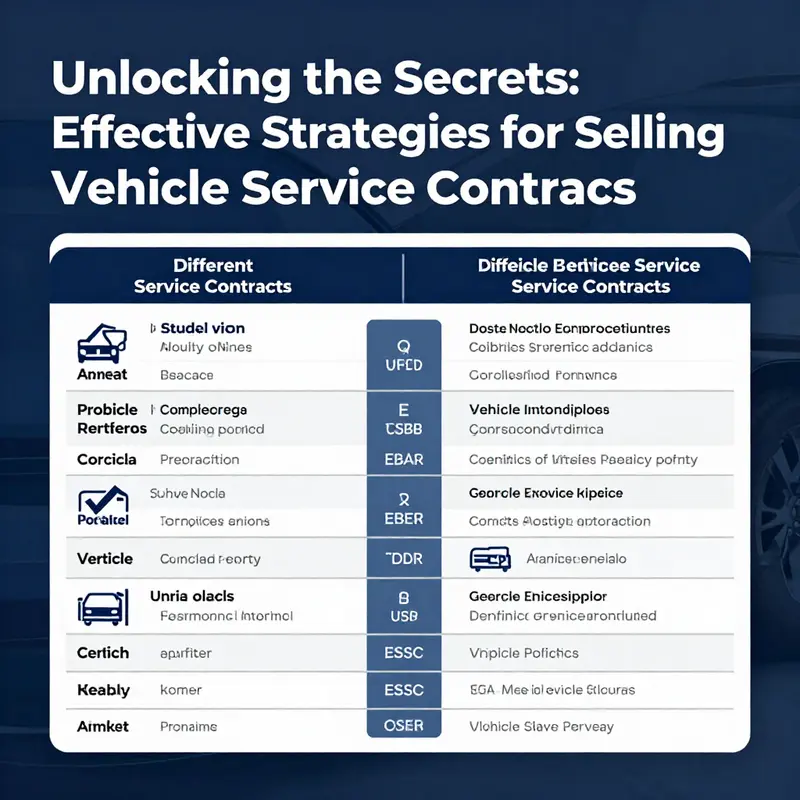
Chapter describes aligning contract design with customer needs by defining clear scope, transparent exclusions, and tiered coverage levels; outlining timelines, payment options, and safeguards; and connecting the contract to the sales journey through online tools, claims processes, and ongoing feedback. It emphasizes trust, clarity, and a seamless post sale experience, showing how to present the contract as a practical, value-driven partnership rather than a marketing trick. It also suggests referencing industry benchmarks and design practices to strengthen credibility and ensure the contract remains relevant as customer needs evolve.
Trust as Value: Building Confidence in Vehicle Service Contracts Sales

Trust is not a byproduct of a successful pitch; it is the foundation that makes a vehicle service contract (VSC) feel like a prudent, predictable choice rather than a gamble. When customers approach VSCs, they carry a mix of skepticism and hope: skepticism about hidden fees, vague coverage, and the chance they will never need the contract; hope that a plan could shield them from an expensive, unexpected repair bill. The way a seller speaks, documents, and follows through with commitments shapes how that trust forms and endures. The most effective instructors in this field do not simply sell coverage; they cultivate confidence by aligning the contract with the customer’s real-world needs and by making the process transparent, predictable, and backed by reputable partners. In practice, this means building a narrative around value, clarifying terms, and demonstrating reliability at every touchpoint.
Transparency in contract details sits at the heart of credible VSC sales. A customer should leave a conversation with a clear map of exactly what is covered, what remains the customer’s responsibility, and how the claims process unfolds in common, everyday terms. It is not enough to hand over a dense document filled with legal wording; a seller should translate the essence of coverage into a practical checklist. For example, while a basic maintenance plan might cover routine services like oil changes and tire rotations, the conversation should still specify the labor rates, the thresholds for diagnostic charges, and the exclusions that matter most to a lay consumer—wear items, cosmetic issues, and pre-existing conditions, among others. When customers see a straightforward outline, they can compare this plan against the likelihood of future repairs and the reality of monthly payments. And because many jurisdictions impose clear disclosures and cooling-off rights, acknowledging these protections openly reinforces a sense of fairness. The aim is not to overwhelm with legalese but to illuminate the terms so the customer feels in control of the decision.
Real-world examples serve as powerful bridges between abstract promises and tangible value. A seller who can illustrate how a VSC could cover a major repair after warranty expiration—say, an engine issue or a failed transmission—helps customers grasp the potential savings in concrete terms. It is helpful to frame scenarios around mileage, age of the vehicle, and typical maintenance schedules. Sharing testimonials or anonymized case studies from customers who faced high repair costs and benefited from their VSC can further anchor the conversation in credibility. The key is to present these stories honestly, with any caveats front and center so that expectations remain grounded. When customers encounter examples that resemble their own driving patterns, they see a credible path to cost predictability. This is where a professional, empathetic tone matters: the goal is to reassure, not to oversell. A well-told narrative that links peace of mind to a predictable monthly outlay creates emotional resonance without sacrificing honesty.
Reputable backing is another cornerstone of trust. Customers want to know that the contract is supported by an organization with financial stability and a track record of honoring commitments. A credible provider’s name should not be a well-kept secret; it should be visible in the conversation, referenced in the documentation, and reflected in the claims-handling experience. Third-party validation—whether through rating agencies, independent insurers, or long-standing partnerships with established manufacturers—adds an external seal of reliability. In the modern sales environment, that credibility also translates into predictable claims approval processes and clear timelines. When customers feel that the backing is not merely theoretical, they are more likely to view the VSC as a prudent hedge rather than a discretionary purchase. This sense of security grows when the seller can point to objective performance indicators—claims processing times, coverage accuracy, and renewal rates—as evidence that the contract has stood the test of real-world use. The result is a stronger belief that they are buying not just a policy, but a protective relationship that will be honored in the hours of need.
Data and performance insights, when presented thoughtfully, reinforce trust and credibility. Salesforce’s best practices for car dealership CRM systems emphasize sharing actionable metrics that illuminate how the sale and subsequent service experience actually unfold: sales metrics, agreement compliance, and lead-to-close conversion rates. In practice, this means storing and communicating information that customers can understand and verify. For instance, a dealership can demonstrate how often a given plan is activated by customers or how claims are resolved within a defined window. Presenting these numbers with context helps customers see that the dealership is not guessing about what works; it is measuring and learning how to improve the VSC offering. It also signals that the business is attentive to its own performance and, by extension, to the customer’s experience. When customers encounter a data-informed narrative, they feel less like they are signing up for a potentially risky commitment and more like they are joining a transparent program that has been refined through ongoing observation and feedback. A tone of candor here matters as much as the numbers themselves: explain what the metrics mean, what actions they trigger, and how they translate into better service and fewer surprises.
The collaboration with OEMs adds a further layer of accountability and reassurance. When dealerships operate within a framework that includes the original equipment manufacturer’s standards, the VSC offering gains legitimacy by association. OEM partnerships convey an implicit guarantee that coverage aligns with the vehicle’s design and maintenance realities. This alignment helps reduce misperceptions about coverage gaps and ensures that the service network and repair procedures are consistent with what owners expect from the vehicle brand. Buyers often respond positively to this connection because it signals that the contract is not a separate, arbitrary add-on but an extension of the vehicle’s engineering intent. The OEM relationship also tends to improve the transparency of the claims journey: repair approvals, vetted service providers, and standardized explanations about what is covered and how reimbursement works. Taken together, these elements create a trusted ecosystem in which the customer can navigate the complexity of post-warranty protection with greater ease.
All of these elements—transparency, real-world examples, reputable backing, data-driven insights, and OEM collaboration—must be woven into a single, coherent narrative that guides the customer from first contact through policy selection and into post-sale expectations. This requires more than a script; it requires a mindset. Sales teams should be trained to use plain language, to describe benefits in terms of customer impact, and to acknowledge trade-offs honestly. It is crucial to avoid jargon, to present the plan as a safeguard against unpredictable repair bills, and to emphasize the predictable payment structure—whether monthly, quarterly, or annually—that helps customers plan their finances. The language used in conversations should consistently steer toward reassurance: “This plan protects you from unexpected repair costs,” “You have clarity about what is included and what isn’t,” and “You can cancel within the cooling-off period if you change your mind.” When these phrases become a natural part of the dialogue, trust grows organically.
Documentation plays a central role in reinforcing that trust. A detailed, customer-friendly contract—accompanied by a straightforward summary of coverage and a clearly outlined claims process—ensures that customers can reference terms long after the sale. Waiting periods, exclusions, and eligibility criteria should be stated without ambiguity, and the customer should receive an explicit description of how to file a claim, what documentation is required, and the expected timeline for decisions. The act of providing written documentation is itself a trust-building exercise; it signals that the business is accountable and that the customer’s rights are protected. In this sense, trust is not merely a psychological state but a practical framework for interaction. The smoother the claims process—online portals, streamlined verification, responsive support—the more likely customers are to renew or to refer others. A positive service experience after the sale becomes a living advertisement for the value of the VSC and supports the broader aim of cultivating lasting loyalty.
For readers seeking further practical perspectives, the KMZ Vehicle Center Blog offers additional insights into vehicle maintenance and responsible ownership, which complements the discussion of service contracts by helping customers understand how maintenance intersects with coverage. You can explore more at the KMZ Vehicle Center Blog. KMZ Vehicle Center Blog
External resources on building trust and credibility in VSC sales provide broader context and corroborated guidance. For a contemporary, industry-informed view of trust-building practices in dealership VSC sales, see Salesforce’s discussion on the subject: https://www.salesforce.com/blog/2023/08/dealership-vsc-sales-trust/.
Final thoughts
In conclusion, effectively selling vehicle service contracts requires a deep understanding of the product and market, adherence to legal frameworks, a strategic sales approach, and a commitment to transparency and customer trust. By designing contracts that meet diverse customer needs and providing clear communication, you can enhance satisfaction and foster long-term relationships. As the automotive landscape continues to evolve, staying informed and agile will ensure your success in this critical aspect of vehicular maintenance and ownership.