Public service vehicles (PSVs) play a crucial role in modern urban landscapes, providing essential services that significantly improve community welfare. Designed to operate in a flexible and mobile manner, these vehicles bridge the gap in service delivery, tackling the challenging ‘last mile’ issues many communities face daily. From mobile clinics to community service vans, PSVs bring necessary services directly to residents, ensuring accessibility in everyday life. This article delves into the definition and classification of public service vehicles, providing insights into different models, the regulatory framework governing them, and their ripple effects on community services and local economies. By examining these aspects, local private car owners, used car buyers and sellers, and small business fleet operators will gain a comprehensive understanding of how PSVs contribute to enhancing quality of life.
Public Service Vehicles in Motion: Mobility as Public Welfare
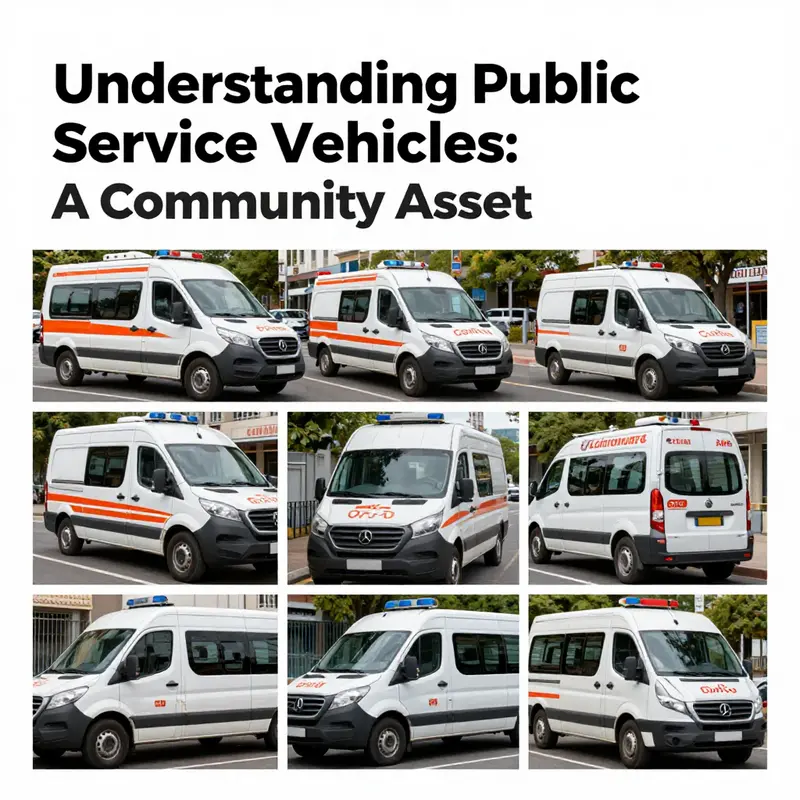
A Public Service Vehicle (PSV) is a vehicle whose primary purpose is to move people and deliver essential services, not merely to transport goods. The public’s needs shape its design, routes, and reliability. In practice, a PSV covers city buses, school transports, and other mobile services that bring healthcare, government assistance, or community support directly to people where they live and work.
A dual mission defines PSVs: high-volume passenger movement and targeted on-demand services. When designed well, they reduce friction in daily life by combining predictable schedule with flexible deployments. The last mile becomes a service design problem: where to place a portable capability, at what times, and in what configurations, so that services like vaccination, document processing, or on-site repairs are brought to the doorstep rather than requiring a trip to a fixed facility.
Policy and regulation shape PSVs through safety standards, accessibility requirements, and service quality expectations. In mature systems they knit dense urban cores to suburbs and beyond, while in underserved areas they become vital tools for equity. The shift toward electrification and cleaner propulsion underscores a broader ambition: to keep mobility as a public good while reducing emissions, noise, and operating costs.
This broader interpretation matters for urban planning because it frames mobility infrastructure as an integrated system of people, services, and spaces. When a city treats PSVs as adaptable platforms rather than single-purpose vehicles, it unlocks resilience and inclusivity. A mobile clinic might run along a fixed corridor at peak times and pivot to health outreach at other hours, or a community service van might provide on-site support and information directly at neighborhoods or hospitals.
For practitioners, the practical concerns include maintenance, reliability, scheduling discipline, and the capacity to reconfigure interiors quickly. The aim is to keep PSVs dependable in the face of fluctuating demand, while preserving safety, comfort, and dignity for every rider. And as cities update fleets with electric drivetrains, fast charging, and smarter dispatch, the PSV becomes a moving node of public welfare rather than a single-purpose transport asset.
If you would like further context, you can explore public transport governance resources that discuss how fleet planning integrates mobility and service outcomes to improve daily life.
null
null
Rules on the Move: The Regulatory Architecture Guarding Public Service Vehicles and the Public They Serve
Public service vehicles, or PSVs, are more than just cars that ferry people from point A to point B. They are a backbone of public welfare, designed to deliver reliable, predictable access to essential services. A PSV might be a standard bus on a fixed route, but it can also be a shuttle that operates on demand, a community service van, or a vehicle deployed for emergency response. What unites all these vehicles is not only their public function, but the regulatory framework that governs safety, accessibility, and accountability. In practice, that framework aims to balance efficiency with protection for passengers, drivers, and other road users, ensuring that public needs are met without compromising safety or fairness. To understand how a PSV earns its place on the road, it is essential to trace the regulatory architecture that shapes licensing, vehicle standards, driver competence, and operational rules, and to see how those pieces work together in a real urban environment.
In the United Kingdom, the term public service vehicle is codified through legislation that recognizes the special role these vehicles play in organized public transport and community services. The Road Traffic Act of 1988 and subsequent regulations created a licensing regime managed by local authorities in tandem with the Driver and Vehicle Standards Agency (DVSA). The licensing process is not a mere formality. It requires PSV operators to demonstrate financial stability, a credible safety management system, and ongoing compliance with transport laws. This means that any operator wishing to run a PSV service must obtain a valid PSV operator’s licence. The licence acts as a gatekeeper, signaling that the operator has the resources and organizational capacity to run a service that passengers rely on. The emphasis on financial stability is not about restricting competition; it is about ensuring continuity of service and the capacity to maintain vehicles and staff through undisturbed operations.
Vehicle standards sit at the heart of passenger safety. PSVs must undergo rigorous periodic inspections that resemble MOT tests but are tailored to the additional demands of carrying the public. These inspections verify mechanical integrity, braking performance, steering, suspension, and emission levels, among other critical systems. More than safety in motion, they encompass environmental considerations and accessibility requirements. In this regulatory space, accessibility is not an afterthought. The framework mandates features such as low-floor access and priority seating to accommodate wheelchair users and people with mobility challenges. Visual and audible announcements contribute to an inclusive travel experience, ensuring that passengers with sensory impairments can anticipate stops and navigate the interior with confidence. The emphasis on accessibility mirrors a broader policy goal: to enable everyone to participate in daily life, whether they are commuting to work, visiting a clinic, or attending community events.
Driver qualifications form a crucial layer of the PSV ecosystem. Operators must recruit drivers who hold a Driver Certificate of Professional Competence (Driver CPC). The CPC is a marker of professional capability, reflecting training in safe driving practices, customer service, and the management of complex road situations unique to large vehicles. But qualification is not a one-off hurdle. Drivers need to maintain fitness to drive, have a clean driving record, and pass periodic checks, often including disclosures that verify their suitability for public passenger service. The regulatory logic here is straightforward: when large vehicles carry the public, the human element—competence, attentiveness, and judgment—must be safeguarded as vigorously as the mechanical side.
Beyond licensing and vehicle checks, there are precise rules governing how PSVs operate. Working hours, rest periods, and speed limits are not negotiable. These provisions aim to prevent fatigue, which is a known risk factor for incidents on busy urban streets. Emergency procedures, too, are codified. PSVs must be equipped and trained to respond to emergencies, whether a medical episode on board, a road traffic collision, or a system-wide disruption requiring rapid re-routing. The regulatory stance treats emergency readiness as integral to service reliability, not as an optional add-on for exceptional circumstances. In a city where public services hinge on timely delivery, a vehicle that cannot be trusted to function safely when the unexpected arises undermines the entire system.
A distinct but related thread in PSV regulation concerns inclusion and dignity in public transport. Rules require accessible features and inclusive communication, recognizing that many people rely on PSVs for essential daily activities. The combination of low-floor designs, accessible entry points, priority seating, and clear announcements creates an environment where people with disabilities can participate in civic life with minimal friction. The emphasis on inclusion is not accidental; it reflects a broader public policy that seeks to expand mobility as a right, not a privilege limited to those who already have easy access to private transport.
The governance of PSVs is a collaborative exercise that spans national policy and local enforcement. At the national level, the Transport Secretary and the Department for Transport (DfT) set overarching policy directions—priorities, standards, and resource allocation. Local councils, operating within these guidelines, implement licensing, monitor compliance, and enforce rules on the ground. In Scotland, Transport Scotland coordinates with local authorities, illustrating how regulatory responsibility can be shared across levels of government. This distributed model is essential for topics as dynamic as urban mobility, where needs and traffic patterns shift with population changes, economic activity, and technology. It also allows for tailored solutions that reflect local realities, such as a region’s travel demand patterns or the availability of wheelchair-accessible infrastructure at major transit hubs.
The regulatory framework is not static. It evolves as cities grow and technologies advance. For instance, environmental objectives push for higher standards in emissions, fuel efficiency, and the adoption of cleaner propulsion systems. The regulatory process must therefore accommodate new vehicle technologies, while maintaining a consistent standard for safety and accessibility. In practice, this means regular updates to licensing criteria, inspection regimes, and driver training requirements. The DVSA remains the central technical authority, coordinating with local licensing authorities to ensure consistency, while also allowing for local adaptation where necessary. The result is a system that aspires to be uniform enough to guarantee a baseline of safety and reliability, yet flexible enough to reflect regional differences in demand and infrastructure.
Within this framework, the line between public transport and broader public service provision can blur. The initial research landscape notes that public service vehicles extend beyond traditional mass transit. Community service vehicles and mobile units that deliver direct, on-site services—such as medical checkups, document processing, or utility repairs—pose distinct regulatory considerations. While many such vehicles fall outside the standard timetable of a city’s bus network, they still operate under dedicated safety and operation standards designed to protect both workers and the public they serve. In many cases, these vehicles share the same driver qualification requirements, vehicle safety checks, and accessibility mandates, ensuring that the public receives essential services with consistent safeguards wherever the vehicle operates. This shared regulatory ethos helps unify a city’s diverse mobility and service delivery functions under a single public-welfare mandate.
For practitioners and operators, the regulatory landscape translates into a practical discipline. Compliance is a daily, not a quarterly or annual, concern. It governs how routes are planned to minimize risk, how schedules are designed to meet predictable demand, and how vehicles are maintained to reduce failure or breakdowns that would disrupt communities. It also shapes investment decisions, since upgrading fleets to meet new standards—whether in safety features, accessibility equipment, or cleaner propulsion—requires capital and strategic foresight. The result is a transport and service ecosystem that is not only safer and more accessible but also more resilient in the face of congestion, aging fleets, and shifting urban priorities.
From a civic perspective, the PSV regulatory framework embodies a social contract. It promises that, regardless of where a person lives or what their mobility needs are, a dependable public service vehicle will exist to help them reach essential destinations. The promise is reinforced by enforcement practices that deter neglect and violations while encouraging continuous improvement. That dynamic creates a path for accountability: operators and drivers know the standards they must meet, and passengers have a framework within which to raise concerns and seek redress when services fall short. When failures occur, regulators investigate with the dual aim of remedy and reform, ensuring that lessons learned translate into concrete improvements for the next service cycle.
For readers seeking practical guidance on navigating this landscape, a broader exploration of industry resources can be beneficial. The kmzvehiclecenter blog offers perspectives on vehicle operation and maintenance that intersect with regulatory expectations. While the focus there is practical and technical, the underlying principle remains clear: well-maintained vehicles and professional crews are foundational to safe, reliable public service. The regulatory backbone and the day-to-day work of keeping a PSV in good order converge in the shared objective of serving the public with dignity, efficiency, and trust.
Ultimately, the regulatory framework surrounding PSVs is a living system. It must honor the essentials of safety, accessibility, and reliability while adapting to new technologies and evolving city needs. In the UK, this means a partnership among national policy makers, local licensing authorities, vehicle engineers, and frontline operators. It means balancing the public’s right to mobility with the equally important obligation to protect passengers, workers, and other road users. And it means recognizing that PSVs are not just machines on a map; they are instruments of public welfare, tasked with delivering services when and where people need them most. The regulatory architecture that governs them is, in turn, a reflection of a community’s commitment to making mobility a shared, reliable, and inclusive resource.
External reference: For official guidance on PSV licensing and regulatory standards in the UK, see the government publication at https://www.gov.uk/government/publications/public-service-vehicle-psv-licensing
How Public Service Vehicles Strengthen Community Services: Mobility, Equity, and Resilience
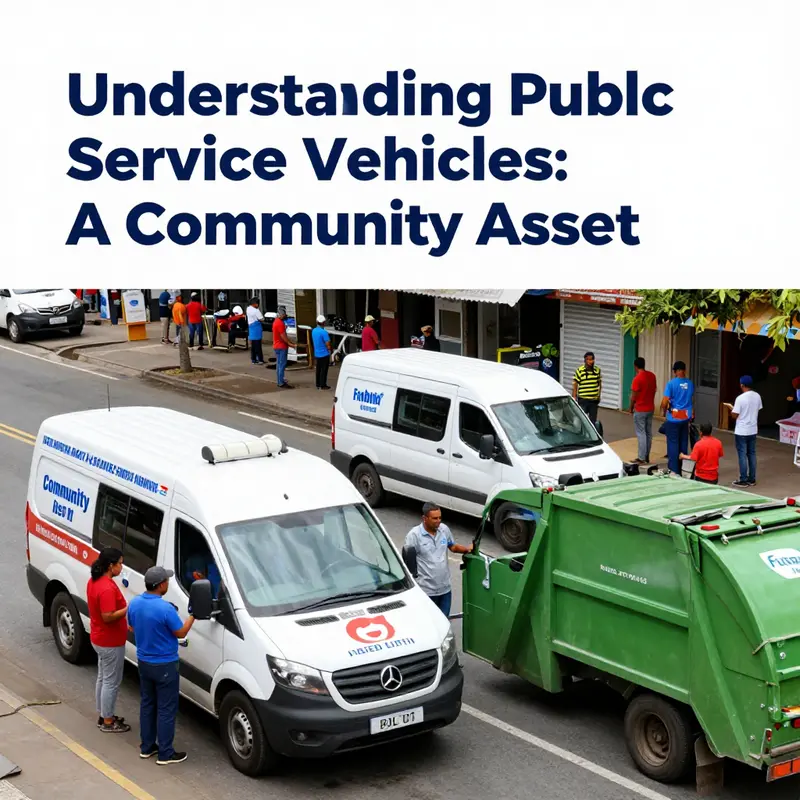
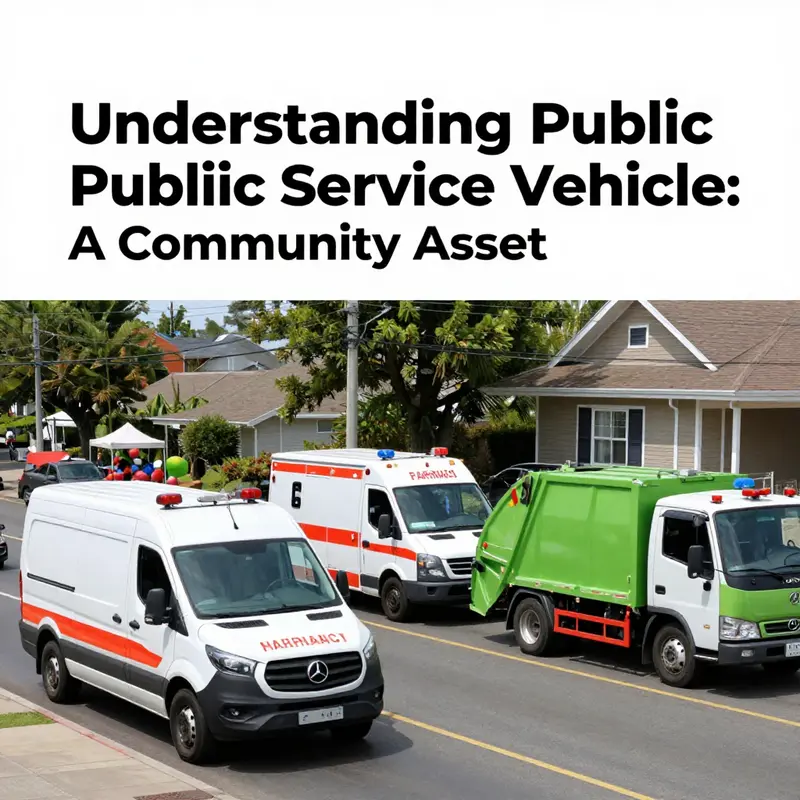
Public service vehicles (PSVs) are more than rolling assets. They are mobile extensions of civic infrastructure, designed to bring services to people rather than requiring people to reach centralized facilities. Understanding their impact on community services means looking beyond scheduled passenger routes. It means recognizing how specialized vehicles — mobile clinics, community service vans, utility trucks, and emergency response units — close gaps in access, improve equity, and help cities and towns respond quickly to changing needs.
A PSV can be small and nimble or large and complex. What unites them is purpose: they exist to serve the public good. That purpose reshapes service design. A neighborhood with a community service vehicle that visits weekly can gain access to basic health checks, document processing, and consumer assistance without long travel. In rural regions, a mobile clinic or library bus can substitute for facilities that are economically unsustainable to run full time. In dense urban centers, maintenance PSVs support continuous utility operation and rapid street repairs that keep commerce moving. Each deployment reduces friction between residents and essential services.
Social inclusion is a primary outcome of well-planned PSV programs. Regular, reliable PSV stops create predictable access for seniors, people with disabilities, and low-income households. When buses and vans are designed with accessible boarding, appropriate interior layouts, and supportive staff, they remove physical and social barriers. Employment outcomes improve as well. Commuter shuttles and on-demand transit services link neighborhoods to job centers. Mobile enrollment and benefits offices reduce administrative hurdles for residents who might otherwise miss application deadlines because they lack transport.
The environmental impact of PSVs multiplies across a community. Efficient, electrified PSVs lower per-capita emissions relative to private vehicle trips. A consolidated service trip, such as a mobile clinic visiting 40 households in a day, replaces numerous individual car journeys. That consolidation reduces traffic congestion and improves air quality. As vehicle fleets shift to electric drivetrains, the emissions benefits grow. City planners can deliberately route PSVs to support active transport by placing stops near bike lanes and pedestrian corridors, encouraging walking and cycling for the first and last mile.
Beyond emissions, PSVs influence urban form. Frequent service nodes make mixed-use development more viable. Retail, education, and healthcare institutions cluster around reliable PSV access points. Over time, this encourages denser, more walkable neighborhoods and reduces overall dependency on private cars. The cumulative effect is healthier streets, safer public realms, and an improved quality of life.
Policy and community advocacy are essential levers in shaping effective PSV networks. Civic engagement helps define service priorities and equitable coverage. When residents participate in route design, scheduling, and service types, planners can direct resources to under-served neighborhoods. Fiscal decisions likewise matter: funding models that blend municipal budgets, grants, and targeted revenue streams sustain operations. Public-private partnerships can inject capital and operational expertise, but they should be structured to protect accessibility and affordability.
Operational excellence underpins long-term impact. Fleet composition, maintenance regimes, and staff training determine service reliability. Vehicles must be selected and configured for their roles: mobile clinics require power supply, sanitation, and privacy zones; utility trucks need specialized lifts and tool storage; community vans benefit from modular interiors that adapt to varied tasks. Regular maintenance prevents downtime and extends vehicle life, while driver and technician training ensures safe, user-centered service delivery. Technical teams, both municipal and contracted, can draw practical operational advice from resources such as the kmzvehiclecenter.com blog to support maintenance best practices and fleet readiness.
Technology amplifies PSV effectiveness without replacing human judgment. GPS routing and telematics optimize schedules and reduce idle time. Data analytics reveal demand patterns that inform service adjustments. Simple digital booking platforms enable reservation-based community services that target residents with limited mobility. Telemedicine equipment in mobile clinics extends specialist reach into neighborhoods. However, technology must be accessible: low-bandwidth, phone-based booking and clear signage at stops ensure no one is excluded by digital divides.
Measuring impact requires both quantitative and qualitative approaches. Traditional metrics like ridership, service frequency, on-time performance, and vehicle kilometers provide operational insight. Equally important are equity metrics: which neighborhoods receive service, who uses it, and whether services improve access to healthcare, education, and employment. Environmental indicators, such as emissions per passenger trip and reductions in vehicle miles traveled, show sustainability gains. Qualitative feedback from community members highlights lived outcomes, like reduced stress from easier access to services, or improved civic trust when government is seen as responsive.
PSVs also serve critical roles in emergency response and resilience. Specialized vehicles provide mobile command, triage, and sheltering capacity during disasters. In the immediate aftermath of emergencies, PSVs deliver medicine, food, and information when fixed facilities are disrupted. Their mobility makes them effective for targeted outreach in neighborhoods cut off by damage or flooding. Planning for resilience means pre-positioning adaptable vehicles, training crews for emergency roles, and integrating PSVs into broader disaster response protocols.
Challenges persist and require deliberate action. Funding limitations can constrain fleet modernization and limit coverage. Regulatory frameworks sometimes lag behind innovative service models, creating friction for on-demand or cross-jurisdictional PSV operations. Maintenance backlogs shrink service reliability and shorten vehicle life cycles. Workforce shortages, particularly among trained technicians and accessible-service drivers, limit scaling. Addressing these challenges needs coordinated policy, predictable funding, and investments in human capital.
For planners and policymakers, several practices produce outsized benefits. First, co-design services with communities to align resources with real needs. Second, prioritize accessibility in vehicle procurement and interior design. Third, commit to electrification timelines where feasible, while investing in charging infrastructure and lifecycle maintenance. Fourth, deploy data systems that protect privacy while revealing demand patterns. Fifth, create funding mechanisms that sustain operations through economic cycles, including contingency funds for emergency deployments.
When implemented thoughtfully, PSVs redefine what it means to offer public services. They reduce travel burdens, improve environmental outcomes, and knit social fabric tighter through regular, visible public presence. They allow governments to meet people where they are, literally and figuratively. Their true value is measured not only in trips completed or emissions reduced, but in lives made easier: a senior who receives vaccination at the corner stop, a family who accesses benefits without a long bus ride, or a neighborhood that recovers quickly after a storm thanks to mobile repair crews. In each case, the PSV is a bridge — between services and citizens, between policy and practical help, and between infrastructure and everyday resilience.
For technical guidelines and formal definitions of PSV types and requirements, see the official guidance on Public Service Vehicles (PSV) vehicle types and requirements.
Public Service Vehicles (PSV) Vehicle Types and Requirements
Final thoughts
The importance of public service vehicles in communities cannot be overstated. They are often the backbone of local service provision, addressing critical needs and improving residents’ quality of life. By enhancing access to essential services and supporting local infrastructure, PSVs facilitate a healthier, more robust community. For local private car owners, used car buyers and sellers, and small business fleet operators, understanding the nuances of PSVs can reveal opportunities for collaboration, investment, or simply better community engagement. As we move towards modern, efficient cities, the role of public service vehicles will continue to evolve, making their understanding increasingly relevant.