Service vehicles play a pivotal role in business operations, especially for local private car owners, used car buyers and sellers, and small business fleet operators. Understanding whether these vehicles qualify as assets encompasses financial implications and operational efficiency. Each chapter of this article will delve into the critical aspects of service vehicles as assets, including their classification, financial impacts, logistics roles, and depreciation and maintenance considerations. By grasping these dimensions, stakeholders can make informed decisions regarding service vehicles and their value in business.
Assets in Motion: Service Vehicles as Long-Term Business Assets
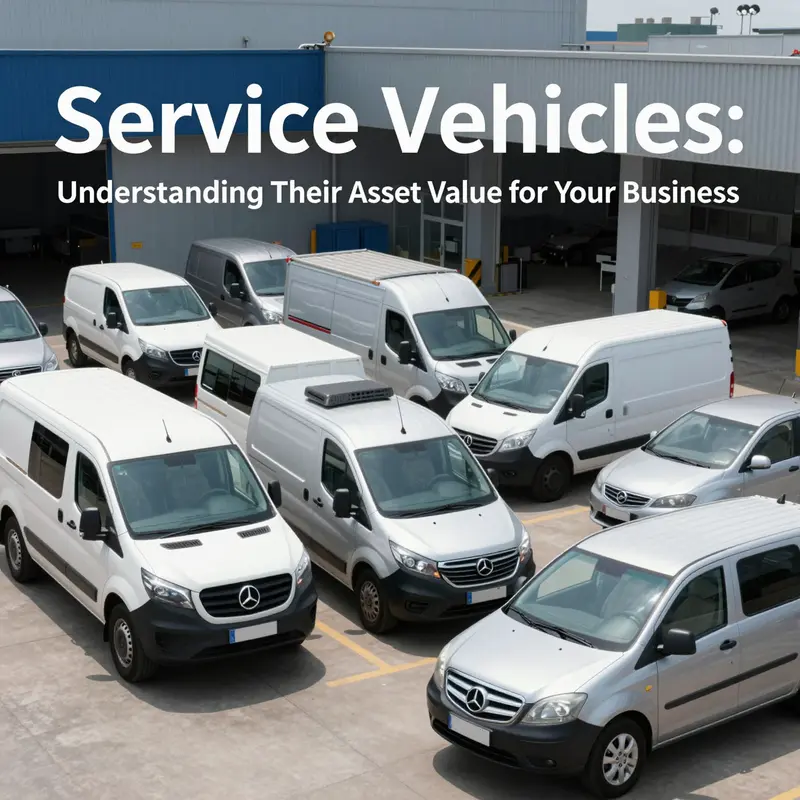
Service vehicles occupy a distinct position in a business’s financial framework: they are not merely conveyances but durable resources that enable service delivery, inventory movement, and customer access. When a company purchases a van or truck, it is investing in an asset that provides value over multiple years. The label ‘service vehicle’ describes its purpose, but asset status is determined by accounting criteria: cost, useful life, depreciation, and tax treatment rather than everyday function.\n\nIn practice, service vehicles are recorded as fixed assets because they meet the criteria of tangible, long-term resources expected to contribute to operations over more than one year. The initial recognition occurs at cost—the price paid plus directly attributable costs to bring the asset to working condition—and is subsequently reduced by depreciation as the asset ages. Depreciation spreads the vehicle’s cost over its useful life, aligning expense recognition with the income the asset helps generate.\n\nTax considerations add another layer: businesses can deduct operating costs such as fuel and maintenance and may deduct depreciation under applicable schedules. The proportion of business use versus personal use must be tracked, as only the business portion is deductible or depreciable for tax purposes.\n\nDisposal of a service vehicle requires recognizing any gain or loss on sale or retirement. If depreciation has been claimed, the difference between sale proceeds and remaining book value can affect taxes. Documentation—asset registers, maintenance records, and purchase receipts—supports depreciation calculations and tax reporting and aids in budgeting for replacements.\n\nEffective asset management involves capitalization thresholds, lifecycle planning, and governance that ensure resources with enduring value remain aligned with strategic objectives. Regular maintenance protects value, while timely replacement can yield gains in productivity and efficiency. By treating service vehicles as assets, organizations strengthen their financial reporting, risk management, and capital planning.
Assets on Wheels: The Strategic Economics of Classifying Service Vehicles
Service vehicles are more than tools for moving people and parts. They embody the company’s operating reality: capacity, reliability, and the ability to generate income over time. The question of whether such vehicles are assets does not hinge on their purpose alone. Instead, it rests on how accounting treats the costs and benefits they embody. In practice, a service vehicle is both a tangible asset on the balance sheet and a vehicle that enables ongoing operations. The dual nature can be confusing: the asset is the vehicle itself, but the service it provides belongs to the realm of day-to-day operations. This distinction matters deeply for financial reporting, for tax planning, and for the strategic decisions that management makes about fleet size, maintenance, and financing. The broader topic of this article asks: is a service vehicle an asset? The straightforward answer is yes, but with important caveats. The vehicle qualifies as a fixed asset when the organization recognizes it as property, plant, and equipment. Its classification carries implications that ripple through every financial statement, from balance sheet totals to income statements, and even to cash flows and tax positions.
When a company decides to capitalize a service vehicle, it records the asset at its historical cost. That cost comprises the purchase price plus delivery charges and any other costs required to bring the vehicle to its intended use. The result is a higher asset base on the balance sheet. This increase can alter key solvency and leverage metrics, especially if the asset is financed with debt. The act of capitalization signals that the vehicle will contribute to earnings over several years, not just in the period of purchase. In turn, this sets the stage for depreciation and a gradual reduction in reported earnings as the asset’s cost is allocated over its useful life. The concept is straightforward, yet its implications are profound. A larger asset base can improve perceived stability and borrowing capacity, but depreciation introduces a recurring expense that reduces net income. In the eyes of investors and lenders, the balance between asset strength and earnings quality becomes a central consideration.
Depreciation is the mechanism that translates a capital outlay into a stream of non-cash charges across multiple years. For service vehicles, the useful life is typically in the five- to eight-year range, though this can vary with vehicle type, usage intensity, and local regulatory requirements. The method chosen to allocate depreciation—whether straight-line, declining balance, or another approach—shapes both timing and magnitude of expense recognition. Straight-line depreciation spreads the cost evenly over the estimated life, producing predictable, gradual expense. Accelerated methods front-load more expense in the early years, which can yield larger tax shields early on and reduce early reported profitability. The choice of method reflects management’s judgment about asset productivity and the company’s broader tax strategy. It also interacts with financing decisions. If a fleet is financed, depreciation interacts with interest costs and loan covenants in ways that influence cash available for other investments.
From a cash flow perspective, the initial purchase of a service vehicle is a cash outflow recorded in the investing activities section of the cash flow statement. Depreciation, being a non-cash expense, does not affect cash flow directly, but it does influence taxable income and, consequently, cash taxes paid. The net effect over time can be favorable: depreciation reduces current tax liability, improving after-tax cash flow in the years when the depreciation deduction is meaningful. Yet this benefit must be weighed against the upfront liquidity impact of a large capex outlay, a burden that often weighs more heavily on smaller firms or those with tight working capital. Fleet managers and finance officers thus face a trade-off between immediate liquidity and long-run earnings quality. In practice, many organizations stage fleet replacement or expansion in a deliberate way to smooth cash outflows and align asset life with business cycles.
Tax considerations add another layer of complexity. In many jurisdictions, qualifying business assets like service vehicles can benefit from accelerated depreciation schedules or even immediate expensing provisions. Such incentives reduce taxable income in the year of purchase and enhance after-tax cash flow. The trade-off, however, is that the book value of the asset on the balance sheet declines more quickly than its tax basis in some cases. That divergence between accounting depreciation and tax depreciation can create future tax consequences and require careful reconciliation in the notes to the financial statements. Firms must design their tax depreciation policy in harmony with financial reporting policies, ensuring that both sets of numbers reflect the asset’s economics and the company’s broader tax planning objectives.
Internal controls become essential once a vehicle assumes fixed-asset status. Proper capitalization requires formal approval, capitalization thresholds, and consistent documentation of cost components beyond the purchase price. Ongoing maintenance, insurance, and periodical impairment testing must be tracked to ensure the asset’s carrying value remains appropriate. If market conditions change—equipment becomes obsolete, or its expected future cash flows decline—impairment losses may need to be recognized. Such events can momentarily depress earnings and alter asset valuations on the balance sheet, reminding readers that assets are not static numbers but dynamic inputs in a company’s performance narrative. Maintenance itself plays a critical role in preserving asset value. Regular servicing keeps the vehicle in productive condition, reduces the risk of unplanned downtime, and sustains its income-generating potential. Thoughtful maintenance planning translates into durable asset performance and steadier depreciation outcomes. For practical guidance on fleet upkeep, consider the truck maintenance tips for first-time owners. This resource offers a grounded perspective on schedules, inspections, and routines that align with sound asset management.
Beyond the mechanics of capitalization and depreciation lies a broader strategic question: should an organization view a service vehicle as a capital asset to be tracked through the balance sheet, or as an operational resource expensed in the period it supports activity? The nuanced answer is that a service vehicle is both. The vehicle itself is a fixed asset with a measurable life and recoverable value. The service it provides—routing parts, enabling on-site repairs, delivering service capability—belongs to operations. The distinction matters because it governs how costs are recognized, how performance is measured, and how leadership demonstrates value to stakeholders. Capitalizing the vehicle communicates long-term commitment to assets that generate enduring benefits. Expensing the vehicle in the year of purchase conveys a different message about short-term profitability and resource flexibility. In a well-governed finance framework, a company will define clear capitalization criteria that reflect both economic substance and regulatory requirements. These policies help avoid misclassifications that could mislead users of financial statements, from internal managers to external analysts.
The narrative of asset classification also intersects with financing strategy and capital budgeting. A service vehicle, when capitalized, becomes part of a company’s asset base and a potential collateral asset for debt financing. This can influence credit terms, interest rates, and the firm’s ability to fund future acquisitions. In contrast, expensing the vehicle lowers taxable income in the near term but keeps the asset off the balance sheet, which may restrict certain financing options or perceived balance sheet strength. Managers must balance liquidity, cost of capital, and strategic fleet plans. The decision will depend on the company’s current capital structure, competitive environment, and growth ambitions. As fleets evolve, so too does the framework for evaluating asset replacement cycles, residual values, and the opportunity costs of tying capital to vehicles versus other income-generating assets. The right choice aligns with a comprehensive view of how the fleet contributes to enduring value, rather than merely satisfying accounting constraints.
In practice, the ultimate verdict on whether a service vehicle is an asset is not a single rule but a disciplined judgment that integrates cost, benefit, and risk. The asset is the vehicle with a clear, measurable future economic benefit and a predictable life. Its recognition on the balance sheet complements, rather than contradicts, the operational importance of the service it enables. When a company adopts a policy that capitalization thresholds reflect both the vehicle’s acquisition cost and its expected contribution to revenue, the resulting financial statements become more informative. They reveal not only how much is spent on fleet assets, but also how effectively those assets convert investment into service capacity, uptime, and customer value. The result is a more coherent picture that supports better budgeting, more accurate performance metrics, and clearer communication with stakeholders.
In closing, the financial implications of classifying service vehicles as assets extend far beyond the mechanics of depreciation tables and tax deductions. They shape the way a business plans its fleet, funds its growth, and manages risk. They influence how profitability is reported in the near term and how value is demonstrated over time. They affect the signals that lenders, investors, and executives read when evaluating the company’s capacity to deliver reliable service. They remind us that the vehicle on the lot or parked in the yard is not merely metal and glass; it is a lever of financial strategy and a tangible embodiment of the company’s commitment to service excellence. For practitioners, the key is to approach asset classification as an integrated decision—one that honors the vehicle’s physical reality and its economic potential, while sustaining disciplined governance, transparent reporting, and prudent stewardship of capital. This balanced view helps ensure that the service vehicle remains not only a tool of daily operation but also a credible contributor to long-run financial strength.
External reading to deepen understanding of depreciation concepts and their financial impact can be found in a well-regarded financial education resource, which discusses how asset costs are allocated over time and why depreciation matters for profitability and cash flows: https://www.investopedia.com/articles/investing/062515/understanding-depreciation-asset-costs.asp
Assets in Motion: Reframing Service Vehicles as Strategic Assets in Modern Logistics
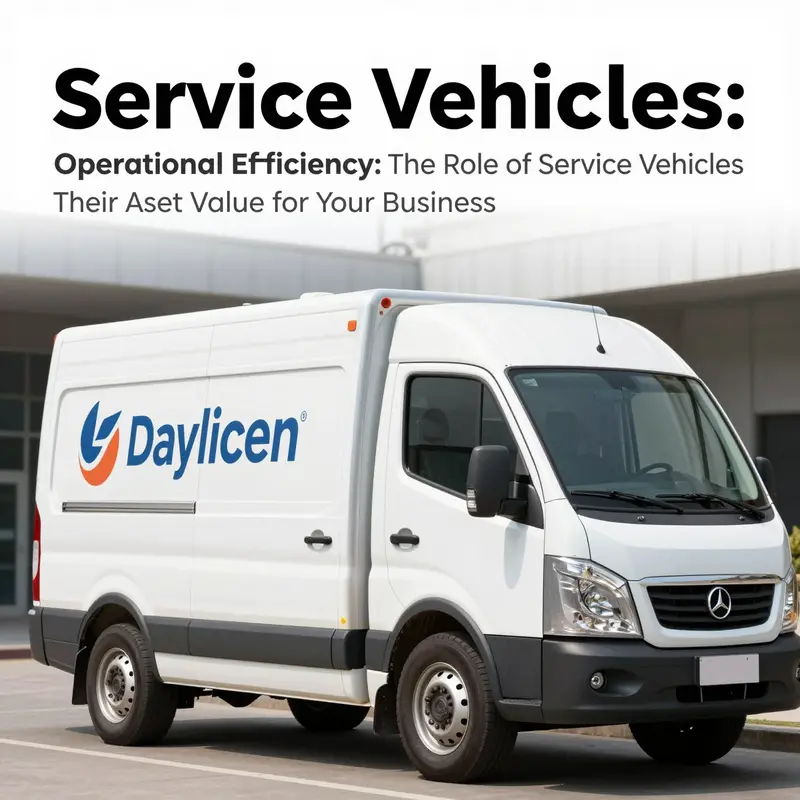
This chapter reframes service vehicles as strategic assets within modern logistics. It argues that a service vehicle is not merely a tool for mobility but a capital asset that can generate revenue and influence reliability. By looking at depreciation uptime route design and data driven maintenance, organizations can align asset management with service performance. Real time telemetry predictive maintenance and disciplined lifecycle planning help maximize asset value and lower total cost of ownership. The chapter also discusses how maintenance financing and asset disposal decisions affect long term profitability and customer satisfaction. In sum, service vehicles deserve asset aware management that links financial metrics with operational outcomes to sustain a resilient customer focused logistics network.
null
null
Final thoughts
Understanding the asset status of service vehicles is critical for local private car owners, used car buyers and sellers, and small business fleet operators. The classification of these vehicles as fixed assets has significant implications for financial health, operational logistics, and long-term maintenance strategies. By recognizing the operational value and the financial responsibilities that come with owning service vehicles, stakeholders can make better-informed decisions that support sustainable and efficient business practices.