
Vehicle safety is paramount, whether you’re a car owner, a used car buyer, or a fleet operator. Understanding the defects that can lead to a vehicle being out of service is crucial. From critical safety system failures to powertrain issues and electrical defects, the potential for danger is significant. In this discussion, we’ll delve into the various causes that can render your vehicle unusable, ensuring you are well-informed about the risks and safety measures necessary for responsible vehicle ownership and management.
Grounded by Design Faults: How Critical Safety Systems Can Put a Vehicle Out of Service
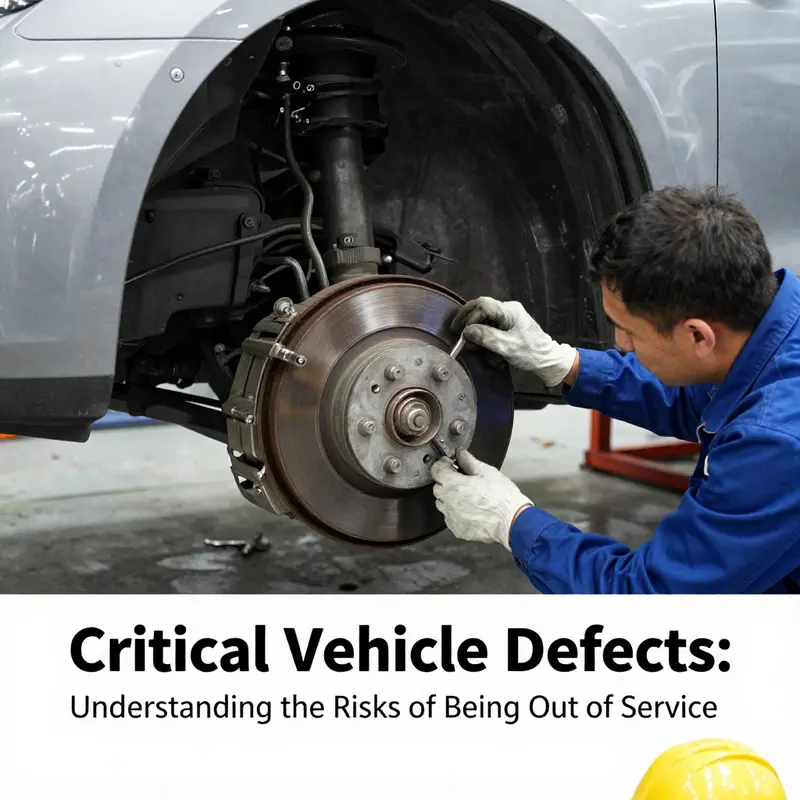
On the surface, a vehicle is a collection of parts that each perform a role, a complex choreography designed to move people and cargo from place to place with predictable safety. Yet the very systems that enable safe operation can, if defective, abruptly strip a vehicle of its mobility and its purpose. The topic remains practical not only because it affects road safety, but because a defect that undermines a core safety function often triggers a formal response from regulators, manufacturers, and service networks. When a defect endangers life or compromises the capability to control speed, direction, or protection for occupants, the vehicle steps out of service in a painstaking, precautionary way. This is not about faulty accessories or cosmetic blemishes; it is about failures that threaten the fundamental ability to operate and protect, and that may force a halt to use until the defect is resolved.
In tracing the spectrum of defects that can lead to a vehicle being taken out of service, it is helpful to start with the broad idea that safety systems lie at the heart of reliable operation. Vehicles carry layers of safety devices that must work in concert. When any one layer falters, the risk compounds. Among the most consequential failures are those that affect the braking system, steering control, and the integrity of occupant protection. A loss of braking power or a leak in the hydraulic system can leave a vehicle unable to stop safely. A malfunction in the steering system, especially in electric power steering or other assistive mechanisms, can erase a driver’s ability to control direction, a danger that becomes acute at highway speeds or on winding roads. If the airbag deployment system is compromised or seatbelts do not lock as intended, the primary line of defence during a crash is weakened, elevating the severity of any collision and increasing the likelihood of injury. These elements form a core that regulators and safety researchers repeatedly emphasize when considering whether a vehicle remains fit for road use.
Beyond these mechanical and protective systems, electronic stability control (ESC) and advanced driver assistance systems (ADAS) contribute a modern, layered safety approach. ESC helps prevent skidding and loss of control, particularly under abrupt maneuvers or slick conditions. When ESC fails, the vehicle’s tendency toward oversteer or understeer can become less predictable, and the risk of rollover or collision rises. Likewise, ADAS features such as adaptive cruise control, lane-keeping assistance, and automatic emergency braking are designed to augment driver judgment. If a software fault or sensor miscalibration disrupts these systems, the vehicle can behave in ways that surprise the driver, potentially undermining safety rather than enhancing it. In the context of a recall or a service bulletin, such malfunctions can be treated as reasons to halt use until a fix is verified and verified again through testing and regulatory checks.
The modern vehicle is also deeply dependent on software and electronic control units. A blackout in the dashboard or control module is not merely an inconvenient screen issue; it can mask critical information needed for safe operation. If essential functions like defrosting and defogging are blocked by a startup failure in a multimedia or instrument cluster, visibility is compromised in certain weather, creating an immediate hazard. Software-related failures can cascade through safety functions, disabling features that drivers rely on to maintain safe following distances, navigate complex traffic environments, or respond to changing road conditions. The rapid evolution of vehicle software means that even a well-maintained vehicle can be vulnerable to bugs or incompatibilities that render certain safety systems unreliable until a patch is applied and verified under real-world conditions.
While critical safety systems form the core of out-of-service decisions, a vehicle can also be sidelined by problems in propulsion, fuel, and power management. An engine that cannot sustain power or a transmission that cannot reliably select gears can halt mobility altogether. In some cases, the vehicle may enter a controlled limp mode, a state in which limited power is retained to allow the driver to reach a safe location for servicing. This is not merely a comfort feature; it is a deliberate containment strategy to reduce the risk of a complete breakdown on the road. In other circumstances, a propulsion fault can trigger protective logic that precludes driving at all, to prevent the risk of a sudden loss of power in traffic or on a high-speed roadway. Transmission faults may prevent the vehicle from being driven in any gear, or may result in abrupt shifting behavior that is unsafe in real-world conditions. The common thread here is that a propulsion defect is not just an inconvenience; it is a potentially life-threatening condition that regulators and manufacturers treat with utmost seriousness.
The fuel system itself is a critical domain of risk. Leaks, improper fuel-air mixtures, or design flaws that could lead to uncontrolled release of fuel, ignition hazards, or fire are at the top of the list for interdicting operation. Fuel systems that can ignite or leak under normal operation demand immediate attention, because even a small fault has the potential to escalate into a hazardous event. Modern fuel systems are designed with multiple layers of safety and containment, yet when a defect bypasses these layers, the resulting risk calls for a proactive response that may include removing a vehicle from service until the defect is rectified. In some cases, a leak or a design flaw can be severe enough to mandate recall campaigns and mandatory corrective actions to prevent fires or explosions. The goal in these situations is to prevent danger before it manifests on the street, since the consequences of a fault in this domain can be catastrophic.
Structural integrity remains a fundamental determinant of whether a vehicle is deemed suitable for use. Cracks or heat-related failures in exhaust systems or other critical structures can create safety hazards beyond immediate performance issues. A defective exhaust manifold that can crack under heat load represents a failure point that, if left unaddressed, may result in heat transfer to components not designed to withstand it or, in worst cases, a structural failure that compromises safety. The durability of the frame and body, particularly in heavy-duty vehicles and those operating in harsh environments, can also influence both roadworthiness and the likelihood of a severe event if a defect is left unchecked. In this sense, structural defects are not simply a matter of long-term reliability; they are a direct factor in whether a vehicle can be safely operated at current conditions.
The regulatory perspective underscores how a merely potential hazard becomes a concrete decision to remove a vehicle from service. Safety authorities maintain a dynamic catalog of conditions under which a vehicle is considered unsafe to drive. This approach relies on a rigorous assessment that combines field data, laboratory testing, and risk modeling to determine when a defect crosses the line from fixable inconvenience to an unacceptable danger. The moment this line is crossed, the vehicle may be ordered off the road until corrective actions are complete. Regulatory actions are not merely punitive; they are reflection of society’s priority on reducing exposure to preventable harm. Recall campaigns, mandatory service campaigns, and required inspections are all tools designed to protect the public while preserving the integrity of the transportation system as a whole. The mechanism by which a vehicle becomes out of service is thus a layered one, blending technical failure, safety-critical function, and a policy framework that prioritizes human life over the convenience of continued operation.
Within this framework, the practical symptoms of critical safety system failures are often diagnosed through a combination of onboard diagnostics and driver cues. An array of warning lights—ABS, airbag, check engine, traction control, and others—serve as early indicators that one or more safety subsystems could be compromised. When a warning light illuminates, it is not a mere signal of a potential problem; it is a call to action. The bar for action is high because some faults can be intermittent or non-critical in isolation, while others demand immediate shutdown of propulsion or a full system reset. The diagnostic logic in most modern vehicles is designed to protect occupants by placing safeties into a safe state. This might mean reducing engine power, limiting top speed, or preventing shifting into certain gears. In the most severe cases, the system may immobilize the vehicle entirely until the fault is diagnosed and repaired. The effect is to transform a possible hazard into a controllable, reducible risk rather than allowing a fault to persist in a way that could cause harm.
A practical consequence of this safety architecture is the emphasis on robust maintenance and timely service. Routine inspection and preventive maintenance, focusing on the health of brakes, steering, suspension, airbags, ESC, and ADAS sensors, can dramatically reduce the likelihood that a defect will escalate to a full stop on the road. Regular checks of electrical connections, sensor calibrations, software updates, and fuel system integrity are essential in keeping safety systems reliable. When the literature and experience converge on this point, it is clear that a proactive, preventive mindset—driven by maintenance intervals, part replacements, and software patches—can help prevent the kinds of defects that trigger out-of-service decisions. The goal is not to eliminate all risk but to minimize the probability that a critical system fails at a moment that creates danger on public roads.
In discussing specific failure modes, it is important to translate technical categories into the everyday experiences of drivers and fleet operators. A brake system problem may present as a soft pedal feel, a warning light, or a warning from the stability control system that traction conditions are unsafe. A steering fault might manifest as heavy steering effort, steering wheel vibration, or a loss of assist in certain driving conditions. An airbag or seatbelt fault can be detected by a dedicated warning light or by diagnostic checks that reveal deployment system faults. An ESC failure may become evident through unstable handling in corners or during lane changes on slippery surfaces. If ADAS features are not functioning, drivers might notice a lack of automated intervention when approaching a slow-moving vehicle or when drifting toward lane markers. In a world where automated and semi-automated safety features are increasingly relied upon, even a software-related failure can be detected by a warning, or, in more severe instances, by a total loss of function that leaves the driver with fewer tools to respond to evolving traffic conditions.
The findings from recall campaigns and safety-focused research reinforce a practical message for road users: treat every warning as a legitimate signal, and treat any failure of safety-critical systems as a reason to pause and arrange professional inspection. The step from potential risk to guaranteed risk reduction is built on cooperation among manufacturers, regulators, service networks, and drivers. It relies on transparent communication about defects, clear instructions for securing the vehicle, and accessible avenues for repair and replacement when tests confirm that a defect could place a vehicle out of service. In the present landscape, the concept of being out of service is not a failure of the vehicle’s design alone; it is a collective safeguard that seeks to ensure that when a fault is detected, the vehicle is not operated in a way that could endanger the driver or others on the road.
A note on public information and practical guidance helps connect these ideas to everyday decision-making. Drivers should be familiar with the meanings of warning indicators and know the steps to take when a fault is detected. If a fault persists or recurs after a repair, a second, more thorough assessment is warranted, as intermittent faults often point to underlying issues that can reappear under different conditions. In such cases, returning to what can be considered a safe baseline—complete inspection, corrective action, and revalidation of all safety systems—becomes essential. For people operating fleets or relying on vehicles for critical tasks, this principle translates into structured maintenance programs, routine sensor and software checks, and a clear protocol for reporting suspected faults to maintenance teams. The objective remains consistent: to keep roads safe and to prevent proper vehicle operation from turning into a risk at high speeds, in heavy traffic, or on challenging terrain.
The broader context that frames these discussions is the interplay between technological advancement and safety governance. As vehicles become more capable and more dependent on software- and sensor-driven systems, the potential risk associated with a fault increases if the defect remains unaddressed. This is why a rigorous approach to safety defects, including the categorization of failure modes, the thresholds for out-of-service status, and the procedures for recalls and repairs, is essential. It is also why accurate, timely information sharing about recalls and safety campaigns matters. The public benefit of open communication is not just about liability management or corporate reputation; it is about ensuring that drivers and fleets know when and how their vehicles can be safely returned to service after a fault is confirmed and corrected.
To explore the practical implications of these insights, it helps to consider the way maintenance culture shapes outcomes. A culture that values proactive inspection, timely repairs, and clear diagnostic records is better prepared to prevent minor faults from becoming major safety concerns. In this context, even seemingly small issues—such as a fluctuating sensor reading, a soft brake pedal, or a dim instrument cluster—can serve as early warnings. The decision to address them promptly can avoid more serious, potentially service-disrupting failures down the line. From a managerial perspective, investing in preventive maintenance and reliable diagnostic processes reduces the likelihood of unscheduled downtime and protects against the safety hazards that would justify taking a vehicle out of service. The aim is not to produce a risk-free machine but to reduce risk to an acceptable level through disciplined care and robust safety practices.
The discussion here draws on the broader body of research and regulatory practice that emphasizes safety-critical systems. It is reinforced by recall histories and standards that guide repair practices and testing protocols. While the specifics of individual recalls vary, the shared lessons remain consistent: when systems designed to prevent harm fail, the consequences can be severe, and the response must prioritize safety and resilience over convenience. This alignment between safety imperatives and regulatory action is a practical expression of the principle that the road system is a shared responsibility. In that space, the chapter on critical safety system failures serves as a reminder that the most consequential defects are those that directly affect the vehicle’s ability to brake, steer, protect occupants, and respond to the demands of a dynamic driving environment.
For readers seeking concrete, actionable steps that connect these concepts to everyday practice, consider the value of structured maintenance. Regular inspection of braking components, steering mechanicals, airbag and seatbelt safety circuits, and software updates can prevent many faults from becoming disabling problems. Just as important is the recognition that some failures require specialized diagnostic tools and trained technicians who can interpret sensor data, calibrate ADAS systems, and verify that corrective actions withstand the test of real-world operation. The chain from fault detection to safe return to service relies on accurate diagnosis, proper repair, and a final validation that all safety subsystems perform as intended. When this chain holds, a vehicle can be trusted to operate with confidence; when it breaks, the consequences can be severe. The chapter thus anchors readers in the reality that safety-critical system integrity is not an abstract ideal but a practical, ongoing duty of car owners, fleet operators, regulators, and manufacturers alike.
In closing, the risk landscape for in-service safety defects is not static. It evolves with new technologies, new sensing modalities, and increasingly sophisticated control algorithms. This evolution makes the topic both urgent and enduring. It underscores why a disciplined approach to defect management—anchored in the safety hierarchy of braking, steering, occupant protection, and propulsion—remains essential. It also highlights the need for continuous improvement in design, manufacturing, testing, and after-sales support. When a defect arises that could place a vehicle out of service, the goal is clear: protect lives by ensuring that the vehicle is either repaired to full safety performance or removed from service until it can be operated safely again. The reader who grasps this linkage between safety design, regulatory oversight, and practical maintenance is better equipped to navigate the complex reality of modern road transport and to contribute to a safer shared mobility future. For those seeking practical, actionable guidance that complements these reflections, a resource focused on foundational truck maintenance offers accessible steps and checks that support safer operation at the start of any journey, reinforcing the connection between daily care and high-stakes safety outcomes. Truck Maintenance Tips for First-Time Owners.
External reference: https://www.sciencedirect.com/science/article/pii/S136403212300789X
Grounded by Power: How Engine, Transmission, and Battery Faults Can Remove a Vehicle from Service
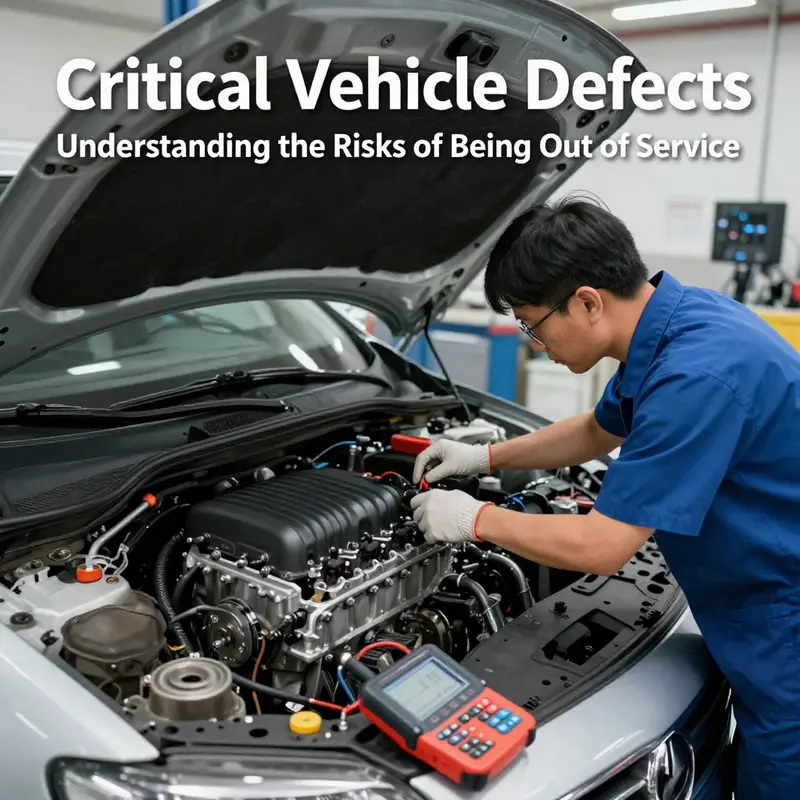
When the topic turns to what defects can place a vehicle out of service, the most consequential are those that rule out movement or entirely disable essential safety and control systems. Powertrain and propulsion failures sit at the core of this risk, because they directly affect the fundamental ability of a vehicle to move, accelerate, steer, or stop in a controlled manner. A defect here is more than a breakdown; it is a sudden loss of propulsion or a breakdown of control that can leave occupants exposed to danger and the vehicle unusable for any practical purpose. The powertrain, in its broadest sense, encompasses the engine or motor, the transmission, the drivetrain that transfers power to the wheels, and, in electrified platforms, the batteries, inverters, and electric motors that orchestrate propulsion. When any element of this chain falters, the consequences can be immediate and severe, turning a routine drive into a hazardous situation or a stranded asset on a busy road or at a critical work site. The chapter that follows moves through the spectrum of failures that threaten this chain, from internal engine maladies to transmission faults, and from electric propulsion shortcomings to the software and electrical systems that govern modern powertrains. It connects technical causes to real-world outcomes, and it ties diagnostic signals to the practical steps fleets and operators can take to detect, mitigate, and plan for these disruptions before they derail operations entirely.
The engine has long stood as the heart of a vehicle’s ability to perform. When an engine experiences a seizure, a loss of compression, or a fundamental misfire that cannot be corrected through standard repairs, the result is an abrupt halt in propulsion. This is not merely a performance issue; it is a safety risk. In diesel-powered heavy-duty applications, for example, problems with fuel delivery systems or air handling components can cause a drop in power to the point where the vehicle cannot maintain a safe speed, particularly when climbing grades or requiring rapid response to traffic conditions. A more nuanced but equally dangerous pathway to immobilization is the loss of power due to a failing exhaust gas recirculation (EGR) system or related cooling components, which can trigger a protection mechanism—sometimes described in recall language as a fault limit torque protection—that deliberately caps engine torque to prevent damage. In practice, drivers may experience a sudden, unexpected reduction in thrust, followed by an inability to recover power without pulling over, checking codes, and scheduling service. The risk is amplified when such conditions occur during overtaking, merging, or navigating through heavy traffic, where even momentary torque suppression can create hazardous spacing and require abrupt deceleration.
The transmission, often the most complex mechanical leg of the powertrain, adds its own layer of vulnerability. A vehicle can lose mobility not only if the engine falters but if the gearbox itself refuses to engage or to hold a usable gear. In some cases, faults in the transmission module or solenoids disrupt the proper sequencing of gears, making it impossible to select drive or reverse, or to hold the selected gear under load. A malfunctioning shift module or a failed gear lock solenoid can leave a vehicle stuck in a neutral state, where it cannot be driven safely or at all. The reliability of the transmission is also challenged by hydraulic issues, including leaks that reduce line pressure or fluid that breaks down under heat, leading to slipping, overheating, and eventual failure. When a fleet vehicle suddenly cannot move because the transmission cannot deliver power to the wheels, the result is operational downtime that can ripple through schedules, routes, and customer commitments. In both cases—the engine and the transmission—the root cause is not solely mechanical wear but a disruption of the coordinated orchestration that ensures the vehicle responds predictably to driver inputs.
The propulsion chain does not end with the mechanical linkages. In modern propulsion systems, electrical and software layers have become indispensable. Electric and hybrid vehicles rely on battery packs, inverters, and high-torque electric motors, all governed by sophisticated control electronics and software. A degraded battery pack that can no longer sustain the necessary current, or a failing electric motor that overheats or develops windings faults, can reduce or completely eliminate propulsion. Inverters, which convert DC battery energy to the AC power needed by some motors, can develop faults that mismanage torque or stall the motor altogether. Software defects or corrupted calibration data in the powertrain control module can misinterpret sensor data and either misfire or refuse to engage certain modes of operation, including those that provide safe defueling, regenerative braking, or traction control. The danger here is twofold: a driver may experience sudden power loss without an obvious mechanical cue, and the system may not provide adequate warnings or defensive safety features. In the most advanced configurations, a software fault can disable essential driver-assistance features that might otherwise mitigate a loss of control, heightening the risk during inclement weather, at night, or in congested environments. The interplay of hardware faults and software governance means that a failure can propagate through subsystems, producing a cascade of symptoms—from reduced range in electric vehicles to unexpected shifts or immobilization during highway travel.
A related, but often overlooked, domain of powertrain risk lies in the fuel delivery and energy supply networks themselves. In LNG or other alternative-fuel platforms, leaks or design flaws in the fuel supply chain can produce critical safety hazards and force rapid operation shutdowns. A leak that cannot be automatically shut off presents a dual threat: the immediate danger of a fire or explosion, and the operational impossibility of continuing to operate a vehicle that could ignite under appropriate conditions. The nature of these failures makes them especially consequential because they not only ground a vehicle but create a clear case for regulatory intervention and recall actions when systemic weaknesses are identified. The literature on recalls and technical service bulletins illustrates how regulators respond when confidence in fuel systems, battery integrity, or energy management software erodes. When defects undermine fundamental propulsion, fleets must confront both the safety imperative and the financial repercussions that follow a suspension of service.
The structural integrity of the propulsion system also factors into the risk calculus. Cracks or failures in exhaust manifolds, heat exchangers, or mounting structures can propagate, feigning benign wear while quietly compromising safety margins. Heat-related damage, such as cracks that worsen under vibration and load, can lead to exhaust leaks or manifold failures that escalate thermal stress in nearby components. While these issues may not be as immediately dramatic as a total loss of power, they create conditions that degrade performance and reliability, and, crucially, they can precipitate a sudden, unreliable shutdown should a critical connection loosen or a sensor fail. In a sense, the powertrain is a network of interdependent systems; a fault anywhere along the chain—engine, transmission, drivetrain, battery, inverter, or control software—can fracture the ability of the vehicle to operate within safe parameters. Because modern fleets rely on continuous operation, any defect that threatens propulsion or control can justifiably be considered a ground-for-service risk.
The consequences of powertrain and propulsion failures extend beyond the moment of breakdown. The operational and financial costs of unplanned downtime are substantial, especially in fleets that rely on precise scheduling, route optimization, and continuous cargo movement. A sudden loss of propulsion can strand a vehicle in unsafe locations or disrupt a multi-vehicle convoy. Even if a vehicle can be restarted after a fault, repeated failures erode confidence and increase maintenance costs, not to mention the potential for collateral damage in the form of tire wear, brake overheating, and transmission overheating caused by abnormal load conditions during retry attempts. Predictive maintenance becomes not a luxury but a necessity in this environment. Real-time monitoring of battery health, motor temperatures, inverter efficiency, and fuel delivery accuracy allows operators to spot wear before it becomes a failure. Diagnostic data collected through onboard systems can reveal subtle trends—rising exhaust gas temperatures, incremental reductions in fuel pressure, or gradual torque loss—that portend a larger breakdown. The goal is not just to fix a failing part but to understand the system’s behavior and intervene before a fault becomes a catastrophe on the road.
This is where the role of maintenance strategy becomes central. Preventive maintenance routines, informed by data rather than schedules alone, help detect early signs of wear or degraded performance. For diesel fleets, attention to components such as the fuel pump, lift pump, and injection system is critical because a failure in one can cascade into the engine or the entire propulsion chain. The literature emphasizes the value of regular inspections, vigilant fluid analysis, and timely replacement of worn parts. When a fleet adopts real-time diagnostics and predictive maintenance tools, it gains a clearer view of remaining useful life for powertrain components and a better sense of the optimal window for parts replacement. It is a shift from reactive repair to proactive preservation, a transition that can significantly reduce downtime and extend vehicle life. In this context, even seemingly routine tasks—like monitoring turbocharger performance, checking for fuel-injection irregularities, or ensuring proper cooling of the engine and power electronics—become high-priority safeguards that keep a vehicle in service rather than sidelined by an avoidable failure.
The practical implications for fleet operators are nuanced. A breakdown may originate in one subsystem yet manifest as a loss of control in another. For example, a minor sensor fault that degrades traction control or stability control can masquerade as a wheel slip or steering issue, prompting a precautionary halt for safety checks. A software update or calibration adjustment might be necessary to restore proper torque delivery or to reestablish safe acceleration characteristics. In EVs, where battery aging reduces range and reliability, a vehicle may still drive but with a degraded capacity that makes it unsuitable for long routes or high-demand tasks, triggering a service decision that reclassifies the vehicle as out of service for the duration of the repair window. The financial calculus follows suit: the downtime cost, the repair expense, the risk exposure from a potential failure, and the potential for regulatory penalties or missed commitments all converge in the decision to remove a vehicle from operation until the fault is resolved or mitigated.
In the broader regulatory and safety context, recalls and technical service bulletins have repeatedly highlighted that defects touching the propulsion chain—whether in traditional internal combustion engines, hybrid drives, or pure electric powertrains—can necessitate mandatory corrective measures. The mechanism is straightforward: regulators identify a defect that could plausibly threaten safe operation and require manufacturers to repair or replace defective components, often at no cost to the owner. The resulting recalls serve as public reminders of the stakes involved when propulsion systems fail or operate outside safe bounds. For readers who want to explore the fault history and current remediation strategies, authoritative resources such as recall databases and service bulletins provide a structured overview of what defects were identified, why they were considered safety-critical, and what corrective actions were mandated. This context underscores a practical point: powertrain defects are not abstract engineering concerns; they translate into real-world risk management, fleet reliability, and safety outcomes.
From an operational perspective, the path to minimizing powertrain-grounded incidents lies in a combination of design foresight, proactive maintenance, and intelligent fleet management. Design foresight means engineers build in fault-tolerance: redundancy where feasible, robust electrical architectures, and software that gracefully handles anomalies without compromising essential safety features. Proactive maintenance means owners and operators lean on data to catch wear before it becomes a failure, schedule service within evidence-based windows, and prioritize components whose degradation correlates strongly with breakdowns—such as turbochargers, fuel delivery subsystems, high-voltage electronics, and battery packs. Intelligent fleet management translates these principles into practice by equipping vehicles with health dashboards, alerting drivers to early indicators of trouble, and leveraging predictive maintenance to reorder parts before downtime is forced by a breakdown. The goal is not only to fix defects but to reduce their likelihood, extend the useful life of propulsion components, and keep vehicles in service where they belong.
In this wider ecosystem, a single defect does not exist in isolation. A failing fuel injection system may lead to uneven combustion that taxes the exhaust aftertreatment system, or a battery cell that begins to drift out of balance may stress the inverter’s cooling needs, causing a thermal fault that limits power delivery. Each component interacts with others, and the signals that reveal problems are often subtle at first. An operator who learns to recognize early warnings—unexplained fluctuations in performance, unusual engine temperatures, or shifts in torque delivery—gains a critical advantage. The shift from reactive to proactive maintenance hinges on the availability of reliable diagnostics and a culture of continuous monitoring. It also hinges on a willingness to act on early warnings, replacing parts or recalibrating systems before the symptoms escalate into a full-blown service outage.
For readers seeking deeper, field-oriented guidance, practical resources emphasize preventive steps such as routine checks of fuel systems, careful management of lubricants and cooling fluids, and adherence to maintenance intervals calibrated to operating conditions and duty cycles. The common thread across these recommendations is clarity: keep the propulsion system clean, well-lubricated, properly cooled, and electronically coordinated. A clean fuel path minimizes injector fouling; proper lubrication reduces wear and extends bearing life; effective cooling prevents overheating that can trigger protective torque limits or other fault responses. In electric drives, preserving battery health through temperature control, healthy cell balancing, and protection against over-discharge is equally critical. When fleets implement these measures in a disciplined way, the probability of an unexpected propulsion failure drops, and the time a vehicle spends out of service moves from the realm of stochastic risk to managed risk with a known remediation path.
To tie these threads back to concrete, day-to-day practice, consider how a fleet might integrate the steady stream of powertrain data into actionable maintenance decisions. A driver-friendly approach is to present clear fault codes and suggested maintenance actions, linked to a central diagnostic platform that flags anomalies across engines, transmissions, and electric propulsion subsystems. The value of this approach becomes evident when it prevents a breakdown in the middle of a route, avoids a costly tow, and ensures that a vehicle returns to service promptly after a single, well-timed repair. In the context of diesel fleets, attention to fuel delivery and lift-pump health remains a practical focal point because it is often at the heart of pressure and flow issues that cause misfires, rough running, or intermittent power loss. For those seeking targeted best-practice guidance on lift-pump maintenance within diesel engines, a practical resource can be found here: lift-pump maintenance tips for diesel engines.
Beyond the mechanical and software dimensions, the strategic takeaway is clear: powertrain and propulsion defects that remove a vehicle from service are not merely a matter of replacing a part. They are a systems problem demanding coordinated attention across engineering design, maintenance strategy, and operational discipline. When a fleet recognizes this, it can move from reactive troubleshooting to proactive health management, ultimately preserving uptime and safety for drivers and cargo alike. The interplay of engine reliability, transmission robustness, electric propulsion integrity, and the software that coordinates them all defines whether a vehicle can stay on the road or must be sidelined for diagnosis and repair. In the end, the question is not only what defect could place a vehicle out of service, but how an organization answers with resilience, foresight, and disciplined execution. This is the practical reality behind the more theoretical discussions of recalls, fault codes, and failure modes: powertrain defects are a critical frontier where safety, performance, and economic viability intersect on every voyage, every shift, and every mile.
For readers who want to place these insights within the broader regulatory and safety framework, the role of recalls and technical service bulletins provides a structured lens through which to view propulsion-related failures. Regulatory agencies monitor and address defects that could threaten safe operation, and the resulting remedial actions—repairs, replacements, or design changes—shape how fleets plan maintenance and allocate resources. This regulatory layer reinforces the importance of rigorous diagnostics and transparent reporting, ensuring that when a defect is found in propulsion systems, it is addressed swiftly and comprehensively. The practical implication for practitioners is straightforward: maintain vigilance over propulsion health, invest in high-quality diagnostics, and implement maintenance strategies that prioritize prevention and rapid remediation. The objective is not simply to keep vehicles running but to keep them running safely, reliably, and in a way that supports the broader goals of operational efficiency and stakeholder trust.
External resource: For a regulatory and recall-oriented perspective on propulsion-related defects and safety actions, see the National Highway Traffic Safety Administration’s recalls and technical service bulletins repository: https://www.nhtsa.gov/vehicle-manufacturers-and-dealers/recalls-and-technical-service-bulletins.
Electrical and Software Defects: Grounding a Vehicle Out of Service

Electrical and software defects in modern vehicles can render a vehicle inoperable and out of service before any physical breakdown is evident. As cars rely on electronic control units, sensors, and software for steering, braking, propulsion, lighting, and safety systems, a fault in one subsystem can cascade into multiple critical failures. For example, a faulty mux controller may inadvertently switch off headlights in gear, increasing collision risk in low light. Software misbehavior in throttle control can cause abrupt acceleration or sudden deceleration, challenging driver command. Dashboard or instrument cluster faults can obscure vital controls such as defogging or hazard indicators, reducing visibility and situational awareness. Safety features like ADAS depend on reliable software; if sensing or planning modules misbehave, lane keeping, automatic braking, or collision alerts may be delayed or disabled. Fuel-management software can create loss of power or unexpected shutdowns; the resulting outage can ground a fleet or individual vehicle until the software is corrected. Across fleets, software recalls and updates are a managing challenge, requiring fleet-wide updates, version control, and robust testing to avoid introducing new risks. Diagnosing root causes becomes more complex as faults propagate through data paths and control logic rather than a single mechanical failure. From the human perspective, drivers and technicians must contend with degraded reliability, unpredictable symptoms, and the need for clear signaling and graceful degradation to preserve safety. In this context, serviceability is as important as performance, and preparedness—through monitoring, diagnostics, and rapid software deployment—defines how long a vehicle can remain in service or must be sidelined for repair. The chapter highlights how electrical and software defects are a strategic risk that shapes fleet planning, maintenance priorities, and the deployment of modern mobility.
Final thoughts
Understanding the various vehicle defects that can lead to a vehicle being out of service is essential for everyone in the automotive landscape. It is imperative to regularly maintain and inspect your vehicle to prevent accidents and unexpected breakdowns. By being aware of issues related to critical safety systems, powertrain malfunctions, and electrical failures, you can significantly lower the risks associated with vehicle ownership. Stay informed, act promptly on any mechanical concerns, and ensure your vehicle remains safe for every journey.