Vehicle ownership extends beyond the excitement of driving; it includes maintenance, repairs, and unexpected expenses. For many car owners, especially those with used vehicles, the uncertainty of high repair costs can lead to the consideration of vehicle extended service plans. These plans offer coverage for major components post-manufacturer warranty, prompting questions about their worth. This guide dives into the complexities of evaluating extended service plans in light of vehicle reliability and repair costs, the financial implications, and the critical factors influencing this significant decision. By the end of this article, readers will be well-equipped to make informed decisions tailored to their driving habits and financial circumstances.
Weighing Reliability, Risk, and Repair Bills: Is an Extended Service Plan Worth It for Your Vehicle?
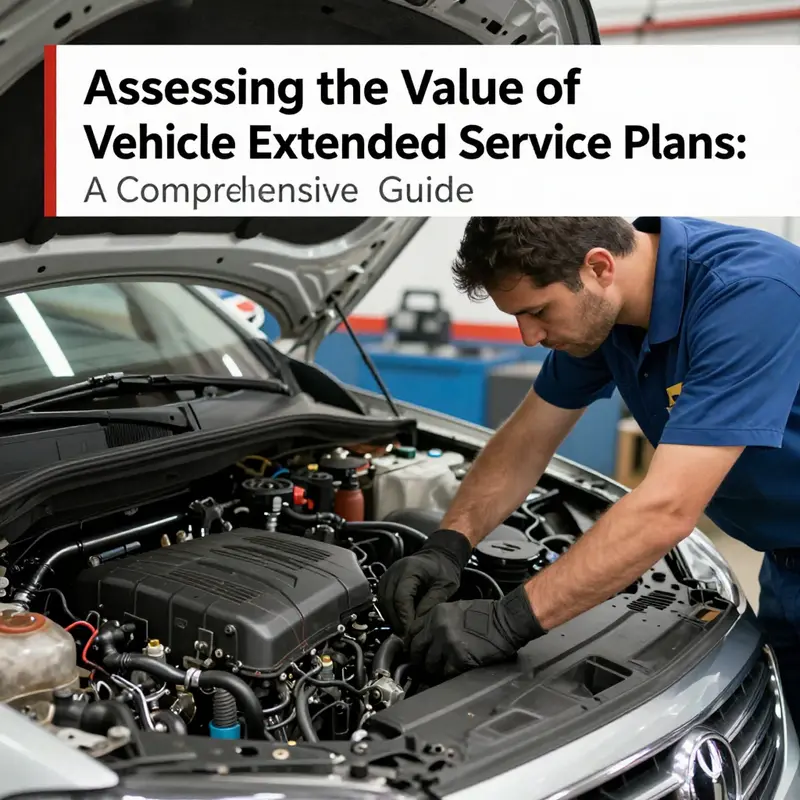
Extended service plans promise a shield against the unpredictable costs that can arrive after a manufacturer warranty expires. They are pitched as a way to stabilize ownership expenses by covering repairs to major components like the engine, transmission, and drivetrain beyond the usual 3 to 5 years or 36,000 to 60,000 miles. Yet the value of these plans is far from universal. It depends on a mosaic of factors: the car’s make and model, its age and mileage, how you drive, the reliability history of the vehicle, and, not least, your personal risk tolerance and budget. In practice, deciding whether a plan is worth it is not about a single statistic but about a careful blend of reality checks and value estimates that you can walk through with your own data, not just the glossy promises of a salesman or the aggressive marketing of an insurer.
For many drivers who own newer, reliable models with low odds of a major failure, an extended service plan may feel like paying for something they already expect to avoid. The math can be straightforward: if a plan costs several thousand dollars over the term and you rarely encounter a major breakdown, the plan has already overpaid for a risk you did not experience. On the other hand, those who own older vehicles or models with a known history of expensive repairs may find the plan helpful as a hedge against the financial blow of a failure that could run into thousands of dollars. Transmission replacements, for example, commonly fall in a broad range that can stretch into the mid to high thousands, depending on the vehicle. In such cases, an extended warranty could plausibly pay for itself if a catastrophic failure occurs during the covered period. Still, there is no universal guarantee, and the emergence of a major repair is not a certainty; the plan hinges on the probability of a claim and the structure of the coverage you purchase.
The economics, however, are telling. A key data point from February 2025 puts a spotlight on the cost side: the average annual cost of an extended auto warranty across providers, plans, and vehicle types sits around 1,297 dollars. That figure encapsulates a wide spectrum of offerings, and it represents a real, recurring expense that compounds year after year. When you multiply that annual amount across the length of the extension you’re considering, the total outlay can become substantial. The question then becomes whether the probability and magnitude of potential repairs during the extended period justify that total outlay. For owners of cars with a well-documented reliability profile, the probability of a major repair in the extension window may be quite low. In those cases, paying 1,297 dollars per year for a few years and not needing to file a claim could feel like money spent for peace of mind rather than for tangible savings. Yet for owners who expect higher repair costs or who rely on the vehicle in heavy-duty or high-mileage use, the plan may offer a meaningful shield against budget shocks.
The terrain across which extended service plans operate is diverse. Coverage can be narrow or broad. Some plans hinge on a core set of components—engine, transmission, and drivetrain—while others expand into electrical systems, climate control, steering, suspension, and even roadside assistance. The breadth of coverage matters as much as the premium. A plan that sounds affordable because it has a low upfront price might still reveal costly gaps after you read the fine print: exclusions for wear items, pre-existing conditions, or failures caused by accidents or improper maintenance. Deductibles can also undermine the perceived value. A plan that covers major components but requires a substantial deductible every time you file a claim can dilute the anticipated savings and make the plan less attractive once you actually need service.
The reliability landscape of modern vehicles further complicates the decision. Consumer Reports and other consumer reliability benchmarks caution that extended warranties are often overpriced relative to the expected payback, particularly if you own a relatively reliable vehicle. The practical takeaway from such assessments is to ground your decision in objective reliability data. Sources like J.D. Power, Edmunds, and RepairPal can help you gauge how often a car of your make and model tends to experience significant repairs beyond the warranty period. If the reliability history is strong, the likelihood of needing costly repairs declines, which in turn reduces the expected value of an extended plan. If the history is less favorable, the potential savings from avoiding a major bill rises, but you must weigh that against the plan’s cost and coverage details.
The price you pay for a plan and the quality of its coverage are inseparable from the policy’s structure. Some providers rely on a fixed network of authorized repair facilities, which ensures a degree of consistency in service quality but can limit your choice if you live far from those facilities. Others operate with broader networks or offer more flexible diagnostics and repair options but may impose longer claim processing times or stricter scrutiny of what constitutes a covered failure. Third-party providers often present lower advertised prices than dealerships; however, the quality of coverage and the ease of claim submission can vary considerably between providers. It is not unusual to see plans that are priced attractively in the short term but later reveal gaps that shift more of the repair cost back onto the vehicle owner through higher deductibles or restricted coverage. The outcomes depend as much on the claims process as on the mechanics of the repairs themselves.
A dimension worth adding to the conversation is the role of parts. OEM parts are traditionally seen as the gold standard for compatibility and durability, yet many extended service plans permit or even encourage the use of aftermarket parts. In some cases aftermarket parts can be reliable and cost saving, especially when the plan explicitly includes or permits third-party parts. This intersection of cost, quality, and coverage is critical. If a plan promises broad coverage but limits you to OEM parts or imposes penalties for non-OEM components, the anticipated savings may be substantially different than you expect. Conversely, if a plan allows aftermarket parts with warranties that remain intact, you can leverage lower repair costs without compromising the value of the coverage. For the buyer, the key is to confirm not only what is covered but also how the coverage interacts with parts choices, and to understand whether the use of aftermarket parts affects the indemnity you receive when a claim is filed.
The decision framework thus starts with your vehicle and ends with your budget and your tolerance for risk. Begin by evaluating the vehicle’s reliability history. If the car has a track record of durability, the headline risk of a major repair is lower, but you should still consider the potential cost of a new transmission or engine, which can be substantial. If the car has a known or suspected fault pattern—perhaps a drivetrain issue, an electrical gremlin, or a history of cooling system problems—the calculus shifts toward coverage, especially if you are approaching higher mileage where repairs become more frequent and expensive. When you assess your options, you are balancing the probability and cost of a major failure against the premium you pay for protection plus any deductibles.
Next comes the practical step of price comparison. Gather quotes for several plans that are advertised for vehicles similar to yours. Compare the total cost of ownership with and without the plan over the intended horizon of ownership. Make sure you are comparing apples to apples: the same coverage levels, the same deductible, similar network access, and equivalent vehicle condition. This is where the difference between consumer guides and real-world experience becomes apparent. The plan that looks cheaper at first glance may hide restrictions that reduce its practicality when a claim is necessary. It is equally important to scrutinize the coverage term length. Some plans are sold as years of protection, while others are marketed by mileage. A three-year, 60,000-mile extension may not line up with a vehicle that you expect to drive well beyond that horizon, and vice versa.
To add nuance, consider the maintenance and service history of the vehicle. A well maintained car, with a documented service history and a tendency toward fewer major repairs, is less likely to necessitate the outcomes extended plans aim to prevent. Routine maintenance is, of course, separate from major component failures. Most plans do not cover routine maintenance such as oil changes or brake pads, and understanding what is and is not included helps you avoid conflating the cost of a service plan with the cost of regular upkeep. In many cases, a disciplined maintenance routine reduces both the probability and severity of unexpected breakdowns, which can tilt the decision away from a plan that covers major components but offers little assistance for the kind of minor issues that still disrupt daily life.
The decision is also shaped by the near-term realities of ownership. If you plan to keep the car for a short period, or if you anticipate selling the vehicle with a robust warranty in place, a plan might deliver resale value or consumer confidence for a buyer who worries about future repairs. Conversely, if you expect to trade in or sell the car soon, the plan may not fully pay off, because most extended warranties have a finite term and may not align with the period you own the vehicle. In short, the timing of your ownership matters. Determining whether a plan aligns with your anticipated holding period can be a decisive factor in the cost-benefit equation.
Consider also the administrative side of owning an extended plan. The speed and fairness of the claims process matter just as much as the coverage itself. A plan that covers a wide range of failures but requires extensive paperwork, lengthy approvals, or ambiguous interpretations of pre-existing conditions can create friction at a moment when you are already dealing with car trouble. Reading the fine print before you buy is essential. Look for explicit exclusions, like certain categories of wear items, maintenance-related failures, or issues arising from improper maintenance. Verify whether pre-existing conditions are covered after a waiting period, and whether there is a grace period after the purchase before you can file a claim. Clarify whether the plan is transferable to a new owner if you sell the car, and whether coverage can be extended to a second ownership if you decide to keep the car longer than planned. These are not technical details that can be safely glossed over; they determine whether the plan lives up to its stated promises during the moment when you actually need it.
With this foundation in place, you can approach the decision with a structured mindset. Start by compiling the reliability profile of your specific model through reputable data sources and by examining your vehicle’s maintenance history. Then estimate your likely maintenance and repair costs over the years you intend to own the car, factoring in your driving conditions and climate, which influence wear and component stress. Next, obtain several plan quotes, ensuring you are comparing like with like in terms of coverage, deductibles, and networks. Finally, weigh these inputs against your financial situation and risk tolerance. If you prize predictable monthly or annual budgets and you prefer the certainty of avoiding a potentially catastrophic repair bill, the plan might be appealing despite a higher expected cost over time. If you value flexibility, want to minimize cash outlays now, and can comfortably absorb the occasional repair bill as it arises, you may decide that self-insurance—setting aside funds to cover future repairs—offers a better fit.
To make this abstract assessment more tangible, imagine a common scenario. You drive a mid-range vehicle with a solid reliability record, currently at 70,000 miles. The extended plan offers coverage for major components for another 60,000 miles or five years. The annual average plan cost is around 1,297 dollars, potentially totaling about 6,500 dollars over the five-year window, depending on the contract. If you estimate, confidently, that during the next five years you will encounter a major failure in the engine or transmission, you might justify the plan as a hedge against a single expensive bill that could exceed several thousand dollars. If, however, you expect to maintain the car meticulously and you anticipate low probability of a major failure, the plan’s cost could outpace the actual repairs you face. In that case, the plan would be a kind of insurance against low-frequency, high-severity events, which may or may not align with your willingness to pay for such protection.
One practical step you can take is to test your assumptions against what you know about your own finances. If you manage a cash flow that can absorb a sudden expense without jeopardizing essential spending, you may prefer to fund potential repairs yourself rather than commit to an ongoing plan. On the other hand, if a single unexpected repair could force tough trade-offs—curtailing other goals, delaying a major purchase, or straining monthly budgets—the plan provides a form of financial certainty that some buyers find invaluable. It is not about being optimistic about failure or pessimistic about reliability; it is about aligning your ownership strategy with your capacity to handle risk.
The bottom line is that the worth of an extended service plan is not an inherent property of the vehicle or the plan alone. It emerges from the interaction of vehicle reliability, anticipated repair costs, plan design, and the owner’s financial posture. If you own a model with a strong reliability record, plan to keep the car for a relatively short horizon, and prefer to match expenses to actual needs, you may find little value in the plan. If you own a vehicle with a patchier reliability history or if you plan to keep it well into high mileage, the plan can deliver significant peace of mind and budget protection, especially when you account for the possibility of costly repairs that could otherwise disrupt your finances. The prudent approach is to treat the decision as a structured assessment rather than a universal recommendation. Gather data, run the numbers, read the fine print, and compare multiple quotes before choosing. When you do so, you will better understand whether the extended service plan is a prudent safeguard or a financial commitment that your future self might regret.
For readers who want to explore practical maintenance planning as a complementary discipline to the extended warranty question, a useful resource is deeply rooted in everyday vehicle care. The KMZ Vehicle Center blog offers accessible guidance on a range of maintenance topics that can influence the risk calculus for major repairs. You can explore practical tips and checklists at the KMZ Vehicle Center blog to reinforce your understanding of how daily upkeep interacts with long-term repair risk. KMZ Vehicle Center blog.
In closing, while extended service plans can be a compelling shield against the uncertainty of expensive repairs, they are not a one-size-fits-all solution. The better approach is to view them through the lens of your car’s reliability profile, your financial readiness to handle large repairs, and the specific coverage details of the plan in question. Use reliability data to gauge the base risk, use price and coverage to estimate the plan’s value, and use your own budget and peace of mind as the final tiebreaker. If the numbers and the narrative align, the extended service plan can be a smart investment; if they do not, you will likely be better off investing in preventive maintenance and setting aside a dedicated repair fund for the future. For a broader context on costs and coverage, see https://www.insurance.com/auto-insurance/extended-warranty-costs/.
The Financial Tightrope of Protection: Are Vehicle Extended Service Plans Worth It?
Extended Service Plans, often labeled as vehicle service contracts or extended warranties in the marketplace, are pitched as a shield against the unpredictable costs of major repairs once a car’s factory warranty has expired. They come with the allure of budget predictability and the promise of avoiding the shock of a $3,000 to $5,000 repair bill for a failed engine, transmission, or critical drivetrain component. Yet the true value of these plans rests on a careful assessment of your individual vehicle, your driving habits, and your household budget. In practice, the landscape is not about absolutes but about trade-offs between risk, price, coverage, and peace of mind. To understand whether an ESP is worth it, it helps to approach the topic as a financial decision as much as a protection strategy, a frame that considers probability, exposure, and the limits of coverage rather than simply the reassurance that an expensive repair might be covered someday down the line.
The first consideration is the most basic: what exactly are ESPs designed to cover and how does that align with the engine that powers your daily life? ESPs are designed to transfer the risk of costly post-warranty repairs from you to an insurer or administrator. They typically extend protection beyond the manufacturer’s warranty, covering major components such as the engine, transmission, and drivetrain. Some plans broaden the protection further, offering services that customers might equate with vehicle ownership convenience, like roadside assistance, rental car reimbursement, or trip interruption coverage. The scope of coverage, however, is where the decision often starts to hinge on value. Plans can vary widely in what they pay for and what they exclude. A single excluded item can tilt the financial balance in favor of a DIY repair, or conversely, an excluded failure can leave you facing a substantial bill that you assumed would be covered. The terms of coverage—deductibles, payout limits, geographic restrictions, and whether pre-existing conditions qualify—materially shape the plan’s cost-effectiveness.
Where to buy these protections also matters, and it affects your bottom line and your experience if you ever need to file a claim. ESPs are commonly purchased at the time of vehicle purchase from the original manufacturer’s dealer network. That path is convenient but often comes with premium pricing. They can also be purchased later from third-party providers, which frequently advertise lower upfront prices but may impose stricter eligibility rules for claims, narrower coverage, or more complex claim processes. And while affordability is attractive, it is essential to read the fine print, because a cheaper monthly or annual price can come with higher deductibles, more exclusions, or limits on the kinds of repairs covered. The contrast between OEM-backed plans and third-party options is not merely a price difference; it is also a difference in claim handling, network of approved shops, and the speed with which repairs can be authorized and paid. Those factors influence the overall value of the ESP far beyond the sticker price.
The financial logic behind purchasing an ESP hinges on a simple, albeit imperfect, equation: compare the premium you pay to the expected cost of repairs without coverage. If your vehicle is likely to require a major post-warranty repair, and the ESP pays most or all of that cost after you meet a deductible, the plan can save money. If such events are rare or unlikely for your model, the plan may overstate its value. The reality, however, is more nuanced because the value of an ESP is not just a function of repairs avoided; it also includes intangible benefits such as predictable budgeting, reduced stress when a breakdown occurs far from home, and the convenience of a known repair pathway. For some households, those intangible benefits translate into real value that is worth paying for, even if the math of the policy’s expected value is borderline.
To ground the discussion in practical numbers, consider a demonstration using the common knowledge of major post-warranty costs. Replacing a transmission, for example, can run in a broad range—often between $2,500 and $4,000 depending on the car and the extent of the repair. An ESP that covers such a failure could easily pay for itself with one large claim, especially if the plan includes a reasonable deductible and offers the convenience of covered labor and parts. On the other hand, many vehicles do not experience such catastrophic failures after the factory warranty period, especially when they have been well maintained and kept up with timely service. In those cases, the ESP becomes a warranty-like expense rather than a cost-saving instrument. The risk calculus, therefore, becomes highly sensitive to the reliability history of the specific vehicle, the mileage profile of the owner, and the dealer’s or insurer’s interpretation of coverage terms.
Several reliable sources in the consumer information ecosystem emphasize caution when evaluating ESPs. Consumer Reports, for instance, notes that extended warranties can be overpriced and may not pay for themselves unless you actually incur a major repair. The recommendation is to evaluate a vehicle’s reliability using independent data sources such as J.D. Power, Edmunds, or RepairPal before deciding. This suggests a prudent approach: don’t buy into ESPs as a reflexive defense against the unknown; instead, use objective reliability metrics to forecast the likelihood of a substantial post-warranty repair for your exact make and model. If the reliability signals are strong and repair costs are historically low for your car, a plan may not be cost-effective. If, however, the car’s reliability scores are middling to poor and you anticipate more frequent or expensive repairs, the ESP could be worth considering, especially if the plan reduces cash flow shocks or simplifies maintenance budgeting.
The decision is also heavily influenced by the wearer’s financial tolerance for risk. For some households, a predictable monthly expense and a finite repair budget can be worth a higher upfront cost. The value of that predictability becomes its own form of insurance: it smooths cash flow and prevents a single, unplanned expenditure from derailing a month’s finances. For others, a more conservative approach to personal finance—building a reserve fund for repairs and paying out-of-pocket as needed—feels more prudent. The calculus here is not only about the likelihood of a big repair but about your ability and willingness to absorb a potentially large, irregular expense. If you already maintain a robust emergency fund and you have steady income that can accommodate a major repair without stress, you might opt to self-insure rather than pay a recurring ESP premium. If, by contrast, a single breakdown could threaten your household budgets or daily obligations, the ESP’s promise of protection may feel like a prudent shield, even if the odds of a claim are not overwhelmingly high.
The quality and reliability of the vehicle also tilt the decision toward or away from ESPs. A reliable, newer car with low mileage may offer diminishing returns from an ESP because the probability of a major post-warranty repair declines as the car ages and accrues fewer miles. Conversely, an older, high-mileage vehicle with a track record of trouble—particularly one with known maintenance quirks—presents a higher expected value for ESP coverage. The same blanket prescription cannot be applied. Instead, it is wise to analyze historical repair costs for the specific vehicle, consult reliability data, and weigh the likelihood of maintenance surprises in the coming years. In this regard, a nuanced approach that blends data with personal risk tolerance yields the most meaningful guidance. A practical next step is to gather several quotes from different providers, both OEM-backed and third-party, and compare the coverage details, deductibles, and exclusions. It is crucial to understand what is included in the plan and what is excluded. For instance, some plans will exclude items that are considered wear-and-tear or routine maintenance, while others may offer broader protection but come with higher premiums or stricter claim requirements. The breadth of coverage, therefore, can be just as important as the price tag when evaluating overall value.
An essential part of the decision process is to compare ESPs not only against the anticipated post-warranty repair costs but also against other risk-management tools. Some owners prefer to set aside money in a dedicated savings account to cover future repairs. In this strategy, you are essentially self-insuring with a fund that accrues interest or at least keeps pace with inflation. The advantage is that you retain control over how the money is used, and you avoid potential gaps in coverage that may accompany ESPs. The downside is the possibility of a repair cost arising earlier than you had saved for or the chance that you may lose access to funds in case your vehicle needs a repair before a sufficient balance has accumulated. An ESP, by contrast, shifts the risk to an insurer and provides a predictable outlay in exchange for a defined payout in the event of a covered failure. In either path, the decisive factor remains whether the annualized cost of the plan is justified by the probability and size of the repairs you are likely to encounter over the coverage horizon.
If you decide to explore ESPs further, there are practical steps you can take that increase your odds of choosing wisely. First, obtain multiple quotes from both OEM-backed and third-party providers, and request a copy of the contract’s terms and conditions before making any commitment. Look for the plan’s deductible structure, coverage caps, and whether there are any caps on labor costs or parts. Note any exclusions that could apply to your specific vehicle. Second, review the plan’s claim process and the network of repair shops. A plan that requires you to use a restricted network or obtain prior authorization for every repair can be less convenient and may add friction to getting a repair done promptly. Third, assess cancellation and refunds provisions. Some ESPs offer prorated refunds if you terminate early, while others are non-cancelable after a certain period. If you are uncertain about the car’s long-term ownership, flexible cancellation terms can play a significant role in the plan’s overall value.
A broader, more reflective approach to the ESP decision comes from combining objective reliability data with your personal finances and risk appetite. Start with a baseline assessment of your car’s reliability from trusted data sources. Then estimate, with reasonable conservatism, the likely major post-warranty repair scenarios for your model—taking into account not just engine and transmission, but potential failures in other high-cost areas such as the electrical system, turbochargers on turbocharged engines, fuel systems on certain designs, or hybrid/electric drivetrain components if applicable. Translate those scenarios into potential out-of-pocket costs, including labor, parts, and any ancillary expenses such as towing or rental cars if the plan offers coverage for those items. Compare this to the ESP’s upfront price and its deductible structure. If the expected value is clearly positive—meaning you would save money or at least break even under realistic scenarios—the ESP becomes a sensible financial tool. If not, it may be wise to forego the plan and allocate funds elsewhere in your budget or reserve.
All of this analysis would be incomplete without a close reading of the fine print and an appreciation for how coverage works in practice. While many ESPs advertise broad protection, the actual terms can reveal a more limited safety net. Pre-existing conditions, mileage caps, or age restrictions can exclude typical repairs from coverage, or they can subject the owner to higher deductibles at the moment of a claim. Some plans explicitly exclude wear items that can fail in ways that catch owners off guard, even though those failures can be expensive to repair in the long run. The difference between a plan that reduces risk and a plan that merely funds risk transfer hinges on these subtleties. For readers who want to deepen their understanding, practical resources exist that compile reliability data and discuss warranty coverage in consumer-friendly terms. A visit to a trusted vehicle information hub or a department of consumer affairs resource can provide a clearer map of what to expect and what to ask when you are evaluating ESP options.
A final note on the decision-making framework: think of ESPs as one possible component of a larger strategy for handling risk around vehicle ownership. They are not a guaranteed money saver, but they can be a valuable tool for households that place a high premium on predictability and convenience. If you rely on your car for daily commuting, long trips, or work that requires dependable transportation, the psychological and practical benefits of not facing unexpected repair bills can be meaningful—especially in regions where maintenance costs are high or where service resources are stretched. In contrast, if you own a vehicle with a solid reliability record, drive modestly, and maintain a sizeable emergency fund, you may find that the ESP adds cost without delivering proportional value.
For readers who want to pursue a deeper, data-informed evaluation, practical insight from the KMZ Vehicle Center community can be helpful. The blog offers guidance on maintenance planning and budgeting, which can complement a formal ESP decision by clarifying your broader maintenance strategy. For instance, regular maintenance planning can reduce the incidence of major surprises after the warranty period ends. You can explore practical maintenance tips and get a sense of how simple proactive care can extend the life of critical components, potentially reducing the likelihood that an ESP would be used to cover routine wear or minor failures. To dig into those perspectives and practical road-tested advice, visit the KMZ Vehicle Center blog. KMZ Vehicle Center blog
Ultimately, the question of whether an ESP is worth it comes down to a matrix of factors: your vehicle’s reliability and repair history, your mileage trajectory, your tolerance for financial risk, and the specific terms of the plan under consideration. If you are leaning toward coverage, approach the decision as a structured risk-management exercise. Collect information, compare options, and run a straightforward cost-benefit scenario. If a major repair occurs, the ESP may prove its value immediately; if not, you will have overpaid relative to your actual experience. The caveat that Consumer Reports emphasizes—overpriced plans that seldom pay for themselves unless a major repair occurs—remains a prudent caution to guide your search. The aim is not to chase maximum coverage but to align protection with the actual risk your vehicle presents and your personal budget constraints.
As you weigh the options, remember that the decision does not stand alone in a vacuum. It interacts with your broader approach to vehicle maintenance, your overall financial planning, and your expectations for ownership. A well-structured maintenance plan that includes routine service, timely repairs, and a contingency fund can accomplish many of the same goals that an ESP offers, with greater transparency about costs and less potential ambiguity in coverage. If that approach suits you, you may choose to invest less in an ESP and invest more in a steady, predictable maintenance routine—and perhaps in an emergency fund that keeps the door open to major repairs without compromising household finances. If, instead, you value the ease of budgeting and the emotional reassurance that a single protection plan can provide, and you are comfortable with the trade-offs summarized above, then an ESP may be worth it.
For readers seeking broader context and corroborating perspectives, Consumer Reports’ extended warranty guidance remains a valuable touchstone. Their analysis helps place ESPs within the spectrum of consumer protection options and highlights the practical realities owners face when navigating coverage terms, reliability data, and out-of-pocket costs. See their overview to inform your own evaluation and to ground your negotiation with providers in a well-researched framework. Consumer Reports – Extended Warranties: What You Need to Know.
Beyond the Warranty Window: How Risk, Reliability, and Budget Shape the Value of Vehicle Extended Service Plans
Choosing an extended service plan for a vehicle is not simply about a price tag you can glance at and store away. It is a stance toward risk, a forecast of how your car will behave in future years, and a budgeting choice that lives at the intersection of emotion and arithmetic. The decision is rarely straightforward because it sits at the crossroads of dozens of small, interwoven factors. The practical reality is that extended service plans, sometimes called extended warranties or service contracts, are designed to provide protection against expensive repairs once the manufacturer’s warranty expires. They typically kick in after a three to five year window or after the car crosses roughly 36,000 to 60,000 miles, depending on the plan and the vehicle. They promise access to coverage for major components such as the engine, the transmission, and the drivetrain, and they can extend to other systems that, in today’s cars, are becoming more complex and more expensive to repair. Yet the decision to buy one hinges less on the meaning of the coverage itself and more on a person’s risk tolerance, financial situation, and a nuanced assessment of the vehicle in question. The logic of the choice becomes clearer when we move from a list of features to a story about potential outcomes.
One of the clearest lenses through which to view the decision is risk aversion. People who are naturally risk-averse tend to price the possibility of a costly breakdown as a meaningful threat to their finances. They may find the idea of a fixed premium for protection against an uncertain future more comforting than the possibility of facing an unpredictable bill for a major repair. This psychological posture translates into a willingness to trade more of today’s income for the security of tomorrow’s expenditure. On the flip side, drivers who are more comfortable with risk, or who already budget explicitly for contingencies, may view extended plans as an unnecessary risk of their own—an extra monthly or annual cost that might never pay off if the car proves exceptionally reliable. The decision, in other words, is rarely about the contract’s language alone; it is about the buyer’s perception of loss and the premium they are willing to pay to reduce that perceived loss.
But risk aversion alone is not enough to tilt the balance. Perceived value and trust in the entity offering the plan matter just as much. Consumers often interpret an extended service plan as a sign of reliability and customer care when it comes from a manufacturer or a trusted dealer. This trust can be disproportionately influential. If the brand has a reputation for durability, and the plan is presented as part of the purchase package for a vehicle known to have a robust engineering pedigree, many buyers feel they are buying not just a policy but a signal of ongoing support. Conversely, when coverage is sold alongside a complex sales pitch or with ambiguous exclusions, trust erodes and the perceived value declines. The problem is magnified in a market where the same contract can vary widely in what it actually covers, what it costs, how deductibles apply, and what service providers are eligible for repairs. The result is a patchwork of perceived value that depends as much on presentation as on factual coverage.
A second axis in the decision is the car’s reliability profile. Reliability matters because it shapes the expected cost of ownership. If you own a vehicle with a track record of expensive repairs, or if you have older equipment that has already shown vulnerability in the past, the argument for an extended plan grows stronger. In these cases, the plan can potentially offset outlays that would otherwise come due for major components. A blown transmission, for example, is a dramatic event that can disrupt life and drain savings. Estimates for a transmission replacement can range from a few thousand dollars to well over that figure, depending on the make and model and whether you need a new, remanufactured, or rebuilt unit, plus labor. A plan that covers such a repair could, in theory, pay for itself with a single incident. Of course, coverage is rarely that clean. Most plans come with deductibles, coverage limits, and exclusions that might peel away the protection just when you need it most. A straightforward look at the numbers can therefore mislead if you forget to account for these gaps.
This is why many consumer studies emphasize reliability data from independent sources when deciding whether to invest in extra protection. Data from respected evaluators and reviewers—such as the historical performance of similar models, the likelihood of major repairs in the vehicle’s age band, and the real-world frequency of expensive failures—provide a baseline. This baseline is the starting point for a thoughtful decision: if a model shows very low anticipated repair costs in the years when the warranty expires, and if the driver plans to keep the car for only a short period after that horizon, the extended plan may not be a good bet. If, however, the model exhibits a history of expensive repairs or if the owner intends to keep the car for many miles beyond the warranty, a plan that covers major components could yield meaningful protection.
These considerations take on additional complexity for newer or more sophisticated vehicles. The complexity of modern powertrains, advanced electronics, and sensors has driven up the cost of maintenance and repair. For electric vehicles, the calculus evolves again. Battery health, battery replacement costs, and the durability of high-voltage components can loom large in the minds of buyers. The anxiety surrounding battery degradation can push even otherwise cautious shoppers toward extended plans, despite the price tag. Yet the lack of clear, long-term maintenance data for some new technologies makes it harder to forecast the true value of a plan in the EV space. In many cases, the decision aligns with a broader concern: how secure do you feel about the future access to reliable service in a rapidly changing automotive landscape? In situations like these, the plan can offer perceived protection against a future where battery replacements and electronics repair could become either infrequent but very costly or common but subcontracted through a network of specialized shops.
The decision is not purely about statistical probabilities or theoretical risk. It is also shaped by how sales messaging is delivered and how consumers interpret the information they are given. Marketing and sales tactics can have a disproportionate effect on the final choice. Some representatives emphasize worst-case scenarios, stacking up tales of expensive repairs that could loom in the future to create urgency and a sense of impending financial doom. In this framing, the plan becomes a rational shield against catastrophe. Other sellers may highlight the plan’s convenience—zero out-of-pocket payments for covered repairs, nationwide coverage, or seamless claims processes—without fully disclosing the fine print about deductibles, coverage caps, or pre-existing condition limitations. The contrast between fear-based framing and convenience-based framing can lead to very different decisions among otherwise similar customers. Skeptical buyers may push back not only against the price but against the trustworthiness of the claims process itself. They worry that the payments they make will not translate into meaningful relief when a repair is needed. In such cases, the decision is less about the abstract value of protection and more about the buyer’s confidence in the promise behind the plan.
For many readers, the practical question remains: how should you assess the specifics of a plan you are offered? The approach begins with a careful diagnostic of the vehicle’s context. First, identify the vehicle’s age and current mileage and compare them to the typical failure patterns for that model and generation. Then, gather a clear picture of the plan’s terms. What exactly is covered, and what is excluded? Are wear items, such as brakes or belts, included or excluded? What is the deductible, and is it per-visit or per-repair? Are there caps on the number of repairs per year, or on the total payout over the life of the contract? Are there limitations on where you can obtain service, or can you go to any certified repair shop? These are not merely bureaucratic questions; they translate directly into real dollars. A plan with a high deductible that covers only grand outlays may be less valuable than one with a lower deductible and broader coverage, even if the monthly premium is higher.
Second, estimate the car’s potential repair costs without a plan. This involves a practical conversation with trusted technicians or seasoned owners of similar models. Discuss the most expensive likely issues within the relevant maintenance window and price how often they might occur. If a particular model is known to incur transmission, timing chain, or body-integrity repairs at a higher rate, it will tilt the calculus toward coverage. Conversely, if there is robust evidence that the car has shown unusually few major failures relative to peers, the economics of paying out of pocket become more compelling. Third, factor in your financial flexibility. A premium that feels manageable on a monthly basis can still be a poor match if the annual household fluctuations are severe and you would need to defer essential expenditures to pay for it. The predictability of a fixed payment—monthly or yearly—has real value for people who must maintain liquidity for other obligations, but it is worth noting that a plan often includes terms that may complicate budgeting: cancellations, refunds on unused coverage, and differences between the price you paid and the price later offered by a different seller when you decide to forego the plan.
Third, assess the presence of administrative friction. Some buyers encounter disappointing claim experiences, long repair delays, or difficulty obtaining authorization for repairs from the plan administrator. A well-priced plan can still feel financially worthless if the claims process is cumbersome or if the shop network is limited. This is where perceived trust and past experience with warranty providers matter. For buyers who have navigated similar processes successfully, the sense of relief that comes from a smooth claims experience may justify a larger premium. For those with a history of frustration, even a modest premium may feel excessive if the process promises more headaches than help when a repair is needed.
There is also a broader, strategic dimension to consider: do you expect to trade the car in before the extended coverage ends, or do you intend to keep it for a long time? If you anticipate selling sooner rather than later, the likelihood of fully recouping the plan’s premium diminishes. If you expect to own the vehicle well past the warranty window and into a period where repairs could become more expensive or more frequent, the plan’s potential value increases. The purchase timing itself can be a signal of underlying intent: buyers who buy at the time of purchase or just after a major service often project forward a longer horizon of ownership, making the plan appear more appealing. In contrast, those who purchase only after signs of wear might be chasing a sense of security after a known risk has materialized, which may complicate the cost-benefit calculus.
To ground these reflections in practical action, consider reading guidance that helps translate abstract risk into actionable finance. A thoughtful route is to triangulate reliability data from independent sources with personal experience and planned ownership horizons. Start by confirming the vehicle’s reliability track record for its age and mileage, using reputable sources that compile repair frequency, failure modes, and cost drivers. Then compare these insights to the plan’s price and coverage terms. If the numbers align in a way that the plan would pay for itself within a reasonable service period, and if the plan reduces anxiety about future bills without introducing large deductibles or restrictive network constraints, the plan could be a sensible addition. If not, the energy might be better spent building a dedicated repair fund or budgeting for anticipated major repairs as they occur, with the option to adjust the fund to match changing risk profiles.
It is also worth acknowledging that the extended plan market is not homogenous. There are multiple layers of products, ranging from manufacturer-backed plans to third-party offerings. Each layer comes with its own incentives, claim-handling practices, and coverage schemata. The third-party space, in particular, often presents a price advantage, which can be appealing when a plan is being weighed against a tight budget. However, the variance in quality and claims processing across third-party providers can be substantial. Some customers experience smooth approvals and quick service; others encounter disputes or prolonged delays. This variability reinforces the need for due diligence, reading the fine print, and understanding the conditions under which coverage is activated. It also underscores why the decision often hinges as much on trust and process reliability as on numerical savings alone.
In the end, the decision is deeply personal, shaped by a blend of rational assessment and emotional comfort. For drivers who place a premium on predictability and peace of mind, and who own older or less reliable vehicles, a well-chosen extended service plan can act as a safety net against the surprise costs that major repairs can bring. For those who drive newer, proven vehicles and are comfortable facing occasional repair bills, or who have built up a contingency fund that covers most contingencies, the incremental benefit of a plan may be marginal or even negative when accounting for price and potential coverage gaps. The key is to anchor the choice in clear numbers while staying mindful of the more intangible benefits and risks: the reduction of financial anxiety, the assurance of a smoother customer experience, and the confidence that a repair will be handled by specialists who understand the car’s architecture.
To support this approach with ongoing guidance, readers may explore broader maintenance strategies that reduce the likelihood of expensive failures in the first place. Practical maintenance decisions—such as timely oil changes, proper tire and brake maintenance, and attention to electrical and cooling system health—play a central role in extending a vehicle’s life and reducing the need for expensive repairs. Resources that translate maintenance science into everyday practice can be a valuable companion to any decision about extended service plans. For example, ongoing maintenance routines can dramatically influence the probability and cost of major failures, and a structured plan for maintenance can itself act as a form of risk management that complements or even substitutes for a formal service contract.
As with many financial decisions in a consumer context, there is value in a measured, well-sourced approach. When assessing a particular extended service plan, it helps to gather comparative illustrations: a scenario in which you pay a modest annual premium and a deductible for a single, large repair, versus a scenario in which you pay a higher premium but avoid any out-of-pocket repair costs. If the plan’s price is close to or higher than the expected outlay of a plausible major repair over the same horizon, the contract may be a poor deal. If, however, the plan can reliably prevent a large expenditure over a long time frame, and the administrative experience supports fast, predictable service, the value proposition strengthens. The nuance lies in translating probability into dollars, and in understanding that the plan represents not a guaranteed outcome but a chosen shield against certain kinds of uncertainty.
For readers seeking a structured takeaway, the most practical approach is to initiate a personal risk-reward calculation. Start by listing your car’s age, current mileage, and known maintenance issues. Then estimate the most likely high-cost repairs for the model in question, adjusting for your driving habits and climate. Next, compare the plan’s total cost—monthly or annual premiums plus any deductibles and coverage caps—to that estimated repair cost under a sticky but plausible scenario. If the plan consistently lowers the potential exposure to a meaningful amount, and if it also reduces anxiety about future bills, it has a strong case. If the numbers don’t line up, or if the plan’s hidden terms complicate the math, the safer choice might be to self-insure. In either case, it is essential to keep the decision aligned with your broader financial goals and your tolerance for risk.
For further reading and a broader academic perspective on why consumers buy extended service contracts, see the scholarly work linked here: https://doi.org/10.1016/j.jbusres.2023.110154. If you want to explore practical, ongoing maintenance perspectives and deeper considerations for vehicle care, the KMZ Vehicle Center blog offers a range of guidance that can complement this analysis. KMZ Vehicle Center blog.
In the literature and in real-world buying rooms, the bottom line remains consistent: there is no one-size-fits-all answer. The worth of an extended service plan depends on how well it aligns with your risk posture, the car’s reliability profile, the plan’s terms, and your financial flexibility. It is a decision that deserves careful examination rather than a knee-jerk purchase. A calm, data-informed approach—balanced by a realistic expectation of the coverage’s strengths and weaknesses—produces the most reliable path through the warranty window. The result may be a comfortable sense of protection, or it may be the insight that your funds are better applied elsewhere. Either way, you will have moved beyond the hype of marketing into a disciplined assessment anchored in your car’s story and your life’s budget.
Final thoughts
Deciding on a vehicle extended service plan involves a thoughtful examination of various factors, including reliability, repair costs, and personal financial situations. While such plans can provide crucial peace of mind for those with aging vehicles or a history of mechanical issues, they may not be necessary for others with reliable newer models. Knowledge of personal driving habits, budget capacity, and potential repair expenses can lead to a decision aligned with your specific needs. Weigh your options carefully to determine if an extended service plan is a worthwhile investment for your automotive journey.