
Maintaining your vehicle’s performance and safety is crucial for any car owner. Within the realm of automotive upkeep, two terms often surface: Vehicle Health Checks (VHC) and Vehicle Services. While they may sound similar, they cater to distinctly different needs. This guide will delve into the nuances of both processes, clarifying their unique roles in vehicle maintenance. From what a VHC encompasses to how it differs from a full service, we will explore essential insights that help local private car owners, used car buyers and sellers, and small business fleet operators make informed decisions regarding their vehicles. Each chapter will build on this foundation, highlighting key components, their individual significance, and how they can work together for optimal vehicle performance.
Reading the Pulse of Your Car: Why a Vehicle Health Check Is Not the Same as a Service
A vehicle health check asks the car how it is doing right now, while a service asks the car to do what it needs to stay in good shape over time. When people wonder whether a Vehicle Health Check is the same as a service, they are really asking about two different but connected tasks. One is diagnostic and preventive in the moment; the other is maintenance that keeps the car running smoothly from milestone to milestone. A VHC is like a medical screening for your vehicle, designed to identify existing issues or hidden risks before they become breakdowns. A service, on the other hand, is a planned maintenance procedure carried out according to a schedule. The distinction matters because it changes how you respond to what you learn about your car, and it shapes how you plan upkeep and budget for repairs.
A Vehicle Health Check is a comprehensive diagnostic exercise. It looks across a broad landscape of systems with the aim of painting a clear picture of the car’s health. In practice, a VHC typically covers a broad spectrum of indicators—multiple systems, dozens of checks, and a detailed readout that flags what is normal, what is wearing, and what might fail next if left unchecked. Reports often reference a catalog of items that are examined and tested, forming a precise snapshot of the vehicle’s current condition. The overarching goal is safety, reliability, and long-term longevity, achieved through the proactive identification of developing problems. It’s the kind of assessment you perform not just when something feels wrong, but when you want to guard against surprises on the road.
The five core systems commonly reviewed are engine, braking, suspension, electrical, and climate control. The engine is checked with on-board data, leaks, and temperature measurements. The braking system is evaluated for pad and disc wear and hydraulic integrity. The suspension is examined for alignment and wear in dampers and linking components. The electrical system is tested for battery health and wiring continuity. The climate control checks refrigerant levels and overall system integrity. Taken together, these domains form a practical framework for understanding how ready the car is to drive safely.
The real value comes when a VHC informs maintenance planning. A quick health check can be completed in minutes for a high level view, delivering a prioritized list of actions rather than a repair bill. The service then acts on those findings with the scheduled maintenance tasks that address both discovered issues and routine wear.
The relationship between a VHC and a service is collaborative and complementary. The check provides diagnostic clarity and a data driven basis for decisions, while the service executes the preventive work that keeps the car safe, reliable, and efficient. When used together, they turn maintenance from a reactive task into a proactive, intelligently managed process that respects both the car’s condition and the driver’s needs.
Key Components of a Vehicle Health Check: Distinguishing Inspection from Maintenance in Your Car’s Care

When people talk about car care, the terms “vehicle health check” and “service” often get used interchangeably. Yet the two ideas sit on adjacent—yet distinct—planes of maintenance. A Vehicle Health Check (VHC) is best understood as a comprehensive, diagnostic audit of a car’s condition. It asks a fundamental question: What is the current state of the vehicle, and which components, if any, may need attention soon? A service, by contrast, is a proactive maintenance procedure. It takes the findings from the inspection and translates them into hands-on work to keep the car running smoothly, to prevent trouble, and to align with the manufacturer’s maintenance schedule. This chapter delves into the anatomy of a VHC, outlines the core components typically examined, and clarifies how this inspection relates to a service. The goal is not to conflate the two, but to illuminate how they complement each other in delivering safety, reliability, and longevity on the road.
A VHC is commonly framed as a broad, methodical check of a vehicle’s health across its most critical systems. In practice, providers describe a VHC as covering a wide array of checks—often cited as 23 major items and over 100 individual checks spread across five core systems. The exact scope can vary by manufacturer, dealership, or service network, but the intent remains consistent: to identify potential issues early, before they escalate into safety risks or costly repairs. In this sense, a VHC is less about fixing and more about foreseeing. It provides a snapshot of condition, flags anomalies, and, crucially, offers a blueprint for what may need attention in the near term. Even where the depth of the assessment varies, most VHCs emphasize safety and reliability as the primary outcomes. They’re particularly valuable before long journeys, after a period of heavy use, or when the vehicle has aged beyond its early-life calm.
The diagnostic backbone of a VHC centers on several interwoven domains. Fluid health is a first line of evidence. Coolant, engine oil, brake fluid, and even windshield washer fluid are checked for level and condition. These fluids aren’t just numbers on a dipstick or a reservoir; they are carriers of lubrication, cooling, and protection. When levels are off or the fluid appears degraded, it signals potential leakage, contamination, or wear that can lead to overheating, friction, or reduced braking performance. The checks extend beyond mere levels to the condition of the fluids themselves. For instance, oil that looks unusually gritty or dark may indicate contamination or breakdown of oil’s protective film. Brake fluid, with its own moisture-absorbing characteristics, can become less effective as it ages, compromising braking response. The VHC, therefore, treats fluids as living indicators of the vehicle’s internal environment, not as static numbers on a gauge.
Electrical systems and lighting form another pillar of the health check. Modern vehicles rely on a dense network of sensors, controllers, and actuators. A VHC will verify lighting outputs—headlamps, brake lights, indicators, tail lights, and interior illumination—and test the horn and related electrical connectors for corrosion or loose connections. Electrical health is about reliability in the moment and in the long run. A flickering light or a sluggish response from a sensor can be a symptom of deeper issues like degraded wiring, faulty grounds, or failing modules. The checklist often expands to boundary testing of the battery and its connections, too. Batteries don’t fail all at once; they degrade gradually, often signaling soft starts or slow crank as precursors to a no-start scenario. A health check helps catch those hints and prompts timely action before you’re stranded.
The condition of tires and wheels is a tangible, safety-critical component of the VHC. Tire pressure is checked, and tread depth is measured with a gauge to evaluate wear patterns. Uneven wear can reveal misalignment, worn suspension components, or improper inflation history. The integrity of wheels and rims is also inspected, along with wheel bolts or lug nuts for tightness. This dimension of the check connects directly to handling, braking efficiency, and fuel economy. It’s not just about avoiding a flat; it’s about ensuring that every rotation conveys accurate traction, stable steering, and predictable response in varying road conditions. When combined with a look at tire sidewalls for cuts or bulges, the tire/wheel assessment becomes a practical barometer of daily safety.
Brakes feature prominently due to their immediate impact on safety. A VHC will typically examine brake pads and discs for thickness and wear, monitor brake fluid levels and condition, and listen for unusual noises during braking. All these signals can hint at whether the braking system has reached the point where service tasks—such as pad replacement or rotor refinishing—become necessary. The focus on brakes during a health check isn’t punitive or punitive in tone; it’s a prudent pause to ensure you’re not unknowingly operating with compromised stopping power. In practice, a finding during a VHC about worn pads, for example, becomes the driver for a follow-up service appointment that addresses the wear with appropriate parts and lubrication.
Suspension and steering are evaluated for play, wear, and alignment. The technician looks for loose components, leaked struts, bushings that have aged or hardened, and steering linkages that show excessive play. These checks are linked to ride comfort, steering precision, and safety through curves or evasive maneuvers. A subtle clunking sound, a soft feel through bumps, or a pull to one side on the highway all serve as tangible cues that something in the suspension or steering is no longer performing at peak efficiency. The health check translates those sensations into documented observations and recommended actions, rather than leaving the owner guessing what a strange sensation might imply.
The battery and its electrical connections receive careful scrutiny as well. Corrosion at terminals, loose cables, and signs of swelling or leakage can compromise starting reliability and the performance of electronics. Even if the car starts, a battery in decline can fail suddenly in the cold or after a long idle period. The VHC treats battery health as a practical focal point because it is both a symptom setter and a potential cause of other failures. The same logic applies to the exterior and interior condition checks. A visual inspection of bodywork can reveal rust, dents, or structural concerns that might not immediately affect performance but could compound problems in the future. Inside the cabin, the health-check routine also considers hazards—sharp edges, loose trim, or warning indicators—that could affect safe operation or dwell in the shadows until a more critical failure arises.
In this sense, a VHC operates as a diagnostic map. It doesn’t replace hands-on maintenance; it guides it. It identifies what needs attention, what can wait, and where to allocate resources most effectively. The “over 100 checks” phrase isn’t a rigid template to memorize; it’s a reminder that a modern health check spans fluids, systems, and wear across the vehicle, with an emphasis on early detection. It is, by design, proactive rather than reactive. The value lies not only in spotting problems but in documenting a baseline condition that can be compared over time. A well-maintained log of VHC findings can reveal trends—such as progressive tire wear or gradual brake-fluid degradation—that inform longer-term maintenance planning and budgeting.
If we pivot to the relationship between a VHC and a service, a simple dichotomy emerges: the health check asks, “What’s wrong or what could go wrong?” The service asks, “What needs to be repaired, replaced, or replenished to keep the car at peak performance?” This distinction matters because it shapes decisions about timing and priorities. A VHC can stand alone when the vehicle is performing within expectations or when you simply want a safety-oriented snapshot before a long trip. You might discover that everything is in good shape, or you might uncover a few items that warrant attention soon. When the VHC points toward maintenance needs—such as low brake fluid, degraded oil, or worn components—the subsequent service steps in. The service carries out the actual labor: changing oil and filters, topping up fluids, replacing worn brake pads, aligning wheels, or refreshing worn suspension parts. In many cases, a VHC will be bundled into a broader service package, because the findings naturally translate into a set of maintenance tasks. But even when performed together, the two activities retain distinct purposes: one screens and diagnoses; the other repairs and sustains.
Understanding the cadence of each process is essential for a practical maintenance plan. A typical service schedule follows manufacturer specifications, driven by mileage or time intervals. It aims to replace fluids, renew consumables, and recalibrate or adjust components to the conditions for which the vehicle was designed. A VHC, meanwhile, can be scheduled independently or as part of a broader check ahead of a journey, after a period of abnormal usage, or when there are new symptoms that don’t yet translate into a specific mechanical failure. The VHC’s strength lies in its ability to interpret symptoms, quantify risk, and forecast potential failures. It creates an information backbone that makes maintenance more precise and cost-effective. The interplay is practical: you can have a VHC to identify what to service, then execute a service plan to address those findings. In some cases, you may also encounter a hybrid approach where a VHC is performed as part of a service—an approach that ensures the vehicle is not only maintained but also continually assessed for evolving risk.
From the perspective of planning and decision-making, the VHC also serves as a cognitive bridge for owners who want to balance safety with budget. The findings can help you prioritize what to address now and what to monitor. For instance, if a VHC notes minor brake wear and slight tire tread reduction but all other systems look solid, you might schedule a service to address the brakes and tires at the next maintenance window while planning for a longer-term replacement strategy. If, instead, the inspection detects a potential coolant leak or an electrical fault, you’d likely place greater emphasis on timely repairs to prevent escalation. The diagnostic clarity provided by a VHC translates into more informed conversations with technicians, better understanding of the proposed work, and a stronger sense of control over the vehicle’s lifecycle.
As you incorporate these practices into your routine, you may encounter varied terminology or emphasis across providers. Some garages emphasize the speed and breadth of a VHC, offering a brisk, comprehensive overview in a short window. Others emphasize a more granular, descriptor-rich report detailing every observation and its risk tier. Regardless of the format, the central logic endures: a VHC is an inspection that maps the car’s present health; a service is a set of actions that returns the car to a preferred condition and keeps it there. The two are complementary tools in a well-managed automotive strategy, each supporting safer driving, greater reliability, and often, lower total ownership costs over time. It may be tempting to view them as redundant checkpoints, but in practice they function as a relay team. The health check flags the issues, the service acts to fix them, and the ongoing maintenance cycle uses the findings to refine future checks and interventions.
For readers who want to connect this discussion to practical maintenance decisions, it is helpful to consider how this framework applies in real-world scenarios. A vehicle health check before a long road trip, for instance, provides reassurance about essential systems—brakes, steering, tires, fluids, and electrical safety—reducing the odds of an unexpected stop along the way. If the VHC identifies no immediate hazards, the trip can proceed with confidence, and the owner may schedule a general service for the regular upkeep window rather than urgent repairs. If the VHC uncovers latent issues, such as aging brake fluid or borderline tire wear, it creates a precise, informed conversation about what needs to be addressed now and what can wait. In this way, the health check becomes a decision-support tool, not just a diagnostic report, guiding owners toward safer, more economical maintenance choices.
To ground the discussion in a practical lens that still respects the broader narrative, consider how maintenance resources are allocated in everyday ownership. Many people maintain a calendar-based or mileage-based approach to servicing, aligning with the manufacturer’s guidance to preserve warranty eligibility and long-term performance. Yet even within this framework, a VHC offers a complementary pathway. It provides a health snapshot that can prompt earlier actions if risk signs emerge. It also helps owners track changes in condition year over year, building a nuanced understanding of how their vehicle behaves under different driving conditions, seasons, or workloads. The result is a more proactive, informed relationship with the vehicle—an alliance of safety, reliability, and cost management rather than a simple sequence of fixes.
As the chapter draws to its broader implication for readers who want to optimize car care, the central message stands clear: a vehicle health check is not the same as a service, but it is an invaluable companion to maintenance that helps you plan and execute the right interventions at the right times. A VHC tells you what needs attention and why; a service delivers the concrete actions that restore and sustain performance. Used together, they form a robust, forward-looking approach to car care that respects safety, reliability, and financial prudence. And as you plan ahead—whether for a routine maintenance window, a pre-trip health check, or a pre-owned vehicle evaluation—the dialogue between diagnostic insight and hands-on maintenance becomes a practical rhythm you can rely on, rather than a vague hope that problems will simply disappear.
For readers seeking deeper preparation around maintenance timing that can influence both checks and services, it’s useful to explore how other maintenance decisions are weighted. For example, many drivers weigh oil-change intervals, balancing time and mileage to determine when to refresh lubricants and filters. This topic—often discussed in practical terms as time versus mileage—offers a concrete touchpoint for aligning VHC findings with a service plan. See the resource on optimal oil-change intervals: time vs mileage for a concise discussion of how these factors interplay in typical maintenance decisions. This kind of guidance helps owners move beyond reactive fixes toward proactive, evidence-based care that keeps the vehicle safer and more dependable over time.
In closing this exploration of the core components of a Vehicle Health Check and its relationship to a full service, it’s worth acknowledging the broader landscape of guidance and information that supports responsible car ownership. The health check’s diagnostic lens, paired with a structured service approach, offers a practical framework for maintaining safety and reliability without unnecessary expenditure. If you want a broader, external reference that outlines what a standard car service includes, you can consult the following guide: https://www.vasstech.com.au/what-does-a-car-service-include/. This external resource provides additional context on the scope of servicing and how it complements diagnostic checks, without dictating a single path for every vehicle. The takeaway remains consistent: treat the health check as the compass and the service as the action that keeps your vehicle on course, with each informing the other to support safer, smarter driving over the life of the car.
From Health Snapshots to Lifelong Maintenance: Why Vehicle Services Matter Beyond Health Checks
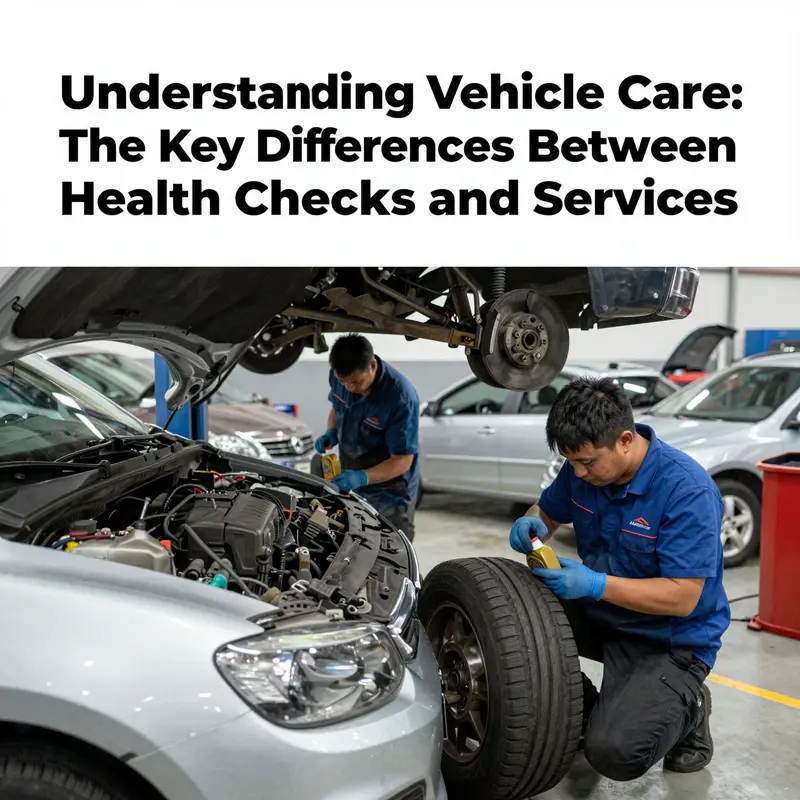
When car owners ask whether a vehicle health check (VHC) is the same thing as a service, the answer is both simple and nuanced. They are not identical, yet they live in the same ecosystem of care. A VHC provides a diagnostic snapshot of a car’s condition, while a service represents an ongoing program of maintenance and repair designed to keep that car performing at its best over time. Understanding how these two elements relate helps owners make smarter decisions about safety, reliability, and value. The distinction is more than semantic. It shapes how we approach regular care, how we budget for upkeep, and how we interpret the results when a technician flags a potential issue. A healthy relationship between inspection and maintenance is what ultimately extends a vehicle’s life and preserves its performance, efficiency, and safety.
A vehicle health check is best thought of as a comprehensive inspection. It is structured to answer a single, crucial question: what is the current state of the vehicle right now? In practice, VHCs examine a broad spectrum of systems with a diagnostic mindset. They look under the hood and beyond it to brakes, suspension, steering, electrical systems, cooling and lubrication fluids, tyre condition and pressures, lighting, and a suite of safety-related features such as seatbelts and airbags. In modern VHCs, the checklist is extensive, commonly comprising a large set of items—23 major areas and well over 100 individual checks spread across five core systems. The aim is early detection: to surface weaknesses before they become roadside failures, and to flag safety concerns that could compromise the moment you turn the key or apply the brakes. Some providers tout rapid VHCs that deliver a clear health picture in as little as 15 minutes. The value here is not a fix but a map: a fast, reliable snapshot that tells you where to focus your attention next.
A vehicle service, by contrast, is a hands-on process of maintenance and repair. It is the act of doing something to the car, not just noting what is wrong. Services follow a prescribed schedule—often defined by time intervals or vehicle mileage—that aligns with the manufacturer’s recommendations. A service includes tangible tasks: changing the oil and oil filter, replacing air and fuel filters when due, inspecting or replacing spark plugs, checking belts and hoses for wear, and evaluating the brake system—pads, rotors, fluid, and lines. A service may also involve top-ups of essential fluids, tuning or recalibrating components, and sometimes parts replacement. Unlike a VHC, the service is a performing act; it is maintenance or repair aimed at preserving or restoring function. It’s not just about diagnosis but about delivering ongoing reliability.
In the practical rhythm of a shop or a dealership, these two activities frequently appear together. A VHC can be performed as part of a service, especially if the vehicle is approaching a scheduled maintenance window or if the driver reports symptoms that warrant deeper investigation. But a VHC by itself does not guarantee that everything is in perfect working order, nor does it guarantee that no repairs will be needed in the near term. Conversely, a service may include a basic checklist and safety checks that resemble a routine health check, but it is driven by an agenda of keeping the car aligned with the manufacturer’s specifications and the owner’s usage pattern. The important distinction is not just about what is checked, but about what is done: diagnosis versus maintenance, discovery versus remediation, prediction versus action.
To appreciate the larger value proposition, consider how the two practices feed into a broader maintenance philosophy. A VHC provides the data you need to plan ahead. It reveals developing issues while they are still manageable and often less costly to fix. For example, a VHC might reveal early signs of wear in the braking system, a looming coolant leak, or a battery that is losing strength. When such signals are detected, a service can be scheduled proactively to address them, rather than reacting to a breakdown. Yet it is equally true that not every VHC issue implies immediate service. Some findings may be within normal variance for a given vehicle’s age and operating conditions, while others may require only minor adjustments or top-ups before a more thorough service becomes warranted.
From a mechanical perspective, a comprehensive service is designed to minimize wear and tear, extend the life of key components, and maintain efficiency. Regular oil changes and filter replacements prevent sludge buildup and ensure proper lubrication, protecting the engine from accelerated wear. Spark plugs, belts, and hoses receive attention to avoid misfires, power loss, or belt-driven failures that could strand a driver. The brake system benefits from periodic inspections and timely replacements that preserve stopping power and reduce the risk of a catastrophic failure. These tasks are not cosmetic; they are the essential upkeep that keeps a vehicle performing as designed and as safely as possible. In a world where drivers rely on complex fuel and emission control systems, a service also ensures that the car continues to meet environmental standards and runs efficiently, contributing to lower fuel consumption and reduced emissions over the long haul.
The diagnostic capabilities that accompany modern servicing add another critical layer. Many services now incorporate diagnostic scanning tools that complement the traditional hands-on checks. These tools can read error codes, monitor sensor data, and track computational diagnostics that reveal issues the naked eye might miss. The integration of diagnostics with maintenance creates a powerful feedback loop: diagnostic results inform service actions, and the outcomes of those actions influence the next round of checks. This loop is where the relationship between health checks and servicing becomes synergistic. A health check identifies risk, a diagnostic service confirms the nature of that risk, and a maintenance service resolves or mitigates the risk while restoring optimal function. In short, the two practices work best when they are not isolated but integrated into a continuous cycle of evaluation, decision-making, and action.
The environmental dimension of vehicle maintenance deserves explicit attention. An efficiently maintained engine, properly lubricated and with clean air and fuel systems, operates more cleanly and consumes less fuel. It emits fewer pollutants and tends to produce less overall wear on components, which translates into fewer replacements and less waste. This is not just a matter of eco-friendly rhetoric; it is a practical outcome of consistent servicing and thoughtful maintenance planning. When owners commit to regular maintenance, their vehicles tend to run longer between major repairs, and the ownership experience becomes more predictable. The environmental benefits compound over time as the vehicle’s lifecycle extends. A well-maintained car, operating within its design tolerances, is less prone to energy-intensive surges and remedial work that would otherwise contribute to a less sustainable ownership model.
Record keeping is another indispensable facet of the maintenance ecosystem. Keeping a precise and accessible record of all VHCs and services is crucial for transparency, warranty claims, and resale value. Digital record-keeping platforms make it easier to document the history of inspections, diagnostics, and repairs. Prospective buyers, or even prospective lenders, often value a clearly recorded maintenance history as a sign of responsible ownership and careful stewardship. For those who prize longevity and reliability, a robust record of regular servicing—in conjunction with periodic health checks—provides a detailed narrative of how the vehicle has been cared for over time. It is this archival record that gives confidence to drivers and technicians alike, enabling them to plan future interventions with greater accuracy and efficiency.
The practical implication for drivers is simple: treat health checks and services as two halves of a shared strategy. When you are about to embark on a long trip or when a vehicle is approaching an important milestone in its maintenance schedule, a VHC can be the first step to clarity, followed by a tailored service to secure ongoing reliability. If safety concerns are identified, the service becomes even more urgent. Recognizing that this distinction exists—and that both elements contribute to safety, reliability, and value—empowers owners to negotiate better decisions with their service providers and to align maintenance plans with their driving patterns and budgets. It also helps set expectations. A VHC is not a guarantee of perfect performance; it is a snapshot and a forecast. A service is not guaranteed to fix every issue, but it is the primary mechanism by which problems are resolved and the car’s operation is safeguarded over time.
The broader maintenance framework, then, must be understood as a continuum rather than a binary choice between a health check or a service. There is a natural spectrum where the health check informs the maintenance plan, and the maintenance plan, in turn, repays the investment with safer, more reliable operation and longer vehicle life. In practice, owners who cultivate this approach often experience fewer unexpected failures, lower total ownership costs over the long term, and a greater sense of confidence behind the wheel. A VHC tells you where you stand; a well-planned service tells you where you’re going. Integrating these two elements into a coherent maintenance schedule is the most effective way to treat a vehicle as the asset it is—a mobile tool that serves daily needs while retaining its value and safety across years of use.
For readers seeking practical ways to apply these ideas, a useful touchpoint is the broader conversation about how maintenance content is organized and explained in industry resources and consumer-oriented platforms. A reliable way to explore this is through dedicated automotive maintenance content that delves into the mechanics and rationales behind common service tasks, as well as the role of diagnostics in proactive care. The goal is to cultivate a mindset that values both the safety net provided by health checks and the protective, value-preserving work performed during servicing. By weaving these threads together, drivers can navigate maintenance with greater clarity and less stress, sampling the best of both worlds: the vigilance of a health check and the assurance of a well-executed service.
As you consider the rhythm of your vehicle’s care, you might also explore resources that contextualize maintenance practices within a broader automotive ecosystem. The KMZ Vehicle Center blog, for example, offers knowledge on maintenance strategies and practical tips that can help you interpret VHC findings and plan service actions more effectively. KMZ Vehicle Center blog
From the perspective of ownership, the crucial takeaway is this: do not treat a health check as the sole safeguard or a service as the only form of protection. Instead, see them as complementary actions within a disciplined maintenance regimen. The VHC supplies the diagnostic map, while the service provides the physical work that keeps that map accurate through time. When used together, they become a powerful framework for extending the life of the vehicle, safeguarding safety on the road, and maintaining value at resale or trade-in. This integrated approach also supports a thoughtful allocation of resources. Rather than chasing reactive repairs after a failure, you invest in a forward-looking plan that reduces the likelihood of costly downtime and inconvenient breakdowns. In the end, the goal is simple but profound: a car that runs smoothly, safely, and efficiently for as long as possible, with a clear record of care that speaks to responsible ownership and prudent stewardship of a significant personal asset.
For readers who want to ground these ideas in established professional guidance, the automotive maintenance discipline offers a wealth of standards and best practices. While the specifics may vary by region, the underlying principles—systematic inspection, proactive maintenance, timely repairs, diagnostic supplementation, and careful record-keeping—are widely recognized as the pillars of effective vehicle care. Industry resources emphasize that a service is the principal vehicle for preventive maintenance, while health checks provide the critical diagnostic input that guides those preventive actions. This synergy is at the heart of durable performance, reduced risk, and long-term satisfaction with a vehicle. The message remains clear: health checks and services are distinct but interdependent elements of a responsible maintenance strategy that priorities safety, reliability, and value.
External resource for further reading: https://www.ase.com/
Beyond the Quick Scan: Integrating Vehicle Health Checks into a Proactive Maintenance Rhythm
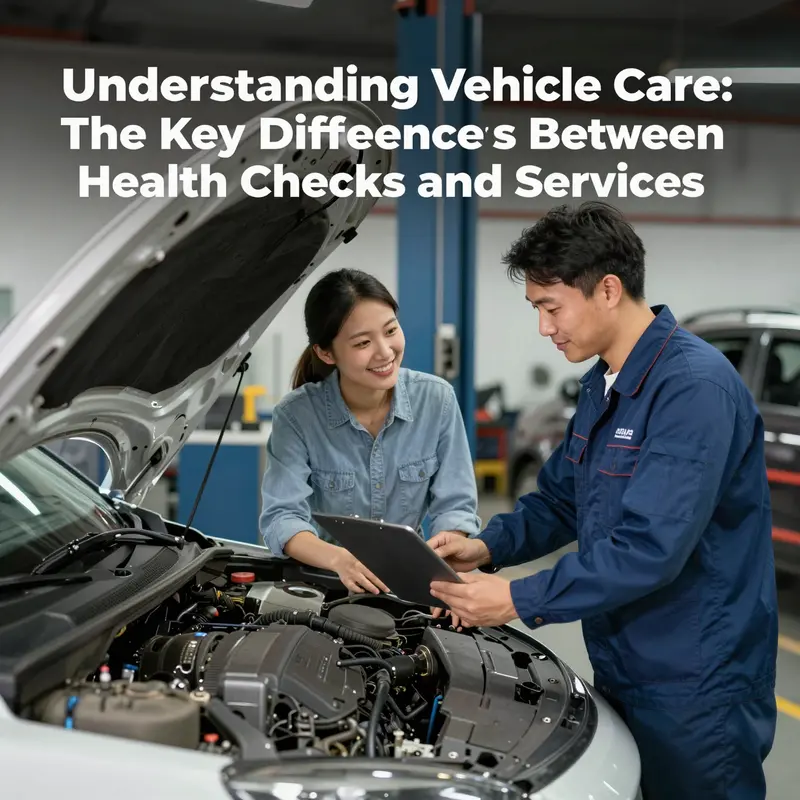
Integrating a vehicle health check into routine maintenance turns a diagnostic snapshot into a living maintenance plan. A VHC is not a service, but it informs when and what to service. The health check maps current condition across key systems and flags trends that may lead to failure, enabling timely action rather than reactive repairs. By aligning the VHC with a scheduled service, owners can plan for immediate repairs and also schedule preventive tasks within a single visit. The five core domains typically examined include the engine and propulsion, brakes, suspension and steering, electrical network, and climate and fluid systems. In practice, the result is a prioritized list with recommended timelines and rough cost ranges, helping maintain safety, reliability, and value. Real world programs often couple the VHC with data analytics and live sensor feeds to spot issues early and minimize downtime. The goal is clarity and control: a clearly structured plan that fits the driver’s schedule and budget while keeping the vehicle healthy over its lifetime.
Final thoughts
The distinction between Vehicle Health Checks and Vehicle Services is essential for maintaining a vehicle’s safety and performance. While a health check allows for the identification of potential issues, services are focused on the hands-on maintenance needed to keep the vehicle running smoothly. Both processes are integral to vehicle maintenance and should be used together for the best results. By understanding the unique functions and benefits of each, car owners, used car buyers, sellers, and fleet operators can make informed decisions that enhance vehicle longevity and safety.