
Every vehicle owner, whether a private car owner, a used car buyer, or a fleet operator, may receive a Vehicle Services Division Letter at some point. These letters, issued by governmental agencies like the Department of Motor Vehicles (DMV), serve various purposes and can significantly impact your vehicle registration and compliance status. Understanding the different types of letters and their functions is vital to achieving smooth operations and avoiding penalties. This guide will delve into the types of Vehicle Services Division Letters, the applicable legal framework, effective responses, and the broader impacts on vehicle registration and compliance.
Decoding Vehicle Services Division Letters: How Administrative Communications Shape Your Vehicle Record
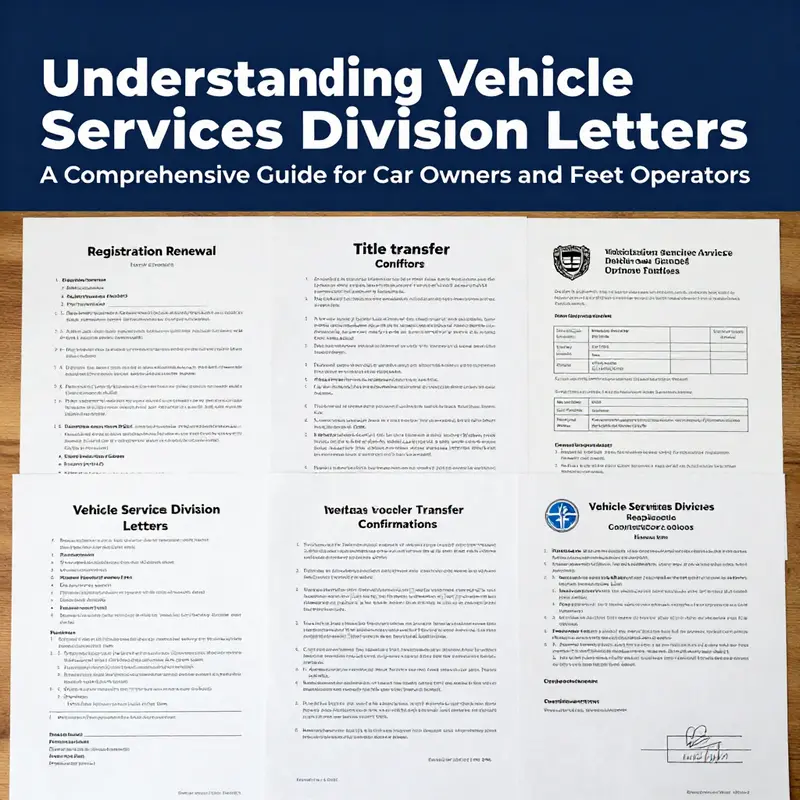
Vehicle Services Division letters are official communications from the agency that maintains vehicle records (often a DMV or an equivalent). They are not a single universal form, but a family of notices tied to the lifecycle of vehicle ownership. Common notices include renewal reminders, title transfers, plate replacements, lienholder notifications, and compliance or suspension alerts. The letters share a simple purpose: to inform the owner, request action, and document the status of the vehicle in the official registry. The language is precise and the structure predictable: an issuing agency header, a date and reference number, the vehicle identifiers (VIN or plate), a clear description of the issue, the required steps, deadlines, and contact instructions. Deadlines are important, and there is usually a path to compliance that protects driving privileges and legal operation. Retain copies of the notice and attachments for your records, even after you respond, because the letter becomes part of the official history of the vehicle. Since rules vary by jurisdiction, always verify details against your local government portal or official inquiry line rather than relying on third-party sources.
Letters, Laws, and Logbooks: The Legal Landscape Behind Vehicle Services Division Correspondence
A vehicle is more than a machine; it is a bundle of records, deadlines, and permissions that span years and jurisdictions. When a government agency handling vehicle services sends a letter, it is rarely a casual communication. It is a formal notice that carries legal weight, procedural instruction, and the potential to alter a driver’s or owner’s rights. The phrase “Vehicle Services Division Letter” is not a single document with a universal template or a universal meaning. It describes a category of official correspondence issued by a vehicle services division or its equivalents within a transportation authority. The content, purpose, and consequence of such letters vary from place to place, but they share a common core: they are instruments of public administration designed to keep records straight, compliance current, and the public informed. To understand what these letters are, how they function, and why they matter, it helps to imagine the lifecycle of a vehicle—from registration to transfer, from plate issuance to lien enforcement— each step producing a formal communication that must be interpreted, acted upon, and, when necessary, challenged within a regulated framework tough enough to deter fraud yet accessible enough to protect legitimate ownership and mobility.
The most visible category of Vehicle Services Division letters concerns renewal and verification tasks that sit at the intersection of ownership, safety, and public policy. A Registration Renewal Notice is a familiar example: a notice sent as the registration period nears its end, urging the owner to renew and reminding them of the legal obligation to keep the vehicle properly documented for road use. While the renewal notice sounds routine, its authority lies in a statutory duty that a state or national authority holds to ensure that vehicles on the road are properly registered, that taxes and fees are collected, and that the public record reflects accurate ownership and lien statuses. In many systems, a renewal notice is not merely a reminder but a trigger for additional steps—updating address information, confirming insurance coverage, and reconciling vehicle data with the database that serves law enforcement, insurers, and regulators alike. Similarly, a Title Transfer Confirmation letter marks a critical moment when ownership changes hands, signaling to the previous owner, the new owner, and sometimes any lienholders that the title certificate has moved from one possession to another. This letter is not a casual acknowledgment; it functions as an official record that validates a change in legal ownership and updates the public ledger that underpins future transfers, registrations, and encumbrances.
Other letters concern the practicalities of plate management. A License Plate Replacement Request notice acknowledges a request for new or replacement plates. It is more than hardware; it is a gateway to identity and accountability on the road. Plates carry a public identifier that links a vehicle to its owner and to the vehicle’s registration history. When a letter confirms the issuance or replacement of plates, it reinforces the integrity of that linkage and enables agencies to monitor compliance with plate standards, tag issuance, and renewal cycles. Then there are more targeted notices: Lienholder Notifications inform banks, finance companies, or private lenders that a lien exists on a vehicle. These letters ensure the lien remains an active, visible flag in the record, preventing a title from being transferred without clearing the encumbrance. They also serve as a reminder to all parties that the vehicle’s value may be tied to collateral in a loan, a consideration that affects resale, transfer, and insurance processes.
But the reach of Vehicle Services Division letters extends into compliance and enforcement. Compliance or Suspension Notices alert owners to problems that can jeopardize the vehicle’s legal status—expired insurance, unpaid fees, or safety violations that trigger suspensions. Such notices are not punitive in a vacuum; they are designed to motivate timely correction and to provide a lawful pathway back to compliance. They typically come with specific instructions, deadlines, and ways to dispute or remedy the issue. The regulatory backbone behind these notices is built not from a single statute but from a network of laws and regulations that authorize the issuance of formal notices, define the information that must be included, and prescribe the consequences for noncompliance. The everyday traffic on these rules is not glamorous, but it forms the quiet architecture of a system whose legitimacy rests on predictability, fairness, and verifiability.
Within this framework, the precise content and language of a Vehicle Services Division Letter will differ by jurisdiction. In some places, letters track a tightly defined template with standardized sections: header, recipient details, subject, body explaining the action required, deadlines, contact information, and a clear statement of potential consequences. In others, messages may be more narrative but still anchored in statute, regulation, and agency policy. What remains consistent is the letter’s function as a formal conduit: it transmits a legally significant notification, records a process in motion, and creates a paper trail that can be referenced in future correspondence or disputes. The variability is a reminder that there is no single universal “vehicle services letter” that applies everywhere. Instead, there is a family of letters, each with a predictable purpose and a distinct set of rules about issuance, delivery, content, and response windows.
From the perspective of someone who encounters such a letter, the most important starting point is to treat it as official. Even when the language seems straightforward, reading the document with a regulatory mindset helps prevent missteps. The letter’s authenticity is anchored not in its tone but in its source and the official identifiers it carries—agency name, department, a case or reference number, and, ideally, a link or instruction to verify the notice through an official portal. This is why recipients are advised to verify the notice against the agency’s official website or contact channels rather than relying on phone numbers or emails that may appear dubious. The risk is not merely administrative delay but the possibility that an issue is left unresolved, leading to penalties, license suspensions, or loss of vehicle rights. In this sense, the Vehicle Services Division Letter is both a shield and a signal: a shield against hazy records and a signal that action is required to maintain lawful vehicle status.
For those who manage fleets or individuals who must navigate multiple jurisdictions, the landscape becomes more complex yet ultimately more navigable when approached as a coherent system. Agencies share foundational principles: notices must be timely, accurate, and comprehensible; the information must reflect current data on the vehicle, owner, insurer, and lienholders; and there must be a fair process for appeal or correction if the information appears to be inaccurate. These principles help ensure due process and protect against mistaken suspensions or improper encumbrances. Within this framework, several recurrent themes emerge that help both readers and practitioners interpret and respond effectively. First, deadlines matter. Notices usually specify a window within which action must be taken. Missing a deadline can lock in consequences, such as a suspension or a shift into a hold or stop-sale status. Second, documentation matters. Letters often require or reference supporting materials, whether it is proof of insurance, a bill of sale, a copy of the title, or a payment receipt. Third, verification matters. Recipients should verify the information with the issuing agency, and, when there is doubt about the letter’s authenticity, they should contact the agency through official channels to confirm its legitimacy.
In terms of authority, Vehicle Services Division letters are instruments derived from the legal framework that governs vehicle ownership and operation in a jurisdiction. They rest on statutes creating the agency, delegating authority to administer registration, titling, and related services, and prescribing the procedures for notifications and compliance. This is not a single, monolithic system but a mosaic in which each jurisdiction contributes its own colors and textures—some with long-standing traditions of formality, others with more modern, digital-first approaches. Even in digitally advanced systems, the core idea remains the same: the government communicates a binding requirement or a confirmation of a transaction, and the recipient has a defined obligation to respond in accordance with the rules laid out in the notice and in parity with privacy and data-protection standards.
Readers should also be aware that the landscape includes safeguards and practical guidance designed to protect individuals. Agencies typically provide resources to help residents interpret notices and to guide them through the appropriate steps to remedy issues. These resources can include FAQs, contact directions for the appropriate division, and sometimes step-by-step explanations of how to upload documents or pay fees through official portals. The presence of these resources underscores a commitment to transparency and accessibility, while the legal backbone ensures that the contact remains formal and enforceable. For practitioners who interface with vehicle records, this means maintaining meticulous documentation, confirming signature lines, and ensuring that any changes in ownership or encumbrances are accurately reflected in the system. A well-maintained record reduces friction when future actions are taken, whether that involves a simple renewal, a title transfer, or a more complex lien disposition.
As a reader, approaching Vehicle Services Division letters with a clear set of expectations helps demystify what can feel like bureaucratic jargon. The letter is not a mystery missive but a controlled instrument within a system designed to balance public safety, administrative efficiency, and individual rights. It is a communication that marks the transition points in vehicle ownership and operation, the moments when a correction or confirmation can secure uninterrupted use of a vehicle, or, conversely, the moment when inaction can unlock a cascade of consequences. The difference between a routine renewal and a suspension, for instance, often hinges on timely response and accurate information. A misalignment in any data field—an incorrect VIN, a mismatch in the insured status, an outdated address—can complicate the process and delay resolution. This is why many agencies emphasize proactive steps: verify data in the notice, cross-check with personal records, and contact the agency if something appears inconsistent. The presence of a structured workflow—where a notice triggers checks, disclosures, and potential reissuance—helps create a predictable path for both the agency and the recipient.
For those who are new to dealing with these notices, it is helpful to keep a few practical considerations in mind. First, treat the letter as part of a broader sequence of records that trace the vehicle’s legal life: the initial registration, any title changes, insurance interactions, and the eventual suspension or renewal events. Second, maintain a habit of updating contact details with the issuing agency. An overlooked address is a common cause of missed notices, and it can complicate the ability to respond on time. Third, when in doubt about the content, consult the agency’s official website or a verified customer service channel rather than acting on rumor or third-party advice. In some jurisdictions, these notices can be issued digitally through a secure portal, which not only expedites processing but also reduces the risk of misdelivery that can occur with paper correspondence. Yet the digital route does not absolve recipients from reading and understanding the notice; it merely changes the mechanics of delivery.
From a broader perspective, the Vehicle Services Division Letter reflects how a modern transportation system balances efficiency with accountability. It codifies a workflow where information flows from the public database to the citizen, and where the citizen’s actions—paying a fee, updating insurance, transferring a title—re-establish a clean, compliant status. The letters thus serve as milestones on the road to lawful vehicle ownership, and they illustrate how bureaucratic processes are designed not to trap citizens but to ensure that records accurately reflect reality on the ground. The careful architecture of these notices helps protect owners from inadvertent lapses and helps authorities enforce compliance in a fair, transparent manner.
To close this exploration, consider how the broad category of Vehicle Services Division Letters operates across different contexts while retaining a shared purpose: to document, verify, and enforce the legal relationship between a vehicle, its owner, and the public authority that governs motorized mobility. The precise legal language, the exact deadlines, and the required documentation will differ by jurisdiction, but the underlying logic remains consistent. The letter is a formal prompt to act, a record of a transaction or status, and a safeguard that helps keep the vehicle registry accurate and the roadways safer. For readers seeking further practical context, the KMZ Vehicle Center blog offers a wide range of maintenance and administrative insights that can complement understanding of vehicle ownership and record-keeping. KMZ Vehicle Center blog. If you are looking for authoritative guidance on the regulatory framework behind vehicle and driver services in another jurisdiction, consult official sources such as the UK government’s Vehicle and Driver Services page for a comprehensive overview of how these processes are organized and administered. GOV.UK Vehicle and Driver Services.
Decoding the Vehicle Services Division Letter: A Practical Path Through DMV Communications and Responsible Response
Receiving a letter from a Vehicle Services Division can feel like stepping into a different language. The acronyms, references to VINs and plate numbers, and the formal tone can be intimidating, especially when the notice touches something as essential as your ability to drive or your ownership records. Yet these letters are not traps or bureaucratic hurdles. They are official checkpoints designed to keep vehicle records accurate, ensure compliance with laws, and safeguard public safety on the roads. The challenge—and the opportunity—lies in approaching the letter with calm, a methodical mindset, and a clear plan. When you do, what initially seems opaque becomes a navigable path that protects your interests and keeps you in good standing with the agency that regulates vehicle use in your jurisdiction. This chapter invites you to move from confusion to clarity by examining what a Vehicle Services Division letter is, what it typically includes, and how to respond in a way that is respectful, precise, and efficient. It is a guide rooted in the common patterns you are likely to encounter, while acknowledging that exact formats and requirements can differ from one state or country to another. As you read, you will notice that the core principles are universal: read carefully, assemble the right documents, respond with a clear point-by-point reply, and preserve evidence of your actions. These steps matter whether the letter concerns a routine renewal, a title transfer, a plate replacement, or something more complex like a lien notice or a compliance warning. The vehicle records that governments maintain are living documents, and letters from the Vehicle Services Division are part of the ongoing conversation that keeps those records accurate and enforceable. The cadence of this conversation varies by jurisdiction and context, but the underlying logic remains consistent. The letter arrives with a purpose; your response should demonstrate that you understand that purpose and are acting in good faith to fulfill it. In practice, this means translating official language into plain, actionable steps and presenting your case in a way that is easy for a clerk or a hearing officer to follow. The broad family of Vehicle Services Division letters includes several common families: notices that remind you to renew registration, confirmations of title transfers, acknowledgments of plate requests, alerts about liens, and compliance or suspension notices. Each type seeks a different kind of information and a different kind of action, but they share a common structure. There is an identifying header that ties the document to a particular vehicle, an explanation of the issue at hand, a list of required actions or deadlines, and a path for submitting further information or contesting a point if needed. Recognizing this structure is the first step toward a confident response. It helps to normalize the letter in your mind, separating the procedural elements from the substantive issues. Once you can identify the request—whether it’s to provide proof of insurance, to confirm a recent lien, or to correct a clerical error—you can map your next steps with confidence. The next layer of understanding comes from situating the letter within the broader ecosystem of vehicle governance. The DMV or its equivalent operates within a web of statutes, regulations, and administrative procedures. Letters are not arbitrary; they are grounded in law and policy. This means a well-crafted reply is not just polite and well-documented but also technically precise. Acknowledge the specific points made in the letter, quote or reference the exact terms when appropriate, and attach the supporting documents that align with each point. The rhythm of a sound reply mirrors the rhythm of the agency’s own processes: a clear identification of the issue, a presentation of evidence, a straightforward conclusion, and an offer for further dialogue if required. While the content of each letter will vary, there are practical habits that consistently yield positive outcomes. Start by reading the letter in full, with a pen handy to annotate key dates, requested actions, and any discrepancies you notice. Jot down questions you want to ask or items you want to dispute. Before you respond, gather every piece of documentation that might bear on the matter. This might include vehicle registration cards, proof of insurance coverage, the latest emissions test results, receipts for any paid fees, or correspondence related to the issue. The goal is not to flood the letter with documents, but to assemble a complete and organized dossier that directly supports your position on each point raised. The drafting stage benefits from a formal, restrained tone. Address the letter to the correct official, use the right reference numbers, and maintain a respectful, professional posture throughout your communication. It is not just what you say, but how you say it. A well-structured response that mirrors the logic of the original letter is easier to evaluate. Respond point by point. If the letter asks for proof of insurance, attach the current policy declaration page or an official proof of coverage. If it notes an emissions issue, include the latest test certificate. If the problem involves a potential clerical error, state the correction clearly and provide documentation that demonstrates the error. In some cases, you may need to explain extenuating circumstances, such as a delay caused by mail delivery or a recent update to your insurance or address. When doing so, keep explanations concise and tether them to the documented facts. A clean, organized submission often takes the form of a cover letter that references each item in the original notice and then attaches the corresponding evidence. For example, you might begin with a brief opening that acknowledges receipt of the letter, identifies the vehicle by VIN and plate number, and states your intent to comply with the requested actions or to resolve the discrepancies. Then proceed to a structured list of the issues and your response to each, followed by a closing paragraph that invites further contact and provides your preferred method of communication. This is not a legal brief; it is a straightforward administrative response designed to expedite review and avoid delays caused by ambiguous or incomplete submissions. Submitting your response through the agency’s official channels—whether a secure online portal, certified mail, or in-person submission where permitted—adds a layer of traceability that can be invaluable if there is any later questioning about delivery or receipt. Retaining copies of everything you submit is another essential discipline. Keep a file with the original letter, your reply, and all supporting documents, along with proof of delivery. If you used certified mail, the receipt and tracking number become part of your records. If the agency provides a portal that confirms submission, save screenshots or download confirmations. The decision to seek legal assistance is not a sign of defeat but a prudent step when the issues involve complex statutes, potential civil penalties, or ties to liability concerns. An attorney or motor vehicle expert can help interpret ambiguous language, verify that your rights are protected, and ensure that your reply aligns with applicable law and procedural rules. Even when legal counsel is not necessary, consulting a local DMV guide or a reputable motor vehicle guidance resource can be valuable. These sources often offer templates, sample letters, and checklists that help you structure your own reply with confidence. The aim is a response that is precise, well-documented, and timely. Timeliness matters in these communications because most notices carry explicit deadlines, sometimes with consequences like suspension or added fees if not addressed. If you cannot meet a deadline due to circumstances beyond your control, communicate proactively with the agency. A brief, respectful explanation of why the deadline cannot be met and a proposed new timeline can sometimes avert automatic penalties or expedite reconsideration. In addition to the procedural steps, a broader cultural habit can improve your experience when dealing with vehicle-related notices: treat every communication as a chance to correct a record rather than a confrontation. The Vehicle Services Division is managing a complex system that requires accurate information to operate effectively. Your careful, cooperative attitude can reduce friction, shorten processing times, and preserve your driving privileges, your property interests, and your peace of mind. The practical rhythm of dealing with these letters—careful reading, organized documentation, point-by-point response, and formal submission—also builds a transferable skill set for other bureaucratic interactions. It trains you to translate formal language into concrete actions, to marshal evidence efficiently, and to present your case in a way that supports a fair and timely resolution. If you want to deepen your understanding beyond the general guidance, you can explore broader resources that discuss how to respond to official vehicle-related correspondence. The U.S. Department of Motor Vehicles and affiliated guidance platforms provide templates, FAQs, and contact options that can illuminate the process. These resources emphasize the importance of accuracy, documentation, and prompt communication. They remind readers that accountability rests on both sides of the exchange: the agency must evaluate the materials presented, and you must present a complete and coherent set of information. While the specifics of a Vehicle Services Division letter may differ across jurisdictions, the ethos of effective handling remains consistent: approach with clarity, respond with evidence, and communicate with courtesy. This approach not only helps you meet the letter’s requirements but also contributes to a broader culture of compliant and responsible vehicle ownership. If you find yourself navigating this landscape for the first time, consider keeping a personal checklist for future correspondence. Begin with acknowledgment and reference numbers, then move to documentation, then draft a point-by-point response, and finally choose the proper submission channel. A simple, repeatable sequence reduces anxiety and increases the likelihood of a smooth resolution. As you close the loop on a letter, you may also notice how the process fosters a stronger sense of agency over your vehicle’s legal status. You are not merely reacting to a notice; you are shaping the record that accompanies your ownership and operation of a vehicle. This sense of control is valuable in a world where regulations continually evolve and where accuracy in government records has tangible consequences for insurance, financing, and road safety. If you want a concise, practical starting point for your next letter, consider this: identify the exact point the agency is asking you to address, assemble documentation that corroborates your position, present a concise narrative that ties the facts to each requested action, and then follow the official submission path. This approach, repeated with care across different letters, yields consistency and confidence. For readers who prefer written exemplars, many agencies offer templates and sample language that you can adapt to your specific situation. When used judiciously, templates help you strike the right tone while ensuring you cover all the essential elements. Remember that a Vehicle Services Division letter is not an endpoint; it is part of an ongoing process of record maintenance and compliance. Engaging with it thoughtfully keeps your records accurate, your vehicle status current, and your rights protected. If you want to explore more about vehicle maintenance and related administrative responsibilities as you navigate these letters, you can browse broader resources on the KMZ Vehicle Center blog, which hosts a variety of maintenance and regulatory topics. For a general hub of guidance that aligns with the themes in this chapter, you can visit the KMZ Vehicle Center blog. (Internal link) https://kmzvehiclecenter.com/blog/ The experiences described here are common enough to deserve thoughtful preparation, but they are also highly manageable when approached with the right mindset and practical tools. The most important takeaway is straightforward: treat every Vehicle Services Division letter as a document that deserves careful attention, not as a hurdle that must be overcome in haste. With a careful read, solid documentation, and a clear, respectful reply, you can navigate these communications effectively, protect your interests, and maintain smooth, ongoing compliance with the rules that govern vehicle ownership and operation. For further reading on how to engage with official vehicle-related correspondence and to access templates and guidance, see external resources such as the DMV guidance and related portals. https://www.dmv.org/
Letters That Move the Plate: How Vehicle Services Division Notices Shape Registration and Compliance
A vehicle is more than an asset; it carries responsibilities and a chain of administrative steps that keep the registration system working. Vehicle Services Division notices function as formal notices that guide owners through renewal, inspection, or compliance processes. They set expectations, outline required documents, and record the actions taken or needed. These notices are not mere paperwork; they are the mechanism that aligns private ownership with public rules, safety standards, and accurate records.
Within this framework, renewal notices, inspection notices, and compliance warnings each have a role. Renewal notices remind owners to keep registration active so a vehicle can legally be driven. Inspection notices require verification that safety and emission standards are being met. Compliance warnings point to gaps that must be closed to restore validity. Together they create a predictable rhythm of notice, response, and resolution, traveling with the vehicle from the date of first registration to the time of final disposition.
The effect on owners is twofold: immediate next steps and long term recordkeeping. Prompt responses reduce processing delays and penalties, while thorough documentation helps verify ownership, insurance, and vehicle status. The letters also support accountability across agencies and fleets, providing an auditable trail that supports safety and enforcement while protecting legitimate owners from unnecessary penalties. In short, a Vehicle Services Division notice is a carefully designed instrument that keeps the public and private sides of vehicle ownership in harmony.
For practical guidance, readers should identify the type of notice received, gather the required documents, and track deadlines. Preparing in advance—ensuring current insurance, updating address information, and scheduling any needed inspections—helps avoid disruptions and additional fees. When in doubt, contact the issuing agency for clarification and confirm the notice applies to the correct vehicle. Jurisdictional differences exist, but the underlying logic remains constant: notify, verify, act, and resolve. Official guidance from the relevant motor vehicle authority will provide jurisdiction-specific steps and timelines.
Final thoughts
Understanding Vehicle Services Division Letters is essential for all vehicle owners and business operators. By familiarizing yourself with the different types of letters, the relevant legal framework, and how to respond effectively, you can ensure compliance and avoid potentially costly penalties. These letters not only influence your vehicle registration but also maintain the integrity of the overall transportation system. Staying informed and proactive serves as the best defense against any issues related to these critical documents.