A Vehicle Service Agreement (VSA) serves as a crucial safety net for vehicle owners, providing clarity and assurance regarding maintenance and repairs. In today’s ever-evolving automotive landscape, understanding the nuances of these agreements is essential for local private car owners, used car buyers and sellers, and small business fleet operators. This article delves into the definition and scope of VSAs, highlighting their coverage and benefits, addressing key limitations and exclusions, and offering practical applications and examples to enrich your understanding of how a well-crafted agreement can enhance your vehicle management strategy.
null
null
Beyond the Factory Warranty: How Vehicle Service Agreements Shield Your Car and Your Budget
When you buy or lease a vehicle, the warranty that comes from the factory is often described as the primary safeguard against sudden breakdowns. A Vehicle Service Agreement (VSA), commonly referred to as an extended warranty, expands that safety net by formalizing coverage for repairs and, in some cases, routine maintenance beyond the original warranty period. A VSA is more than a single number on a contract; it is a scoped agreement between a vehicle owner and a service provider that sets out what is paid for, what is excluded, how claims are processed, and how long protection lasts. The essence of a VSA is not merely to promise relief from repair bills, but to establish a predictable framework for upkeep that can influence decisions about service, maintenance, and even the resale value of a vehicle. The contract can be offered by a dealership, a third-party administrator, or, less commonly, directly by the automaker. The choice among these providers often determines the breadth of coverage, the cost, and the ease of claiming, all of which shape the practical value of the agreement over its life. A well-chosen VSA helps owners navigate the tension between the desire for uninterrupted mobility and the reality of mounting repair costs as a vehicle ages or accumulates miles. It can transform potential financial shocks into manageable, monthly or annual outlays, and in quiet moments of reflection it can be the sort of purchase that reduces anxiety about the future, even if it doesn’t remove all risk. Yet a VSA is not a universal remedy. Its truth lies in the specifics—the coverage, the exclusions, the limits, and the small print that governs the moment a claim is filed and a repair is approved. Reading a VSA is not like reading a simple warranty; it is a negotiation with outcomes that depend on the plan design, the vehicle’s history, and the network through which service is delivered. The contrast with a standard factory warranty is telling. The factory warranty is built into the original purchase and typically covers major components for a defined period or mileage. A VSA, by contrast, is a supplementary or alternative program that customers select to extend or tailor protection beyond that baseline. This distinction matters for several reasons. First, it affects cost. VSAs vary widely in premium, deductibles, and coverage levels; a low upfront cost might come with higher deductibles or restricted eligibility, while a comprehensive plan could have a higher price but reduce out-of-pocket costs when a repair arises. Second, coverage comes and goes with the plan’s structure. Some VSAs emphasize major mechanical systems—engine, transmission, drivetrain—while others broaden to electrical systems, climate control, or suspension components. Third, service experience can differ dramatically. The contract may dictate whether repairs are performed at a manufacturer’s dealer network, at independent shops with pre-authorization, or within a broader approved network. These differences shape how—and how quickly—claims are resolved, and they can influence the overall value of the agreement. The practical dimension of coverage is best understood by looking at what is typically included and what is commonly excluded. A VSA often covers components that represent the most financially disruptive failures: the engine, the transmission, the drivetrain, various electrical subsystems, and, in some cases, air conditioning or certain electronic features. Some plans extend to components like suspension and steering, or parts of the cooling system, which can be a meaningful addition for vehicles with higher mileage or previous maintenance issues. It is important to recognize that not all repairs fall under a VSA. Routine maintenance tasks—consumables such as oil changes, tire rotations, and brake pad replacements—are typically excluded from coverage. Even within covered items, there are standards and limits. Coverage may be constrained by use and operating conditions, restrictions on drivetrain durability, and exclusions for wear-and-tear, misuse, neglect, or pre-existing conditions. For a vehicle owner, understanding these boundaries is essential. A policy that covers an engine but excludes pre-existing conditions, for instance, requires a careful assessment of the vehicle’s history and the timing of the VSA purchase. In practice, the most valuable VSAs are those where the plan aligns with the owner’s risk tolerance and the vehicle’s expected use. For someone with a high-mileage commute in a region with extreme temperatures, a plan that includes the cooling system and the electrical components combined with a reasonable deductible can translate into meaningful protection. For a collector or a lightly used vehicle, a plan that emphasizes major systems but keeps premiums manageable may be the wiser choice. The cost of a VSA is not merely a sticker price; it includes the deductible per repair, the annual or per-mile premium, and any caps on coverage. Some plans require you to pay the deductible each time you file a claim, while others may apply a one-time deductible or a per-visit deductible. There can also be caps that limit the total payout over the life of the contract or per covered component repairs. These financial mechanics matter because they influence the break-even point—the moment when paying for the VSA becomes less expensive than paying out-of-pocket for unexpected repairs. A hypothetical illustration can illuminate this, though actual numbers vary by provider and plan. Suppose a plan costs a few hundred dollars per year and imposes a modest deductible for each repair. If a single major failure would cost several thousand dollars to fix, the VSA can be quite valuable. If, on the other hand, a vehicle remains exceptionally reliable and few claims are needed, the premium might not be fully offset by the repairs avoided. This dynamic underscores a core principle: a VSA is most valuable when it cushions the owner against high-probability, high-cost failures within the covered scope, rather than acting as a blanket shield against all conceivable issues. The real-world decision to purchase a VSA is grounded in practical evaluation. Prospective buyers should weigh the plan’s scope against the vehicle’s age and mileage, the reliability track record of the model, and the owner’s own tolerance for risk. Documentation matters. Keeping meticulous service records, performing required maintenance on schedule, and understanding any pre-authorization requirements before a repair can affect both eligibility and the speed with which a claim is processed. Some plans intersect with maintenance scheduling in meaningful ways. For example, certain maintenance activities can influence the likelihood of a covered failure, and the maintenance discipline may even unlock access to a broader network of service providers or additional benefits such as roadside assistance or rental-car reimbursement during repairs. To sift through these details, vehicle owners are encouraged to engage in a careful comparison that goes beyond monthly premiums. The terms of the contract should be read with attention to coverage scope, eligibility criteria, wait periods, and any exclusions that carve out exceptions for wear items or for repairs caused by abuse or neglect. A key part of this reading is recognizing that a VSA is negotiable to some degree. While the basics are fixed, many plans offer tiered coverage levels or optional add-ons. Some buyers may opt for broader coverage for a longer term, paying more upfront, while others may select a leaner plan to minimize ongoing costs. There is also the practical matter of transferability. In many cases, a VSA can be transferred to a new owner if the car is sold, which can be a meaningful value-add in the used-car market. Conversely, if the vehicle changes hands and the VSA is not transferable, that could influence resale just as it could influence the buyer’s willingness to purchase. For those evaluating a VSA in the context of a used vehicle purchase, the decision often hinges on the vehicle’s current condition, history of repairs, and the likelihood of future failures given its mileage. A thorough vehicle history report, along with a professional inspection, can help a buyer gauge whether a VSA would be a prudent hedge against anticipated maintenance costs. The process of making a claim under a VSA is typically straightforward but can be nuanced. When a covered failure occurs, the owner or repair shop must follow the terms of the contract, which usually require pre-authorization for certain repairs. The claim will be assessed against the contract’s coverage limits and exclusions, and a determination is made about whether the repair is covered and to what extent. The experience can vary by provider and by network. Some networks emphasize speed and convenience, offering streamlined approval processes and a wide range of participating service centers. Others may require more coordination but provide broader coverage or more favorable terms for certain types of repairs. In examining the broader implications of a VSA, it is helpful to consider the total cost of ownership. The VSA affects not only the potential repair bill but also service availability, downtime, and the ease with which a vehicle can be repaired in the event of a breakdown. For owners who prioritize predictability and the ability to budget for maintenance, a VSA can be a reliable companion. For others who prefer to self-manage repairs or who own models with particularly strong factory warranties, the incremental value may be smaller. The decision rests on the alignment between need, risk tolerance, and financial planning. In practice, the best approach is to compare plans with the same level of fairness and transparency. Look for clarity on what is and isn’t covered, whether there are caps per repair, per component, or in total, whether there are deductibles and how they apply, and whether maintenance tasks influence eligibility. A simple, decisive comparison often reveals not only coverage breadth but also the ease of claiming and the quality of service when a repair is needed. To further explore how maintenance scheduling relates to service plans, you can read an article on Optimal oil change intervals: time vs mileage. Optimal oil change intervals: time vs mileage. As you weigh options, remember that a VSA is a tool for risk management rather than a guarantee of problem-free ownership. It is a contract that, when chosen thoughtfully, can reduce the stress of unexpected repairs and provide a clearer path to keeping a vehicle on the road for longer. It can be especially valuable for buyers entering the used-car market, for owners facing aging vehicles, or for those who rely on their vehicles for essential daily transportation and cannot afford a sudden, large repair bill. For readers seeking a broader perspective on how extended service coverage fits into the landscape of vehicle-care options, an external resource with a comprehensive overview can be found at https://www.autopom.com.
What is Vehicle Service Agreement: Navigating Its Limitations and Exclusions
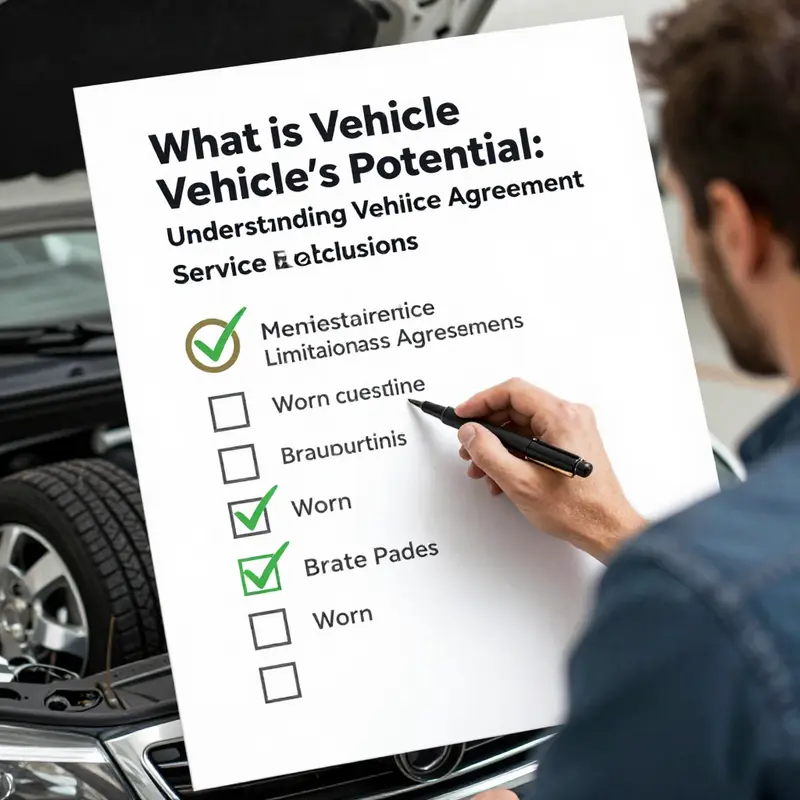
A Vehicle Service Agreement (VSA) works like a safety net for the unpredictable costs of keeping a vehicle on the road after the factory warranty expires. It promises to shoulder some of the financial burden when a covered component falters, but the safety net has edges. The terms, restrictions, and explicit exclusions shape what a policy will and won’t pay for, and understanding those boundaries is the key to a sensible purchase. A well-chosen VSA can provide real relief against expensive repairs, yet a misaligned policy can leave a driver with surprise bills and a sense of frustration. This chapter explores how those limitations and exclusions operate in practice, and how a vehicle owner can read the fine print with the same care given to the initial vehicle purchase itself.
At the core, a VSA is a contract. It outlines which repairs or maintenance tasks are eligible for reimbursement, how long the coverage lasts, and under what conditions the provider will or will not pay. It is not a blanket guarantee against every failure. The agreements are crafted to balance risk between the vehicle owner and the service provider, and they do this by imposing a structured framework of time frames, mileage caps, covered components, and a set of common exclusions. The result is a document that rewards proactive maintenance and careful budgeting rather than a universal shield against all repair costs. Its utility depends on how closely the contract aligns with the specific vehicle, its age, its anticipated future reliability, and the owner’s willingness to manage the agreement rather than assume it will cover every event.
One of the most straightforward and consequential boundaries of a VSA is the combination of time and mileage restrictions. Most plans specify a maximum duration—often measured in years—and a maximum mileage cap. Coverage ends when either limit is reached, whichever comes first. This means a vehicle that accumulates miles quickly or ages rapidly can exhaust the protection sooner than the calendar would suggest. It also means that a vehicle with relatively low annual mileage or one kept for longer than anticipated may outlive the benefit. The practical effect is blunt: a driver may be protected for a substantial phase of ownership, but not indefinitely, and the exact point of expiration should be anticipated in the budgeting and decision-making process.
Beyond the clock and the odometer, the list of covered components is another critical boundary. A VSA typically includes coverage for major mechanical systems—often the engine, transmission, and drivetrain—and sometimes certain electrical components or subsystems. But coverage is rarely all-encompassing. Commonly, items such as tires, brakes, wiper blades, and routine maintenance tasks like oil changes or fluid top-offs are excluded from coverage. This division matters not just at the point of purchase but at the moment of a claim. If a vehicle problem arises in a part of the system that is explicitly excluded, the owner will face the repair bill even if the failure seems associated with a covered component. The precise allocation of covered versus excluded items can feel technical, but it is the difference between meaningful protection and a partial shield.
Another frequent limiter is the deductible. Many VSAs require the policyholder to pay a deductible for each eligible repair. The deductibles can be relatively modest—often in the range of a few dozen dollars—but they accumulate over multiple claims. A plan with a low deductible may be attractive for a driver who anticipates frequent service needs, while a higher deductible can be more cost-effective for someone who plans to drive without incident for long stretches. In either case, the deductible represents the portion of the cost that the owner must bear before the coverage kicks in. It is essential to factor this into the overall cost of ownership and to understand how the deductible is applied across different repairs because, in some plans, the deductible may apply per claim rather than per service period.
Pre-existing conditions present another common filter in VSAs. If a vehicle problem existed before the VSA began, many contracts exclude it from coverage. This can be a subtle and sometimes surprising limitation. Owners might assume that any issue diagnosed after purchase will be addressed, only to discover that a prior condition, even if it worsens later, falls outside the agreement’s remit. The practical takeaway is to document vehicle history clearly at the time of VSA purchase and to be cautious about assuming that past symptoms are automatically eligible simply because the issue worsened after the contract began. Clarity on pre-existing conditions is not merely academic; it translates into real money when a claim surfaces months or years into the policy.
The exclusions section in a VSA often reads like a guardrail for the provider. Damage from external factors, such as accidents or vandalism, is typically outside the agreement unless another policy step is involved. Normal wear and tear—fading paint, worn dashboards, suspension bushings that have degraded through normal use—generally falls outside coverage as well. The philosophy behind such exclusions is straightforward: VSAs are designed to address repair costs triggered by mechanical failure or component wear beyond normal life, not damage resulting from incidents or the inevitabilities of daily use.
A more nuanced set of exclusions can surface when modifications or aftermarket parts are introduced. If a vehicle is altered in ways that the original manufacturer did not approve, many VSAs will void coverage for related repairs. This is a common friction point for owners who pursue performance upgrades, aesthetic alterations, or non-OEM components. The policy’s stance on maintenance is equally important. Neglect—failing to adhere to the manufacturer’s recommended service schedule—can lead to coverage being denied for related repairs. The logic is simple: if the owner fails to maintain the vehicle properly, it is reasonable for the provider to question whether the underlying failure reflects responsible ownership.
High-cost repairs—particularly those involving advanced electronics or software systems—are frequently singled out for special exclusions or limitations. Modern vehicles rely on complex networks and computerized control units. Some VSAs cover the mechanical core, while others explicitly carve out certain electronic or software-driven repairs, or require authorization for diagnostic work and software updates. For a buyer, this means that a seemingly comprehensive plan may still leave essential electronic subsystems vulnerable if the contract’s language is unforgiving on that point. The nuance of these exclusions underscores a broader warning: certainty about coverage hinges on reading what is not covered as much as what is.
The importance of reading the entire agreement cannot be overstated. It is tempting to skim the list of covered components and assume the rest is covered by default, but the real protection is the explicit language. A thorough review reveals the precise scope of coverage, the deductible structure, the claim process, the network of service providers, and any transferability provisions that matter if ownership changes hands. It also highlights the presence of addenda or riders that modify standard terms. Some plans attach addendums at the time of purchase that detail benefits and exclusions in a way that can affect the total cost of ownership for a particular vehicle. This is not a mere formality. It determines whether a policy will be a lifeline or a mismatch when a costly repair arises.
For those who want to connect maintenance philosophy with coverage, a practical approach is to align maintenance timing with the VSA’s design. The relationship between scheduled maintenance and coverage is not arbitrary. In many plans, routine maintenance tasks themselves are excluded, but the condition of the vehicle after maintenance can influence the likelihood of a claim being approved for a covered repair. To the extent that a maintenance interval affects the occurrence or severity of a mechanical failure, it becomes part of the broader narrative of risk management. The way a driver schedules oil changes, tire rotations, and brake inspections can have downstream consequences for eligibility—especially if maintenance records are requested during a claim or if a failure occurs soon after a maintenance service. For readers seeking practical guidance in this area, consider how timing decisions interact with coverage terms, and consult the service intervals that are endorsed by the vehicle’s manufacturer. See specifically how maintenance timing intersects with coverage decisions at times when care may be the best defense against claim disputes. For context on maintenance timing and how it relates to coverage, see resources focused on optimal oil-change intervals and their relation to time and mileage constraints: oil-change intervals (time vs. mileage).
Another important facet is the claim process itself. A VSA often requires prompt notification of a potential failure, a pre-authorization in certain situations, and documentation of services performed by approved technicians. The administrative load is real, and it can influence how and when a driver chooses to pursue repairs. A smooth claim experience generally depends on keeping meticulous service records, using authorized repair facilities when required, and understanding which fees or parts are reimbursable under the contract. The difference between a straightforward claim and a denied one can hinge on how well the owner followed the defined steps and adhered to exclusions. This procedural reality reinforces a broader theme: a VSA is as much a governance document as a protection instrument. It dictates not only what is paid for but how payment is triggered, documented, and reconciled.
For a reader evaluating a VSA, the evaluation should extend beyond the headline price and the list of covered components. It should include a clear calculation of total expected cost of ownership over the period of protection, incorporating the premium, the deductible per claim, the likelihood of claims given the vehicle’s age and reliability history, and the practical constraints of service networks. It should also consider the possibility of alternative strategies, such as setting aside funds for maintenance and major repairs or choosing a shorter or longer term based on the vehicle’s projected lifecycle. The decision is rarely binary; it sits at the intersection of risk tolerance, budget discipline, vehicle usage patterns, and the anticipated lifecycle of the asset.
In the end, the value of a Vehicle Service Agreement lies in its fit. A well-matched policy delivers meaningful protection at a reasonable cost, with coverage that aligns with the vehicle’s design, the owner’s maintenance habits, and the expected trajectory of repairs. A poorly matched plan, by contrast, can feel like a costly hedge against risks that never materialize or, conversely, a thin shield that dissolves at the moment a sizable repair appears. The best strategy is to approach VSAs with the same careful scrutiny applied to acquiring a vehicle itself: read the entire contract, understand the limits and exclusions, verify the maintenance expectations, and consider the practical realities of ownership. The road to clarity runs through the limits and exclusions, which, properly understood, illuminate where protection ends and responsibility begins. External references and policy guides can provide additional context for how these terms are interpreted in practice. For readers seeking a broader policy perspective, an external resource on coverage addenda from a major automaker’s policy framework can be informative: https://www.porsche.com/usa/finance/gap/.
Beyond Warranties: How Vehicle Service Agreements Align Maintenance, Costs, and Accountability

A Vehicle Service Agreement is more than a piece of paper tucked into a glove compartment. It is a carefully drafted contract that aligns a vehicle owner or operator with a service provider, specifying not only what work will be done but how, when, and at what cost. In practice, a Vehicle Service Agreement functions as a governance tool for maintenance, repair, and, in some cases, ongoing operational support. It translates broad ideas of care and reliability into concrete terms that hold both parties accountable. Knowledge of its core elements helps owners avoid surprises, fleets optimize uptime, and public entities secure predictable service within regulated procurement processes. The heart of a vehicle service agreement lies in clarity about scope and limits. It typically spells out scheduled maintenance such as routine oil changes, tire rotations, brake inspections, and fluid top-offs, but it can also cover repairs to specific mechanical or electrical components. Importantly, the agreement defines duration and usage thresholds for the coverage, often expressed as time bounds like years and mileage caps such as a fixed number of miles. This framing matters because wear and tear, usage intensity, and the age of a vehicle all influence how costs unfold over time. When a service plan includes parts and labor, the contract clarifies which party bears responsibility for each element. If a deductible applies, the agreement states the amount and the circumstances in which it is charged. If only labor is covered, or if a certain category of parts is excluded, those decisions become front and center in how a vehicle operates under the plan. For many readers, the most practical distinction in the world of vehicle service agreements is not whether coverage exists but what it excludes. Wear and tear items such as tires or brake pads are commonly excluded or subject to separate terms. This is not a flaw but a deliberate boundary that helps manage expectations and pricing. In the same breath, readers should note that there are often nuanced carve outs around electronics, drivetrain components, or auxiliary systems. The way these elements are drafted can dramatically affect whether a costly repair is even eligible for coverage, and knowing this helps owners decide if the plan matches the vehicle’s use profile. Across the spectrum, a Vehicle Service Agreement is also about timing and predictability. It imposes a schedule on maintenance and repairs that, while reducing the chance of sudden failures, requires disciplined adherence to the plan. The technology in vehicles evolves rapidly, and accelerated complexity makes a well crafted agreement essential. For fleets and regulated bodies, the implications extend beyond the individual vehicle. A service agreement becomes a risk management tool that translates maintenance risk into financial terms and service levels. In a fleet context, it is not unusual for government agencies or large corporations to sign long term vehicle service agreements with repair networks or fleet operators. The result is a centralized relationship where pre approved providers enter the picture through a procurement framework, and the client gains predictable performance, standardized pricing, and transparent governance. A concrete illustration of this approach appears in public sector procurement, where a city or district may contract with a private operator to manage depot to depot transport, or to oversee a set of maintenance tasks for a defined period. The agreement would specify vehicle types, routes, schedules, insurance requirements, and the liability framework for any damages or incidents during transit. These terms create a predictable service model that supports efficient operations and minimizes downtime, which is critical when fleets are directly tied to essential services such as public transportation or emergency response. In the realm of public sector maintenance, long term frameworks often precede individual work orders. A district or province might establish a two year framework agreement that pre authorizes qualified service providers to deliver maintenance and repair services as needed within predefined standards. This kind of arrangement streamlines procurement, reduces repetitive bidding, and fosters consistency in service quality across multiple institutions. It also allows public bodies to leverage economies of scale and standardized inspection regimes, which in turn helps manage budgetary risk and compliance with regulatory requirements. The practical difference between a Vehicle Service Agreement and a standalone warranty or a simple bill of repairs becomes clear when one examines the lifecycle of a vehicle in operation. A general repair contract between a vehicle owner and a repair shop usually covers a specific repair event. The contract details what is being repaired, the expected time frame, the cost estimate, the warranty period on those repairs, and a method for approving any additional charges. In contrast, a Vehicle Service Agreement envisions ongoing relationships and a portfolio of services over years or tens of thousands of miles. It places the maintenance plan in a context of ongoing service standards, with predefined response times, service level obligations, and, often, a fixed or capped cost structure. When a major repair is necessary within such an agreement, the terms become a test of the service provider’s adherence to the plan. The provider must show that the requested repair fits within the covered scope and is consistent with the maintenance schedule and the performance standards agreed upon at the outset. The stakes are higher because the obligation is not simply to fix a single issue but to maintain a vehicle’s reliability over a defined horizon. In addition to the technical scope, a Vehicle Service Agreement addresses governance and accountability. It is a legally binding instrument that clarifies who bears risk, who pays for what, and how disputes are resolved. This is why, even in the private sector, a well drafted agreement can become a crucial reference in mediation or arbitration if the quality of work falls short of expectations. A strong contract will include explicit details on parts sourcing, whether original or aftermarket parts are acceptable, and under what conditions substitutions may occur. It will also specify the preferred labor standards, the qualifications of technicians, and the permissible timelines for service delivery. The end result is a clear map of responsibilities that reduces ambiguity in real world situations. For fleets that operate in multiple regulatory environments or across borders, the contract gains additional layers of complexity. Transportation or maintenance agreements may need to address safety standards, environmental requirements, and cross jurisdictional compliance. In these cases, the contract often becomes a living document that can be adjusted as regulations change, with clause sets that cover compliance, reporting, and audit rights. The broader point is that a Vehicle Service Agreement is a practical instrument for aligning expectations with outcomes. It enables owners and service providers to coordinate around uptime, performance, and cost, rather than leaving those issues to chance. The reliability of a vehicle fleet, or the smooth operation of a rented or chauffeured service, depends on this alignment. To make the idea tangible, consider a few illustrative cases. In a municipal setting, a city signs a vehicle service agreement with a private operator to transport buses between depots and service centers on a fixed schedule. The agreement enumerates bus models and license identifiers, sets delivery windows, and imposes penalties for delays or accidents. It also establishes insurance coverage and defines who handles which risk during transit. The objective is not only to transport but to ensure that maintenance and safety checks keep the fleet on the road, minimizing disruption to the public. In a public sector procurement context, another example looks like a multidistrict framework where predefined terms enable schools, hospitals, and departments to engage vetted maintenance providers without a re bid for each task. This structure is designed to promote efficiency and standardization, while still allowing for flexibility when urgent repairs or preventive maintenance needs arise. A private scenario, meanwhile, might involve a high mileage personal vehicle undergoing a major engine rebuild conducted under a repair contract that clearly states the repair scope, expected duration, cost ceiling, and the warranty on the rebuilt components. The contract acts as a shield for both parties, ensuring the work proceeds within defined boundaries and that any overruns receive prior written approval. In every case the contract helps translate technical maintenance activities into financial accountability and service expectations. The practical value of these agreements becomes even more apparent when we consider the ongoing relationship between the vehicle’s owner and the service provider. A robust Vehicle Service Agreement is not a static document; it is a framework for ongoing collaboration. It sets up a rhythm of preventive care, rapid response, and disciplined cost management. For operators and owners, the payoff comes in the form of improved uptime, steadier maintenance costs, and clearer pathways for resolving disputes. It is here that the literature often converges on a simple truth: predictable costs and predictable service levels reduce the friction that naturally accompanies vehicle upkeep. This is especially important for fleets that must balance service reliability with budget constraints and regulatory obligations. To deepen practical understanding, readers may wish to explore ongoing discussions in vehicle care and maintenance planning. For further reading and practical guidance, you can visit the KMZ Vehicle Center blog. KMZ Vehicle Center blog. The content there often touches on maintenance strategies, scheduling, and the broader philosophy of keeping vehicles operating efficiently, which complements the governance and contract focus discussed here. In the broader landscape of vehicle service arrangements, one encounters frameworks that aim to standardize how maintenance is delivered, measured, and billed. The ultimate goal is to ensure that both sides share a steady understanding of what constitutes good service and what constitutes value for money. When done well, a Vehicle Service Agreement transforms maintenance from a series of sporadic fixes into a coordinated program of care that preserves asset value, reduces downtime, and supports safe and reliable operation across the vehicle lifecycle. It is, in short, a bridge between the technical world of mechanical reliability and the commercial world of risk management and budgeting. For readers who want to situate these ideas in concrete policy and practice, a public procurement portal provides a window into how such frameworks operate in real life. The official portal for the 2026–2028 Snghu District Vehicle Maintenance and Service Framework Agreement in Jiangsu Province offers a vivid illustration of how standardized terms can enable public bodies to access vetted service providers with confidence. This example underscores the importance of clear specifications, pre approved providers, and transparent governance in delivering reliable vehicle services. External link for reference: https://jszfcg.jsczt.cn/workbench/operator. In sum, a Vehicle Service Agreement is fundamentally about clarity, trust, and shared expectations. It brings the discipline of a written contract to the dynamic world of vehicle maintenance, aligning the interests of owners, operators, and service professionals. It helps ensure that maintenance is not an afterthought but an integrated activity that supports safety, efficiency, and financial predictability across the life of a vehicle. By recognizing the critical elements—scope and exclusions, duration and thresholds, cost allocation, and dispute mechanisms—any reader can approach these agreements with greater confidence and a sharper eye for value. The result is not merely a contract but a disciplined approach to keeping vehicles on the road, ready for use, and aligned with the broader goals of reliability and responsible stewardship of asset resources.
Final thoughts
Understanding the intricacies of a Vehicle Service Agreement empowers vehicle owners, used car shoppers, and small business fleet operators alike. These agreements provide peace of mind and protection against unexpected repair costs, ensuring maintenance is handled professionally. Whether for personal vehicles or fleet management, a well-structured VSA reinforces the relationship between owners and service providers, establishing clearly defined rights and responsibilities. As you consider entering into one, remember that a thorough examination of coverage, limitations, and examples will further enhance its benefits, ensuring your vehicle remains a reliable asset for years to come.