
In the bustling vehicle registration landscape, A&E Vehicle Registration Service stands out as a trusted DMV-authorized partner catering specifically to the needs of local car owners, used car buyers and sellers, and small business fleet operators. Located conveniently in Hawthorne, California, this service center not only promises a streamlined registration experience but also emphasizes efficiency and shorter wait times compared to traditional DMV offices. This article will delve into the various aspects of A&E Vehicle Registration Service, exploring their comprehensive overview, diverse service offerings, operational strategies, and the exemplary customer experience they provide. Moreover, we will discuss the strategic importance of this service center within the local community, highlighting its role in enhancing vehicle management and supporting the needs of its clientele. With each chapter contributing to a complete understanding of A&E Vehicle Registration Service, readers will grasp why it’s a pivotal resource for anyone looking to navigate the complexities of vehicle registration with ease and efficiency.
Rethinking DMV Efficiency: The A&E Vehicle Registration Service Experience in Hawthorne
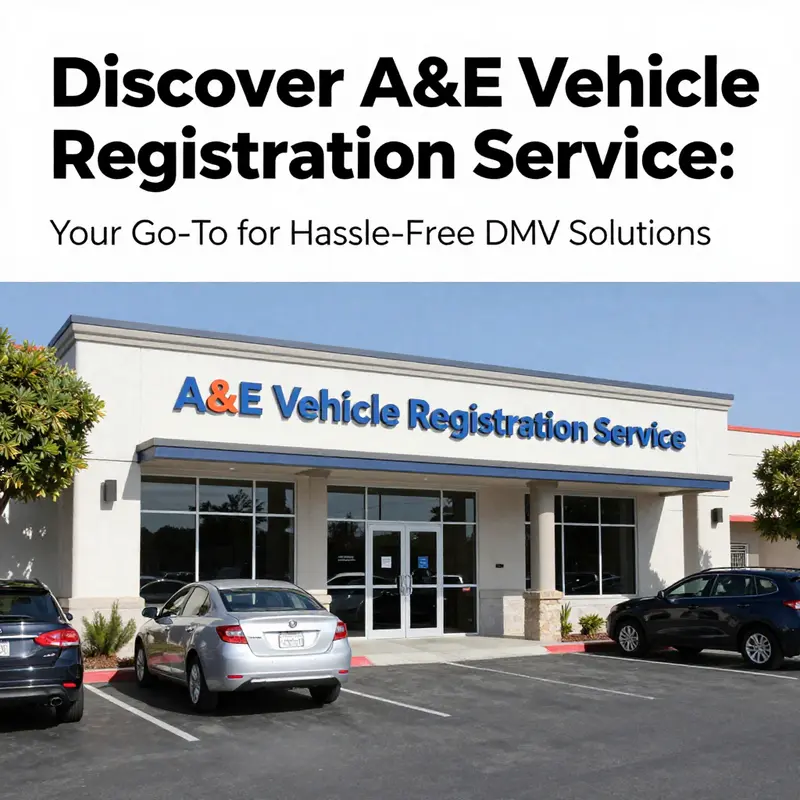
In the long arc of public administration, where long waits and tangled forms often define the user experience, a growing class of private agencies has stepped in to reframe how people interact with government services. The A&E Vehicle Registration Service in Hawthorne embodies this shift. It operates as a DMV-authorized partner, a designation that signals legitimacy while enabling a more streamlined, customer-centric approach to tasks that drivers routinely need to complete. Located at 13666 Hawthorne Boulevard, Suite 1, Hawthorne, CA 90250, this service center bills itself as a practical alternative to the main DMV office—one that promises shorter wait times and a calmer environment for people who would rather avoid the stress of waiting rooms and crowded lobbies. The everyday reality of vehicle ownership—registering a car after a purchase, renewing tags, transferring titles, replacing license plates, or obtaining a disabled parking placard—can feel like a set of bureaucratic hurdles. Yet the Hawthorne desk reshapes that experience by narrowing the gap between intent and action, turning a sometimes tedious process into something approaching efficient transaction work conducted with professional courtesy and clarity. In a region where mobility matters to businesses and households alike, the appeal of a private, specialized office that handles DMV-related tasks with practiced ease is understandable. The center’s accessibility is reinforced by its hours—Monday through Friday, 10:00 AM to 5:00 PM—though readers are reminded to call ahead, as hours can vary with demand and local scheduling. The phone line, (424) 675-2333, offers a first point of contact to confirm appointments, verify available services, and obtain any updates that may not yet reflect in printed materials or the official state portal. This small characteristic—availability of a human being on the other end of the line—can dramatically alter the perception of public-facing services, and A&E Vehicle Registration Service understands this dynamic well. The practical impact of such a center becomes most evident when considering daily realities: someone who recently bought a car and needs to register it promptly before driving it off the lot, a commuter who must renew a registration before the expiration date, or a caregiver assisting an elderly family member through the maze of paperwork. In these moments, the promise of a shorter line, a clearer process, and a friendly, knowledgeable staff can translate into real time saved and less friction in the overall journey of vehicle administration. The Hawthorne location situates the service in a neighborhood context that blends convenience with the potential for community ties to strengthen business ecosystems. The center’s operations emphasize a customer-focused approach, a trait that emerges in the way staff members engage with clients, guide them through required steps, and help troubleshoot common hiccups that can emerge from incomplete forms or missing documents. The mention of a staff member like Amy Morales within the service community underscores how private agencies in this space often depend on a blend of professional training and local goodwill to create smoother transactions. Cleanliness and order are not afterthoughts here; they are part of an intentional environment designed to reduce anxiety and support efficient processing. The experience is shaped by a sense that everything has a place: forms are organized, counters are uncluttered, and the workstations function as focused hubs where accuracy and speed coexist rather than compete. This balance—between speed and precision—is what turns a relatively narrow service catalog into a genuinely practical solution for many vehicle owners. The core offerings at A&E Vehicle Registration Service reflect the breadth of DMV tasks people encounter in everyday life. Vehicle registration renewal is a recurring necessity that can become a source of stress if pushed into a crowded public office. The Hawthorne center handles this with processes that convert what could be a months-long backlog into a matter of days, depending on the specifics of the case and the required verification steps. New vehicle registration is another critical service, enabling owners to complete the legal formalities that render a vehicle placeable on public roads without friction or delay. The issuance of license plates and decals is a tangible outcome that many drivers expect in a single, cohesive visit rather than a sequence of trips to different county offices. For individuals who require it, the center also assists in obtaining disabled person parking placards, a service that intersects with accessibility needs and the broader mission of a government service model designed to be inclusive and efficient. A key dimension of the client experience is the way staff interact with customers. The professional demeanor of the team, the responsiveness of the front desk, and the care with which applications are reviewed all contribute to a sense that the center values time as a resource. This is not merely about moving people through a room; it is about treating each application as a discrete, accountable task with a clear ownership chain. In such a setting, clients gain confidence in the process and in the people delivering it. The practical advantages extend beyond time savings. By providing a stable, predictable environment, the center helps reduce the cognitive load associated with government transactions. Clients do not have to guess what documents are required or which forms must be completed first. The staff’s role often includes verifying documentation on the spot, clarifying ambiguous questions, and guiding customers toward the correct sequence of steps. This level of support, in many ways, is what makes a third-party DMV partner credible. It also helps individuals plan more accurately, whether they are juggling work schedules, family responsibilities, or other administrative duties that accompany vehicle ownership. The experience is further enriched by the sense of reliability that comes from consistency. Regular patrons develop a shorthand with staff and become familiar with the process, which can accelerate subsequent visits. That familiar rhythm—knowing where to stand, whom to speak with, and how long a typical task might take—can transform a potentially stressful moment into a routine that feels manageable and even predictable. Yet, like any service model, this approach has to be understood in context. Private agencies operate within the legal framework of DMV authorization, and they complement public offices rather than replace them. They excel where demand for speed and convenience intersects with the serious, rule-bound nature of motor vehicle administration. This is a landscape that benefits from robust information about hours, service availability, and any changes in policy that could affect processing times. The Hawthorne location emphasizes accessibility by preserving a straightforward address, which helps residents and visitors orient themselves within a dense transportation network. The practical takeaway for readers is simple: if you need to handle vehicle registration tasks efficiently, a DMV-authorized private partner can be a reliable option worth considering, provided you verify hours, prepare documents carefully, and are mindful of any regional variations that might affect service delivery. The conversation surrounding such centers also nods to broader questions about how government services can adapt to modern expectations without compromising integrity, accuracy, or accountability. In this sense, A&E Vehicle Registration Service offers a case study in how private agencies can align with public standards while delivering a user experience that feels closer to private-sector service expectations—clean, organized, courteous, and speedy. For readers who want to explore more about the broader ecosystem of private-service DMV agencies and related guidance, the KMZ Vehicle Center blog provides a useful repository of perspectives and practical tips that can complement the experience described here. KMZ Vehicle Center blog. For those seeking the most current official information, the center’s operations align with the state’s broader DMV framework; to review official guidance and verify hours or service offerings, visit the external resource at https://www.aandevrs.com/.
Efficient Paperwork, Clear Roads: The Comprehensive Reach of A&E Vehicle Registration Service
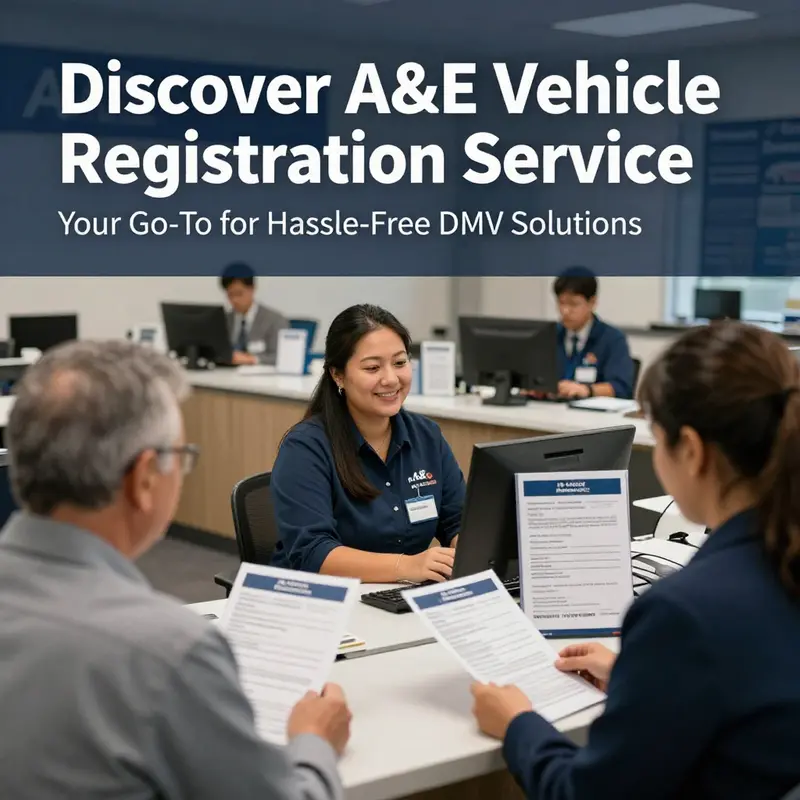
Navigating the world of vehicle ownership means maneuvering a web of forms, deadlines, and official notices. For many drivers, the process can feel like a detour through bureaucratic terrain rather than a straightforward path home. In Hawthorne, California, a DMV-authorized partner named A&E Vehicle Registration Service has built a reputation for turning that detour into a smoother, more predictable journey. Located at 13666 Hawthorne Boulevard, Suite 1, the center positions itself as a practical alternative to the larger DMV offices, promising shorter wait times and a focused, one-stop experience for core registration tasks. The physical presence of the center matters in a sprawling region where residents routinely juggle work, family, and transportation needs. The address is easy to remember for repeat visits, and the hub is designed to meet the day-to-day realities of vehicle owners who want to handle renewals, transfers, plates, and related documents without extended delays. For the people who run small fleets, ride-share vehicles, or simply manage a household of cars, the Hawthorne location becomes more than a service point; it becomes a reliable partner in keeping wheels turning and paperwork in order. The center maintains regular business hours, typically Monday through Friday, from 10:00 AM to 5:00 PM, though hours can vary with demand or special events. Prospective visitors are encouraged to call ahead to confirm availability and to inquire about any required documents or unusual service needs. The phone line is a direct channel to staff who can verify appointment windows, discuss the scope of services available on a given day, and provide guidance on the most efficient way to approach a visit. In addition to the human touch, the center’s promise rests on a curated set of services designed to address the most common registration tasks with clarity and speed. This is not a one-size-fits-all counter; it is a place where people can finalize a series of interrelated tasks in a single sitting, reducing the number of trips back and forth between offices, appointments, and paperwork stacks. The focus is on reliability, transparency, and the practical reality that most vehicle owners want to spend as little time as possible dealing with bureaucratic requirements while ensuring every form is completed correctly the first time. For anyone who values a clear, predictable path through vehicle registration chores, A&E Vehicle Registration Service presents itself as a practical option that aligns with the broader goal of keeping the road network functioning smoothly and reliably for daily life and business alike.
Among the core offerings, the center provides Vehicle Registration Renewal, which is the bread-and-butter service for many car owners. Renewal is a routine milestone that keeps tabs on license plate validity, current registration stickers, and the necessary compliance with state rules. The process typically involves presenting proof of ownership and identification, confirming current vehicle details, and updating any changes in address or insurance status that affect registration. By handling renewals on-site, the Hawthorne center eliminates the need to mail or drop documents at multiple locations, trimming the timeline and giving drivers a clear, near-immediate sense of progress. The service is particularly valuable in periods of heavy demand when main DMV offices are prone to longer lines. For residents who rely on their vehicles for commuting, school runs, or delivering goods, the ability to renew quickly translates into more predictable planning and fewer disruptions to daily routines.
The center also assists with New Vehicle Registration, a process that many buyers encounter after a purchase. Whether the vehicle is freshly imported, leased, or financed through a local dealership, registering it in the state involves several moving parts: proof of ownership, a vehicle title, purchase information, and confirmation of the VIN (Vehicle Identification Number). The personnel at A&E Vehicle Registration Service guide customers through these requirements with a clear, end-to-end approach. They help gather the necessary documents, ensure that the vehicle’s details match the records submitted to the state, and coordinate with the local DMV framework to convert a bill of sale into an official registration. In a market where the paperwork can be dense and the timelines unforgiving, having an experienced assistant in the corner reduces the risk of delays caused by missing or misformatted information. The center’s staff understand how small discrepancies—such as a mismatch in name spelling or an incorrect address—can derail an otherwise straightforward registration, so they focus on meticulous checks before submission.
Another pillar of the center’s portfolio is the Issuance of License Plates and Decals. For many drivers, a new plate or a replacement decal marks a fresh start or a security update after a plate loss or theft. The service covers the transition from purchase to display-ready plates, ensuring that the new plates are properly issued and that the accompanying decals are applied in a way that complies with state requirements. The practical value here lies not only in compliance but in the sense of continuity it provides to vehicle owners who are balancing the practicalities of daily life with the administrative duties of ownership. The ability to replace plates or update decals without a prolonged wait can be a meaningful difference for someone juggling work schedules, school pickups, and weekend commitments. The Hawthorne center’s approach emphasizes accuracy and speed, recognizing that correctly issued plates and decals contribute to smoother travel experiences and fewer future administrative hiccups.
In addition to standard registrations and plate services, the center handles Processing for Disabled Person Parking Placards. This service touches a different axis of responsibility and personal consideration, helping applicants navigate the forms and requirements needed to secure or renew parking privileges for individuals with disabilities. The process involves verifying eligibility, collecting appropriate medical documentation, and ensuring that the placards are issued in a manner consistent with state regulations. For families, caregivers, and individuals who rely on accessible parking, this service represents a practical blend of empathy and efficiency. It reflects an understanding that registration centers are not only about registering cars but about supporting access and mobility for people who manage complex daily needs. The center’s staff provide guidance on permissible uses, renewal timelines, and the steps necessary to maintain compliance, reducing the risk of delays that could otherwise complicate travel for those who already face greater logistical challenges.
Taken together, these services form a cohesive ecosystem designed to relieve some of the friction of vehicle ownership. The Hawthorne location embodies a philosophy that a well-run service center can be a genuine time-saver and a reliability anchor in a busy region. The advantage of a DMV-authorized partner is not just a matter of branding; it is about leveraging the standards and oversight of the larger regulatory framework while delivering streamlined, customer-friendly execution. This is where the practical realities of everyday life intersect with the formalities of state requirements. People are often surprised by how much smoother their experience becomes when a service center prioritizes clarity over ambiguity, checks for accuracy before submission, and offers a straightforward path to completion rather than a maze of back-and-forth. The center’s emphasis on one-stop efficiency—where renewals, new registrations, plates, decals, and placard processing can be addressed within a single visit—speaks to a broader shift in how communities approach routine bureaucracy. In a region where time is a scarce resource, such an integrated approach is not simply convenient; it is transformative for families and small businesses that rely on dependable vehicles to keep daily routines intact.
Understanding the practical steps involved also matters for those planning a visit. Prospective customers should consider calling ahead to confirm current hours and service availability. While the stated schedule is Monday through Friday from 10:00 AM to 5:00 PM, variations can occur, especially during holidays or peak periods. A quick phone check can prevent wasted trips and help staff prepare for specific requests, such as a potential plate replacement or a disabled-placard application. The Hawthorne center’s location further enhances accessibility for residents across the South Bay and neighboring communities, offering a convenient alternative to busier downtown offices where wait times can stretch into hours. For those who want to map out their visit in advance, a quick online check or a phone call provides a practical sense of the day’s workflow, enabling customers to plan appointments or determine if a walk-in option is feasible.
As with many consumer-facing services, the quality of the experience often rises or falls with how well expectations are set and how consistently those expectations are met. A&E Vehicle Registration Service appears to recognize this dynamic by aligning its service promises with everyday needs: shorter wait times, clearer guidance, and a coherent suite of offerings that reduces the need to shuttle between multiple offices. In this sense, the Hawthorne center acts as a bridge between the more expansive, sometimes impersonal DMV environment and the practical realities of modern vehicle ownership. It serves the essential functions of keeping registrations current, ensuring legal compliance, and supporting responsible navigation of the state’s regulatory landscape. For readers who want to explore similar capabilities in other neighborhoods, the broader ecosystem of vehicle registration services offers parallel models, each with their own strengths and local fits. The key takeaway is that a well-chosen service center can convert cumbersome processes into predictable routines, saving time for people who deserve to spend more of their day on the things that matter most.
For readers who are curious to explore related automotive-care perspectives and practical how-tos, there is a gateway resource that offers broader insights into ongoing vehicle maintenance, ownership logistics, and the sometimes overlooked intersections between car care and administrative tasks. You can visit the KMZ Vehicle Center blog for practical guidance and reader-friendly explanations that complement the registration experience. This additional context helps connect how maintaining a vehicle’s performance and keeping its legal paperwork in order work in tandem to support reliable, safe, and efficient driving. And for those seeking the most authoritative, up-to-date information about official procedures and requirements, the external resource linked to the authoritative governing body of these services provides the current standards and updates that guide every interaction at centers like A&E Vehicle Registration Service.
In the end, the value of a service like this rests on more than the speed with which a form is stamped. It rests on a dependable, transparent process that respects the time and circumstances of each driver. The Hawthorne center demonstrates how a focused, customer-centric approach can transform routine administrative tasks into a smoother part of the journey from purchase to possession to proper registration. It’s not merely about meeting minimum requirements; it’s about delivering a stable, predictable experience that motorists can rely on as part of their daily lives. And when that reliability is achieved, the road ahead looks less daunting and more navigable, one well-handled form at a time.
External resource: For official guidelines and updates on registration requirements, refer to the center’s governing framework and current procedures at https://www.aevrs.com. For readers seeking additional practical automotive insights and guidance, the KMZ Vehicle Center blog can provide useful context and guidance, including broader maintenance and ownership topics that complement the registration process: KMZ Vehicle Center blog.
Speed, Compliance, and Customer Care: Operational Essentials of a DMV-Authorized Vehicle Registration Partner in Hawthorne
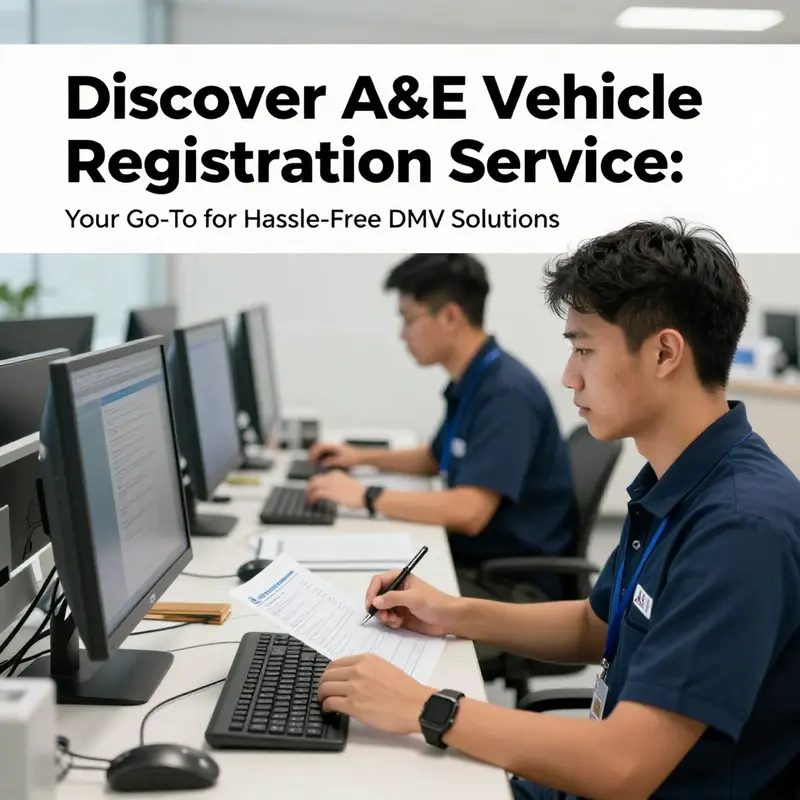
In Hawthorne, a streamlined routine unfolds not far from the main DMV offices. A modest storefront on 13666 Hawthorne Boulevard, Suite 1, serves as a DMV-authorized partner, a place where registration renewals, title transfers, and license plate replacements move with efficiency that many customers begin to notice the moment they approach the door. The location is chosen not only for accessibility but for the smoother, less congested flow it can offer compared with larger government facilities. The experience is built around a simple premise: quicker transactions without sacrificing accuracy or regulatory compliance. The service window becomes a lens through which everyday vehicle ownership—renewals, transfers, replacements—meets the practical demands of modern life, where time matters and reliable processing matters more.
From the outside, the center presents a familiar, approachable face. Inside, the work unfolds with a quiet rhythm. The staff, trained under California’s DMV guidelines, are oriented toward a predictable sequence of steps that reduces improvised delays. The staff’s competence—and their ability to explain the why behind required documents—lends confidence to customers who might otherwise feel overwhelmed by the maze of forms and reminders that characterize vehicle administration. The center’s operational ethos centers on precision and expediency: verify the documents, confirm the vehicle and owner information, process the payment, and finalize the submission in a manner that keeps the customer moving rather than stalled in a queue. When customers leave with a smile and a receipt that proves their business was completed correctly, the result is a tangible indication of a well-tuned system.
A key factor in this efficiency is the deliberate alignment with DMV standards. As a licensed third-party service provider in California, the Hawthorne operation adheres to the same regulatory framework that governs state offices. That compliance is not merely a formality; it is the backbone of trust customers rely on when they choose a partner for critical tasks like title transfers or plate replacements. The staff’s knowledge of the rules surrounding proof of ownership, residency, and identity verification translates into fewer rejections or follow-up visits. The result is a smoother journey for customers who arrive with a bundle of documents that might otherwise provoke doubt and anxiety. In this environment, accuracy is not an optional extra; it is a prerequisite that enables the whole service to proceed with clarity and pace.
The operational flow mirrors the needs of real people who balance busy schedules with the occasional, essential vehicle-related task. The center offers a clear menu of services—vehicle registration renewals, title transfers, and license plate replacements—each with its own set of requirements and timelines. Yet the real value lies in how those services are delivered: a process designed to minimize back-and-forth, with staff who can guide customers through the exact documents needed for their particular case. This is particularly important for title transfers, where the alignment of seller and buyer information, lien details, and parceling of fees demands careful coordination. The team’s ability to reconcile these elements quickly contributes to shorter wait times, setting this Hawthorne location apart from longer DMV queues and reducing stress for people who might be visiting during a lunch break or after a day’s work.
The human element is essential to the center’s narrative of efficiency. A professional, courteous demeanor from staff members helps maintain a steady pace even when demand spikes. The work environment values confidentiality and accuracy just as much as speed, which means customers can trust that sensitive information—such as vehicle titles and personal identification—will be handled with care. The center’s reputation for thoughtful service is reinforced by recognizable team members who bring a consistent standard of care to every transaction. For instance, the staff’s approach to customer interactions—polite, patient explanations, and clear next steps—helps demystify processes that can feel opaque at a large agency. In turn, customers are more likely to come prepared with the right documents and to ask precise questions, further lubricating the operation’s efficiency.
Part of the efficiency comes from how the center manages time. Hours are set to accommodate both walk-ins and appointments, offering flexibility for a range of customers. Open Monday through Friday from 10:00 a.m. to 5:00 p.m., the schedule reflects a balance between service availability and the need to maintain a stable workload that staff can manage without sacrificing accuracy. The option to book ahead helps reduce peak-time congestion, while walk-ins still retain a practical path for urgent or unexpected needs. Because hours may vary, a quick call ahead is a pragmatic step for customers who want to confirm availability or to verify any changes in service scope. The phone line—listed publicly as a direct point of contact—serves as a simple conduit for questions about specific documents, processing times, or the status of a given case. The ability to confirm hours, required forms, and anticipated wait times before visiting speaks to a broader commitment to transparency and reliability.
The Hawthorne center’s suite of services naturally leads to a streamlined experience for residents who might face obstacles at larger, more congested offices. Vehicle registration renewals typically involve confirming the vehicle’s current status, the owner’s information, and any changes in liability or coverage that could affect the registration. Title transfers require careful attention to ownership documentation, lien indicators, and the correct matching of names and addresses. License plate replacements involve identifying the correct plate type, whether standard or specialized, and ensuring that the new plate is properly recorded in the state system. Across these tasks, the center relies on a combination of standardized forms, clerical reviews, and electronic submissions that connect to the DMV’s core systems. The result is that a transaction can be completed more quickly than one might experience at a general-service DMV office, especially for routine renewals and straightforward transfers.
From a customer perspective, the experience at this partner location is often characterized by clarity and practical assistance. The staff’s dedication to efficient processing is accompanied by a thoughtful attention to questions and concerns. When a form triggers a doubt about whether it has been filled correctly or whether a supporting document is acceptable, the staff member can provide immediate guidance, reducing the likelihood of a return visit. This direct accessibility also extends to the facility’s design: a welcoming reception, organized workstations, and visible signage that helps direct customers to the right service path. Even small details—the way a person is greeted, the cadence with which the information is explained, the availability of a quiet space for discussions of sensitive documents—contribute to the overall impression of a service environment that respects customers’ time and dignity.
In terms of broader context, customers seeking a deeper understanding of how third-party DMV providers fit within the state’s regulatory framework can explore related resources that discuss the policy environment and the role of authorized partners. This ecosystem reflects a deliberate balance between accessibility and accountability, ensuring that residents have convenient options without compromising the integrity of vehicle records. The Hawthorne center embodies this balance through its professional staff, its adherence to standards, and its commitment to transparent service options. It stands as a concrete example of how a well-managed partner site can complement the work of traditional DMV offices by absorbing routine tasks and allowing the state system to focus on more complex cases.
For individuals curious about practical, real-world sources that capture ongoing experiences around vehicle registration and title processing, there is value in exploring the broader content available through related vehicle maintenance and ownership resources. The KMZ Vehicle Center Blog provides context and insights that readers can consult to better understand the day-to-day realities of vehicle care and administration. You can visit the blog for a broader perspective on how owners navigate maintenance, regulatory updates, and service experiences that intersect with vehicle registration timelines. KMZ Vehicle Center Blog
In sum, the Hawthorne partner location demonstrates how a DMV-authorized facility can deliver speed without compromising compliance. The blend of accessible hours, clear service pathways, trained staff, and a practical approach to document handling creates a model where efficiency and reliability reinforce one another. It is a reminder that, behind a seemingly simple task like renewing a registration or transferring a title, there is a carefully designed operational framework. That framework prioritizes accuracy, respect for the customer’s time, and strict adherence to regulatory standards, all of which contribute to a smoother experience for vehicle owners who need timely and dependable service.
External resources that frame this model within a broader regulatory context can be found on official state pages that describe how third-party providers operate within the DMV ecosystem. For a regulatory overview, see the official DMV resource on third-party service providers: https://www.dmv.ca.gov/wps/wcm/connect/dmv/site/locations/vehicle-registration-services/
Beyond the Window: Elevating the DMV Experience at A&E Vehicle Registration Service (Hawthorne)
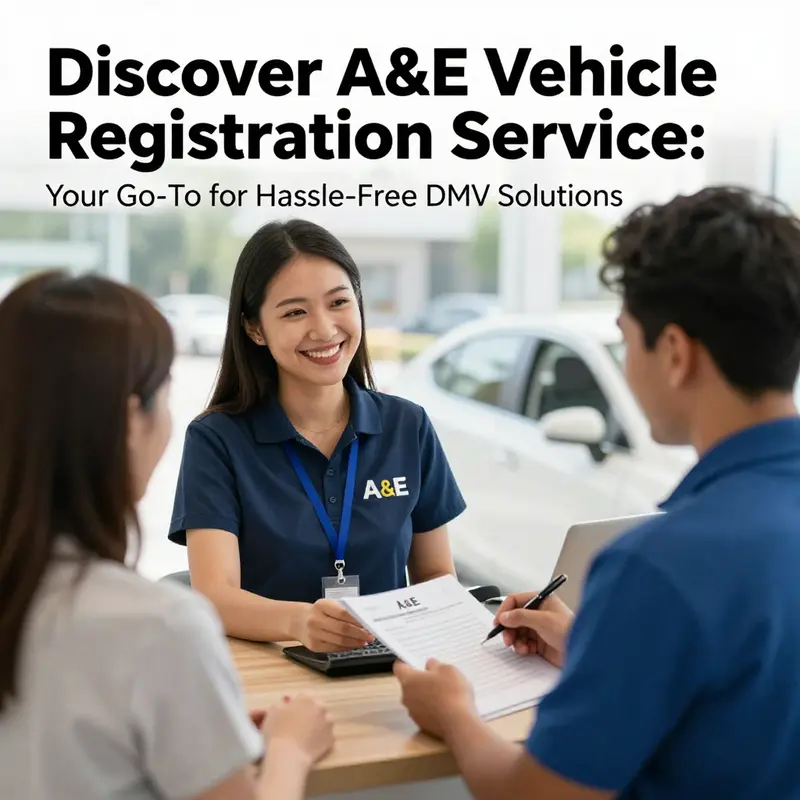
Across a landscape where government services can feel opaque, A&E Vehicle Registration Service in Hawthorne offers a human-centered alternative. Located at 13666 Hawthorne Boulevard, Suite 1, Hawthorne, CA 90250, this DMV-authorized partner focuses on clarity, accessibility, and respectful guidance throughout vehicle registration, title transfers, and license plate replacements. Staff members explain requirements step by step, answer questions without judgment, and aim to shorten wait times without sacrificing accuracy. The center’s hours—Monday through Friday, 10:00 AM to 5:00 PM, with occasional variations—signal a service designed to fit real schedules. A quick call ahead can align visits with staff availability, reducing the need for follow-up trips.
From the moment visitors walk in, the emphasis is on people-first service paired with efficient processes. The environment is calm, the process is predictable, and the team unpacks complex forms in plain language. Testimonials often highlight staff like Amy, whose patient, knowledgeable handling of paperwork creates trust and sets a benchmark for how public-facing services can feel: “Amy is truly great to deal with… A&E/Amy is really good at what she does.” This combination of warmth and competence reframes a routine task as a collaborative journey rather than a hurdle.
The Hawthorne center consolidates several common tasks: registration renewal, title transfers, and license plate replacements. By guiding customers through data verification, insurance checks, and form prefill in a single workflow, the operation minimizes errors and redundant steps. Shorter wait times than traditional DMV offices are a meaningful improvement for anyone balancing work, family, and errands. The staff’s proactive communication—explaining what documents are needed and why—reduces surprises and builds a sense of civic efficacy that endures beyond a single visit.
This model blends human care with practical efficiency, aligning with broader expectations for customer experience in regulated domains. It demonstrates that public services can be navigable, respectful, and dependable when teams focus on clarity, transparency, and real-time problem solving. For readers curious about how design choices impact the driver and vehicle ownership journey, the store’s approach offers a compelling case study in user-centered public service.
The Lifeline of Local Readiness: How an A&E Vehicle Registration Service Shapes Emergency Response, Safety, and Community Trust
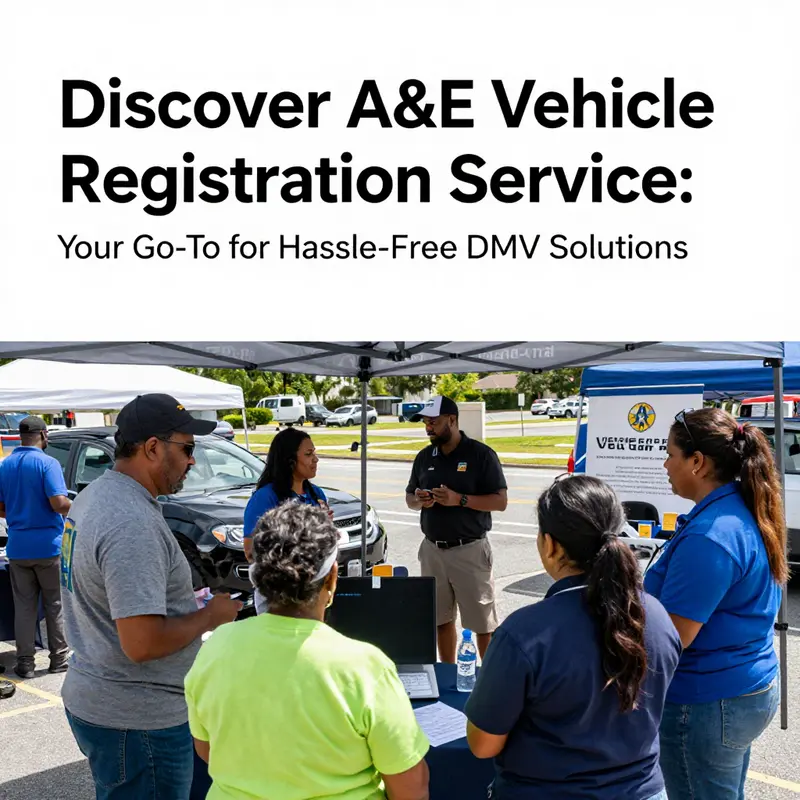
The A&E Vehicle Registration Service in Hawthorne is more than a curbside checkpoint for plates and renewals. It is a strategic node in a broader system of local preparedness that links mobility, safety, and public accountability. When a city contemplates the readiness of its emergency response infrastructure, it often focuses on dispatch centers, training programs, and hospital networks. Yet a robust vehicle registration service—authorized and specialized—operates quietly at the intersection where policy, practice, and daily street realities meet. In this light, the Hawthorne center, located at 13666 Hawthorne Boulevard, Suite 1, serves not merely as a registration desk but as a dependable enabler of rapid, reliable, and coordinated emergency medical response. Its role matters because every document filed, every registration renewed, and every title transfer processed can influence how swiftly an ambulance can be dispatched, how securely a fleet is maintained, and how transparently the public perceives the readiness of its emergency services.
To understand the strategic value of such a service, one must look at the connective tissue between vehicle management and life-saving outcomes. Emergency responders move through a landscape of real-time constraints: traffic conditions, changing incident locations, and the urgent need to know that every vehicle is properly identified and legally prepared for service. A well-managed vehicle registration system supports this reality by ensuring that emergency vehicles are accurately registered, uniquely identifiable, and equipped with up-to-date documentation. When fleet operators can rely on a centralized center to verify registrations and issue timely renewals, they reduce the administrative lag that can otherwise delay readiness checks. This is especially critical for fleets that operate across jurisdictions or rely on rapid redeployment during mass casualty incidents or regional drills. In such contexts, the capacity to confirm a vehicle’s identity, its owner’s authority, and the status of required inspections translates into faster, more trustworthy dispatch decisions. Real-time or near-real-time data integration—linking registration records with fleet management software—emerges as a practical embodiment of this principle. Dispatchers who know the exact status of every vehicle in a responding network can allocate resources with greater confidence, spare units for other calls, and direct available ambulances to the nearest appropriate unit. The result is not merely operational efficiency; it is a visible enhancement in the chain of survival for those in urgent need.
Safety and compliance lie at the heart of the registration process as a cornerstone of public protection. Modern automotive safety depends on a disciplined culture of regular inspections, up-to-date certifications, and maintenance continuity. A DMV-authorized partner that understands the unique demands of emergency vehicles can enforce safety standards that minimize the risk of mechanical failures during critical missions. This is more than bureaucratic ritual; it is a protective layer that guards responders and patients alike. The reliability of an emergency vehicle rests on systems and components that must be authenticated, tested, and certified. When a registration center validates that a unit’s compliance documents are current, that records exist for routine safety checks, and that any recalls or service bulletins have been addressed, the authority of the vehicle to operate becomes a tangible, auditable fact. In a field where a single missed inspection can disrupt a response or compromise safety, the emphasis on disciplined record-keeping and timely renewal is a direct contributor to mission success. The digital transformation of automotive safety, including sensorization, telemetry, and electronic documentation, reinforces this dynamic. A well-designed registration service does not resist these advances; it embraces them, enabling a seamless flow of verified safety information from the moment a vehicle enters the fleet registry to the moment it powers into service on a call.
Beyond safety, there is a practical dimension tied to supply chain stability and resource coordination. The emergency fleet increasingly relies on a diverse mix of conventional and alternative powertrains, including electric vehicles, which introduce new maintenance and parts considerations. The integrity of the supply chain—especially for batteries, control modules, and specialized components—depends on authentic, certified parts that meet strict performance criteria. A robust registration system can be part of the verification process for components, serial numbers, and certifications that accompany replacements and repairs. This alignment is crucial for ensuring that electric emergency vehicles remain ready without compromising safety. It also intersects with broader concerns about counterfeit or substandard parts, a risk that is amplified in critical-use vehicles. In this sense, the registration center acts as a safeguard for the procurement and maintenance ecosystem, helping to preserve operational readiness across the fleet while reinforcing public trust that the engines, brakes, and electrical systems performing life-saving work are built to exacting standards.
Public trust and accountability emerge as the social consequence of a transparent, well-functioning vehicle registration framework. When a community sees that emergency vehicles are properly registered, inspected, and monitored, it reinforces a narrative of responsibility and reliability. Citizens gain confidence that the local authorities are committed to safety and that the systems supporting emergency response are continuously monitored and improved. This transparency is not about bureaucratic optics; it is about the tangible assurance that when a call goes out, the response function has been maintained with diligence and honesty. The acts of renewing licenses, updating titles, and replacing plates—though ordinary in isolation—build a shared sense of public stewardship when performed consistently for the vehicles that carry life-saving capabilities. In turn, this trust reduces anxiety during crises and fosters community resilience, as residents know that emergency services operate within a framework designed to protect public safety at every step.
The Hawthorne center’s presence also speaks to the broader principle of accessibility in public services. A local, convenient registration option reduces delays and barriers for fleet operators who need timely verifications and documentation. For emergency responders and private contractors that support citywide readiness, convenient hours and predictable service rhythms help maintain continuity in operations. The center’s hours—Monday through Friday, 10:00 AM to 5:00 PM, with the caveat that times may vary—reflect an attempt to balance the exigencies of frontline work with the administrative cadence required to keep fleets compliant. While a single point of contact cannot solve every logistical challenge, it can become a trusted pivot around which the entire emergency mobility network orbits. In practice, this means fewer unnecessary trips, more predictable service windows, and a faster path from paperwork to pavement for the vehicles that will carry responders into the field when real-world emergencies arise.
In this narrative, the registration center is part of a larger ecosystem of mobility and public safety. It interfaces with fleet managers, maintenance crews, and procurement officers who work across municipal, county, and private-stakeholder boundaries. The integration of vehicle management practices with safety standards, supply chain integrity, and accountability mechanisms creates a resilient platform from which emergency services can operate with confidence. It also offers a model for other communities seeking to strengthen their own readiness through localized, DMV-aligned partnerships. The strategic value is not merely in the sum of its administrative activities; it lies in how those activities shape faster dispatch decisions, safer vehicle performance, and an environment of trust that helps residents recognize and support the work of their emergency responders.
As one considers the practical implications, it becomes clear that the A&E Vehicle Registration Service offers more than a service outcome. It embodies a philosophy of readiness that aligns administrative rigor with frontline necessity. The center’s work—ensuring that every vehicle’s identity, status, and compliance are current—translates into a culture of preparedness that communities can measure in minutes and lives saved. For readers seeking further perspectives on the broader landscape of vehicle care, fleet reliability, and maintenance culture, the KMZ Vehicle Center blog provides resources and discussion that complement this chapter’s themes. KMZ Vehicle Center blog
In the end, the strategic importance of a dedicated A&E vehicle registration service in a local community rests on three interlocking pillars: rapid, reliable access to up-to-date vehicle documentation; rigorous safety and compliance oversight that reduces risk during critical missions; and transparent governance that strengthens public trust and accountability. When these elements come together at a single, accessible center, they enable emergency services to move more swiftly, operate more safely, and carry a higher level of public confidence into every shift. The Hawthorne center thus stands as a practical embodiment of a larger commitment: to ensure that the vehicles that carry life-saving capabilities are as ready as the people who drive them, every day, in every call, across the community they serve.
For readers who want to situate these ideas within a wider framework of automotive safety and innovation, external perspectives provide valuable context. See the automotive standards and innovation resources offered by the British Standards Institution for a broader understanding of how safety, digital transformation, and regulation intersect in modern transportation: https://www.bsigroup.com/en-GB/industries/automotive/.
Final thoughts
A&E Vehicle Registration Service exemplifies the ideal partner for local vehicle owners, small business operators, and those navigating the world of vehicle registration. By providing a comprehensive suite of services combined with exceptional customer experiences and a strong commitment to the community, A&E stands out as a beacon of efficiency and support. Whether you need to renew your registration, transfer a title, or replace a license plate, their dedicated team is ready to assist promptly. Engaging with A&E not only simplifies your vehicle management needs but also strengthens local ties, fostering a supportive community for all. Trust A&E Vehicle Registration Service to enhance your registration experience, and discover the difference a dedicated service can make.