
Maintaining a hybrid vehicle requires specialized knowledge and timing to ensure both safety and performance. As hybrid vehicles combine complex electric and gasoline powertrains, knowing when and how technicians can service them is essential for private car owners, used car buyers and sellers, as well as small business fleet operators. This article will explore key aspects of hybrid vehicle maintenance including routine maintenance, safety protocols for technicians, timing for advanced diagnostics and repairs, technician certification requirements, and manufacturer recommendations. Each chapter will provide important insights, ensuring that you can make informed decisions about your hybrid vehicle’s maintenance needs.
Timing the Touchpoint: When a Technician Can Safely Service a Hybrid Vehicle and Why Certification Matters
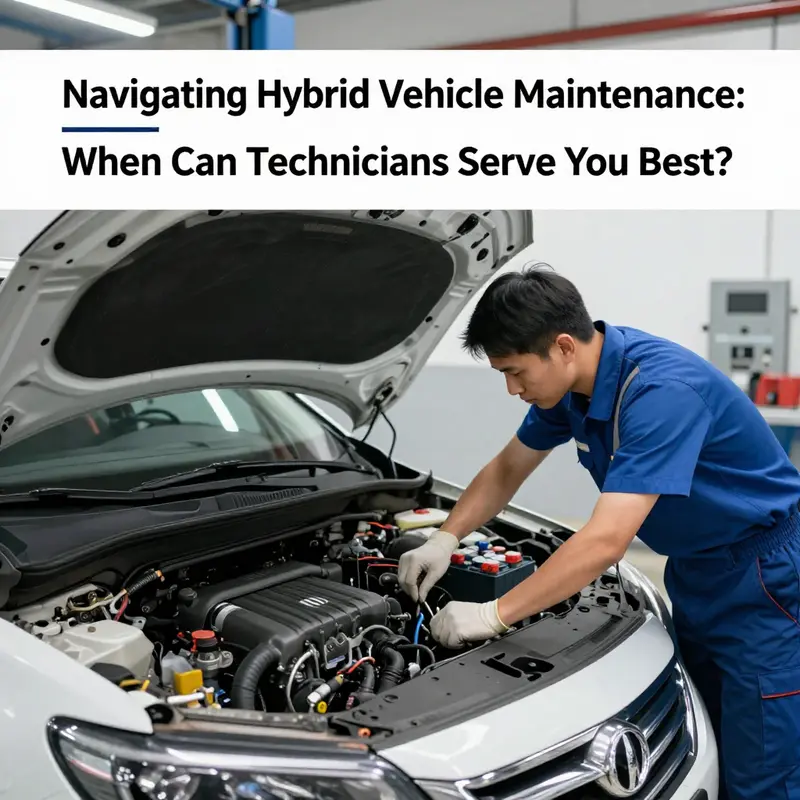
Hybrid vehicles sit at the intersection of two powertrains, the electric drive and the petrol engine, sharing components yet demanding distinct care. The central question in routine care is deceptively simple: when can a technician service a hybrid vehicle? The answer unfolds as a careful balance between the vehicle’s maintenance requirements and the specialized safety protocols that govern high-voltage systems. In practice, routine maintenance tasks—things like oil changes, tire rotations, brake inspections, and battery health checks—can be addressed similarly to those for conventional vehicles, provided that the technician follows the manufacturer’s procedures for hybrids. The critical distinction lies in who is authorized to work on the car’s high-voltage equipment and how that work is conducted. The hybrid powertrain hides a powerful electrical system behind its safety shield, and any service that touches that system must be performed under strict safety discipline by personnel trained to handle it. This is not merely a matter of best practice; it is a question of safety, warranty adherence, and long-term vehicle reliability.
The safety framework around high-voltage systems hinges on proper de-energization. Technicians working on these vehicles are required to complete hybrid-specific training that certifies their understanding of the electrical architecture, high-voltage components, and the sequence of steps needed to neutralize a live system before any service begins. In most cases, the first step is to disconnect the high-voltage battery and implement a lockout, ensuring that the system cannot re-energize while maintenance is in progress. This lockout is not a cosmetic precaution; it is a functional safeguard that prevents stored energy from reactivating unexpectedly during work. The manufacturers’ service manuals—operating manuals for hybrid vehicles—detail these procedures in a way that untrained hands cannot safely replicate. Firms that perform hybrid work routinely invest in specialized tools and OEM diagnostic software that enable them to communicate with the vehicle’s battery management system, regenerative braking controls, and power electronics without compromising safety.
For routine maintenance, the practical rule is straightforward: any qualified mechanic can perform foundational tasks on a hybrid, provided they are comfortable with the added stepshybrid maintenance demands. Yet there is a caveat. While an oil change or a tire rotation may fall within the skill set of many technicians, hybrid-specific components or the steps required for a thorough inspection of the braking system, the cooling circuitry around the battery, or the high-voltage rail connectors may call for the manufacturer’s recommended procedures. The goal is not merely to service but to preserve the integrity of the vehicle’s hybrid system and its warranty. That means technicians should, whenever possible, adhere to OEM-recommended intervals and procedures, and when uncertain, defer to a hybrid-certified technician who can confirm that the service aligns with the vehicle’s design and software expectations.
The reality in many shops is that hybrid certification represents more than a badge. It signals a formal, documented understanding of how to approach both routine maintenance and more complex diagnostics. Basic services—such as checking oil levels, inspecting the brakes for wear, and rotating tires—can be performed by a qualified technician who understands the importance of preserving the hybrid’s cooling and lubrication regimes. However, when a service involves the high-voltage battery, the battery cooling loop, power electronics, or the vehicle’s battery management software, certification becomes essential. The certification program ensures the technician can interpret fault codes that relate to the battery’s state of health or the powertrain’s energy management with accuracy, minimizing the risk of misdiagnosis that could lead to unnecessary part replacement or, worse, injury during the repair.
Consumer confidence rests on the consistency of diagnostic practices across service centers. Certified technicians are expected to stay current with evolving technology, which means ongoing training and recertification as new hybrid architectures emerge and as OEM software updates change the way systems communicate. The certification process often includes hands-on training, examinations, and access to OEM diagnostic tools that are not available to the general public. This ecosystem of training and tooling helps ensure that routine maintenance is not merely a checklist activity but a disciplined procedure executed with an informed understanding of how the hybrid system interacts with the vehicle’s safety nets and alarm protocols. It also helps ensure that warranty coverage remains intact, because many automakers require documentation of technician certification for hybrid services to qualify for warranty support.
For owners, this framework translates into practical advice with tangible outcomes. If your vehicle is under warranty or you have concerns about the longevity of the hybrid drive, prioritize service through a facility that clearly advertises hybrid certification and access to OEM diagnostic software. Ask for proof of certification and for a maintenance schedule that aligns with the vehicle’s manuals. In some cases, the dealership network will offer hybrid-specific training programs and tools that a general independent shop cannot replicate. The presence of this specialized training is a strong indicator that the technicians understand how to handle not just the routine, but also the nuanced procedures for interventions that may involve the battery or the high-voltage system. A best-practice approach is to plan routine visits with a technician who can perform both the inspections and the validation of the battery’s health in a way that preserves the system’s integrity while avoiding unnecessary risk to the technician.
The broader narrative of when a tech can service a hybrid also includes the importance of clear communication between the vehicle owner and the service provider. The exact scope of work should be defined before any procedure begins. Owners should articulate what they perceive as a concern—strange noises, coolant leaks around the battery, a warning light related to the energy system, or merely routine maintenance—and ask the shop to confirm whether the work will be performed under hybrid-specific procedures. Transparent conversations help ensure that the service plan complies with the vehicle’s design philosophy and that the chosen technician has the right credentials for the tasks at hand. It also helps managers and customers alike track what maintenance was performed and what software checks were run, which is essential when evaluating the vehicle in future service visits or when assessing warranty coverage.
In the end, the timing of service for a hybrid vehicle hinges on two intertwined factors: the maintenance need and the technician’s qualification. Routine maintenance can proceed when a qualified mechanic follows hybrid-specific guidelines, but any task that engages high-voltage components should be reserved for a technician with current hybrid certification. This is not a restriction designed to complicate ownership; it is a guarantee that the vehicle’s dual-powertrain remains safe, reliable, and warrantied. The careful, certified handling of high-voltage systems reduces the risk of electrical injury, prevents inadvertent damage to sensitive battery management electronics, and preserves the nuanced balance between energy efficiency and performance that hybrid systems are engineered to deliver. As manufacturers continually refine safety protocols and as vehicles evolve, the role of certification becomes even more central to when and how a technician services a hybrid.
For those exploring the practical path to informed maintenance, consider consulting sources that outline the expectations and requirements of hybrid service. A steady intake of updated guidance from official manuals and training programs helps ensure that the answer to “when can a technician service a hybrid vehicle?” remains precise for your model and its evolving software as well as for the shop you choose. If you want a snapshot of the broader conversation about ongoing learning and shop readiness, you can see how our own team frames these standards in accessible terms on our blog. KMZVehicleCenter blog offers insights that connect the maintenance schedule to real-world scenarios and practical considerations that owners face when scheduling routine visits. This kind of knowledge helps owners approach service with confidence, knowing the technician behind the lift has the right credentials and the right procedures at hand.
Beyond the day-to-day questions, the pathway to reliable hybrid service rests on a combination of formal certification, manufacturer-provided guidelines, and the disciplined application of safety procedures. The high-voltage landscape is not a barrier to care, but a defined boundary that trained technicians navigate with precision. This nuanced approach to maintenance ensures hybrid vehicles stay efficient, safe, and dependable, and it frames maintenance timing not as a single decision, but as an ongoing collaboration between the vehicle owner, the service professional, and the brand’s procedural standards. As the industry continues to advance, owners can count on the principle that routine maintenance is most effectively performed by operators who are certified to handle the hybrid’s distinctive electrical ecosystem while still honoring the fundamentals of traditional maintenance that keep engines and drivetrains healthy.
External resources and official guidance should be consulted to complement this chapter’s perspective. For official guidance on safe and effective hybrid vehicle maintenance, refer to the manufacturer’s service manual or contact a certified dealership. A representative resource that documents the required standards for technicians working with hybrid systems can be found here: https://www.honda.com/vehicles/hybrid-vehicle-service-certification.
Guardrails of Power: Rigorous Safety Protocols for Technicians Servicing Hybrid Vehicles
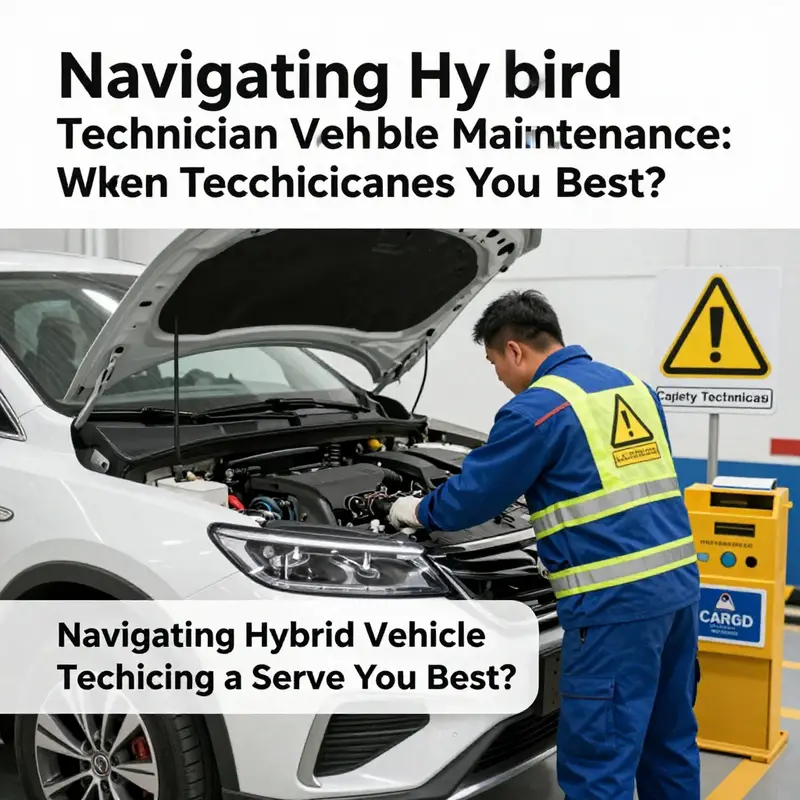
Safety is the core burden and the quiet ally of any hybrid vehicle service. The moment a technician steps into the bay, the high-voltage system transforms routine maintenance into a careful choreography designed to prevent harm and preserve equipment. Hybrid powertrains combine an electric drive with a gasoline engine, and the traction battery that underpins both performance and efficiency can store energy far beyond what a conventional vehicle does. The risk is not abstract: a lapse in procedure can lead to electric shock, arc flash, or a cascade of unintended system re-energization. Yet this risk is not an obstacle to service. It is a clear mandate for discipline, training, and a culture of safety that starts with the plan and ends with verification. When technicians follow manufacturer procedures, wear appropriate PPE, and respect the boundaries of their qualifications, hybrid vehicles can be serviced with the same reliability and precision that customers expect from any modern maintenance program.
To frame a practical approach, consider the overarching principle: all work on the high-voltage system must be conducted by personnel who have received manufacturer-approved training and who follow a documented sequence that isolates energy sources before any service begins. Routine items like oil changes, brake inspections, and tire rotations remain part of the maintenance repertoire, but even these tasks can involve hybrid-specific components and procedures that standard, non-specialized mechanics might misinterpret. The difference lies not in the frequency of service but in the complexity and risk profile of the powertrain. In other words, a vehicle’s daily upkeep may be performed by qualified staff, but the most sensitive tasks require certified technicians who can navigate the high-voltage landscape with a disciplined approach that aligns with OEM guidelines and regulatory standards.
A foundational element of safe servicing is the formal shutdown and isolation of the high-voltage system. This is where the service culture must begin before a single wrench turns. Manufacturer procedures typically require isolating the high-voltage battery and ensuring the system is physically disconnected from the vehicle’s energy sources. The maintenance plug, often referred to as the maintenance switch or service plug, is removed and the system is locked out or isolated according to an established sequence. A waiting period—commonly around 10 minutes—follows to allow capacitors to discharge fully. This interval is not a guess: it is a critical window during which stored energy is bled down to safe levels. The sequence is designed to prevent any residual energy from re-energizing the system mid-service, which could otherwise lead to dangerous conditions or damage to sensitive components.
Equally essential is the proper selection and use of personal protective equipment. Technicians working near high-voltage components must wear insulated gloves rated for high voltage, flame-resistant clothing, and safety glasses. In many cases arc-rated clothing and, where necessary, face protection and hood systems are advisable to shield skin from potential arc flash. The PPE is not merely a barrier; it is a calibrated system that corresponds to the energy levels technicians may encounter in a given task. Tools used in proximity to the HV system should be insulated and rated for high-voltage work, and equipment should be inspected for integrity before use. A competent safety regime also includes a prohibition on jewelry and other conductive accessories, which can become conductive paths in a fault or arc scenario.
The integrity of the safety program rests on the competence of the personnel. Only technicians who have completed manufacturer-approved training and who demonstrate proficiency in both safety procedures and diagnostic methods are entrusted with high-voltage work. This is not a negotiable criterion. It reflects the potentially severe consequences of improper handling, including the risk of severe injury or fatality. The broader maintenance staff may handle routine tasks, but more advanced diagnostics—such as battery management verification, high-voltage system diagnostics, or power electronics repairs—must be performed by those with explicit certification. In practice, many service networks invest in comprehensive, hands-on training that combines classroom theory with real-time system monitoring and supervised diagnostics. This ensures that technicians not only know the safe way to operate the tools but also understand diagnostic strategies and how to interpret data from the vehicle’s own monitoring systems before interacting with the hardware.
Regulatory guidance provides a formal guardrail that complements OEM procedures. The electrical work around hybrid vehicles is governed by standards that emphasize energy isolation and worker protection. A central tenet is lockout/tagout (LOTO) procedures, which ensure that energy sources remain isolated during maintenance. This approach reduces the risk of accidental re-energization and provides a clear, auditable process for teams. Within this framework, qualified personnel follow a defined sequence for de-energizing, testing, and re-energizing the system, with checks and balances that help prevent human error. The NFPA standards—particularly those relating to electrical safety—offer detailed guidance on how to structure these practices in a way that aligns with both automotive work and broader electrical safety norms. The aim is not to impose additional hesitation but to formalize steps that have proven effective in reducing incidents, while keeping the work aligned with manufacturers’ expectations and local regulations.
In practice, the servicing workflow blends these strands into a seamless narrative. Before any disassembly or component access, the technician confirms the service scope, reviews OEM manuals, and verifies that the vehicle is in a safe state to begin. The high-voltage system is isolated in accordance with the manufacturer’s process, the service plug is removed, and the energy is allowed to dissipate for the prescribed duration. The technician then checks, re-checks, and confirms that the system remains de-energized using appropriate verification methods—this may involve specialized voltage detectors or manufacturer-provided verification tools. Only after these confirmations does the service begin in earnest. During the work, PPE is worn consistently, and tools are selected to minimize the risk of inadvertent contact with live components. The environment is prepared to reduce slips and missteps—surfaces are clean, lighting is adequate, and any potential ignition sources are controlled. If diagnosis or repair involves high-voltage battery modules or power electronics, the technician adheres to added safeguards and procedural adaptations that the OEM describes for those procedures.
Another dimension of safety is the obligation to maintain a clear, professional boundary between routine maintenance and high-energy work. The vehicle’s powertrain is a dynamic, integrated system. Even seemingly straightforward tasks can interact with energy pathways in unexpected ways. Because of this interdependence, continuous learning and competence are essential. Training programs frequently include scenarios that mirror real-world hazards, such as a partial re-energization sequence or a fault that could cause a sudden rise in voltage during service. The objective is not only to prevent harm but also to ensure that the diagnostic process itself does not become a source of risk. Technicians learn to anticipate how a fault might propagate through the system, identify where energy could be trapped, and apply the correct sequence to minimize exposure. This level of awareness improves not only safety but service quality, because a well-trained technician can diagnose more accurately and avoid unnecessary disassembly that might introduce new hazards or compromise battery integrity.
Finally, the safety framework is iterative and continuously reinforced by a culture of communication and accountability. Service teams hold pre-work briefings to confirm the scope, identify potential hazards, and assign roles. They document each step, recording the confirmation of energy isolation and the PPE worn, which provides traceability and helps with continuous improvement. The emphasis is on prevention, not reaction—anticipating where mistakes could occur and implementing robust control measures before they can cause harm. As vehicles become more sophisticated, the safety landscape will inevitably evolve, with new procedures, tools, and training modules. The core principle remains the same: treat the high-voltage system with respect, apply the manufacturer’s procedures precisely, and equip every technician with the knowledge and gear needed to perform their duties safely.
For readers seeking practical guidance that anchors this discussion in a broader maintenance framework, the KMZ Vehicle Center blog offers ongoing context on how to manage regular maintenance while staying aligned with safety and best practices. You can explore related topics and stay informed about the latest maintenance approaches at the following resource: KMZ Vehicle Center blog.
Further reading on electrical safety standards and best practices is available through the industry-wide standards body. For comprehensive guidance on safe electrical work in automotive contexts, see the NFPA 70E resource and its explanations of lockout/tagout and related safety protocols: https://www.nfpa.org/Code-Updates/NFPA-70E.
null
null
Certified Hands, Safe Servicing: When a Technician Is Qualified to Service a Hybrid Vehicle
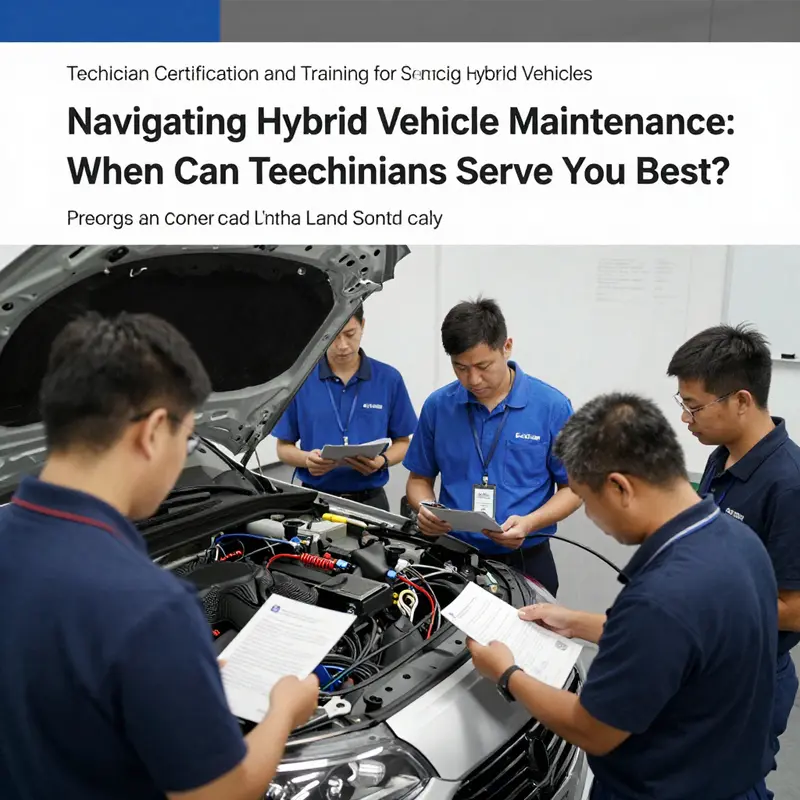
To understand when a technician can service a hybrid vehicle, it helps to distinguish between routine care and work that touches the high-voltage heart of the vehicle. A hybrid s powertrain blends an electric motor with a gasoline engine, backed by a high-voltage battery and sophisticated power electronics. That combination brings remarkable efficiency, but it also introduces safety and procedural complexities that simply do not appear in conventional internal combustion engine vehicles. The key question is when a technician is allowed to perform service, and the answer is nuanced: routine maintenance can occur with the right qualifications, but work on high-voltage systems, battery management, and power electronics demands dedicated manufacturer level training and certification. This layered reality shapes who can and should work on hybrid vehicles, and it emphasizes the importance of verifying credentials before any service begins.
At the most fundamental level, routine maintenance such as oil changes, brake inspections, tire rotations, and fluid top-offs remains within the scope of qualified mechanics. These tasks may not engage the high-voltage components directly, but hybrid systems still interact with standard maintenance procedures. For example, some routine checks must respect the vehicle s design and manufacturer recommendations, because hybrid powertrains have unique cooling requirements, special brake systems that use regenerative braking, and sensor networks that can differ from those in traditional ICE vehicles. In practice, a technician who is well-versed in hybrid service can perform these tasks, provided they follow the manufacturer s published procedures and use the correct tools. The overarching principle is that maintenance should be performed by technicians who understand the vehicle s hybrid configuration and who follow OEM guidelines to avoid disturbing any hybrid-specific systems during service.
As the work becomes more intricate diagnostics that require access to high-voltage data, or repairs involving the battery, power electronics, or regenerative braking systems, the line tightens. High-voltage safety is not optional; it is a core requirement. The typical safety framework begins with recognizing that the high-voltage battery and associated circuitry can present serious risks if mishandled. To mitigate those risks, technicians must deactivate the electrical system according to strict procedures, disconnect the high-voltage battery, and, in many cases, lockout or tagout the power source before service proceeds. This is not a casual precaution; it is a formal, documented step that protects the technician and the vehicle s occupants. Vehicles manufactured for today s electrified fleets are designed with multiple layers of protection and diagnostics, but those protections rely on the technician s adherence to the correct sequence of de-energization, verification, and re-energization. When these steps are not followed, the risk of arc flash, electric shock, or component damage increases dramatically, which is why such work is reserved for individuals who have completed hybrid-specific training and earned recognized credentials.
The distinction between routine maintenance and advanced work also guides decisions about who should perform the service. Routine tasks such as oil changes, filter replacements, brake pad inspections, and wheel alignments are often within reach for qualified mechanics who are familiar with the hybrid s design and the OEM s service notes. However, advanced diagnostics and repairs such as battery management, battery cooling systems, traction power electronics, and the calibration of regenerative braking are typically restricted to technicians who hold manufacturer-certified credentials. These credentials signal that the technician received dedicated instruction on the vehicle s energy storage system, its control software, and the precise diagnostic procedures required to interpret high-voltage data without compromising safety or performance. The time and investment required to maintain these competencies are substantial, but they are essential for preserving both the reliability and the safety of electrified powertrains.
For consumers, the practical takeaway is simple: when a vehicle is due for care, verify that the shop can deliver the appropriate level of service for the task at hand. If the service involves high-voltage components, battery management, or power electronics, ask about the technician s hybrid certification and the shop s access to OEM diagnostic software. Independent shops with a strong hybrid program may perform many routine tasks well, but OEM-specific procedures and the ability to interact with the car s diagnostic ecosystem are critical for addressing the more complex issues that can arise in electrified vehicles. A shop should be able to demonstrate that its technicians have completed manufacturer-recognized training and that its diagnostic tools are compatible with the vehicle s software. If you are uncertain, scheduling maintenance or diagnostics at a certified dealership or an authorized service center can reduce risk and ensure that the job is carried out according to the vehicle s official guidelines.
In guiding this decision, manufacturers publish service manuals that define what can be done in a given service visit and what must be escalated to a certified technician. These manuals are not mere references; they are the operating instructions the service team follows to maintain warranty coverage, ensure safety, and sustain the vehicle s performance. They commonly outline safe handling of the high-voltage system, the proper sequence for battery disconnection and re-energization, and the exact diagnostic steps for battery management and power electronics. Even routine tasks can have manufacturer-specific steps that, if overlooked, could compromise the vehicle s energy management or regenerative braking function. This is why many dealerships and authorized service centers invest in hybrid-specific training programs, tools, and access to OEM diagnostic software. The result is not a single moment of certification but a programmatic, ongoing commitment to staying current with evolving technology and safety standards.
A robust certification pathway is a cornerstone of this ecosystem. It signals that a technician has moved beyond basic mechanical skills to master the unique safety, diagnostic, and system integration challenges posed by electrified vehicles. While the precise names of programs may vary by region and manufacturer, the core competencies typically include high-voltage safety, electrical system diagnostics, battery technology fundamentals, thermal management, and the calibration of hybrid control systems. These competencies enable technicians to interpret error codes that involve energy flow, assess the health of the battery pack, and implement the appropriate service interventions without risking cross-system interference. For technicians, completing such training is less about a single test and more about a continuing process of learning and re-validation as new battery chemistries, power electronics, and control strategies enter the market.
For vehicle owners, this landscape translates into practical expectations during service visits. Look for a shop that can clearly articulate which tasks require high-voltage training and which can be completed through routine maintenance pathways. Ask to see credentials and to confirm that the technician has current, manufacturer-recognized certification for hybrid systems. It is also wise to inquire whether the shop uses OEM diagnostic software, as this access is often essential for accurate fault diagnosis and safe reassembly. A transparent conversation about qualifications, procedures, and the scope of work can help avoid misunderstandings and ensure the service meets both safety standards and the vehicle s performance goals. When customers understand that some work hinges on specialized expertise, they are more likely to choose service providers who maintain rigorous training programs and who partner with certified technicians for anything beyond basic maintenance.
To connect this understanding with everyday practice, consider how routine maintenance plans interact with hybrid-specific requirements. Routine care should align with OEM schedules, which frequently incorporate insights about how the vehicle s energy management and thermal systems behave across different drive cycles. In some cases, a careful mechanic can perform routine tasks while observing the hybrid system s integration with the vehicle s computer controls. For more on how to think about maintenance intervals in light of a vehicle s hybrid architecture, you can explore the discussion on optimal oil change intervals and time versus mileage, which provides a practical look at balancing maintenance timing with hybrid operation.
Ultimately, the question of when a technician can service a hybrid vehicle centers on safety, certification, and the scope of work. Routine maintenance may be within reach for qualified technicians who adhere to OEM procedures and use the correct equipment. More complex tasks that involve high voltage or advanced battery systems require that the technician hold a formal, manufacturer-recognized certification and have access to OEM diagnostic tools. This framework protects the technician, the vehicle, and its occupants, while ensuring that the hybrid system continues to operate as designed a delicate balance of safety, expertise, and trust.
As the automotive landscape continues to evolve toward electrification, the importance of properly trained technicians will only grow. The best service experiences come from shops that invest in ongoing hybrid training, maintain current certifications, and partner with manufacturers to stay aligned with the latest safety protocols and diagnostic workflows. Customers benefit when they can confirm that a technician has completed a rigorous program focused on high-voltage safety, battery management, and hybrid system diagnostics, rather than relying on general mechanical skill alone. In this environment, trust is built on verifiable credentials, access to the right software, and a demonstrated commitment to the standards that keep hybrid vehicles safe and reliable on the road.
External resource for official certification standards and guidance: https://www.ase.com/certification/hybrid-electric-vehicle-certification
Safeguarding Power and Precision: Manufacturer Guidance on When Hybrids Should Be Serviced
Hybrid vehicles merge electric propulsion with an internal combustion engine, a pairing that delivers efficiency and performance in equal measure. But it also creates a maintenance landscape that is both familiar and distinct from conventional cars. For a technician, the question of when to service a hybrid is not simply a matter of mileage or calendar; it is a matter of following a manufacturer’s maintenance philosophy, safety protocols, and diagnostic roadmaps. This is where the guidance from automakers matters most. They typically structure service intervals around a blend of time and mileage, with explicit checks of the hybrid system that spans the high-voltage battery, the electric motor and power electronics, and the cooling system that keeps the entire package from overheating. The logic behind these intervals is not arbitrary. It reflects the realities of thermal cycling, battery aging, fluid degradation, and the unique failure modes that can surface in a hybrid’s dual-drive architecture. In practice, many manufacturers advise a formal inspection window at roughly every 30,000 to 50,000 miles, or every three to five years, whichever comes first. Within that window, the high-voltage system and its coolant circuits get the focused attention that keeps the vehicle safe and reliable. The exact procedures, of course, are model-specific and documented in the official service manual and technical bulletins. Those documents guide the technician through model-accurate steps, from sensor checks and software validation to coolant replacement and component integrity tests. The intent is clear: ensure that critical elements such as the high-voltage battery and the battery cooling system remain stable, responsive, and within safe operating limits. When the manufacturer points to these milestones, it is also signaling a broader principle: hybrid maintenance is not a one-size-fits-all affair. The vehicle’s energy management software, cooling architecture, and battery chemistry are tuned to each model, and the service workflow must mirror that specificity. This is why advanced diagnostics and repairs—battery management recalibration, regenerative braking system tuning, or power electronics diagnostics—are typically reserved for technicians who hold certification from the vehicle’s maker. These certifications are not merely ceremonial; they verify that the technician has been trained to follow the exact procedures required to work on high-voltage systems. They also ensure that the proper OEM diagnostic software and tools are used, because aftermarket equipment may not provide the depth or accuracy required to interpret battery health metrics, inverter temperatures, or motor torque profiles. A safe and effective hybrid service relies on a chain of safeguards. First, the high-voltage system must be properly deactivated before any work begins. Lockout/tagout procedures, standardized by manufacturers, prevent accidental re-energization during maintenance. Second, technicians must use manufacturer-approved tools and follow procedure checklists that capture model-specific nuances, such as battery state-of-charge thresholds, coolant pressures, and the sequence for disconnecting and reconnecting high-voltage components. Third, the cooling and thermal management subsystems demand careful attention. The literature from manufacturers consistently emphasizes the use of pre-mixed coolant. This recommendation is grounded in a simple but vital truth: achieving the correct coolant concentration is essential for protecting the battery, heat exchangers, and seals. When technicians mix coolants manually, even slight deviations from the optimal ratio can impair cooling efficiency, promote corrosion, or accelerate component wear. By using a pre-mixed formulation, shops minimize the risk of mismixing, support predictable thermal performance, and extend the life of the hybrid’s sensitive electronics. Beyond fluids, a thorough hybrid service includes validating the health of the battery’s charge-discharge cycles, monitoring the cooling system’s performance under load, and confirming that the inverter and electronics maintain proper thermal and electrical boundaries. Routine maintenance—such as oil changes, brake inspections, and tire rotations—remains essential, but the specifics for hybrid components may differ from those of a conventional vehicle. Brake wear, for instance, is often reduced due to regenerative braking, yet the brake system still requires careful inspection for pad life, ABS readiness, and hydraulic integrity. The vehicle’s data stream, accessed through OEM software, provides a rich picture of component health, even in the absence of visible symptoms. This is one reason the manufacturer’s service manual or official bulletins are the primary sources of truth for service intervals and procedures. It is also why many dealerships and authorized service centers maintain hybrid-specific training programs. A technician who completes manufacturer-certified hybrid training gains not only theoretical knowledge but practical familiarity with model-specific service paths, torque specifications, connector handling procedures, and the correct sequence for high-voltage work. When a shop advertises hybrid competence, it is prudent to verify that certification and the availability of OEM diagnostic software are in place. For consumers, choosing a service provider means looking beyond the surface of a generic “hybrid capable” claim. Confirm that the technician is trained to the vehicle’s manufacturer standard, has access to the correct diagnostic suite, and follows the exact steps outlined in the service manual for that model. The value of this diligence becomes especially evident when addressing advanced topics such as battery health validation, software updates to powertrain control modules, and cooling-system servicing that must preserve battery longevity and performance. If you want to see how routine and advanced maintenance norms intersect in practice, consider the broader framework of interval-based servicing. The typical cadence—every 30,000 to 50,000 miles or every three to five years—aims to catch wear before it becomes a fault, to refresh fluids, and to verify that the energy system is operating within its designed thermal envelope. Within that cadence, reminders to check the high-voltage battery’s health, to validate coolant quality and flow, and to confirm the integrity of high-voltage wiring are not throwaway tasks. They are the guardrails that keep the hybrid system dependable, safe, and efficient for daily use and for the road trips that demand reliable power delivery across varied climates and driving patterns. For routine maintenance items, manufacturers often permit qualified, non-certified mechanics to perform standard tasks, provided they follow manufacturer-recommended procedures and use the correct service information. The boundary between routine upkeep and more specialized work hinges on the safety-sensitive components. When the service involves high-voltage elements or battery management, the technician’s certification becomes non-negotiable. This is a clear distinction within the hybrid service ecosystem: routine checks can be done with standard tooling, while high-voltage interventions require the protective discipline of certification, lockout procedures, and OEM diagnostic capacity. As you consider where to take a hybrid for its next visit, you can lean on the fact that official guidance exists to protect both people and powertrain. The model-specific service manual is the map, the high-voltage safety procedures are the locks, and the OEM software is the compass that keeps diagnostics precise. In short, manufacturers are explicit about when to service a hybrid and who should perform the work. They base it on a combination of timing, mileage, and the health of the high-voltage system, and they insist on trained hands that can navigate the dual-drive architecture without compromising safety or reliability. Routine maintenance remains a shared responsibility between vehicle owner and technician, but high-voltage work, battery management tasks, and power electronics diagnostics belong to technicians who have earned manufacturer certification and access to the appropriate tooling. For those seeking to learn more about routine maintenance intervals and the interplay between time and mileage, practical guidance is available in industry-focused resources that discuss oil-change timing and service windows. See the discussion on optimal oil-change intervals for time versus mileage to contextualize how a hybrid’s maintenance cadence fits into the broader vehicle-care plan. Optimal Oil Change Intervals: Time vs. Mileage. While this chapter centers on manufacturer-driven timing and safety, the practical takeaway remains consistent: hybrids demand disciplined, model-specific care delivered by trained hands working within a documented procedure and with the right tools. For those seeking official, model-specific guidance, consult the vehicle manufacturer’s service manual or contact a certified dealership to ensure that every service step aligns with the intended performance and safety outcomes. External reference: Toyota’s Hybrid Vehicle Service Guidelines outline the high-voltage safety steps, required tools, and diagnostic approaches that underpin the servicing of modern hybrids. https://www.toyota.com/tech/hybrid-service
Final thoughts
Understanding when technicians can service hybrid vehicles is crucial for ensuring their optimal performance and safety. The diverse aspects of maintenance—from routine checks to advanced repairs—demand specialized training and adherence to safety protocols. By prioritizing certified technicians and following manufacturer recommendations, you can enhance the longevity and reliability of your hybrid vehicle. Empowered with this knowledge, you’re better equipped to seek out the right services for your hybrid, ensuring peace of mind and a well-maintained ride.