
For private car owners, used car buyers and sellers, and small business fleet operators, understanding service timelines is crucial. The time it takes to service a vehicle can greatly impact daily life and business operations. This article will explore various aspects of vehicle servicing timings, from basic maintenance to complex diagnostics, outlining what can influence these timeframes. By the end, you’ll have a clearer picture of what to expect when scheduling your vehicle’s service, thus enhancing your overall automotive experience.
null

null
Diagnostics in the Spotlight: Reading Timelines When Vehicle Service Requires Deep Troubleshooting
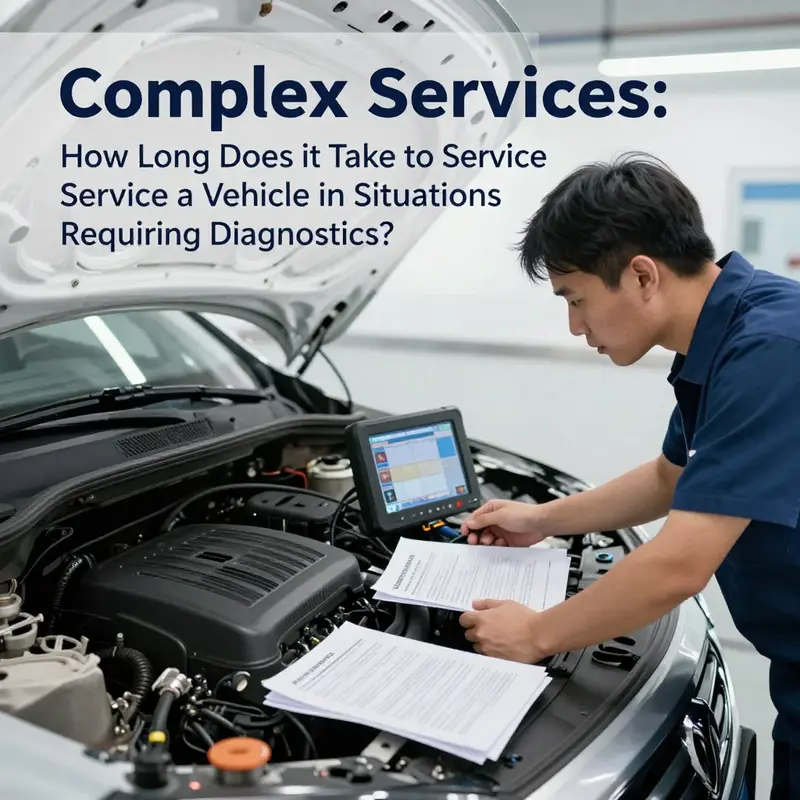
When a vehicle arrives with a mystery to solve, the clock starts ticking in earnest, but the exact duration is rarely a single straight line from diagnosis to fix. The time it takes to service a vehicle in situations that demand diagnostics is a spectrum shaped by the problem’s complexity, the tools at hand, and the technician’s experience. A simple diagnostic check to confirm a straightforward fault can be brief, often slipping into the half-hour to one-hour range. But as soon as the issue touches multiple systems, involves intermittent behavior, or relies on modern electronics and software, the timeline stretches beyond a single morning. The human element matters, too. A seasoned technician who can read data logs fast, recognize patterns, and cross-check against manufacturer service bulletins will often move more quickly through a first pass. Conversely, a newer technician might take a bit longer as they verify each step and document findings for later reference. This isn’t a process that can be rushed by guesswork; the goal is to avoid false conclusions that would lead to repeat visits and recurring faults.
Diagnostics, at their core, are a disciplined method of discovery. They begin with information gathering: what the owner describes, what the dashboard lights show, and whether the symptom is consistent or sporadic. Then comes data collection. Modern vehicles are living computers with dozens of sensors feeding data into one or more control units. A simple fault code can act as a breadcrumb, but it rarely tells the whole story. Technicians will often retrieve freeze-frame data, view live sensor readings, and compare current values to factory specifications. This phase can take a little while, particularly if the vehicle’s fault does not produce a consistent readout or if several codes appear that seem related but point to different root causes.
The time spent in diagnosis can stretch quickly when the issue is less a single failed part and more a system-wide condition. Consider a minor sensor malfunction that triggers the check engine light. If the fault is isolated and easily reproducible, a quick test drive, a few sensor readings, and a targeted repair can close the case in a few hours. But when the sensor data hints at a larger problem—perhaps a compromised wiring harness, a suspect control unit, or a hybrid or electric powertrain component—the diagnostic process becomes a multi-layered investigation. In these situations technicians may perform electrical tests that require specialized equipment, run extensive software scans, and perform cross-functional checks to verify that the fault is not just a symptom of another issue elsewhere in the vehicle’s network. The clock then moves not just in hours but in a learning curve where each new data point informs the next step.
The role of diagnostic complexity cannot be overstated. ASE-compliant workflows—the industry standard for methodical troubleshooting—often describe a multi-stage approach. The first stage is data logging and quick verification. If indisputable, a repair can be executed, and the job moves toward completion. If not, the team progresses to deeper component testing, which may involve removing parts for inspection, bench testing, or substituting known-good components to isolate the fault. In the most challenging cases, the process includes cross-referencing manufacturer service bulletins and collaboration between technicians to confirm that a suspected fault is not the product of a software ambiguity or a recent engineering bulletin that alters the expected behavior of a subsystem.
For today’s vehicles, several specific scenarios illustrate how diagnostic time can vary. A minor sensor malfunction that lights up the dashboard may be resolved in a few hours once the sensor is pinpointed and replaced. But when the fault involves a sophisticated ECU problem, a wiring harness fault, or issues within hybrid or electric vehicle systems, the diagnostic runway lengthens considerably. These problems often require advanced equipment, precise calibration, and sometimes reprogramming of software to restore proper function. In such cases, the service bay can resemble a laboratory, with technicians performing controlled tests, validating results, and ensuring that the repair does not set off a cascade of related issues across interconnected modules.
One modern wrinkle is the need for software updates, calibrations, or reprogramming after a repair. Vehicles equipped with ADAS and other advanced safety and driver-assist features demand post-repair recalibration to return to factory specification. This rework adds not only time but a new category of checks: alignment, sensor field of view, and cross-sensor data fusion must be validated under real-world conditions. The duration here is highly variable. A routine calibration might take an hour or two, while a complex reprogramming cycle, followed by extended test drives to confirm stability, could stretch into a full workday. The exact sequencing depends on the vehicle’s architecture, the software version, and the availability of the correct calibration targets and test routes.
Part availability and access to parts play a practical role in diagnostic timelines as well. A diagnostic plan often assumes that any faulty component is recoverable on the spot. When a part must be ordered, the clock not only stops waiting for shipment but also often shifts toward scheduling a subsequent visit that may occur days later. In some cases, a temporary workaround may be implemented to keep the vehicle operable while awaiting the replacement, but any such approach requires careful risk assessment and explicit guidance from the technician. For this reason, an accurate diagnostic estimate at the outset almost always includes a contingency for part delivery if a repair depends on a component that is not stocked in the shop.
The cadence of these diagnostics also depends on the technician’s access to data and the shop’s workflow. Modern diagnostic protocols emphasize a data-driven approach. The ability to log data over time, compare it against baseline values, and cross-reference with service bulletins helps narrow down root causes more efficiently. In practice, this means that even when two vehicles present with seemingly identical symptoms, the path to resolution can diverge. A vehicle with intermittent electrical faults may require longer observation periods to catch the fault in action, whereas a car with a single clear code that maps directly to a component in a given subsystem can be resolved much faster. This variability is a core reason why shop time estimates are described as ranges rather than fixed numbers.
From a customer communication standpoint, recognizing and explaining this variability is essential. A straightforward oil change has a predictable tempo, but diagnostics introduce a range that reflects the uncertainties inherent in troubleshooting. A shop may quote a basic diagnostic window of 1 hour for a simple fault, with a longer window for complex scenarios. The more complex the issue, the more important it becomes to describe what is being tested, what data is being collected, and what the probable paths look like. This transparency helps set realistic expectations and reduces the chance of miscommunication when the final bill arrives or when a second visit is necessary. It also underscores the value of skilled diagnosticians who can navigate the grey zones where symptoms do not point to a single culprit.
The timing conversation then naturally ties back to broader maintenance planning. Routine services that do not require deep diagnostics—oil changes, fluid top-offs, and tire rotations—tend to be straightforward and predictable. When diagnostics are involved, the expectation shifts toward flexibility and careful scheduling. A customer who understands that a check engine light does not always imply a quick fix will be better prepared to plan around a diagnostic day or a diagnostic-and-repair sequence. In many shops, the sequence might begin with a diagnostic assessment to confirm the scope, followed by a repair in a later session if parts or specialized labor are needed. The result is a service experience that, while potentially longer, aims for accuracy and reliability rather than speed at the expense of quality.
For those who want to explore practical considerations beyond the mechanics, the blog community around vehicle care often shares timelines and decision points that can illuminate what to expect. If you’re seeking more context on how diagnostics fit into overall maintenance planning, you can explore the KMZ Vehicle Center blog for broader maintenance guidance and scheduling perspectives. This resource can help owners align expectations with realistic timelines, especially when a vehicle’s condition requires more than a single appointment. KMZ Vehicle Center blog.
Ultimately, the diagnostic journey is a careful balance between rapid fault identification and thorough verification. Short, crisp checks have their place, but when the fault hides in the architecture of a vehicle’s electronic ecosystem, patience becomes part of the repair itself. The goal is not to rush to a fix but to arrive at a durable solution that restores performance, safety, and reliability. With modern vehicles growing more complex every year, a well-communicated diagnostic plan that respects the uncertainty inherent in troubleshooting is a mark of professional service. And while the clock may sometimes stretch into longer days, the outcome—clarity about the fault, a dependable repair, and a roadmap to avoid recurrence—offers greater value than a hurried, uncertain repair.
External reference for broader industry context: https://www.autoblog.com/2024/06/19/diagnostic-repair-time-vehicle/.
Behind the Clock: How Model, Make, and Condition Shape Vehicle Service Time
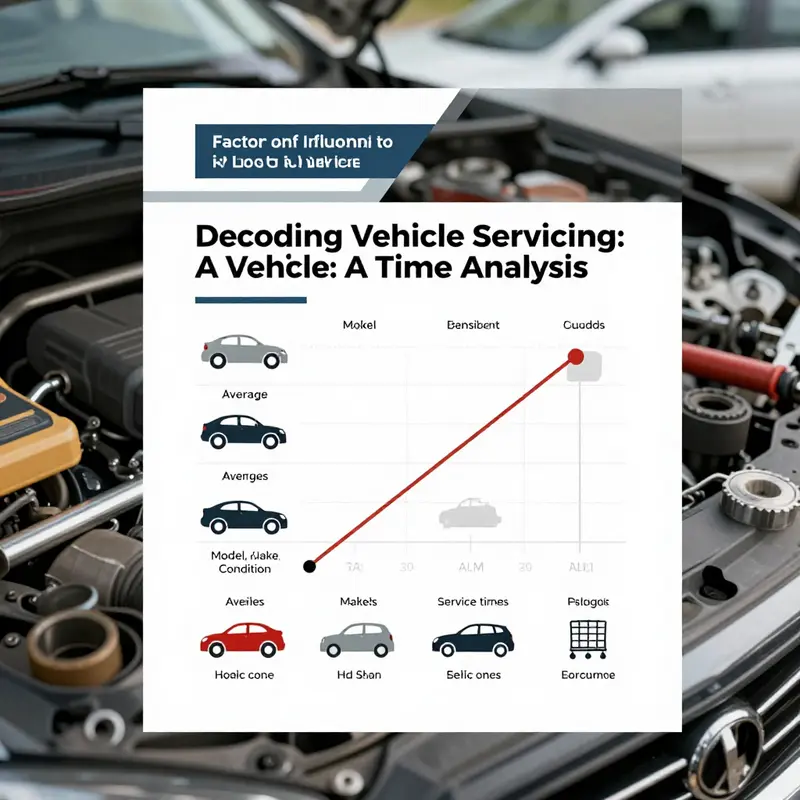
The duration of a vehicle service is rarely a single fixed number. It bends with the type of service you need, the engineering and layout of the car, and the condition it’s in when you bring it in. Knowing what to expect helps you plan, budget, and avoid surprises on the day the shop calls with a time estimate. At its core, routine maintenance—like an oil change and basic fluid top-offs—remains the quickest path to keeping a car healthy. A typical oil change and filter replacement, if nothing else is required, often clocks in around 30 minutes to an hour. For more comprehensive but still common maintenance items, such as a tire rotation or a brake inspection, the clock often sits in that 1 to 2 hour window. These are the ranges most shops use as a baseline, but a few caveats around the make, model, and condition of your vehicle can push the total time in either direction.
The most immediate driver of any service duration is the job itself. If the work is straightforward and the car’s system design is simple, the technician can move quickly through the routine checks and replacements. But when the service involves complex electronics, multi-parameter diagnostics, or parts that require special handling, the time climbs. A full diagnostic check, especially when the vehicle has intermittent trouble or a warning light that requires deeper investigation, can span two to four hours or more. And if the repair plan includes component replacement with back-ordered parts, or if a preexisting issue is discovered that necessitates additional work, the entire process may spill into a full day. The lesson is practical: estimates are useful, but the clock can drift once the technician uncovering a hidden snag begins work.
The specific model and make of a vehicle further shape how long a service takes. Vehicles that sit at the upper end of the spectrum—those with intricate electronic ecosystems, advanced driver-assistance features, or performance-oriented engineering—tend to demand more time and skilled labor. The complexity of the systems requires specialized tools and the expertise to navigate manufacturer-specific procedures. In contrast, standard, mass-market models with conventional engine layouts and well-documented maintenance routines typically progress more quickly, especially for routine tasks. It is not just the engine that drives this difference; the entire vehicle architecture matters—from how the intake and exhaust are managed to how the braking system and sensors are integrated with the control unit. Parts availability also plays a role. Even for a routine service, if a required component must be sourced from a dealer and limited in stock, the technician may have to pause the job to await delivery. In practical terms, a routine service on a standard sedan might stay near the lower end of the time range, while the same service on a higher-end or more technologically dense model could approach the upper end or exceed it.
The condition of the vehicle is another influential factor that can reshape the expected timeline. An older car that has accumulated wear and tear across many miles can demand more thorough inspections and a broader sweep of checks. Rusted fasteners, degraded hoses, or corroded electrical connectors can extend even routine tasks as technicians take care to avoid forcing parts, document unusual wear, and ensure safety margins. Conversely, a well-maintained, younger vehicle with clean components and a documented service history may proceed with fewer surprises, letting technicians stay closer to the anticipated duration. This is why, when you bring in a car with a long service history and relatively low mileage for its age, you can often expect a smoother, faster execution than a car that has seen little consistent maintenance yet has begun to show wear in several subsystems.
Concrete timeframes help translate this complexity into actionable planning. A general, modern sedan performing an oil change and filter replacement is typically around 30 minutes, assuming standard conditions and no ancillary work. A more involved routine like a brake inspection—especially if pad wear is detected or if you request a quick recap of the braking system’s state—may extend the visit toward the one- to two-hour mark. For a compact SUV or a mid-size crossover that uses more electronics and has a larger service envelope, the same oil change plus a diagnostic check could realistically land in the two-hour territory. A high-end or luxury-class vehicle with multiple electronic control units, advanced sensors, or a more intricate engine management approach commonly nudges the service duration into the two-hour range, and sometimes beyond, if recalibration, software updates, or system reinitialization is required after components or belts are replaced. It is helpful to recognize that the service’s duration is a function of both the job’s intrinsic complexity and the car’s particular setup, rather than a single universal standard.
From a practical standpoint, the shop’s process can also add time even before the wrench starts turning. A thorough pre-service inspection and a diagnostic scan may reveal conditions that were not apparent at intake. A detailed vehicle health check often becomes a prerequisite to ensure that no related issue is left untreated, which is especially important for older vehicles or ones with a poor maintenance cadence. If such a check uncovers a need for additional work—like replacing worn fluids, belts, or hoses—that work adds to the total duration. In many cases, the technician will present an initial estimate based on a quick visual and the service type, then refine that estimate after the diagnostic phase and any necessary parts are sourced. This practice can help manage expectations and avoid overpromising a time frame that later proves unrealistic.
Another practical layer concerns the availability of parts and the shop’s workflow. If the service requires a part that must be ordered from a supplier, the completion time can be extended by the time needed to receive that part and schedule the next available slot for the repair. Even when parts are on hand, the need to coordinate multiple steps—draining fluids, rechecking torque specs, re-bleeding a braking system, or recalibrating sensors—adds layers of coordination. The era of highly integrated vehicle systems means that some tasks are not purely mechanical; they require software updates or programming sessions that can temporarily stretch the clock. For a driver planning a service, a useful mental model is to compute the base time for the requested service, then add a conservative buffer for diagnostics, parts procurement, and potential delays caused by the car’s condition. This approach reduces the risk of being blindsided by a late start, an extended diagnostic, or a part-needs-delay that cannot be avoided.
And while a straightforward oil change on a standard vehicle can be a reliable short visit, the broader question of how long it takes to service a car is most accurate when anchored to context. The numbers—from around 30 minutes for a simple oil change to several hours for more elaborate packages—are meaningful only when paired with the vehicle’s model, its feature set, and its maintenance history. For readers who want a practical touchstone, consider the oil-change interval piece that sits at the intersection of time and mileage. The guidance there helps determine not just when to service, but how long you should reasonably expect that service to take given the vehicle’s typical usage and wear. You can explore that context in more depth here: Optimal Oil Change Intervals: Time vs Mileage.
Ultimately, the best way to translate these dynamics into real-world planning is candid dialogue with your mechanic. Ask for a written estimate that distinguishes the base service time from the diagnostic portion, and request a notification if additional work becomes necessary. If you have a calendar constraint, share it up front and discuss whether a courtesy vehicle or a shuttle is available. The goal is to avoid a situation in which you arrive for a short maintenance visit and leave with a longer, unplanned repair plan. By embracing a clear, communicative approach, you can ensure your vehicle is serviced efficiently without compromising safety or reliability. As you navigate the service journey, remember that the clock is not merely ticking toward a finite moment; it’s an indicator of the vehicle’s health, the complexity of its systems, and the care an experienced technician brings to keeping you safely on the road.
External resources can provide additional perspectives on how long maintenance can take and why variations occur. For a broader look at maintenance timing and related factors, see AutoZone’s detailed guide on car maintenance duration, which complements the practical estimates discussed here: https://www.autozone.com/repair-resources/maintenance-and-repair/tips-for-keeping-your-car-in-top-condition#how-long-does-car-maintenance-take.
Time on the Shop Floor: Understanding How Long Servicing Modern Vehicles with Advanced Technology Really Takes
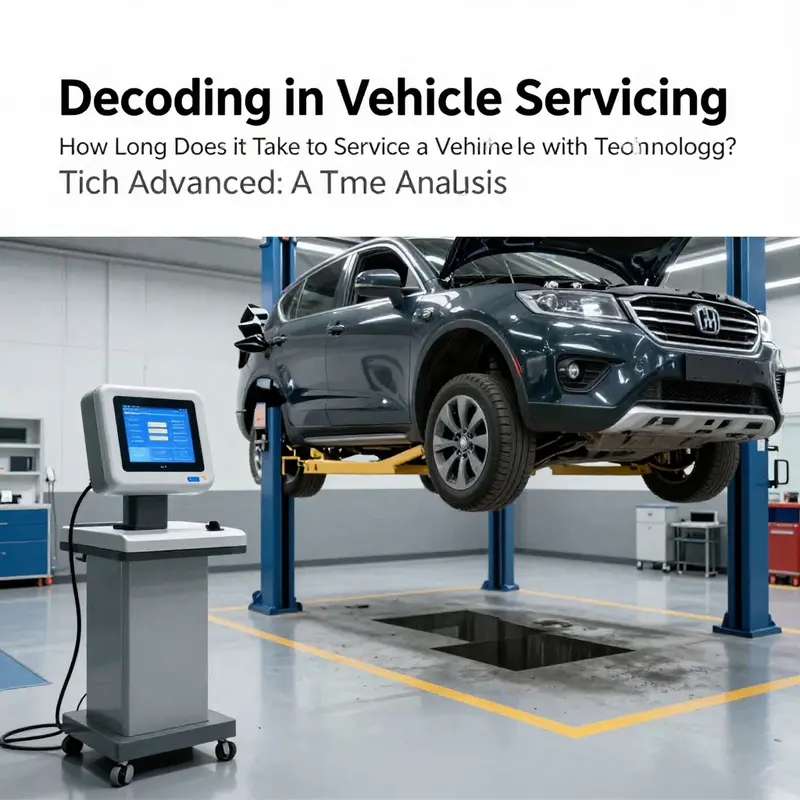
When people ask how long it will take to service a vehicle, they are really asking about a blend of science, craft, and timing. In workshops today, the clock measures more than the duration of a task; it tracks safety, accuracy, and how smoothly systems interact with one another. The time required to service a vehicle depends on what needs to be done, the vehicle’s make and model, and the condition discovered during inspection. Even when the job seems straightforward, a series of small decisions can extend or shorten the overall timeline. This is especially true as vehicles become more equipped with advanced technology, where software, sensors, and hybrid or electric components add new layers to the workflow. A simple oil change, for instance, might unfold quickly, but it is not merely about draining old oil and replacing a filter. Modern engines are linked to onboard computers that monitor fluid levels, wear indicators, and the condition of various components. Technicians rely on these signals to decide whether a quick top-off is enough or if a deeper service is warranted. In practice, the duration of routine maintenance such as oil changes, tire rotations, and fluid top-offs typically falls within a familiar window, yet even these tasks can drift depending on the vehicle’s systems and the shop’s workflow. A typical oil change or tire rotation often unfolds in roughly 45 minutes to an hour when the vehicle is responsive and parts are readily available. The presence of onboard diagnostics accelerates certain checks, allowing technicians to confirm oil quality, brake fluid condition, and coolant levels with digital readouts rather than manual gauge inspections. This synergy between human hands and machine data helps keep the pace steady and predictable in many cases, particularly in shops equipped with digital work orders and real-time monitoring. Yet the clock can advance more slowly when the vehicle presents surprises. A straightforward maintenance task can become more involved if the technician detects a warning code, a fluid leak, or a wear pattern that signals a potential issue beyond the intended scope of service. Even when the problem is not critical, evaluating it requires time: you verify the code, cross-check sensor readings, and decide whether an accessory needs to be removed for access. This is where the line between speed and thoroughness becomes decisive. For routine maintenance, many shops estimate a 1 to 2 hour window, acknowledging that this range reflects typical scenarios rather than universal rules. If the vehicle signals deeper concerns or if the workshop’s part supply chain encounters a hitch, the timeline lengthens. A diagnostic check, particularly when coupled with a broader inspection, can extend into several hours. A full diagnostic, brake inspection, or transmission service often occupies two to four hours or more. And if the work requires parts to be ordered, rebooked, or if specialized tools are needed, the duration may stretch even further. A key point is that a precise estimate comes from the technician after a quick but careful assessment. The first step is a hands-on inspection, followed by a review of the vehicle’s fault codes, live data, and service history. This approach prevents overpromising and underdelivering, a balance every shop aims to strike. The role of advanced technology in this stage is double-edged. On the one hand, digital diagnostic tools and linked service histories reduce guesswork. On the other, when a vehicle features hybrid powertrains, adaptive suspensions, or sophisticated driver-assistance systems, there is an added need for software interactions that can lengthen the process. Reprogramming, calibration, and sensor re-learning can be necessary after a repair, and these steps often require careful sequencing, validation tests, and sometimes dealer-level software access. The result is a paradox: technology has the potential to speed up certain tasks while adding steps that ensure the repair is complete and the vehicle returns to safe, reliable operation. In many modern service centers, efficiency gains come not only from the tools but from how a shop organizes the workflow. Real-time diagnostics, digital work orders, and streamlined communication between technicians and service advisors can shave precious minutes off the queue. A well-structured process reduces redundant checks and minimizes idle time, helping technicians stay synchronized with the vehicle’s needs and the customer’s expectations. This orchestration matters because time spent waiting is time that the vehicle remains away from the owner. The impact of digital systems is not just about cutting minutes in the shop; it is also about eliminating uncertainty. When technicians can confirm a problem promptly and map out a precise plan, they can focus on the necessary steps rather than chasing symptoms. Even so, the reality remains variable: the total duration depends on the exact scope of work and the vehicle’s condition. A routine oil change could be completed within an hour, but a vehicle with a fault code that requires wiring checks, component testing, or module reprogramming will need more attention and time. If the technician uncovers an underlying issue during a routine service, the customer will likely receive an updated estimate that reflects the broader work now required. The process of setting expectations is itself a service, and transparent communication helps customers understand why some tasks take longer than anticipated. For those who own vehicles with advanced technology, it is prudent to anticipate a wider range of possible outcomes. A hybrid or plug-in hybrid powertrain may require battery system checks, cooling circuit inspections, and software updates that go beyond traditional maintenance. Vehicles with adaptive suspension or complex driver-assistance features might demand precise calibrations after component replacements. In such cases, the timeline is not a fixed stopwatch but a plan that adapts to the findings of the diagnostic stage and the success of subsequent verifications. Practically speaking, this means you should approach a service visit with flexibility. If the shop can present a clear scope of work and a phased timeline, customers gain reassurance and can schedule their day more efficiently. It also helps to establish a preliminary estimate before any parts are ordered or any disassembly begins. When possible, bring a thorough maintenance log and be ready to discuss any warning lights, unusual noises, or performance changes you’ve noticed. These details guide the technician’s initial assessment and can shorten the path to a precise, reliable conclusion. For readers seeking practical context beyond the immediate maintenance window, our guide on timing for routine maintenance offers helpful perspective on oil-change intervals and related tasks. This link provides guidance on when to service based on time or mileage, which can influence the planning around a visit. Optimal oil-change intervals (time vs mileage). In the end, the most accurate forecast comes from a conversation with the shop after a swift inspection. A good technician will outline the scope of work, identify any potential additional tasks, and present a realistic timeline. They may also discuss how long a test drive or calibration step will take, especially when software updates or sensor re-learning are part of the procedure. These factors explain why two vehicles with similar styles of maintenance can emerge from the same shop at different times. While the average durations described here provide a framework, the variability remains real. For customers who value predictability, it helps to schedule maintenance during a period when the shop’s workflow is stable and to set aside a window large enough to accommodate the unexpected. It also avoids the temptation to treat the service as a quick drop-in, only to discover mid-visit that more work is required. The goal is a balance: a fair estimate, a transparent explanation, and a completed job that leaves the vehicle safer and more reliable than when it came in. For those who want a broader snapshot of how time factors into the maintenance ecosystem, a broader industry overview explains why some tasks inherently take longer and how shops apply technology to improve accuracy and speed. This perspective reinforces that efficiency is not simply about rushing work; it is about aligning expert judgment with the capabilities of modern machinery and software. In sum, basic tasks may glide through in under an hour, while complex repairs with advanced systems commonly stretch into several hours. Vehicles featuring hybrid powertrains, complex driver-assistance subsystems, or programmable components can introduce additional layers that require careful software work and precise recalibration. Yet, with real-time diagnostics, digital workflows, and experienced technicians, many service centers achieve steady, predictable performance without compromising safety or quality. If you’re planning a visit, consider the scope of work, the vehicle’s technology, and the likelihood of any surprises, and you’ll be positioned to understand why some service times are short while others demand more time and attention. For broader context on how maintenance time is perceived industry-wide, see this external resource. https://www.autoblog.com/2023/07/27/car-maintenance-take-time/
Clocking the Service: Real-World Timelines for Vehicle Care from Start to Finish
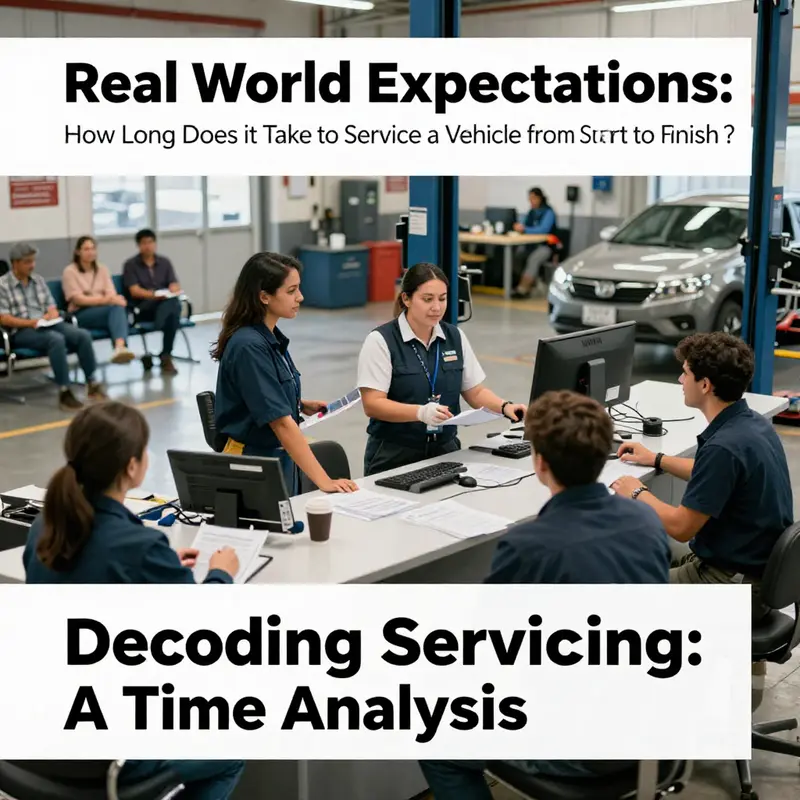
When you pull into a shop and hand over the keys, you transfer more than responsibility for your car you hand over a clock that will not only track the minutes but also reveal how well a shop negotiates the variables that every service carries. The time it takes to service a vehicle is rarely a single fixed duration. It depends on the service you request, the design and condition of the car, and what the day throws into the mix. In practice, a basic maintenance visit can glide along smoothly, while the same visit on a different day or with a different car can feel elongated. Reading these timelines helps owners guard against surprises and helps technicians manage expectations without compromising safety or quality. The baseline is simple: routine maintenance is typically the quickest, and as the work becomes more involved, the clock stretches, sometimes extending into complex diagnostics or repairs that require parts, patience, and precision.
For routine maintenance, the arithmetic is straightforward and reassuring. An oil change paired with a filter replacement, a tire rotation, and a quick top-off of fluids can usually be completed in roughly forty-five minutes to an hour. This window accounts for draining the old oil, replacing the filter, refilling with fresh oil, and performing a basic safety check that includes inspecting fluid levels, brakes, and tire tread. It also assumes no complications that demand extra checks or additional services during the same visit. The actual flow of work in a shop is a blend of order, efficiency, and a touch of contingency planning: technicians move from bay to bay, confirming fluid levels and tire pressures, then documenting any anomalies that might warrant further investigation on a subsequent visit. The pace is brisk, but not rushed; the goal is to deliver reliable maintenance in a predictable time frame while ensuring that no corner is cut when it comes to safety.
When a maintenance visit grows beyond the basics, the timing can become a story of its own. More complex services such as brake inspections or repairs, transmission servicing, or engine tune-ups carry more variables. These tasks routinely fall into a broader window of two to four hours, and sometimes longer if something unusual is uncovered during the inspection. For a brake job, the technician must examine rotor or disc wear, check calipers, confirm proper hydraulic function, and replace pads or rotors as needed, sometimes needing extra time for bedding in new components. A transmission service is even more intricate: it may begin with a diagnostic check, followed by fluid changes, filter replacement, and a careful reorientation of the transmission control system if faults are detected. Engine tune-ups, depending on the age and configuration of the engine, can involve a sequence of checks, sensor tests, and potential component replacements, all of which add to the total duration. The common thread across these scenarios is that every additional step adds a layer of verification to protect the vehicle and its occupants. The car might come in with a single suspected issue, but the technician’s assessment might reveal a few more things that require attention. In reality, a well-run shop aims to resolve all confirmed concerns in one visit whenever feasible, while also keeping a clear line of communication about anything that must wait for parts or more time.
A critical driver of duration in any service is the vehicle’s condition at the start. A clean bill of health with no hidden gremlins will naturally progress toward the shorter end of the timeline. But if the car presents with aged components, stubborn leaks, or intermittent fault codes, the process lengthens. Parts availability plays a pivotal role as well. If a needed part is in stock, technicians can proceed without interruption. If a part must be ordered, or if a specialized service is contingent on a manufacturer or dealer supply, the clock can stretch into days. This is not an indication of poor service; it reflects the reality that vehicles, like people, do not always present themselves in perfect alignment with a repair plan. In such moments, the best practice is transparent communication: the technician can outline the likely steps, provide a provisional timetable, and set expectations for a follow-up visit when parts arrive or when a deeper diagnosis is completed.
For the everyday owner, timing clarity starts with an understanding of what each service entails and how it might affect the schedule. Routine maintenance is often the most predictable, yet even here, small delays can occur. A misread tire pressure issue discovered during the inspection, a low battery that requires testing, or a firmware check in a modern vehicle can nudge the clock forward. In many service shops, you can streamline the process by choosing to wait in the customer area during maintenance rather than dropping off, if the shop offers that option. Waiting rooms that provide real-time updates on the vehicle’s status, comfortable seating, and visible workflow can alleviate anxiety about timelines. For busy drivers with tight schedules, communicating a preferred window and confirming the appointment specifics ahead of time reduces the chance of misalignment between your calendar and the shop’s workflow.
One practical way to frame expectations is to think in terms of a baseline and a buffer. The baseline is the best-case time for the requested service based on the vehicle and the work order. The buffer accounts for the probability of discovery of additional issues, the arrival of unexpected parts, or additional safety checks that a comprehensive inspection might reveal. This mindset is particularly valuable when coordinating with a shop that offers decisions on the spot: do you want the service completed today, or is a scheduled follow-up acceptable if more time or parts are needed? A good technician will present an honest assessment up front, including a realistic estimate for the primary work and a separate note about any potential secondary concerns that could extend the visit. In this way, the timing becomes a collaborative forecast rather than a rigid deadline.
A note on the practical side of timing also emerges in the realm of real-world scheduling. For drivers seeking the most accurate estimate, a quick call or a chat with the service advisor before the vehicle is dropped off can be invaluable. They can confirm the service package, review the vehicle’s history, and flag any known intermittent issues that might require additional attention. This proactive approach often minimizes the time spent in a shop because the technician arrives prepared with the right tools and a plan. The idea is simple: align expectations with the actual needs of the car and the realities of parts supply and technician workload. In this sense, time is less about a countdown and more about a carefully managed sequence of tasks that respects both the craft of automotive care and the vehicle owner’s schedule.
To close the loop, the role of clear communication cannot be overstated. If your vehicle is due for routine maintenance, or if a more involved service is recommended, having a candid conversation about time and priority helps everyone stay on the same page. Some owners choose to couple maintenance with a diagnostic check, which can be efficient but may also extend the overall visit if fault codes require deeper investigation. Others prefer a staged approach, tackling safety-critical items first and scheduling nonessential items for a separate visit. Either way, the goal is to arrive at a sound, actionable plan, accompanied by a realistic time frame that you can carry back into your day.
As you prepare for the next service, consider the broader context of how long a car service typically takes. Basic maintenance sits with a shorter, more predictable window. More involved services expand the timeline in proportion to complexity, the car’s condition, and the supply chain for parts. Roadside assistance or emergency scenarios add an extra layer of immediacy and safety that shifts priorities but still relies on a disciplined, safety-first approach. If you want to explore a specific aspect of timing, such as how often you should service certain components, or how to align maintenance with your driving patterns, there is value in consulting resources that address time versus mileage. For example, the topic of oil change intervals can be particularly relevant to overall scheduling, and you can read more about that at the linked resource on optimal oil change intervals. optimal oil change intervals (time vs mileage).
In sum, the clock during a vehicle service is a composite, not a single beat. It ticks differently for routine care and for substantial repairs, and it depends on the car, its history, and the broader shop dynamics. If you approach the service with a clear sense of the baseline and a flexible plan for the inevitable contingencies, you will not only manage your day more effectively but also support a smoother, safer repair that leaves you with confidence in the road ahead. For real-time estimates, the best course is to speak with a trusted mechanic or service center and to establish a timetable that reflects your vehicle’s needs as well as your own time constraints. For a broader view of how car maintenance timelines are discussed in consumer guidance, a reputable external reference provides additional context about the overall duration of car maintenance tasks. See the external resource for a wider perspective on how long car maintenance can take in practice: https://www.autocar.co.uk/car-advice/maintenance/how-long-does-car-maintenance-take
Final thoughts
In conclusion, the time it takes to service your vehicle can vary significantly based on the specifics of the service and the vehicle’s condition. By understanding the different factors that influence servicing time, you can better plan your automotive care routine. Whether it’s routine maintenance or complex diagnostics, having realistic expectations will enhance your entire experience and ensure you make informed decisions about your vehicle’s care.