
For car owners, used car buyers, and small business fleet operators, understanding the Department of Motor Vehicles (DMV) adjudication services is essential. These services encompass the systematic processes used by DMVs to evaluate and decide on various driver-related matters, including license suspensions, traffic violation appeals, and special driving privileges. As the interplay between state regulations and personal driving rights can often be complex, our discussion will clarify the procedures involved, the types of cases these services manage, and the legal framework that governs them. Each chapter will build on the previous one, providing you with a robust understanding necessary to navigate these often daunting adjudication processes.
Judging the Road: Navigating DMV Adjudication Services and the Road to Restored Driving Privilege
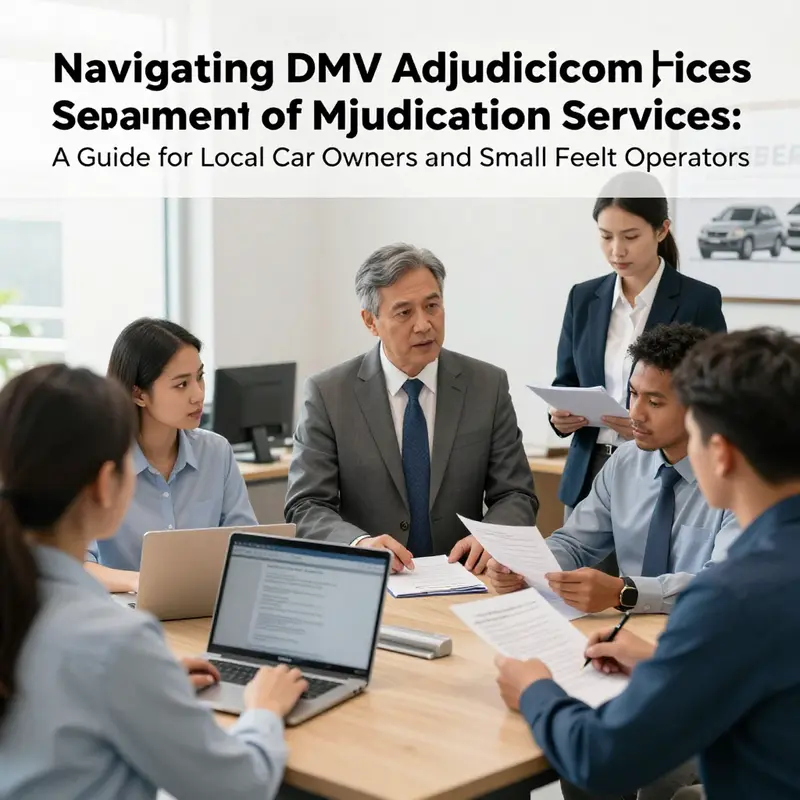
Adjudication within the department of motor vehicles is a formal process that reviews decisions affecting driving privileges. When a license is suspended or a penalty is imposed for a traffic or parking matter, adjudication determines whether the action should stand, be modified, or be reversed. The outcome can affect commuting to work, caring for family, and daily life. Procedures vary by state and sometimes by county, so adjudication is best understood as a set of lawful avenues balancing DMV authority with the rights of individuals to present their case and seek fair resolution.
To grasp how DMV adjudication works, view it as a structured conversation that begins when a decision is issued and ends when a final determination or higher appeal is pursued. At its core it is about due process: the chance to be heard, to present evidence, and to have decisions explained with legal basis. The people involved include the driver, the vehicle owner, the clerk, the hearing officer, and sometimes an administrative law judge. The main categories of adjudicated cases include license suspensions or revocations, appeals of traffic penalties or administrative actions, requests for reinstatement after a suspension, and determinations of eligibility for restricted or hardship privileges. The arc is similar across jurisdictions: a notice or citation triggers a process, evidence is gathered, and a decision follows that may be reviewed on appeal if the outcome seems unjust or unsupported by law.
A concrete scenario common to many jurisdictions is a parking ticket or traffic citation the recipient believes was issued in error. In the District of Columbia contesting a citation often uses a mail in hearing option. The path starts with reading the notice, which explains how to request a hearing and what forms to submit. The next step is preparing a written appeal that lays out the facts, grounds for contest, and supporting evidence. Evidence can include photographs, witness statements, receipts, and other documents that help prove that the violation was issued in error. Deadlines are essential guardrails to prevent neglect and default judgments with automatic penalties.
The mail in adjudication approach reflects the DMV mission to make justice accessible and practical. It allows people who cannot attend in person hearings to participate by submitting written materials. Whether the hearing is by mail, in person, or a hybrid format, the logic remains the same: documentation and argument in a fair forum should be weighed against applicable statutes and agency policies. The DC DMV guides for mail adjudication outline the required forms, submission procedures, and deadlines to govern the process. This transparency helps ensure that everyone knows what to expect and what is required to mount a credible challenge. The available resources anchor decision making in law and procedural fairness.
Beyond parking tickets and traffic notices, adjudication can affect other actions that influence driving liberty. When a suspension or revocation is contemplated, the DMV may initiate a formal review that may include a hearing where the driver can present evidence and propose alternatives such as a restricted license. Reinstatement after a suspension often depends on meeting requirements like completing a program, paying fines, showing proof of insurance, or demonstrating better driving behavior. The process is designed to accommodate multiple paths to restoration while protecting road safety and compliance.
To understand how outcomes are reached, consider the hearing itself. In formal jurisdictions a hearing is conducted by a hearing examiner or an administrative law judge who evaluates facts, applies the law, and issues a reasoned decision. The standard of proof in many administrative processes is not the same as in criminal cases but is described as a preponderance of the evidence or substantial evidence in the record. Practically, the challenging party must show that it is more likely than not that the agency erred or that the facts do not support the cited action. Evidence interpretation occurs within the framework of statutes and regulations that govern driving privileges. Decisions rest on a careful synthesis of fact and law rather than emotion.
A central aim of adjudication systems is consistency and fairness across similar cases. DMV policy seeks to apply rules uniformly while allowing consideration of unique circumstances. The consequences of DMV actions are real for individuals and families. A suspension can disrupt daily responsibilities; a revocation can affect employment; a reinstatement process may require renewed proof of competence or obligation. The system requires relevant, properly authenticated, and legally admissible evidence. The decision makers weigh this evidence against the standards set by law and policy to ensure outcomes are connected to facts and rules.
One common question is how process complexity interacts with everyday needs. Adjudication aims to be accessible, but it can seem intricate because it sits at the intersection of traffic codes, state administrative codes, and agency policies. The aim is not opacity but tailoring the response to the facts of each case while protecting the public and providing a predictable framework for all drivers. Adjudication acts as a bridge between regulation and daily life, sturdy, transparent, and navigable for people who rely on it to restore driving privileges after a misstep or to confirm the integrity of a decision when needed.
Notices and deadlines drive the process. Notices of violations or suspension orders trigger a procedural timeline. Missing a deadline can lead to penalties or continued suspension. Most adjudication systems emphasize timely responses and careful tracking of dates. Information needed to navigate timelines is provided with the notice and supported by official resources, helplines, or online portals. Clocks and milestones vary by state, but the principle holds: timely, documented engagement with adjudication supports a fair outcome.
Regardless of method, preparation is key. Gather relevant materials, organize them chronologically, and anticipate questions a hearing officer might ask. Identify the strongest pieces of evidence and present them clearly. Some cases may benefit from a brief narrative explaining the circumstances or a bundle of documents showing compliance with insurance requirements or completed driving courses. The quality and relevance of evidence matters as much as legal arguments.
There is an ongoing connection between adjudication and public policy aims. Adjudication supports road safety by ensuring suspensions or revocations are warranted and proportionate. It supports fairness by offering a platform to contest findings and have evidence weighed under the rules. It supports efficiency by aiming to resolve disputes within clear timelines. The interplay of safety, fairness, and efficiency shapes guidelines and training for hearing staff. When a decision is issued, most litigants can pursue review in state courts or additional administrative appeals if the record does not support the result. The layered structure emphasizes accountability and a safety first approach to road use.
In everyday practice, individuals encounter adjudication in tense moments about their driving status. A notice can cause anxiety but also can be a chance to engage with the system constructively. Gathering evidence, articulating a case, and presenting it to a decision maker is a civic exercise that keeps driving accountable. The process rewards preparation and careful consideration of facts. It recognizes that lives depend on mobility and that the reasons behind a citation or action often involve a mix of human error, systemic factors, and policy goals. The system seeks a fair, reasoned decision that respects both public safety and individual circumstances.
For readers seeking guidance, consult official DMV resources and reputable summaries that explain common steps in plain language. State level manuals and checklists can help. As with any quasi legal process, understanding the rules, deadlines, and expectations is the groundwork for a successful engagement with adjudication services. The goal is to participate in a manner that is clear, organized, and truthful, so that the resulting decision reflects the facts and the law.
Within the broader arc of the article, adjudication sits alongside discussions of how DMVs issue licenses, record driving histories, and coordinate with other agencies on enforcement and safety programs. Adjudication works with these functions to ensure driving privileges are exercised with checks and balances. A driver’s record, license status, and eligibility for privileges are interconnected and influence daily life, from commuting to work to education and housing. When these processes are well designed, they provide a predictable environment in which people know what to expect, what recourse they have if a decision seems unfounded, and what steps to take to restore driving privileges after compliance and rehabilitation.
In sum, DMV adjudication services provide a practical framework for resolving disputes arising from driving regulation. They emphasize due process, practical accessibility, and safety minded governance. They recognize that penalties are sometimes necessary but that clarity, fairness, and opportunities for reinstatement matter as well. They favor evidence and law over whim, while acknowledging real world complexities that people bring to the table. For readers seeking concrete guidance on adjudication in their state, official DMV pages and procedural documents offer the most reliable roadmaps. For those who want a broader view of driving governance, the ongoing dialogue between enforcement, adjudication, and rehabilitation remains a telling story about balancing safety with individual mobility.
To connect with practical resources and ongoing explanations of DMV processes, readers can visit the KMZ Vehicle Center blog, which covers vehicle management and regulatory topics. A link to the blog can direct readers to additional insights. For formal, state specific provisions and procedural details beyond this chapter, reviewing authoritative notices and guidelines from the relevant DMV is essential. For a detailed external reference on a mail adjudication process, the District of Columbia DMV’s documented approach provides an example of how mail based hearings are structured, what evidence is considered, and how decisions are communicated. External readers may consult the DC DMV document linked in their publications.
From Citations to Reinstatement: The Range of Cases That Drive DMV Adjudication
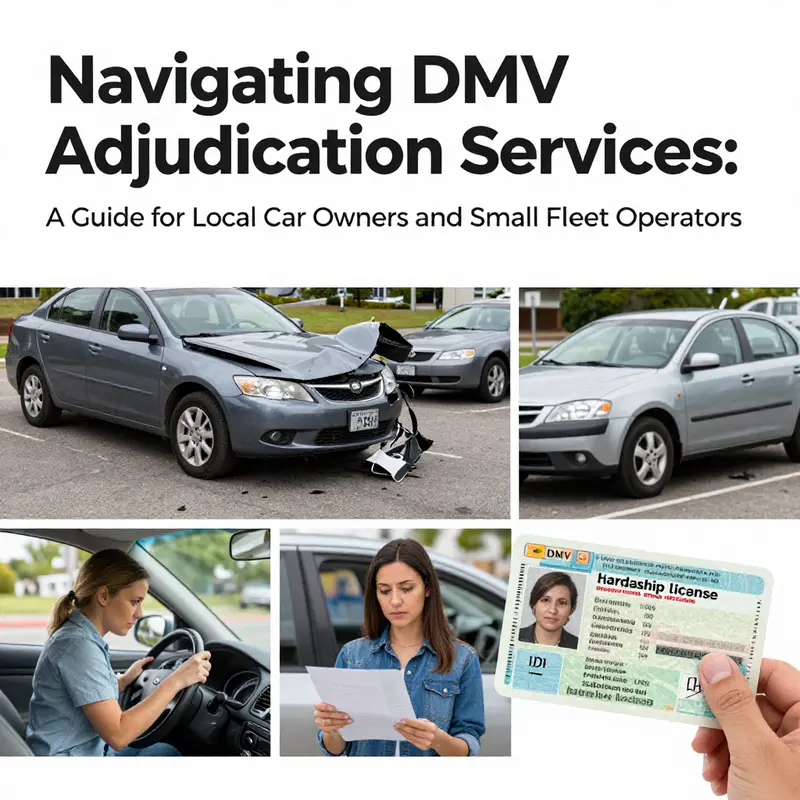
The Department of Motor Vehicles adjudication services operate at a critical junction in the system of driving regulation. They are not the same as the agency that issues licenses or registers vehicles, yet they are essential to how those powers are exercised responsibly. Adjudication, in this context, refers to the formal review and decision-making process the DMV uses when a driver challenges a citation, faces a license restriction, or seeks to restore a driving privilege after suspension or revocation. Across states, this adjudicatory function embodies a balance between public safety aims and the due process rights of individuals who must navigate complex administrative rules. The result is a recognizable, though sometimes austere, legal environment where facts, procedures, and timelines converge to determine whether a person can keep, lose, or regain the right to drive. Understanding this landscape requires seeing beyond the immediate act of receiving a ticket or receiving a notice of suspension. It means recognizing a layered system that channels disputes into hearings, evidence into records, and policy into practice, all within the bounds of state law and administrative regulation.
At its core, adjudication services are about fairness in action. When a driver receives a ticket or a notification that their license is at risk, the clock starts ticking on an enrollment in a process designed to reveal the truth of the situation under rules that aim to be transparent and predictable. The concept of due process underpins every step: notice of the issue, an opportunity to be heard, and a reasoned decision based on evidence and applicable law. This is not merely procedural formality. It is the mechanism that ensures decisions about driving privileges do not hinge on haste, bias, or ad hoc interpretation. While the language and exact steps can vary from state to state, the underlying principles remain recognizable: a structured setting where facts are weighed, arguments are considered, and the public interest in safe roads is upheld through disciplined decision-making.
To move from the moment a driver becomes aware of a potential action to the moment a decision is rendered, adjudication unfolds through several interconnected pathways. One of the most common entry points is the traffic-related citation. A speeding ticket, a failure to yield, or a violation such as a distracted driving offense may trigger an adjudicatory review not because the driver disputes the factuality of the citation in every case, but because the consequences extend beyond a single incident. When a citation interacts with the driver’s record, it can affect points, insurance costs, and the risk of future license actions. In many jurisdictions, the adjudication process allows the driver to request a hearing to contest the citation or to present mitigating circumstances. The hearing is not a trial in the criminal sense; rather, it is an administrative proceeding in which the adjudicator assesses the evidence according to state law and DMV regulations.
Another substantial area concerns license actions that arise from accumulated driving behavior rather than a single incident. Points loaded onto a driving record, repeated violations, DUI or DWI offenses, or failures to appear in court can all set a cascade toward suspension or revocation. The adjudication process in these cases becomes a mechanism of risk management for public safety. It is a space where the DMV clarifies what level of risk a driver represents, what corrective steps are required, and what timeline the driver must follow to demonstrate rehabilitation or compliance. The procedural fabric includes notice of suspension, documented evidence of compliance, and opportunities to present testimony or expert information. In essence, adjudication in these contexts is about translating policy into individualized outcomes that reflect the facts on the ground and the legal framework that governs driving privileges.
Administrative driving record reviews constitute another pillar of adjudication services. The DMV routinely assesses driving records to determine whether point accumulations, medical conditions, or other disqualifying factors warrant particular actions. These reviews are not passive; they are active exercises in monitoring ongoing risk and ensuring that the record accurately reflects current driving behavior and restrictions. A driving record review may lead to a proactive restriction, an adjustment to license classification, or a formal notice inviting additional information or corrective steps. The driver, in turn, has the chance to respond with documentation, such as completion of treatment programs or updated medical clearance, to influence the final determination. These reviews demonstrate how adjudication services blend administrative efficiency with individualized consideration, recognizing that a person’s license status often depends on evolving circumstances rather than a single snapshot in time.
For drivers seeking to restore a suspended license, the adjudication path offers a distinctly hopeful route. Restoration hearings focus on demonstrating that the individual has met all prerequisites for reinstatement—whether those prerequisites include proof of treatment compliance, payment of fines, completion of courses, or the passage of required time intervals. In many jurisdictions, these hearings are the culmination of a sequence that begins with the suspension and proceeds through requirements for reinstatement. The adjudicator assesses whether the applicant has satisfied the legal conditions, whether there are outstanding issues such as fees or restitution, and whether any continued restrictions or probationary periods should accompany reinstatement. The process is designed to be fair and practical: it recognizes that a person with a suspended license may have obligations that extend beyond merely showing up for a hearing. It also acknowledges the public interest in reintroducing capable drivers into the community under monitored and safe conditions.
Appeals of DMV decisions add another layer to adjudication services. When a driver believes a DMV ruling is incorrect or unfair, there is often an avenue to challenge the outcome through an appeal process. Depending on the state, appeals may be heard by an internal appellate division within the DMV or by an external administrative tribunal, or even by a court. The appeal typically examines whether legal standards were correctly applied, whether the evidence supported the DMV’s findings, and whether procedural rights were observed. The tone of an appeal is analytical rather than adversarial: the goal is to ensure the decision aligns with the law and the facts, rather than to win a dispute through rhetoric. Appeals underscore a central truth about adjudication services: the system is designed to correct or refine initial determinations when warranted, preserving a pathway to justice even after a decision appears final on paper.
The geographic scaffolding of adjudication also matters. While the core functions described above are common across many states, the specific rules—the standards of proof, the thresholds for suspensions, the timelines for hearings, and the eligibility criteria for reinstatement—vary. In practice, drivers often encounter a mosaic of procedures that reflect local legislative choices, administrative cultures, and the particular emphasis a state places on road safety. In large part, this variability explains why a driver who navigates adjudication in one state may encounter different forms and expectations in another. Yet the shared architecture remains: notice, opportunity to be heard, an evidentiary record, and a reasoned ruling grounded in state law.
The procedural texture of these hearings can range from relatively informal conferences to formal, officially recorded proceedings with live witnesses and cross-examination. Some jurisdictions allow for teleconference or video hearing options to improve access, while others favor in-person appearances in DMV offices or designated hearing centers. In all cases, the fundamental rights of the participant—clarity about charges, a fair chance to present evidence, and the ability to challenge the DMV’s findings—are protected to the extent that the relevant statutes and administrative rules permit. The adjudicator’s role is not to punish or reward, but to apply the law to the factual matrix presented by the driver, the DMV, and any other stakeholders such as prosecutors, law enforcement, or medical professionals if medical impairment is involved. This is where the case becomes truly individualized: it is not merely about whether a ticket was issued, but about whether the actions, circumstances, and compliance efforts fit within the framework of the law and the safety expectations of the community.
In describing these pathways, it is useful to acknowledge how information technology and recordkeeping intersect with adjudication. The DMV maintains a formal record of every hearing, decision, notice, and reinstatement decision. The integrity of this record matters, because it informs future actions, such as whether points remain on a driving record, whether additional restrictions apply, and whether reinstatement orders are fulfilled. The electronic backbone that supports adjudication helps ensure that decisions are traceable, auditable, and consistent with legal requirements. Yet the person at the center of the process is a real individual with a story, a driving history, and a set of responsibilities that extend beyond the hearing room.
Because the landscape has regional nuances, drivers commonly seek guidance as they prepare for adjudication. The best practical advice emphasizes early engagement, accurate documentation, and a clear understanding of the specific rules that apply to their situation. For instance, knowing the exact grounds for suspension or the prerequisites for reinstatement can help a driver gather the right forms, evidence, and witnesses ahead of any hearing. It also helps to understand the timing windows involved: how long a suspension must endure, what steps must be completed during that period, and when an appeal or restoration action can be filed. Proactive preparation often reduces anxiety and increases the likelihood that the adjudication outcome will be aligned with the driver’s actual circumstances and responsibilities.
The experience of going through DMV adjudication also intersects with broader themes in public administration. Adjudication services exemplify how state authorities translate policy goals into practical processes that affect everyday life. They reveal the tension between punitive action and rehabilitative opportunity, between speed and accuracy, and between statewide standards and localized implementation. When a driver wins a restoration or an appeal, the result is not a personal victory alone; it is a functional restoration of a driving capability that can impact employment, caregiving responsibilities, and daily routines. Conversely, when a decision restricts or suspends a license, it can illuminate issues of public safety and accountability that extend beyond the individual case. Across both outcomes, the adjudication system operates under the ethical obligation to be fair, transparent, and consistent, even as it must contend with the complexities and pressures of modern transportation networks.
If a reader seeks further clarity about how these processes look in a concrete setting, it helps to consult state-specific resources. Each state’s DMV website usually provides a dedicated section on hearings, appeals, and driver’s license suspension or reinstatement procedures. The information is typically organized to guide applicants through the steps, determine eligibility, and set expectations about timelines, required documents, and the kinds of evidence that strengthen a case. The overarching message is consistent: adjudication services exist to ensure that decisions about driving privileges are made through careful, rule-bound consideration of the facts, with opportunities for timely and fair review when necessary. For readers who want an accessible overview of administrative hearings and traffic offense appeals, a broader reference such as the New York State DMV site can illustrate how the system communicates its procedures to the public: https://www.dmv.ny.gov/.
In the broader ecosystem of vehicle governance and public safety, adjudication services are a steadying force. They translate the friction of enforcement into manageable, predictable pathways. They acknowledge that many drivers will encounter the process at least once in their lifetimes and that the quality of the adjudicatory experience can influence whether a driver remains compliant, seeks help when needed, and ultimately returns to driving with the appropriate safeguards in place. For those who want to explore more about the daily realities of vehicle maintenance and safe operation, the journey through adjudication might feel distant from routine mechanical concerns. Yet it shares a common thread with how people care for their vehicles: attention to rules, readiness to respond to consequences, and a commitment to restoring function after disruption. In that sense, adjudication services are not merely a bureaucratic step; they are a structured, human-centered pathway that supports responsible driving as part of a well-governed road system.
As readers reflect on these dynamics, a practical takeaway emerges: when confronted with DMV actions, preparation and clarity are the most powerful tools. Understanding the spectrum of cases—ranging from traffic citations to license restoration and appeals—helps demystify what otherwise can feel like opaque administrative machinery. It invites drivers to engage with the process thoughtfully, assemble the necessary documentation, and seek guidance when needed. For those who want to deepen their understanding of general adjudication concepts or to explore supportive resources, the KMZ Vehicle Center blog offers a repository of practical insights and maintenance-oriented perspectives that can complement the legal and administrative considerations of adjudication. Access it here: KMZ Vehicle Center blog.
Finally, the chapter’s landscape is not a closed system. It is part of an ongoing conversation about how best to balance individual mobility with community safety. As transportation policies evolve, DMV adjudication services will continue to adapt their procedures while preserving the core commitment to fairness, transparency, and due process. This coherence between law and practice—between the rules that govern driving and the human narratives that bring those rules to life—remains the enduring anchor of adjudication in the modern DMV ecosystem. The result is a system that, though sometimes complex and intimidating, ultimately aims to guide drivers toward compliance and to restore driving privileges whenever that restoration is warranted and safe.
External resources can provide broader context for readers who want to compare practices across jurisdictions. For a general understanding of how administrative hearings and traffic offense appeals are framed in a major state, you can consult the New York State DMV site, which outlines procedural steps, eligibility criteria, and the types of hearings available: https://www.dmv.ny.gov/.
From Notice to Reinstatement: The Legal Fabric of DMV Adjudication Services
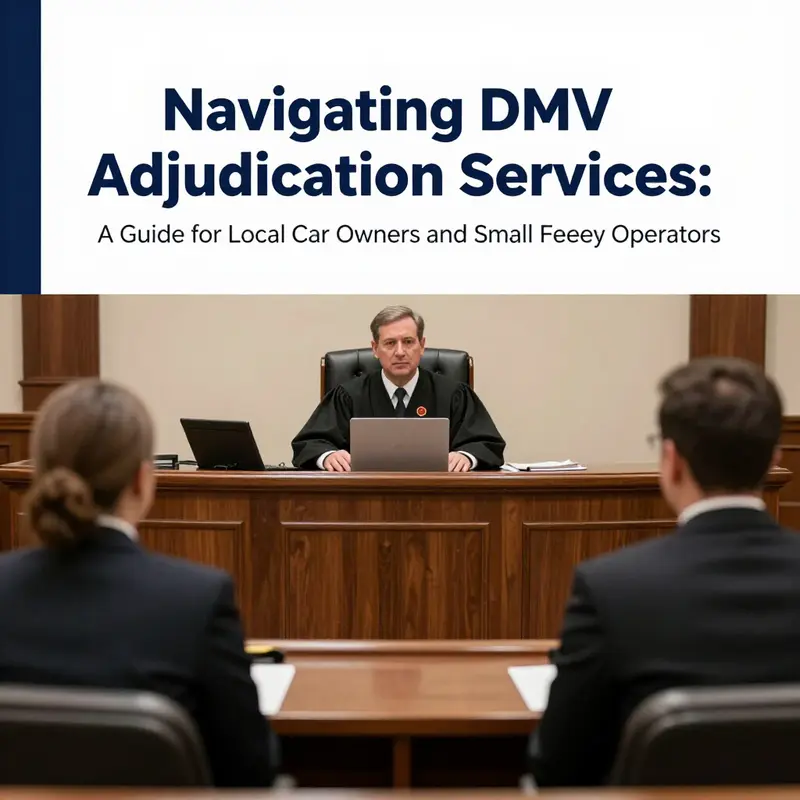
When people think of driving, they often picture the open road, the feel of the wheel, and the sense of independence that a valid license affords. Yet behind every license decision lies a carefully engineered system of rules, procedures, and safeguards designed to balance public safety with individual rights. Department of Motor Vehicles (DMV) adjudication services occupy the middle ground of this system. They are the formal processes by which state DMVs review and decide on driver-related applications, appeals, and administrative disputes. These services determine who continues to drive, who must pause behind the wheel, and under what conditions a license might be reinstated after suspension or revocation. The adjudication framework is not a single uniform machine; it is a patchwork quilt formed by state statute, regulation, and administrative practice. Still, the shared aim across jurisdictions is clear: to translate rules into fair, timely, and legally sound outcomes that safeguard road safety while preserving due process for drivers navigating complex administrative actions.
At the heart of DMV adjudication is authority. Each state grants its DMV authority through its statutes, and those statutes sketch the broad powers to license, to register, and to discipline when rules are violated. The agency then fills in the operational details through regulations and administrative codes. This is where legal theory meets practical administration. The statutes specify the triggers for adverse actions—such as suspensions for accumulating too many points, revocations for DUI offenses, or administrative penalties for nonpayment of fines—and assign the mechanism by which a driver can challenge or defend against those actions. Regulations translate those triggers into procedures: notice, hearing rights, evidentiary rules, timelines, and the forms of relief available, including reinstatement after compliance with suspension conditions or the granting of restricted licenses under hardship circumstances.
The procedural spine of DMV adjudication is often built around due process. In a legal sense, due process means that a decision-maker is impartial, that the affected person receives notice and an opportunity to be heard, and that the decision rests on substantial evidence in the record. In practice, this translates to hearings in which a driver can present evidence, challenge the agency’s evidence, and rely on an administrative law judge or an impartial hearing officer to decide. The specifics vary by state, but the core principles are widely shared. Notice must be adequate; the hearing must be fair; and the decision must be reasoned and documented with findings of fact and conclusions of law. Adjudication thus becomes the DMV’s formal mechanism to ensure accountability when enforcement actions are challenged or when a path to continued or renewed driving privileges must be carved out under the law.
In most states, the adjudicatory step comes after the agency initiates a proposed action—such as a suspension or revocation—often following a separate action, like a traffic violation or an administrative determination. The driver typically receives written notice detailing the proposed action, the factual basis, the legal grounds, and the procedural steps to request a hearing. The hearing itself is where the driver and the DMV present their cases, introduce evidence, and present witnesses where allowed. The standard of proof in administrative hearings is generally tailored to the DMV’s mission and is usually described as substantial evidence or a preponderance of the evidence. Although the exact standard can differ, the guiding principle remains consistent: the decision must be supported by a reliable record and must reflect careful reasoning that a reviewing court can follow.
One might wonder how a DMV hearing differs from a courtroom trial. Both share the language of evidence, witnesses, and cross-examination, but the setting and the stakes are distinct. DMV proceedings are administrative; they are designed to be efficient, specialized to the agency’s administrative domain, and based on statutes and regulations crafted for public safety and administrative efficiency. The decision-maker, whether an administrative law judge or a DMV hearing officer, is typically trained in administrative law and often specializes in driver licensing issues. The rules of evidence may be more flexible than in a state trial court, prioritizing practical relevance and timely resolution over strict courtroom formality. Yet the essential protections endure. The record must be clear, the findings must connect to the evidence, and there must be a reasonable opportunity for the driver to present a defense.
A crucial feature of the adjudication framework is the opportunity to seek reconsideration or appeal. The path from decision to remedy often involves an appeal to a higher administrative authority within the DMV or, in many states, to the state judiciary. Appeals usually focus on legal errors or substantial omissions in the administrative record rather than reweighing the facts anew. Courts reviewing DMV decisions typically apply standards that limit de novo fact-finding and instead examine whether the agency acted within its authority, adhered to the required procedures, and made findings supported by substantial evidence. This structure reflects a balancing act: it preserves the DMV’s expertise and speed in handling licensing matters while ensuring a check against arbitrary or capricious action.
The substantive areas that fall under DMV adjudication are broad and deeply consequential for drivers. Driver’s license suspensions and revocations are perhaps the most visible, but the adjudicative process also governs appeals of traffic-related penalties, requests for license reinstatement after a suspension, and determinations of eligibility for special driving privileges. A hardship or restricted license can mean the difference between meaningful work and economic disruption, between family obligations being met and missed opportunities. The adjudication framework must account for the nuanced realities behind each case: a driver’s employment needs, family responsibilities, medical conditions, and ability to comply with certain driving restrictions. In this sense, adjudication is not merely a punitive tool; it is a structured doorway to a measured remedy that respects safety concerns while recognizing human circumstances.
The procedural architecture that underpins these decisions is reinforced by a network of oversight and accountability mechanisms. DMVs are typically part of state executive branches, often operating under the broader umbrella of a department of transportation or a parallel agency. They are expected to follow administrative procedure acts, which set forth notice-and-comment requirements, listening sessions where applicable, and formal rulemaking methods for significant changes to regulations. The Administrative Procedure Act (APA) frequently influences how DMV adjudication processes are run, including timelines, the public’s opportunity to participate in rulemaking, and the requirement that decisions be documented with written findings. Even in states with more or less centralized control, the aim is to ensure that DMV decisions are not opaque; they must be traceable from the initial notice through the final disposition.
Beyond state law, federal considerations also creep into the adjudication environment, particularly where disability rights, privacy protections, or federal funding intersect with DMV operations. The Americans with Disabilities Act (ADA) imposes obligations to ensure accessibility to hearings, information, and services for people with disabilities. This can translate into accommodation requirements for physical facilities, accessible technology for remote or virtual hearings, and plain-language communications that reduce barriers to understanding. The Privacy Act and related privacy protections govern how driving records are collected, stored, and shared. The DMV’s handling of sensitive data—such as driving histories, medical information related to driving fitness, and personal identifiers—must align with these protections to avoid unnecessary disclosures or misuse. In practical terms, this means clear notice about data use, robust security practices, and processes to correct or contest inaccurate information in a driving record. This intersection of federal and state rules is a reminder that adjudication services do not operate in isolation; they are embedded in a broader legal ecosystem that values safety, fairness, and privacy in equal measure.
The daily life of DMV adjudication also hinges on the people who implement and oversee the process. Administrative law judges, hearing officers, and support staff translate statute and regulation into concrete determinations. They must weigh testimony, assess documentary evidence, and apply the relevant legal standards to the facts on the record. The human element matters: experience with traffic safety issues, sensitivity to the needs of drivers facing hardship, and an understanding of how different remedies affect people and communities. The quality of decisions often turns on the clarity of the agency’s written decision—the explicit linkage of facts to conclusions, the consideration of mitigating or aggravating circumstances, and a well-reasoned rationale that a driver can review and, if necessary, challenge. Such clarity matters not only for the individual involved but also for the integrity of the system as a whole. When people see that decisions are reasoned and grounded in law, trust in the adjudicatory framework grows, which in turn supports compliance and safety on the roads.
States vary in the specifics of how hearings are conducted. Some jurisdictions rely heavily on in-person hearings, while others increasingly use telephonic or video hearings, particularly for routine cases or in response to public health needs. The format can affect accessibility, pace, and the opportunity for cross-examination or witness presentation. The mechanics of evidence—static documentary submissions, live testimony, or expert reports—also differ. Yet the underlying logic remains consistent: provide a fair stage for contesting adverse actions, allow for the introduction of relevant information, and require the decision-maker to articulate how the evidence supports the outcome.
The end goal of adjudication is not simply to sanction but to resolve. A well-managed process offers a spectrum of outcomes: continuance of a license with conditions, a temporary or conditional reinstatement, a period of probation, or a complete revocation accompanied by a plan for reinstatement. The pathways to resolution are usually defined by a combination of statute, regulation, and agency policy. These pathways recognize that there are legitimate reasons drivers may be temporarily unable to comply with typical licensing requirements. They also acknowledge that suspensions, if used appropriately and consistently, can be powerful deterrents to unsafe driving. The challenge for adjudication services is to balance those aims—protecting the public by ensuring safe drivers while providing a viable, humane process for those who must navigate the consequences of errors, medical issues, or financial hardship.
A practical thread running through the entire adjudicatory experience is transparency and accessibility. Drivers should be able to understand what is at stake, what evidence is needed, and how decisions are reached. Agencies often publish guides, notice templates, and informational pages that outline hearing rights, timelines, and the kinds of evidence that can be persuasive. However, the reality of court-like processes can be daunting for some, especially for individuals with limited English proficiency, cognitive or sensory impairments, or constrained resources. That is why many DMVs invest in language assistance services, accessible formats, and user-friendly online portals to track the status of a case, submit documents, and request accommodations. The best adjudication systems are not just legally sound; they are navigable for ordinary people who must engage with complex rules under pressure. In this sense, the adjudicatory framework is a living instrument, capable of evolution as technology, demographics, and safety needs shift over time. Some jurisdictions have begun to implement digital case management tools, offer remote hearings, and streamline the documentation requirements to reduce delays without sacrificing accuracy or fairness. These innovations reflect a broader commitment to efficiency, while not compromising the due-process guarantees that underpin legitimate DMV decisions.
For readers seeking more practical context or a lay-friendly overview of these processes, the KMZ Vehicle Center blog offers accessible commentary and examples that complement the formal framework described here. See the overview at kmzvehiclecenter.com/blog.
The road ahead for DMV adjudication services is shaped by ongoing questions about modernization, equity, and accountability. As states seek to reduce backlogs and improve the user experience, they confront trade-offs between speed and thoroughness, centralized consistency and localized nuance, and the benefits of digital record-keeping against concerns about cybersecurity and privacy. Some trends point toward a more proactive, preventive posture: pre-hearing conferences that clarify issues, standardized prefiled documents to minimize ad hoc evidence disputes, and clearer guidance on the kind of evidence that reliably demonstrates eligibility for reinstatement or for a hardship license. Other trends emphasize ongoing oversight: regular audits of outcomes to detect bias or disparate impact,公开 reporting of appeal rates and reversal rates to ensure accountability, and the integration of safety data with adjudicatory decision-making to align penalties with measurable risk. The aim is not to strip adjudication of its necessary rigor but to make it more predictable, accessible, and humane while preserving the core objective—protecting the public on the roads through fair, enforceable, and well-reasoned decisions.
In sum, DMV adjudication services are the legal and administrative mechanism by which states translate the traffic of everyday life into enforceable, fair, and practical outcomes. They operate at the intersection of public safety, individual rights, and administrative efficiency. While the specifics differ from state to state, the essential architecture—notice, hearing, evidence, impartial decision-making, written findings, and avenues for appeal—creates a coherent system that disciplines driving activity without abandoning the person at the center of each case. The adjudication process thus embodies a foundational principle: rules must be applied with rigor, yet there must be space for context, correction, and appropriate rehabilitation. This is how a society of many drivers and a shared road system maintain both safety and fairness, day in and day out.
External resources and references provide further breadth for readers who want to dive deeper into the legal skeleton and the practical application of adjudication services. For an overview of federal guidance and best practices that inform state DMVs, see the National Highway Traffic Safety Administration’s resources at https://www.nhtsa.gov. This external reference complements the state-level detail outlined here and can help readers understand how national standards and recommendations shape the way adjudication services operate across jurisdictions.
Final thoughts
Understanding the Department of Motor Vehicles adjudication services is vital for any driver. Whether you are contending with a license suspension, navigating appeals for traffic offenses, or seeking reinstatement of driving privileges, each step you take should be informed by a clear comprehension of the procedures and legal guidelines that apply. This guide has illuminated the path through which these services operate, the types of cases they manage, and the legal framework supporting them. Equip yourself with this knowledge to take charge of your driving rights and vehicle investments confidently.