
Motor vehicle crashes can be overwhelming for anyone involved, but for active-duty service members, the legal implications come with unique considerations. Understanding the intricacies of how military status interacts with civilian law is critical for ensuring that rights are protected. From compensation rights and reporting procedures to the impact of military service on liability, each facet plays an essential role in navigating a post-accident landscape. This article is tailored to local private car owners, used car buyers and sellers, and small business fleet operators, presenting a coherent overview on how service member status influences these legal scenarios. By exploring relevant chapters, readers will gain insights that prepare them for engagement with the legal systems that govern civilian and military interactions in motor vehicle accidents.
Duty, Rights, and the Aftermath: Legal Pathways for Service Members Involved in a Motor Vehicle Crash
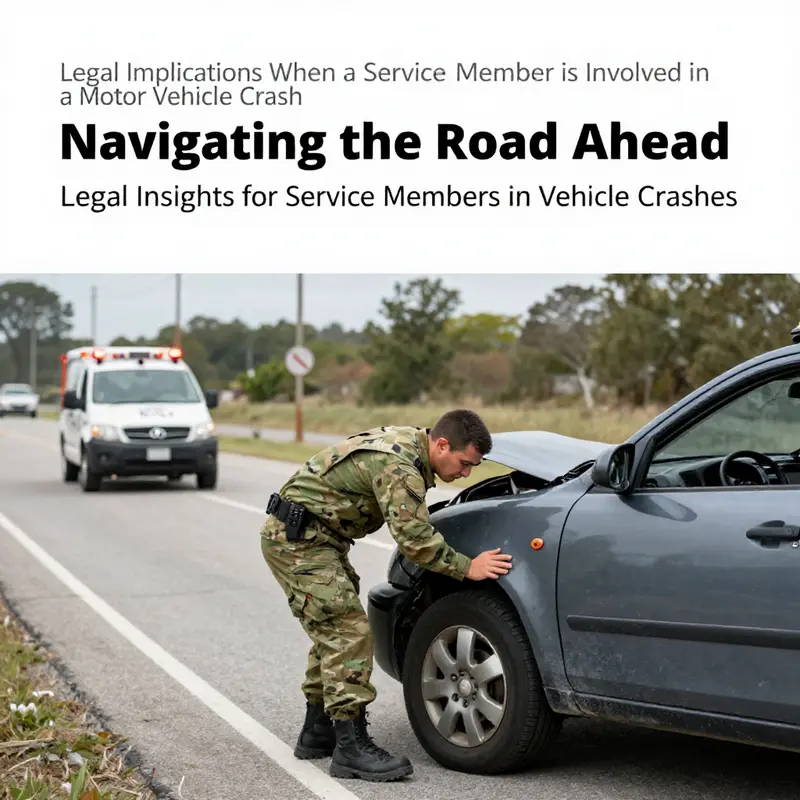
A motor vehicle crash involving a service member is rarely a single event with a single consequence. It ripples through custody of safety, duty, and liability, stretching across military and civilian law alike. The moment the crash occurs—whether during a mission-related task, a training exercise, or a routine off-duty drive—the service member remains under the umbrella of both civil rights and military duties. The legal landscape that follows is not a single track but a set of parallel tracks that may converge, diverge, or run side by side for years. Understanding how these tracks run helps a service member protect health, finances, and future opportunities without compromising the integrity of the military mission or the civil rights owed to every citizen on active duty. The core concerns begin with jurisdiction: where the incident happened, under what authority, and which rules apply to the conduct and the aftermath. If the crash occurs off a military installation, civilian traffic laws typically govern the immediate allocation of fault and the civil remedies that may follow. Yet, even in those civilian contexts, the service member does not surrender civil rights simply because they are in uniform. They retain the right to seek compensation for injuries, medical costs, lost wages, and other damages caused by another party’s negligence, whether that party is a private civilian or a fellow driver. This duality—civil rights protected by civilian law and military duties enforced by the Uniform Code of Military Justice (UCMJ)—frames the earliest decisions after a crash and guides the ongoing process of accountability, recovery, and justice. In practice, this means that a civilian driver who fails to yield, drives negligently, or contributes to a multi-vehicle collision can be held liable for personal injuries under state tort law, just as any other driver would be. At the same time, service members must navigate the possibility that their own conduct could raise questions within the military justice framework, especially if alcohol or drugs are involved or if the incident bears relevance to official duties. The UCMJ applies to conduct during duty and, in some cases, to off-duty actions that reflect on the service member’s fitness or conduct within the armed forces. In short, two streams flow from the same event: a civil claim for damages under applicable state tort law, and, where appropriate, military administrative or criminal proceedings under the UCMJ. The Department of Defense has policies designed to ensure that these streams operate with fidelity to both federal and state laws. These policies emphasize that service members must not be deprived of civil remedies simply because they are in military service, and they require that civilian authorities be allowed to handle civil claims arising from the negligence of non-mederal actors. This means the injured service member can pursue compensation for medical expenses, rehabilitation costs, wage losses, property damage, and even non-economic damages such as pain and suffering, to the extent permitted by state law. Importantly, medical care for service members is available through the military health system, regardless of fault. The obligation to seek compensation for other losses, however, remains separate from the obligation to obtain medical treatment. A crash can trigger a series of investigations that may influence both administrative outcomes and potential criminal proceedings. When a military investigation is warranted—particularly if the incident involves official duties, military equipment, or potential violations of military regulations—an additional layer of scrutiny may be added to the case. Investigations can affect the timing and nature of administrative actions, and they can intersect with civilian processes in complex ways. Service members should be aware that an investigation is not a determination of fault; rather, it is a fact-finding step that may inform subsequent actions by both military authorities and civilian courts. The legal consequences extend beyond the immediate event of the crash. If alcohol or drugs are involved, or if the incident reveals concerns about safety protocols, disciplinary action under the UCMJ can be initiated. Disciplinary actions may address conduct unbecoming, failure to adhere to safety standards, or other violations that could impact a service member’s career. Importantly, pursuing civil remedies does not foreclose the possibility of military disciplinary action, and vice versa. The two processes can proceed in parallel, each operating under its own standards of evidence and procedure. This overlap is not merely a procedural curiosity; it shapes every step a service member takes after a crash. It means that reaching out for proper legal counsel is essential. A lawyer who understands both military law and personal injury law can help chart a course that protects the service member’s rights in civilian courts while also preserving administrative and career interests within the military. The JAG Corps or military legal aid offices are designed to provide that bridge, guiding service members through reporting requirements, evidentiary preservation, and the sequencing of civil and military procedures. The first practical step after a crash is often to secure competent legal advice promptly. This counsel can help ensure that evidence is preserved and that the service member’s statements do not inadvertently harm possible civil claims or military proceedings. The importance of timely action cannot be overstated: police reports, witness statements, medical records, and vehicle data can all play decisive roles in determining fault, evaluating damages, and safeguarding the service member’s future. When collecting and preserving evidence, it is prudent to avoid making admissions of fault, particularly in the presence of others who could later be called as witnesses. Cooperating with authorities remains important, but it is equally important to understand the distinction between cooperation and self-incrimination or admission of liability before appropriate legal counsel has had the opportunity to review the facts. In the aftermath, the service member’s right to seek remedies is complemented by an obligation to follow reporting and investigative procedures that may be unique to the military environment. If the crash occurred on a military installation or while carrying out official duties, internal reporting channels and investigative procedures may govern the initial response and subsequent steps. These internal processes are designed to assess risk, ensure accountability, and maintain the integrity of military operations. Yet, they do not automatically supersede civilian rights to pursue compensation for injuries and losses caused by another party’s negligence. Navigating this dual-framework reality means coordinating evidence gathering across both military and civilian systems, so that civil claims and military investigations do not undermine one another. The service member’s legal strategy, therefore, should be built around a coherent plan that addresses medical treatment, civil claims, and any relevant military proceedings in a synchronized manner. This is where resources such as military legal aid and the JAG Corps become particularly valuable. They provide the specialized know-how to navigate the overlapping jurisdictions and help ensure that the service member’s rights are protected, while also respecting the obligations that arise from military service. In practical terms, this translates into concrete steps. Seek prompt medical evaluation and treatment, document all injuries, and keep records of medical expenses and lost work time. Notify the chain of command in accordance with applicable procedures, and engage legal counsel early to guide your communications with civilian insurance companies, police, and any civilian plaintiffs. Preserve all physical and digital evidence, including photographs of the scene, vehicle damage, weather and road conditions, and any dashcam or telemetry data. Collect contact information from witnesses and ensure that any statements obtained are recorded accurately. When it comes to compensation, the service member can pursue claims for medical costs not covered by the military healthcare system, lost wages, pain and suffering, and property damage, as applicable under state law. The military health system can provide treatment regardless of fault, but that treatment does not assign liability for the accident. The civil claim seeks to allocate fault and compensate losses beyond medical care, and it operates under state tort law. A crucial truth emerges from this complex landscape: the service member’s rights to pursue civil remedies and the military’s interest in fairness and discipline are not mutually exclusive. Instead, they complement one another to ensure that the service member receives necessary care and that accountability for negligent behavior is addressed in a way that respects both civilian and military obligations. For readers seeking a broader sense of how these processes unfold in real life, several practical resources can offer further guidance. The KMZ Vehicle Center blog provides accessible commentary on vehicle-related issues and may serve as a general reference point for service members seeking to understand the civilian side of vehicle incidents. You can explore their broader resources at the KMZ Vehicle Center blog. KMZ Vehicle Center blog. For a comprehensive external perspective on practice after a crash during active duty, a detailed overview is available from a well-established resource that surveys the civilian and military intersections in such cases. This external resource offers deeper context and practical guidance for those navigating the aftermath of a service member’s motor vehicle collision, including steps for coordinating with legal counsel and the chain of command. External reference: https://www.military.com/defense-news/2024/08/16/car-accidents-while-on-active-duty-military-members-guide-after-a/
Compensation Pathways When a Service Member Is Involved in a Motor Vehicle Crash: Rights, Remedies, and Responsibilities
A motor vehicle crash involving a service member on active duty creates more than physical injuries and vehicle damage. It unfolds within a web of duties, protections, and potential benefits that can affect the service member for years to come. The incident may occur on a military installation or off base, during travel on official orders, or while performing duties that connect directly to military service. In each scenario, the service member deserves a clear understanding of what legal avenues may be open and how to navigate them without compromising duties to the unit or the mission. The core of this landscape lies in two parallel tracks: civil recovery from third parties responsible for the crash, and veterans-related benefits that may flow from injuries that are service connected. Together, these tracks define a comprehensive approach to compensation that respects both civilian rights and military obligations.
At the outset, it is important to recognize that a service member’s status does not automatically shield them from accountability or from pursuing compensation when another party is at fault. If a civilian driver, a pedestrian, or another non-military party bears responsibility for the crash, the service member may pursue a personal injury claim for medical expenses, lost wages, and damages for pain and suffering. This civil route is essentially the same avenue available to any person injured in a collision with a negligent third party. The parties’ duties of care, supported by applicable state or federal law, determine whether a recovery is possible and what compensation may be awarded. Yet the military context injects additional considerations. The fact that the service member was performing duties, or was on duty-related travel, can influence the damages, the procedure, and the timing of claims. It can also affect the sharing of information between civil and military authorities and the management of privacy and sensitive information that arise in national security or personnel matters.
In practice, the civil route requires careful documentation and a coordinated approach. Immediate steps after the crash matter. Seek medical attention as needed and prioritize safety. Collect evidence at the scene—a police report, contact information for witnesses, photos of vehicle damage, and a record of the scene. Keep a meticulous log of medical appointments and treatment costs, and preserve receipts for out-of-pocket expenses. When the responsible party is clear and insurance coverage is accessible, the service member or the unit’s designated legal counsel can initiate a civil claim or negotiate a settlement. The process may involve coordinating civilian legal representation with military law offices to ensure that pursuit of compensation does not conflict with ongoing investigations, security considerations, or internal reporting requirements on base. The military legal community, including the JAG Corps, can provide guidance on how civil actions interact with military discipline and investigation procedures. This alignment is essential because certain information disclosed in civil litigation could have implications for ongoing investigations or disciplinary actions.
Beyond civil action, the accident may also implicate benefits from veteran-oriented programs if the injuries become connected to military service. The Department of Veterans Affairs (VA) evaluates each case individually to determine whether a medical condition is service connected and thus eligible for disability compensation. A crash that occurs while performing military duties or while traveling on official orders, and that results in injuries aggravated by military service, may qualify for VA disability benefits. The test is whether the injury or its aggravation is linked to service. Even injuries sustained in non-combat settings can be eligible if the medical evidence demonstrates a service connection. This means a service member could receive disability compensation for conditions that originated in the crash or were worsened by the stresses and demands of military life. The VA reviews medical records, service records, and statements from medical professionals and superiors to establish a credible causal link between the service and the impairment. The evaluation is inherently case-specific, with no automatic assumption of eligibility based solely on the crash’s occurrence.
For service members navigating this dual track, it helps to understand the kinds of evidence and procedures that commonly matter. A successful civil claim hinges on establishing fault, quantifying losses, and demonstrating the causal link between the crash and resulting damages. Medical bills, rehabilitation costs, reduced earning capacity, and the impact on the service member’s ability to perform duties are all relevant. If the service member’s injuries also affect readiness or result in extended medical treatment, the unit and its medical staff can document how the injury relates to military duties, which can be relevant to both civil and VA claims. In parallel, the VA’s disability evaluation requires medical diagnoses, the degree of impairment, and how the condition affects daily living and work, with consideration given to how military service contributed to or aggravated the condition. The outcome of a VA claim depends on the constellation of medical findings and service records rather than on the accident alone. In this way, the civil and VA processes may run in parallel, each addressing different facets of the service member’s experience and needs.
Knowing where to seek help is as important as assembling evidence. Military bases typically offer access to legal assistance through their JAG offices, which can help service members understand rights, coordinate civil actions, and ensure adherence to military reporting requirements that can accompany an incident on or off base. The JAG Corps can also guide service members through privacy and confidentiality issues that arise in the context of legal proceedings and medical care. For members who prefer civilian counsel, the base legal office can help ensure compatibility between civilian and military litigation strategies and can provide referrals to reputable civilian attorneys with experience in military-related personal injury and disability claims. The path to compensation is rarely solitary; it is most effective when it leverages the strengths of both military and civilian support structures, ensuring that the service member’s health and rights are preserved while the unit’s professional obligations are respected.
Meanwhile, a prudent, proactive approach includes not only pursuing compensation but also maintaining a healthy line of communication with the service member’s chain of command and medical team. Clear documentation of how the injuries affect duty performance, training obligations, and readiness is essential. This helps both the civil claim and the VA claim reflect a coherent narrative of impairment and impact. It is also advisable to be mindful of confidentiality and security considerations. Some information that emerges in civil litigation may interact with ongoing investigations or administrative processes. Weaving together input from medical professionals, unit supervisors, and legal counsel helps ensure that the service member’s rights are protected without compromising operations or security.
To keep the resources practical and accessible, service members may explore broader resources as they navigate this landscape. For instance, a centralized hub like the KMZ Vehicle Center blog can offer general guidance on vehicle safety, maintenance, and safety resources that support a service member’s overall readiness and transportation needs. This kind of resource can complement more formal legal and medical guidance by reinforcing best practices for avoiding crashes and understanding how to document incidents when they occur. Accessing such resources in conjunction with formal guidance from the JAG office and the VA can provide a well-rounded foundation for action after a crash. KMZVehicleCenter Blog.
Ultimately, the core message for service members facing a motor vehicle crash on or near active duty is that multiple pathways may exist for compensation and support. Civil claims against third parties may recover medical costs, lost wages, and intangible harms if fault lies with a non-military party. Service-connected injuries may qualify for VA disability benefits, with eligibility determined on a case-by-case basis by the VA. The interplay between civil litigation, military investigations, and VA claims requires careful coordination among medical providers, base commanders, legal counsel, and the service member themselves. Preparedness matters as much as the incident itself. Pre-crash planning—understanding state accident laws if stationed off base, keeping a well-organized set of personal injury records, and knowing where to turn for legal and medical support—can shape outcomes and preserve options regardless of how the crash unfolds. It is this integrated approach, balancing rights with responsibilities, that enables a service member to secure fair compensation while maintaining readiness and accountability.
External resource for further guidance and the latest standards on disability benefits is available at the U.S. Department of Veterans Affairs: https://www.va.gov/disability/.
Protocol Under Fire: Reporting Procedures and Protections for Service Members After a Vehicle Crash

When a service member is involved in a vehicle crash, safety is the immediate priority. The questions that follow—who was at fault, what needs to be documented, and how the incident will affect the mission—are not stray concerns. They are part of a structured, lawful process designed to protect the individual, the unit, and the broader public. The military set of rules for reporting crashes balances swift action with the preservation of evidence, accountability, and the option to pursue civil remedies when another party bears responsibility. In practice, the first duty after any crash is to ensure medical care for anyone injured and to move to a safe location if possible. Even amid urgent duties, the obligation to report remains a constant thread in the chain of command. The guidance is clear: report the incident to the appropriate command as soon as possible, ideally within 24 hours, unless medical or operational constraints prevent it. This early notification enables commanders to initiate the proper investigations, furnish support, and begin the administrative processes that will follow. The simplicity of that requirement belies its significance. It serves as the connective tissue between personal responsibility and organizational accountability, ensuring that a crash does not become a blind spot in safety training and mission readiness. The administrative machinery is designed to function efficiently, not to punish preemptively, but to uncover contributing factors, mitigate risk, and safeguard the rights of those involved. For a service member, the initial step is a report of the incident through the chain of command. This is not a bureaucratic hurdle but a lifesaving, evidence-preserving action. The DoD Standard Form 705, the Accident Report, is used in cases of injury, death, or significant property damage—usually defined as damage exceeding a threshold, such as $1,000. When these conditions are met, the form captures essential particulars about what happened, where and when it occurred, weather and road conditions, the type of vehicle involved, the actions of the driver, and any factors that may have contributed to the crash. The emphasis on detail is deliberate: a precise account supports investigations that may lead to safety enhancements, revisions in training, or changes in vehicle maintenance procedures. The report then travels up the chain of command for review and action by the appropriate safety office or center, such as the Army Safety Center or the Naval Safety Center, depending on the service branch. These centers do more than log events; they analyze patterns, identify systemic issues, and propose improvements that can prevent recurrences. In many cases, crashes involve military-issued vehicles or occur during official duties. When that is the case, additional reporting obligations may arise, directing information to the Service’s Safety Office or the Defense Accident Investigation Board (DAIB). The DAIB’s mandate is not to assign blame solely but to determine root causes and contribute to safer practices across the force. The emphasis on investigations is not punitive; it is preventative. Service members are expected to cooperate fully, preserve evidence, and provide access to photos, witness statements, and any data recorded by the vehicle, such as data recorders where available. The integrity of the record matters because it can influence subsequent safety improvements, training changes, and maintenance workflows that reduce risk for others in the future. The cooperation of the service member in the investigative process reflects a shared commitment to safety and accountability rather than a mere adherence to procedure. In addition to the safety and investigative dimensions, a service member should also be aware of civil avenues. If the other party in the crash is a civilian and at fault, the service member may pursue personal injury claims for medical expenses, lost wages, and other damages. The fact that a service member is on active duty does not automatically shield them from civil liability, nor does it preclude civil actions against a negligent civilian. Where civil actions overlap with military investigations, it is prudent to obtain guidance from the military legal community. This is where support from the JAG Corps or military legal aid becomes invaluable. Legal advice helps ensure that civil remedies are pursued appropriately and consistent with military duties and disciplinary requirements. It also clarifies how to balance claims with ongoing military investigations, so neither process undermines the other. The role of military legal aid is not just to protect rights but to help navigate complex interfaces between civilian law and military discipline. This delicate balance is essential, because the reporting process, while procedural, has real consequences for medical care, compensation, and potential disciplinary or corrective actions. For service members, documenting injuries, losses, and the sequence of events can shape outcomes in both civil and military contexts. The decision to seek compensation for medical bills or lost wages does not erase the obligation to report promptly or to participate in investigations. Instead, it often accompanies and informs those processes, ensuring that justice and safety cohere rather than conflict. As part of a practical approach to handling a crash, service members should preserve evidence immediately. Take photographs of the scene, gather contact information from witnesses, and note vehicle positions, road conditions, and any mechanical failures observed at the moment. If you have access to a vehicle data recorder, retrieve and preserve that data as soon as feasible. These steps are not only prudent for legal and safety reasons; they also support the broader mission of the unit by contributing to safer operations and preventing future incidents. In parallel with the procedural requirements, there is a crucial emphasis on timing and communication. The early notification within 24 hours is designed to activate supervisory and safety mechanisms, not to punish prematurely. Commanders can arrange for medical support, traffic control, or temporary duty adjustments to ensure that the service member can recover and return to duty safely when appropriate. The reporting process also ensures that the unit can coordinate with medical facilities, adjust duty rosters if needed, and implement any necessary safety training or equipment changes based on the findings of the investigation. This integrated approach highlights the functional purpose of the procedure: to safeguard the service member, sustain operational readiness, and improve safety culture across the force. For those seeking broader context on vehicle safety resources, a comprehensive overview can be found in the military vehicle safety discourse available in the general blog sphere. For a broader discussion of vehicle safety resources, see the kmzvehiclecenter blog. This internal reference helps bridge personal experience with practical, experience-based knowledge that complements formal procedures without substituting them. When the dust settles after the immediate response and the formal reporting have begun, service members should actively engage with the official channels that guide these processes. The guidance that underpins these steps is codified in DoD Instruction 6055.05, which standardizes accident reporting across all branches. The instruction lays out the responsibilities of commanders, Safety Centers, and investigators, and it clarifies the relationships between civilian liability, military discipline, and civil claims. It also reinforces the expectation that personnel will cooperate with investigations and preserve evidence to support safety improvements. Anyone navigating these protocols should consult the official DoD materials for precise requirements. For official guidance, see DoD Instruction 6055.05 at https://www.esd.whs.mil/Portals/54/Documents/DD/issuance/DD_605505.pdf. The path from the moment of impact to formal reporting, investigation, and potential remedy is deliberately structured to protect the service member’s rights while ensuring accountability and safety. In that sense, reporting procedures after a vehicle crash become a critical intersection of duty, law, and care—an intersection that, when navigated properly, strengthens the force and honors the service member’s commitment to both mission and community.
Steering Toward Justice: Military Legal Aid Resources for Service Members After a Motor Vehicle Crash

A motor vehicle crash can disrupt the course of service, but it does not erase the rights that protect a service member after the collision. The consequences of a crash—damage, medical bills, time away from duty, and the possibility of civilian liability—sit at the intersection of military and civilian law. For service members on active duty, navigating that intersection requires a careful understanding of who bears responsibility, which processes apply, and where to turn for reliable legal guidance. The guiding principle is straightforward: when a civilian driver, a pedestrian, or another non-military party is at fault, a service member may pursue a civil personal injury claim for reasonable losses. Those losses typically include medical expenses, lost wages, and, where appropriate, non-economic damages such as pain and suffering. Yet this straightforward premise is tempered by the realities of military discipline, confidentiality obligations, and the potential involvement of military justice procedures. The result is a landscape that rewards early, informed action and access to skilled legal counsel who can bridge the civilian and military worlds.
This bridge is built most reliably with the help of military legal aid resources. The landscape is not a one-size-fits-all map; rather, it is a spectrum that covers civilian injury claims, insurance interactions, and internal investigations that may arise when a crash touches military operations or base life. The service member’s status on active duty does not automatically foreclose civil actions, nor does it automatically trigger a military process in every circumstance. What matters is the role of fault, the location and context of the crash, and the potential impact on duties, security clearances, or benefits. A service member who experiences a crash while performing official duties or while traveling on official business may still have the option to pursue civil remedies, but the path to recovery becomes clearer when guided by professionals who understand both DoD policies and state tort law. In practice, this means turning to the right kind of legal assistance early and keeping a disciplined record of every step taken after the incident.
The critical first step is to seek guidance from the appropriate military legal aid resources. The Military Legal Assistance Office (MLAO) at a service member’s installation is designed to provide free or low-cost advice and, in many cases, representation for a range of civil matters, including traffic-related disputes and personal injury claims arising from crashes. A seasoned military attorney can help a service member understand rights and obligations, communicate effectively with military police or the judge advocate general (JAG) office, and ensure that procedures are followed in a way that preserves both military readiness and civil remedies. The MLAO’s role is not to replace civilian counsel where it is warranted but to create a bridge so the service member can pursue civil claims with informed support and without compromising service obligations. In addition to MLAO services, the broader DoD ecosystem hosts the Military Legal Assistance Program, which curates online guides, FAQs, and direct links to locate legal aid at installations around the world. These resources are regularly updated to reflect evolving policies and procedures, guaranteeing that service members have access to current guidance even if they are posted far from their home station.
For service members facing the aftermath of a crash, the practical advice is pragmatic and disciplined. Immediately after an incident, priority should be safety and medical care. If there is any risk of injury, call emergency services and seek medical evaluation promptly. While dealing with immediate needs, it is wise to preserve evidence: photograph the scene, obtain the other driver’s information, collect witness contacts, and secure any available police or base incident reports. It is equally important to limit conversations about fault to neutral, non-committal statements and to avoid agreeing to settlements or waivers on the spot. The legal process can be complex, and premature admissions of fault—or discussions that seem to prejudice a claim—can complicate civil proceedings or investigations that may follow.
Documentation is the backbone of any claim, and in military contexts it often carries additional weight. Keep copies of medical bills, treatment records, receipts for out-of-pocket costs, and documentation of time lost from duty. A clear timeline helps when coordinating between civilian insurers and military administrative processes. When the crash involves a DoD vehicle or occurs on a military installation, internal procedures can trigger investigations by military police, base safety offices, or the JAG. In these situations, the role of counsel becomes even more important, because military investigations can influence readiness, rank, or eligibility for benefits. A knowledgeable attorney can help interpret the findings, explain how they relate to civil liability, and ensure that the service member’s rights are protected throughout the process.
The civil dimension of a crash is often governed by civilian law, but it interacts with military considerations in meaningful ways. If a third party is at fault, a service member may pursue compensation for medical expenses and lost wages through civil channels. The amount and form of compensation depend on factors such as the severity of injuries, the impact on the service member’s ability to perform duties, and the degree of fault determined by insurance investigations or judicial findings. An attorney with familiarity in both spheres can help navigate the insurance landscape, manage subrogation issues, and coordinate any civil settlement with ongoing military administrative requirements. This coordination can prevent a service member from facing dual processes that might otherwise run in parallel and create unnecessary duplication of effort.
The Military Legal Assistance Office stands as a practical lifeline for service members seeking clarity in what can feel like a labyrinth. The office can guide clients through initial consultations, help prepare documentation, and in appropriate cases provide representation in civil matters. Beyond concrete legal representation, MLAO professionals can assist in communicating with the military police or the JAG office, ensuring that all relevant procedures are observed and that the service member’s evidence is preserved in a way that does not compromise military duties or security considerations. The overarching aim is to safeguard the service member’s rights while supporting mission readiness. For those seeking a broader view of available resources, the installation-based legal aid office is a reliable starting point, and the Military Legal Assistance Program offers a framework for finding assistance in locations worldwide. A service member does not need to navigate these waters alone; the system is designed to provide both practical help and professional advocacy when needed.
As service members consider their options, a practical tip emerges: consult early with a qualified attorney who understands military programs and the relevant state laws. This proactive step can clarify questions about fault, liability, and the interplay between civil litigation and any ongoing military investigations. It can also help identify any insurance coverage issues, such as how TRICARE or civilian health insurance interacts with civil claims, and what, if any, benefits may be offset by civil recoveries. The law is not a single track but a network of rules that must be navigated with care. A legal professional who is aware of both military protocols and state tort law can prevent missteps that cost time, money, or the ability to pursue a claim altogether.
For readers seeking additional context or resources, consider exploring the broader landscape of military legal resources through the installation blog pages, which often offer practical explanations and updates that are tailored to service members and their families. See kmzvehiclecenter.com/blog/ for a broad view of related topics and perspectives that can illuminate the practical aspects of vehicle maintenance, incident reporting, and the legal considerations that accompany everyday transportation scenarios. This internal resource can complement more formal guidance and provide real-world examples of how service members navigate complex situations on and off duty.
In sum, a motor vehicle crash involving a service member on active duty is navigable with the right support. The combination of civil remedies, military procedures, and accessible legal aid creates a pathway to protect medical and financial interests without sacrificing service commitments. Early engagement with a Military Legal Assistance Office, a clear record of the incident, careful management of communications, and a solid understanding of the interaction between civil and military processes can make the difference between a delayed resolution and a timely, fair settlement. The road to recovery, in every sense, begins with informed steps and trusted guidance. As the next chapter will explore, the role of insurance and how it interfaces with military benefits adds another layer to this already intricate process, reinforcing the need for professional counsel who can translate policy language into actionable rights for service members.
External resource: Military Legal Assistance information can be found at https://www.militaryonesource.mil/legal-assistance/.
null

null
Final thoughts
Understanding the unique legal landscape surrounding vehicle crashes for service members is vital for safeguarding rights and navigating the aftermath effectively. When a service member is involved in an accident, legal implications vary significantly based on military status, whether pertaining to compensation rights, reporting procedures, or liability. By being informed of the applicable laws and available resources, service members can better advocate for their interests and ensure they receive the support they need during these challenging circumstances. A proactive approach not only aids the individual but also fosters an understanding within the civilian community, paving the way to more informed interactions.