
Tesla, a leader in electric transportation, has set a standard in the automotive industry by ensuring that all of its service and delivery vehicles run on electricity. This strategic choice not only underscores the company’s dedication to sustainability but also sets a precedent for the auto industry as a whole. This article delves into Tesla’s commitment to sustainability and its implications for service vehicles, offering insights into how their electric fleet contributes to greener operations and how this approach aligns with Tesla’s global strategy. Local private car owners, used car buyers and sellers, and small business fleet operators will find valuable insights into why moving away from gas-powered vehicles is not just a choice but a necessity for a sustainable future.
Electrifying Service: How Tesla’s Green Vision is Paving the Way for Electric-Only Service Vehicles
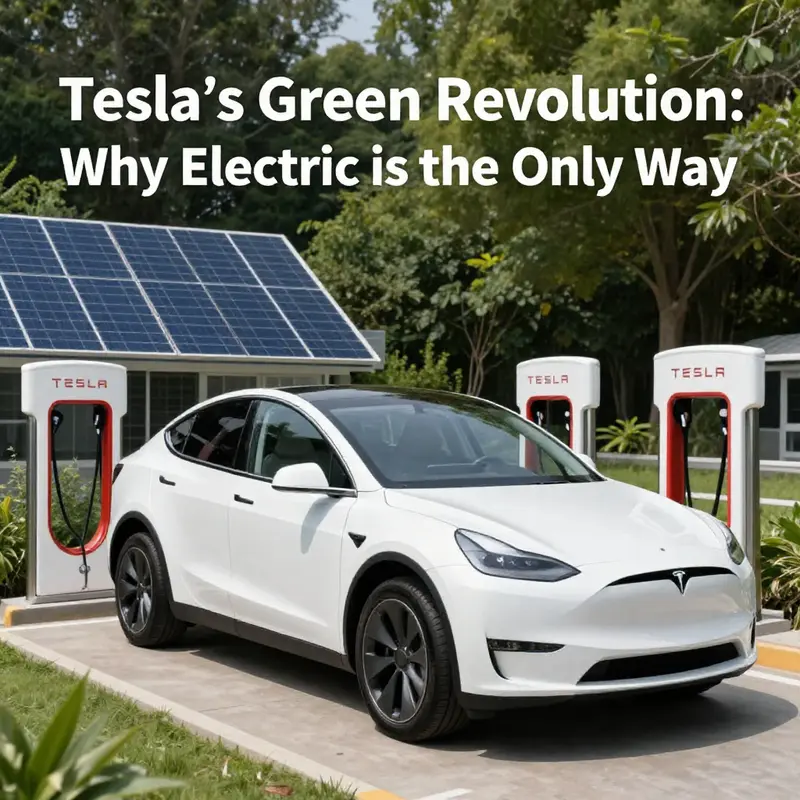
Tesla’s journey toward a sustainable future is both inspiring and groundbreaking. The company has built its entire identity on clean energy and innovation, and this vision is reflected in every aspect of its operations. From its high-performance electric vehicles to its meticulously designed service operations, Tesla consistently redefines what is possible in the world of transportation. By eliminating reliance on gas-powered service vehicles, Tesla not only underscores its commitment to sustainability but also sets a new standard for the industry.
At its core, Tesla’s mission is to accelerate the world’s transition to sustainable energy. This mission permeates every decision made within the company, and the move to operate a fully electric fleet for service, logistics, and delivery operations is no exception. Unlike many organizations that continue to depend, even partly, on internal combustion technology for operational needs, Tesla insists on a future where every vehicle on the road is powered by electricity. This means that even behind the scenes, as technicians travel to service electric vehicles or transport parts across the country, every service van and delivery truck is an embodiment of Tesla’s aspiration to drive down global carbon emissions.
The impact of these efforts is both quantifiable and significant. In recent reporting from 2024, it was revealed that Tesla’s customers collectively prevented nearly 32 million metric tons of CO₂ equivalent from entering the atmosphere. Imagine removing more than 7 million gasoline-powered cars from the road for an entire year. Such staggering figures not only illustrate the power of Tesla’s vehicle lineup but also highlight how the company’s holistic approach to sustainability extends beyond product sales to influence every facet of its operations. By eliminating conventional gas-powered service vehicles, Tesla further reduces indirect emissions, contributes to cleaner air, and champions a cleaner, more responsible model of corporate conduct.
An important element of Tesla’s strategy is the integration of multiple clean energy solutions into its business model. The company’s commitment to sustainability goes beyond just manufacturing electric cars. It also involves incorporating solar energy and sophisticated battery storage systems into its operations. When service and logistics divisions use electric vehicles, they can also tap into these renewable energy sources and optimized battery systems to support their missions. This integration creates an ecosystem where energy production, consumption, and storage work together to reduce reliance on fossil fuels. The outcome is a streamlined approach in which every operation, whether on the showroom floor or in the service yard, embraces the advantages of modern renewable technology.
Tesla’s adaptability is further underscored by its willingness to innovate in areas that many consider secondary to the main product line. While headlines often celebrate Tesla’s advancements in consumer vehicles, less publicized but equally important is how the company has reimagined its internal operations. In a significant departure from industry norms, Tesla has revamped its logistics and maintenance fleets to be exclusively electric. This decision sends a clear message about the company’s values: sustainability must be woven into every operation, from the cars on the road to the vehicles that service those cars. In doing so, Tesla not only reaffirms its mission but also challenges other companies to reexamine the environmental impacts of their internal practices.
Transitioning a service fleet from being fossil-fuel dependent to being fully electric is not an overnight process. It requires meticulous planning, significant investment, and a commitment to long-term benefits over short-term convenience. Tesla’s leadership recognized early on that every detail counts when it comes to environmental stewardship. The company undertook an extensive evaluation of its service and delivery operations, gradually replacing legacy systems with state-of-the-art electric models. Electric service vehicles like the custom-modified Cybertruck and the adaptable Model Y have become part of an evolving lineup designed to meet the unique demands of repair, logistics, and customer support functions. These vehicles are equipped with the latest technology in energy efficiency and durability, ensuring that the transition not only benefits the environment but also enhances operational reliability and performance.
The decision to utilize only electric vehicles for service is a powerful manifestation of Tesla’s long-held belief in the potential of electric mobility. In a time when environmental concerns are at the forefront of public discourse, every facet of an organization’s operations is scrutinized for sustainability. Tesla’s choice to employ electric vehicles across its service fleet underscores the company’s unwavering dedication to reducing emissions and protecting the environment. It is one thing to produce a revolutionary electric car for sale, but it is another entirely to integrate that revolutionary spirit into every operational detail. This bold approach rarely goes unnoticed. Stakeholders, customers, and environmental advocates alike see Tesla as a leader in reimagining the future of transportation—not just on the roads, but behind the scenes as well.
Moreover, this initiative provides extensive operational benefits as well. Electric vehicles, such as those used by Tesla for in-house service operations, are associated with lower maintenance costs compared to their gas-powered counterparts. They eliminate the need for complex internal combustion engine maintenance, reduce the number of moving parts that can wear out or fail, and can operate with a higher degree of efficiency. Over time, these vehicles become more cost-effective, not only from an environmental perspective but also in terms of total cost of ownership. This efficiency allows Tesla to allocate savings to further research and development, fueling additional innovations in sustainability and technology. As Tesla’s electric fleet continues to grow and mature, it acts as a self-sustaining ecosystem that feeds back into the company’s overall strategy of reducing environmental impact.
The practical implications of this strategy also extend to the broader community. When service vehicles are powered by electricity instead of gasoline, local air quality in service regions improves. Reduced emissions mean fewer pollutants in the environment, contributing to healthier communities and a lower overall carbon footprint. This factor is particularly relevant in urban areas, where air quality can dramatically affect residents’ day-to-day lives. Communities near service centers and logistics hubs experience tangible benefits when only clean energy vehicles are used, further emphasizing Tesla’s role as a force for positive environmental change.
The company’s drive towards an all-electric service fleet also exemplifies responsible resource management. Fossil fuels are finite and their extraction and usage have significant environmental costs. By shifting away from gas-powered vehicles, Tesla sidesteps these issues and positions itself at the vanguard of a renewable future. This strategic decision not only addresses immediate environmental concerns but also aligns with long-term global trends toward renewable energy adoption. As economies worldwide gradually embrace cleaner energy sources, Tesla’s early commitment to electric service vehicles provides the company with a competitive edge, ensuring it remains at the forefront of technological and environmental progress.
In addition to these operational changes, Tesla’s sustainability initiatives are socially impactful. For customers who choose Tesla, the environmental benefits are clear. Every mile driven in an electric Tesla vehicle represents a commitment to reducing pollution and mitigating climate change. This sentiment is mirrored in how the company conducts its own business. Service vehicles, even when used for routine maintenance or part deliveries, actively support the broader goal of environmental responsibility. This alignment between product and operation reinforces Tesla’s brand message and builds trust with those who value sustainable living.
The concerted efforts by Tesla to overhaul its service fleet send a robust signal across the industry. Traditional automotive dealerships and service centers often maintain mixed fleets with a heavy reliance on gas-guzzling vehicles. In contrast, Tesla’s clear-cut choice to embrace a 100-percent electric model is a declaration that sustainability is not optional—it is essential. This shift influences not only how service is provided but also sets a precedent that other companies might follow. The potential ripple effect of such a strategic move is enormous; as more companies witness the environmental and economic benefits of an all-electric fleet, they too may pivot towards sustainable solutions. In this way, Tesla is indirectly fostering a broader transformation in service operations across the automotive sector and even beyond.
Furthermore, modern technology and innovation have enabled Tesla to overcome many of the traditional challenges associated with electric fleets. Battery life, charging infrastructure, and energy management are all areas where Tesla has invested heavily. The same research and development that went into designing its consumer vehicles have also been applied to refining service vehicles. This focus on continuous improvement ensures that the electric service fleet is not only sustainable but also reliable and efficient under the most demanding operational conditions. The integration of cutting-edge telematics and data analytics helps Tesla monitor vehicle performance in real time, optimize maintenance schedules, and predict potential issues before they arise. It is this proactive approach to service management that sets Tesla apart.
From an environmental perspective, every electric service mile charged by Tesla’s fleet is a step towards a cleaner future. The company’s dedication to sustainability permeates every operational detail, reinforcing the idea that environmental responsibility need not come at the expense of efficiency or profitability. Instead, Tesla demonstrates that a business can thrive while actively contributing to the protection of the planet. This sustainable model aligns perfectly with contemporary global trends where businesses are increasingly expected to play a role in addressing climate change. Tesla is more than a car manufacturer; it is a beacon for what can be achieved when sustainability is placed at the forefront of corporate strategy.
In practical terms, the benefits of Tesla’s electric service fleet extend to enhanced customer experiences as well. Electric vehicles are known for their responsiveness, quiet operation, and advanced connectivity features, all of which contribute to smoother and more reliable service visits. For customers, this means shorter wait times, greater precision in service scheduling, and a consistent commitment to environmental ethics. When a service vehicle arrives, it is not just delivering parts or expertise; it is also a mobile ambassador for a cleaner, greener alternative to traditional fossil-fuel dependence. This tangible demonstration of the company’s values bolsters customer confidence and deepens loyalty.
Beyond the immediate operational advantages, Tesla’s transformation of its service fleet is part of a larger vision for a comprehensive sustainable ecosystem. The interplay between electric vehicles, renewable energy generation, and innovative storage solutions creates an environment where sustainability is not compartmentalized but pervasive. This ecosystem approach ensures that every aspect of Tesla’s operations contributes to building a robust and resilient framework for a cleaner future. For instance, homes and small businesses equipped with Tesla’s solar panels and battery storage systems benefit from a seamless integration of clean energy, further reducing reliance on grid electricity that may be produced from non-renewable sources. In this interconnected system, Tesla’s electric service vehicles play a crucial role by embodying and reinforcing the overarching message of sustainability.
Tesla also actively leverages partnerships and collaborations to enhance its sustainability footprint. By working with suppliers who share its environmental ethos and investing in next-generation battery technology, Tesla continues to push the boundaries of what is possible in electric mobility. Internally, initiatives to train technicians on the unique aspects of servicing electric vehicles ensure that the company’s commitment to sustainability is maintained at every level. These training programs emphasize not only technical skill but also a broader understanding of the environmental impact of their work. This holistic approach creates a workforce that is as dedicated to the preservation of the planet as it is to operational excellence.
For those interested in learning more about how all aspects of vehicle maintenance are adapting to modern technology and environmental considerations, you can visit the KMZ Vehicle Center blog to explore detailed insights and practical tips related to evolving vehicle technologies and service innovations.
The strides Tesla has made in revamping its service operations serve as a microcosm for its overall mission. What began as a bold challenge to the status quo has blossomed into a fully integrated, environmentally responsible strategy that is reshaping the very nature of vehicular maintenance and logistics. Every decision to use an electric service vehicle is a reaffirmation of a commitment to lower emissions, to cleaner air, and to a future where sustainable practices are not merely adopted but celebrated. This transformative journey is a testament to Tesla’s forward-thinking approach and unyielding dedication to mitigating the environmental impacts associated with traditional transportation.
As more data emerges, the tangible benefits of Tesla’s strategies continue to become apparent. Future projections suggest that by further optimizing its service fleet, Tesla will contribute to an ever-deepening reduction in global carbon footprints. This is not limited to the direct effects of operating electric vehicles; it also includes the synergistic benefits derived from wider adoption of renewable energy systems and evolving technologies that promote energy conservation. The company’s comprehensive strategy is a model for others, showing that meticulous attention to detail—from fleet management to end-user service—can lead to broad, measurable improvements in sustainability.
In an era when environmental issues are pressing and planetary resources are increasingly strained, Tesla’s example offers a blueprint for balancing business operations with ecological responsibility. The company’s refusal to rely on gas-powered service vehicles is more than a tactical decision—it is a fundamental element of a broader, strategic vision that champions sustainable progress. By aligning everyday operations with a larger commitment to reducing greenhouse gas emissions, Tesla redefines not only how service operations are managed but also how industries can adapt to meet the challenges of the 21st century.
Every mile that Tesla’s electric service vehicles travel is a reminder of the opportunity to make a difference. Every innovative solution and every new technology implemented speaks volumes about the potential for progress when sustainability is prioritized over convention. Tesla’s service fleet is not just about logistics and customer care; it is a living example of how corporate practices can evolve to benefit the environment and society at large. Through continuous innovation and dedication to clean energy, Tesla has set a high standard for operational excellence that leaves a lasting mark on the transportation sector.
Tesla’s ongoing journey is an invitation to reimagine what is possible. It paints a picture of a future where business success is intertwined with environmental stewardship—a future where every vehicle on the road, whether carrying customers or servicing the fleet, is powered by clean, renewable energy. This vision, built on a foundation of relentless innovation and responsible resource management, is transforming not just how companies operate, but also how we think about sustainability on a global scale. For more detailed insights into Tesla’s long-standing commitment to environmental sustainability and the technologies driving it forward, please visit Tesla’s official sustainability page at https://www.tesla.com/sustainability.
Pioneering Electric Excellence: How Tesla Redefined Service and Delivery Fleets
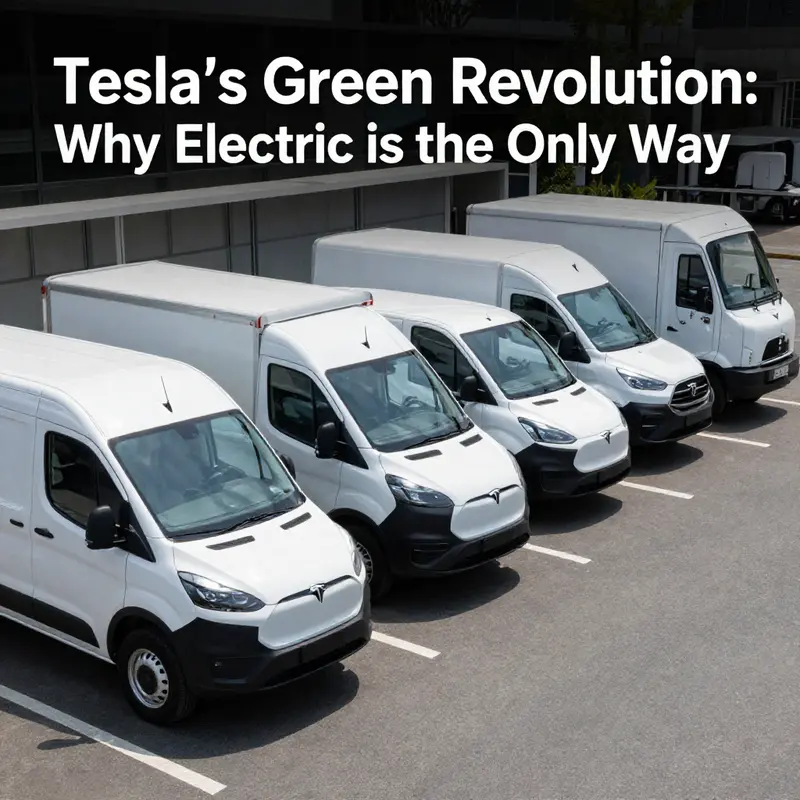
Tesla’s approach to service and delivery vehicles is not only a reflection of the global push for more sustainable transportation—it is a bold and transformative strategy that redefines what it means to operate a service fleet. By completely eliminating reliance on gas-powered vehicles, Tesla has not only embraced its core mission of accelerating the transition to sustainable energy but has set a new benchmark for fleet management across industries. This expansive narrative explores the intricate details of Tesla’s electric fleet, examining how advanced battery technology, streamlined onboarding processes, and robust privacy and security systems coalesce to deliver a service fleet that is as innovative as it is efficient.
At the heart of Tesla’s electric fleet is a commitment to longevity and reliability combined with environmental mindfulness. The evolution of battery technology in recent years has enabled Tesla to equip its vehicles with unparalleled performance metrics. Each vehicle benefits from continuous innovations that translate into extended range, faster charging times, and lower overall costs of operation. This relentless pursuit of excellence in energy storage and efficiency is instrumental for businesses that depend on large fleets to carry out day-to-day operations. In fleets where every minute counts, the ability to quickly charge and maintain a high level of performance means that vehicles are ready for use more often, ensuring that downtime is minimized and productivity is maximized.
The technological achievements are not limited to the battery alone. Tesla’s integration of state-of-the-art onboard systems, such as autopilot and Smart Summon, elevates the safety and convenience standards that service fleets have historically struggled to achieve. These systems are seamlessly integrated with the electric powertrain to offer a package that is both forward-thinking and user-friendly. Clients and fleet operators benefit from real-time data that allows them to monitor vehicle performance, plan efficient routes, and even predict service needs before issues arise. Such proactive management not only reduces the overall maintenance overhead but also aligns with broader corporate objectives such as reducing carbon footprints and cutting operational emissions—a win for both business efficiency and environmental responsibility.
The onboarding process for drivers participating in Tesla’s electric fleet program has been engineered with precision, ensuring that the shift from conventional, gas-powered vehicle systems to next-generation electric systems is swift, straightforward, and secure. As soon as a driver joins a fleet, they are required to install the latest version of the Tesla app, available on both major mobile platforms. Through this portal, fleet managers can effortlessly assign vehicles to drivers, provide detailed routes, and update delivery schedules in real time. Privacy concerns are kept in mind during this integration, as the data shared through the app is anonymized and protected with stringent security measures. The onboarding process is entirely digital, reinforcing Tesla’s commitment to leveraging technology for safer, more efficient fleet management.
One of the standout aspects of this comprehensive system is the emphasis on familiarizing drivers with every nuance of their new electric vehicles. Before drivers take full control of the vehicles, they are invited to participate in a series of in-person workshops, interactive demo sessions, and instruction through detailed video series commonly referred to as the “Meet Your Tesla” program. These initiatives are designed to build a deep understanding of both the operational and safety features unique to electric drivetrains and advanced infotainment systems. In a domain where technological advancements are frequent and rapid, this proactive approach to driver education ensures that road safety and operational efficiency remain paramount. With topics ranging from the intricacies of regenerative braking systems to the effective use of autonomous driving aids, drivers are equipped with the knowledge needed to exploit the full potential of their vehicles while upholding the responsibilities of safe driving.
Tesla’s electric fleet goes beyond mere functionality—it serves as an embodiment of the company’s vision for a greener future. The philosophy underpinning this strategy is firmly rooted in the reduction of greenhouse gas emissions and the minimization of reliance on fossil fuels. By replacing conventional service vehicles with electric alternatives, Tesla not only diminishes the overall carbon footprint of its operations but also contributes actively to the global efforts aimed at mitigating climate change. This progressive stance reinforces the brand identity of Tesla as a leader in sustainable innovation. In an era where environmental considerations have become critical determinants of corporate success and public approval, Tesla’s comprehensive approach to building and managing an electric fleet sends a strong message about the company’s dedication to responsible resource utilization and forward-thinking business practices.
A critical component of Tesla’s service fleet strategy is its focus on data security and user privacy. In an interconnected world where vast amounts of data are transmitted between vehicles, drivers, and control centers, safeguarding sensitive information is of utmost importance. Tesla’s protocols ensure that driver-specific data—encompassing location, driving habits, and even video recordings from integrated cameras—remains anonymized. The data collected is predominantly used for fleet-wide learning and improvement of autonomous systems, and only in exceptional circumstances, such as the aftermath of a collision or other safety-critical events, is the identification of the driver considered. This meticulous balance between data utility and privacy not only builds trust among fleet operators and drivers but also positions Tesla as an ethical leader in the realm of technology and transportation.
The operational efficiency of an electric fleet is deeply intertwined with its maintenance regime and software support. Traditional fleets reliant on gas-powered vehicles face numerous challenges related to engine maintenance, fuel logistics, and the regular upkeep of complex mechanical systems. Tesla’s electric mandate, however, simplifies many aspects of vehicle maintenance. With fewer moving parts and a design focused on durability and reliability, Tesla vehicles offer a reduction in the frequency and complexity of maintenance tasks. Furthermore, over-the-air updates ensure that vehicles are always running the latest version of their software, incorporating improvements in autonomy, safety features, and general performance. Fleet operators benefit tremendously from this system, as maintenance schedules can be dynamically adjusted based on real-time performance data, leading to a more predictable and lower-cost operation.
The approach to service fleet management adopted by Tesla also has far-reaching implications for businesses beyond the automotive industry. When companies shift away from traditional gas-powered service vehicles, they are not just upgrading their vehicles—they are transitioning to a paradigm where sustainability and efficiency are central to their business operations. This shift often correlates with broader initiatives, such as adopting green energy solutions, optimizing logistical operations, and investing in long-term cost savings through reduced fuel consumption and maintenance. Businesses can also leverage insights from other industries; for example, truck maintenance tips for first time owners provide valuable lessons in managing fleet health, ensuring that even companies with traditionally diesel-based systems can draw inspiration from Tesla’s operational methodologies. The underlying message is clear: modernization and sustainability are not mutually exclusive—they reinforce one another.
It is also important to appreciate how Tesla has reimagined the process of fleet integration as a whole. Unlike fleets managed by legacy systems which often require significant manual intervention and disparate software solutions, Tesla’s digital-first approach creates a unified ecosystem. For fleet managers, this means that all vehicles are connected, monitored, and updated through a single, central platform. The result is not only a reduction in administrative overhead but also an increase in operational transparency. As vehicles communicate their status in real-time, decisions regarding route adjustments, battery recharging needs, or rehabilitation after service events can be made swiftly and effectively. The centralized command not only enhances logistical efficiencies but also acts as a backbone for a scalable system that can expand as demand increases, ensuring that both small and large organizations can benefit equally from the technological advances on offer.
Moreover, the integration of advanced digital tools within the Tesla fleet has far-reaching effects on how business operations are structured and reimagined. Enterprises that adopt these vehicles notice a transformation in their internal processes, where data-driven decision-making becomes the norm rather than the exception. The insights derived from fleet data can inform everything from scheduling and route planning to more strategic decisions such as fleet expansion and resource allocation. Additionally, since the vehicles come equipped with features that optimize driving patterns and energy consumption, businesses see a noticeable decline in operational inefficiencies. The shift from reactive to proactive management—enabled by accurate, real-time data—can lead to significant cost savings and enhanced safety, thereby positioning Tesla’s electric fleet as a cornerstone of modern transportation management.
Another dimension of Tesla’s electric fleet strategy that merits attention is the impact on urban mobility and the broader public perception of electric vehicles. As service fleets typically interact directly with the public—be it for delivery, maintenance, or support—every interaction serves as a testament to the reliability and sustainability of electric transportation. Each journey undertaken by a Tesla vehicle reinforces the idea that electric mobility is not a compromised alternative to traditional designs but a superior, forward-thinking option in its own right. The visual representation of a sleek, emission-free vehicle navigating city streets bolsters the case for an electric future, thereby encouraging other organizations and even private consumers to consider similar transitions. Through this ripple effect, Tesla’s operational decisions contribute significantly to broader societal shifts, underscoring a move toward cleaner, greener urban environments.
Beyond the technology and operational elements lies a strategic narrative about kindling innovation and setting industry trends. Tesla’s electric fleet is emblematic of a larger revolution within the automotive industry, one that favors sustainability over short-term gains tied to fossil fuels. This shift is not merely about environmental benefits, although those are significant—it is also about fostering a culture of continuous innovation. Every advancement in battery performance, every efficiency gained through sophisticated software, and every improvement in driver safety protocols serves as a building block for what is to come. Companies across sectors are rapidly recalibrating their strategies to align with these emerging trends. The confluence of sustainability, technology, and operational excellence embodied by Tesla creates a blueprint for future transportation solutions that aspiring organizations seek to emulate.
The seamless integration of hardware, software, and driver support systems in Tesla’s electric fleet represents a comprehensive answer to longstanding issues in fleet management. In traditional fleets, technological integration often lags well behind the advancements seen in consumer vehicles, leading to inefficiencies and higher maintenance costs. However, Tesla’s commitment to a connected, fully integrated system of operation ensures that every component of the fleet—from the onboard systems and driver interfaces to the centralized management platform—operates in unison. This creates a virtuous cycle where improvements in one area stimulate enhancements throughout the entire fleet network. As businesses adjust to this new model, they reap the benefits of an ecosystem designed for high reliability, operational clarity, and environmental responsibility.
It is also worth exploring how Tesla’s electric fleet strategy interfaces with broader market trends and regulatory evolutions. With governments around the world increasingly incentivizing green technology and imposing stricter emissions standards on vehicles, the adoption of electric fleets is moving from a niche option to an industry prerequisite. Tesla’s robust infrastructure for electric service vehicles positions its clients at the forefront of regulatory compliance and environmental stewardship. Moreover, as public policy continues to favor low-emission technologies, organizations that have transitioned to electric fleets may find themselves better situated to benefit from government incentives, tax breaks, and enhanced community goodwill. In this context, Tesla’s vision extends beyond a single fleet operation—it’s an integral part of a larger movement toward sustainable urban development and responsible economic growth.
The transformation catalyzed by Tesla’s electric service and delivery vehicles underscores a broader paradigm shift—a move away from incremental improvements toward profound changes in how fleets are conceived, managed, and maintained. The advantages offered by electric powertrains, digital integration, and proactive data management are clear, not just in the raw metrics of fuel savings or reduction in emissions, but in fostering a way of thinking that values efficiency, security, and environmental integrity. Tesla’s integrated approach has inspired a re-evaluation of traditional models, prompting industry stakeholders to rethink practices rooted in the era of fossil fuels and mechanical complexity. In an increasingly competitive market where operational transparency and sustainability are prized, Tesla’s service fleet offers a compelling case study in how transformative technology can drive meaningful change.
For organizations contemplating the transition to an electric fleet, the Tesla model presents numerous learning opportunities. Embracing this model involves not only acquiring new hardware but also adapting to new processes, from digital onboarding to continuous remote monitoring. As businesses integrate these vehicles into their operational fabric, they discover that many conventional challenges, such as fuel logistics and intensive scheduled maintenance, are either significantly reduced or eliminated altogether. Instead, the emphasis shifts to maintaining a technologically unified fleet that communicates its needs in real time, thereby allowing for predictive maintenance models and smarter resource allocation. As the benefits of this system become ever more apparent, early adopters can expect substantial improvements in operational efficiency and an overall uplift in the company’s environmental credentials.
Moreover, the Tesla electric fleet represents a convergence of multiple factors that collectively underscore a holistic approach to transportation. The fusion of cutting-edge hardware and intuitive software solutions provides a robust platform not only for day-to-day fleet operations but also for long-term strategic planning. As the digital infrastructure supporting these vehicles continues to evolve, businesses can anticipate a future where operational insights derived from big data further drive innovation and efficiency. In this way, Tesla’s model acts as both a catalyst and a roadmap for organizations intent on modernizing their transportation assets while meeting the demands of a rapidly changing world.
For those seeking further insight into the operational excellence and strategic foresight that define modern fleet management, additional details can be gleaned from trusted resources such as the official support page dedicated to Tesla’s fleet operations at Tesla Fleet for Drivers. This platform offers comprehensive guidance on vehicle configuration, driver onboarding protocols, and ongoing system updates that ensure every fleet remains at the cutting edge of innovation.
In summary, Tesla’s electric service and delivery fleet is not merely an alternative to conventional gas-powered vehicles—it is a complete reinvention of what a service fleet can be. By harnessing state-of-the-art battery technology, providing a streamlined digital onboarding process, emphasizing driver education through both digital and in-person initiatives, and rigorously ensuring data security and privacy, Tesla constructs a model that is as operationally sound as it is environmentally responsible. This approach, in turn, fosters a broader ecosystem of sustainability that is likely to have ripple effects across industries and geographies. As more businesses recognize the tangible benefits of transitioning to an electric fleet, the industry as a whole may well undergo a fundamental transformation, one that champions operational efficiency, environmental stewardship, and continuous innovation.
Tesla’s pioneering strategy exemplifies how companies can seamlessly blend sustainability with premium performance. It is an inspirational model that challenges established norms and sets the stage for future developments in electric transportation. As organizations worldwide adapt to new regulatory environments and consumer expectations, Tesla’s electric fleet stands as a beacon of what can be achieved when innovation, technology, and environmental commitment converge. The cumulative impact of these efforts is unmistakable: an operational paradigm that is cleaner, smarter, and more attuned to the demands of the modern world.
Through its transformative approach, Tesla has redefined the landscape of service fleets by eliminating the need for gas-powered vehicles in favor of an entirely electric lineup. This paradigm shift is not only a testament to the company’s unwavering commitment to sustainability but also a broader call to action for industries to reexamine and reinvent their operational models. In doing so, Tesla is paving the way for a future where environmental responsibility and cutting-edge technology collaborate to create solutions that serve both business needs and the global community. The journey from traditional mechanisms to high-performance, integrated electric fleets is complex and challenging, yet the rewards—manifested in lower emissions, improved operational efficiencies, and enhanced driver experiences—are profound and far-reaching.
Ultimately, the story of Tesla’s electric fleet is one of innovation and leadership. It underscores how dedicated investments in technology and sustainability can result in significant operational advantages, inspiring a new era of fleet management that prioritizes environmental integrity alongside efficiency. The comprehensive design of these fleets, characterized by advanced battery systems, digital integration, proactive driver support, and a staunch commitment to privacy, encapsulates a vision of a future where every aspect of transportation is reimagined. As more organizations follow suit, the collective shift towards electric fleets promises a cleaner, safer, and more connected world, highlighting a monumental leap forward in the evolution of service and delivery vehicles.
Electrifying Service Dominance: Tesla’s Global Strategy Powered by Electric Innovation
Tesla’s journey into the future of sustainable transportation is not limited to its high-performance road vehicles; it extends deep into every facet of its operations, including the essential realm of service vehicles. In a world where every mile matters, Tesla has chosen an all‐electric approach not only for its consumer models but also for the fleet that supports its global service and delivery operations. This strategic decision underscores the company’s unwavering commitment to sustainability, operational efficiency, and energy innovation. Far from being a marginal detail, Tesla’s use of entirely electric service vehicles forms a critical thread in the fabric of its global strategy, reinforcing its role as a pioneer in the evolution of clean energy and environmentally responsible mobility.
At the heart of Tesla’s manufacturing and service ecosystem lies a philosophy that merges operational necessity with long‐term vision. The company’s determination to use electric vehicles—across the board—ensures that every element of its operation contributes to the reduction of greenhouse gas emissions and a cleaner global environment. This holistic approach means that whether it is ramping up production at its flagship facilities, like the Shanghai Gigafactory, or dispatching service vans to assist customers in remote locations, Tesla maintains an unyielding focus on electric power. The Shanghai Gigafactory, a linchpin in Tesla’s international expansion, recorded an extraordinary production output in 2025, with over 851,000 vehicles rolling off its assembly lines. Such numbers are not merely a testament to production scale but also a validation of Tesla’s belief in electric propulsion as the only sustainable path forward.
The sheer scale of Tesla’s operations in Asia-Pacific and Europe has evolved into a global success story. For instance, during the third quarter of 2025, record quarterly deliveries reached a high of 497,000 units, driven primarily by the robust performance of the Model Y in strategic markets such as China. The Model Y’s repeated success in dominating the mid-to-high-end SUV segment is a clear indication that consumers across the globe are embracing EV technology. This acceptance, powered by innovative design, superior performance, and a unique ownership experience, has allowed Tesla to tighten its grip on key markets. Tesla’s commitment to expanding its electric portfolio in China through initiatives like the refreshed Model Y, the luxury six-seat Model Y L, and extended-range variants that offer more than 800 kilometers of driving range demonstrates a tailored approach designed to meet local consumer demand. Each tweak and upgrade is part of a broader strategy intended to prove that EV technology can be as luxurious, reliable, and convenient as the traditional alternatives that once dominated the market.
The evolution of Tesla’s service vehicle fleet, entirely powered by electricity, is emblematic of the company’s commitment to an integrated ecosystem that prioritizes sustainability and efficiency at every turn. In addition to assembling and delivering vehicles, Tesla is investing heavily in developing an expansive charging infrastructure. By planning to manufacture EV chargers at its Shanghai facilities and rapidly deploying new charging stations across multiple regions, Tesla is ensuring that its service and support network is as future-focused as its products. This expansion does not occur in isolation; it forms an essential pillar of the company’s broader mission to accelerate the global transition to sustainable energy. Every electric service vehicle that rolls out is a mobile ambassador of Tesla’s ideology, representing a commitment to reducing dependency on fossil fuels and advancing a greener planet.
Tesla’s global strategy is multifaceted, spanning from raw material procurement and advanced battery technology innovations to significant investments in production efficiency and customer outreach initiatives. For Tesla, the challenge is not simply to produce electric vehicles but to create an entire ecosystem that supports them seamlessly. At the Shanghai Gigafactory, where over half of Tesla’s global deliveries are now churned out, every aspect of production is interwoven with sustainability. This facility is not just an engine of production; it is a hub of technological research, development, and strategic planning, focused on ensuring scale and resilience in the face of a rapidly evolving market landscape. The facility’s success has provided a blueprint for similar expansions in other regions, all emphasizing the fusion of high efficiency with low environmental impact.
Integral to Tesla’s comprehensive strategy is the recognition that the global demand for electric vehicles is fostered by localized innovation. In China, for instance, Tesla has leveraged its manufacturing prowess to introduce products that are finely tuned to meet the unique demands of a dynamic market. From offering zero-interest financing options that make EV ownership more accessible to launching the world’s largest supercharger station in Shanghai, Tesla has taken bold steps to foster customer loyalty and build an enduring electric ecosystem. Each initiative helps create a ripple effect that enhances not only the immediate service quality but also the broader public perception of electric mobility. The company’s ability to blend innovation with practical marketing strategies has allowed it to manage robust sales numbers while continuously investing in the future of sustainable transportation. This enduring focus on technological advancement and market adaptation has resulted in a service network where every electric vehicle—whether on the sales floor or the repair route—is a testament to Tesla’s commitment to quality and sustainability.
Behind the scenes, Tesla’s operations are guided by a relentless pursuit of efficiency and innovation. Every electric service vehicle is designed to minimize energy consumption while maximizing operational uptime. In a sector that once relied heavily on gas-powered trucks and vans, this shift to electrification is revolutionary. The benefits are tangible: lower fuel costs, reduced maintenance burdens, and the elimination of carbon emissions associated with fossil fuels. Such strategic advantages are crucial in an era where environmental regulations are tightening and consumer consciousness regarding sustainability is at an all-time high. The operational philosophy at Tesla is clear—if the primary vehicles on the road are to be electric, then every support operation must mirror that philosophy. This coherent approach not only bolsters Tesla’s brand identity but also sets a new standard for automotive service operations worldwide.
Despite Tesla’s towering successes in various regions around the globe, challenges persist in markets with historically entrenched automotive traditions. For instance, in India, steep import tariffs have made advanced electric models like the Model Y less accessible for many potential consumers. Nonetheless, Tesla remains steadfast in its commitment to scaling production and refining its technology to suit diverse regulatory and market conditions. The company’s decision to maintain an all-electric fleet of service vehicles, regardless of local challenges, reflects its dedication to uniform standards of sustainability. By ensuring that every facet of its operations adheres to high environmental standards, Tesla sends a powerful message that its vision for the future is unyielding. Even in markets where economic and policy challenges exist, the company’s strategic focus remains on innovation and sustainability. The long-term view is clear: by investing now, Tesla seeks to influence the market and foster broader adoption of electric vehicles over time. In doing so, Tesla not only drives its own success but also paves the way for a global shift away from fossil fuels.
From the perspective of a service provider and a customer, the impact of Tesla’s all-electric strategy is both pragmatic and inspirational. On the pragmatic front, the benefits of reduced emissions, quieter operations, and lower long-term maintenance costs are immediately apparent. On the inspirational side, Tesla’s vision is a rallying cry for a cleaner, more sustainable future—a future where every delivery, every repair, and every service visit is powered by clean energy rather than fossil fuels. This transformation resonates deeply across communities and industries, emphasizing that a commitment to sustainability is not merely a strategic business decision but a moral imperative. The entire service network becomes a microcosm of Tesla’s broader ambition: to lead the charge toward a future where electric power is the norm. As more customers experience the benefits of an electric service network first-hand, the narrative shifts from one of isolated success stories to a compelling global movement. For those interested in understanding the nuances of vehicle innovation and maintenance, further insights are available on the comprehensive resource provided by the KMZ Vehicle Center blog, where industry trends and practical maintenance guidelines continue to inspire and educate.
Innovation at Tesla extends far beyond the vehicle manufacturing line. The company’s investment in next-generation battery technology, smart charging solutions, and energy management systems mirrors the same forward-thinking mindset that has defined its approach to service vehicles. Advanced battery management systems help optimize the energy flow, ensuring that even the service vehicles have extended ranges and minimal downtime. This technological acumen enables Tesla to continue pushing the boundaries of what is possible in the realm of electric mobility. Across its global operations, Tesla’s integrated strategy is clear: every electric vehicle, whether it is on the showroom floor, the factory line, or out on a service call, receives the same level of innovation and investment. This consistency is both a reflection of Tesla’s corporate ethos and a vital component of its success in maintaining customer trust and operational superiority.
The strategy behind Tesla’s all-electric service fleet is not a temporary measure; it is a carefully cultivated philosophy set to steer the company’s global trajectory for decades to come. As governments around the world implement increasingly rigorous environmental regulations, and as consumer awareness about climate change intensifies, Tesla’s early commitment to a fully electric operational model provides it with a significant competitive edge. Each service vehicle on the road is a beacon of technological progress and environmental stewardship, reinforcing the message that sustainable energy is not only viable but also preferable. Innovations in charging infrastructure, battery recycling programs, and energy efficiency initiatives serve as the backbone for an operational model that is as much about environmental responsibility as it is about economic viability. The company’s global expansion plans mirror a broader trend in the industry, one where traditional reliance on fossil fuel-powered logistics is rapidly becoming a relic of the past.
In a dynamic global market, where every strategic decision carries far-reaching implications, Tesla’s use of electric service vehicles emerges as a central pillar in its overall growth and sustainability agenda. This deliberate strategy is driven by a recognition that operational consistency and brand authenticity are keys to long-term success. By ensuring that every touchpoint—from vehicle production and delivery to post-sale support—is powered by clean energy, Tesla reinforces its position as a leader in sustainable mobility. The global narrative surrounding Tesla is a powerful reminder that the future is electric. As more consumers, regulators, and industry experts begin to appreciate the multifaceted benefits of sustainable energy, Tesla’s integrated approach will undoubtedly serve as a road map for others to follow. The company’s commitment to an all-electric fleet is not simply a business strategy; it is a vision for a cleaner, more resilient future where energy efficiency and innovative design work hand in hand to create a better world.
In summary, Tesla’s electric service vehicles are much more than a mode of transportation for maintenance and delivery—they are an essential, strategically integrated component of the company’s vision to redefine global mobility. Through consistent innovation, careful planning, and a devotion to sustainability, Tesla has proven that electrification can serve every segment of the automotive industry, from manufacturing to aftersales service. This narrative, punctuated by impressive production statistics and pioneering initiatives in markets like China, embodies the essence of Tesla’s global strategy. It is a story of relentless progress, where each electric mile traveled is a step toward a more sustainable future. As Tesla continues to invest in cutting-edge technology and expand its global presence, the electric service vehicle fleet will remain a critical engine driving the company’s success and its lasting impact on the world. For further details on the cutting-edge developments at Tesla’s production hubs, interested readers can refer to the comprehensive coverage available in the Bloomberg article.
Final thoughts
Tesla’s commitment to electric transportation is not just a business model but a vital component of their identity and strategy. Their choice to use electric service vehicles exemplifies a forward-thinking approach that resonates with environmentally conscious consumers and businesses. In an era where sustainability is paramount, Tesla not only meets this challenge but pioneers new pathways in the automotive industry, leading by example for local private car owners, used car buyers, sellers, and small business fleet operators. Adopting electric vehicles is not merely a trend; it signals a larger movement towards a sustainable future.