
Knowing your vehicle’s service history is crucial for car owners, used car buyers, and small business fleet operators. Comprehensive records provide insight into past maintenance, previous accidents, and overall vehicle health—information that plays a pivotal role in making informed decisions regarding repairs, purchases, and sales. This guide explores effective methods to verify your vehicle’s service history, including leveraging advanced third-party platforms, consulting official dealership records, tapping into insurance claims, utilizing government databases, and employing OBD diagnostic tools. Each chapter will delve into these approaches, guiding you toward a complete understanding of your vehicle’s past and its implications for the future.
null
null
Traceability at the Source: Verifying Your Vehicle’s Service History Through Official 4S Dealerships
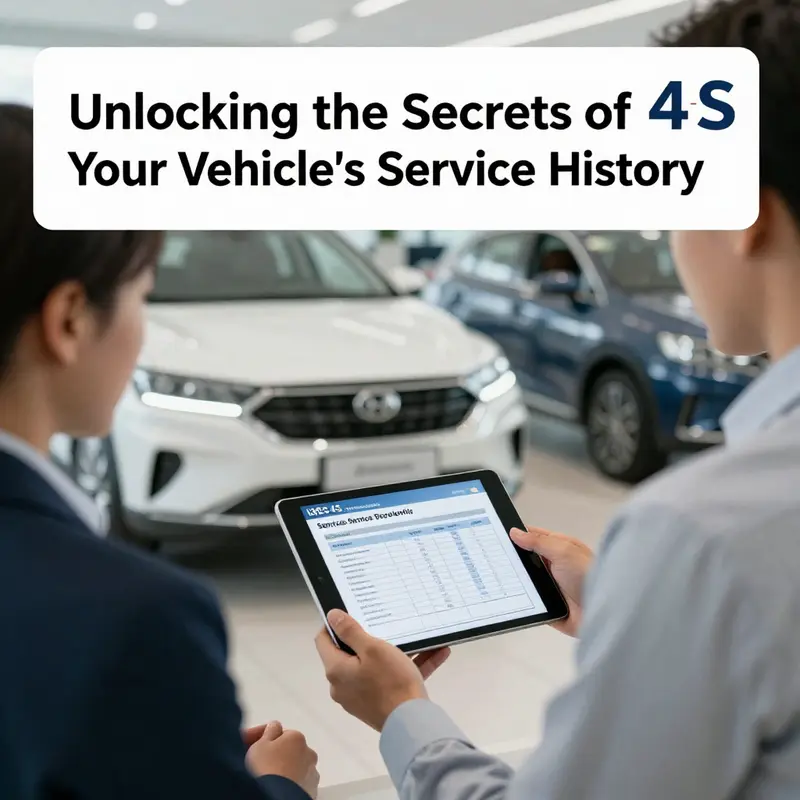
When you set out to verify a car’s service history, tracing it back to the source often yields the most precise and reliable record. Official brand dealerships, the 4S network that many car makers operate, hold a comprehensive chronicle of every maintenance and repair event performed within their system. This is not merely a list of past work; it is a carefully organized ledger that ties service visits to exact dates, mileages, parts, and technicians. The principle is simple: you are asking for aligned, manufacturer-sanctioned data that has already been vetted and logged in a centralized way. The payoff is clarity. The hard part is navigating privacy controls, identifying the right contact, and understanding what the dealership can and cannot show you. Yet when you approach the process with a clear sense of what to request and what to expect, the experience becomes straightforward rather than opaque.
To begin, identify the dealership or the brand’s official service network most closely associated with the vehicle. If the car has spent most of its life in the hands of a single brand’s service centers, that network is your best first port of call. If you’re unsure where the car was last serviced, a quick outreach to the brand’s customer care line or official website can guide you to the right address. Once you locate the correct facility, plan a visit with the simplest, most direct objective: obtain a complete maintenance history from the dealer’s internal records. The next practical step is practical preparation. Bring government-issued photo identification, the vehicle’s registration documents, and the VIN. The VIN—the 17-character code that uniquely identifies the car—can usually be found in a few visible places: the lower corner of the windshield on the driver’s side, the driver’s door jamb, or the vehicle’s registration certificate. With those items in hand, you signal that you are the rightful inquirer and that you are requesting access to the vehicle’s maintenance ledger.
Inside the service department, the staff will typically pull up the vehicle’s history in their Dealer Management System, or DMS. This is the brand’s centralized repository for service orders, repair notes, parts used, labor hours, and the associated invoices. If the owner or authorized party is present, the staff will present a detailed printout or even a digital PDF of the full history. The level of detail can be striking: you may see each service visit listed with the exact date and the mileage at that moment, a breakdown of every maintenance item performed, the parts that were replaced and their part numbers, the quantity of labor performed, and the price for each service line item. There may also be technician notes that shed light on the condition of components at the time of service, recommendations for future maintenance, and any warranty work that was logged under the vehicle’s record. In some cases, the dealership can also provide context about whether certain services were completed under a recall or a safety campaign.
Beyond the content of the records, the process itself is shaped by privacy and data protection rules. In most jurisdictions, dealerships will require proof of ownership or a written authorization if the inquirer is not the registered owner. This is not a barrier so much as a guardrail: the data is sensitive, and the dealership’s responsibility is to protect it. If you are purchasing a vehicle for someone else or if you are a power of attorney, bring documentation that confirms your authority to request the records. Once verified, the staff can usually release a printed history immediately or within a few business days if the records need to be compiled from multiple service orders. Some centers may offer the added convenience of emailing the report or providing a secure download link for you to access later. The key is to ask for the complete, unedited history rather than a partial summary. It’s easy for a customer service agent to present only the most recent or most flattering maintenance data, but the full history is what you need to detect patterns, verify consistency, and understand the true condition of the vehicle over time.
It is important to recognize the scope and limitations of the 4S-based records. The 4S network maintains an authoritative set of maintenance histories for services performed within its own brand ecosystem. If the vehicle was serviced at independent shops, non-brand repair facilities, or at a non-brand dealership, those records will not automatically appear in the 4S system. This limitation does not undermine the value of the 4S record; rather, it highlights a best practice: treat a 4S history as the most reliable core log, and then complement it with other sources for a fuller picture. For example, if you suspect that some repairs were completed outside the brand network, you can cross-check with other data sources later. In practical terms, you might start with the dealership’s printout for a solid baseline, then use a third-party history service to fill in gaps if you suspect missing entries, and finally check with the insurer for major claims that may shed light on significant events like major repairs or collision-related work. Throughout, keep an eye out for entries that don’t align with the odometer readings, as discrepancies there can point to tampering or clerical errors that deserve closer scrutiny.
Another layer of this process involves the accessibility of information beyond the physical printout. In recent years, many brands have expanded their digital ecosystems to provide owners with online access to their service histories. After confirming your identity and ownership, you may be able to log into a dedicated brand portal or mobile app, connect your vehicle’s VIN, and view the maintenance timeline, upcoming service reminders, recall notices, and sometimes the full service history in a neatly organized interface. This online access offers several practical advantages: instant availability, easy searching, and the option to download or share records securely with buyers, lenders, or service technicians. The digital pathway is a natural complement to the in-person data pull, especially for owners who prefer to manage their vehicle information electronically.
For those seeking a smoother, more seamless experience, it’s worth noting that the dealership can often guide you toward the brand’s preferred online access route, if such a portal exists for your vehicle. In this sense, the 4S approach is not merely about printed documents; it is about connecting you with a broader, centralized ecosystem of maintenance data that the brand itself has curated. If you decide to pursue this digital option, bring along your personal identification and the VIN, and ask the staff to help you link your account to your vehicle. In many cases, once the linkage is established, you will be able to view your service history alongside future maintenance schedules, recall updates, and service advisories at any time, through the brand’s official site or app.
Even as you lean on the authority of the 4S system, remember a practical reality: the most convenient and comprehensive path for many owners is to begin with a trusted third-party data aggregator that consolidates records from multiple sources. While a 4S record represents the brand’s official maintenance chronicle, third-party platforms can offer a broader panorama by including independent repair shop data and insurance-related entries. When combined with the brand’s own logs, this approach can deliver a near-complete picture of the vehicle’s service history. However, to avoid confusion or conflicting information, treat the brand’s record as the primary source and use third-party data to supplement only as needed. If you ever need to cross-verify, the dealership’s printout provides the most trustworthy anchor, with digital portals offering the most convenient ongoing access. And for those who enjoy a blend of traditional and modern methods, an OBD diagnostic tool can provide real-time fault codes and historical ECU data that may corroborate maintenance work or highlight issues the logs might not fully capture.
To anchor these ideas with a practical path, consider this sequence when you are evaluating a used car or revisiting a vehicle you already own. Start with the dealership’s service history for the brand-specific record. Present your ID and the vehicle’s VIN, request the complete maintenance log, and ask for any notes the technician may have added about future maintenance recommendations or potential recalls. If you need a broader view, inquire about the brand’s online portal access so you can monitor the history in a living document that updates as you service the car. If gaps appear, or if you want confirmation that the history is complete, you can supplement with a trusted third-party data source for cross-checks. Throughout, keep the process transparent and well-documented: note the dates, the contact persons, and any discrepancies you find. This disciplined approach not only clarifies the vehicle’s past but also informs smarter decisions about future maintenance, resale value, and ongoing ownership.
For readers who want a tangible cue on where to begin, imagine the following simple workflow: a quick call or visit to the brand dealership serving your car, bringing along the VIN and ownership documents, and asking for the official maintenance ledger. You’ll walk away with a precise, legally shareable record that anchors the vehicle’s service history in the brand’s trusted data environment. If you’re curious about broader maintenance practices in the meantime, you can explore established maintenance fundamentals in related sections of the KMZ Vehicle Center blog, which offers a balanced spectrum of guidance that complements the 4S-centric approach. See the linked resource for a gateway into a broader conversation about care and upkeep, where practical guidelines and timelines complement the official history you’ve just retrieved. KMZ Vehicle Center blog
External resource for deeper context: the initial suite of options for verifying a vehicle’s history often includes public and insurer data that can corroborate major events. For an example of how these sources can intersect with an official history, you can consult the WeChat-based vehicle history interface, which aggregates records from multiple channels to present a consolidated view. While the specifics of access may vary by region or platform, the underlying principle remains consistent: combining authoritative brand data with supplementary sources yields the most reliable picture of a car’s service journey. External reference: https://weixin.qq.com/s/3Yv8jQbWxXy6zZ9m
Uncovering the Past: How Insurance Records Shape Your Vehicle’s Service History
When you set out to check a vehicle’s service history, insurance records often serve as an essential, corroborating backbone. They are not the only source, but they are one of the most reliable anchors for major events that affect a car’s life—accidents, claims, and the subsequent repairs. Insurance logs can reveal patterns that other sources might miss: a string of high-cost repairs after a single incident, a cluster of parts replacements from independent shops, or the timing of a claim that aligns with a period of aggressive maintenance work. The insight they offer can be particularly valuable when you are buying a used car, reconciling discrepancies between owners, or trying to determine whether a vehicle has faced serious damage that could influence its value or safety. The journey to access these records begins with understanding who holds them, how to reach them, and what to expect in terms of content and limitations. It also invites a practical, step-by-step approach that blends insurer data with other sources to build a trustworthy narrative of the vehicle’s past.
At the core, someone who has owned or insured the vehicle will be the source of this information. Insurance companies log every claim tied to a vehicle, including the date, nature of the incident, and the repairs that followed. Some claims may trigger partnerships with accredited repair shops and body shops, which means the insurer’s record often contains more than a simple claim number. It can include notes on the type of repairs, the replacement parts, and even the labor hours billed for those repairs. Because these records are created for risk management and regulatory compliance, they tend to be detailed and carefully timestamped. When you align these entries with a vehicle’s VIN, you can begin to reconstruct a coherent timeline: when the car needed attention, what kind of events precipitated that attention, and whether those events were isolated or part of a broader maintenance arc.
There are several practical paths to access insurance records, and each path serves different needs. The most direct route is to log into the insurer’s online portal or mobile app. For many people, this is the fastest way to pull a concise history of claims and some related vehicle information. You’ll typically navigate to sections labeled Claims History, Policy Services, or Vehicle Information. The exact layout varies by company, but the principle remains the same: you verify your identity, locate the vehicle in question, and request a history report. You may be able to export or print a PDF version of the claims log, which you can then compare against dealer service records or independent repair histories. In some cases, insurers also provide a separate section for maintenance or repairs connected to an incident, which can be a gold mine for verifying whether a major repair coincided with an insurance claim.
If online access is inconvenient or incomplete, a phone call to the insurer’s customer service line is a solid alternative. A representative can guide you through the specific steps to verify your identity and request a copy of the vehicle’s claims history. The information you’ll usually need includes your policy number, the vehicle’s VIN, and your driver’s license or other identifying documents. In-person visits to a local branch can offer the most direct way to obtain records, especially if you want a physical file or if the insurer requires in-person verification. When visiting, bring your ID, the vehicle’s registration, and any proof of coverage you may hold. The staff can typically retrieve the full claims log and, if permitted, provide copies of the documents you need for your records.
One important point to keep in mind is that insurance records are tied to particular insurers. If the vehicle has changed hands or the coverage has shifted from one company to another over the years, you will need to request histories from each insurer that held the policy during the relevant period. Privacy rules and data protection laws mean you may need to provide explicit authorization or proof of ownership for someone other than the registered owner to access these records. If you are researching a vehicle on behalf of a buyer or a lending institution, secure the necessary consents before requesting data.
Beyond standalone insurer portals, there is a practical, cross-source approach that can save time and reduce the risk of gaps. Third-party vehicle history platforms consolidate data from multiple insurers, repair shops, and other sources to generate a more comprehensive overview. A well-regarded model in this space aggregates information to deliver a fuller picture of insurance claims, repair histories, and vehicle status indicators. Using such a platform can quickly reveal whether the car has a pattern of significant claims, a history of extensive repairs, or flags like odometer discrepancies that may require closer inspection. When you use a third-party service, you typically enter the vehicle’s VIN and, if possible, confirm the current ownership details. The resulting report often includes a timeline of claims, a list of major repairs, and status indicators such as whether the car has been reported as totaled or stolen, which can be crucial for assessing risk and value.
Of course, the insurance route is not a stand-alone solution. The data from insurers must be interpreted in context. A single accident with minor damage and a quick repair is not necessarily a red flag; a pattern of frequent, high-cost claims over several years can signal deeper mechanical risk or unresolved issues. Cross-checking with other sources—official 4S dealership records, independent repair shop logs, and even government vehicle histories—helps you assemble a robust, defensible history. The goal is not to accuse or to rely on a single data point, but to triangulate information so you can judge the vehicle’s reliability and maintenance demands with confidence. In practice, you may begin with an insurer’s statement of claims history, then expand to dealer or repair-shop records to corroborate the parts replaced and the service intervals. If a comprehensive overview is what you want, a third-party aggregator can fill in gaps and present a unified narrative, after which you can perform targeted verifications with the original insurers for key events.
There is value in recognizing that insurers, dealers, and independent shops often record similar events, but in slightly different formats. A collision repair may appear in the insurer’s claims history, the shop’s work order, and the vehicle’s ownership documents, each with its own detail emphasis. A cohesive history emerges when you align these sources. For instance, a claim logged for a front-end repair may correspond to a part replacement and a set of labor hours documented by a repair facility. If the repair was done under a warranty or recall program, you might also find notes about component updates or service bulletins attached to the record. Interpreting these details requires a careful eye for dates, service intervals, and the identities of service centers. It also requires a readiness to validate what you find with the VIN, the license plate, and, if needed, the ownership chain. The process may feel like detective work, but the payoff is a clear, evidence-based picture of how the vehicle has been cared for—and what that care implies for future maintenance and resale value.
As you gather data, consider a practical integration strategy. Start with the insurer’s online portal to pull the claims history for the vehicle and download any available reports. If you suspect missing pieces, add a request to a second insurer that has covered the car during its lifetime. Then, consult the vehicle’s service history from the most recent 4S dealership or trusted independent shops where records are kept. If you’re building a broad view, bring in a third-party platform to create a unified timeline, but treat it as a starting point rather than the final word. Always cross-check the critical facts—dates, parts, and shop names—with primary documents from the insurer or the repair facility. This practice helps you avoid gaps and reduces the risk of misinterpretation, especially when the car has lived across multiple owners or service networks.
For readers seeking a wider frame of reference, a visit to a broader resource hub can be informative. The KMZ Vehicle Center blog offers practical guidance on navigating vehicle history checks and interpreting the data you uncover. A concise way to explore more about how to gather and verify history is to visit the blog hub: KMZ Vehicle Center blog. This resource can complement the insurer-focused workflow with additional perspectives on maintenance tracking, owner disclosures, and the kinds of evidence you should collect when evaluating a used car. While insurance records provide essential insight into claims and major repairs, the broader history often rests on the corroborating details found in dealer and independent shop logs, which together paint a complete picture of how the vehicle has been kept and what it may require going forward.
In all steps, remember that privacy and authorization govern access to sensitive data. If you are researching a vehicle that belongs to someone else, you must obtain explicit permission from the owner to view their insurance records. This requirement protects personal data and aligns with regulatory expectations in many jurisdictions. If you are the current owner or an authorized representative, you should be able to request and receive documentation with relative ease, provided you can verify your identity and ownership. The process is designed to balance transparency with protection, ensuring that the vehicle’s history remains accessible to those with legitimate interests while safeguarding the privacy of individuals involved.
To close the loop, keep in mind that no single source will likely tell the complete story. Insurance records are a critical piece, but they fit best when cross-referenced with dealer service logs, independent repair data, and, where applicable, government vehicle histories. When you compile these elements, you gain a nuanced understanding of the car’s past maintenance patterns, the reliability of components, and the likelihood of future maintenance needs. This integrated approach supports smarter buying decisions, clearer disclosures for sellers, and more informed maintenance planning for owners. If you are navigating a used-car purchase, for instance, you can leverage the insurer’s claims history to corroborate the seller’s narrative about repairs and to identify any red flags that warrant deeper investigation. If you are maintaining a vehicle you currently own, the same records help you plan preventive work and budget for upcoming replacements, often before noticeable symptoms appear on the road.
External resource: https://www.postcar.com/
From Official Records to Honest History: Government Pathways to Verify Your Vehicle’s Service Story
When you’re weighing a used-car purchase or trying to settle questions about a vehicle’s past, you want data that is reliable, auditable, and legally recognized. Government sources provide that baseline. They are the backbone of vehicle history checks in many jurisdictions and help you cut through the noise of scattered maintenance notes, questionable dealer records, or mismatched paperwork. By starting with official records, you position yourself to identify red flags early and build a trustworthy narrative around the vehicle’s service history before you rely on any other source.
At the national level in the United States, the National Motor Vehicle Title Information System (NMVTIS) stands out as the primary repository for essential title information, theft status, and brand history that affect a vehicle’s value and insurability. This system is a federally mandated backbone designed to deter fraud by ensuring that critical data travels across state lines in a standardized, tamper-resistant format. NMVTIS aims to capture what matters most for a vehicle’s legal and ownership history: who owns it, whether it has a clean title, and whether it has been reported as stolen, salvage, or rebuilt. It also flags branded titles—status that can dramatically alter sensitivity to risk, such as flood or fire damage—along with the presence of any declared total-loss events. The overarching purpose is not to replace every piece of the maintenance log but to provide a trustworthy checkpoint that helps you verify identity, provenance, and legal status before you dig deeper into a vehicle’s detailed hands-on history.
The value of government data, however, does not rest on a single database alone. Private platforms and dealership records can offer broader or more easily accessible snapshots, but they often synthesize information from multiple sources, including government data, insurers, and repair shops. The government baseline provides an unambiguous reference point you can trust, against which you can validate other records you encounter. It’s common for a buyer to encounter a full NMVTIS report through a dealer or a third-party service when evaluating a used vehicle, yet the most important element publicly verifiable by an individual is the core title and ownership history, plus any legally significant markers like liens, theft flags, and salvage branding. When you understand what the government data does and does not include, you can interpret private reports more accurately and avoid chasing incomplete or misleading conclusions.
In practical terms, this means recognizing that government sources tend to emphasize legality and authenticity over granular maintenance detail. They can confirm ownership chains, current registration status, and whether any encumbrances exist against the vehicle. They can also reveal whether a vehicle has been reported as stolen or if a lien has been placed against it—information that not only affects your financial protection but also your ability to insure or register the car in your name. They do not, in most cases, provide a complete, shop-by-shop account of maintenance or every part replaced. For that level of detail, you will typically turn to dealership service logs or private maintenance histories, which can be corroborated by the government data to ensure you are seeing a consistent story rather than a selective snapshot.
If you’re navigating this process in the United States, you’ll want to leverage both federal and state avenues. The NMVTIS serves as a national anchor, but the most actionable steps you take often begin with the state’s own motor vehicle department. A classic entry point is the state DMV, which frequently offers online tools that allow you to verify basic title information, current registration status, and lien indicators using the vehicle’s VIN. California, for example, provides an online vehicle history inquiry interface that lets you confirm whether a vehicle’s title has been transferred, whether it’s currently registered, and whether there are any brand or lien listings attached to it. In New York, the DMV offers VIN-based search capabilities to surface similar details, giving you a jurisdictional view that complements the broader NMVTIS data. These state portals are designed to be user-friendly for the general public, enabling you to confirm essential facts without needing specialized software or insider access.
The practical steps are straightforward, though they require a careful eye. First, locate the VIN on the vehicle, typically found on the windshield or driver’s door jamb. Entering the VIN correctly is essential; a single character mix-up can mislead your search. Second, decide whether you are seeking a full NMVTIS-style report or a basic title and registration check from the state DMV. In many cases, the basic information is free or inexpensive and provides a reliable baseline. If you need the full historical breadth, including brands and previous ownership details, you may need to access NMVTIS through a dealer or third-party provider, which might involve a fee. Third, prepare to verify your identity and, in some cases, demonstrate ownership or a legitimate interest in the vehicle. This step protects privacy while ensuring that individuals can access the records they are entitled to.
A useful nuance to keep in mind is that government sources shine brightest where legality and provenance are concerned. They help you answer questions like: Has the vehicle ever been reported as stolen? Is there a lien against the title that could complicate your purchase or financing? Is there any branding on the title that signals a salvage, rebuilt, or other condition that could influence insurance and resale value? Do the registration records indicate consistent ownership with the reported service history? While these questions do not replace the need to review maintenance logs or service notes, they create a trustworthy framework for assessing overall risk. When such flags appear, you should pursue additional verification from the sellers, request official maintenance receipts, and, if feasible, obtain corroborating records from the service centers or dealers involved in the vehicle’s history.
The government data environment also has practical limitations to manage. Updates can lag, especially in periods of rapid ownership change or when a vehicle moves between states with different reporting timelines. Some localities may have more limited public access than others, and certain records—particularly detailed maintenance entries—may reside in private or dealer-managed systems rather than in government databases. This is not a flaw so much as a reality of how information systems are structured; government databases concentrate on essential, verifiable facts that stand up to regulatory scrutiny. Consequently, when you are building a full, nuanced history of a car, you will likely combine government-backed checks with other sources to fill in the gaps about maintenance intervals, major repairs, and parts replaced.
To help readers connect these concepts to everyday practice, consider how you can anchor your investigation in a reliable baseline before chasing every line item from service centers. Start with a government-backed check to confirm title status, ownership history, and any flags such as salvage branding or liens. Use this information to guide your conversations with sellers or dealerships and to frame your subsequent requests for maintenance logs and repair invoices. If you want a broader sense of how to interpret findings and integrate different data sources, you can explore practical guidance in industry blogs that translate official data into consumer-friendly insights. For an accessible starting point, see the KMZ Vehicle Center blog, which aggregates consumer-focused tips and interpretations that complement the government data you obtain. kmzvehiclecenter.com/blog/.
While government sources set the gold standard for authenticity, they do not operate in a vacuum. Always cross-check the information you obtain with other records when feasible. If a private history report claims a maintenance milestone that contradicts the government data, insist on the underlying sources and, if possible, ask for service receipts from the shops that performed the work. This approach minimizes the risk of relying on a single, potentially incomplete source. Remember that the objective is not to assemble a flawless, line-by-line account of every service event but to establish a credible, verified baseline of ownership, legality, and major risk factors. From there, you can layer in maintenance detail from service centers and insurer records to paint a fuller picture of the vehicle’s health and reliability.
For anyone navigating these checks, the government pathway offers clarity and confidence. It anchors your understanding of a vehicle’s past in documented, regulatory data that stands up to scrutiny and resists misrepresentation. By verifying title status, ownership chains, and encumbrances through NMVTIS and state DMV portals, you reduce the likelihood of hidden liabilities surfacing after a purchase. This is not a final verdict on the car’s condition—maintenance history remains essential—but it is a critical first act that protects you from fraud and ensures that subsequent steps in your due diligence are grounded in verified facts. When you have this foundation, your conversations with sellers, lenders, and insurers can proceed with greater certainty, and your final decision can be based on a robust, well-supported history rather than scattered anecdotes or unverified notes.
External resource: For official state services and vehicle history inquiries, see the California DMV at https://www.dmv.ca.gov
Reading the Car’s Diary: How OBD Diagnostics Build a Living Vehicle Service History
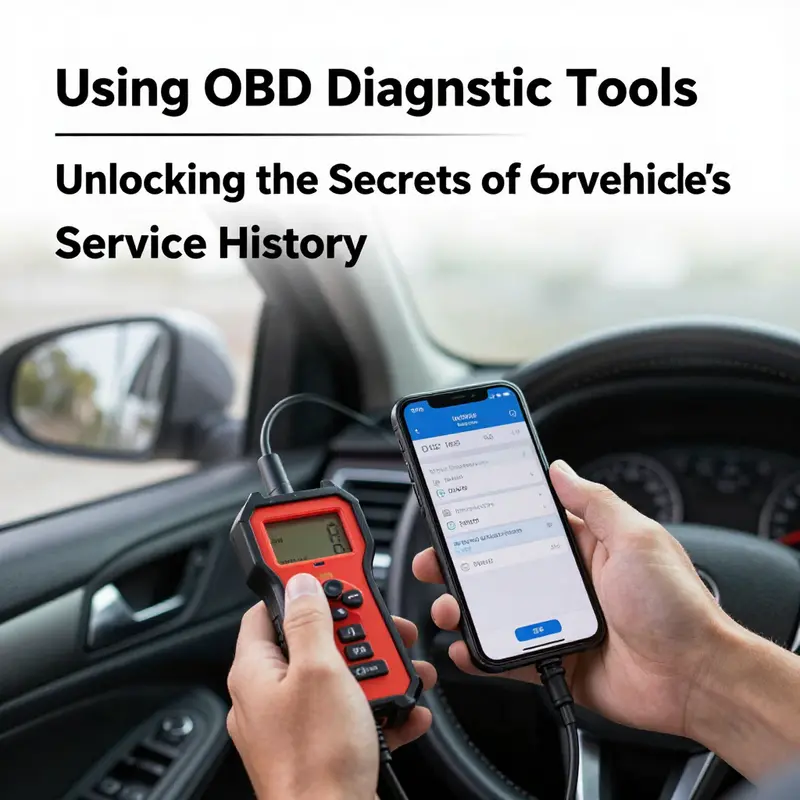
A car’s health is a story written in sensors and codes, not just receipts and maintenance stamps. When you connect an OBD diagnostic tool to the vehicle, you gain access to a stream of real-time data and Diagnostic Trouble Codes (DTCs) that together form a living record of how the engine and its supporting systems have behaved over time. This approach doesn’t replace traditional service logs, but it turns a vehicle into a constantly updated diary. It helps you trace patterns, anticipate wear, and plan maintenance before a minor fault blooms into a costly repair. For people managing a used car, a young fleet, or simply the curious owner who wants to understand what happened between visits to the shop, OBD-based history is a practical, proactive companion to the paperwork that arrives with every service receipt.
At the heart of this capability is the OBD-II standard, a universal port and protocol that most cars built after the mid-1990s share. The diagnostic port is usually tucked under the dashboard, within easy reach of the driver’s seat. It provides access to a broad set of engine and emissions data, from sensor readings like engine temperature and fuel trim to fault codes that flag misfires, sensor failures, or ignition problems. The standard ensures that the data format is consistent across vehicles, which means you can learn to read patterns without needing a bespoke interface for every make. This consistency makes it possible to build a personal service history that is portable, searchable, and—most importantly—actionable. You aren’t just recording numbers; you are capturing a narrative of how the vehicle responds to weather, fuel quality, and driving style, and how that response evolves as components wear or get replaced.
Getting started is simple in principle, though the details depend on your preferred workflow. An OBD-II adapter is plugged into the port, and a smartphone or tablet can act as the data sink. The adapter provides a Bluetooth or Wi‑Fi bridge, while the app displays live data streams and stores historic records. You might begin with a single, comprehensive scan when you first connect, then set up automatic logging that captures data on a regular cadence or after each trip. This creates a chronological thread that shows the odometer movement alongside engine parameters and any codes that have appeared. When you notice a repeating fault code—say, a misfire code that comes back after a few weeks—or a gradual drift in sensor readings, you have a clear trigger to investigate. It’s the difference between guessing when maintenance is due and knowing precisely when the car is telling you to attend to a part before it fails.
One of the strongest benefits of OBD-based service history is the ability to observe patterns over time. A single fault code may be a false alarm or a one-off event, but a series of similar codes or a consistent trend in engine temperature, fuel trim, or battery voltage can reveal an underlying issue. For example, recurring misfire codes that appear during cold starts, combined with rising exhaust gas temperatures, may point to failing spark plugs or aging ignition coils. Fluctuating upstream oxygen sensor readings can signal fuel delivery inefficiencies or a tired catalytic converter. When you connect these data points with the date of maintenance, the parts replaced, and the service notes you add, you transform abstract numbers into a narrative that helps you, or a technician, diagnose more quickly and precisely.
Beyond viewing codes, many modern OBD setups provide continuous monitoring of key performance parameters. Real-time data on engine temperature, fuel trim, manifold absolute pressure, and battery voltage lets you see how the car behaves under different loads and conditions. With a logging app, you can create a digital service diary that records not only faults but also the driving context in which they occur. This is especially useful for identifying correlations between driving habits and wear patterns. For instance, a fleet manager might notice that a particular vehicle shows rising engine temperature and slightly elevated fuel trim during hot weather or heavy duty use, suggesting cooling system maintenance or a tune-up before the summer peak hits. For individual owners, such insights can warn you about inefficient fuel usage or deteriorating tune before fuel efficiency collapses.
The practical benefits extend to maintenance planning and vehicle resale as well. When you’ve built a robust service history from OBD data, you have a quantitative basis to justify routine interventions. Instead of waiting for the next obligatory service reminder, you can schedule preventive work based on actual operating conditions. This can reduce downtime and extend the life of critical components. For buyers in the market, a well-maintained digital diary that shows consistent, well-documented care a vehicle has received can be as persuasive as a stack of paper receipts. The car’s narrative becomes transparent: how it was driven, how it was cared for, and how it performed under real conditions, not just under the bellied notes of a service invoice.
While OBD data is powerful, it is important to recognize its limitations. The data available through a standard OBD-II interface focuses on the engine, emissions, and some chassis systems. It does not automatically unlock every service action ever performed at every shop, nor does it reveal every repair conducted outside the OBD-visible scope. Some systems—such as advanced airbag deployment logic, certain ABS control nuances, or manufacturer-specific modules—may not provide full visibility through generic interfaces. This means that while OBD can tell a story about the engine’s health and the car’s operating conditions, it should be read alongside other records from official maintenance logs or trusted third-party histories to form the most complete picture. In this sense, OBD data is a complement, not a substitute for a comprehensive history file.
Constructing a useful service diary with OBD data also requires a disciplined approach. Start with a clear goal: do you want to monitor potential ignition failures, track fuel efficiency trends, or validate the timing of maintenance actions? Then decide on a logging cadence that suits your usage pattern. If you drive predominantly in city traffic, you might log more frequently than a long-distance highway runner, because the city cycle exposes different wear patterns. Attach notes to each log entry—brief observations about symptoms, weather, or repairs—and record the parts replaced or services performed in the same timeline. When you export the data to a spreadsheet, you can create simple charts that reveal year-over-year trends, seasonality, and the impact of repairs on performance and economy. Such a record becomes a living document you can share with a mechanic or a potential buyer, reducing ambiguity and speeding up diagnosis.
As you weave OBD data into your service history, you’ll likely discover that this method aligns well with other approaches described elsewhere in the article. Third‑party vehicle history platforms can pull together data from workshops, insurers, and regulatory records to offer a broader vista. Your OBD log then serves as a personal, granular layer within that broader history, filling gaps and validating events with objective measurements. If the vehicle has a documented maintenance path in a brand’s network, you can cross-reference with the OBD timeline to confirm consistency or identify discrepancies. This layered approach enhances reliability and gives you confidence when you’re making maintenance decisions or evaluating a used car purchase.
To illustrate how this looks in practice, imagine you’re evaluating a used car with a modest mileage but several months of sporadic performance concerns. You connect an OBD adapter and start logging. Over a six-week period, you notice intermittent misfire codes during cold starts, paired with slightly elevated long-term fuel trim and a small dip in fuel economy on trips with rapid acceleration. You add a note: “cold-start misfire, possible worn plugs.” A week later, after a scheduled service, you import the maintenance receipts and note the replacement of spark plugs. The next scan shows no misfire codes, but you still monitor the vehicle for a couple of weeks to ensure the issue does not recur. This sequence—a pattern detected by the OBD data, a targeted maintenance action, and a follow-up check—produces a precise, verifiable service history that neither a single invoice nor a one-off code could convey. It is a practical demonstration of how data becomes knowledge, and knowledge becomes proactive care.
If you want to connect this practice to broader maintenance habits, you can also view related guidance on maintenance routines for vehicles that share similar duty cycles or engine architectures. For instance, once you establish a reliable OBD-based diary for one vehicle, you can apply the same principles to others in your fleet or household garage, increasing efficiency and consistency. For those new to maintenance, a supportive resource on truck maintenance tips for first-time owners can offer a gentle bridge to larger, more technical practices while you build comfort with diagnostics and record-keeping.
In short, using OBD diagnostic tools to build a vehicle’s service history is about turning an immediate readout into a long-term strategy. It gives you the ability to observe, quantify, and act on how your car behaves between visits to the shop. The data become your roadmap for maintenance, a personal diary you can share with a technician, and a valuable asset when you’re assessing a vehicle’s value. By integrating real-time diagnostics with traditional records and reputable third-party histories, you gain a fuller, more actionable picture of a car’s health—and you unlock a higher level of confidence in every driving decision you make.
External resource: https://www.autocar.co.uk/advanced-vehicle-tech/diagnostics/obd2-scanner-guide-what-you-need-know-2025
Final thoughts
Understanding your vehicle’s service history is not just about transparency—it’s about empowering yourself as an informed owner, buyer, or seller. By utilizing various methods such as third-party platforms, 4S dealership inquiries, insurance records, government sources, and OBD diagnostics, you can piece together a comprehensive picture of your vehicle’s past. Prioritize this information in your decision-making processes to ensure reliability, safety, and value retention for your vehicle. The crucial takeaway is that knowledge is power—so arm yourself with facts to navigate the automotive world confidently.