
When it comes to vehicles, knowing their service history can save you from costly surprises and enhance your peace of mind. Whether you’re a local private car owner, a used car buyer, or a small business fleet operator, understanding how to check a vehicle’s service history is crucial. This article dives into effective methods, starting with third-party platforms that offer comprehensive data, to the authoritative insights from 4S dealerships, and even how to harness the information from independent repair shops. Each chapter will guide you through the significance of service records and how to utilize Vehicle Identification Numbers (VINs) for a more informed purchase, emphasizing the importance of a complete service history.
Unlocking the Past: How Third-Party Histories Make Checking a Vehicle’s Service Record Easy and Reliable
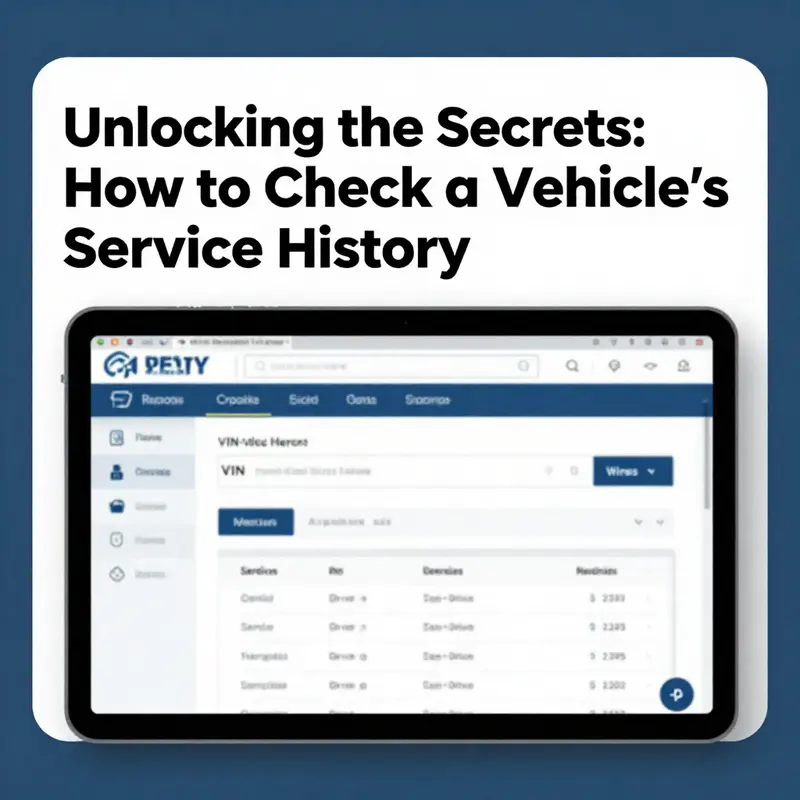
When you stand in front of a used car, the story you tell yourself matters as much as the story the car can tell you. A car with a clean, well-documented service history is not a guarantee of perfection, but it is a powerful signal about how the vehicle has been cared for. The past speaks through records, and in recent years a wave of third-party data platforms has converted scattered maintenance notes, repairs, and claims into a single, readable chronicle. This shift changes the calculus for buyers and sellers alike. It moves the market away from vague impressions toward verifiable history, helping people distinguish a well-kept car from a vehicle that silently accumulated wear and potential trouble. At its core, third-party history checks are a practical bridge across the data silos that once separated the various places a vehicle might have been serviced, insured, or repaired. The result is a more complete, more actionable picture in a fraction of the time it used to take to chase down individual shop records or dealer invoices.
These platforms pull data from a broad network. They aggregate information from authorized dealerships, independent repair shops, insurance records, and even, in some regions, government or regulatory databases that track title status and recalls. The breadth matters because most vehicles are not kept solely within one dealership chain or one local garage. A car may be serviced at a brand’s flagship store for major work and then rely on a trusted neighborhood shop for routine maintenance for years. If you only check one location, you risk missing important details that could influence a buying decision. A well-constructed third-party report, by design, seeks to fill those gaps and present a unified history rather than a scattered set of fragments.
The process is straightforward and user-friendly. You typically start by entering the Vehicle Identification Number (VIN) or, in some cases, uploading a photo of the vehicle’s registration certificate. The platform then parses the VIN and searches its network of data sources. The resulting report is often delivered within minutes, with an easy-to-read timeline that chronicles maintenance and repairs, accident history, and even the vehicle’s status on a title. A good report confirms that the odometer readings align with the known service intervals and that there are no discrepancies suggesting odometer tampering. It also checks whether the license plate matches the VIN, which can be a subtle, but telling, indicator of data integrity. This is not mere trivia; it is a set of guardrails that helps you gauge the car’s reliability and the honesty of its claimed history.
The maintenance and repair sections are typically detailed. You may see dates, exact parts replaced, labor hours, and costs. The depth can vary, but the most robust reports are not a simple ledger; they translate raw entries into meaningful narratives about ongoing care—oil changes, brake jobs, timing belt replacements, cooling system work, and more. Equally valuable are the accident history and insurance claims, which can uncover significant events that might otherwise be brushed aside if you only saw a clean bill of sale. A record of major repairs, fire or flood claims, or frame-altering incidents can reframe the risk profile of a vehicle you’re considering.
Odometer verification is another essential feature. A trustworthy history report will flag inconsistencies between the mileage reported at various service visits and the currently stated odometer reading. This kind of cross-check is a powerful safeguard against odometer rollbacks and the illusions they create. In some markets, the report will also reveal title status—whether the car has a salvage designation, or if there are liens or recalls outstanding. These details can affect your negotiating leverage and the total cost of ownership over time. In short, third-party platforms help you see the car’s life in a way that a single dealership invoice never could.
Yet even the most comprehensive third-party platform is not a magic wand. It aggregates data from many sources, but no single system can guarantee a 100 percent complete record. There will be gaps—work done outside the network, or documentation that never reached the data feeds. That’s why the strongest approach blends multiple sources. If the platform’s report reveals a clean, complete, and corroborated history, you’ve gained a solid basis for confidence. If it uncovers gaps or oddities, you now know where to focus your further inquiry. In those moments, the direct route to the car’s original owner or the dealership where most servicing occurred becomes invaluable, and you can triangulate the truth with deeper investigation.
For buyers, the practical takeaway is simple: start with the third-party history check. It’s fast, broad, and surprisingly revealing. A well-constructed report will illuminate not just routine maintenance, but also potential red flags—an accident that left a long repair trail, a pattern of high-cost parts replacements, or a history of repairs that may indicate underlying mechanical issues. The breadth of information allows you to tailor your due diligence before you commit time, money, or emotional energy to a vehicle purchase.
From a seller’s perspective, these platforms can also provide clarity. A car with a transparent, well-documented service history and clean odometer readings can command a stronger price and smoother negotiations. It is not about altering truth to fit a price but about presenting the vehicle’s life honestly, with as much verifiable detail as possible. A seller who has maintained records across multiple service events and can show a coherent maintenance trajectory may earn more trust and shorten the path to a successful sale.
As you weigh your options, consider how these platforms fit into a broader verification process. They are most powerful when paired with the old-fashioned, still essential step: a physical inspection. A thorough test drive, a careful check of tires, brakes, and suspension, and an independent mechanic’s pre-purchase inspection can validate what the data already suggests and reveal issues that documentation cannot capture. History reports tell you what happened; a careful inspection reveals the current condition and how well it was managed over time. The two in tandem provide a robust defense against unexpected costs down the line.
The literature on best practices for checking a vehicle’s service history now consistently emphasizes this blended approach. A third-party history check gives you a fast, comprehensive overview of a vehicle’s past, while a targeted inquiry at the original 4S dealership can deliver the most authoritative source for brand-specific records. If a car has spent its life within a single brand’s network, that dealership archive can be remarkably detailed, capturing every service entry, every part replacement, and every service note with exact mileage stamps. But that same source will often omit work done at independent shops or non-authorized facilities, which is why a broader data platform can fill in critical gaps.
This is not a competition among sources. It is a collaboration. The best practice is a tiered approach: begin with a third-party history check to establish the big picture, then pursue a direct inquiry at the most relevant dealership network to confirm or refine specifics, and finally triangulate with independent shop records to fill any remaining blanks. In many cases, that layered strategy turns what could be a minefield of uncertainty into a map you can trust.
If you are looking for a practical, hands-on reference that complements this approach, consider exploring resources that discuss how to navigate vehicle data and maintenance history. For example, the KMZ Vehicle Center blog offers a practical overview of VIN-based checks and what to expect in a typical report, which can help you translate data into meaningful questions for sellers and mechanics. You can visit their blog here: KMZ Vehicle Center blog.
In summary, third-party platforms have become indispensable tools for anyone evaluating a used car. They bring together multiple streams of information, present a unified, readable history, and expose patterns that single-source checks often miss. They are most valuable when used in concert with direct dealership records and with a careful physical inspection. Together, these steps turn the uncertain process of buying a used car into a more confident, informed journey that is less about luck and more about verified history. External checks do not replace due diligence; they amplify it, offering a clearer view of the car’s life and enabling you to make a sound financial decision without guessing at what lies beneath the surface. For readers seeking a broader understanding of how to approach maintenance and vehicle history as part of ongoing vehicle care, there is a wealth of information available through reputable automotive resources that discuss the practical implications of maintenance schedules and service history in everyday ownership.
External reference for further reading: https://www.houchekejian.com
Inside the Vault: Why 4S Dealerships Hold the Most Authoritative Service Histories for Your Used Car

When you set out to verify a used car’s past, you are essentially peering through layers of time at a vehicle’s health, care, and the decisions that have kept it on the road. The clearest, most trustworthy chapters in that story are usually written by the original brand centers—the 4S dealerships that symbolize the manufacturer’s authorized care network. These centers do more than perform maintenance; they curate a standardized, centralized record of a vehicle’s service life. For buyers, that inventory of records can be the deciding factor between confidence and doubt. The reason lies in how 4S dealerships operate: they are the official service arm of a brand, connected to a manufacturer’s diagnostic tools, repair catalogs, and warranty frameworks. They maintain a discipline around documentation that, when compared against other data sources, often reads as the most consistent and traceable narrative of a vehicle’s history. In practical terms, a 4S center will log every service event in a format aligned with the maker’s expectations. The entry typically includes the service date, the type of maintenance performed, parts replaced, and the labor details. Because these centers use proprietary tools and software tied directly to the manufacturer’s database, the information they provide tends to carry a level of precision that is difficult to match elsewhere. There is a reason that, in many markets, consumer protection authorities and automotive professionals view 4S records as a gold standard for verifying past maintenance and ownership history.
For a prospective buyer, the route to these authoritative records often begins with the VIN and a request to the original or most recent brand service center. The process is straightforward but purposeful. You present your interest in purchasing the vehicle and provide basic identification to establish legitimate ownership or authorization to view the information. The dealership’s internal system, commonly referred to as their service management or customer management solution, pulls up a detailed service history that can reveal a wealth of specifics. You will see not only the dates and types of service but also the exact parts that were replaced and the corresponding mileage at each service. If the car has entered recall campaigns, those records are frequently included or linked to the service history, along with any notes about the corrective actions taken. In many cases, when a vehicle has remained within a single brand’s network, the record also captures warranty-related work, which can be especially telling about the vehicle’s early years and the preventive maintenance it has received.
The integrity of these records is reinforced by the way 4S centers are integrated into a manufacturer’s diagnostic ecosystem. They use standardized diagnostic protocols and repair procedures, and the data they generate adheres to uniform terminology and classification. This standardization matters because it reduces ambiguity. A service description like “oil change” or “brake inspection” is coupled with specific service codes, part numbers, and labor times that align with factory manuals and warranty guidelines. When a seller presents such a report, a buyer can trace the chain of events with confidence, knowing that the language and the numbers come from a controlled source rather than a fragmented array of independent shops. In a market where the same car may have lived in multiple hands and under various service arrangements, this level of consistency is not merely helpful—it can be decisive in protecting a buyer from hidden defects disguised by gap-filled records.
Yet even within the authoritative frame of 4S documentation, there are practical realities to consider. The most obvious limitation is scope. A 4S dealership can only display the records generated within its own network or by its factory-connected services. If a vehicle has spent a portion of its life in independent repair shops, or if it was serviced at non-brand facilities, those events may not appear in the 4S report. Some manufacturers allow access to a broader data pool through dialogue with other authorized centers, but access is not universal, and cross-brand visibility can be inconsistent. This reality makes the 4S report a vital, but not exclusive, piece of the verification puzzle. Buyers should expect that a purely 4S-based history may tell a precise tale for the work done in-brand, while potentially missing chapters written by independent garages or non-dealer service centers.
To build a complete picture, many buyers—and increasingly many professional evaluators—supplement 4S records with data from third-party platforms that aggregate information from multiple sources. These platforms aim to break information silos by pulling data from a network of dealers, independent repair shops, and sometimes insurance records. The value of such platforms lies in breadth: they can reveal a broader set of servicing events, accident history, and even mileage inconsistencies that a single brand network might overlook. The combination of breadth from third-party aggregators and depth from 4S records often yields the most reliable assessment of a vehicle’s past. The trade-off is that third-party sources may vary in completeness and may require careful cross-verification with the brand-specific history when possible. This is why discerning buyers approach verification as a layered process rather than a single pass through a lone data source.
In markets where 4S networks are deeply entrenched, such as in many reputable automotive ecosystems, the cultural expectation is that a serious purchase involves a direct inquiry to the original dealership that serviced the car. This practice is rooted in the belief that the original dealer has the most intimate understanding of the vehicle’s early history, including mileage logs, recall campaigns, and even corrective actions tied to safety issues. The authenticity of these records can be a powerful tool in disputes over vehicle condition or warranty coverage. If a vehicle has been regularly maintained at a brand center, the documented history can underpin a credible narrative that supports resale value and protects against fraud. Digital access to these histories is becoming more common, with some centers offering portals or mobile apps that let buyers view the records securely, often after entering a VIN and authorized access credentials. Even with digital convenience, a buyer should still expect to go through a verification step to confirm that the person requesting the information has legitimate ownership or permission to view it.
Understandably, the economics of retrieving records at a 4S dealership can vary. Some centers may charge a small fee to retrieve or print a formal report, while others include it as part of a broader service experience. The cost, in many cases, is justified by the assurance that the record provides—the clarity of the vehicle’s service life and the confidence it can give a buyer during negotiations. For a seller, presenting a clean, consistent 4S history can materially improve the car’s perceived value. It signals a commitment to transparency and a willingness to stand behind the maintenance path the vehicle has traveled. In both cases, the concrete data—dates, service types, parts replaced, and mileage—helps reduce ambiguity when a buyer is deciding whether to proceed with a purchase.
In the broader context of this article, exploring the 4S dealership as the most authoritative source frames a practical approach to verifying service history. It anchors the verification process to a trusted, manufacturer-backed record, which, when combined with other sources, creates a robust, well-rounded view of a vehicle’s past. It is not a call to abandon other avenues but a reminder that the clearest, most defensible portions of a vehicle’s history often originate from the brand’s own service ecosystem. For readers who want to extend their research beyond the 4S record, a cautious, methodical approach—starting with a comprehensive third-party data sweep and then triangulating with the dealer’s official history—tends to yield the most reliable conclusions. The result is a more informed decision, less exposed to fraud or misrepresentation, and a better sense of how the car has aged under the care of professionals aligned with its original engineering intent.
If you are seeking additional context on how to navigate maintenance information in general, the KMZVehicleCenter blog offers related guidance on keeping a vehicle in top condition. You can explore practical tips and insights there, which complements the process of verifying a car’s service history with the rigorous, brand-backed records described here. For readers who want to corroborate this approach with external references, a widely cited article from a major national publication explains how to verify a used car’s service history, including the importance of official 4S records and the role of recalls in assessing true condition. This external perspective reinforces the idea that transparency and provenance matter more than ever when evaluating a used car’s past. External reference: China Daily – How to Verify a Used Car’s Service History
Behind the Service Record: How Independent Repair Shops Complete Your Vehicle’s History
Independent repair shops are increasingly becoming a vital resource for filling gaps in a vehicle’s service history, especially when official records are incomplete or unavailable. These shops often maintain detailed digital logs of every repair and maintenance job they perform, creating a comprehensive and transparent record that can be invaluable for both current owners and potential buyers. The story of a car’s care, after all, is rarely a single stamp in a file; it is a continuous thread that traces the vehicle’s life from the moment it leaves the showroom to the day it changes hands again. When you learn how these small, local operations document work, you begin to understand why their notes can be as important as the invoices from a brand-authorized service center. The notes form a narrative you can read with your eyes, not just a number on a page. They can illuminate decisions that otherwise would remain murky and offer a grounded sense of a car’s reliability that resembles a medical history for a person.
One of the clearest strengths of independent shops is centralized record keeping. In many dealership networks, records are sometimes dispersed across locations, service bays, and different software systems. An independent shop, by contrast, often maintains a single, client-centered file that travels with the vehicle as it moves between garages. That single file becomes especially valuable when a car has lived in multiple hands or when its journey includes a mix of dealer work, local garage services, and informal maintenance. Instead of assembling a patchwork from separate locations, a buyer or current owner can review a coherent log that reveals patterns—diagnostic checks that were repeated, parts that were consistently replaced over a given period, and the intervals between visits. The clarity of this centralized approach reduces the guesswork that can cast doubt on a vehicle’s condition, making it easier to gauge not just what happened, but how often it happened and why.
Beyond organization, independent shops bring a depth of diagnostic capability that often exceeds what a single dealer visit can capture. Many modern vehicles depend on intricate electrical systems, adaptive engine control, and sophisticated driver-assistance components. Independent shops increasingly invest in advanced diagnostic tools, cloud-connected service software, and data-logging platforms that monitor performance over time. A routine service might become an opportunity to collect longitudinal data—sensor readings, voltage patterns, and even drive-cycle results—that, when reviewed together, paint a richer portrait of how the car performs in the real world. This level of detail is particularly meaningful for buyers who want to understand how a vehicle aged under normal use, not just how it appeared on a specific day in a showroom or a service bay.
The documentation produced by independent shops also tends to be highly specific. Rather than a generic receipt, these records often include explicit notes about the symptoms observed, the tests performed, the parts replaced, and the conditions under which repairs were made. For instance, if a vehicle has undergone transmission work, a precise timeline that notes the miles at which major repairs occurred, the exact components involved, and the service codes used can be invaluable for assessing future maintenance needs. If a suspension issue required multiple alignments or component replacements, the diary-like entries from an independent shop can reveal how durable those repairs proved to be under varying loads and terrains. For buyers, such granular documentation reduces ambiguity and helps set realistic expectations for future involvement in the car’s care.
Consumer impact flows from this reliability of information. A transparent history, complete with consistent maintenance entries and careful notes on major repairs, builds trust between current owners and prospective buyers. When someone considers purchasing a used vehicle, a clean, thoroughly documented history offers reassurance about the vehicle’s past reliability. It signals that the car received attentive care rather than occasional, last-minute fixes. This perceived reliability can translate into a stronger resale value, not because the car is flawless, but because its maintenance story is credible and traceable. In a market where every line on a history report is scrutinized, the value of clear, well-kept records cannot be overstated. Independent shops, in effect, become stewards of a vehicle’s reputation, providing a bridge between what happened and what buyers need to know to feel confident about a purchase.
Industry evolution also plays a role in shaping how independent repair histories are perceived and used. As digital tools become more widespread, many independent shops move beyond paper receipts and scattered PDFs toward secure cloud-based logs that can be easily shared with owners and potential buyers. The shift toward standardized digital records helps align independent shops with third-party data platforms, which aim to aggregate information from multiple sources into a single, trustworthy history. This convergence is important because it preserves the strengths of independent documentation while increasing its accessibility. For the buyer who wants a robust, multilingual, or multi-source view of a vehicle’s past, independent shop records can complement data from brand networks and third-party aggregators, offering a more complete narrative rather than a series of disjointed chapters.
From a practical standpoint, readers exploring how to check a vehicle’s service history should consider independent shops as a crucial piece of the puzzle. If the vehicle has spent its life in a broad ecosystem of maintenance—from local garages to occasional dealer visits—the independent shops that worked on it can offer the linchpin data that ties those disparate records together. In many cases, the independent shop will be the source that can summarize the vehicle’s care in a way that is accessible to a layperson, translating jargon and codes into plain-language explanations of what was done, why it mattered, and how it affects future performance. To readers who want to take ownership of a vehicle’s audit trail, this is a powerful advantage, a way to move beyond the fear of hidden histories toward a clear, verifiable timeline of care.
For readers who want hands-on guidance on how to interpret and assemble this information, consider practical steps that start with the basics. Begin by gathering every repair invoice, diagnostic printout, and service note from independent shops that have worked on the vehicle. If you are the current owner, request copies in digital format and in hard copy to ensure you have a complete archive. When possible, ask for the technician’s notes and any drive-cycle data that might illuminate how the vehicle performed under real-world conditions. If the car has changed hands, reach out to prior owners or any known service providers to fill gaps in the record. A simple, well-organized folder—whether digital or physical—can dramatically improve your ability to review the vehicle’s past and project its future needs.
As you build a fuller service history, you will also want to consider how this information should be shared with others. A consolidated history that includes independent-shop records can be presented alongside a summary from a brand-authorized dealership and any third-party data platform findings. This approach helps create a holistic view: a narrative that begins with routine maintenance, includes notable repairs, and ends with ongoing recommendations for upkeep. It is this combination of care, transparency, and meticulous documentation that makes a vehicle’s history not just a list of events but a trusted story. For readers who want a quick, practical reference to how to maintain the vehicle’s care over time, a resource such as the practical guidance found in truck maintenance tips for first-time owners can be a handy companion as you assemble and interpret the history.
In the end, the value of independent repair shops in documenting a vehicle’s service history lies in their ability to translate diverse experiences into a single, credible narrative. Their centralized records, deep diagnostic capabilities, and detailed service notes create a transparent history that is both understandable and verifiable. This is not only about satisfying a buyer’s curiosity; it is about preserving a vehicle’s integrity in a way that respects the people who own, drive, and repair it. As the automotive world continues to digitalize, the role of independent shops in preserving and enriching a vehicle’s history will likely become more pronounced. Their work protects the truth of a car’s life, safeguards trust in used-car transactions, and ultimately helps ensure that every mile driven is backed by a history that matters.
External resource: https://www.carfax.com/blog/why-your-vehicle-history-matters
VIN Gatekeeper: Unraveling a Car’s Service History Through Its Unique Identifier
The vehicle identification number, or VIN, sits like a digital fingerprint on every modern car. It is more than a string of letters and digits; it is the key that unlocks a layered record of a car’s life. When you need to understand how a vehicle has been cared for, what repairs it has undergone, and whether its mileage has been trusted, the VIN becomes your compass. A well-tracked VIN consolidates details from multiple sources into a coherent narrative, allowing buyers, owners, and mechanics to move beyond surface impressions to a document of provenance. Yet the VIN alone does not automatically reveal every twist in a car s story. The journey from identifier to history is mediated by data standards, reporting practices, and the willingness of service providers to share information. The chapter that follows traces how the VIN functions as a gateway to service history, what kinds of records you can expect to access, and how to navigate the practical realities of data quality and gaps. In doing so, it connects the core idea of service history checking with the broader aim of the article: helping readers make informed decisions about vehicle condition and value without assuming that a single report tells the whole story.
A VIN is a 17-character code that encodes a vehicle’s essential manufacturing details. Its structure is not random, but standardized. The first section, the world manufacturer identifier, identifies the country and the manufacturer. The middle portion, the vehicle descriptor section, conveys information about the model, body style, engine type, and safety features; the final section, the vehicle identifier, includes details such as the model year and a unique serial number. This organization is not just bureaucratic trivia. It enables trusted databases and reporting services to anchor every data point in a single, verifiable reference. When a database receives a VIN, it can pull in records tied to that specific car across different points in its life, from the moment it left the factory to the last service report logged in a shop’s system.
In theory, the VIN ties together a constellation of records that would otherwise exist in siloes: the service history logged by a dealership network, maintenance notes from independent repair shops, and even important notices about recalls or title status. In practice, the reliability and breadth of those records depend on several factors. For example, when a vehicle is serviced exclusively at an authorized dealership, the dealership’s data management system can present a highly granular, brand-specific history. The exact items replaced, labor involved, and the mileage at each service can often be recovered with high fidelity from the dealership’s documentation. If the same car later visits a wide array of independent shops, those records may appear as separate, piecemeal entries unless a comprehensive third-party platform aggregates them. Conversely, if a vehicle has a patchy history with limited documentation, the VIN will point to gaps rather than a seamless chronology. In all cases, the VIN is indispensable because it anchors every fragment of information to a single, verifiable identity.
What makes the VIN especially powerful for checking service history is the way it enables cross-database lookup without requiring the observer to know each shop or dealership personally. A well-designed data ecosystem will connect the VIN to a spectrum of data streams: detailed maintenance logs, accident history and insurance claims, status of ownership, and evidence of odometer readings. A comprehensive report can reveal whether the vehicle has undergone major repairs, such as transmission work or engine overhauls, and whether those repairs align with the vehicle’s reported mileage. It can also reveal less visible but equally important issues, such as recall notices that were issued but not completed or title problems that could affect resale value. When the VIN is cross-referenced with multiple data sources, it becomes possible to validate a vehicle’s claims of regular maintenance or, alternatively, to spot patterns that warrant additional caution.
Accessing a VIN-based service history typically unfolds through a few practical pathways. One widely used approach is through third-party data platforms that aggregate information from a broad network of sources. These platforms are built to be user friendly and efficient, especially for prospective buyers of used cars. A single VIN search can yield a consolidated report that includes maintenance and repair records from numerous shops, a summary of any accidents and insurance claims, and a check on whether the vehicle is currently under lien or seized. They may also provide verification of odometer readings, checking for signs of tampering or rollback, and a plate-to-VIN conformity check. The appeal of this method lies in its breadth: by pooling data across many locations and providers, it allows a car to be evaluated on a more complete history than would be possible by consulting a single shop or dealership.
Another path, often the most authoritative for vehicles with long-time brand loyalty or early ownership within a single network, is to query the original authorized dealership or the specific brand s network directly. The dealer’s internal system can pull up the full historical record for the VIN, showing the exact items replaced, the parts used, and the labor involved at each service. This source is the gold standard for granular detail. It is particularly valuable for validating the maintenance sequence on a car that has remained within a single brand ecosystem. The limitation here is clear: the dealership only records the service performed within its own network. Work performed at independent shops or at different-brand service centers may not appear unless those records were later shared with a data platform that aggregates across networks.
When the vehicle has been serviced extensively outside the brand ecosystem, independent repair shops themselves can be sources of history. If you know the names of trusted local garages, reaching out to them with the VIN can yield records about maintenance, parts replaced, and even the service intervals that the shop used to follow. The strength of this approach is its coverage of non-dealer work, which is often the majority of a car s service life after the warranty period. The main caveat is that not all shops share or participate in a centralized data pool, and some may not retain detailed records that can be easily accessed later. Still, this approach can significantly deepen the completeness of a vehicle history when combined with the other data streams.
Across these pathways, certain data elements commonly surface in VIN-based histories. You can expect to see ownership changes and the dates of transfer, a chronology of maintenance visits, the specific services performed, and the mileage recorded at each service event. Accident history and insurance claims often appear, albeit sometimes in summarized form, along with any recalls that have been issued and whether they were addressed. Title status indicators also can appear, highlighting issues such as salvage designations, flood damage, or other events that could affect the car s value and insurability. A particularly valuable feature in many reports is mileage verification. Consistent mileage trends across multiple entries strengthen confidence in the vehicle s reported wear, while anomalies can signal odometer tampering or inconsistencies that deserve closer inspection. Taken together, these data points create a robust narrative that helps a reader separate genuine wear from suspicious spikes or gaps.
The standardization and regulation of VINs play a crucial role in producing reliable histories. Internationally, the VIN adheres to ISO 3779, which provides a consistent framework for the identifier s structure and meaning. In certain regions, national regulations further define how VIN data should be recorded, reported, and accessed. In practice, these standards help ensure that a VIN from one country is interpretable in the same way in another, reducing the risk of misreading critical details when a car crosses borders or when data from another jurisdiction is added to a history report. This consistency is particularly important for buyers who are considering imported vehicles or vehicles previously driven abroad, as it means the core identifiers and data terms carry the same meaning across different markets. The alignment of global standards with local reporting practices helps maintain trust in VIN-based histories and supports informed decision making regardless of where a vehicle has lived.
For readers seeking a broader understanding of how a VIN-based history is assembled and interpreted, consider exploring additional perspectives through dedicated online resources. For a detailed explanation of what a VIN can reveal, a reputable online VIN resource offers comprehensive guidance on decoding the 17 characters and translating them into actionable insights. This background can demystify the process and empower readers to engage more effectively with the data. To connect with related discussions and broader context, you can also visit the KMZ Vehicle Center blog, which covers maintenance topics and the practical implications of vehicle histories in everyday ownership. KMZ Vehicle Center blog
The practical upshot of all this is that a VIN-based service history is a powerful starting point for evaluating a vehicle s condition and provenance, but it is not a stand-alone verdict. The best approach blends breadth with depth. Start with a third-party platform that aggregates data from dealer networks and independent repair shops to gain a broad, rapid picture of the car s life. Then, when a particular brand has a long relationship with the vehicle, follow up with the original dealership to obtain the most authoritative, granular details. In parallel, reach out to trusted independent repair shops to fill in gaps and confirm maintenance patterns that may not be captured within the dealer network. Finally, pair this data-driven view with a thorough physical inspection. The objective is to align the digital record with the car s present reality, looking for consistency in wear, timely maintenance, and signs that the vehicle lived up to the service promises implied by its history.
Even with careful checking, a VIN-based history has its limits. Not every repair is reported, especially if it occurred outside formal networks or in markets with less standardized reporting. Some smaller shops may not retain records long enough to be accessible later, or they may not participate in data-sharing ecosystems. Data privacy and ownership rules can further constrain what is available to a prospective buyer or a new owner. These gaps are not reason to discard VIN histories but a reminder to treat them as one essential piece of due diligence rather than the sole determinant of a vehicle s condition. The most reliable conclusions emerge when the historical record is triangulated across the broadest possible data sources and then checked against the vehicle s current physical state—tires, brakes, engine sound, and the overall reliability of systems such as electricals and safety features.
In sum, the VIN is the gateway to a vehicle s past, not a simplified verdict. It unlocks access to a tapestry of maintenance, ownership, and regulatory records that, when read together, illuminate patterns of care and use. The process entails navigating multiple data streams, each with its own strengths and limitations, and integrating those insights with a careful, hands-on inspection. The result is a more confident assessment of a car s true condition and its value relative to its history. As buyers and owners become more adept at leveraging VIN-based histories, they gain a practical tool for avoiding costly surprises and for making informed decisions that align with both budget and stewardship of a vehicle. For those who want to deepen their understanding, engaging with the broader narrative around vehicle history—through reputable online resources and informed community discussions—can provide valuable context and practical tips for interpreting the data in real-world scenarios, reinforcing the idea that the VIN is the gatekeeper to a car s life rather than a final judgment on its worth.
External resource: https://www.carfax.com/vin
null
null
Final thoughts
A vehicle’s service history holds the key to understanding its past, preventing potential issues, and ensuring reliability for the future. Both potential buyers and current owners must utilize available resources—be it third-party data platforms, direct inquiries at 4S dealerships, or consultations with independent repair shops—to construct a complete profile of the vehicle’s maintenance history. By harnessing the Vehicle Identification Number (VIN) for effective inquiries, and appreciating the critical nature of comprehensive service records, you empower yourself to make informed decisions whether buying, selling, or maintaining a car.