
When your dashboard illuminates the message ‘Do not restart vehicle service required,’ it signifies a critical concern with your vehicle that demands immediate action. This alert can be bewildering and concerning for car owners, used car buyers, sellers, and small business fleet operators. Understanding the significance of this warning is vital to preventing further damage and ensuring the reliability of your vehicle. This guide will explore immediate actions to take when faced with such warnings, the implications for vehicle performance, common causes of these alerts, and the long-term risks of neglecting them. Each chapter is designed to equip you with essential knowledge, enhancing your ability to manage this serious warning effectively.
When Your Dash Says ‘Do Not Restart’: Safe Immediate Steps and Why They Matter

When the warning appears, act deliberately. A dashboard message reading “Do not restart vehicle service required” is not a routine alert. It is a direct instruction from the vehicle’s safety and diagnostics systems indicating a potentially severe fault. The most important action is simple and nonnegotiable: stop driving as soon as it is safe to do so, turn off the engine, and do not attempt to restart it. Restarting can allow a damaged system to operate under power and may worsen mechanical, electrical, or safety failures. This chapter explains what to do in the moments after the message appears, how to assess immediate risk without creating more danger, and how to coordinate professional help so the underlying problem is diagnosed and resolved with minimal additional harm.
Begin by finding a safe place to stop. If you see the message while traveling, reduce speed gradually and signal to move out of traffic. Use hazards and pull into a shoulder, rest area, or quiet side street. Avoid sudden maneuvers that might expose you or others to risk. Once stopped, put the vehicle in park and turn off the ignition. Resist the urge to restart the engine to “see if it clears.” That impulse is understandable, but it can allow fluids or electrical systems to operate in a compromised state and spread damage.
After the engine is off, perform a visual scan around the vehicle from a safe distance. Look for smoke, steam, or puddles of fluid under the vehicle. Strange odors—sharp electrical scents or the smell of hot coolant or burning oil—are reason for immediate caution. If you detect smoke, a strong burning smell, or visible flames, evacuate all occupants to a safe distance immediately and call emergency services. Treat any sign of fire as urgent; do not attempt to fight it unless you have a trained response and appropriate extinguisher. If there are no signs of fire, you still need to check for leaks. Fluid on the ground could indicate coolant, oil, transmission fluid, or brake fluid loss; any of those can be associated with faults that trigger the warning.
Next, look briefly under the hood if you can do so safely. Let the vehicle remain off for at least a few minutes before opening the hood if it feels hot. Use caution around hot components and moving parts. You are not attempting repairs—only checking for obvious signs like loose belts, puddles of fluid in the engine bay, disconnected wiring, or the smell of burnt insulation. If any component appears damaged or wires are visibly melting, retreat and wait for professionals. If everything looks normal and you find no signs of leaking or fire, the message may still indicate a critical electronic or mechanical fault that is not externally visible. In that case, leave the vehicle off and request help.
Do not attempt DIY diagnostics unless you are trained and equipped. Modern vehicles rely heavily on integrated electronics and computerized controls. A correct diagnosis often requires a diagnostic scanner and access to manufacturer-specific data. Improper troubleshooting or temporary fixes can mask symptoms, introduce unrelated problems, or cause more severe damage. Instead, contact roadside assistance or a certified mechanic. If your vehicle is under warranty or a service plan, call the manufacturer’s roadside assistance line. Otherwise, use a trusted local towing service and arrange for transport to a reputable repair facility.
When speaking to the assistance provider, be concise and precise. Report the exact dashboard message, any other illuminated indicators, and the conditions when the message appeared: whether the engine was cold or hot, speed at the time, recent maintenance, and whether you noticed noises, vibrations, or loss of power. This information helps technicians prioritize potential causes and prepare the right tools and tow destination. If you have a roadside assistance membership or insurance that covers towing, reference the policy and provide necessary identification. If anyone in the vehicle is injured or at medical risk, inform emergency services immediately.
If you have access to an onboard diagnostic reader and experience interpreting codes, you can retrieve error codes while the vehicle is off but the vehicle’s key is in the accessory position, following the device instructions. Note that many critical errors will store codes that require powered communication to the vehicle’s control modules; some scanners also need the engine off but ignition on. Do not attempt repairs based on a single code unless you are confident in the diagnosis and possess the right tools. For most drivers, sharing the error codes with your repair facility before towing can save time and ensure the tow destination is properly equipped.
When the vehicle is towed, inform the tow operator about the message and any concerns you observed. Ask for the vehicle to be transported to a dealer or an independent shop experienced with your vehicle make. Tell the operator if the vehicle requires special handling—low-profile vehicles, heavy-duty trucks, or vehicles with aftermarket modifications often need flatbed towing to prevent further damage. If the vehicle is disabled in an unsafe location, insist on a flatbed tow even if it costs more. Proper towing reduces risk to drive trains, tires, and onboard electronics.
Once at the service center, expect a professional inspection to begin with a visual and code-based diagnostic. Technicians will scan the vehicle’s systems, read stored and pending trouble codes, and review freeze-frame data that records the engine conditions when the fault triggered. They may perform pressure tests, fluid checks, and a road test—if they can do so without risking damage—to replicate the fault. Some faults require replacing sensors or repairing wiring harnesses, while more serious failures may involve engine internals, transmission components, or braking systems. Ask for a clear explanation of the fault codes and how the recommended repairs address the underlying issue. Do not approve repairs you do not understand; seek a second opinion if necessary.
Understand that the message can result from diverse causes. It might be a failing sensor falsely indicating critical failure. It could be a real mechanical failure, such as loss of oil pressure or coolant, electrical shorting, or catastrophic transmission malfunction. The vehicle’s systems err on the side of caution: a no-restart advisory prevents operation when the control systems cannot guarantee safe function. This conservative approach is designed to protect you and the vehicle. Accepting the inconvenience of a tow and repair is usually less costly than driving further with an unresolved critical fault.
Keep records of everything. Document the dashboard message, take photos of the instrument cluster, record any codes if available, and keep receipts for towing and diagnostics. These records are important for warranty claims, insurance, or disputes with the repair shop. If the vehicle is leased or financed, notify the lender as required. If your vehicle is still under manufacturer coverage, the dealer may handle warranty claims for eligible repairs.
Finally, learn from the experience to reduce future risk. Follow recommended maintenance schedules for oil, cooling system, and transmission service. Regular inspections can spot worn belts, leaky hoses, and deteriorating wiring before they cause sudden failure. Consider a periodic diagnostic scan if your vehicle is older or has high mileage. For drivers who operate heavy use vehicles or trucks, specific maintenance like lift pump and fuel system checks can prevent conditions that trigger severe warnings; a helpful resource for truck owners is the KMZ Vehicle Center blog that covers maintenance topics and care strategies. Build a plan for roadside emergencies: keep a charged phone, emergency kit, reflective triangles, and a list of preferred towing services.
When faced with a “Do not restart vehicle service required” message, your response should prioritize safety and preservation of the vehicle. Stop, turn off the engine, inspect for obvious hazards, and call professionals. Avoid quick fixes and restarts that could turn a contained issue into a catastrophic failure. Professional diagnostics and proper towing protect you from danger and prevent greater repair costs. For manufacturer-specific guidance on service messages and recommended next steps, consult the official owner resources, such as the Toyota Owner Center: https://www.toyota.com/owners
When the Dash Demands Caution: A Deep Dive into the Do-Not-Restart Vehicle Service Required Warning
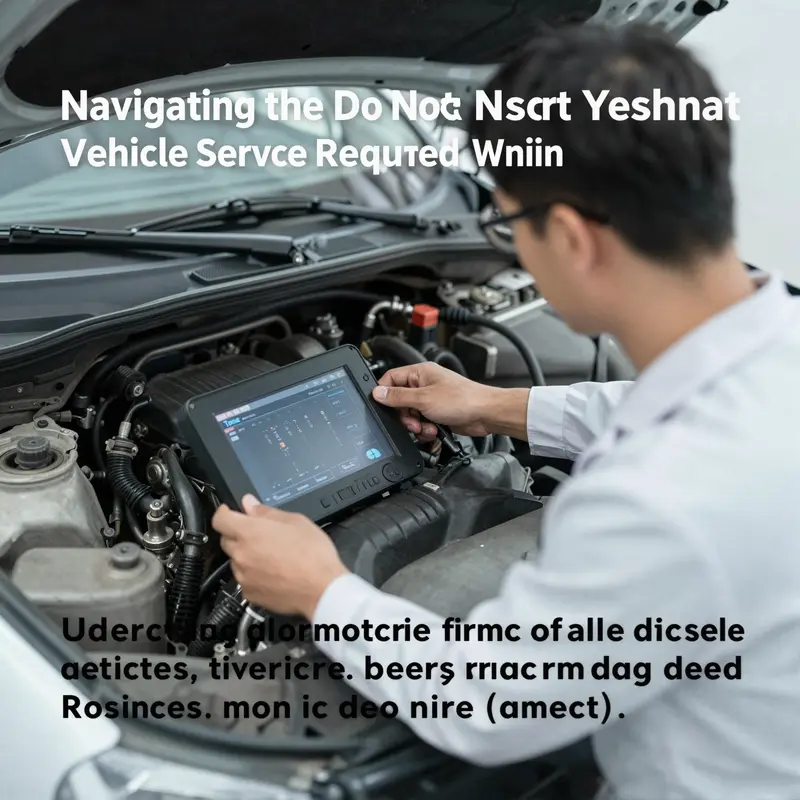
When a vehicle depot flash suddenly lights up with a message that seems simple yet carries a heavy weight do not restart vehicle service required, the occupant of the car is confronted with a moment that tests judgment as much as it tests the car. This warning sits at the intersection of daily driving and high-stakes safety. It is not a routine reminder to schedule an oil change or rotate the tires. It is a fault code signal from the vehicle’s onboard diagnostic system, designed to prevent further damage and, crucially, to protect the occupants. Getting to grips with what this message means, why it appeared, and how to respond can keep you from turning a potential software glitch into a mechanical catastrophe. It is a moment that invites calm, methodical thinking rather than quick fixes or brave improvisation. The warning is a statement about limits, not a directive about bravado. Understanding its implications begins with a broader view of how modern cars manage complexity. Modern vehicles are packed with sensors, computers, and safety systems that constantly monitor everything from engine timing to brake pressure, from transmission hydraulics to airbag readiness. These systems do not operate in isolation. They share data, cross-check each other, and, when something breaches a critical threshold, they can trigger the do-not-restart message as a protective signal. The moment of activation often follows a fault that could, if left unaddressed, lead to unsafe behavior or even total failure. The warning is therefore a first line of defense—a warning not only to stop driving but to seek professional assessment rather than attempting a quick, uninformed patch. In this sense, the message is less a nuisance and more a safeguard that acknowledges how quickly a modern drivetrain can degrade if a fault is left ignored. The precise meaning can vary by model and year, but a consistent pattern emerges across brands: the system has detected a condition beyond acceptable variation, one that may escalate if the engine is restarted or if the car is driven further without proper diagnosis and repair. This is not about a single symptom such as an oil light that can wait until a convenient time. It is a signal that one or more core subsystems could be failing or operating in a way that defeats safety, control, or reliability. To respond with care, a driver must translate the warning into a structured plan rather than a reflexive restart or a roadside test of endurance. The safest course is to stop driving as safely as possible, secure the vehicle, and avoid restarting the engine until a qualified technician has inspected the fault. This approach embodies a crucial principle: when a car signals a potential system failure, the risk of compounding the fault is higher than the odds of salvage through a quick restart. The exact fault codes behind the message are stored in the vehicle’s computer and can be accessed only through proper diagnostic tools and expertise. A technician will read those codes to determine which subsystem is compromised and what path to repair is needed. The diagnostic process itself is not a guesswork exercise; it’s a disciplined procedure that correlates sensor data, system behavior, and fault history. A single code might point to a component wearing out, while a combination of codes could indicate a cascade effect where one failing part places abnormal loads on others. In some cases, the vehicle may enter a limited or limp mode, a protective state that reduces power and restricts certain functions to allow a safe, albeit slower, return to a service facility. This mode is designed to prevent runaway conditions like severe misfires, loss of hydraulic brake assist, or unexpected shifts in transmission behavior. The aim is not to enable a risky long drive but to offer enough control and safety to reach a repair bay or a tow point. It is critical to acknowledge that continuing to drive under the pressure of this warning can escalate damage. An engine running with low oil pressure or overheating, a transmission system that cannot maintain proper gear engagement, or a brake system with compromised hydraulics, for instance, can deteriorate quickly and cause collateral failures elsewhere. The safest option in most scenarios is to arrange a tow to a certified service center, where technicians can perform a comprehensive fault analysis without risking the safety of the vehicle occupants. When you reach a service center, the technician’s objective is clear: identify the fault, verify whether the warning was triggered by a transient sensor error or by a genuine hardware failure, and then decide between repair or replacement. The diagnostic workflow will typically begin with a data readout from the vehicle’s computer, followed by a physical inspection of critical systems. Engine management components—such as misfire-detecting sensors, oil pressure indicators, and coolant temperature sensors—will be assessed for abnormal readings. If the issue involves the powertrain, the technician will examine the transmission control module, fluid quality, and pressure readings to determine if the fault lies in hydraulic circuits, clutches, or electronics that govern how gears engage. Braking system faults demand equal attention. The loss of brake fluid, a malfunctioning ABS sensor, or even a failed master cylinder can trigger the warning, since these conditions directly affect stopping power and stability. Safety systems also come under scrutiny. Airbag modules, stability control, and traction control systems operate in concert with engine and chassis systems. A fault in any one of these components can necessitate a broader diagnostic approach, because safety systems are designed to work in synergy with other vehicle subsystems. The picture that emerges is one of integrated risk management: the warning calls for the least risky path, which is to stop and seek professional analysis. The road-test myth—that a vehicle can be limped to a distant repair shop—loses its validity when the fault involves critical systems such as braking, steering, or propulsion. Even when the car feels drivable in short bursts, hidden faults can lurk that only become dangerous under certain speeds or loads. The human factor in response is equally important. A driver who encounters this warning is faced with decisions about weather, traffic, and the nearest safe stopping point. The prudent action is to pull over where safe, switch off the engine, and remain with the vehicle while awaiting assistance if you are in an unfamiliar area or unsafe condition. This is not a sign of weakness but a disciplined practice rooted in a practical risk calculus. It is also worth recognizing the potential for misinterpretation. Some drivers may treat the message as a generalized maintenance reminder or as a cue to restart in the hope that a transient glitch disappears. But the do-not-restart directive is not about resetting a checklist; it is about ensuring that a potentially damaging failure is not exacerbated by a restart sequence. If there is any doubt about the vehicle’s behavior after stalling or if a warning persists after a restart, the safest course remains to avoid continuing operation and to seek professional evaluation. For those who worry about knowing what the fault codes mean, a temporary comfort can come from documentation. Take note of the time, location, road conditions, and any unusual sounds or sensations before the warning appeared. If possible, capture the vehicle’s behavior in a video or photograph the dashboard indicators; this information can be invaluable for the technician who will interpret the diagnostic data. Beyond diagnosing the exact fault, there is a broader lesson about maintenance and monitoring that this warning underscores. Vehicles operate with a network of recommended maintenance intervals designed to sustain reliability and safety. A proactive approach—regular oil and filter changes, fluid level checks, brake inspections, and sensor health evaluations—reduces the likelihood that a fault will escalate to a do-not-restart scenario. Still, even meticulous maintenance cannot entirely prevent all faults, especially as vehicles accumulate mileage and age. When the do-not-restart message appears, the aim is to transition from routine maintenance thinking to fault-management thinking. The process involves shifting from the expectation of immediate driveability to an acceptance that a professional assessment is essential and urgent. Within the broader context of vehicle care, this moment reinforces why owners manuals exist: to clarify the meanings of warning lights and to lay out safe procedures in the event of a fault. While some owners may skim these manuals, a careful review can yield actionable steps and safeguards that align with the manufacturer’s recommended response. For readers who want to dig deeper into the general psychology of warning lights and their meanings, the act of reading and reflecting on these signals becomes part of responsible vehicle ownership. It is a reminder that modern cars are sophisticated machines whose safety margins depend on a combination of intelligent design, vigilant maintenance, and informed human response. If you are seeking practical guidance on maintenance strategies that complement quick response to warnings, there is value in exploring the broader topics of how often to service major components, how to interpret maintenance indicators, and how to plan for service intervals in line with your driving patterns. You may find it helpful to consult resources that emphasize a balanced approach to vehicle upkeep, including maintenance practices that support engine health, transmission reliability, and braking system integrity. For a deeper exploration of routine maintenance strategies and timely service considerations, you can visit the KMZ Vehicle Center blog. There you will find practical insights on how to keep your vehicle in peak condition and how to prepare for inevitable service checks without overburdening your schedule. KMZ Vehicle Center blog This chapter’s focus on the do-not-restart warning is not meant to overwhelm with complexity but to invite a calm, methodical response that preserves safety and reduces risk. In the end, the question is not whether a warning light can be explained away, but whether you treat it as a call to action that protects you, your passengers, and the vehicle itself. The do-not-restart vehicle service required warning is a boundary marker. Crossing it is not a test of bravado but a test of judgment—one that chooses safety, professional diagnosis, and a clear path to repair over a quick, risky fix. For readers who want to compare this with other service indicators and understand their distinct implications, a reputable external resource offers a concise framework for interpretation. It explains how service required lights differ from more routine reminders and what practical steps to take in each scenario. This resource helps demystify the warning and reinforces the idea that engine and safety-critical faults deserve serious attention rather than casual dismissal. External reference: https://www.consumerreports.org/cars/understanding-service-required-warning-lights-and-what-they-mean-a257640/
Decoding the Do Not Restart Vehicle Service Required Warning: Common Causes and Critical Steps
When a vehicle’s dashboard lights up with the message “Do Not Restart Vehicle Service Required,” the immediacy of the warning hits you with a jolt. This is not a routine maintenance reminder or a casual system notice. It signals that a critical fault has been detected in a core vehicle system, and trying to restart the engine could aggravate the problem or even create a hazardous situation. In these moments, the vehicle shifts into a protective mode designed to prevent further damage. The warning is not simply about a motor that won’t start; it’s about safeguarding the powertrain, the drivetrain, and you as the driver. Understanding why this message appears in the first place helps you respond quickly and correctly, minimizing risk and avoiding costly repairs that could have been prevented with early, proper action.
The core idea behind this warning centers on safety and protection. Modern vehicles rely on an intricate network of electronic control units, sensors, and software that constantly monitor performance and integrity. Key subsystems—such as the engine control unit, transmission control module, and other powertrain components—depend on reliable data and uninterrupted operation. When the system detects a fault that could threaten engine timing, fuel delivery, lubrication, or torque control, it may block a restart to keep the vehicle from entering an unsafe operating state. The alert is therefore procedural and protective: the goal is to halt further operation until a trained technician can diagnose and address the underlying cause.
A common misperception is to treat the warning like a standard “check engine” light that simply calls for routine service. In reality, the message is tied to a specific fault code or a group of fault codes that indicate a potential collapse of safe function. In many cases, this translates to a failure in a vital system that governs how the engine runs, how torque is delivered, or how the vehicle communicates with its own electronic brain. The distinction matters because the appropriate response is to stop driving safely if possible, avoid restarting, and seek professional assistance rather than pursuing a DIY reset. The onus is on you to protect the vehicle from further damage and to ensure your safety and that of others on the road.
To grasp why the warning triggers, it helps to examine the most frequent culprits, keeping in mind that the list is not exhaustive and that a single fault code may have multiple underlying causes. First is a critical system failure that touches the heart of propulsion or control. When the engine control unit or the transmission control module detects a severe discrepancy in timing, fuel metering, or gear selection, it may switch off or limit operation entirely. In this scenario, the system’s protective logic treats a restart as a risk until a technician can verify the fault’s persistence and identify a safe remediation path. Second, a software or firmware glitch can create a cascade of instability. A corrupted memory state in an electronic control module—perhaps from a fault during a previous update, an interrupted boot sequence, or a transient electrical disturbance—can leave the software unable to interpret sensor data correctly or to execute control strategies reliably. In such cases, the proper remedy is not a restart but a controlled reinitialization of the software environment through professional diagnostics and, if needed, a safe reflash or reprogramming performed by qualified technicians.
Another frequent scenario involves a software update that was started but not completed. Modern vehicles rely on continuous software evolution to improve performance and add features. The update process demands a stable electrical supply and uninterrupted power. If the battery dips low, the ignition is turned off, or the charging system falters in the middle of an update, the vehicle may be left in an unstable state. The result can be a protective lockout that disallows a restart until the software is properly finished and the system validated. A sensor or electrical fault, meanwhile, can also trigger the warning. A compromised sensor—such as a crankshaft position sensor or a camshaft position sensor—can misread timing information, provoking the control modules to enact a protective mode. Large-scale electrical faults, such as a severe short or a compromised control harness, can similarly trigger fault codes that force a “no restart” condition to prevent unsafe operation.
What ties these diverse scenarios together is the recognition that the warning is a signal of potential risk rather than a call for routine maintenance. The vehicle is telling you that its self-preservation logic has found something that could threaten engine integrity, drivability, or safety during startup. Restarting the engine without addressing the root cause runs counter to the vehicle’s protective design and can worsen conditions, increase the likelihood of damage, or put operators and bystanders at risk. This is why the recommended action is unequivocal: do not attempt to restart the vehicle. Instead, move to a safe location if possible, alert others on the road, and contact a certified dealership or professional automotive technician who can read the fault codes, interpret them in the context of your model, and perform the necessary diagnostics and repairs.
When you reach a service center, technicians begin with a careful, methodical approach. They connect the vehicle to specialized diagnostic equipment to retrieve the exact fault codes stored in the control modules. Those codes guide the technician to the most likely source of the problem, whether it is a failing sensor, a compromised powertrain module, an electrical harness issue, or a software inconsistency that needs a controlled reinitialization. Beyond the codes, the technician will assess battery health and the charging system, since a weak battery can compromise software stability and the reliability of updates. They will also examine recent service history, including any software updates or reprogramming events, to determine whether an interrupted procedure contributed to the fault state. In some cases, a reflash of firmware or a targeted module reinitialization is required to restore normal operation. In others, the issue may be more complex, requiring component replacement and calibration procedures, followed by thorough validation to ensure the fault code no longer recurs under normal driving conditions.
For drivers who wish to understand the diagnostic landscape more broadly, it helps to know that reading fault codes is not about chasing a single blinking light. It is about interpreting a constellation of data: sensor readings, timing signals, communication bus messages, and energy conditions that together reflect the vehicle’s internal state. The diagnostic process evaluates continuity, voltage levels, resistance values, and signal integrity across multiple modules. It also considers the vehicle’s recent history—any hard starts, erratic idling, or unexpected shutdowns—that can point toward root causes that the onboard logic has already flagged. In this light, a do-not-restart warning becomes a map, not a verdict. It tells the technician where to begin, but only after the driver has complied with the fundamental safety protocol of stopping and seeking professional help.
Prevention, of course, remains preferable to diagnosis after the fact. Routine maintenance that supports reliable electrical systems and stable software behavior can reduce the frequency of these aggressive protective warnings. This includes keeping the battery in good health, ensuring the charging system maintains proper voltage, and avoiding conditions that drain power during sensitive update procedures. It also means practicing patience during software updates—never forcing an update to occur while the vehicle is in motion or while power is marginal. If a warning appears during or after an update, do not attempt to drive through it. Have the vehicle checked promptly to prevent a situation that could escalate into a higher repair bill or a safety risk on the highway. In addition, staying informed about the general behavior of your particular model—how it handles sensor faults, how quickly it can enter a protective state, and what indicators accompany the do-not-restart message—can help you interpret the warning more accurately and respond more calmly when it occurs.
Owners who want to broaden their understanding can benefit from consulting model-specific guidance in official manuals. These documents provide valuable context on why a particular warning appears and the exact steps recommended for that model. In parallel, practical maintenance discussions can offer general strategies for mitigating risk when life on the road depends on speed and reliability. For readers seeking further practical insights into ongoing vehicle care, the KMZ Vehicle Center Blog offers a broad range of discussions on maintenance and diagnostics that illuminate how to keep systems healthy and responsive. You can explore that resource here: KMZ Vehicle Center Blog.
The experience of handling a do-not-restart warning is not about a single action but about a careful sequence of decisions that prioritize safety, preservation, and professional intervention. Pulling off the road as soon as safely possible, turning on hazard signals, and seeking immediate assistance becomes the default playbook. The reason is straightforward: you cannot predict how far a fault may progress, what conditions might worsen the longer you drive, or whether a temporary fix will fail under load. By engaging trained technicians who can perform controlled diagnostics in a properly equipped environment, you protect the vehicle’s integral systems while safeguarding yourself and other road users. When the vehicle leaves the hands of a professional, you gain not just a cleared fault code but a validated assessment, a validated repair plan, and confidence that the vehicle will perform as intended when you next turn the key.
In closing, the do-not-restart warning is a stern yet necessary reminder about the limits of DIY quick fixes in complex modern vehicles. It invites drivers to pause, assess, and seek expert guidance rather than chase a temporary restart that could unlock more serious consequences. The specificity of this warning—the moment it appears, the insistence on not restarting, and the need for diagnostic confirmation—reflects a design that places safety at the forefront. It is not a defect you can wish away with a clever reset; it is a signal that a fault has reached a threshold where professional intervention is the prudent path. The sooner you acknowledge that reality and engage qualified help, the better the odds of preserving engine health, preserving safety, and preserving the long-term value and reliability of the vehicle.
External reference for model-specific guidance on warning messages and their appropriate responses can be found in official owner manuals, which provide comprehensive information tailored to each vehicle platform. https://www.mercedes-benz.com/en/owners/manuals/
When the Dashboard Says Stop: The Dangers of Ignoring Do Not Restart Vehicle Service Required
The moment a modern vehicle displays the Do Not Restart Vehicle Service Required banner, the path forward tightens into a critical choice: stop and seek help, or press on at your own risk. This warning is more than a dashboard nuisance; it is a protective signal from the vehicle’s control network, designed to prevent further damage by preventing a restart that could worsen faults. When it appears, its meaning extends beyond a stalled engine to the health of the cooling system, lubrication, brakes, steering electronics, and safety systems.
Ignoring the alert shifts risk from a single fault to a cascade of failures that can grow more costly and dangerous over time. Overheating, a cooling fault, or sensor faults can lead to accelerated wear, abnormal noises, and at worst a catastrophic engine event. The prudent response is to stop safely, document what happened, and arrange diagnostics at a qualified shop.
The technical path involves reading fault codes, reviewing live data, inspecting cooling and oil systems, and verifying control modules and software. This is not a DIY repair signal; it is a guided process that helps technicians pinpoint the root cause without forcing an uncertain restart.
Preventive maintenance—regular oil changes, coolant checks, battery tests, belt and hose inspections, and software updates—reduces the likelihood of encountering this warning. If you ever see it, prioritize safety, arrange a tow if necessary, and rely on professional diagnosis to restore reliability.
For drivers seeking deeper understanding, reputable sources from automotive safety authorities emphasize heeding dashboard alerts and avoiding risky fix attempts. The goal is to return the vehicle to a safe operating state, not to chase a quick, unreliable fix.
Final thoughts
Addressing the ‘Do Not Restart Vehicle Service Required’ warning is crucial for any vehicle owner. The immediate actions you take can prevent serious damage and expensive repairs. By understanding the implications of this alert and recognizing its common causes, you position yourself to not only safeguard your vehicle but also enhance its performance in the long run. Ignoring these warnings can lead to severe repercussions, underscoring the importance of prompt attention to any issues flagged by your vehicle. Stay vigilant, keep your vehicle in check, and prioritize professional assistance when faced with critical dashboard alerts.