
Understanding how long vehicle services take is crucial for all car owners, whether you’re a personal vehicle owner, a used car buyer or seller, or a fleet operator managing multiple cars. The time it takes for service can significantly affect your planning, budgeting, and overall satisfaction with vehicle ownership. From basic oil changes to complex repair jobs, the duration can vary greatly, introducing uncertainty into your schedule. This article will explore the timing for common vehicle services, delve into complex repairs, analyze the impact of technological advancements, and examine service time estimation strategies. Each chapter will provide valuable insights, ensuring you can make informed decisions regarding vehicle maintenance and repairs.
The Clock on Car Care: Realistic Timelines for Common Vehicle Services
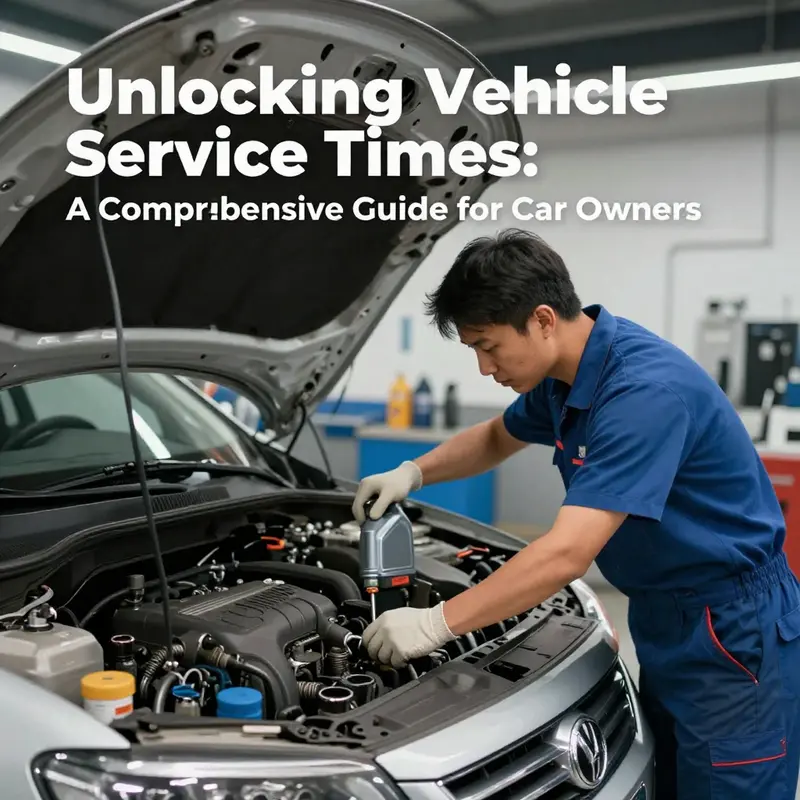
Time sits somewhere between expectation and experience when you bring a vehicle in for maintenance. The clock in the service lobby often marks the difference between a routine errand and a quiet, productive afternoon. Understanding what governs that clock helps drivers plan, reduces friction at the counter, and ultimately supports a smoother relationship with any shop, whether you’re tending to an everyday commuter or a specialty machine. At a fundamental level, the length of a basic vehicle service hinges on the scope of the tasks involved, the make and model of the car, and the proficiency of the technicians and their tools. A standard service that includes an oil change, filter replacement, and a basic inspection typically runs between one and three hours. That window is not a guarantee, but a practical range based on typical vehicles and workflows. Within that range, the exact duration can swing for reasons both obvious and nuanced, from the accessibility of components to the condition of fluids, and even the efficiency of the tech performing the work. The clock starts as soon as the vehicle is in the bay and the technician begins to work, and it stops when the last check is completed, the vehicle is returned to the owner, and the final paperwork is settled. Real-world experiences vary, but the core rhythm remains consistent for most conventional maintenance tasks. The simplest oil change, for instance, can be completed in as little as 30 minutes in some shops with dedicated equipment and a straightforward engine layout. In other garages, especially those that perform a multi-point inspection or top off multiple fluids, that same oil change might fill the upper end of the hour or even slide into the next hour. The presence of a robust throughput—well-organized bays, readily available parts, and properly calibrated lifts—makes a tangible difference. When the job requires little beyond the basic workflow, time is saved not by cutting corners but by using standardized, repeatable steps. A typical oil and filter replacement is, at its core, a sequence: drain old oil, remove the old filter, install a new filter, pour in fresh oil, and verify levels. A well-tuned shop streamlines each of those steps so the car spends the minimum necessary time in the bay while still receiving a thorough check of associated components. This is where the carmaker’s guidelines, the service bulletin, and the shop’s own standard operating procedures converge to define a predictable cadence. Yet even within a one-to-three-hour window, there are meaningful differences from vehicle to vehicle. The engine layout can either ease or complicate access to the drain plug and filter housing. Some engines arrange the filter high on the side, making it a quick reach; others tuck it deeper or behind brackets that require extra disassembly. The type of oil matters too. Conventional oil can flow and drain quickly; synthetic oils, while offering superior performance in engines that demand it, may require more careful measurement and timing to ensure a precise fill. The oil capacity of the engine is another factor: a larger capacity means more oil to drain and replace, which can lengthen the job by a few minutes or more, particularly in older or high-mileage engines where the time spent on torque specifications and slow, careful pours reduces the risk of overfilling. The filters themselves vary a little in size and shape; some vehicles use cartridge filters that demand a separate step to remove and replace, while others use a traditional spin-on filter. Each approach has its own micro- rhythm, components, and potential delays. These subtleties accumulate across a busy day, and the cumulative effect can tilt a standard service from one hour into three, especially when the shop runs near capacity and technicians are juggling multiple vehicles. In every case, the service advisor’s clear communication about what’s included in the oil change, what inspections will be performed, and what fluid levels will be checked matters. A basic inspection is not merely a casual cursory glance; it’s a structured, documented process. The technician will typically verify tire pressures, inspect brakes visually, listen for unusual noises during a test drive, and note any leaks or worn components. If the inspection reveals a wear item approaching the end of its life, the shop may pause to discuss the recommended preventive maintenance, which can adjust the overall time of the visit. The dichotomy between a routine service and a more thorough one becomes even more pronounced when additional tasks are bundled into the visit. For example, some maintenance packages pair the oil change with a brake inspection and a coolant level check. If the brakes display corrosion on the rotors, or if the brake pads show uneven wear, a supervisor may recommend additional checks or service, which can extend the appointment by one or more hours. The coolant flush, when selected, introduces another layer of complexity. A coolant flush involves draining the cooling system, flushing with a cleaning solution or distilled water, and refilling with fresh coolant to a precise level and concentration. This process is more time-consuming than a straightforward top-off, because it requires system pressure testing and careful purging of air pockets to prevent hot spots that could damage the engine. The discussion of time in maintenance inevitably leads to a broader question: what about cars that present more challenges from the first moment in the bay? The answer lies not only in the car’s age or condition but in the broader context of service operations. If a vehicle requires diagnostic work—whether to identify an intermittent electrical fault, a sensor misread, or a software-related alert—the clock can stretch into three to six hours or more. A full diagnostic check often begins with scanning for error codes and data logs, followed by targeted tests, component access, and sometimes the ordering of parts that aren’t currently in stock. When parts need to be sourced, the timeline can extend further, not only because of shipping times but also because some components require special handling or programming. Even for a basic service, there is a dedicated sequence that technicians follow to prevent rework. A well-run shop minimizes back-and-forth by aligning the service with manufacturer guidelines and by pre-planning tasks in the order of operations. The system can also be influenced by external realities, such as the arrival of other vehicles scheduled in the same window. Technicians may need to adjust workflows to accommodate a last-minute appointment or to coordinate with the service lane’s capacity, which can indirectly affect how long a car remains in the bay. In modern maintenance practice, predictive tools and estimated service time models are valuable. They draw on historical data and real-time factors like current workload, bay availability, and even traffic patterns around the service center to forecast throughput and communicate realistic expectations to customers. Those models help shops manage the often-unknowns that can arise in a given day, such as a higher-than-average number of emergency services, or a vehicle that requires an undetected repair discovered only during a routine inspection. These estimates benefit customers by providing a basis for planning. They also benefit technicians by reducing the tension of the unknown and by supporting more accurate scheduling, which in turn improves the likelihood that a vehicle will be completed within the stated window. For a vehicle owner planning around a service visit, the practical takeaway is simple: ask for a written estimate that breaks down the anticipated tasks and the approximate time for each. If the service includes an optional diagnostic, confirm whether it’s billable and how it might impact the total duration. It’s also prudent to verify the vehicle’s condition beforehand and to come prepared with any questions about potential wear items that could influence the duration of the visit. The car’s make and model matter as well in this planning. For example, electric vehicles bring a unique balance of efficiency and complexity. A basic service on an electric vehicle often emphasizes software updates, battery health checks, and inspection of key components like brakes and suspension. In such contexts, the core service may come in at the shorter end of the spectrum—often around one to two hours—yet the presence of a comprehensive diagnostic or a needed software patch can extend the appointment. This is not a sign of inefficiency but a reflection of the vehicle’s simpler mechanical architecture paired with a more demanding digital ecosystem. Across these scenarios, the most important thread remains consistent: timelines are approximate, not promises carved in stone. The best practice is to treat the stated duration as a range rather than a deadline. That approach protects customers from disappointment and gives technicians room to perform a thorough, safe service without feeling hurried. It also underscores the idea that maintenance is not a one-size-fits-all task. A driver’s responsibility includes keeping the vehicle on a maintenance schedule that aligns with the manufacturer’s guidelines, not only to keep the car safe and reliable but also to optimize the time spent in the shop. For those who want to dive deeper into the timing conversation, a broader discussion of maintenance timing topics can be explored in the KMZ Vehicle Center blog. There, readers can encounter practical timelines and planning tips that reflect real-world service experiences across a range of vehicles, from everyday commuters to more specialized machines. KMZ Vehicle Center blog can serve as a complementary resource to the manufacturer guidelines and the shop’s own scheduling practices, helping owners set realistic expectations and prepare for the day when the service clock starts. While the specifics will differ from one car to another, the structure of the experience remains recognizable. A clean, organized bay, a clear work order, and a technician who communicates as the work progresses contribute to a smoother journey from drop-off to pickup. It is natural to feel a moment of uncertainty when you consider the possibility of delays, but with transparent estimates and proactive planning, that uncertainty gives way to confidence. The key is to view service time as a function of thoughtful preparation, precise execution, and well-timed communication. By understanding the typical ranges—roughly one to three hours for a basic oil change with filter replacement and inspection, and three to six hours or more for more involved maintenance or diagnostic work—drivers can approach each visit with better expectations and less friction. In the end, the clock measures both efficiency and care. It marks not only how long a vehicle takes to be serviced but also how well it is cared for during the process. As service centers continue to refine their workflows through predictive models and streamlined processes, customers benefit from shorter, more predictable visits without compromising the thoroughness that protects their investment. For those who want a concrete reference point, manufacturer guidelines remain a cornerstone, and digital scheduling tools can provide a clearer picture of what to expect for a given vehicle and task. The most reliable approach remains a candid dialogue with the service provider, a clear outline of what’s included, and a shared understanding that some days will run tighter than others, while many days will move smoothly, with the clock ticking in a way that matches the care being delivered under the hood. External resources can offer additional context on how guidance for maintenance evolves in the industry. For broader reading on maintenance as a discipline—beyond the shop floor—consult industry-approved sources and official maintenance guidance sites. For a practical look at how these principles play out in electric vehicles, the official guidance on vehicle maintenance can be consulted here: https://www.tesla.com/support/vehicle-maintenance.
Timing the Long Haul: Understanding How Long Complex Vehicle Repairs Truly Take
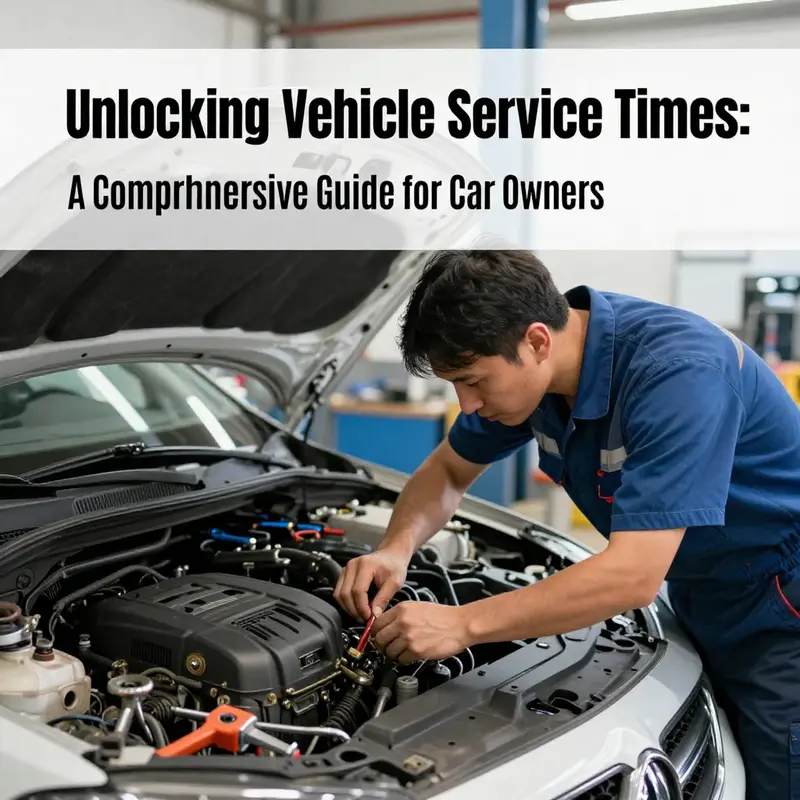
A repair that qualifies as complex changes the tempo of a shop in a way that simple routine tasks do not. It isn’t just about turning a couple of wrenches; it is about coordinating diagnostics, sourcing parts, and aligning skilled labor with safety and quality checks. When a vehicle requires extensive repairs, the clock often stretches beyond the familiar one- or two-day service window that many owners expect. The narrative of time in complex repairs is a story of phases, dependencies, and inevitable contingencies that reshuffle the calendar as a project unfolds. In practice, major repairs such as engine overhauls, transmission replacements, or substantial frame work typically fall into a multi-day rhythm that can stretch from three to seven days under normal conditions. In cases where parts are unusual, scarce, or bespoke, the timeline can extend to two weeks or more. This spectrum reflects how repair work sits at the intersection of demand, supply, and the shop’s capacity to manage complexity with consistency.
To grasp why those numbers look the way they do, it helps to picture the repair as a sequence of distinct, interconnected steps rather than a single block of labor. The first phase is diagnostic. Even when a vehicle presents a clear symptom, the root cause might require careful verification. A stubborn misfire, an intermittent noise, or a suspected failure in a critical system can demand a deeper dive with specialized equipment. Diagnostic time grows with the intricacy of the issue, the need to rule out multiple potential causes, and the level of confidence a technician requires before proceeding with a repair plan. This early effort matters, because an accurate diagnosis sets the stage for every subsequent step and can prevent costly detours later in the timeline.
Once diagnosis yields a primary repair objective, the process enters the procurement and parts phase. This is where the race with the calendar becomes most visible. If the required components are common and readily available, the procurement step may be brief, allowing the shop to move into the hands-on repair more quickly. When parts are back-ordered, on a long lead time, or when a vehicle relies on rare, vintage, or specialized hardware, the schedule can stall. In some cases, the presence of insurance work adds another layer of coordination, since approvals, inspections, or authorization checks can introduce additional days before a part ever leaves the supplier to arrive at the shop. The variability in this stage is the principal reason why two otherwise similar repairs can diverge by several days in practice.
The actual repair work follows a similar pattern of variability. The complexity of the job dictates not only the number of hours or days required but also the level of attention to precision, safety, and testing. An engine overhaul, for instance, may involve disassembling major assemblies, inspecting and replacing components, reassembling with exact tolerances, and verifying performance across multiple parameters. A transmission replacement carries its own unique choreography, including removal, alignment of the new assembly, fluid management, and a comprehensive function test after installation. Frame repairs, which may involve straightening or reinforcing structural components, also demand meticulous measurement and validation to ensure that the chassis geometry remains within specification. Each of these repair families has its own internal tempo, and the shop’s experience with similar jobs becomes a practical predictor of how smoothly that tempo can be sustained.
Even within an ongoing repair, the pace is influenced by labor coordination and shop workflow. Skilled technicians may work on multiple aspects of a vehicle in parallel when tasks are modular and dependencies are minimized. However, complex repairs rarely permit full parallelism without risking misalignment of critical systems. The leadership of the shop—whether through a dedicated project manager or a master technician—plays a decisive role in sequencing tasks, scheduling test runs, and catching issues early. The effect of this coordination is a smoother flow of work that can shave off days in some instances, or conversely, a hiccup in scheduling that reverberates through the entire timeline. In short, the duration of a major repair is as much a function of project management as it is of mechanical difficulty.
Another factor shaping the speed of complex repairs is the availability of resources beyond the shop floor. Specifically, the supply of parts and the readiness of specialized tools or calibration equipment can accelerate or slow progress. Shops that have established relationships with multiple suppliers may negotiate preferential timelines, while those that rely on a single source may face unavoidable delays when parts are scarce. In addition, some repairs require reprogramming or relearning of vehicle control modules, adaptive systems, or diagnostic software. When software updates or dealer-level access are required, additional time must be factored in for software validation and security checks. The cumulative effect is that a repair’s duration becomes a composite of mechanical work, diagnostic validation, tooling availability, and software integration, all harmonized within the constraints of the shop’s overall workload.
Owners and operators often ask whether insurance or warranty considerations change the clock. Insurance-driven repairs commonly involve an approval and inspection phase that can add days before any physical work begins. Even after authorization, the process of approving estimates, approving revisions if additional damage is uncovered, and scheduling an approved scope of work can elongate the timeline. Conversely, warranty-covered repairs may benefit from streamlined workflows in some cases, but not at the expense of due diligence. The best approach for customers is to understand that the path from assessment to road-ready status can be longer when third-party oversight enters the equation, but that this extra time helps protect safety, coverage, and accountability.
In practical terms, most customers will experience a window of three to seven days for major repairs under typical circumstances. A minority of scenarios—those involving rare parts, extensive structural work, or complex diagnostics—will exceed that window, sometimes dramatically. The overarching message is simple: plan for a multi-day horizon, with an explicit acknowledgment that unexpected discoveries can extend the timeline. This reality is why forward-looking maintenance narratives emphasize transparency and proactive communication. It is not merely about posting a single completion date; it is about keeping a running update on diagnostic conclusions, part availability, and the evolving scope of work so that owners can adjust plans accordingly.
For readers seeking a broader sense of how professional shops estimate and manage these timeframes, many service providers lean on diagnostic and time-estimation models. These models factor in the nature of the service, the vehicle’s condition, and even external variables—paralleling how predictive tools are used in routine maintenance to optimize workflows and allocate resources. The result is a more disciplined forecast that helps reduce downtime and minimizes surprise when the vehicle finally returns to the owner. If you want a broader perspective on how timelines are framed across the industry, the KMZ Vehicle Center blog offers expansive guidance on maintenance intervals and service pacing, which complements the discussion of complex repairs. KMZ Vehicle Center blog.
As you contemplate the road ahead when your vehicle requires extensive work, it helps to carry a mental model of the timeline that aligns with the phases described above. Picture your car first being assessed to verify the problem, then having parts sourced, followed by the essential repair work, and finally a thorough test drive and quality check. Each phase carries its own uncertainty, but with clear communication, you can arrive at a realistic expectation for when the repair will be completed and when your vehicle will be back in service. It is also worth noting that modern maintenance practices increasingly incorporate predictive scheduling and data-driven estimates to minimize downtime, much as they do for routine services. This approach supports not only logistical efficiency but also customer satisfaction by providing credible, evolving timelines rather than static promises. The outcome remains contingent on the complexity of the repair and the external factors that shape the parts and people involved, yet the guiding principle is consistency: informed expectations reduce frustration and help everyone stay aligned through the process.
In the end, the duration of complex vehicle repairs is a balance between the scientific precision of diagnostics and the practical realities of supply chains, labor allocation, and sequencing. Owners who understand this balance are better prepared to navigate the weeks ahead, arrange temporary transportation if needed, and engage in constructive discussions with their service provider about milestones, potential risks, and contingency plans. For those curious about the broader spectrum of repair timelines beyond the scope of complex jobs, the industry literature and expert guides frequently echo a core message: while some tasks are relatively quick, extensive repairs demand patience, transparency, and a collaborative approach to keep the project moving toward a safe and reliable finish.
External reference: For a detailed, up-to-date overview of typical timelines for complex vehicle repairs, including real-world data and expert insights, see CarMD’s Repair Timelines: https://www.carmd.com/repair-timelines
Smarter Service, Shorter Downtimes: How Automated Systems and Predictive Maintenance Are Redefining Vehicle Service Timelines

When someone asks how long a vehicle service takes, they often think in terms of fixed blocks on a shop clock—oil changes in thirty minutes, brake jobs in a few hours, engine work dragging into the day. In reality, the duration is a moving target, shaped by the vehicle’s condition, the service category, and the efficiency of the shop’s workflow. In the last decade, a quiet shift has been underway: the rise of automated systems and predictive maintenance. These technologies do more than just speed up repairs; they change when and why a service is performed. By turning maintenance from a reactive fix after a warning light into a proactive sequence guided by real-time data, fleets and individual owners alike are learning to plan around maintenance rather than to react to failures. The result is not merely shorter service blocks, but a tighter integration of diagnosis, parts availability, and labor capacity that minimizes wasted time for everyone involved.
In modern garages, vehicles are not just repaired on a timetable of fixed intervals but continuously monitored. Telematics, connected sensors, and on-board diagnostics feed data into centralized systems that track wear patterns, fluid quality, and component health. When an issue trends toward an underperforming state, technicians can schedule preventive or predictive interventions during planned downtimes or lower-traffic windows. This condition-based approach shifts the service model from a calendar habit to an evidence-based practice. It means a car or truck may go longer between random breakdowns, and when a service does occur, it is more likely to be focused, purposeful, and time-efficient. The human element remains essential; skilled technicians interpret data, verify anomalies, and translate digital signals into effective, safe repairs. Yet the role of the shop floor evolves: less guesswork, more precise targeting, and a workflow designed around data-driven priorities.
A predictive maintenance MVP typically requires a deliberate, multi-step rollout that can take six to eight weeks, depending on fleet size, data availability, and API access to vehicle systems. During this period, the project team configures data pipelines, calibrates anomaly thresholds, and tests integration with the maintenance management system. Once in place, these systems can identify potential issues before they lead to failure, allowing maintenance teams to address problems during planned downtimes. In practical terms, the pace of service accelerates because diagnostics are trimmed to what truly matters. Rather than a broad, time-consuming exploration of many subsystems, technicians receive precise alerts that point to a small set of likely failure points. This not only shortens the time spent diagnosing but also lowers the risk of unnecessary repairs.
Consider how real-time analytics affect everyday tasks inside a shop. Predictive AI agents monitor engine performance indicators—temperatures, vibrations, fuel efficiency trends—along with tire wear, brake pad depth, and fluid contamination levels. The system flags emerging issues with a level of diagnostic precision that used to require lengthy, manual testing. When technicians arrive at a vehicle, they confront a work plan that looks more like a tight series of steps rather than a broad, exploratory session. For example, instead of dismantling a component to inspect it, they may confirm a data-driven conclusion and proceed directly to a targeted replacement or re-calibration. The time savings compound across multiple jobs in a day, allowing shops to increase throughput without sacrificing safety or quality. As the diagnostic phase becomes more efficient, the actual repair, replacement, or recalibration can be scheduled with higher confidence, and downtime can be allocated to customer appointments and fleet cycles with greater reliability. In this environment, a routine service such as an oil change does not stand alone; it sits within a responsive maintenance plan that evolves with the vehicle.
This shift also invites a more nuanced view of time itself. Traditional maintenance schedules often treated each service like an isolated event: do the work, log the miles, and move on. Predictive maintenance reframes time as a continuum guided by data. A small anomaly detected today might trigger a minimal intervention now, or it might justify a more substantial, but still planned, service if the wear pattern suggests a future risk. The result is less downtime overall, because the system aligns service windows with actual needs and vehicle availability. Even simple routines become opportunities to optimize, because the timing of the service becomes part of a larger orchestration that considers parts supply, technician availability, and the vehicle’s operating schedule. For instance, an oil change is no longer simply a clocked task but a data-informed activity that may be scheduled during a low-demand period when a vehicle would otherwise sit idle. The idea is not to rush care but to synchronize care with readiness—not more time spent, but better time spent.
In terms of numbers, industry observations suggest that a predictive maintenance MVP, once deployed, can reduce service duration by roughly thirty to fifty percent compared to traditional reactive maintenance. This is not a universal guarantee, but it is a meaningful average across fleets of varying sizes and configurations. The percentage reflects several connected improvements: faster diagnostics, fewer ancillary checks, and a more efficient use of technician hours. The improvements in scheduling also contribute, as teams can line up consecutive tasks so that a single downtime creates less idle time for technicians and service bays. The net effect is a smoother flow in the shop, with fewer abrupt pauses between jobs and a greater ability to finish a cycle of work within a shifted, predictable window. For owners and operators, the practical upshot is a service experience that blends transparency with reliability. When a vehicle is brought in, the shop can share a realistic timetable built on live data rather than estimates rooted in historical averages.
From the perspective of those managing maintenance programs, the integration of automated systems into service workflows demands careful attention to data quality and continuity. The value of predictive maintenance hinges on clean data streams, consistent sensor labeling, and robust data governance. Gaps in data, sensor drift, or misaligned definitions can erode confidence in the system’s alerts and lead to over- or under-treatment of issues. Implementation teams respond by establishing standard operating procedures for data validation, anomaly handling, and change management. They design the workflow so that human experts remain in the loop to interpret, validate, and sign off on decisions that carry risk or cost. In this light, technology becomes a collaborator rather than a replacement for skilled technicians. The best outcomes emerge when dashboards, alerts, and maintenance queues empower teams to act decisively, while also preserving the flexibility to override automated recommendations when the context calls for professional discretion.
Of course, there are practical caveats that owners should weigh. Data availability varies across makes and models, and not every vehicle transmits the same level of detail. Some fleets operate older units with patchier telematics, which can slow the initial velocity of a predictive program. Others must invest in secure data-sharing protocols and apis that enable reliable communication between vehicle systems and the maintenance platform. Likewise, cybersecurity concerns demand careful protection of diagnostic data and control interfaces, so that predictive insights cannot be manipulated or misused. A successful rollout balances ambition with a disciplined focus on data integrity, interoperability, and safety. Even with strong data and thoughtful governance, the human element remains essential: technicians still interpret the signals, verify the issues, and perform the actual work with professional judgment. The best-performing shops embed continuous learning into their culture, tracking how predictions translate into outcomes and using that feedback to refine algorithms and thresholds over time.
These considerations do not erase the value of traditional guidance. Manufacturer guidelines, for example, continue to provide critical benchmarks for maintenance intervals and service procedures. The predictive system does not replace these benchmarks; it complements them by offering a dynamic view of when those guidelines should be applied given the current state of the vehicle. For owners, this often means checking in with a service provider or consulting manufacturer documentation to align expectations about how long a service should take under real conditions. A good provider will explain how the predictive approach affects scheduling, describe what signals prompted the service, and offer a realistic estimate for the required downtime. In some cases, the time for a routine service remains short—an oil change that takes half an hour and a quick top-off, for example—but the surrounding maintenance work can be consolidated to minimize the total time the vehicle spends in the shop. In other scenarios, more complex diagnostics may uncover issues that previously would have required a separate visit, and those discoveries can be resolved within a single, well-planned downtime window.
The experience of time in vehicle service is thus reframed. Rather than a rigid timetable, customers and technicians move through a shared forecast that adapts to data. The underlying principle is simple: service should occur when it is truly needed, not merely because it is due by calendar or mileage. The practical implication is that the total time the vehicle spends out of service is reduced, leading to shorter downtimes, faster turnarounds, and more predictable schedules for fleet operators and individuals alike. This is not a promise of instant fixes; it is a promise of more efficient, data-informed care. The human and digital elements working in concert yield a smoother, more reliable service experience, and that improvement tends to compound with each new vehicle added to the predictive program. For readers seeking a closer look at one piece of this larger puzzle, optimal oil change intervals can provide a practical example of how targeted maintenance intervals fit into a broader strategy of time management and vehicle care.
External resource: How long does it take to deploy a predictive maintenance MVP?
Estimating Service Time for Fleets: Practical Strategies to Predict How Long a Vehicle Service Takes

Accurate estimation of vehicle service time sits at the intersection of operational discipline and informed prediction. For logistics and fleet managers, a reliable estimate reduces downtime, improves scheduling accuracy, and lowers the total cost of ownership. Estimation is not a single act of guesswork. It is a repeatable process built from recorded experience, standardized tasks, live telemetry, and pragmatic buffers. This chapter describes a cohesive method to move from rough approximations to dependable forecasts that align maintenance windows with delivery commitments.
Begin with historical records. Maintenance logs, work orders, and repair receipts are the foundation. Collect data spanning the last six to twelve months, capturing start and end timestamps, service type, parts used, and any discoveries made during work. When aggregated, these records reveal clear averages and typical ranges for each kind of job. For example, brake-pad replacement, when performed under normal conditions, may cluster tightly around a mean duration. Oil changes for heavy vehicles show different patterns than for light trucks. Use these baselines as your primary references, not as immutable truth. Historical averages indicate what usually happens. They do not cover every eventuality.
To turn raw history into operational time estimates, break tasks into standardized work units. A complex maintenance job often contains repeatable sub-tasks: diagnosis, part removal, component replacement, function testing, and documentation. Assign a default time to each unit based on historical medians and expert input. For instance, a scheduled inspection might decompose into eight units, each with a preset duration. Summing them yields a transparent, auditable estimate. This modular approach accomplishes two goals. It exposes which parts of the job drive variability and it enables partial parallelization. If two technicians can work on separate units simultaneously, total elapsed time shrinks. Standardized units also simplify cost allocation and training, because everyone uses the same time expectations.
Modern fleet managers increasingly pair these standards with digital fleet management platforms. Today’s software ingests vehicle telemetry—mileage, engine hours, fault codes, and usage profiles—and combines it with historical repair patterns to forecast both when maintenance is due and how long it will take. A vehicle flagged by diagnostics may need a more intensive intervention than mileage alone would suggest. Predictive models adjust the expected service duration accordingly. This dynamic prediction is particularly valuable for high-utilization assets where unscheduled downtime carries heavy penalties. Integrating scheduling tools with workshop calendars lets managers block time proactively, rather than react when a vehicle breaks down.
Despite careful analysis and digital forecasting, uncertainty remains. Effective forecasts incorporate explicit buffer time. Typical practice is to add 20–30% buffer to the calculated net task time. This cushion addresses common causes of delay: parts delivery or parts mismatches, technician availability during peak periods, and unexpected failures found during the service. The buffer is not mere padding. It embodies experience. For example, while a routine engine oil change may require 40 minutes of pure work, real-world throughput at a busy depot often extends close to an hour when you include queuing for lifts and parts staging. Make buffers visible in schedules so planners and drivers understand the origin of the slack.
Parts availability must be treated as a distinct planning variable. Even fleets with well-stocked inventory face occasional shortages. Variability arises from supplier lead times, incompatible part numbers across model years, and sudden batch quality issues. Rather than assuming parts will always be on hand, track historical lead times for each critical component. For frequently replaced items, maintain min/max stocking thresholds tuned to usage rates and supplier reliability. When a scheduled job requires a part that commonly backorders, the estimated service time should reflect the procurement lead time plus the repair labor. This integration prevents optimistic estimates that force rescheduling.
Technician capacity is equally consequential. A standard work unit assumes a particular skill and toolset. When that skillset is unavailable, tasks take longer or require rescheduling. Record technician-level throughput for common tasks, and apply correction factors when the assigned crew composition differs from the historical norm. Cross-training programs and clear work instructions narrow the spread of technician-related variability. Where possible, schedule tasks to match technician specialties with the job’s highest-impact units. This alignment reduces elapsed time and improves first-time-fix rates.
Another practical lever is continuous feedback. After each service event, capture the actual time taken for every work unit, along with notes about delays and discoveries. Feed that data back into your baseline and adjust standard times. Over months, these iterative calibrations refine estimates and surface systemic issues—weak processes or chronic parts problems—that inflate service durations. A dynamic reference database, updated in this way, prevents stale assumptions from driving planning decisions.
For fleets that rely on third-party workshops, build partnerships that include shared scheduling visibility and agreed response times. When external vendors integrate with your maintenance management system, you can receive real-time availability and expected lead times. When such integration is not feasible, standardize service agreements to include maximum response windows and declared turnaround times for specific job classes. Negotiate penalties or priority access for critical assets where downtime is disproportionately costly.
Field service logistics also deserve attention. Many fleets use mobile mechanics or require a tow and a repair at a distant shop. Travel time and shop queue positions must be factored into the estimate. Use routing data and average traffic patterns to predict travel time windows. Add expected queuing time at the shop based on historical arrival distributions. When services are performed on site, plan for environmental factors such as weather and workspace limitations, which often lengthen repair time.
Finally, communicate expectations clearly and early. Drivers and dispatchers need accurate windows more than precise minutes. Provide ranges with confidence levels. For example: “Expected service duration: 2.5–3.5 hours, 80% confidence.” When the estimate includes a buffer, label it as such. This transparency builds trust and helps operations make pragmatic decisions about vehicle substitution, load redistribution, or route adjustments.
These strategies combine into a reliable estimation system: use historical data to set baselines, decompose tasks into standard work units, apply real-time telemetry for dynamic predictions, and add informed buffers to cover uncertainty. Continuously refine the model with post-service outcomes. Pay attention to parts flow, technician skills, external vendor performance, and travel time. The result is predictable service windows that allow planners to minimize idle time without sacrificing repair quality.
For practical guidance on scheduling routine oil and mileage-based services, reference detailed maintenance interval practices kept in fleet maintenance resources, such as Optimal Oil Change Intervals that balance time and mileage. External tools and vendor documentation can also illustrate how predictive maintenance functions tie into daily operations; see a leading platform’s resource for examples of predictive maintenance and workflow integration: https://www.samsara.com/.
Applied consistently, this approach makes service time estimation a managed capability rather than a recurring risk. It transforms maintenance planning into a dependable input for logistics decisions, enabling fleets to maintain high availability and predictable delivery performance.
Final thoughts
Understanding how long vehicle services take is essential for efficient vehicle management. From quick oil changes to extensive engine repairs, knowing the expected times helps maintain your vehicle effectively and improves your scheduling. Moreover, with technological advancements reshaping our service landscape, staying informed about how these innovations enhance service time estimation can provide an edge, especially for fleet operators. Finally, applying strategic service time estimation will not only streamline maintenance processes but also ensure customer satisfaction. Armed with this knowledge, vehicle owners can navigate their service needs with confidence.