
When it comes to vehicle service, understanding the duration is essential for car owners, buyers, and fleet operators alike. Knowing how long services typically take can aid in planning and managing schedules effectively, especially in environments prone to delays. This article delves into the intricacies of vehicle service durations, beginning with standard service timeframes before exploring the myriad factors that can affect these durations. Finally, it will discuss the implications for service users and why being informed is crucial to enhancing your overall experience and operational efficiency.
Timing the Tune-Up: Understanding How Long Vehicle Service Really Takes
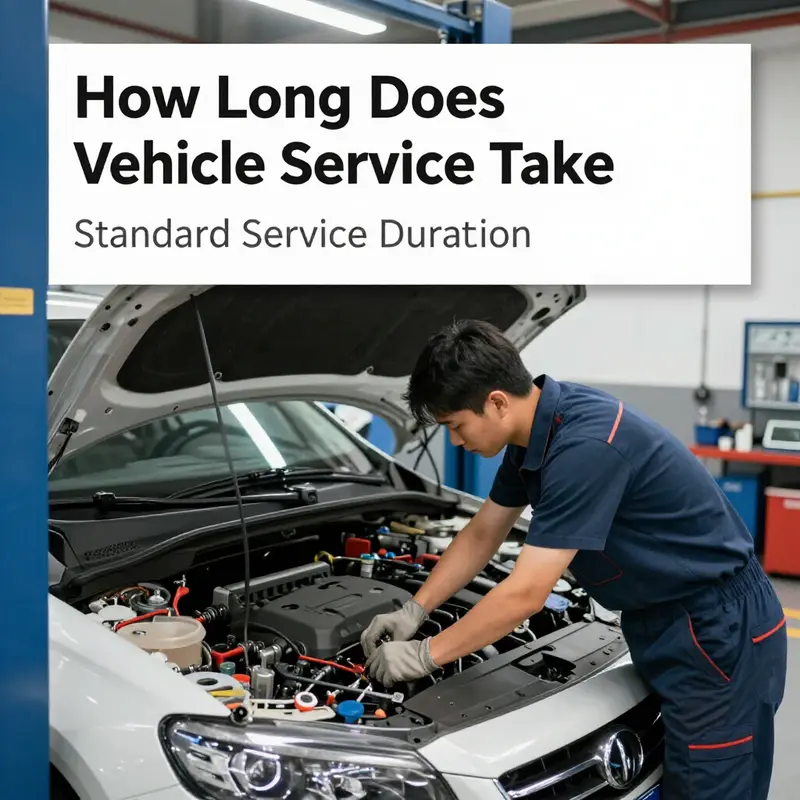
A service bay hums with the quiet choreography of tools and trained hands, and the clock becomes part of the process as much as the service plan. For many drivers, a question lingers at the edge of planning: how long will this take? The short answer is simple in concept—time varies with the type of service and the car, but the long answer is about understanding what goes into that duration, how technicians pace the work, and what you can do to plan around it. In the world of vehicle maintenance, duration matters not just for the driver’s schedule but for the overall reliability and safety of the vehicle. A standard light service can be a few hours, while a more thorough inspection or repair, especially on an older model with tighter tolerances, can stretch longer. And there is a different kind of time to consider altogether: when a service includes pickup and drop-off on the same day, the clock can stretch to fill a full day. The figures you’ll encounter are not universal law but a framework shaped by routine tasks, the condition of the vehicle, the availability of parts, and the workload at the service center. Understanding this framework helps you plan more accurately and reduces the stress that often accompanies vehicle maintenance.
To begin with, the concept of a standard service duration is anchored in what most drivers need on a routine basis. A typical, on-site visit for standard maintenance—think oil changes, tire rotations, and basic inspections—usually falls within a window of one to three hours. This range is not arbitrary. It reflects a practical sequence of steps: arrival and check-in, the actual labor, and the time needed for the vehicle to be tested after the work is completed. An oil change, for example, is commonly completed in about an hour. The process includes draining the old oil, replacing the filter, and refilling with fresh oil, along with a quick check of other essential fluids and levels. Tire rotations, often paired with an inspection, can also take roughly an hour, since the procedure involves removing each wheel, inspecting the tread and condition, and re-installing with proper torque on the lug nuts. Basic inspections, which might encompass a fluid top-off, belt and hose checks, and a quick brake and system look-over, typically take between one and two hours, depending on the vehicle and the specific checks requested.
More comprehensive services—those that go beyond the basics and include broader checks—can extend the time frame up to about three hours. These services might include fluid checks and replacements, brake inspections, air filter replacements, and a more thorough diagnostic look at the vehicle’s systems. The exact duration hinges on how many components are tested or replaced, and whether any issues are discovered that necessitate additional parts or labor. In well-equipped service centers, the workflow is designed so that one or two technicians can handle these tasks efficiently, but the exact pace is still linked to the vehicle’s condition and the service plan you choose. It is common to see a slight variation in the listed durations across makes and models, because certain engines and transmissions require more careful handling, specialized tools, or longer wait times for parts.
Beyond the mechanics of the tasks themselves, several practical factors influence how long service takes. The first is the vehicle’s condition. A car that has been neglected or that requires more complex diagnostics can take longer to service. An older vehicle with corrosion, seized components, or hard-to-access belts may require extra time for safe removal and installation. The second factor is parts availability. If a needed component is in stock, the service proceeds more quickly; if parts must be ordered or shipped in, the clock extends accordingly. A third factor is the workload at the service center. During peak hours or busy days, even a routine oil change can be delayed by queued vehicles, while technicians move between tasks. Weather, facility size, and the efficiency of the service protocol in place also play roles. The common thread across all these elements is that time is a variable—good planning depends on recognizing that variability and building some cushion into your expectations.
This is where the broader context of service duration becomes particularly relevant for someone planning a day or a trip around car maintenance. A key distinction to keep in mind is the difference between on-site service and services that include transportation arrangements. In some service offerings, the price and the schedule assume you will be riding with a driver to and from the service location, or that a shuttle returns you after the work is completed. In those cases, the total time you should anticipate for the day can extend beyond the on-site duration to accommodate pickup, drop-off, and potential traffic delays. The maximum timeframe mentioned in planning materials for certain service models is roughly nine hours for the entire day, with the on-site work fitting within that window. The nine-hour cap is designed to cover the day’s logistics, including travel and any contingencies that might arise from traffic or other delays. If the service time runs longer than planned, driven by traffic congestion or other unanticipated issues, the policy typically enforces overtime charges for the extended vehicle hours. This is not meant to catch drivers unawares; rather, it is a practical acknowledgment that time is a scarce commodity on the road and that the service ecosystem must account for the realities of urban travel and the unpredictability of road conditions.
Given this landscape, it is important to understand that the duration figures for standard services are common reference points rather than fixed guarantees. The numbers—roughly one hour for an oil change, about an hour for a tire rotation, one to two hours for basic inspections, and up to three hours for comprehensive services—offer a reasonable expectation. But the precise figure for your vehicle will come from a conversation with your local service provider. In busy shops, the schedule might show a window that begins with a shorter estimate and then expands as work begins and new tasks are added to the queue. The most reliable way to obtain an accurate estimate is to connect directly with the shop staff. A phone call or a quick message when you drop off the vehicle can confirm the expected duration and whether any parts are on backorder. For those who want to plan with a bit more nuance, it helps to have a sense of the tasks that may be included in a standard maintenance visit and to ask for a breakdown of how long each segment is expected to take. This approach clarifies how much time you should allocate for the day and reduces the risk of overbooking your schedule.
As you weigh your options, it’s worth reflecting on the broader implications of service duration for vehicle reliability and owner peace of mind. When a vehicle returns from service with a clean bill of health and a documented checklist, the value of a well-timed appointment becomes clear. On the other hand, if a vehicle requires more extensive diagnostics or unexpected repairs, the duration can extend beyond the initial estimate. That is not necessarily a sign of a failure in planning, but rather a signal that the automotive system can reveal hidden issues only through thorough testing. In such cases, the service provider may present an updated plan and a revised timeline, which should be communicated clearly to you as the vehicle owner. The goal is not to rush the process but to ensure that every necessary check is performed, every concern addressed, and every potential risk mitigated before the vehicle leaves the shop.
An important practical note for readers who are juggling schedules is to consider the possibility of supplementary time for fluid top-offs, system checks, and pre- and post-service diagnostics. Even when the core tasks are completed within the typical one to three-hour window, there can be ancillary steps that add a little time. For instance, after an oil change, technicians may perform a quick test drive or a system scan to verify that no warning lights remain and that all fluid levels remain within spec after the new oil is circulating. If a tire rotation accompanies the service, technicians often check wheel alignment and tire pressures more comprehensively, ensuring that the car’s handling remains consistent with the new setup. Such additional checks, while not usually extensive, contribute to the overall time spent and to the thoroughness of the service—an outcome that many drivers value highly.
The practical takeaway for anyone preparing to schedule vehicle service is to approach the process with a measured expectation and a clear plan. If the aim is a quick, routine visit, you can anticipate roughly one to two hours on-site, with the possibility of a little extra time if any surprises arise. If the goal is a more encompassing check-up or a service that involves parts replacement, a three-hour benchmark is reasonable, with the understanding that some vehicles or circumstances may push beyond that. When transportation is part of the service plan, it is prudent to factor in the full day and to leave a buffer for traffic, weather, or an unexpected extension of the work. The overall message is simple: understand the service type, communicate with the provider about the scope of work, and allow for a reasonable range in the timeline rather than a rigid deadline.
For readers who want to explore broader estimates and how they compare across contexts, the literature and industry guidance provide useful benchmarks. A widely cited resource discusses car service time estimates across a variety of common tasks, offering a sense of the typical durations one can expect. While this reference is external to the service provider you may use, it can help you calibrate your expectations and serve as a baseline for conversations with your local shop. As you plan, consider also how your own priorities—such as staying within a certain budget, minimizing time away from work, or ensuring a comprehensive check—shape which service option you choose. A short visit for routine maintenance can be appealing when time is tight, while a longer, more thorough service may be worth the investment when addressing multiple concerns or when the vehicle has high mileage and needs more vigilant care.
To connect these ideas with practical steps, you can use the insights about durations to aid scheduling and communication. When you call to book, ask for the estimated on-site duration for the specific services you require, and request a written estimate that outlines the expected time per task and any contingencies that might extend the total. If you are taking advantage of a service-with-pickup option, inquire about the door-to-door timeline, including potential wait times for pickup, transit, and return. It’s also wise to verify whether the service plan includes a post-work test drive or a diagnostic scan, as those checks can add to the total time but are often essential for ensuring that the vehicle performs safely after the maintenance. And if the price quote requires adjustments based on the actual time spent, confirm how overtime is calculated and whether the overtime fees apply only after a certain threshold or at a per-hour rate.
For those who want to align their expectations with broader industry guidance, a useful resource offers a curated view of typical service durations across common tasks. While your local shop is the final authority on your vehicle, this information can provide a starting point for conversations about what is reasonable and what might require more time. The goal is to foster a transparent dialogue that respects both the customer’s schedule and the technician’s need to conduct a thorough, safe service. In the end, the duration figures are not mere numbers; they are the flex points in a process designed to keep a vehicle safe, reliable, and enjoyable to drive. By understanding the range—from one hour for a straightforward oil change to as much as three hours for a comprehensive service—and by recognizing the practical factors that influence that range, you can plan with confidence and reduce the uncertainty that often accompanies vehicle maintenance.
As you prepare for your next service, consider bookmarking a few practical steps. First, collect a few service options that fit your timetable and budget, and compare the on-site durations and the availability of pickup or shuttle services. Second, when you drop off the vehicle, provide a concise list of symptoms or concerns so the technicians can prioritize the work and minimize back-and-forth. Third, if you have flexibility, consider scheduling during off-peak hours; a quieter shop is more likely to proceed efficiently, reducing wait times caused by a crowded queue. Fourth, keep an open line of communication with the shop during the process; a quick check-in can help you stay informed about any adjustments to the estimated duration and can prevent surprises when you return to pick up your vehicle.
If you are curious about more granular guidance on related maintenance timing, you can explore a resource focused on optimizing oil change intervals and how timing relates to mileage. This kind of knowledge supports smarter scheduling decisions and can influence how you phase maintenance over time. Optimal oil change intervals—time vs. mileage. For a broader perspective on how service times are estimated across common tasks, you can also consult industry discussions and consumer-facing summaries such as those found in widely read automotive information outlets. These resources can provide a sense of the variability you may encounter and how to interpret the estimates given by your local service provider. Ultimately, the best approach is to treat duration as a variable that you can manage through proactive planning, clear communication, and a willingness to adjust expectations when new information emerges. With that mindset, a service day becomes a well-orchestrated sequence rather than a rushed sprint, and you can return to the road with confidence, knowing that the work was completed with care and with a realistic understanding of how long it took.
External resource: https://www.autoblog.com/2024/05/17/car-service-time-estimates/
Reading the Clock: Why Vehicle Service Times Vary and How to Plan Around Them
When you roll into a service center, the clock begins ticking in more ways than one. It isn’t just the moment the keys are handed over or the service order is written. The duration of a vehicle service unfolds as a living equation, balancing what needs to be done with who is doing it, what parts are in stock, and how busy the day has become. The result is a spectrum rather than a fixed number. On a simple oil change, you might anticipate a brief pause in your day. On a brake overhaul, a transmission rebuild, or a full diagnostic sweep, the clock stretches, sometimes into hours, sometimes into days. The practical implication for drivers and fleet operators is clear: planning must account for variability as a core variable, not an afterthought. In this sense, the question of how long vehicle service takes is less a single stopwatch reading and more a narrative about the factors that push the hands of the clock in different directions.
At the heart of any service narrative is task complexity. The simplest jobs, those that involve routine maintenance, tap into a well-understood sequence of steps. An oil change, for instance, is a straightforward procedure that can typically be completed within 30 minutes to an hour under standard conditions. A tire rotation follows a similar arc, often finished within the same window. Yet even here there are variables: the condition of the tires, the accessibility of the drain plug, and the efficiency of the technician. A key reality is that even processes that appear routine can be influenced by the state of the vehicle, the tools available, and the immediate demands of the shop floor. When a technician encounters an unexpected complication—an seized bolt, a corroded component, or a sensor readout that requires rechecking—the time required can grow quickly, nudging the service toward the upper end of the estimate or beyond it.
When we move beyond the obvious, the scope of complexity expands dramatically. Brake systems, steering racks, transmission assemblies, and engine management diagnostics exemplify this shift. A brake pad and rotor replacement can be a quick job in a lightly used vehicle but becomes substantially more time-consuming if the rotors are worn unevenly, the calipers need recalibration, or the brake lines require careful inspection for leaks. A transmission service might start with a diagnostic phase to identify slips or clunks, followed by disassembly, replacement of worn components, and careful reassembly with precise torque specs. Engine diagnostics, likewise, can morph from a routine scan into an investigative process if fault codes reveal multiple subsystems that must be tested in sequence. In these cases, the duration can extend from a few hours to multiple days, especially when a shop must coordinate with external suppliers or schedule specialized technicians.
Another dimension shaping service duration is the availability and expertise of the personnel involved. Skilled technicians bring efficient problem-solving instincts to the work bay, but their availability is not infinite. Clinics and shops with high demand, especially during peak seasons or hours, experience bottlenecks that can cascade through the day. A vacancy in a critical role, such as a senior diagnostic technician or a line supervisor, can slow the entire workflow as teams reallocate tasks, re-prioritize repairs, or wait for input on a thorny issue. Expertise also matters; two shops may advertise similar capabilities, yet one might routinely complete complex repairs more quickly because its technicians are more experienced with a particular vehicle makes and models or more adept at using a specialized piece of diagnostic equipment. The bottom line is simple: the more specialized the repair, the more sensitive the duration becomes to the skill mix on the floor.
Parts availability is another central variable. In today’s supply chains, vehicles draw from a broad ecosystem of components from multiple manufacturers. A simple service can stall if a critical part is out of stock or backordered. Even delays in seemingly minor items, such as clips, gaskets, or fasteners, can trigger a ripple effect that slows the entire queue. Modern service centers increasingly mitigate this risk with proactive parts management, just-in-time ordering, and robust supplier networks. Yet the real world remains imperfect. A vehicle may arrive with a rare part or a special edition component that requires sourcing from a distant warehouse or even a secondary supplier. The time impact can be substantial, turning a routine 90-minute job into a multi-hour affair because a single item must be overnighted or couriered.
Beyond the tangible steps of labor and parts lies the more elusive factor of service-time uncertainty. This is where research by P. Kumar shines a perceptive light. The core insight is that wait durations do not exist in a vacuum; they depend on customer processing speed at the service location and the level of congestion at the time the vehicle enters the workflow. Even routine services are susceptible to unexpected delays, whether due to a surge in vehicles arriving for maintenance, a few vehicles in the queue requiring more attention, or a mid-day backlog that compresses the schedule. The human element—how quickly a customer completes paperwork, how promptly a customer can answer questions, and how efficiently a vehicle can be moved through the intake process—works in concert with the physical work being performed. All of this creates a perception of time that is as important as the measured duration. When customers feel uncertain about how long something will take, anxiety can rise, affecting satisfaction, loyalty, and the willingness to return for future service.
The importance of clear communication cannot be overstated here. When service providers communicate transparently about potential delays and offer realistic, data-informed time estimates, they do more than set expectations. They reduce the cognitive load on customers who would otherwise be watching the clock with growing concern. A single, honest conversation about a possible overrun can build trust and frame the experience in terms of cooperation rather than confrontation. This dynamic aligns closely with the broader literature on service quality, where perceived reliability and responsiveness often trump the raw efficiency of the operation. In practical terms, a shop that presents a range for each service, notes potential bottlenecks, and offers periodic updates during the process tends to leave customers with a sense of control and confidence in the outcome.
From a scheduling perspective, many centers operate with a baseline that includes a buffer for uncertainty. The nine-hour ceiling for same-day service and pickup, noted in certain arrangements, anchors expectations for what is feasible within a single visit. This baseline does not imply a rigid limit; rather, it serves as a planning heuristic that helps customers decide how to pace their day and whether to combine multiple maintenance tasks in one visit. When a job is simple and the bay is free, the clock may run shorter than the floor estimate. Conversely, when traffic is heavy, parts are backordered, or a technician encounters an unknown complication, the anticipated duration can drift upward. In either direction, the most reliable driver of a smooth experience is the willingness of the service provider to maintain open lines of communication with the customer, both at intake and throughout the service process.
For readers seeking ways to minimize downtime, the alignment between maintenance planning and service durations matters. Understanding how oil changes intersect with broader service events can help in scheduling efficiently. The oil-change interval is a classic example: it is determined not only by mileage but also by engine design, lubrication quality, and operating conditions. The guidance on optimal oil-change intervals (time vs mileage) provides a useful lens for thinking about when to consolidate or separate maintenance tasks in a single visit. By planning around periods when the shop is likely to be less congested, customers can often reduce overall time in the service bay. This approach can be especially beneficial for fleets where downtime translates directly into lost productivity. To explore this topic further, see the guidance on optimal oil-change intervals (time vs mileage).
Another layer of nuance arises from the broader ecosystem of the automotive service industry. Modern service centers increasingly deploy digital tools to streamline intake, triage, and progress tracking. A well-implemented system can route a vehicle to the most appropriate technician, queue jobs by estimated duration, and alert customers to deviations from the planned timeline in real time. Such transparency not only improves efficiency but also reinforces a sense of partnership between customer and shop. Yet technology alone cannot eliminate variability; it can only illuminate it. The human factors—clear communication, accurate assessment, and collaborative decision-making—remain central to shaping whether a service finishes on time or stretches into the next day.
When planning a trip to the shop, the practical question becomes not merely how long a given service takes, but how to orchestrate the day around it. If you are scheduling a simple maintenance window, you might arrange to drop off your vehicle early, leave a note about any concerns, and arrange a pickup that aligns with your own routine. If a more extensive repair is anticipated, you may want to allocate a full day or even consider a rental vehicle or alternative transportation for the interim. For fleet operators, the calculus is more complex. Availability of substitute vehicles, the sequencing of multiple vehicles through the same facility, and spare parts logistics can all influence the overall downtime for a fleet. In every case, the objective is to minimize the total impact on operations by leveraging transparency, realistic estimates, and proactive coordination with service personnel.
The discussion so far highlights why a universal, one-size-fits-all answer to the question how long does vehicle service take is elusive. The precise duration is the product of several interacting forces: the inherent complexity of the repair, the skill mix and availability of technicians, the supply chain realities of parts, and the rhythm of the day dictated by other customers and the shop’s internal processes. The nine-hour benchmark offers a rough boundary condition for planning, especially when same-day pickup is essential, but it should not be treated as a rigid rule. Instead, think of it as a guidepost that helps manage expectations and informs decisions about whether to bundle services or stagger visits. In contexts where time is of the essence, discussing the anticipated range with the service advisor and requesting a written time frame with explicit milestones can provide a sense of certainty that proves invaluable when the day becomes crowded.
For readers who want to further connect maintenance decisions with practical time management, consider a closer look at how routine tasks fit into your overall service plan. The example of an oil-change interval, which balances time, mileage, and vehicle use, illustrates how planning ahead can reduce downtime. As you weigh options, remember that the ultimate goal is a reliable vehicle and a predictable schedule. The best service experiences emerge when the customer and shop collaborate to adapt to conditions, communicate clearly about timelines, and implement a plan that keeps maintenance from becoming a source of daily disruption. This collaborative approach is the core of modern vehicle service: it respects the realities of time while honoring the essential aim of keeping vehicles safe, reliable, and ready for the road.
As a final reflection, the variability of service times should not be viewed as a nuisance but as an honest account of how repair work unfolds in the real world. Every component replaced, every diagnostic test performed, and every part sourced contributes to a unique journey from intake to completion. The more accurately customers understand this journey, the less the experience resembles a guessing game and the more it resembles a well-managed process. And in that transformation lies the true value: a service experience that respects your time, aligns with your expectations, and delivers confidence that your vehicle will be ready when you need it, not a moment later.
External resource for further reading: The impact of service-time uncertainty and anticipated wait details how variability in durations shapes customer behavior and operational efficiency. https://doi.org/10.1016/j.jom.2007.05.004
Internal reference for planning efficiency: For practical guidance on routine maintenance timing and minimizing downtime, consider the article on optimal oil-change intervals (time vs mileage) as a helpful companion piece: optimal oil-change intervals (time vs mileage). This resource offers actionable context that can be integrated into your service planning and scheduling conversations.
Timing the Turnaround: Understanding Vehicle Service Durations and What They Mean for You

Time is a variable companion when you bring a vehicle in for service. It isn’t a fixed minute-count that fits neatly into a calendar slot; it’s a dynamic experience shaped by what you need, the car’s condition, the shop’s organization, and the shifting rhythms of traffic and demand. The common industry shorthand sketches the day in rough ranges: routine maintenance generally occupies a few hours, while more involved repairs can stretch into days. Some providers promise same-day pickup and return, with a general ceiling around nine hours from drop-off to door, but that ceiling is not universal. When traffic snarls, when a car’s issue proves trickier than anticipated, or when the diagnostic path reveals that more parts or rework are needed, service durations drift. The result is a moving target, a clock that demands flexibility from drivers, fleet managers, and technicians alike. Yet understanding the contours of these durations is not just a courtesy. It is a practical tool for planning commutes, work commitments, family logistics, and even urgent travel that depends on a road-ready vehicle. In other words, the time you spend in the process is not merely a line-item on a receipt; it is a dimension of the service experience with real consequences for your schedule and budget.
Within this frame, the calendar of vehicle care separates into broad but meaningful categories. Routine services sit at one end of the spectrum, marked by predictability and compact time windows. More complex repairs sit at the other, characterized by uncertainty and the potential for multi-day timelines. Between these poles lies a spectrum where the specifics of the car, the availability of parts, and the efficiency of the shop’s workflow can tilt a service from a standard hour or two to a longer, more uncertain horizon. For drivers who want to plan with clarity, the first step is to understand where a given task typically lands on that spectrum and what can push it toward the upper end of the range.
A practical look at routine services reveals a straightforward pattern. Oil changes, tire rotations, and basic inspections form the backbone of preventive maintenance. In a well-functioning operation, these routine tasks tend to fall within a window of roughly one to three hours. The exact duration depends on several factors. The vehicle’s design can simplify or complicate access to filters and fluids. The shop’s throughput—how many bays are available, how efficiently technicians rotate among vehicles, and how many ancillary checks they conduct—plays a decisive role. If the vehicle is in good shape and nothing unexpected turns up, a routine service is typically brisk. If, however, the technician must perform additional checks or calibration after a diagnostic scan, or if the queue is long and the technicians are juggling multiple tasks, the clock can creep toward the upper end of that window.
For those who manage schedules around maintenance, this range is a useful baseline. It helps translate a maintenance visit into a concrete block of time for planning commutes, child-care arrangements, or work hours. It also emphasizes the value of transparency from the service provider. A clear estimate that explains why a routine service is taking longer—perhaps because a parts hold is involved or because the shop is adjusting a software setting after a routine update—builds trust and reduces anxiety about the unknown. If you are seeking more nuanced guidance on how routine maintenance decisions hinge on time, you may find it helpful to consider guidance on maintenance intervals that connect time with mileage. For a planning perspective on this topic, the resource titled Optimal oil-change intervals: time vs. mileage can be illuminating.
Beyond routine tasks lies the realm of more complex repairs. Engines may require overhauls, transmissions may demand replacements, and brakes or suspension systems may need major work. In this category, the usual expectation shifts: durations can stretch to several days. The variables multiply here. A rare or unusual problem may demand deeper diagnostics, additional teardown, or the sourcing of specialized parts that are not immediately available. A vehicle with multiple systems affected will naturally require more time to repair because each subsystem depends on careful integration with others. In many cases, the timeline depends more on the parts supply and the availability of skilled technicians than on the actual hands-on labor once parts are in hand. This is where the business of service becomes more than a hallway conversation about how long something should take. It turns into a management exercise: coordinating parts deliveries, technicians’ schedules, vehicle storage, and customer expectations in a way that preserves safety and reliability while minimizing downtime.
The implications of these timing realities extend well beyond a single car and its owner. For service users, duration variability means you must plan for vehicle downtime. A car out of service can disrupt a work commute, a family’s transportation routines, or a business’s delivery cycles. If the repair project lingers, it may force a shift to alternative arrangements—rental cars, rideshare services, or relying on public transit. The financial dimension multiplies in scenarios where extended downtime requires temporary mobility solutions. Even when a loaner vehicle or shuttle is offered, the inconvenience and potential costs—whether incremental rental fees, insurance considerations, or a need to recalibrate schedules—become part of the total service experience. The key takeaway is that time is not just a clock on the wall; it is an active constraint that shapes decisions and costs, and it ought to be factored into planning in advance.
For business fleets, the stakes are higher. Prolonged service times can ripple through operations, diminishing productivity and revenue potential. A single vehicle out of service may disrupt delivery windows, reduce service coverage, or force adjustments to shift patterns. In this context, the downtime is not a personal inconvenience but a constraint on service delivery and customer commitments. Companies frequently respond by building redundancy into fleets—keeping spare vehicles, leasing temporary replacements, or adjusting routes to maintain service levels. Transparent estimates and reliable scheduling become critical for fleet managers who must balance cost, risk, and continuity. In short, duration is a practical lever for operational efficiency and financial planning, not just a customer-facing statistic.
To meet these challenges, service centers increasingly embrace practices designed to improve predictability and trust. Reliability hinges on a provider’s ability to offer dependable turnaround times and accurate estimates. Transparent scheduling—published windows, real-time progress checks, and proactive communication when timelines shift—helps users align expectations with reality. The role of technology in this shift cannot be overstated. Diagnostic software accelerates initial assessments, pinpoints issues with greater accuracy, and aids in producing time estimates that reflect the likely scope of work. When customers receive timely updates about progress and any new developments, anxiety about the unknown subsides, and the relationship between customer and shop strengthens. In a marketplace where time is a critical variable, the most trusted service centers combine consistency with clear communication, turning uncertainty into a collaborative plan rather than a source of friction.
Mitigation strategies also revolve around convenient alternatives and smarter scheduling. Online booking systems simplify the process of finding a suitable time slot and bring the scheduling experience into the digital age. Mobile notifications can update customers about the status of their vehicle in near real time, offering a sense of control even as the clock ticks. Diagnostic software, as mentioned earlier, enhances speed and precision, allowing technicians to arrive at time estimates that are closer to reality. For customers who must continue with daily life while their vehicle is away, having access to loaner vehicles or shuttle services can be a game changer, reducing the burden of downtime and preserving mobility. Taken together, these strategies shift service from a purely reactive process to a proactive partnership, where both sides share information and align expectations. As service centers adopt these tools, the path from drop-off to pickup becomes less fraught with surprises and more focused on delivering reliable results.
In considering how long vehicle service takes, it is essential to hold a realistic view of what drives the clock. Routine maintenance is usually the most predictable, but even here, the presence of hidden checks, software recalibrations, and the need to verify that every step has been completed correctly can extend the duration. Complex repairs may reveal new issues or require careful coordination with parts suppliers, engineers, and the vehicle’s own computer systems. The best strategy for users is to engage early with the service provider about expected timelines and to document any constraints on their own schedules. A simple, proactive approach—asking for a written estimate that breaks down the major phases of the work, requesting updates at key milestones, and confirming the availability of loaner options if needed—can transform a potentially stressful experience into a transparent, manageable process. When customers understand that duration is not just a standalone figure but a reflection of the work’s scope, the vehicle’s condition, and the shop’s workflow, the relationship between consumer and provider evolves from one of expectation to one of collaboration.
For readers seeking a broader industry perspective on how service timelines are framed across different shops and regions, ongoing coverage in respected automotive outlets can provide useful context. This chapter aligns with a view that emphasizes reliability, transparent scheduling, and progress updates as central to customer satisfaction. Industry commentary often highlights how digital tools are reshaping the speed and precision of inspections, diagnostics, and time estimates, while still acknowledging the practical realities of parts availability and technician bandwidth. In the end, the most effective path through the timing puzzle is a shared language between users and service centers—one that translates the clock’s movements into concrete plans, expectations, and alternatives that preserve mobility and confidence.
External perspective: For a broader industry context on service timelines, see Autocar.
Internal link for further practical planning: For guidance on maintaining intervals in sync with how time passes between drives, explore the resource on Optimal oil-change intervals: time vs. mileage which connects maintenance timing with real-world driving patterns.
Final thoughts
Understanding the duration of vehicle services and the factors that impact these times is vital for effective management and scheduling. For local private car owners, used car buyers, and small business fleet operators, being informed enables better decision-making and enhances overall service satisfaction. As you navigate the complexities of vehicle service, consider how effective time management plays a pivotal role in optimizing your vehicle-related experiences.