
Maintaining a vehicle is not just about keeping it operational; it’s key to ensuring safety, performance, and even resale value. For local private car owners, used car buyers and sellers, and small business fleet operators, understanding how often to service a vehicle is crucial. A structured maintenance schedule not only prolongs the life of the vehicle but also enhances its reliability and overall efficiency. This comprehensive guide will delve into general servicing guidelines, manufacturer recommendations, the impact of driving conditions, necessary service types, and the overarching importance of regular maintenance to empower you in making informed decisions for your vehicle.
The Balance of Miles and Time: How Often Your Vehicle Should Be Serviced

Maintenance schedules for vehicles sit at the intersection of engineering design and everyday life. Manufacturers publish timelines that assume certain driving patterns, but real-world use often deviates from those ideals. The question of how often a car should be serviced is not a single number but a framework that blends mileage, time, and the conditions under which you drive. In practice, most drivers should plan for a service interval that respects both the odometer and the calendar, with adjustments for how their vehicle is operated. The simplest way to anchor this plan is to start with the manufacturer’s schedule, then consider your daily routine, road conditions, and the demands you place on the vehicle. While some owners may be tempted to stretch intervals to maximize time between trips to the shop, doing so can quietly erode performance and safety. Regularity matters, even when the car seems to run smoothly. Through this approach, service becomes a routine signal of care rather than an afterthought you encounter only when a warning light blinks on the dashboard or a strange noise appears on a long highway stretch.
Oil changes form the backbone of any service plan, yet even here there is nuance. For most modern engines, the choice between synthetic and conventional oil shifts the recommended frequency. Synthetic oil often allows longer intervals because it resists breakdown more effectively, leading to recommendations around seven thousand to ten thousand miles in many vehicles. Conventional oil, which does not have the same resistance to heat and contaminants, tends to require more frequent changes, typically in the three-thousand to five-thousand mile range. It is essential to consult the owner’s manual for a schedule tailored to your exact make and model, because tolerances and design goals vary across engines and generations. The manual becomes the roadmap, and following it consistently reduces the risk of costly repairs in the future.
Beyond the engine oil, a vehicle’s health hinges on a suite of components that wear in different ways depending on how the car is driven. Filters, belts, and fluids all play integral roles in keeping the engine and the drivetrain in good working order. A representative maintenance cadence commonly includes inspections and replacements of items like air filters, cabin filters, brake fluid, coolant, and transmission fluid at intervals that can span roughly five to fifteen thousand miles, depending on usage and environmental factors. Short trips, stop-and-go traffic, dusty air, extreme temperatures, or heavy towing place extra stress on these parts, often accelerating wear and making more frequent service prudent. In other words, the calendar and the odometer together tell the story of what your car needs next.
A modern edge worth noting is the rise of usage-based maintenance. Newer vehicles frequently feature onboard diagnostic systems that monitor engine performance, fluid conditions, and component wear. When these systems detect a deviation from normal operation, they prompt a service at a time that reflects actual usage rather than a fixed mileage threshold. This approach can extend intervals safely for some drivers while calling for earlier attention for others whose driving patterns are more demanding. It underscores a simple truth: the most effective maintenance plan is one that adapts to actual conditions rather than a one-size-fits-all timetable. Always consult the owner’s manual for a detailed schedule that suits your car’s electronic design and software.
Driving conditions exert a powerful influence on service needs. A car that spends most of its life in a climate with extreme temperatures, frequent dusty conditions, or heavy city traffic will typically require more frequent checks than a similar model clocking steady highway miles in temperate weather. Stop-and-go urban driving can age fluids and wear brakes faster than steady highway cruising, while dusty environments can clog filters and shorten air intake life. Heavy towing or payloads also put additional load on transmission fluid, engine cooling, and braking systems. In these scenarios, a practical rule of thumb is to bring the service interval forward by a couple of thousand miles or by a few months, whichever comes first, to preserve performance and safety.
In planning a maintenance routine, many drivers find it helpful to translate the guidance into a simple, repeatable rhythm. A typical practice starts with an annual check at minimum, paired with an odometer-based target that aligns with the manufacturer’s guidance. For instance, if a manual calls for an oil change every six to twelve months or at ten thousand miles, whichever comes first, you would track both the months and the miles and err on the side of caution as either threshold approaches. Even if your vehicle sees only light use, time itself matters. Fluids degrade, seals dry out, and rubber components lose elasticity over time, so a yearly check helps catch creeping issues before they translate into failure.
An important practical step is to keep a clear log of all service events. A straightforward record of oil changes, filter replacements, brake inspections, tire rotations, and fluid top-offs reduces the risk of missed maintenance and provides a durable history if you ever sell the vehicle or require diagnostic work. This habit translates into better resale value and, more importantly, safer operation. When a driver reduces service variability by sticking to a predictable rhythm, the vehicle’s response improves: smoother acceleration, steadier braking, and more consistent fuel economy. The small cost of regular maintenance is almost always outweighed by the savings from avoiding unexpected repairs and from maintaining peak performance.
For those who are tempted to rely solely on the car’s warnings, it is worth acknowledging the limitations of dashboard indicators. The presence of a check engine light, a battery symbol, or a tire-pressure warning is a clear signal that immediate attention is needed, but many issues begin insidiously. Subtle changes such as a slight increase in oil consumption, a faint metallic noise, or a gentle reduction in fuel economy can be early signs that a service interval should be advanced. The aim is not to chase every minor fluctuation but to tune into patterns that suggest an underlying wear-out process. Regularly cross-checking the manufacturer’s schedule against your personal usage pattern provides a middle ground between rigid adherence and reactive maintenance.
If you want a practical touchstone that ties the discussion to reliable, expert guidance, consider consulting a service schedule that emphasizes oil-change intervals in relation to time and mileage. For practical oil intervals, see optimal oil-change intervals—time vs. mileage. This resource highlights how different oils and driving styles interact with service intervals and helps drivers tailor a plan that marries engine health with cost efficiency. Yet even with a well-informed starting point, the core approach remains personal: observe how your car behaves, respect the manufacturer’s core recommendations, and adjust for the realities of your driving life.
Ultimately, the central message is straightforward. Servicing a vehicle is not a single moment but a recurring practice that protects performance, safety, and longevity. The schedule is a conversation among several factors: the vehicle’s design, the type of oil, the environment, and the driver’s habits. A dependable routine blends mileage and time, honors manufacturer guidance, and remains flexible enough to respond to signs that your car communicates when something needs attention. By treating maintenance as part of responsible vehicle ownership, you reduce the odds of surprise breakdowns, shorten the path to optimal performance, and extend the vehicle’s useful life. For those seeking a concrete anchor, many drivers find it helpful to pair a mileage-based target with a yearly check, then adjust up or down depending on the conditions they routinely encounter. The key is consistency: a steady cadence that keeps vital systems in good shape and preserves the vehicle’s reliability over years of use.
For authoritative guidance, refer to the official maintenance schedule in your vehicle’s owner’s manual and to trusted automotive resources. You can also explore general maintenance guidance on reputable sites that discuss how often to service vehicles in relation to driving patterns and conditions. And when you need a dependable place to start for hands-on maintenance, local service centers and technicians can tailor a plan to your make and model, ensuring that your car’s upkeep aligns with both design expectations and your everyday reality. In the end, the best servicing strategy is one that you can maintain with ease, that keeps the car performing as designed, and that gives you confidence behind the wheel.
External reference: For authoritative guidance on vehicle maintenance schedules, see the AAA’s automotive maintenance overview: https://www.aaa.com/automotive/vehicle-maintenance
Decoding the Manufacturer Service Schedule: How Intervals Shield Performance, Safety, and Value
Service schedules are not arbitrary. They are the product of controlled testing, engine engineering, and a philosophy of reliability that spans thousands of miles and thousands of hours in various climates. When you open the owner’s manual and pace through the maintenance section, you are not seeing a bureaucratic checklist; you are seeing a designed cadence that aims to keep the vehicle performing as the engineers intended. Manufacturers build a schedule around critical systems: the engine oil, the timing system, the coolant, the transmissions, the brakes, and the dozens of sensors that keep everything in balance. Typed reminders sit within the manual, and more recently, within on-board computers that monitor wear and usage in real time. Following this cadence helps protect your warranty, maintains resale value, and minimizes the risk of unexpected failures. The clock and the mileage together chart a path to dependable operation, and striking the right balance requires understanding both the letter of the schedule and the spirit behind it.
Typically, the baseline interval recommended by manufacturers today is around every 10,000 to 15,000 miles or roughly once a year, whichever comes first. In many cases, the time dimension is given as a ceiling of 12 months. This approach reflects longer-life fluids, tighter tolerances, and the availability of advanced maintenance cycles that can align with modern driving patterns. Yet this standard is not universal. Some high-performance or luxury models with specialized engines or advanced lubrication systems may call for more frequent services, while other vehicles designed for long-life fluids and robust components could extend service intervals well beyond 15,000 miles. The actual schedule is embedded in the owner’s manual and, increasingly, in the vehicle’s onboard maintenance reminder system. These reminders track engine oil life, brake wear indicators, tire health, and even driver behavior, adjusting the due date as conditions change. What this means in practice is that two vehicles of the same model and year can have different service dates if their operating contexts diverge. The reminder system provides a personalized countdown that mileage alone cannot capture.
Oil changes sit at the heart of the service cadence, but they are only one part of the broader maintenance picture. For many modern vehicles, the engine bears a threshold that recognizes the difference between synthetic and conventional lubricants. Synthetic oils, engineered for longevity and superior stability, often justify longer intervals on paper, whereas conventional oils typically require more frequent changes. However, the story is nuanced. Some manufacturers publish a fixed mileage range of 10,000 to 15,000 miles for synthetic fluids, while others tie replacement to oil life monitors that factor in driving conditions, ambient temperature, and engine load. In practice, you should consult the owner’s manual for the precise oil interval and follow any on-board prompts. The maintenance schedule also prescribes intervals for brake inspection, tire rotation, fluid checks, and filter replacements. These services historically cluster around similar mileages, with common guidance suggesting checks every 5,000 to 15,000 miles, depending on how aggressively you use the vehicle and the environment you operate in—dusty air, extreme heat or cold, frequent towing, or a lot of short trips can accelerate wear. The subtle point is that while the engine oil is critical, neglecting accompanying services can erode overall reliability more quickly than a skipped oil change.
Driving conditions shape the real-world cadence more than the sticker on the glove box. Short trips, stop-and-go traffic, and harsh climates accelerate the aging of fluids and the accumulation of contaminants. In urban use, engines may not reach full operating temperature, inviting fuel dilution, condensation, and residue that can compromise lubrication and cooling. In dusty environments, air and filter systems labor harder, increasing the need for air filter changes and intake cleaning. In extreme temperatures, hydraulic and coolant systems endure greater stress, making timely coolant or transmission fluid checks more critical. People who regularly tow heavy loads or operate at high speeds may see wear indicators reach threshold sooner, prompting earlier inspections. The manual will still anchor service intervals, but many drivers benefit from treating the schedule as a flexible guideline rather than a rigid rule. Keeping a log of service events, noting driving patterns, and aligning maintenance with the actual operating conditions helps preserve engine health and reduces long-term costs. This pragmatic approach doesn’t reject manufacturer wisdom; it personalizes it to the realities on the road.
Beyond the engine, the chain of services that accompany each maintenance visit matters as much as the visit itself. Brake inspections, tire rotations, fluid level checks, and filter replacements are not optional extras; they are essential components of the vehicle’s safety and efficiency. The recommended cadence for these tasks often overlaps with oil-change intervals, but it can shift due to usage. A vehicle that endures frequent short trips or travels in dusty climates will typically require more frequent tire rotations and air-filter replacements, while a vehicle on smooth highways in temperate weather may stretch these intervals. Your ownership experience benefits from a simple practice: treat the maintenance schedule as a coordinated plan rather than a series of separate chores. When you approach a service appointment, communicate your typical driving profile to the technician or service advisor. A clear understanding of your daily miles, the climate you operate in, and any towed loads helps tailor the service to your car’s actual needs. In turn, this responsiveness supports better fuel economy, steadier brake performance, and longer-lasting components.
Warranty and resale considerations add weight to the case for consistent maintenance. Vehicles come with warranties that reflect engine and component durability when kept within specified intervals and used fluids that meet the manufacturer’s standards. Skipping or misaligning services not only risks coverage for certain failures but can also complicate future resale. A well-documented maintenance history often enhances buyer confidence, underscoring responsible ownership and preserving value. For this reason, many drivers develop a habit of reviewing the manual, logging every service entry, and maintaining receipts for parts and fluids. It’s not merely about avoiding penalties; it’s about preserving the vehicle’s performance envelope. The reminder systems on modern vehicles—oil-life monitors and wear sensors—empower owners to personalize the schedule, but they also demand vigilance. Ignoring an alert can lead to reduced fuel efficiency, accelerated wear, and a higher probability of breakdowns that could have been prevented with timely service. The aim is steady reliability, not radical interventions; the goal is to keep the engine clean, the brakes responsive, and the cooling system stable through the vehicle’s life.
An effective way to navigate these rules is to use manufacturer schedules as a reliable baseline while adjusting for real-world conditions. The starting point remains the owner’s manual, but the modern maintenance ecosystem often includes digital reminders and service intervals calculated from engine oil life, sensor data, and climate inputs. This is where the concept of time and mileage converges into a practical plan: time addresses the aging of seals and fluids even if miles are low; mileage captures wear from use; together they create a robust, multi-dimensional picture of when service is due. For readers curious about the nuances of oil-change timing, Optimal oil change intervals time vs mileage offers a focused examination of how time and mileage interact, with guidance on how to interpret oil-life readings without overreacting to every alert. Keeping this perspective helps drivers avoid both under-maintenance and over-maintenance, striking a balance that honors engineering intent while adapting to personal use patterns. And it aligns with trusted automotive guidance that emphasizes following official schedules and using correct fluids and parts.
In practice, the best approach is to treat service intervals as a dynamic conversation between the car and its driver. You begin with the manufacturer’s timetable and the built-in reminders, but you refine the plan through honest assessment of how you drive. If your week involves long highway commutes in moderate climates, you may be able to align closer to the higher end of the recommended range. If your routine includes frequent short trips, heavy loads, and dusty days, you might need to move closer to the lower end or even beyond the average depending on the car. The key is to be proactive rather than reactive: schedule the next service while the car is mechanically fresh, avoid letting the schedule drift, and treat each service as an opportunity to check systems that have no direct connection to the odometer. A responsible approach means inspecting brake lines, listening for unusual noises, measuring tire wear, and confirming that fluids are clean and at proper levels. In the end, service frequency is not a single number; it is a practice of mindful ownership that protects safety, performance, and the vehicle’s long-term value.
Automotive maintenance literature and authoritative guidance converge on a simple principle: follow the manufacturer’s instructions, stay attentive to your vehicle’s indicators, and adapt to your driving reality. The modern vehicle, with its onboard diagnostics and memory of miles driven, rewards a disciplined, informed schedule. Even lightly driven vehicles benefit from a periodic check of essential systems at least once a year, because time itself can degrade seals, fluids, and hoses. By embracing a practical cadence that weighs both time and mileage—and by recognizing that the reminder systems are designed to help rather than nag—you invest in reliability, safety, and retaining value. This mindset is not about chasing a universal tick-list but about respecting engineering intent and the realities of your day-to-day usage. When you step into the service bay, you do so with a clear plan: the baseline interval, the conditions that accelerate wear, the critical systems to monitor, and a commitment to returning the vehicle to peak condition as the miles accumulate.
External resource: https://www.motortrend.com/cars/vehicle-service-intervals-explained/
When the Road Demands More: How Driving Conditions Rework Your Vehicle Servicing Schedule
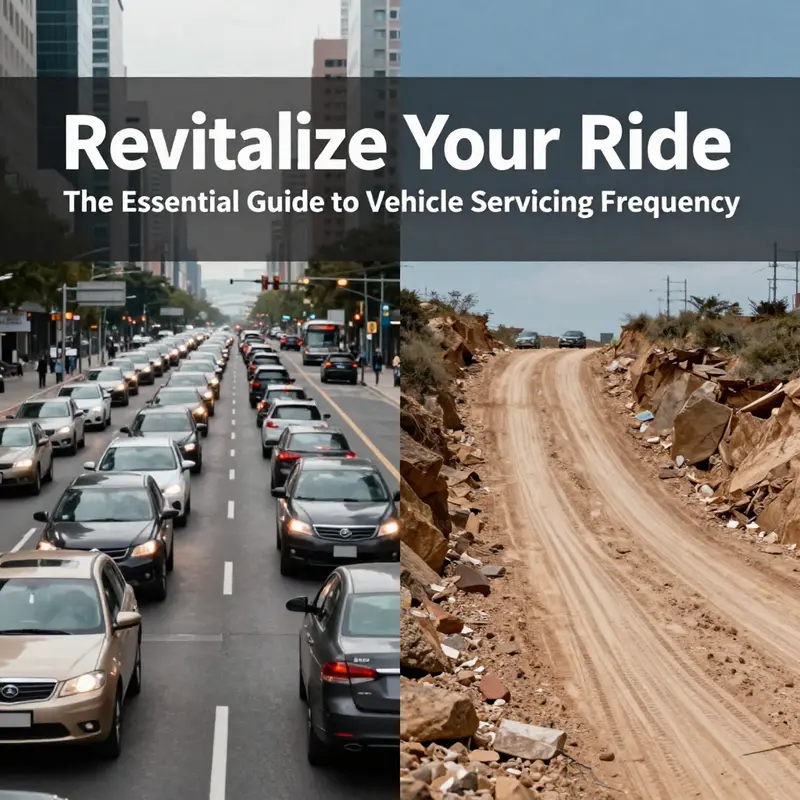
The question of how often a vehicle should be serviced is rarely answered by mileage alone. While many manufacturers provide a mileage-and-time window—often a range like every 5,000 to 10,000 miles or every six to twelve months—the real cadence of maintenance is written by the road you travel and the way you drive. Driving conditions shape wear and stress on the engine, transmission, brakes, suspension, and countless other systems in ways that simple odometer readings can’t capture. In practical terms, that means two cars with the same miles on the clock can have very different servicing needs depending on where and how they are driven. The era of flexible maintenance schedules is guided by a blend of manufacturer recommendations, engine design, and a field reality where the road itself becomes a kind of wear-rate calculator. This is why a robust servicing plan sits at the intersection of mileage, time, and the conditions you encounter on a daily basis. A reasonable starting point remains the general guideline of servicing every 5,000 to 10,000 miles or every 6 to 12 months, whichever comes first, but the undercurrent of driving conditions can push that cadence up or down in meaningful ways. Modern vehicles tend to run longer between oil changes if synthetic oil is used, often implying changes around 7,500 to 10,000 miles, whereas conventional oils can require more frequent changes, roughly every 3,000 to 5,000 miles. The owner’s manual remains the most dependable compass here, providing modelspecific guidance that reflects the engineering realities of each engine and lubrication system. When you step beyond the book, the day-to-day realities of your driving environment begin to tilt the scales toward more frequent checkups.
Driving conditions matter because they translate into measurable wear and environmental challenges. In a typical suburban routine, your car spends a lot of time idling in traffic, making frequent stops, and facing a variegated mix of temperatures. In such cases, the engine and fluids experience different load cycles compared with long, steady highway cruising. Routine checks on oil level and quality, coolant, and hoses become more than habit; they are a shield against early wear when the engine rarely enjoys a full, uninterrupted warmup. Short trips, in particular, are a well-documented risk factor. When the engine never reaches its optimal operating temperature, condensation forms inside the crankcase, and fuel residues can contaminate the oil. Over time, this degrades lubrication, accelerates engine wear, and can muddy oil chemistry. The remedy isn’t simply more miles; it’s a more attentive maintenance schedule that recognizes the signals of incomplete warmup and the attendant byproducts.
Dusty and sandy environments add another layer of complexity. In arid or dusty climates, the intake system endures a higher daily intake of debris. Air filters clog more quickly, restricting air flow and reducing engine efficiency. The consequences ripple through fuel economy, combustion stability, and exhaust emissions, but the practical impact is felt in maintenance needs. Air filter replacements may move from a routine, mild interval to a more aggressive cadence in dusty seasons or locations. Similarly, debris and grit can accelerate wear on the intake system and related sensors, nudging a service plan toward more frequent inspections and part replacements. Stop-and-go urban driving, often interwoven with air contamination and heat cycles, further compounds stress on brakes and the transmission. Each stop is a micro-event that reconditions the brake system with every heel-and-toe maneuver and every shift of gears. In such environments, timely brake inspections and fluid checks become not just safety assurances but maintenance accelerants, catching wear before it translates to reduced stopping power or transmission slip.
Driving style is another potent moderator of service frequency. Aggressive driving—rapid acceleration, hard braking, and aggressive cornering—transfers stress away from the odometer and toward the engine, suspension, tires, and cooling system. The same mileage can endure very different levels of wear depending on how quickly that energy is dissipated or stored. A body of research underscores that driving behavior checks and maintenance practices are not merely reactive but proactive in keeping the vehicle in good technical condition. Even with equal mileage, two vehicles can diverge in health due to how they are driven. This reality means that the cadence of servicing must be responsive to driver habits as well as to the road’s demands. In effect, the vehicle’s health becomes a dynamic target rather than a fixed schedule.
Given these nuances, what should a practical servicing plan look like for drivers who face harsh conditions or aggressive driving tendencies? The recommendations begin with adjusting the interval mindset. Manufacturers may outline a broad window—often extending to 10,000 or 15,000 miles for some modern vehicles—but the harsher the environment or the more spirited the driving, the more prudent it is to shorten the interval. For drivers frequently navigating extreme conditions—dusty roads, high temperatures, heavy stops and starts, or consistent aggressive driving—a service every 5,000 to 7,500 miles can be a sensible safety margin. In less demanding settings, the general 7,500 to 10,000 miles range remains usable, with the added caveat that time-based checks (the six- to twelve-month clock) should still be observed to capture fluid degradation and gasket aging that mileage alone cannot reveal.
An important piece of the equation concerns oil. If your vehicle uses synthetic oil, the 7,500 to 10,000-mile range is more credible, yet even with synthetics, the environment can compress the interval. Conventional oil, by contrast, often sits closer to 3,000 to 5,000 miles between changes, and in harsh conditions that window may become even tighter. The practical takeaway is simple: use the oil type your manufacturer designed, then temper the interval with your driving climate and behavior. The manual is where to start, and your own experience on the road is where you finish the decision.
Beyond the oil, the broader maintenance needs—brakes, tires, fluids, and filters—also ride on the same wind of driving conditions. Brake wear accelerates in stop-and-go traffic and in vehicles carrying heavier loads or driven more aggressively. Tire wear and alignment needs can reflect sharp cornering or rough roads; and fluid quality in the brake, transmission, and cooling systems can degrade more quickly under extreme heat or cold. A rule of thumb is that many of these supporting services are advised at intervals ranging from 5,000 to 15,000 miles, depending on usage and conditions. The idiosyncrasies of your climate, the dust present in your environment, and your driving discipline all contribute to where within that broad band your car should sit at each service. The consistency that matters is not the exact mile number alone, but a routine that flags potential trouble early and keeps the car healthy across seasons and road conditions.
To knit these insights into daily practice, keep a regular maintenance rhythm that complements your car’s official schedule. When budgeting for service, consider structuring a plan around a 6- to 12-month cycle with a mileage check-in aligned to your typical annual distance. If your annual miles are low but you drive in high-stress environments, don’t sidestep scheduled maintenance; think of the time-based checks as a safeguard against aging fluids and seals that don’t wait for a friendly odometer. Conversely, a driver accumulating high mileage in calm conditions might lean more on mileage milestones than calendar time, though time still matters for fluids and gaskets.
For readers seeking a practical, reader-friendly pathway, consider pairing this understanding with targeted maintenance resources that translate these principles into concrete action. For example, you can explore guidance on balancing oil-change intervals with time and mileage through an emphasis on practical intervals here: Optimal oil-change intervals: time vs. mileage. This resource helps translate the theory of driving conditions into a concrete schedule you can follow, keeping your car healthy and performance consistent.
In sum, the road you travel writes the cadence of your service schedule. The general guideline—5,000 to 10,000 miles or 6 to 12 months—serves as a baseline. Driving in dusty environments, enduring extreme temperatures, facing frequent short trips, or adopting an aggressive driving style pushes the schedule toward more frequent checks. The goal is safety, reliability, and longevity: regular inspections of brakes, tires, fluids, and filters, guided by both the vehicle’s manual and the reality of your daily drive. When you treat maintenance as a dynamic practice rather than a fixed target, you preserve performance and avoid the surprise of sudden failures on the road.
For readers who want to anchor these ideas in research, recent peer-reviewed work underscores how driving behavior and maintenance practices influence vehicle health. It’s an essential reminder that the car’s condition is a living scorecard of how we drive and how we maintain it: https://www.mdpi.com/2076-3478/15/1/19
How Often Should Your Vehicle Be Serviced? A Practical Guide to Minor and Major Services
The frequency with which a vehicle should be serviced rests on a blend of factors rather than a single rule. Manufacturer recommendations, driving conditions, and the specific model all shape a maintenance schedule. The premise is simple but powerful: service should occur at intervals that preserve safety, reliability, and efficiency. While many owners default to a mileage target, time plays a crucial role too. After all, fluids degrade with age, seals wear with use, and components are affected by heat, cold, and humidity just as much as by mileage. Car care is a disciplined habit rather than a checkbox on a calendar, and the best approach treats service as a running plan rather than a one-off event. The core idea is to balance mileage and time so that each aspect of the vehicle receives attention before problems emerge, rather than after symptoms appear.
At the heart of this approach is the distinction between minor and major services. A minor service is the frequent, routine check that keeps the engine and its immediate surroundings in good order. It typically includes an engine oil change, an oil filter replacement, and a basic inspection of key systems and components. This is the maintenance rhythm that prevents early wear and helps the engine breathe cleanly. Official guidance for minor service often points to intervals around every 12,000 miles or once a year, whichever comes first. Different driving patterns or manufacturers may shift this window by a few thousand miles in either direction, but the spirit remains: regular oil changes plus a quick health check.
For those seeking a broader safety net, a major service—the full service that covers everything in a minor service and adds a more thorough examination—is typically advised every 24,000 miles or two years. The major service expands the scope beyond oil and basic inspection to include critical system checks and top-ups that support longevity and safety. In practice, this means a comprehensive brake system inspection, verification of coolant levels and condition, assessment of the battery’s health, and a review of other fluids and filters. It’s a proactive step to catch wear that isn’t yet obvious to the owner but could become consequential if ignored. The emphasis is not only on keeping the car running smoothly but also on preserving the integrity of systems that bear the brunt of daily use—brakes, cooling, and electrical readiness.
Beyond the bookends of minor and major services, there is a spectrum of maintenance tasks that typically align with mileage bands. Brake inspections, tire rotations, fluid level checks, and filter replacements populate a schedule that often sits somewhere between 5,000 and 15,000 miles, depending on how hard the vehicle works for you. Drivers who rack up long highway miles may stretch some tasks, whereas urban dwellers facing frequent short trips, dusty environments, or extreme temperatures may need to service more often. Short trips do not allow the engine to reach optimal operating temperature, which can amplify moisture buildup in the oil and contribute to faster wear. Likewise, dusty surroundings can clog air filters and accelerate component strain. In each case, the underlying principle remains the same: regular checks and timely replacements reduce the likelihood of breakdowns and improve efficiency.
The decision tree for service frequency should also honor the specifics tucked inside the owner’s manual. Automakers tailor schedules to the nuances of each model, engine variant, and even regional climate. The guidance you’ll find there is the most authoritative compass for whether a 7,500-mile oil-change interval with synthetic oil or a 3,000 to 5,000-mile cadence with conventional oil is appropriate. If you want to understand the math behind these intervals and how time and mileage interplay, consider looking into resources that discuss oil-change intervals and time versus distance. For a practical, model-agnostic examination of these intervals, many owners find value in resources that compare time-based and distance-based maintenance plans. Optimal oil-change intervals: time vs mileage provides a concise lens on why some schedules favor mileage while others weigh time more heavily. It’s worth reviewing to tailor a plan that suits your driving style and vehicle’s needs.
In also recognizing the value of a steady cadence, it’s wise to keep a written or digital log of all service events. This record helps you track when the next minor service is due and ensures the major service doesn’t slip beyond its recommended window. A well-kept log can smooth out decisions when you drive irregularly or share a vehicle among several drivers. It can also simplify relationships with service centers, where accurate service histories support diagnostic work and resale value.
One practical approach to applying these guidelines is to look for the intervals that align with your typical driving profile. If you log substantial highway miles, a slightly longer interval before a major service can be reasonable, provided the oil remains in good condition and the fluids are stable. If you routinely operate the vehicle in harsh conditions—extreme temperatures, dusty roads, or frequent short trips—the opposite is true: more frequent minor services and checks become prudent. The goal is to maintain a steady state of readiness, rather than letting wear accumulate quietly beneath the hood.
All of this underscores a fundamental truth: no single number can replace a thoughtful, model-specific maintenance plan. The most reliable source of guidance remains your vehicle’s owner’s manual and the servicing recommendations published by the manufacturer. In addition, reputable general guidance from automotive associations and trusted automotive media can help you interpret those schedules in the context of real-world use. Following a consistent maintenance rhythm, informed by the manual and tailored to your driving conditions, is the best defense against reduced fuel efficiency, higher emissions, and avoidable mechanical failures.
For readers seeking a targeted takeaway on the oil portion of the schedule, the link above to the oil-change interval discussion offers a helpful perspective. It emphasizes that the time a car sits between oil changes can be as important as the miles rolled on the odometer, especially for synthetic versus conventional oils and for engines with different tolerances and oil capacities. Yet oil is only one piece of the broader maintenance mosaic. The minor and major service framework ensures you aren’t neglecting the other critical components—brakes, cooling, electronics, and fluid health—that contribute to a vehicle’s safety and longevity. This integrated approach is what makes the service schedule truly practical: it is not a punitive calendar but a proactive plan to keep the car reliable, safe, and economical over the long haul.
If you are preparing for a hands-on conversation with a service advisor, bring along your recent service records, your manual, and a concise summary of your driving habits. Explain whether you frequently drive in extreme heat or cold, whether your trips are short or long, and whether the vehicle tows or carries heavy loads. These details help the advisor tailor the minor and major service items to your actual usage, rather than applying a one-size-fits-all calendar. A good technician will use the owner’s manual as a baseline but will also adjust recommendations to reflect the realities of the vehicle’s operation. In this way, service frequency becomes a practical, not theoretical, decision—one that protects your investment and your safety.
For those who like to benchmark against external guidance, reputable sources outside manufacturers can offer additional context and validation. One external resource that provides structure to the discussion of service tips and best practices is Race and Drive, which aggregates practical maintenance considerations that align with everyday usage and maintenance common sense. While no single article can replace your car’s manual, cross-referencing trusted sources can sharpen your plan and give you confidence when you discuss maintenance with a technician or a service center.
In sum, the question of how often a vehicle should be serviced cannot be answered with a single mile-based rule alone. It requires aligning minor and major service intervals with the vehicle’s design, the oil choice, the driving environment, and the owner’s usage pattern. By combining the manufacturer’s schedule with thoughtful attention to time and conditions, you can maintain peak performance, maximize safety, and extend the life of your vehicle. The path to reliable, economical operation lies in consistency, a clear maintenance log, and a willingness to adapt the plan as conditions change. In the following sections, we will continue to connect these ideas to practical workflows and real-world examples, keeping the focus on how to implement a maintenance routine that fits both your lifestyle and your car’s demands. External guidance from established resources can augment this approach, and the shared goal remains the same: to keep the vehicle dependable, efficient, and ready for the road ahead.
External resource: For broader, independent guidance on vehicle service tips, see https://www.raceanddrive.com.au/vehicle-service-tips
How Often Should Your Vehicle Be Serviced? Balancing Time, Mileage, and Peace of Mind
Regular maintenance is less about chasing a perfect number and more about protecting a complex system that relies on clean fluids, precise tolerances, and responsive safety features. When you look at a car through that lens, the question “How often should I service my vehicle?” becomes a practical decision rather than a ritual. The answer is shaped by several interacting factors: what the manufacturer designed, how you drive, and the environment in which the car operates. The result is a practical baseline that most drivers can adopt with confidence, while still leaving room for adjustments when life or work sends you down a particularly demanding road.
As a starting point, many vehicles benefit from routine maintenance roughly every 5,000 to 7,500 miles or about every six months, whichever comes first. This cadence works well for engines that rely on conventional oils and for drivers whose days include a mix of urban commuting and longer highway trips. It ensures that critical components—engine oil and filters, fluids, brakes, and tires—are checked and refreshed on a schedule that aligns with typical wear and tear. Yet this baseline is just that—a baseline. Modern engineering has shifted the landscape in meaningful ways, and your car’s explicit needs can drift from this rule of thumb based on the specifics of the design.
For many contemporary vehicles, the oil itself is a central variable in the maintenance equation. When synthetic oils are used, the interval between oil changes can extend to about 7,500 to 10,000 miles, with some manufacturers and service philosophies pushing beyond that ceiling under certain conditions. Conventional oils, by contrast, often require more frequent changes, commonly in the range of 3,000 to 5,000 miles. These figures reflect oil’s role in lubricating moving parts, carrying away heat, and minimizing sludge buildup, but they also mirror the chemical stability and additives provided by different oil bases. The exact numbers aren’t universal because every engine expects a particular oil grade, viscosity, and replacement schedule. To avoid guessing, the owner’s manual remains the most reliable compass, because it codifies the manufacturer’s tested intervals for your specific make and model. If you want a more nuanced view that weighs time against mileage, a focused look at oil-change intervals is worth your attention: Optimal oil-change intervals: time vs. mileage.
Beyond the oil, the broader maintenance picture includes a suite of routine tasks that protect braking, handling, and general reliability. Brakes deserve a careful inspection on a schedule that mirrors the oil’s cadence, especially in regions with hilly terrain or heavy traffic. Tire rotations help even out wear and preserve grip, while fluid checks—coolant, transmission fluid, brake fluid, power steering fluid, and windshield washer fluid—are essential to prevent overheating, corrosion, and degraded performance. Air and cabin filters also play a quiet but crucial role in engine efficiency and occupant comfort. In many cars these checks and replacements fall within a broader window of roughly 5,000 to 15,000 miles, but the exact interval shifts with how aggressively you drive and the conditions you encounter. Frequent short trips, dusty environments, extreme temperatures, and heavy towing or payloads all tend to accelerate wear. Short trips are particularly gnawing on engine and exhaust components because the engine spends less time reaching optimal operating temperature. Condensation and moisture can accumulate in fluids not designed to hold it indefinitely, and filters can clog more quickly when dust and debris are abundant. In such contexts, the recommended service window tightens, and more frequent inspections become prudent.
A modern vehicle’s sensors and onboard diagnostics add another layer of protection and guidance. Computerized monitoring keeps tabs on oil quality, coolant temperature, battery health, and various emission-related metrics. When a sensor flags a concern, the vehicle can light a service indicator or store a fault code the moment you park, creating an opportunity to address issues before they evolve into bigger problems. Yet preventive maintenance relies on more than messages from a dashboard. Regular servicing provides a human audit of wear, alignment, and performance that sensors alone cannot replace. The aim is not to chase a problem after it appears but to prevent problems from emerging in the first place. In practice, the best approach is to follow a consistent maintenance schedule that respects both mileage and time, because some components deteriorate simply with the passage of months, not miles.
The discipline of maintenance becomes more tangible when you adopt a practical, scenario-based mindset rather than an abstract schedule. If your daily routine includes long highway drives with steady speeds, your engine will thank you for longer oil-change intervals and somewhat longer gaps between minor inspections. If your days are dominated by stop-and-go city traffic, you’ll likely benefit from more frequent checks to ensure brakes, tires, and fluids stay responsive. Those who operate in extreme heat or cold climates may find that fluid performance and battery capacity degrade more quickly, requiring adjustments to the calendar and mileage thresholds you observe. And for drivers who rarely drive but want to keep the car in good shape, a time-based approach—checking fluids, battery health, and filters at least twice a year—helps prevent problems caused by long periods of inactivity. The key is to harmonize the schedule with how the car is used, recognizing that one size does not fit all.
This practical philosophy sits alongside a broader truth: neglect almost never pays off in the form of reliability, resale value, or peace of mind. Skipping services or extending intervals beyond what the manual allows can lead to reduced reliability, a potential dip in resale value, and a higher chance of encountering unexpected repairs. Automakers and independent technicians alike emphasize that preventative maintenance is typically far more cost-effective than emergency fixes. That insight isn’t merely financial; it’s a safety consideration. A well-maintained braking system, properly inflated tires with adequate tread, and clean cooling and fuel systems all contribute to safer, more predictable driving. And because many modern vehicles carry advanced driver-assistance features, keeping the underlying mechanicals in good order helps ensure those systems function as intended when you need them most.
In shaping a personal maintenance rhythm, you’ll likely find it useful to maintain a simple record. A log that tracks the date of service, mileage at the time of service, and any notes about observed wear or symptoms can be a quiet but powerful tool. It creates a narrative of the car’s health and provides a practical frame of reference for future decisions. You can also align service with calendar milestones, seasonal checks, or pre-trip inspections when you anticipate heavy use or extreme driving conditions. The overarching goal is consistency: a steady cadence that reflects both the vehicle’s design and your way of driving. This is the kind of disciplined approach that often yields smoother operation, better fuel efficiency, and a longer useful life for the car.
To make this approach concrete without becoming rigid, think of three pillars supporting your maintenance plan. First, always consult the owner’s manual for the manufacturer’s native schedule, which is informed by engineering, testing, and real-world wear. Second, adapt the original plan to your actual conditions—short trips, dusty environments, and extreme temperatures aren’t hypothetical for you, they’re daily realities. Third, treat each service as a holistic check: oil and filters, fluids, brakes, tires, and the health of the cooling and charging systems should be examined together, not in isolation. When you approach maintenance with this integrated mindset, you’ll often discover that your car’s needs aren’t simply about replacing worn parts but about sustaining a balanced interplay of systems that keep performance steady, efficiency steady, and safety steady.
Of course, the precise cadence will differ from car to car and year to year. The baseline remains a reliable starting point: a balanced mix of mileage and time, with adjustments for synthetic versus conventional oil, fuel type, climate, and how aggressively you drive. The question of “how often” thus becomes a personalized plan that respects the vehicle’s design and honors the realities of your day-to-day life. And while this chapter presents a framework, the broader message is clear: maintenance is an ongoing practice, not a one-time event. By keeping a steady schedule, you preserve power, protect safety, and reduce the likelihood of disruptive, expensive surprises down the road.
For readers seeking a broader context on maintenance philosophy and oil-change timing, additional guidance from trusted automotive resources can be valuable, and this journey of understanding is best anchored in credible sources that synthesize engineering insight with practical experience. See the linked article for a deeper dive into the nuances of oil-change timing, and consider this approach as one element of a comprehensive, mileage-and-time-based maintenance plan. For further authoritative guidance, you can explore Autoblog’s Car Maintenance Tips, which discuss keeping a vehicle running smoothly and safely over the long term: https://www.autoblog.com/2023/09/18/car-maintenance-tips-keep-your-vehicle-running-smoothly/.
In sum, the frequency of vehicle servicing is a thoughtful balance of how your car was designed to operate and how you actually use it. The goal is not to chase a perfect interval but to align service with the realities of mileage, time, and environment—then to maintain a consistent rhythm that allows the vehicle to perform reliably, safely, and efficiently for years to come. The recommendations you adopt should be clearly informed by the owner’s manual, complemented by practical experience with your specific driving patterns, and supported by regular checks that keep all major systems in harmony. In doing so, you’ll protect both the car’s longevity and your peace of mind, mile after mile.
Final thoughts
In conclusion, understanding how often vehicles should be serviced is integral to maintaining their longevity and efficiency. Tailoring your maintenance schedule according to general guidelines, manufacturer recommendations, and specific driving conditions will help you safeguard your investment. Regular servicing not only enhances performance but ensures safety for you and your passengers while also improving the resale value of your vehicle. Make maintenance a priority, and your vehicle will reward you with reliability and a smooth ride over the years.