
As electric vehicle (EV) ownership gains traction, a new model is swiftly redefining the way individuals and businesses access and use vehicles: subscription services. Designed to cater to the diverse needs of local private car owners, used car buyers and sellers, and small business fleet operators, these services offer an appealing alternative to traditional vehicle ownership. Chapter one will delve into the fundamental structure of subscription services, explaining how they work and the benefits they provide. The second chapter will focus on the financial advantages of subscription models, particularly the predictability and comprehensive coverage of costs. Finally, chapter three will explore the technological integration that enhances user experience, demonstrating how smart features and charging solutions enhance convenience and efficiency for EV owners.
How EV Subscriptions Reshape Ownership: From Software to Charging and Service
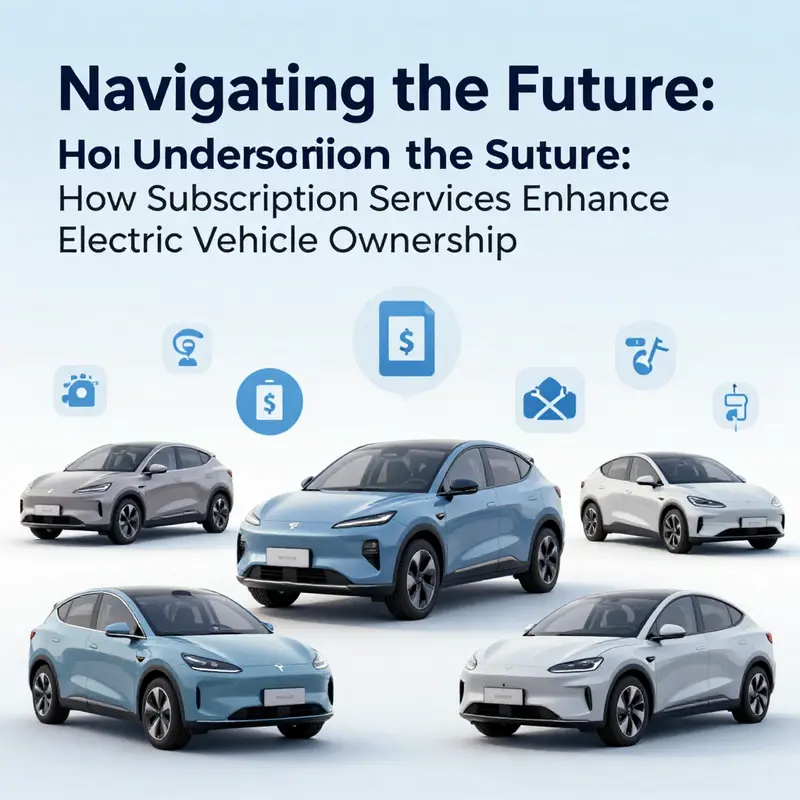
How EV Subscriptions Reshape Ownership: From Software to Charging and Service
Electric vehicle owners are encountering a new layer of choices that go well beyond selecting a battery size or range. Subscription services package capabilities, convenience, and ongoing costs into predictable monthly payments. They change what it means to “own” an EV by decoupling many features from the physical vehicle and treating them as ongoing services. The result is a more modular, adaptable ownership experience that blends hardware, software, and access into a single relationship between driver and provider.
At the heart of this shift is the idea that software and access can be monetized separately from the car itself. Rather than buying every capability up front, owners can enable or disable features as their needs evolve. Some subscriptions focus on advanced driving aids, others on entertainment and connectivity, while still others bundle charging access and maintenance. Taken together, these offerings reduce uncertainty and let drivers tailor their costs and capabilities over time.
One prominent category is advanced driver-assistance functionality. These features range from lane-keeping and adaptive cruise control to hands-on support for complex maneuvers. Subscriptions let owners try higher tiers of driver assistance without committing to a permanent purchase. That flexibility matters: some users want the comfort of more automation on long highway trips but don’t need it every day. By treating advanced capabilities as an optional monthly service, companies create a path for gradual adoption. The tradeoff is clear—ongoing expense in exchange for flexibility and the ability to try improvements delivered via software updates.
Closely related are subscriptions for vehicle software and infotainment. Modern EVs are effectively computers on wheels, and their value can increase after sale through continuous software enhancements. These packages often include richer navigation with live traffic and predictive routing, cloud-based entertainment, and vehicle personalization options. For families, this can mean streaming services and rear-seat content for long trips. For commuters, it means better route planning and smarter energy use. Charging-intensive features such as preconditioning the cabin before departure can be bundled too, smoothing range anxiety in cold climates.
Bundled services also manage how drivers charge. Access to faster, less congested charging stations and discounted rates at partner networks are commonly offered in subscription plans. For urban drivers who rely on public infrastructure, this can materially lower total charging time and cost. For owners with home charging, subscription-based energy management systems integrate the vehicle with the household energy profile—shifting charging to off-peak hours and aligning with solar generation when available. These systems can reduce electricity bills and ease grid load, while giving owners clear controls over when and how their battery fills.
Maintenance and warranty extensions are another important pillar. Electric vehicles generally require less routine mechanical servicing than internal-combustion cars, but they still benefit from periodic checks, software diagnostics, and protections against battery failures or electronic faults. Subscriptions for service and extended warranties transform variable repair costs into a predictable monthly outflow. This predictability is appealing for budgeting and for owners who want to avoid surprise bills from unexpected battery defects or electronic repairs. Many plans also include roadside assistance and tire services, wrapping the typical ownership overhead into a single payment.
Taken together, these subscription layers create multiple advantages. First, they increase cost predictability. Owners can forecast monthly expenses that include the vehicle payment, insurance, charging support, and software subscriptions. This transparency makes comparing total cost of ownership simpler and helps new EV adopters who are sensitive to price volatility. Second, subscriptions accelerate access to new features. When improvements come as over-the-air updates, subscribing owners can benefit immediately without scheduling, visiting a service center, or buying hardware. Third, subscriptions make EVs adaptable. Users can add features seasonally or as life changes—turning on advanced winter climate control for a cold season or boosting entertainment packages for a road trip.
There are, however, tradeoffs that owners must weigh. Subscriptions shift value from a one-time capital expense into recurring operating expenses. Over time, paying monthly can be more expensive than a single purchase, especially for features that remain relevant for the life of the vehicle. The decision then becomes a financial calculus: is the flexibility and lower upfront cost worth the cumulative subscription fee? For some drivers, the ability to cancel or change tiers offsets the long-term cost. For others, permanent ownership of a capability is more economical.
Another consideration is vendor lock-in and data privacy. When features are delivered via a provider’s cloud services, continuity depends on that provider’s business decisions. A subscription can be terminated, repriced, or altered, and the owner’s access can change as a result. Likewise, subscriptions often require sharing driving and charging data to deliver personalized services. Responsible providers offer clear data policies and local controls, but owners should still understand what data is collected and how it is used.
Interoperability also matters. Charging subscriptions are most valuable when they include access to widespread networks and fair pricing. Owners who travel across regions will want networks with broad coverage and transparent roaming arrangements. Similarly, software features that rely on mobile connectivity depend on reliable cellular service. If an EV is resold, the transferability of active subscriptions becomes an important detail. Some plans allow transfer to a new owner, while others are tied to the original purchaser or vehicle VIN.
Beyond individual choices, subscription models influence the broader EV ecosystem. Automakers can adopt a “vehicle as a service” mindset where new revenue streams fund ongoing improvements and services. Third-party providers can create competitive charging and maintenance networks that challenge legacy dealers. The competition encourages innovation—providers build richer feature sets, better charging experiences, and more flexible ownership bundles. For owners, that tends to mean better options and lower barriers to entry for advanced technologies.
Real-life usage patterns reveal how subscriptions can fit into daily life. Consider a household that buys an EV but still needs the occasional truck or larger vehicle. Instead of adding a second vehicle, the household might use a vehicle-access subscription from a third-party service that allows short-term swaps. Other households opt to keep a base subscription for navigation and safety features and add temporary entertainment packages before a long vacation. Fleet operators often leverage subscriptions to standardize software across vehicles and ensure consistent charging and maintenance practices with predictable costs. The modular nature of subscriptions supports all these varied needs.
Financially, subscription services change how buyers evaluate value. Traditionally, vehicle pricing emphasized purchase price and depreciation. With subscriptions, a new metric emerges: ongoing service cost per month. That metric includes the subscription fees for driver assistance, infotainment, charging access, and maintenance. Buyers who value the latest software features may accept higher monthly costs. Buyers focused on long-term ownership may choose to purchase certain features outright when offered. The market responds by offering a mix of one-time purchase options and subscription tiers, creating a spectrum of choices.
Regulatory and consumer-protection frameworks will shape how subscription services evolve. Clear rules about disclosure, transferability, and refunds will be important. Consumers should expect transparent terms that explain what happens if a provider changes pricing or discontinues a service. In some regions, regulators scrutinize whether subscription locks on safety-critical features are appropriate. Ensuring subscriptions do not create undue safety risks or unfairly limit vehicle functionality is a likely focus of future regulation.
For buyers evaluating subscriptions, a few practical steps help make informed choices. Start by listing the features you expect to use regularly. Consider whether you will use certain capabilities enough to justify a long-term subscription. Compare the total monthly cost of subscription bundles to the one-time purchase price when available. Check the transferability terms in case you sell the vehicle. Review data and privacy policies to understand what information is collected and how it is used. Finally, look at provider networks and coverage maps for charging subscriptions, and confirm whether roaming fees or network constraints could impact travel plans.
Service providers and automakers are also learning to price offerings more predictably. Bundles that combine charging incentives, maintenance coverage, and essential software features are increasingly common. These bundles simplify decisions and align incentives: when owners have charging discounts and efficient route planning, they use the network in ways that reduce grid strain and improve station availability. This alignment can lower costs and boost user satisfaction over time.
As the landscape matures, subscription services will likely become more modular and interoperable. Standards for data exchange, charging protocols, and feature licensing could emerge to reduce friction. That would allow owners to pick best-of-breed services from different vendors without losing functionality. Until then, shopping carefully and reading the fine print remains essential.
Subscription services represent a significant shift in how EV ownership feels and functions. They turn many vehicle attributes into ongoing choices rather than lifetime commitments. For drivers who value flexibility, continuous improvement, and simplified bills, subscriptions offer clear advantages. For those who prefer owning functionality outright, some options still exist, but the market favors recurring access models. Understanding the balance between flexibility and cumulative cost is the key to making the right choice for your driving habits.
For an overview of how these services are changing the market and examples of provider strategies, see this analysis. For practical tips on managing your vehicle’s longer-term upkeep and how subscription-based maintenance can fit into routine care, consult resources from vehicle service experts and maintenance guides like the KMZ Vehicle Center blog.
External source: https://www.electricvehiclesnews.com/2025/12/15/ev-subscription-services-are-changing-the-game-for-owners/
Internal resource: KMZ Vehicle Center blog – https://kmzvehiclecenter.com/blog/
Predictable Costs and Real Savings: How EV Subscriptions Change the Economics of Ownership
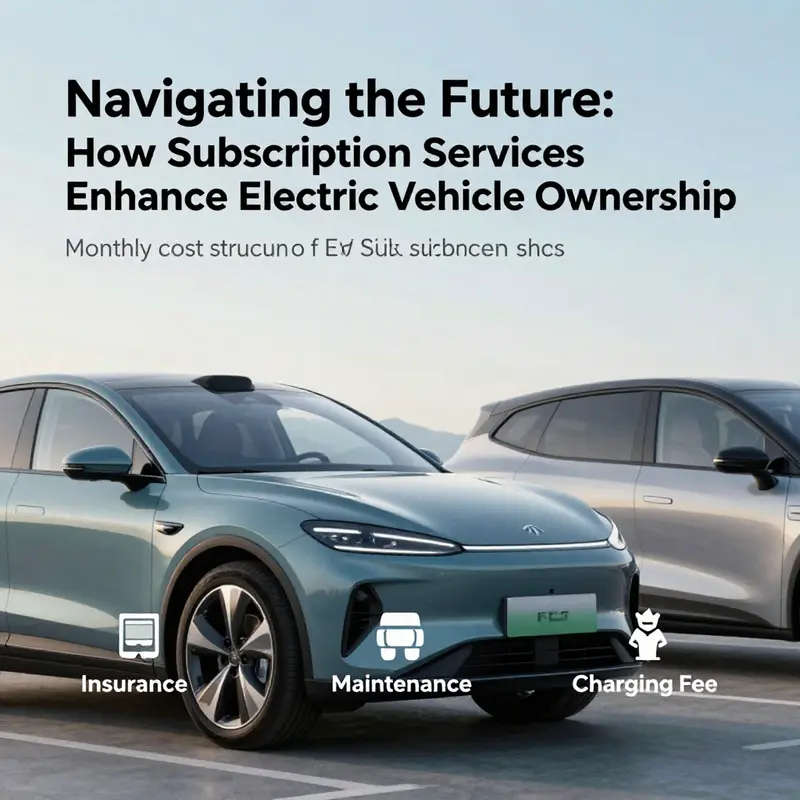
Predictable Costs and Real Savings: How EV Subscriptions Change the Economics of Ownership
Subscription services for electric vehicle owners reshape how people think about the money side of driving. Rather than a single large purchase followed by unpredictable bills, subscriptions turn ownership into a steady monthly expense that bundles many moving parts. This shift matters because the economics of electric vehicles are not just about sticker price; they involve charging costs, battery health, software and feature upgrades, maintenance, insurance, and the convenience of charging access. Pulling these elements into one predictable package addresses major financial pain points and makes EV use more appealing for a wider range of drivers.
At the core of the subscription value proposition is cost predictability. When monthly fees cover maintenance, warranty protection, and charging access, drivers can plan around a fixed expense. This removes the anxiety of surprise repair bills and the variability of public charging costs. For households used to budgeting a single car payment plus fuel, subscriptions offer a similar rhythm but often with more included services. The psychological value of predictable bills is significant: it reduces the barrier to adoption for those who worry about unknown future costs associated with new technology.
Bundling maintenance and extended warranty coverage is one of the clearest financial benefits. Electric vehicles generally have fewer moving parts than internal combustion cars, so routine maintenance costs tend to be lower. However, when issues arise—particularly with high-value components like the battery or power electronics—repair bills can be large. Subscription plans that include extended warranties or comprehensive maintenance packages shift these potential costs to the provider. Over a multi-year horizon, owners who opt into bundled services have reported meaningful reductions in out-of-pocket maintenance expenses. Data shows bundled subscribers can cut such costs by more than a quarter across five years, a saving that tightens the total cost of ownership (TCO) in favor of EVs.
Charging costs are another area where subscriptions deliver tangible savings. Individual charging behavior varies widely: some drivers primarily charge at home, others rely on public stations, and many use a mix. Without a subscription, public fast-charging sessions can be expensive and inconsistent. Subscription models often include access to dedicated charging networks with discounted or unlimited sessions, which can lower the per-kilowatt-hour price and reduce transaction fees. For drivers who lack a reliable home charging setup, network access can be the difference between daily convenience and frequent detours. Moreover, providers sometimes absorb or subsidize the cost of installing a home charging unit, removing an upfront expense that can be several hundred to a few thousand dollars.
Beyond per-session discounts, smart charging and grid integration programs tied to subscriptions create incremental savings. When a subscription includes demand-response features, the vehicle can defer charging to off-peak hours or respond to grid signals for incentives. Participants in these programs typically see smaller electricity bills because energy prices vary by time of use. In practice, drivers who schedule charging for overnight or shoulder periods can reduce their charging costs substantially. Additionally, utilities sometimes offer direct credits or bill reductions for customers enrolled in managed charging programs, further improving the economics of driving an EV on a subscription plan.
Subscriptions also change the calculus around depreciation and resale. EV technology evolves quickly: battery capacities, range figures, and software features improve year to year. For buyers who own outright, depreciation and the risk of obsolescence weigh heavily. Subscription services that allow periodic vehicle swaps or upgrades remove the need to absorb the full depreciation hit. Instead of selling a vehicle at a potentially unfavorable time, a subscriber can transition to a newer model under the same service structure. This flexibility is especially valuable to tech-minded drivers who want the latest features without the resale hassle and unexpected market fluctuations.
Insurance is another cost dimension that subscriptions can address. Bundled policies or preferred rates negotiated by a provider can reduce premiums. Centralized management of driving data, maintenance records, and vehicle health can give insurers more confidence in risk assessment, sometimes leading to discounts. In some subscription models, basic insurance coverage is included, simplifying the paperwork and aligning incentives for safe driving—an advantage for drivers who prefer a single monthly transaction covering both their vehicle and protection.
Subscriptions make premium features more accessible without hardware upgrades. Some providers offer access to advanced driver-assistance features, enhanced connectivity, or entertainment services that would otherwise require expensive add-ons. By delivering software-based upgrades as part of the subscription, owners can tailor the car to their needs while avoiding high upfront costs. This pay-for-use approach suits drivers who value occasional access to performance features or concierge-style services but do not want to invest permanently in them.
When you put these elements together, the total cost impact becomes clear. Fixed monthly fees that include charging access, warranty, maintenance, and optional insurance reduce variability and isolate vehicle use from unpredictable large expenses. For many drivers, this leads to a lower effective TCO versus traditional ownership over the medium term. For those who drive less or primarily commute short distances, the math can be especially favorable: predictable monthly payments avoid paying for unused depreciation risk and provide included services that would otherwise be underutilized.
However, the savings are not automatic. The exact economics depend on driving patterns, energy prices, location, and the details of the subscription. For a driver with a reliable home charger and minimal usage of public stations, a subscription that emphasizes network access may provide less incremental value. Conversely, for someone who rents, lives in an apartment, or frequently travels and needs reliable charging access on the road, the subscription becomes financially and practically compelling. Evaluating these trade-offs requires understanding what the subscription covers and comparing those inclusions to the expenses one would incur outside the plan.
Another important cost consideration is the reduction in transaction friction. Traditional ownership often involves multiple vendors: warranty providers, insurers, maintenance shops, and charging networks. Each relationship can introduce overhead and friction in the form of time, paperwork, and separate bills. Subscription models consolidate those touchpoints. Time is money; the convenience of a single bill and unified service channel reduces indirect costs associated with vehicle ownership. For many users, this friction reduction has real monetary value that often goes uncounted in simple price comparisons.
There are also system-level cost effects worth noting. Subscriptions can support broader efficiencies in the mobility ecosystem. Fleet-style management of vehicles allows providers to optimize asset utilization, rotate cars to meet demand, and refurbish vehicles to extend life. When vehicles are maintained centrally and updated regularly, the whole fleet can retain higher value for longer. These efficiencies can pass through to subscribers in the form of lower fees or better services. At the same time, subscription structures enable coordinated charging behavior that benefits grid stability and lowers overall energy costs. Providers can aggregate charging loads across many vehicles to negotiate better rates with utilities or participate in energy markets, creating savings that trickle down.
Critically, subscription models can reduce the barrier to entry for people concerned about long-term battery health. Battery degradation remains a top worry for potential EV buyers. By shifting warranty and battery replacement responsibilities to the service provider, subscriptions remove a major source of financial uncertainty. Providers have a vested interest in maintaining battery health across their fleet, using data-driven maintenance and conservative battery management strategies to extend life. This shared interest results in longer-lasting batteries and fewer catastrophic replacement costs for subscribers.
There are, of course, limits and trade-offs. For drivers with very high annual mileage, the per-mile cost under a subscription may be higher than ownership, especially if the subscription includes mileage caps or steep fees for excess miles. Similarly, drivers who prefer long-term ownership for tax or personal reasons might find subscriptions less attractive. The path to cost advantage usually hinges on aligning driving behavior, service coverage, and flexibility needs with the subscription’s structure.
To evaluate whether a subscription makes financial sense, prospective subscribers should run a few simple comparisons. First, calculate expected monthly driving costs outside a subscription: energy costs based on local rates and driving habits, average maintenance and repair expenses, insurance premiums, and estimated depreciation. Second, compare that sum to the subscription fee while noting what the fee includes and excludes. Third, adjust for intangibles such as convenience, perceived risk reduction, and access to networked charging. Finally, consider horizon flexibility: if you expect your needs to change in a few years, the subscription’s ability to adapt may carry extra value.
As subscription services mature, they will likely introduce more nuanced pricing tiers and targeted incentives. Expect options that blend ownership and subscription elements: long-term subscribers who commit to several years might secure lower monthly rates, while short-term users may pay a premium for flexibility. Utilities and providers may deepen partnerships, offering combined plans that align vehicle subscriptions with home energy services for further savings. Such integrated offerings would allow households to optimize both mobility and energy budgets together.
In sum, subscription services change the economics of electric vehicles by turning uncertain future costs into predictable, often lower, monthly payments while offering access to charging networks, warranties, and bundled services. They reduce exposure to depreciation, simplify billing, and, in many cases, lower the overall cost of ownership through improved efficiencies and coordinated energy strategies. Whether a subscription is the most cost-effective route depends on individual circumstances and driving patterns, but for many drivers—especially those seeking flexibility, reduced hassle, and better charging access—subscriptions offer a compelling financial alternative.
For a deeper look at the documented savings and policy analysis underpinning these benefits, see this government overview of cost advantages linked to EV subscription programs: https://www.energy.gov/eere/vehicles/articles/cost-benefits-ev-subscription-services
For related practical advice on vehicle upkeep and to explore broader maintenance topics that still matter under a subscription scenario, see the KMZ Vehicle Center blog for owner-focused guidance: https://kmzvehiclecenter.com/blog/
Smart Mobility on Repeat: How Technology Orchestrates EV Subscription Services
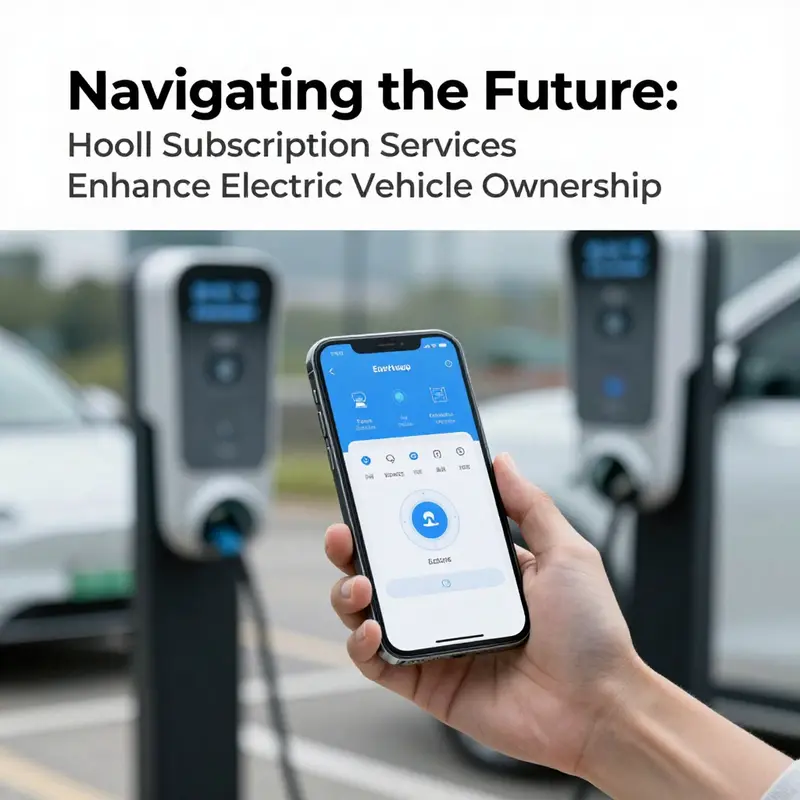
The shift from owning to subscribing a vehicle is not merely a change in how people pay for transport. In an EV subscription, a car becomes part of a living digital ecosystem, delivering flexibility, predictable costs, and access to a rotating fleet, with insurance, maintenance, and charging bundled into one monthly plan.
Technology sits at the heart of this model. OTA updates push software improvements without dealer visits, optimizing battery management, charging efficiency, and safety features. The subscription model uses these updates to keep vehicles current and capable.
Data from the fleet becomes a central asset. Telemetry supports predictive maintenance, usage analytics, and smarter fleet planning for providers, while empowering users with reliability and transparent service expectations.
The user experience centers on apps that manage climate, charging, route planning, and personalized vehicle settings, all while balancing energy costs and grid considerations. AI learns from behavior to tailor comfort and efficiency.
Charging infrastructure integration ensures home and public charging work together, with smart charging that aligns with energy prices and renewable availability, and route-based charging optimization to minimize downtime.
The broader implications include a recurring revenue model that rewards ongoing innovation, data governance, and privacy protections that underpin trust.
Look ahead: continued improvements in software, data standards, and cross-provider interoperability will shape how scalable and personalized EV subscriptions become, with industry analyses and practitioner insights charting the path forward.
Final thoughts
In summary, subscription services for electric vehicle owners represent a compelling innovation in vehicle access, especially for local private car owners, used car buyers and sellers, and small business fleet operators. These services not only provide flexibility and a diverse range of electric vehicles but also promote significant cost predictability and an integration of technology that enhances the driving experience. As the automotive landscape evolves, adopting these subscription models could be the key to a more sustainable and economically viable future in transportation.