
Understanding a vehicle’s service history is crucial for making informed decisions—whether you’re a private car owner, a used car buyer, a seller, or a small business fleet operator. Service history reveals a car’s maintenance and repair activities, which can significantly affect its reliability and resale value. This article explores various methods to obtain detailed vehicle service histories. From leveraging third-party platforms to contacting dealerships and insurance companies, each chapter delves into methods that make it easier for you to uncover comprehensive insights about the vehicles you own or plan to purchase. With the right approach, you can ensure that you are aware of any hidden issues that may impact your vehicle’s performance, longevity, and overall value.
Unlocking a Car’s Past: Getting Vehicle Service History Through Trusted Third-Party Platforms
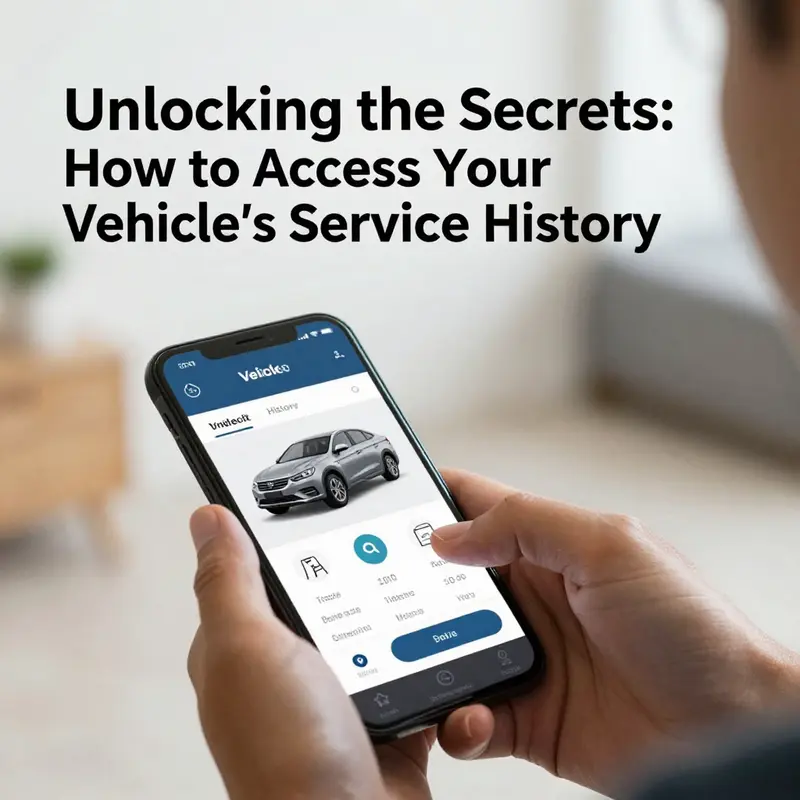
Knowing a vehicle’s service history is valuable when buying, selling, or maintaining a car. This chapter explains how trusted third-party platforms compile maintenance records from multiple sources, what data you can expect, and how to interpret it for smarter decisions. It also covers practical steps to access the report, what to verify against dealership records, and common caveats about data completeness and regional limitations. Readers will learn how to cross-check mileage, assess maintenance cadence, recognize red flags, and use the report as part of a broader due-diligence process that includes a professional inspection and direct documentation from the seller.
How to Get Vehicle Service History directly from Authorized Dealerships

A vehicle’s service history is more than a ledger of past visits; it is a narrative of care, maintenance discipline, and the road-tested reliability that can influence value, safety, and future reliability. When a car’s past is unclear, prospective buyers and current owners alike are left to guess whether routine maintenance was performed on schedule, whether critical parts were replaced, or whether a hidden issue lurks behind a seemingly minor symptom. The direct route to clarity lies in requesting the complete service and repair history from an authorized dealership network. This path, while sometimes requiring a little legwork and the right documents, yields the most authoritative and comprehensive record available. It is the route that ties a vehicle’s official maintenance history to the manufacturer’s own service ecosystem, ensuring that what you read on the report reflects services recorded in the brand’s official channels. By following the process closely, you can access a report that covers authorized services across the vehicle’s life, including detailed entries on repairs, parts replaced, and the labor that accompanied those tasks. The outcome is not just a chronology; it is a verified dossier that informs decisions about ownership, value, and future maintenance strategies.
Begin with preparation, because the strength of your request rests on the documents you can present. Gather the vehicle’s registration certificate and any government-issued photo ID. If you are not the registered owner, you will typically need a written authorization letter from the owner, along with the owner’s identification documents. This is not an obstacle so much as a safeguard; the dealership must verify that the person requesting access has a legitimate right to view the vehicle’s sensitive maintenance data. Once you have these documents in hand, you can plan your visit with a clear sense of purpose rather than wandering the service department asking for an arbitrary lookup. This preparation is a quiet but essential verb in the act of retrieving a trustworthy history; it signals to the staff that you are a serious, properly authorized requester who will handle the information responsibly.
Next comes the choice of where to go. The most straightforward option is to visit any official dealership that operates within the same brand network as the vehicle. Whether you own a luxury sedan, a practical SUV, or a performance-oriented variant, the brand’s network of authorized service centers keeps a central record of maintenance performed under its banner. The staff in the service department, sometimes called the After-Sales or Customer Care team, are trained to look up records by VIN—the 17-digit Vehicle Identification Number—or by other identifying details such as the license plate. The VIN is your gateway to the history: it is the unique key the dealership uses to unlock the vehicle’s longitudinal maintenance record. If you are not sure where to go first, explain your goal to the receptionist or service advisor and request a full service history for the VIN you provide. They will guide you to the correct channel within the dealership’s internal system so you can proceed with verification.
The verification step is essential. In most cases, you will be asked to demonstrate your identity and ownership rights before the dealership will grant access to the full report. The internal process relies on the Dealer Management System (DMS), the branded repository that contains every service entry, every parts replacement, and every technician’s note associated with the vehicle. The staff will input the VIN, confirm your identity, and confirm that you have legitimate authority to view the records. This security-first approach protects vehicle owners and preserves the integrity of the data stored in the brand’s official database. Once the system confirms your eligibility, the dealership’s platform will assemble the complete service history for your review.
What you receive at the end of the access process can take two familiar forms: a printed copy or a digital version sent by email or made available through a dealership app. Both formats serve the same purpose, but the digital copy often provides easier transport, searchability, and integration into your personal records. A printed report, however, can be handy for those who prefer a tangible document during negotiations, appraisals, or when meeting with a prospective buyer. The content of the report is the heart of the experience. Expect entries that cover routine maintenance performed at authorized service centers, major repairs conducted under the manufacturer’s guidance, and replacements of factory-recommended components. You will see dates, mileages, parts replaced, and the labor hours charged for each service event. In some cases, independent repairs performed outside the brand network may be noted as ancillary information, but they will typically not appear in the official record unless they were duplicated into the dealership’s system or synchronized through a formal data-sharing pathway.
The value of this approach rests on its accuracy and its scope. Because the data derives directly from the manufacturer’s network, the report is generally highly precise regarding service intervals, parts numbers, and the exact nature of each service item. It is also comprehensive in terms of identifying which services were performed at authorized dealerships throughout the vehicle’s life. This breadth is what makes the dealership path the most authoritative source for an official service narrative. Yet there are important caveats to keep in mind. The record reflects only services conducted within the brand’s authorized network. Maintenance performed at independent garages, quick-lube shops, or non-brand workshops may not be included unless the dealership specifically has a data-sharing arrangement or you obtain and present those records to the dealer for cross-reference. The dealership report, therefore, should be viewed as the most complete official account of manufacturer-endorsed maintenance, not a catch-all ledger of every tire rotation or oil change the car ever received.
In practice, many owners discover that this method not only verifies history but also clarifies the exact status of the car at any given moment. For instance, the report can reveal whether certain critical components have been replaced under recall or service campaigns, whether the vehicle has undergone significant repairs, and whether there are recurring issues tied to specific systems. The depth of detail—down to specific parts and labor costs—helps buyers assess value with greater confidence and enables current owners to plan future maintenance with the reassurance that the car has been cared for within official channels. To broaden your understanding of broader maintenance considerations and best practices, you can consult related insights on the KMZ Vehicle Center blog. KMZ Vehicle Center blog.
While this pathway is highly reliable, it is not the only route to a clear history. A holistic approach often involves cross-checking the dealership report with other sources. Third-party vehicle history platforms, for example, can compile maintenance and repair data from multiple authorized and independent sources, providing a broad view that includes non-brand service events and insurance-related repairs. For some buyers, combining the official dealership record with a third-party history check yields the most robust picture of a vehicle’s past. However, it is important to recognize that third-party sources may differ in their data coverage and update frequency, so the dealership record should remain the core reference point for official maintenance history. If you decide to explore this supplementary path, keep your VIN handy and be prepared to provide authorization for data retrieval, since some platforms require you to verify ownership before accessing records.
The practical realities of visiting a dealership are worth noting as well. Some brands offer remote or app-based access to service histories, especially for customers who regularly service at the same network. In such cases, the dealership may provide a secure link or a downloadable report that you can access from home. If you anticipate needing the history for a sale, loan application, or insurance evaluation, ask the service advisor about the best delivery method and whether any additional authentication steps are required to share the data with a third party. If you are researching and gathering context before a purchase, the dealership’s official report is the anchor, and subsequent cross-checking with credible sources can fill in any gaps the brand record might leave.
The experience of obtaining a dealership history is not a mere bureaucratic hurdle; it is an investment in certainty. When the data comes directly from the brand’s network, you acquire a narrative that carries the weight of authenticity. You gain access to the precise maintenance timeline, the exact parts used, the labor performed, and the reliability history that underpins the vehicle’s current condition. This foundation makes it easier to discuss price, negotiate confidently, and chart a maintenance roadmap that preserves the car’s integrity for years to come. For readers seeking a broader understanding of maintenance strategies and related topics, the linked KMZ Vehicle Center blog offers additional perspectives and practical how-tos.
In sum, obtaining a vehicle’s service history directly from authorized dealerships is the most authoritative route when you need a trusted, manufacturer-endorsed record. It requires a modest preparation of documents, a visit to the right service department, and a clear request for the VIN-based history. The payoff is a narrative you can rely on—one that confirms what has been done, when it was done, and with what parts, all within the framework of the manufacturer’s official records. While you may supplement this with data from other sources for a broader picture, the dealership record remains the core reference point for the vehicle’s official maintenance story. And as you conclude the process, consider how this solid history informs your next steps—whether you are finalizing a purchase, planning a budgeting approach for future maintenance, or simply seeking peace of mind about a vehicle you already own. For broader context on maintenance topics, see the KMZ Vehicle Center blog.
External resource: https://www.nhtsa.gov/vehicle-safety
How to Get Vehicle Service History through Insurance Companies

Retrieving a vehicle’s service history through an insurance company can be a pivotal part of assessing a used car’s value, safety, and future repair needs. Insurance records carry a level of credibility because they are tied to formal claims and documented settlements. They offer insight into accidents, major repairs, and the financial scope of those interventions. Yet the process requires careful navigation through identity verification, policy ownership, and the reality that these records are primarily about incidents rather than routine maintenance. When approached with a clear plan, the insurance route can yield a trustworthy, incident-focused history that complements other sources, helping you piece together a fuller picture of a vehicle’s past.
The journey begins with a simple truth: access to an insurer’s claim history hinges on proving your connection to the vehicle and your legitimate need to view its records. If you are the current owner or a prospective purchaser with established rights, you will typically initiate a request by identifying the insurer or insurers that have covered the vehicle. In practice, this means gathering basic details: the vehicle’s VIN, the license plate number, and personal identification documents that establish ownership or authorized access. The insurer will expect you to demonstrate that you have a legitimate interest in the vehicle’s claims history, which is a standard safeguard under privacy and data-protection regulations. This initial clarity often speeds up what can feel like a labyrinth of forms and verifications, especially when a vehicle has passed through multiple owners or multiple insurers over its lifetime.
Most insurers provide a direct path to the data through their official channels. You can reach them by phone, through their official website, or via a mobile app. On the digital front, a typical user journey unfolds in two stages. After you log in to the insurer’s portal, you look for a section labeled something like “My Policies” or “Claims History.” This is where past events—dates of claims, the nature and location of accidents, the repair work performed, and the costs involved—are stored in a structured, auditable format. The information is generally presented in chronological order, sometimes with additional notes about the cause of the incident and the estimated or final settlement. The level of granularity can vary; some portals may itemize specific repairs and parts replaced, while others provide a broader summary. Either way, you gain a verified record that helps you verify whether a reported service history aligns with actual events.
If you prefer human interaction or run into digital hurdles, a phone call to the insurer’s customer-service line remains a reliable option. When you call, you’ll typically be asked to complete an identity verification step. You may need to supply your policy number, the VIN, the license plate, and a form of government-issued identification. In many cases, you can request a full history of all claims related to the vehicle, including the dates, locations, and outcomes of each claim, as well as any repairs that were funded through the insurer. Some insurers can provide digital or printed reports upon request, which can be handy if you need to present them to a dealer or a potential lender.
A local branch visit is another avenue that sometimes proves necessary, especially if you require an official, stamped document or need to navigate complex ownership scenarios. A branch representative can retrieve the complete claim history from internal systems, and they can help confirm ownership and rights to access the data. This route can also be valuable if you suspect gaps in online records or if the vehicle has a history that spans several jurisdictions where different branch staff may interpret requirements differently.
The reality for vehicles with multiple insurers over time is that you must explore each company separately. Privacy and security measures routinely require you to authenticate with every insurer that previously insured the vehicle. A single insurer’s records may only reflect claims filed during the period of that policy. If the car has changed hands or been covered by different insurers after a major incident, you’ll want to assemble a complete mosaic by combining the reports from all relevant carriers. While this can feel painstaking, the payoff is a more accurate portrait of the vehicle’s safety history and repair trajectory, which is crucial when evaluating a used car’s condition for purchase or resale.
It is essential to note a fundamental limitation: insurance records are excellent for accident-related repairs, claims outcomes, and financial settlements, but they rarely capture routine maintenance that occurs outside an insurer’s purview. Regular service visits to a dealer or independent shop—oil changes, brake jobs, tire rotations—are rarely if ever recorded as part of an insurer’s file unless a specific claim was filed in connection with those services. This means that while an insurer’s history can reveal the major safety-related interventions and the timeline of those events, it should be read alongside other sources to form a complete service-history narrative.
This is where a broader strategy becomes valuable. For a fuller view that stitches together incident-driven data with routine maintenance and non-insurance repairs, third-party history platforms can be an excellent complement. These platforms pull information from multiple sources, including dealer networks and independent repair shops, to present a more comprehensive picture. If your goal is a thorough due-diligence check, you’ll likely rely on both the insurer’s claims history and a broader vehicle history check that aggregates data from several channels. When you examine the combined data, you gain a more robust sense of how the vehicle has been cared for, how it has performed in real-world conditions, and whether any latent issues might emerge with further use.
For readers who want to connect the dots between different data streams, it helps to have a central hub of context. If you’re exploring maintenance patterns across a vehicle’s life, consider tapping into a general maintenance-focused resource that collects insights from a broad audience of owners and technicians. Such a resource can help you interpret the insurance records in light of typical service intervals, common repair sequences, and parts replacement trends for similar makes and models. As you weave these threads together, you’ll have a clearer understanding of not just what happened, but why it happened and how it may influence future reliability and value.
Practical steps to keep the process smooth begin well before you start requesting records. Assemble a concise dossier: copies of your government ID, proof of ownership, the vehicle’s VIN, current and past license plates, and any prior correspondence with insurers. If you suspect the vehicle has seen multiple insurers, create a simple inventory listing each insurer with approximate coverage periods. When you contact each company, reiterate your legitimate interest and request the specific format you prefer for the report—digital, printed, or both. Ask about any fees or lead times, as some companies can grant immediate online access while others may require a formal release request. If a request is declined or restricted, you’ll want to understand the reason and whether authorization from the current owner or other documents can unlock access.
In the broader narrative of vehicle history, the insurer’s records serve as a vital, dependable backbone for accident and repair events. To pull the complete story together, you can integrate this backbone with additional streams of information. For example, a general archival check from a third-party history provider can fill in gaps about maintenance performed outside the insured network. Meanwhile, dealership records—when the car has been serviced at an authorized network facility—offer the most authoritative source for brand-specific repairs and part replacements. The synthesis of these perspectives yields a well-rounded and credible service history that supports informed decisions at every turn, from negotiations to ongoing maintenance planning.
If you want to explore a broader lens on vehicle histories beyond insurer-provided data, a well-curated resource hub can be a valuable companion. It offers practical guidance on interpreting maintenance invoices, recognizing telltale repair patterns, and identifying discrepancies between claimed and observed vehicle conditions. A convenient way to access such context is through the KMZ Vehicle Center Blog, which gathers insights on maintenance, diagnostics, and best practices for vehicle care. You can visit the blog to connect the historical dots with practical, real-world tips and examples. KMZ Vehicle Center Blog
Ultimately, the insurer route is not a stand-alone solution. It shines when used in concert with other sources, providing a credible anchor for major events in the car’s life. The most thorough approach combines the insurer’s documented claims history with a broader history check that aggregates data from multiple providers and repair shops. This integrated view helps you understand the car’s past, assess its current condition, and anticipate future maintenance needs with greater confidence. When you pursue this path, you’ll be better equipped to ask informed questions of sellers, assess the true value of a prospective purchase, and plan a maintenance strategy that aligns with the vehicle’s proven history. For a broader, nationwide context, consider exploring the external resource that specializes in vehicle history checks, which offers additional perspectives and tools to interpret the data you collect from insurers and other sources. Learn more about vehicle history checks via Houchekejian: https://www.houchekejian.com
Listening to the Past: Why Contacting Previous Owners Won’t Give You a Reliable Vehicle Service History

When a used car catches your eye, the instinct to reach out to the previous owner can feel natural. A direct line to someone who lived with the car might seem like the fastest way to uncover its maintenance routine and repairs. Yet as a matter of practice, this approach often leads you down a winding path with dead ends. Memories fade, dates blur, and what is remembered can be selective. A former owner may recall a few maintenance events but overlook others, or they may misattribute causes, confuse parts, or mix up mileage markers. In the absence of a verifiable, auditable trail, a conversation becomes a narrative rather than evidence you can rely on when assessing condition and potential risk. The risk is not merely that a detail is forgotten; it is that an incomplete account blinds you to patterns of neglect or recurring issues that shape both safety and value. A car’s life is revealed not by a single recollection but by a credible sequence of documented events, and memory alone has a poor track record of providing that sequence in full.
Beyond the reliability question lies the problem of documentation. Service invoices from a certified shop, repair orders from a licensed technician, or official maintenance logs are pieces of evidence you can trust because they are tied to real transactions, timestamps, and standardized practices. A former owner may be able to share impressions—say, that the car was well cared for or that it ran smoothly—but impressions do not prove what was done, when, or with which parts. Records matter because servicing history can affect safety, performance, and resale value. Without official documents, you can end up treating a symptom as a cure or, worse, missing a repair that should have been recorded. Even if the conversation is well-intentioned, its value as a stand-alone source is limited. A single anecdote, no matter how convincing, cannot substitute for an auditable service ledger that spans the life of the vehicle.
Privacy and legal considerations further complicate the scenario. Asking for a former owner’s contact information raises questions about consent and data protection. Different jurisdictions impose varying rules about sharing personal data, and even with consent, there is no guarantee of a timely or complete response. If contact is made, the other party may choose not to reply, or they may provide information that feels helpful but cannot be independently verified. The result is a potential cascade of misinformation that looks plausible but cannot be cross-checked against official records. In this environment, relying on a private memory becomes a weak foundation for decisions that hinge on safety and long-term reliability.
Because of these drawbacks, many buyers seek alternatives that offer verifiable and comprehensive insight. A reputable third-party vehicle history platform can aggregate information from multiple sources and present it in a single, checkable report. By cross-referencing VIN data with maintenance entries, mileage records, and accident or insurance events, such services can deliver a more complete picture than any one owner’s memory could provide. The value of this approach lies not only in breadth but in the structure of the data: standardized formats, clear dates, and accessible provenance that makes it easier to verify and discuss with a dealer or inspector. Of course, even the broadest external report has its boundaries. It may omit maintenance done entirely outside a preferred network, or it may interpret data differently in regions with divergent reporting practices. The key is to use it as a solid baseline and to corroborate it with primary sources whenever possible.
For those who want the most authoritative look at a vehicle’s past, turning to the dealership network that originally sold or serviced the car can be the strongest option. When maintenance has occurred within a brand’s authorized service centers, the records tend to be exceptionally detailed: exact service items, specific parts replaced, labor hours, and precise dates. This level of detail can be decisive when evaluating a car’s readiness for longer-term ownership, determining warranty eligibility, or assessing whether safety recalls have been addressed. The limitation here is straightforward: the data is generally scoped to the brand’s own network. If the vehicle has seen independent shops or service centers outside that network, those entries may not appear in the official record. Nevertheless, for the critical subset of maintenance done within the brand’s ecosystem, dealership records offer a reliable and transparent account that can anchor your decision.
Insurance records, too, play a pivotal role in building a complete history, particularly when the vehicle has been involved in accidents. Claims histories can illuminate the severity of a crash, the repairs that followed, and whether structural work affected frame or safety components. These data points matter because they tie directly to safety and potential future depreciation. The caveat is that insurance data centers on claims, not routine maintenance. They do not substitute for full service logs, and they cannot reveal everything that happened during routine upkeep or minor repairs. If you pursue this path, obtain proper authorization and request a detailed claims history rather than a high-level summary. When combined with service data, insurance information adds a crucial dimension of safety and incident history that is otherwise missing from a simple maintenance ledger.
An auxiliary source can be the diagnostic information gathered from the vehicle’s on-board computer via an OBD reader. This approach offers a real-time snapshot of fault codes and esoteric issues that might not yet have triggered a service entry. It is a valuable supplementary check for a buyer who plans a thorough pre-purchase inspection, but it should not be mistaken for a complete maintenance history. Fault codes can indicate problems, but they do not provide a chronological record of past services or the quality of repairs performed. The practical takeaway is clear: use OBD data to inform questions and inspections, not as the sole basis for assessing a car’s past.
Relying on a single source—especially a private memory—carries the risk of surprises after you drive away with the car. A prudent approach is to triangulate information from multiple channels: a consolidated history report from a credible platform, corroborating dealership records, insurance histories, and, where feasible, recall and regulatory records. Such triangulation minimizes gaps and helps you separate impression from fact. If you want a practical reference for reinforcing these checks, the KMZ Vehicle Center blog offers guidance on how to approach record verification in everyday terms. KMZ Vehicle Center blog.
As you compile data, remember that the most robust verification emerges when you treat each source as part of a larger picture rather than a stand-alone guarantee. Official service invoices demonstrate what was done, when, and with which parts. A dealer’s maintenance log confirms care within a specific network and provides a consistent narrative of how the car has been treated over time. Insurance documents reveal how the vehicle behaved after incidents and what repairs followed. A third-party history report ties these strands together, offering a narrative you can review before making a purchase. The strength of this combined approach is that you are not swayed by a single anecdote; you are looking at a documented sequence that supports your assessment of price, condition, and future reliability. If any one source comes from a private memory, and others come from certified facilities, the certified data should govern your judgment.
For readers who want to pursue the most reliable path, keep in mind that official channels remain essential anchors. Local authorities and official agencies often maintain accessible records on vehicle registrations and safety concerns, including recalls. When you pair these sources with the more conventional histories, you gain a triangulated perspective that reduces the chance of overlooking a critical safety or maintenance item. If you are comfortable exploring further, an external reference for safety recalls and regulatory information is available at NHTSA recalls.
How to Get Vehicle Service History using On-Board Diagnostics (OBD)
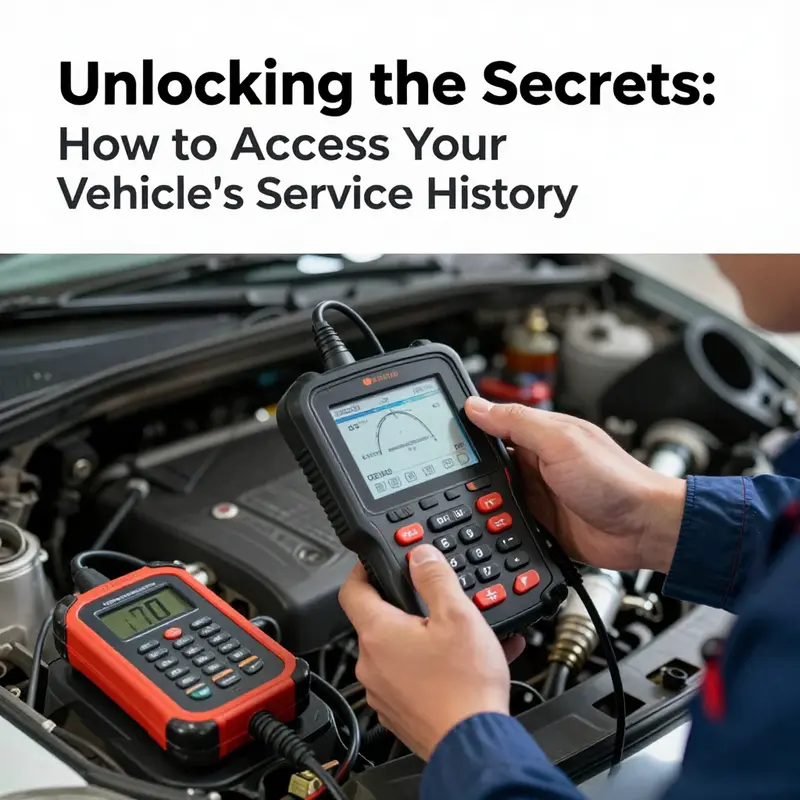
The promise of On-Board Diagnostics (OBD) lies not in a single snapshot of a car’s condition, but in the story the vehicle can tell over time. Real-time fault codes and live sensor readings are invaluable for diagnosing current problems, yet a thoughtful use of OBD can reveal patterns that hint at what has already happened under the hood. The idea is to treat OBD as a historian’s toolkit—combining what the car has recorded in its ECUs with careful interpretation and cross-checks against official service records. Not every car stores a full ledger of every service ever performed, and not every event is captured in a way that is easy to read. Still, approached with patience and a clear plan, OBD can substantially strengthen your understanding of a vehicle’s past, which is essential for assessing value, safety, and future maintenance needs.
To begin, you need two things: a reliable OBD-II scanner and a compatible app or software on a smartphone or tablet. The scanner plugs into a standard 16‑pin port located somewhere under the dashboard, usually near the steering column. Once connected, the device communicates with the vehicle’s network of ECUs. The software on your phone then translates the data into readable information. Avoid the impulse to chase every flashy feature; focus on the data points that help reconstruct history. Because you are after history, you will want access to more than just current fault codes. You’ll need ability to view freeze frame data, DTC history, and, where possible, long-term fuel trim trends and timing data. These components are the threads that, when woven together, form a narrative about past conditions and repairs.
One of the most tangible pieces of history is freeze frame data. When a fault is recorded, the ECU stores a snapshot of engine state at that moment—engine rpm, vehicle speed, coolant temperature, fuel pressure, and the status of the air and fuel systems. Freeze frames are like time capsules that let you reconstruct the circumstances that triggered a fault. If you notice a pattern of faults occurring at similar engine loads or temperatures, you may infer chronic conditions such as vacuum leaks, sensor drift, or fuel delivery issues that likely required intervention. Reading freeze frame data alongside the actual fault codes helps separate intermittent glitches from persistent problems, which is essential when assessing whether a car has required repeated attention or whether a single incident was an isolated event.
Beyond freeze frames, the long-term fuel trim values stored by the ECUs can reveal subtle, long-running issues. Long-term fuel trim tells you whether the engine has consistently run lean or rich over an extended period. A car that repeatedly shows a lean trend might have intake leaks or a failing sensor, while consistent rich readings could point to a faulty sensor, clogged injectors, or a malfunctioning fuel pressure regulator. Although fuel trim alone does not prove that a particular service was performed, it hints at maintenance history. When you combine fuel trim patterns with occasional misfire counts, you begin to see the full arc of repairs and replacements that may have occurred in the car’s life.
Some vehicles also expose diagnostic trouble code (DTC) history within the OBD system, not just the most recent code. Access to a log of past DTCs can indicate recurring issues or intermittent faults that were significant enough to trigger protection modes or require service. If you observe repeated misfire codes, for example, you might infer issues shared across several visits, such as ignition coil failures, worn spark plugs, or problems with fuel delivery. While DTC history does not replace formal service invoices, it provides a valuable independent cross-check when you are evaluating the authenticity of the documented maintenance record.
A nuanced but important factor is mileage data and trip history, which some advanced protocols and vehicles store within the OBD framework. While standard OBD-II does not always provide a straightforward, universal mileage timeline, certain vehicles and protocols can surface trip counts or mileage insights through extended data sets. Apps that access manufacturer-specific extensions or deeper vehicle protocols may offer approximations of total mileage or daily trip patterns. When such data aligns with service intervals you see in invoices or logs, it strengthens your confidence in the record. In cases where the vehicle lacks explicit OBD-based mileage data, you can still triangulate age and usage by comparing the timing of fault events with known service intervals and road exposure.
Interpreting this information requires a careful approach. Start by establishing a baseline: what is the vehicle’s typical operating range, and what is the normal state of health for its ECUs? Then look for clusters of activity. Do you see two or three instances of a particular fault code with similar freeze frame contexts? Do the long-term fuel trim values trend in a similar direction during those events? Patterns like these can indicate that a car has experienced recurring issues—perhaps a leaking vacuum hose or a sensor that has been intermittently failing—without having a complete, paper trail of every intervention. In contrast, a clean series of diagnostic checks with stable trim values and no recurring faults suggests either a well-maintained machine or a vehicle with a sparse history of issues, making it easier to trust the record you’re assembling.
It is important to acknowledge the limits of OBD as a source of history. Many vehicles do not store a comprehensive, chronological ledger of all services and repairs. Some historical data may be kept only within dealership or manufacturer ecosystems, and only certain events are captured by the OBD in a way that makes sense for a lay reader. Even when older fault codes appear, they may reflect temporary glitches that were resolved without a formal service. The absence of data does not prove that nothing happened; it may simply mean the data was never logged in a readable format or was erased during a software update. Additionally, because OBD data is oriented toward diagnostics and performance, it should be used as a supplemental layer rather than a sole determinant of a vehicle’s history. Always corroborate OBD findings with official maintenance records, invoices, and disclosures from previous owners or dealerships.
When you are evaluating a used car, the value of OBD-driven history lies in its ability to reveal patterns that either support or challenge the written record you receive. For instance, if you encounter service invoices that claim routine maintenance at regular intervals, yet the OBD data shows repeated misfires and lean-trim drift with no corresponding repairs, this discordance can raise red flags about record authenticity or maintenance neglect. Conversely, if the OBD view aligns with a comprehensive service history—regular oil changes, sensor replacements, and throttle body cleanings documented in invoices—the combined picture becomes more credible and reassuring.
To maximize the usefulness of OBD history, adopt a disciplined approach to data collection. Connect the scanner in a quiet, well-lit setting, and take notes on the codes you see, the freeze frame contexts, and the timing of any long-term trim shifts. If possible, capture multiple sessions over a period of days or weeks. The vehicle’s behavior can change with ambient temperature, driving style, and fuel. Repeating observations helps distinguish transient conditions from persistent patterns. As you accumulate data, cross-reference it with any paperwork you have from the seller or previous owners. Ask clarifying questions about repeated faults, parts replaced, or unusual maintenance schedules. This dialogue, anchored by the objective data from OBD, often yields a more complete understanding than either source alone.
For readers who want a broader perspective on interpreting these signals, the KMZ Vehicle Center blog offers additional context and examples of how owners and buyers use diagnostic history in practical decisions. KMZ Vehicle Center blog
externalresourcenote: To deepen your understanding of how to interpret OBD-derived history and to explore more technical detail, you can consult external guidance on the subject. External resource: https://www.torqueapp.com/learn/how-to-use-obd-ii-for-vehicle-history
Final thoughts
In conclusion, understanding how to access your vehicle’s service history is vital for maintaining vehicle performance and safety. Whether through reputable third-party platforms, direct inquiries with authorized dealerships, or even contacting previous owners, each approach provides unique advantages that can help you uncover critical information about your vehicle. Being proactive in obtaining this knowledge ensures you make informed buying decisions, manage your current vehicle more effectively, and keep your fleet in optimal condition. Armed with this guide, you are now equipped to take charge of your automotive journey, assessing the history that will ultimately influence your vehicle’s future.